What Does PDRN Mean in a Facial Appointment? A Straightforward Guide Before You Book
Brenda Cammo Team
PDRN is one of those facial terms that can sound far more complicated than it needs to be. If you have seen it described as “salmon DNA”, “polynucleotides” or a skin-regeneration facial, it is sensible to pause and ask what the name actually means before booking.
In simple terms, PDRN stands for polydeoxyribonucleotide: a DNA-derived compound. In aesthetic conversations, it is often associated with purified DNA fragments sourced from salmon or trout. The wording can vary between products, countries and treatment menus, which is why a good booking conversation should focus on the exact facial being offered rather than relying on a trend-led label alone.
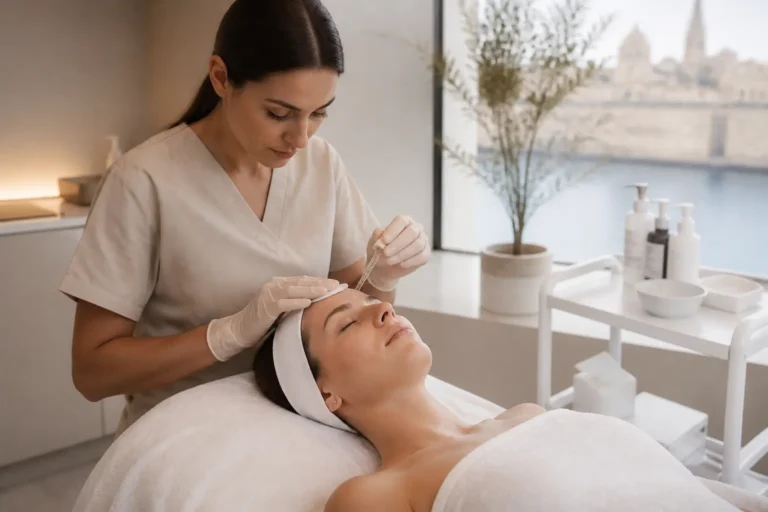
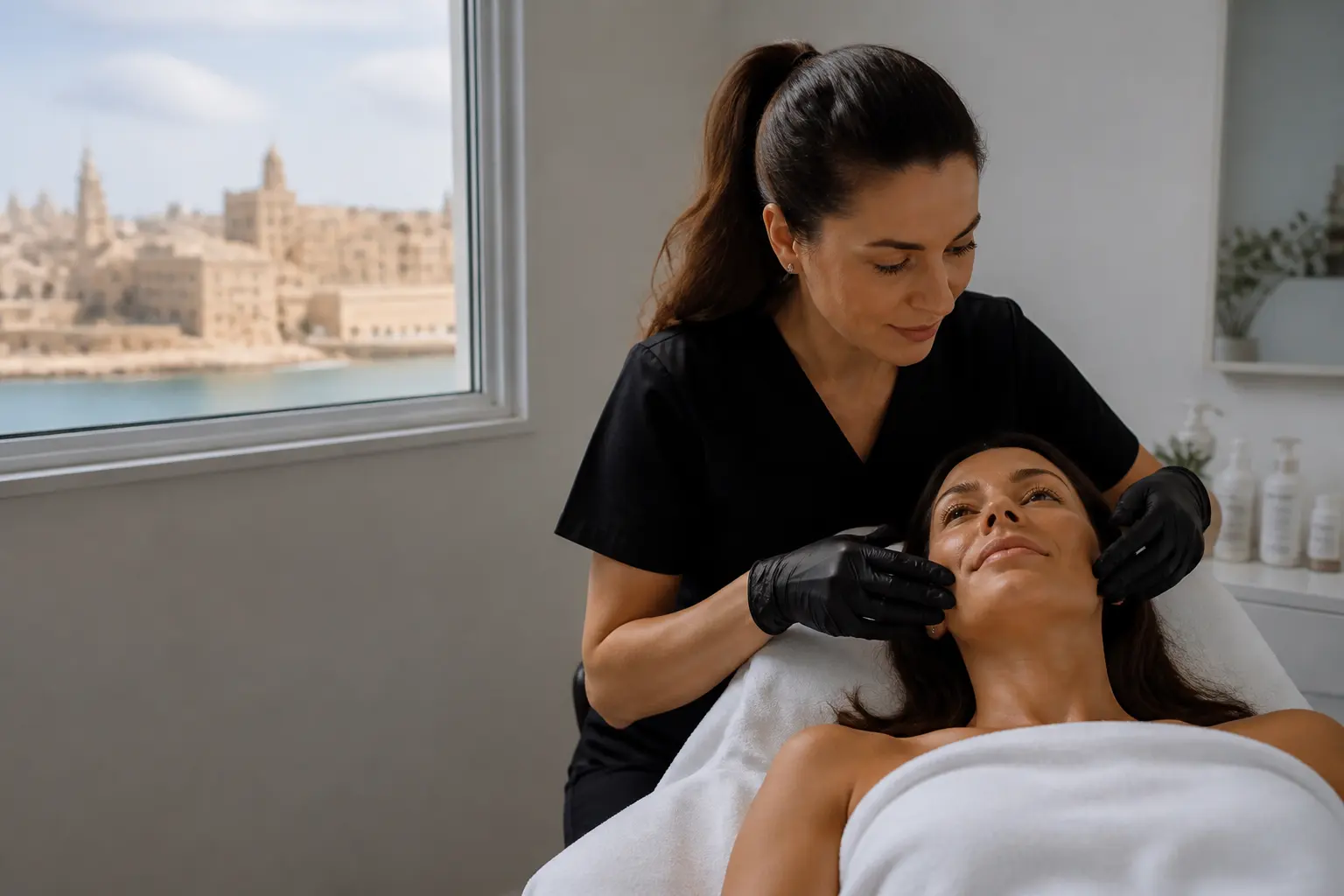
A PDRN facial appointment is best approached as a personalised skin-care service. It may suit someone whose priority is a fresher-looking, better-supported routine, but it is not a promise to change every skin concern in one visit. Here is what the term means, what it does not automatically mean, and what to clarify before you book.
What does PDRN actually stand for?
PDRN is short for polydeoxyribonucleotide. It describes DNA fragments made from deoxyribonucleotides, the building blocks found in DNA. In scientific and aesthetic literature, PDRN is discussed alongside polynucleotides, often shortened to PN. The two terms are related, but they are not necessarily interchangeable: they can refer to DNA-derived materials with different chain lengths and physical properties.
That distinction matters because beauty language can simplify several different formulations into one familiar phrase. A product labelled PDRN, a product labelled PN, and a service advertised as a “salmon DNA facial” may share a broad DNA-derived theme, yet the formula, concentration, format and way it is used can differ. A recent scientific comparison notes the molecular differences between PDRN and PN, while also recognising that both are being explored in dermatology and aesthetic practice. Read the PubMed summary of the PDRN and PN comparison.
So, when you see PDRN on a facial menu, the most useful translation is not “a miracle ingredient”. It is: a facial featuring a DNA-derived skin-care ingredient or formulation, with the precise protocol confirmed by the provider.
Why is PDRN sometimes called “salmon DNA”?
“Salmon DNA” is a shorthand description used in beauty marketing because many PDRN and PN materials discussed in aesthetic literature are derived from purified DNA from salmon or trout. It is a memorable phrase, but it does not tell you everything you need to know about the facial itself.
For example, it does not tell you whether the product is applied topically as part of a professional facial, whether it is used in a mask or ampoule, how it is combined with other steps, or whether the term refers to a different type of aesthetic procedure elsewhere. The way a product is delivered makes a meaningful difference to the appointment experience, aftercare and suitability.
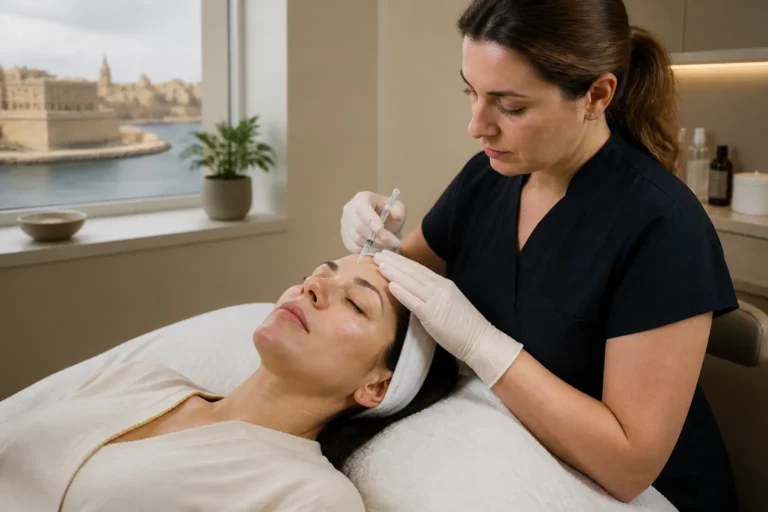
At Becammo, PDRN Facial – Salmon DNA Therapy is listed as a facial service. That means the right starting point is a facial consultation and a clear discussion of your skin, routine and expectations. It should not be assumed to be an injectable procedure simply because you have seen PDRN discussed online alongside injectables. If you are unsure about any part of the service, ask before booking rather than making assumptions from a social-media video or a product nickname.
What is the aim of a PDRN facial appointment?
People usually consider a PDRN-focused facial when they want to give their skin-care routine more attention and are looking for a professional facial that feels restorative and hydrating. Depending on the protocol and your individual skin assessment, the conversation may focus on visible dullness, a feeling of dryness, comfort, texture or the appearance of fine lines.
It is important to keep the language realistic. Research into PDRN and related polynucleotides is developing, and published reviews describe promising potential in aesthetic settings. At the same time, a systematic review found that stronger, high-quality research is still needed to establish the best use of these materials and make firm conclusions across different aesthetic applications. See the systematic review on polynucleotides in aesthetic medicine.
In practical terms, this means a PDRN facial should be viewed as one part of thoughtful skin care, not as a substitute for medical advice, prescribed treatment or a consistent home routine. Your response can vary with your skin condition on the day, the products used, your usual routine and factors such as recent sun exposure.
PDRN facial, polynucleotides and injectables: do not assume they are the same
The terminology around DNA-derived aesthetic ingredients can be confusing because the same broad family of terms appears in several contexts. Some clinical literature examines PDRN or PN in injectable and post-procedure settings, while facial menus may describe a non-invasive professional service using a topical formulation. These are not automatically the same experience.
| Term you may see | What it tells you | What you still need to ask |
|---|---|---|
| PDRN | The product or service relates to polydeoxyribonucleotide, a DNA-derived material. | Which formulation is used and how is it included in the facial? |
| Polynucleotides or PN | A related DNA-derived category that may differ from PDRN in molecular characteristics. | Is this the same product family, or a different formulation and protocol? |
| Salmon DNA facial | A consumer-friendly description often used for salmon- or trout-derived DNA material. | What are the full ingredients, expected steps and aftercare? |
| Injectable PDRN or PN | A different category of procedure that may be discussed in clinical aesthetic settings. | Is the service injectable? If so, who provides it and under what professional framework? |
This is why it is worth using clear words when you book. You can simply say: “I am interested in the PDRN facial. Could you explain whether it is a topical facial treatment and what the appointment includes?”
That question is not awkward or overly cautious. It helps the therapist understand what you expect and gives you the information needed to make a confident decision.
What happens before and during the appointment?
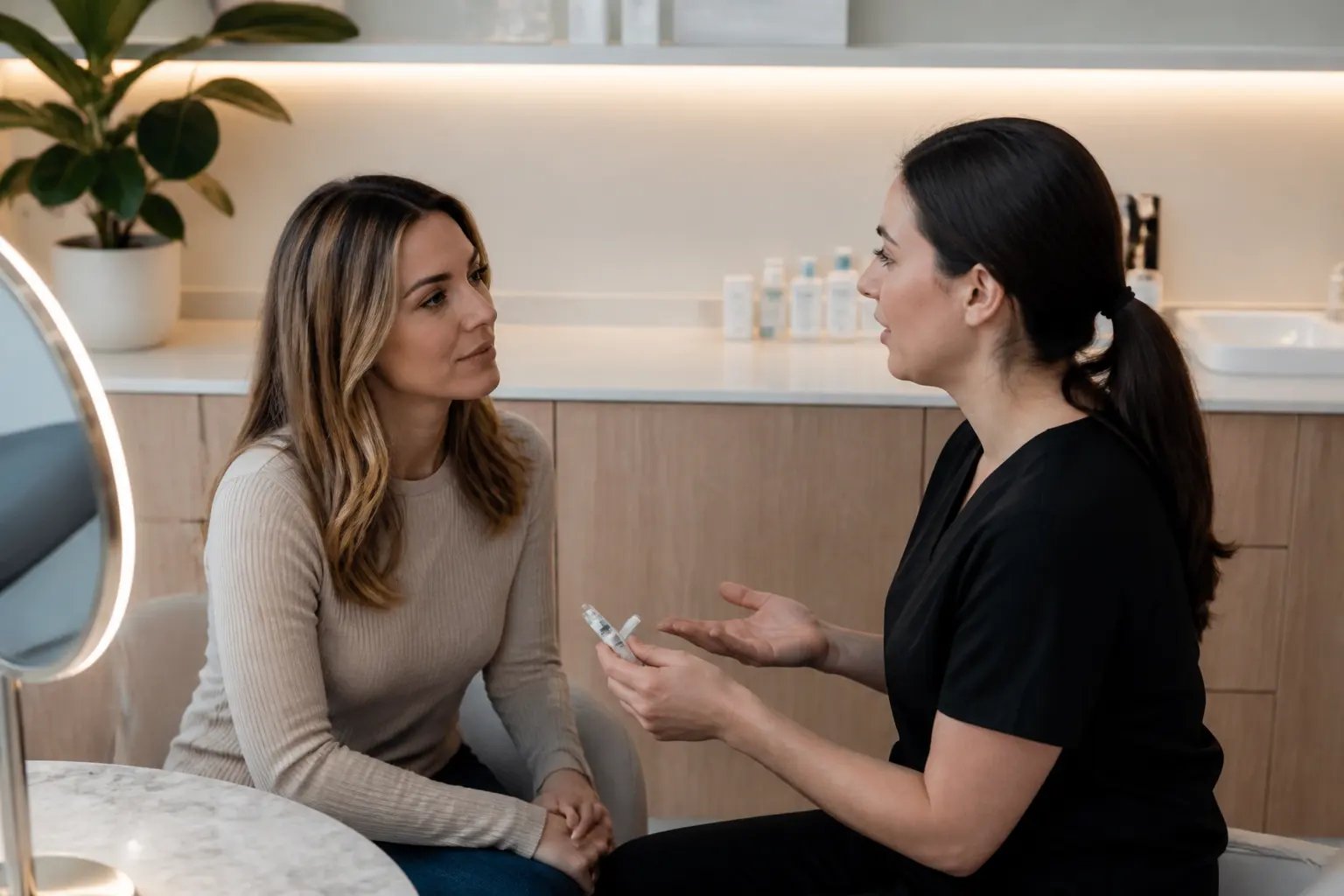
The precise steps should always follow the studio’s protocol and your individual assessment. A professional facial appointment commonly begins with questions about your skin, current products, sensitivity and recent treatments. That conversation is especially useful when you are booking PDRN for the first time, because it avoids treating a popular ingredient as though it were suitable for every routine without context.
Be ready to mention:
- how your skin has been feeling recently, such as dry, dull, congested or reactive;
- any active redness, irritation, broken skin or current flare-up;
- the exfoliants, retinoids or strong active products you use at home;
- recent professional treatments, including peels, laser services, dermaplaning or hair removal on the face;
- known allergies or previous reactions to cosmetic products;
- whether you are pregnant, breastfeeding or under medical care for a skin condition, so you can receive appropriate guidance.
During a facial, comfort should be part of the experience. If anything feels unexpectedly intense, itchy or uncomfortable, say so immediately. A good appointment is not about pushing through sensations to prove that a product is “working”; it is about choosing a protocol that respects your skin on that day.
Who may want to ask about a PDRN facial?
A PDRN facial may be worth discussing if your main aim is to refresh a skin-care routine with a professional facial and you would like a more personalised recommendation than choosing from a menu alone. It can also be a useful option to ask about before an occasion, provided you leave enough time to see how your skin responds and do not introduce a new service at the last minute.
It may be less suitable to book without a conversation if your skin is currently irritated, if you have a new unexplained reaction, or if you are planning another facial procedure very close to the same date. In those situations, the most responsible choice may be to delay, simplify the routine or seek appropriate medical advice where needed.
There is no universal “best facial” for everyone with dullness, dryness or fine lines. Skin can look dull because it is dehydrated, stressed, over-exfoliated, congested or simply in need of a calmer routine. The right service depends on the goal you want to discuss, not only on the newest ingredient name.
How should you prepare before booking?
You do not need to overhaul your routine before a PDRN facial. In fact, keeping your routine steady gives you and the therapist a clearer picture of how your skin is behaving. Avoid experimenting with several new strong products immediately beforehand, particularly if you know your skin can become sensitive.
When booking, give yourself enough room before a major event. Even gentle professional facials can leave skin looking temporarily different as it settles, and individual reactions are not identical. It is wiser to book with a little flexibility than to make a first-time appointment immediately before photographs, travel or an important celebration.
On the day, arrive ready to share the useful details rather than aiming for a perfect bare-faced assessment. If you are wearing make-up, the facial protocol can account for cleansing, but be honest about what is on your skin and what you used that morning.
Aftercare: keep the first day simple
Aftercare should be based on the exact products and techniques used during your appointment. Your therapist’s advice always comes first. As a general principle, many people find it helpful to keep the rest of the day simple: use gentle skin care, avoid adding unfamiliar strong products, and follow the specific guidance you receive.
Sun protection also deserves attention in Malta’s bright climate. Daily broad-spectrum SPF is a sensible part of skin care, particularly when you have had any facial service that involves cleansing, exfoliation or active professional products. If you have a reaction that feels more than mild or does not settle as expected, stop using the suspected product and seek appropriate professional advice.
Do not judge the entire value of a facial by an immediate glow alone. The more useful question is whether the service fits your skin, feels comfortable, and can be incorporated sensibly into your wider routine.
Questions to ask before you book a PDRN facial
Clear questions make it easier to choose a facial with confidence. Consider asking:
- What does PDRN refer to in this particular facial?
- Is the product used topically as part of the facial protocol?
- What are the key steps of the appointment?
- What skin goals is the facial designed to support?
- What should I mention about my current home routine and recent treatments?
- Are there any reasons to postpone based on my skin today?
- What aftercare do you recommend for the first 24 to 48 hours?
These questions also create space for a more personalised recommendation. You may find that a PDRN facial suits your aim, or that another facial approach better matches what your skin needs right now.
Frequently asked questions
Does PDRN mean the facial uses salmon DNA?
PDRN is commonly associated with purified DNA-derived materials from salmon or trout, which is why “salmon DNA” is widely used as shorthand. However, that phrase does not explain the complete product formula or facial protocol, so ask what is used in the specific appointment.
Is a PDRN facial the same as an injectable treatment?
No. PDRN and PN may be discussed in both topical aesthetic services and injectable clinical contexts. A facial appointment should not be assumed to involve injections. Confirm the delivery method and appointment steps when you book.
Can I book a PDRN facial before an event?
You can ask whether it fits your plans, but it is better not to try a new facial at the last minute. Allow time before an important event, especially if your skin is sensitive or you have not had that protocol before.
Can I combine PDRN with dermaplaning?
Do not combine services based on a general rule. The suitability and order depend on your skin, the exact facial protocol and recent treatments. Ask for a personalised recommendation before planning both.
How often should I have a PDRN facial?
There is no single schedule that suits every person. Frequency should be based on your skin goals, the products used, your response to the facial and the advice you receive after assessment.
PDRN is easier to understand once you move beyond the buzzword: it is a DNA-derived ingredient category, not a one-size-fits-all outcome. If you are considering a PDRN facial, use your booking conversation to clarify the protocol, share your skin history and choose an appointment that makes sense for your routine. The final booking step can then be a calm, informed decision rather than a guess based on a label.