How to Choose a Facial When You Already Use Active Skincare
Brenda Cammo Team
A well-stocked skincare shelf can make choosing a facial feel more complicated, not less. You may use a cleanser, exfoliating toner, vitamin C serum, retinoid, moisturiser, sunscreen and occasional mask — yet still be unsure which professional appointment makes sense.
The most useful starting point is not to look for a facial that does everything. Instead, consider what your skin needs now, what your home routine already covers and what you would like support with. Your daily products and a professional facial can have different roles, but they should be considered together.
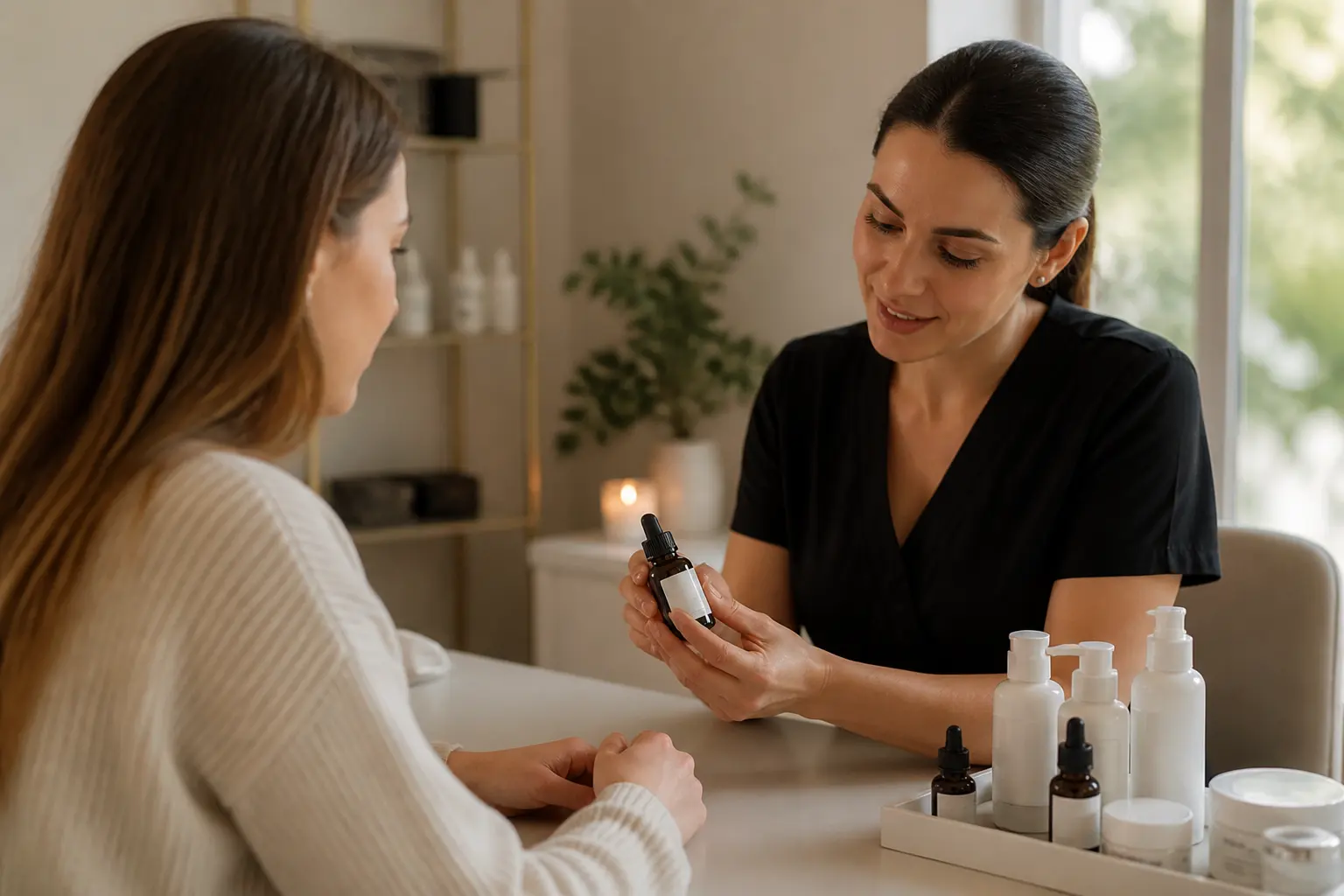
If you are booking in Malta, bring a simple overview of your routine to the conversation. It helps the therapist understand whether your priority is cleansing congested-looking areas, refreshing a dull complexion, improving the feel of makeup application or simply taking time for a more considered skin-care appointment.
Start with your main reason for booking
When several products are already part of your routine, it is easy to choose based on a product trend or a name that sounds appealing. A clearer route is to define one primary goal for this appointment.
Try completing this sentence: “I would like this facial because my skin currently feels or looks…” The answer can guide the booking conversation.
- Congested or uneven in texture: You may want to discuss a deep-cleansing-focused appointment.
- Dull rather than congested: Your goal may be a refreshed-looking complexion and a pause to review whether your routine feels balanced.
- Covered in fine facial hair that affects makeup finish: Dermaplaning may be the relevant service to ask about.
- Interested in a skin-regeneration-focused facial experience: Ask specifically about the PDRN Facial and whether it fits your current routine and expectations.
- Unsure what your skin needs: Begin by describing your concerns rather than selecting a service solely from its name.
One appointment can involve more than one benefit, but setting a priority makes it easier to choose appropriately. It also prevents you from adding procedures simply because they appear to complement a long list of home products.
Map your existing skincare routine before you book
You do not need an expert-level ingredient audit. A short, accurate list is enough. Include the products you use regularly, how often you use them and any recent changes. A photo of the products or ingredient labels can be useful if you are unsure of the names.

Products worth mentioning
Share products that exfoliate, renew, brighten or are designed for targeted concerns, alongside your basics. In practice, that may include exfoliating acids, retinoids or retinol products, vitamin C, spot-care products, scrubs, peels, clay masks and strong at-home exfoliants.
Also mention whether you have recently introduced a new product. Skin can respond differently while it adjusts to a change, and that context matters more than having the most extensive routine.
Details that make the conversation clearer
- How often you use each targeted product.
- Whether you have used an exfoliant, scrub, peel or retinoid recently.
- Whether your skin has recently felt dry, tight, reactive or more sensitive than usual.
- Any areas that feel different from the rest of your face, such as an oily T-zone and drier cheeks.
- Your usual makeup habits, especially if a smooth makeup finish is one of your goals.
- Any past reactions or concerns you have noticed after products or beauty appointments.
This is not about judging your routine. It is about avoiding assumptions. The more clearly you explain what is already happening at home, the easier it is to plan a facial that complements it rather than making the day feel overloaded.
Understand the difference between everyday maintenance and an appointment
A multi-step routine often handles daily maintenance: cleansing away the day, moisturising, applying sunscreen and using selected products consistently. A facial appointment is an opportunity to focus on a current concern, receive personalised guidance and enjoy a professional setting for a particular service.
For example, a person using an exfoliating serum at home may still want to discuss a Brazilian Deep Cleansing Facial if congestion and blackheads are their main concern. The key question is not whether they already exfoliate. It is whether their current routine is meeting their goal, and how recent use of exfoliating products should shape the appointment plan.
Likewise, someone with a thoughtful routine may choose dermaplaning for its hair-removal and surface-exfoliation focus, particularly when they want a smoother makeup application. That is a different booking objective from managing congestion through a deep-cleansing-focused facial.
More products do not automatically mean your skin needs a more intensive appointment. The best choice begins with your current concern, product use and a personalised discussion.
Choose by concern, not by how many products you own
When congestion is the main issue
If blackheads, clogged-looking pores or an uneven, congested feel are central concerns, a deep cleansing facial may be the service to discuss. Explain which areas concern you, whether you use at-home exfoliation and whether your skin feels comfortable or sensitive at present.
At-home products may be useful parts of a routine, but they do not make every professional appointment unnecessary. They also do not mean that every cleansing-focused step will suit every person at every time. Your skin’s current condition and your recent product use should guide the plan.
When the issue is a lack of glow
Dullness can have many everyday causes, including a routine that feels too heavy, inconsistent hydration, seasonal changes or simply a complexion that does not look as fresh as you would like. If your skin does not feel congested, say that clearly. It directs the conversation away from a cleansing-led choice that may not be your main need.
Describe how your complexion looks in daylight, how makeup sits and whether it feels comfortable after cleansing. These practical observations are more useful than trying to self-diagnose your skin type from social media content.
When peach fuzz and makeup finish are the priority
Dermaplaning is worth discussing when your main interest is removing fine facial hair, often called peach fuzz, alongside surface exfoliation. It is not simply a replacement for every facial or every product in a routine. It has a specific focus.
Tell the therapist if you use exfoliating products, have recently used a scrub or peel, or are experiencing sensitivity. If you wear makeup frequently, explain what you would like to improve: for example, whether foundation seems to catch on texture or whether you want a smoother-looking base for an occasion.
When you are considering a PDRN Facial
PDRN Facial is a distinct facial option, so it is best booked because its focus fits your interests rather than because it is the newest step to add to an already busy routine. Discuss your current products, your expectations and what you would like to prioritise from the appointment. A considered conversation is especially helpful if you alternate multiple targeted serums or regularly use strong active products at home.
A facial should be chosen with realistic expectations. It can be part of personal care and a broader routine, but it is not a substitute for medical advice where that is needed.
Use a simple product-timing checklist
Before your appointment, do not assume you should stop every product for the same length of time. Product strength, frequency of use and your individual skin response differ. Instead, communicate clearly with the studio and follow the pre-appointment guidance provided for your chosen service.
A useful personal checklist is:
- List the targeted products you used during the previous week.
- Note the last time you used a scrub, exfoliating acid, peel or retinoid product.
- Observe whether your skin currently feels calm and comfortable or unusually sensitive.
- Tell the studio about recent sun exposure if it has left your skin feeling sensitive.
- Ask whether anything in your routine should be paused or adjusted around the appointment.
This approach is safer and more useful than copying a generic routine from someone with different skin, products and goals.
Questions to ask before choosing your facial
Booking platforms make it easy to select a service quickly, but a few questions can make the decision more informed. You do not need to ask all of them; choose those that relate to your concern.
- Which facial best matches my main goal: congestion, dullness, texture or fine facial hair?
- I use several active products. Which of them should I mention before the appointment?
- Does my recent at-home exfoliation affect which service is most suitable to discuss?
- What should I keep simple in my skincare routine immediately afterwards?
- Is dermaplaning relevant to my makeup-finish goal, or would another facial be a better fit?
- Should I book a focused facial now and review another concern at a later appointment?
The final question is particularly valuable. Trying to solve every concern in one visit can make decision-making harder. A focused appointment, followed by thoughtful maintenance at home, is often a more manageable approach.
Examples of choosing with a full routine
Example: the active-product enthusiast with blackheads
You cleanse twice daily, use a toner with exfoliating ingredients a few evenings a week and apply a moisturiser and sunscreen. Yet your nose and chin still appear congested. Rather than booking based on the strongest-sounding option, explain your routine and identify congestion as the main goal. A Brazilian Deep Cleansing Facial is the relevant service to discuss, with the therapist taking recent product use into account.
Example: the makeup wearer seeking a smoother base
Your routine includes a gentle cleanser, hydrating serum, moisturiser and sunscreen. You are less concerned by blackheads and more interested in how foundation sits over fine facial hair. In this situation, dermaplaning may be the more relevant conversation. Mention your makeup routine and any exfoliating products you use, even occasionally.
Example: the person who has added too many products at once
You have recently introduced several serums and a weekly exfoliating mask. Your skin now feels unpredictable, and you cannot tell what is helping. The immediate goal may be clarity rather than another intensive step. Be open about the recent changes, focus on how your skin feels and ask which facial is appropriate to discuss. Keeping your home routine simple around the appointment may make it easier to observe what your skin is comfortable with.
How to make the most of your consultation
A useful consultation is collaborative. You can make it easier by avoiding the pressure to present a perfect routine or to know the exact technical name of every concern. Plain descriptions work well: “My cheeks feel dry after cleansing,” “My chin looks congested,” or “I want my makeup to apply more smoothly.”
At Becammo, facial choices can be discussed in relation to your goals and routine rather than a one-size-fits-all beauty standard. This matters for every skin tone and skin profile. The aim is not to copy an online routine, but to choose a service that is appropriate to your preferences and current context.
After your appointment, use the aftercare guidance you receive rather than immediately returning to every product in your usual rotation. If you are uncertain about a product, ask before using it. A calm, consistent routine is often easier to assess than a constantly changing one.
Conclusion
Choosing a facial when you already use several skincare products is less about finding an extra step and more about making a purposeful choice. Define your main concern, list the products you use, mention recent exfoliation or sensitivity and ask how the service fits into your wider routine.
Whether your priority is deep cleansing, a smoother makeup base, a refreshed-looking complexion or exploring a specific facial option, a clear pre-booking conversation can help you choose with confidence. When you are ready, select the facial service that best reflects your current goal and share your routine details during the booking process.
Frequently asked questions
Can I have a facial if I use retinol or other active skincare products?
Possibly, but you should mention the product, how often you use it and when you last applied it before booking. Follow the studio’s individual pre-appointment guidance rather than assuming all active products are handled in the same way.
Should I stop all my skincare before a facial?
Do not make broad changes without guidance. Tell the studio about your routine, especially exfoliating products, scrubs, peels and retinoid products, then ask what is appropriate for your planned service.
Which facial should I choose if I use acids at home but still have blackheads?
Discuss a Brazilian Deep Cleansing Facial if congestion and blackheads are your main concern. Your recent use of acids and your skin’s current comfort level should be part of the conversation.
Is dermaplaning the same as a deep cleansing facial?
No. Dermaplaning has a specific focus on fine facial hair and surface exfoliation, while a deep cleansing facial is generally the more relevant topic to discuss when congestion and blackheads are the priority.
Can I book a facial before an event if I have a complex skincare routine?
Yes, but plan ahead where possible and share the event date, your usual products and your desired result. Avoid making several untested changes to your routine immediately before an important occasion.