Are Old Tattoos Easier to Remove Than New Tattoos?
Brenda Cammo Team
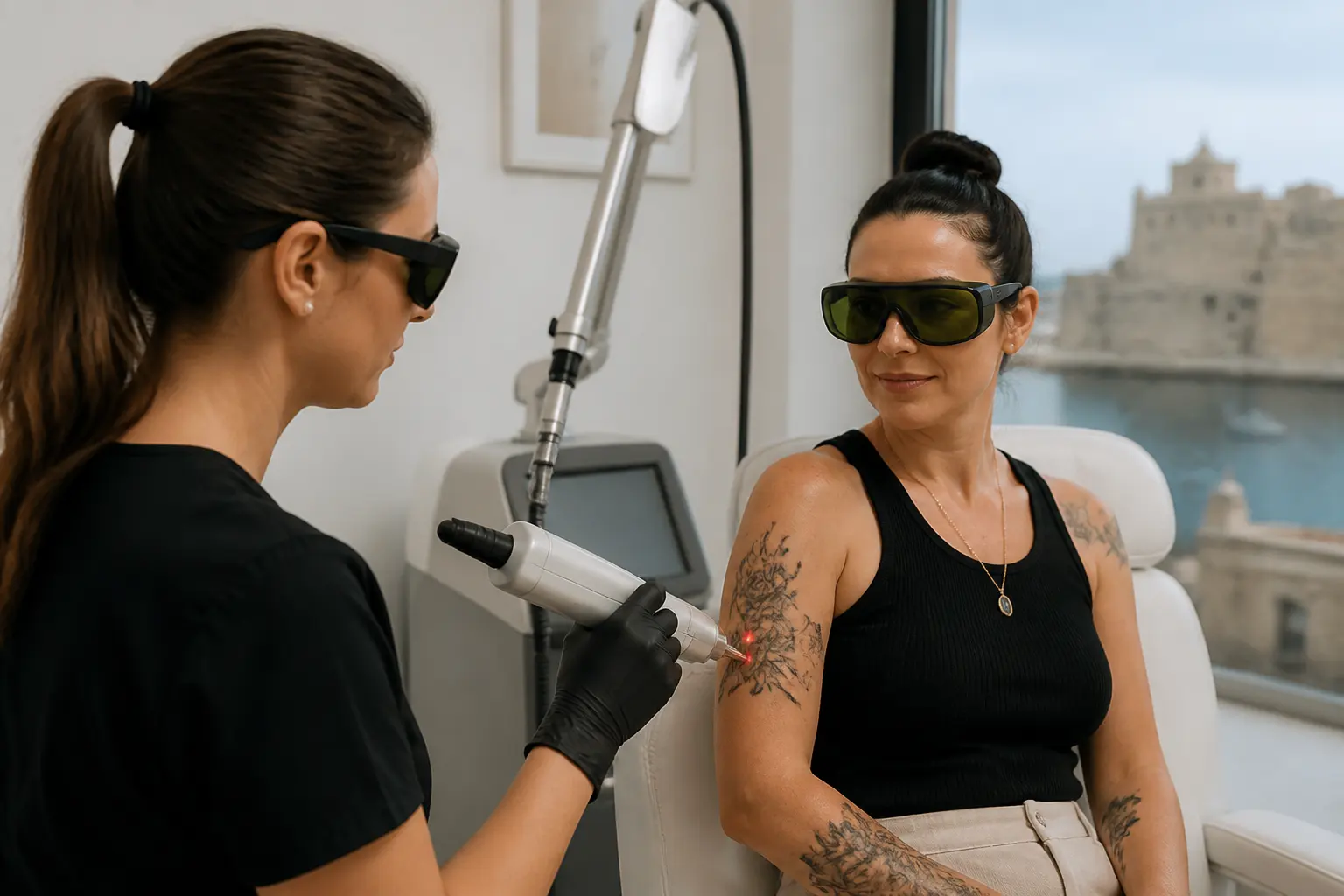
It is a common question before laser tattoo removal: are old tattoos easier to remove than new ones? Sometimes they can be, particularly when years of natural fading have already softened the ink. But tattoo age is only one part of the picture. A newer tattoo is not automatically harder to remove, and an older tattoo is not automatically simple.
The most useful way to think about removal is this: the laser responds to the ink that is present in the skin today, not simply to the date the tattoo was done. Ink colour, how densely it was applied, the tattoo’s size and location, your skin’s response between appointments, and the type of tattoo all influence the plan.
At a professional studio, this is why a consultation matters. It is the opportunity to look closely at the tattoo, discuss its history, identify realistic aims such as fading for a cover-up or seeking the greatest possible clearance, and explain why more than one session is normally needed.
The short answer: old tattoos may have a head start, but age is not decisive
Older tattoos often look lighter because pigment may have faded gradually over time. Sun exposure, natural skin renewal and everyday life can all alter the visible appearance of a tattoo. When less visible ink remains, it may appear to respond more quickly at the beginning of a removal plan.
However, the tattoo’s age cannot tell you everything. A ten-year-old tattoo with dense green, yellow or red pigment may still be more complex than a recent black linework tattoo. The United States Food and Drug Administration explains that dark blue and black inks are generally easier to target than green, red and yellow inks. It also notes that removal commonly requires multiple sessions, with time between them for the skin to settle. FDA guidance on tattoo removal
So, an old tattoo may be easier to remove when it has faded and uses responsive ink colours. But it is more accurate to say that lighter, less densely packed and darker-coloured ink may be more straightforward to work with, whatever the tattoo’s age.
Why tattoos do not all fade or remove in the same way
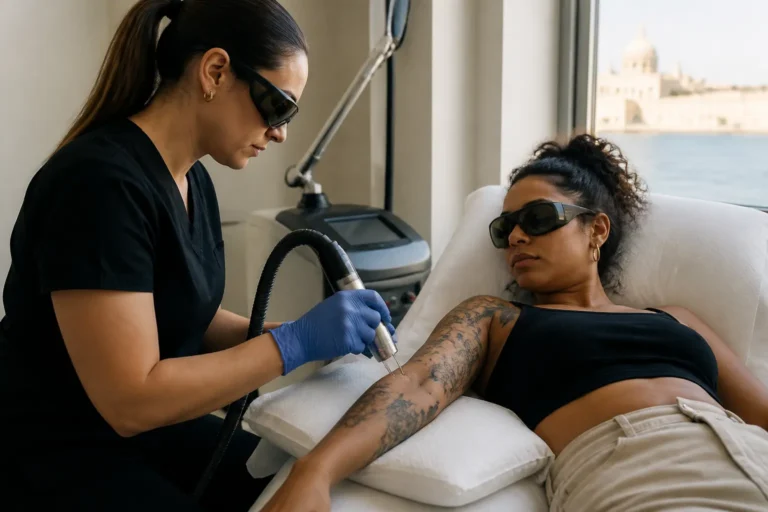
Laser tattoo removal uses light energy to break pigment into much smaller fragments. Your body then gradually processes those fragments over time. The laser begins the process, but the visible fading happens progressively between appointments rather than all at once.
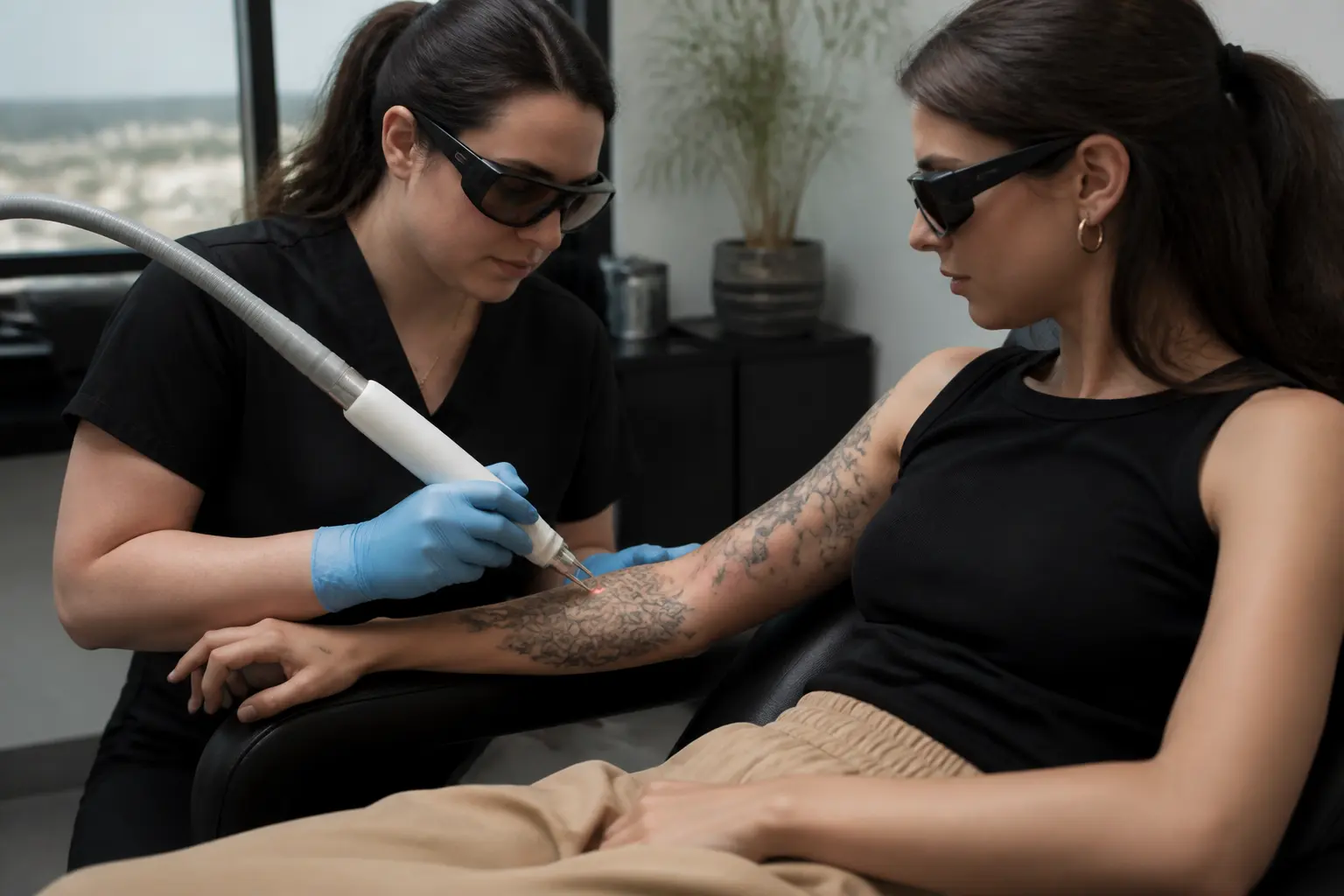
This is also why a professional plan is never just about selecting a number of sessions in advance. The tattoo needs to be reviewed as it changes. The skin needs suitable recovery time. The pace of fading can differ across areas of the same tattoo, especially when some sections are darker, layered or contain different colours.
The American Academy of Dermatology highlights several factors worth discussing before removal, including how long the tattoo has been present, how deeply the ink sits, its colours, its position on the body, relevant health information and any history of raised scarring. American Academy of Dermatology information on laser tattoo removal
The factors that matter more than old versus new
1. Ink colour
Colour is one of the biggest variables. Black and dark blue tattoos are often considered more responsive because they absorb laser energy effectively. Lighter or brighter colours can require a more considered approach. Green, red and yellow are often more challenging, and tattoos containing several colours can require different laser settings or wavelengths at different stages.
White, flesh-toned and some cosmetic pigments deserve particular caution. According to the FDA, these pigments can darken through oxidation after laser exposure, which can make the situation more complex. This is especially important for permanent make-up, including old brow work. Never assume that a pigment which looks light on the skin will behave like ordinary black tattoo ink.
2. Ink density and layering
A tattoo can look old yet contain a substantial amount of pigment. Professional tattoos are often applied evenly and deeply enough to create a long-lasting finish. Cover-ups may contain several layers of ink, usually with darker pigment placed over an earlier design. That can make them more complex to fade, even if the original tattoo is many years old.
By contrast, a newer tattoo with fine black lines and less saturation may have a different removal journey. This does not guarantee a shorter plan, but it shows why age alone is not a reliable comparison.
3. Professional versus amateur application
It is tempting to assume that amateur tattoos always remove more easily. Some may use less evenly placed or less densely packed pigment, which can influence fading. Yet this is not a rule. Ink depth, pigment type and the way the tattoo healed are all individual.
A professional tattoo can be very clean and consistent, but that consistency may also mean a substantial volume of pigment is present. An amateur tattoo can be uneven, with parts that fade quickly and other areas that take longer. A close visual assessment is more useful than a label.
4. Tattoo size and detail
Small tattoos are not always quick to remove, but their smaller surface area can make each appointment more manageable. Large pieces naturally take more time to cover and may include shaded sections, solid fill and multiple colours.
Fine details may also create a changing visual effect as the tattoo fades. A design can become lighter overall while certain outlines remain visible. If your aim is a cover-up rather than complete removal, partial fading may be the right objective. That should be discussed from the start, because the desired endpoint shapes the plan.
5. Placement on the body
Where a tattoo sits can affect how it responds. Blood flow and healing can vary across different body areas, and tattoos on hands, feet or lower legs may not follow the same pattern as tattoos on the upper arm or torso. This is not a reason to rule an area out, but it is another reason that online comparisons can only go so far.
6. Skin tone, skin history and aftercare
Every person’s skin deserves an individual assessment. A responsible consultation should include questions about the tattoo, your skin, previous reactions and your expectations. You should also share relevant information that could affect suitability or recovery, including a history of raised scars or any current skin concern in the area.
Aftercare and patience matter throughout the process. Redness, tenderness and temporary changes in the treated area can occur. The skin needs time to recover between sessions, and picking, friction, heat exposure or ignoring aftercare instructions can make recovery less straightforward. If you are under the care of a clinician or have a health concern, seek their advice before booking.
Why a new tattoo should not be removed immediately
A fresh tattoo needs to heal fully before any discussion of removal can move forward. It is still a recent skin wound, and the visible surface may look settled before deeper healing has completed. Attempting to rush the process is not a sensible shortcut.
For a new tattoo you regret, the practical first step is to let it heal and then arrange a professional consultation. Bring any information you have about the inks used, especially if the tattoo has unusual colours or if it is cosmetic tattooing. The more clearly the tattoo’s background can be understood, the more informed the conversation can be.
There is no advantage in trying home creams, acids, abrasive methods or do-it-yourself kits while you wait. The FDA warns that tattoo removal creams, ointments and DIY kits are not approved for this purpose and may cause burns, rashes or scars. FDA information on tattoos and permanent make-up
What an older tattoo consultation should cover
For an old tattoo, it helps to arrive with an open mind. Natural fading may be encouraging, but the best plan depends on what remains in the skin and what you want to achieve.
- Your goal: complete removal is not always possible, so be clear whether you want significant fading, preparation for a cover-up, or the best achievable clearance.
- Colour and design: point out every ink colour, including pale highlights and areas that look skin-toned.
- Previous work: mention if the tattoo has been covered, reworked, lightened or previously treated.
- Skin history: share any past sensitivity, unusual scarring or pigment changes after procedures.
- Timing: allow for the fact that appointments are spaced out. Removal is a process, not a one-visit change.
At Becammo, laser tattoo removal is available exclusively at the Sliema studio. A consultation gives you space to ask direct questions about the tattoo you have, the practical next steps and whether the aim of removal or fading is appropriate for your situation.
Old tattoo versus new tattoo: a practical comparison
| Factor | Older tattoo | Newer tattoo |
|---|---|---|
| Visible fading | May already be lighter after years of wear | Often still looks vivid and saturated |
| Skin readiness | Usually long healed, subject to individual assessment | Must heal fully before removal is considered |
| Ink behaviour | Depends on colour, density, layering and original application | Depends on the same factors, not simply its recent date |
| Likely planning need | Assessment of remaining pigment and realistic end goal | Assessment after healing, with no rushed timeline |
| Key takeaway | Can have a fading head start, but is not automatically easy | May be removable later, but new does not mean impossible |
How to make a confident decision
Rather than asking only whether your tattoo is old or new, ask better questions. What colours are in it? Is there solid black fill? Has it been covered up? Is the goal to clear it as much as possible or create space for a different design? Has it healed normally in the past?
These questions move the decision away from assumptions and towards a plan built around your tattoo. They also help you recognise why two people with tattoos of the same age may have very different experiences.
If you are considering removal in Malta, take clear photos in natural light before your consultation. Avoid editing the image or using filters. A true view of the pigment, its edges and its colour variation makes the initial discussion more useful. Then allow the professional assessment to guide expectations rather than relying on a friend’s timeline or an online before-and-after image.
Conclusion
Old tattoos can sometimes be easier to remove because they may have faded over time, but age is not the deciding factor. Dark ink, lower pigment density, a simpler design and an individual skin assessment often matter more. New tattoos need full healing before removal is considered, while old tattoos still need careful review, particularly if they contain bright colours, cover-up layers or cosmetic pigment.
A professional consultation is the right place to discuss your tattoo’s age, colour, location and your goal for the final result. If you are ready to explore laser tattoo removal or fading for a future cover-up, book a consultation at Becammo Sliema and bring your questions with you.
Frequently asked questions
Are old black tattoos easier to remove?
They may be more straightforward than tattoos containing lighter or brighter colours, especially if they have naturally faded. However, ink density, layering, size and placement still affect the plan.
Can a new tattoo be removed straight away?
No. A new tattoo needs to heal fully first. If you are unhappy with a recent tattoo, wait for healing and arrange a consultation rather than trying to rush or remove it at home.
Do faded tattoos need fewer laser sessions?
They may have less visible pigment to address, but there is no fixed session count. The number and spacing of appointments vary according to the tattoo, the skin’s recovery and the response over time.
Which tattoo colours are hardest to remove?
Green, red and yellow are often more challenging than dark blue and black. White, flesh-toned and some permanent make-up pigments require particular care because they can darken after laser exposure.
Can laser tattoo removal prepare a tattoo for a cover-up?
Yes, fading can be a goal when you want to create more options for a cover-up. Discuss this intention at your consultation so the removal plan is shaped around the amount of fading you need.