The Artistry of Dimensional Brows: Light, Shadow and Stroke Depth
Brenda Cammo Team
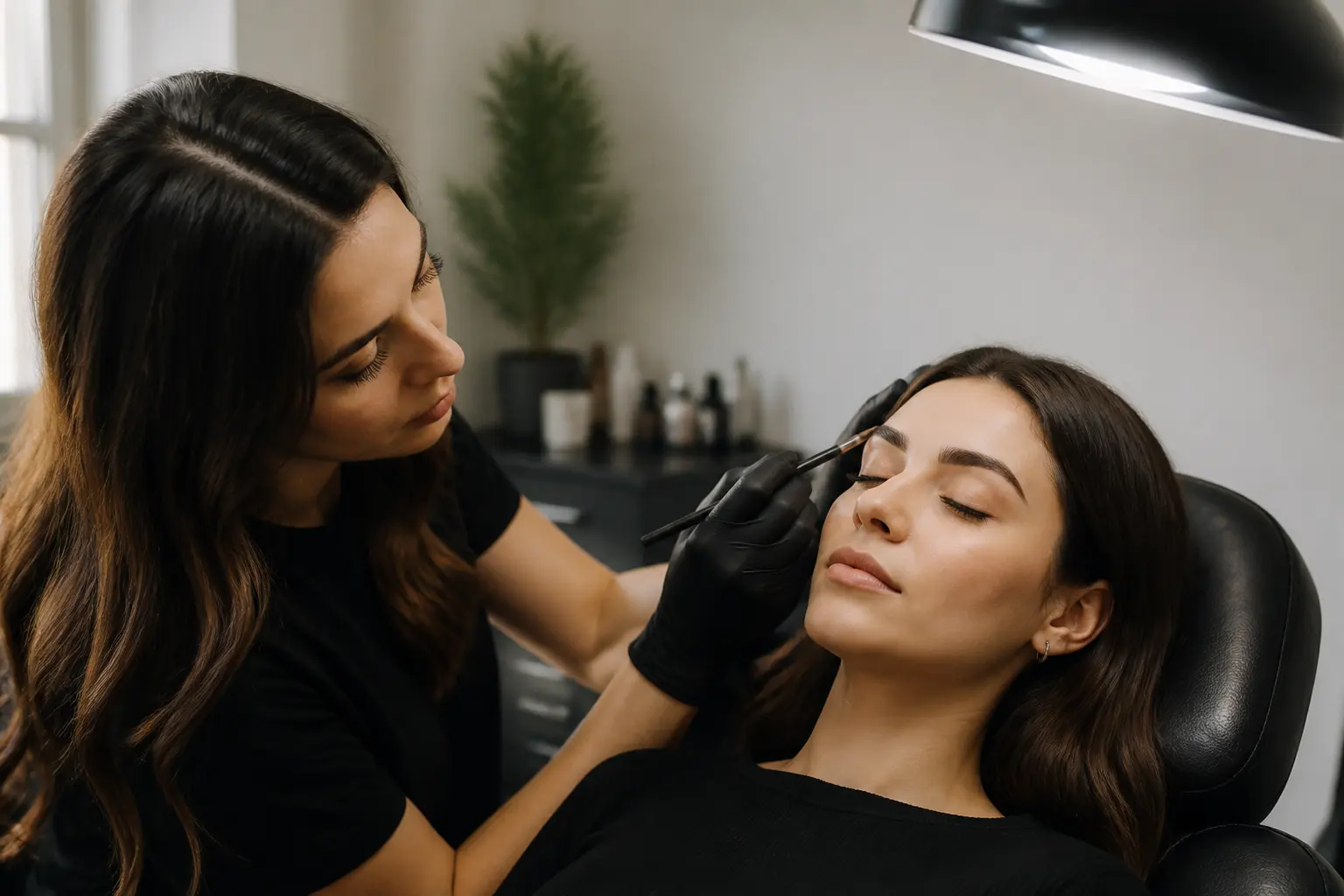
Dimensional brows are not about making every area equally dark, sharp or filled in. They are about creating a sense of depth that works with the face, natural hair pattern and the way light falls across the brow area. When brow work is thoughtfully designed, the result can look balanced from close up, in photographs and in everyday movement.
At a professional brow studio, creating dimension begins long before any semi-permanent strokes are considered. It involves observing the natural brow, understanding where density already exists, identifying areas that need visual balance and choosing an approach that respects the individual rather than following one fixed brow trend.
For clients in Malta considering Brazilian Microblading, it is useful to understand the artistry behind the term. Light, shadow and stroke depth all influence whether a brow appears soft, structured, airy or more defined. The goal is not to create a copy-and-paste pair of brows. It is to build a considered design that feels in harmony with your own features.
What are dimensional brows?
Dimensional brows are brows designed to create visual variation rather than one flat block of colour or identical-looking lines. In practice, this means the artist considers how individual hair strokes, spaces between strokes, soft shading and the natural brow hairs work together.
A brow has areas that naturally appear denser and areas that appear lighter. The front is often softer, the body may carry more visual weight and the tail may taper more finely. This is not an unbreakable rule. Every brow is different. However, recognising these shifts helps an artist create an effect that feels believable and appropriately balanced for the individual face.
Dimension can be created in several ways:
- Using strokes that follow the client’s natural hair direction.
- Leaving intentional negative space rather than filling every gap.
- Adjusting the apparent density from the brow front through to the tail.
- Combining crispness and softness in the right areas.
- Respecting natural asymmetry while aiming for overall facial balance.
- Choosing a design with enough definition to be visible, without making the brow look heavy.
In semi-permanent brow work, dimension is visual. It does not mean creating literal physical depth in the skin. It means using design choices that allow the brow to read with more nuance.
Why light matters in brow design
Light changes how brows are perceived. Strong sunlight, indoor lighting, flash photography and the softer light of an overcast day can all reveal different aspects of a brow design. A professional artist therefore considers how a brow will look beyond the treatment chair.
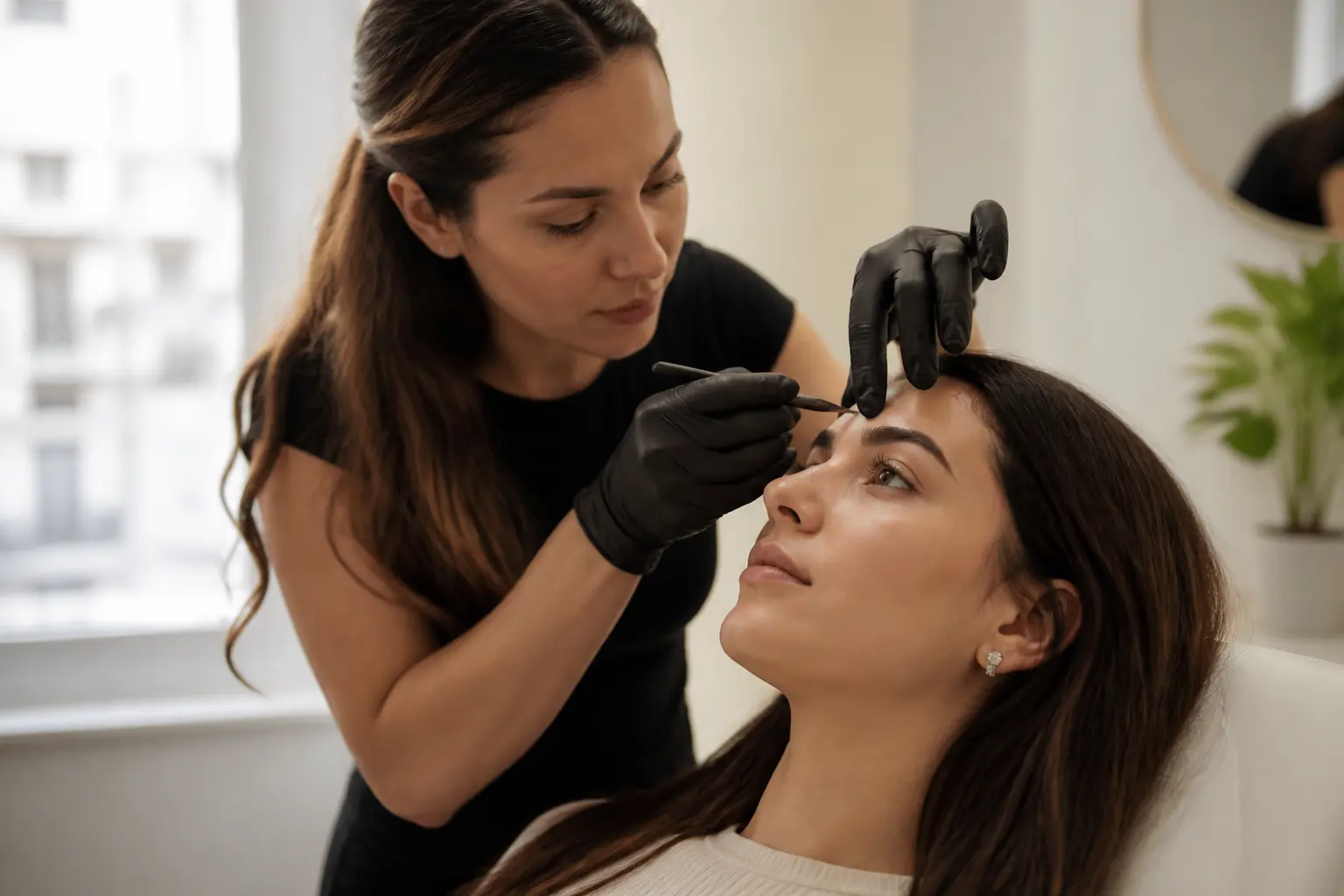
Areas with lighter visual density can keep a brow looking open and soft. This is especially relevant at the beginning of the brow, where an overly solid finish may appear abrupt. Small, well-placed strokes and carefully maintained space can allow the natural transition from skin to hair to remain visible.
Light also interacts with the brow bone and the surrounding skin. The placement of the arch, the direction of the tail and the distribution of density all affect how the brow frames the eye area. This is why brow design is not simply a matter of tracing a fashionable shape. It requires looking at the face as a whole.
The brow front: softness with purpose
The brow front is one of the most important areas for a natural-looking sense of dimension. It is tempting to make this section very dark in the search for fullness, particularly when natural hairs are sparse. Yet a softer beginning often helps the brow transition more naturally into the rest of the design.
That does not mean every client needs a barely visible brow front. Some people prefer a clearer, more expressive look. The key is that the level of definition should be intentional and proportionate to the rest of the brow, the client’s natural hair and their preferred everyday style.
Shadow: building density without a flat effect
Shadow in brow artistry refers to the visual impression of density. It can come from natural hairs sitting close together, from the overlap and direction of semi-permanent strokes, or from a microshading approach where suitable. When handled carefully, shadow gives the brow body and helps connect sparse areas with fuller sections.
The challenge is avoiding a uniform effect. If every section has the same intensity, the brow may lose the variation that makes it feel dimensional. Instead, an artist assesses where density is genuinely needed and where the skin and existing hairs should remain more visible.
For example, a client may have a naturally full centre section but a weaker tail. In that case, the design may focus on giving the tail more visual continuity without unnecessarily increasing the density of the whole brow. Another client may have scattered hairs throughout the brow, calling for a different pattern of strokes and spacing.
Good brow artistry does not try to force every brow into the same template. It uses balance, direction and measured definition to support the face in front of it.
Negative space is part of the design
Negative space means the small areas left unfilled between hairs or strokes. It is not an unfinished detail. It can be one of the elements that stops a brow from looking overly dense or visually flat.
In Brazilian Microblading, each stroke needs a reason. It should contribute to the overall direction, density and flow of the brow. Filling every possible space can make individual strokes harder to read, especially once the brow is viewed at a normal conversational distance.
Thoughtful spacing also supports a more personalised design. A client with naturally fine hairs may benefit from a different visual rhythm than someone with coarser, more densely packed brows. The artist’s task is to study what is already there and design accordingly.
Stroke depth: more than the length of a hair stroke
When people hear the phrase stroke depth, they may think only about how bold or dark a line appears. In brow artistry, it is more useful to think of stroke depth as the visual layering created by placement, length, curvature, direction and the relationship between one stroke and the next.
A stroke that is too long, too straight or placed without reference to surrounding hairs can interrupt the natural flow of the brow. Conversely, carefully varied strokes can help create movement. The brow may appear fuller while still retaining detail.
Professional semi-permanent brow work requires trained judgement. The artist must consider the client’s existing hair direction, the texture and condition of the brow area, the desired level of definition and the importance of a design that can age with a sense of balance. An initial consultation is the right time to discuss these points openly.
Hair direction creates movement
Natural brow hairs do not grow in one perfectly straight line. At the front, hairs may point upward or slightly outward. Through the body, they often travel diagonally, while the tail usually follows a more horizontal or downward direction. These patterns vary from person to person.
Studying this direction is essential when planning hair-stroke work. The design should not ignore the natural brow in favour of a generic diagram. Instead, it should use natural growth as information. This is one reason two clients can receive the same type of service yet have designs that look very different.
How microblading and microshading can support dimension
Brazilian Microblading and Brazilian Microshading are related semi-permanent brow approaches, but they create dimension in different visual ways. Microblading centres on the appearance of fine hair-like strokes. Microshading creates a soft, shaded effect that can add the impression of fuller density.
The most suitable direction depends on factors such as the existing brow, the desired finish and the individual assessment. Some clients are drawn to visible hair-stroke detail. Others prefer a softer make-up-inspired effect. The right choice is not about which method is universally better. It is about matching the technique and the design plan to the person.
| Design element | How it contributes to dimension | What an artist considers |
|---|---|---|
| Hair-like strokes | Can add movement and the appearance of individual hairs | Natural direction, spacing, length and brow density |
| Soft shading | Can create a more diffused impression of fullness | Desired definition, natural brow structure and finish preference |
| Lighter brow front | Helps create a gradual visual transition | Face balance, hair distribution and the client’s style |
| Tail refinement | Can bring continuity to sparse or uneven-looking ends | Existing hair, facial proportions and the brow’s overall flow |
| Intentional spacing | Prevents the design from appearing visually flat | How individual details will work together over the full brow |
A consultation provides the space to explore these differences without pressure. It also allows the artist to explain what can realistically be designed around your own brow starting point.
Why face shape is only one part of the picture
Face shape is often discussed in brow advice, but it should not be treated as the only factor that determines a suitable design. Bone structure, eye area, natural hair growth, skin tone, hair colour, personal style and day-to-day make-up habits all play a role.
For example, an arch that looks balanced on one person may feel too strong on another, even if both are described as having a similar face shape. Likewise, a fuller brow may suit someone who enjoys a polished make-up look, while another client may prefer an understated design that simply restores the appearance of missing detail.
At Becammo, brow design is approached with attention to different ethnicities, skin tones and natural hair characteristics. There is no single ideal brow. The aim is to create a design that feels appropriate to the individual client, rather than asking the client to fit a narrow beauty standard.
What to discuss before booking dimensional semi-permanent brows
If you are considering Brazilian Microblading in Malta, arriving with a few clear questions can make the consultation more useful. You do not need to know every technical term. It is enough to share what you like, what you do not like and how you want your brows to fit into your routine.
- Bring examples of brow styles you are drawn to, but stay open to adapting them to your own features.
- Explain whether you prefer a soft, natural impression or a more defined finish.
- Tell the artist how much time you usually spend on brow make-up.
- Point out any areas you feel are sparse, uneven or difficult to shape.
- Ask how the proposed approach will use your natural hair direction and brow density.
- Discuss preparation, aftercare and the planned touch-up process before deciding.
Honest communication matters. A strong design starts with understanding not only the brow, but also the client’s expectations. A skilled artist can guide the conversation, explain the limitations of a particular starting point and recommend an approach that prioritises proportion and clarity.
Maintaining the look after your appointment
Dimensional brow work also benefits from realistic maintenance expectations. Natural hairs continue to grow, and the surrounding brow area may still need tidy shaping over time. Your artist can advise on suitable maintenance based on the service received and the way your brows grow.
Avoid trying to correct the shape yourself immediately after a semi-permanent brow appointment. Small changes made at home can affect the balance of the design. Follow the aftercare guidance you receive, attend any recommended touch-up appointment and ask the studio before introducing new brow products or treatments around the area.
For everyday styling, a light brow gel or a carefully chosen brow product may help natural hairs sit in the intended direction. The amount of product needed will vary. The most dimensional brows are not necessarily the most heavily styled ones. Often, it is the combination of good design and restrained finishing that allows the details to show.
Conclusion
Light, shadow and stroke depth are the quiet details behind dimensional brows. Together, they help turn a basic outline into a design with movement, softness and visual balance. Whether your starting point is naturally full brows, sparse tails or uneven hair distribution, the most useful plan is one that responds to your own features rather than a passing trend.
If you are considering Brazilian Microblading, booking a professional appointment gives you the opportunity to discuss your brow goals, natural hair pattern and preferred level of definition before committing to a design. Choose the Becammo location in Sliema or Swieqi that suits you, and ask the team how a personalised brow plan could work for you.
Frequently asked questions
Are dimensional brows the same as bold brows?
No. Dimensional brows can be bold or subtle. Dimension refers to the variation in density, lightness, direction and visual layering. A brow can look soft while still having depth.
Can sparse brows still look dimensional?
Yes, but the approach should be tailored to the natural brow starting point. Carefully placed detail, appropriate spacing and a balanced shape can help create a fuller visual impression without trying to make every area equally dense.
Is microblading the only way to create dimensional brows?
No. Professional threading and brow shaping can create dimension by refining the outline and working with the natural hair pattern. Semi-permanent options such as Brazilian Microblading or Brazilian Microshading may also be considered after an individual assessment.
Will both brows look exactly identical?
Brows are naturally sisters rather than exact twins. A professional design aims for overall harmony and balance while respecting differences in natural hair growth, bone structure and starting density.
How do I choose between a soft and a defined brow design?
Consider your usual make-up routine, how visible you want the brows to appear and the features you want to emphasise. During a consultation, these preferences can be discussed alongside your natural brow pattern and the available design options.