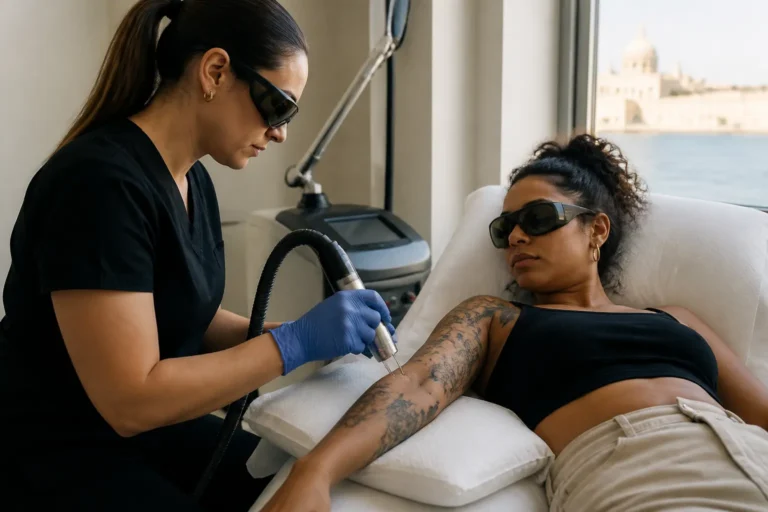
Which Tattoo Colours Fade Fastest Under Laser?
Brenda Cammo Team
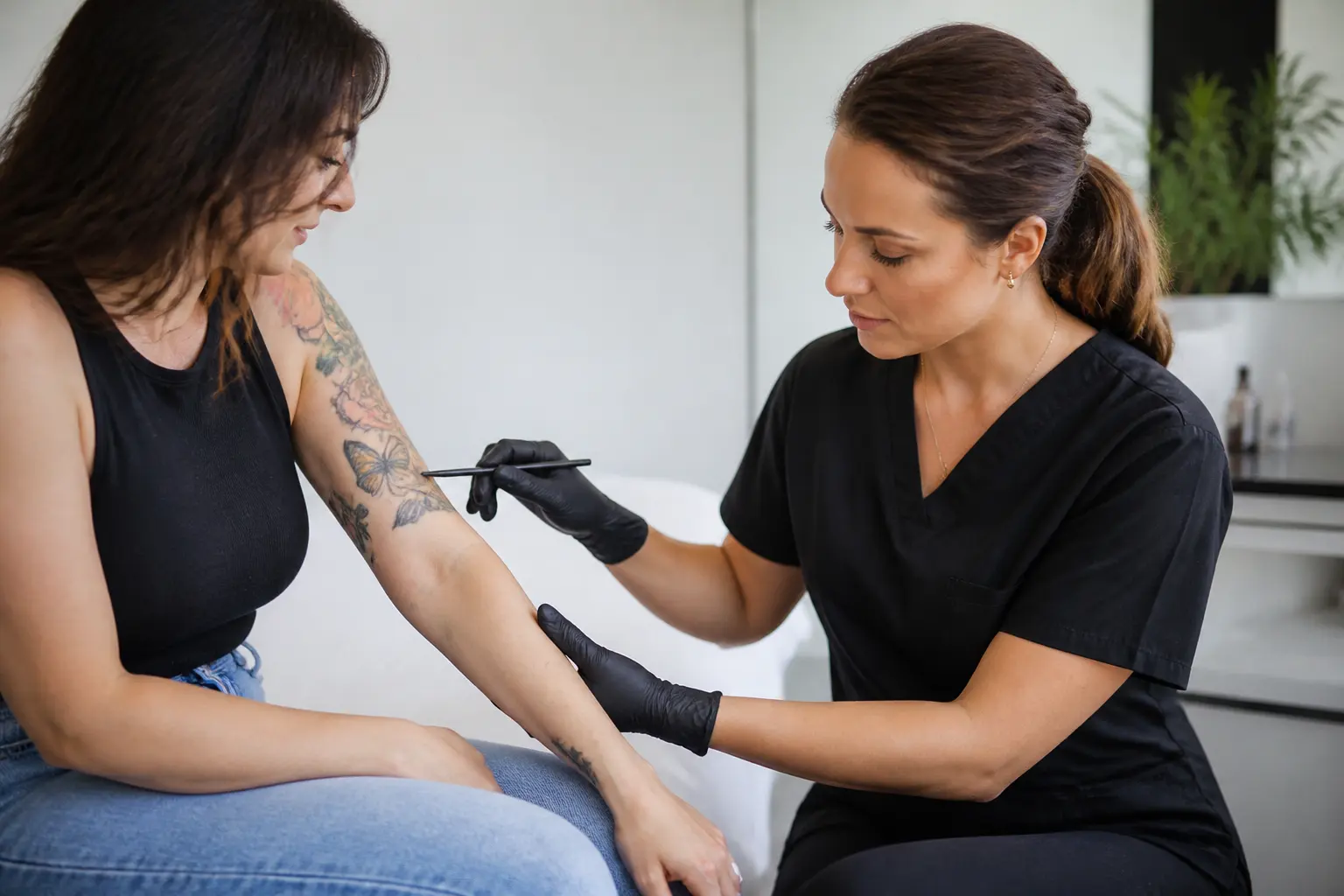
When you are considering laser tattoo removal, the colours in your tattoo can have a major influence on how the process unfolds. The straightforward answer is that black and very dark blue inks usually fade fastest under laser treatment. They tend to absorb laser energy more readily than lighter, brighter shades.
However, tattoo removal is never only about colour. The exact ink formula, how densely it was applied, the tattoo’s age, its location on the body, your skin tone and your individual healing response all matter. A professional assessment is therefore the best way to move from a general answer to a realistic plan for your own tattoo.
At Becammo, laser tattoo removal is available exclusively at our Sliema studio. A consultation gives you space to discuss the colours, size, placement and history of the tattoo before deciding on next steps.
The short answer: black usually fades fastest
Black ink is generally regarded as the most responsive tattoo colour for laser removal. It absorbs a wide range of light wavelengths effectively, allowing the laser to target the pigment efficiently. Dark blue often responds well too, especially where the pigment is dense and close in behaviour to black ink.
That does not mean every black tattoo will disappear at the same pace. A small, older black line tattoo may behave very differently from a large, recently applied blackwork design. Still, if you are comparing colours alone, black usually offers the most predictable starting point.
Dark blue is often placed close behind black in terms of responsiveness. It can lighten well, although the specific blue pigment and the laser wavelengths available make a difference. Some tattoos that look blue-black may reveal lighter blue tones as treatment progresses, which can affect the later stages of the plan.
Why tattoo colour affects laser removal
Laser tattoo removal works by delivering very short pulses of light energy to the pigment in the skin. The pigment absorbs that energy and breaks into smaller particles. Over time, the body clears those particles through its natural processes.
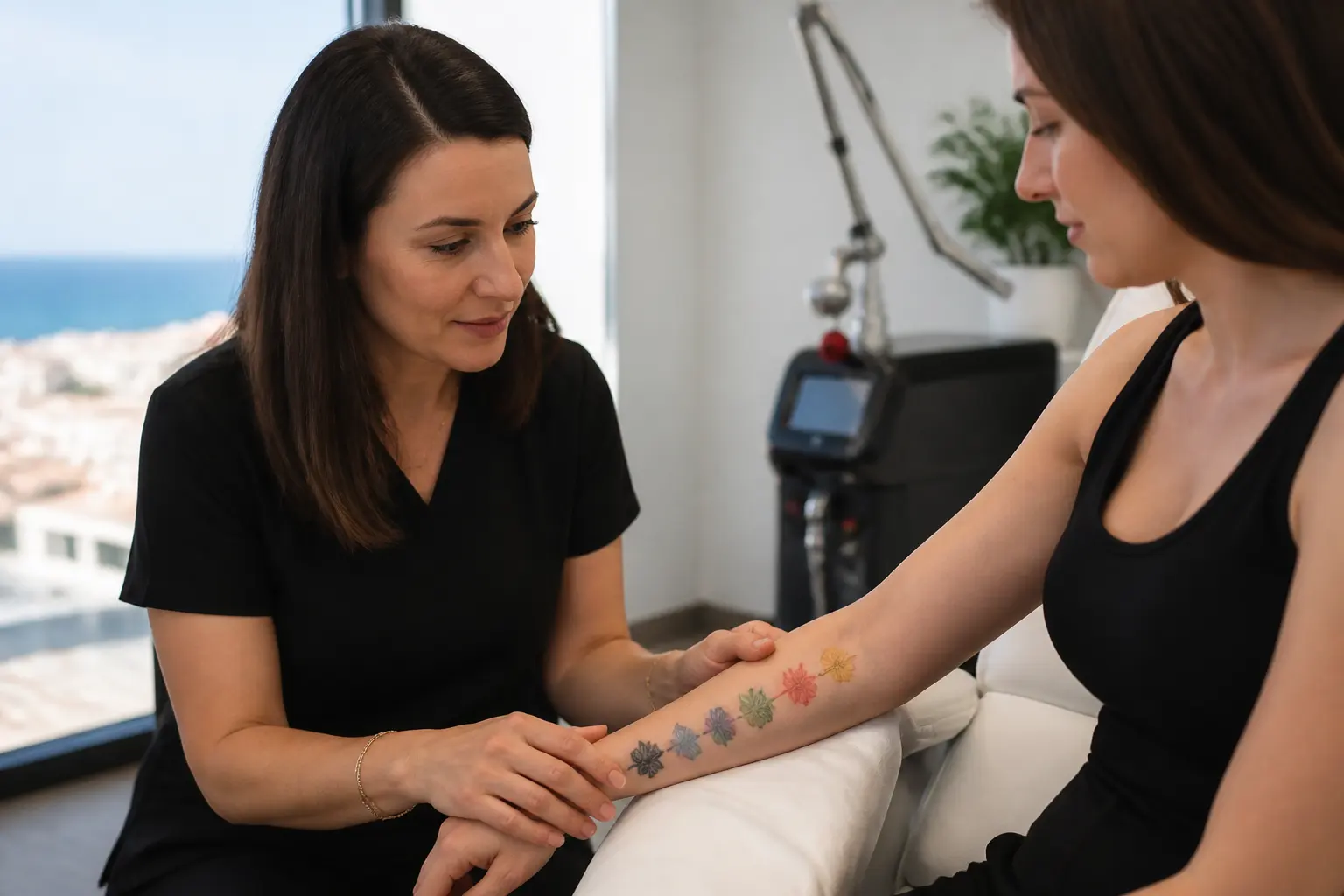
Each pigment reflects some light and absorbs other wavelengths. That is why a laser setting suited to black ink is not automatically the ideal choice for red, green or yellow. A multi-coloured tattoo may need different wavelengths at different points in the process.
The goal is not simply to use the strongest setting possible. A professional approach considers the ink colour alongside the surrounding skin, the tattoo’s response at each session and the need to allow adequate healing between appointments. The US Food and Drug Administration also notes that different tattoo colours may require different lasers, and that complete removal is not always possible.
A practical guide to tattoo colours and expected fading
Black
Black is usually the easiest and fastest colour to fade. Because it absorbs laser energy strongly, it is often the colour practitioners expect to respond most visibly in the early part of treatment.
Black is not a promise of a short process, though. Professional tattoos may contain a great deal of pigment, and heavily saturated areas may take time even when the colour itself is favourable. A tattoo with black outlines over coloured sections can also change in stages, with the black softening before the colour beneath becomes the main focus.
Dark blue
Dark blue can often respond well, particularly when it is close to navy or blue-black. As with black, the response depends on the pigment itself and the appropriate laser wavelength.
Lighter blue can be more variable. A tattoo may initially look as though it contains one shade of blue, then reveal several tones as it fades. This is normal in the sense that tattoos are often built from layers, blends and different pigments rather than one uniform colour.
Red and orange
Red and orange can be treatable with the right wavelength, but they are usually less straightforward than black. They may respond well in some tattoos and more slowly in others, depending on the particular pigment blend.
It is important to remember that a visible colour name does not tell the whole story. Two tattoos that both look red can contain very different ingredients. This is one reason a practitioner cannot responsibly promise an exact number of sessions from a photograph alone.
Green
Green is often among the more challenging tattoo colours. Some green inks can respond to wavelengths designed for blue-green pigments, while other greens contain yellow components that are more resistant. A green tattoo may therefore fade unevenly or appear to shift in tone as different pigments respond at different rates.
For this reason, green tattoos benefit from a careful, patient approach. The question is not only whether green can be treated, but which type of green is present and how your skin responds over time.
Yellow
Yellow is commonly considered one of the most difficult colours to remove fully. It reflects a large amount of light, which can make it less responsive to the wavelengths commonly used in tattoo removal. Yellow may also be mixed into green, orange or skin-toned inks, becoming more noticeable only after darker surrounding pigment begins to lighten.
A consultation should include an honest conversation about this uncertainty. Treatment may still be worthwhile for fading a tattoo, preparing for a cover-up or reducing the visibility of a particular area, but an exact endpoint should never be assumed in advance.
White, cream and flesh-toned inks
White, cream, beige and flesh-toned pigments require particular caution. Some of these inks can darken after laser exposure through a process often described as oxidation. Instead of fading immediately, a light area may turn grey or black.
This is especially relevant for tattoos containing white highlights, cosmetic tattoo pigments and older cover-up work. The FDA guidance on tattoos and permanent make-up highlights that flesh-coloured tattoos, white ink and permanent make-up can be particularly difficult because of this risk of darkening.
Darkening does not automatically mean there is no possible next step, but it does mean the tattoo needs specialist evaluation and a realistic discussion before treatment begins. Never assume that a pale colour will be easier simply because it looks less bold.
Purple, pink and mixed shades
Purple, pink and pastel inks often contain a mixture of pigments. A purple section, for example, may have blue and red components that do not fade at the same speed. As one component responds, the colour left behind can look unexpectedly warmer, cooler or lighter.
Mixed shades are a good example of why tattoo removal is assessed session by session. The visible outcome after one appointment helps inform how the next stage should be planned.
Colour is important, but it is not the only factor
It is understandable to focus on ink colour, but it is only one part of the picture. A professional assessment also considers the following.
- Ink density: Solid, heavily packed colour usually takes longer to break down than fine line work.
- Tattoo age: Older tattoos may have already softened over time, although age alone does not determine the outcome.
- Professional or amateur application: Professional tattoos can be more deeply and evenly saturated. Amateur tattoos can be less predictable in depth and composition.
- Placement: Tattoos in areas with different circulation and skin characteristics may respond differently.
- Skin tone and sensitivity: Settings must be selected with care for the pigment and the skin together.
- Previous work: Cover-ups, reworked tattoos and tattoos treated elsewhere may have several layers of pigment to consider.
- Healing and spacing: The skin needs time between sessions. Rushing appointments is not a shortcut to a better result.
Why the same colour can behave differently in two tattoos
There is no universal ink recipe for a colour called “green”, “red” or “blue”. Tattoo ink is made from pigments and carriers, and the final shade can vary between brands, batches and artists. A colour may also look different once it is placed in the skin and layered over another pigment.
For example, a dark green leaf may contain black, yellow and blue elements. If the darker parts fade first, the remaining colour can look lighter or more yellow than expected. Equally, a bright red detail may respond differently from a deep burgundy area because the pigments are not identical.
This is why online colour charts are useful for broad expectations, but they cannot replace an assessment. A good consultation does not offer false certainty. It identifies what appears more favourable, what may be more resistant and what should be monitored carefully.
What to expect during a professional tattoo removal consultation
Before beginning laser tattoo removal, the practitioner should look at the tattoo in person. This is the time to ask questions and share relevant information about the tattoo, your skin and previous treatments.
You may be asked about when the tattoo was done, whether it was professionally applied, whether it has been covered or retouched, and whether you have had any previous removal sessions. The consultation should also identify colours that may need additional caution, particularly white, beige or cosmetic-style pigments.
At Becammo’s Sliema location, tattoo laser removal begins with a consultation so you can understand the service and discuss your individual tattoo before committing to a course of sessions. This is particularly valuable for colourful designs, cover-ups and tattoos with uncertain ink history.
How to prepare for a conversation about coloured tattoo removal
You do not need to know the technical name of every pigment to have a useful consultation. A few practical details can help make the discussion more productive.
- Take clear photographs of the tattoo in natural light, if you are enquiring before your appointment.
- Make a note of the tattoo’s approximate age and whether it was professionally applied.
- Tell the practitioner about cover-up work, touch-ups or previous removal sessions.
- Point out any white, cream, pale pink, beige or flesh-toned areas, even if they seem small.
- Share any relevant skin history or concerns honestly, so the service can be discussed responsibly.
- Ask what type of fading may be realistic, rather than expecting a fixed number of sessions or a guaranteed result.
Common myths about tattoo colours and laser removal
“Bright colours always fade faster because they stand out.”
Not necessarily. Visibility to the eye is different from how well a pigment absorbs the laser wavelength used in treatment. Bright yellow can be highly visible but still difficult to fade.
“Black tattoos always come off quickly.”
Black is often the most responsive colour, but large, dense or layered black tattoos can still require a significant course of treatment. Favourable does not mean instant.
“One laser works equally well on every colour.”
Different colours respond to different wavelengths. Multi-coloured tattoos may need a tailored approach rather than one setting for the entire design.
“If a pale pigment darkens, the removal has failed.”
Darkening can be an unexpected reaction associated with certain light or cosmetic pigments. It is exactly why these colours should be assessed carefully before treatment. It does not support a one-size-fits-all plan.
Making a realistic decision
If your tattoo is mainly black or dark blue, you may have a comparatively favourable colour profile for laser fading. If it includes green, yellow, white, cream or flesh-toned details, the process may be more complex, but that does not automatically rule out treatment. It simply means that the plan needs to be based on the tattoo in front of the practitioner, not on a generic promise.
The most helpful question is not only, “Which tattoo colours fade fastest under laser?” It is also, “What colours are actually in my tattoo, and what outcome is realistic for me?”
If you are considering tattoo laser removal in Malta, book a consultation at Becammo in Sliema. You can discuss the colours in your tattoo, ask practical questions and receive guidance grounded in a professional assessment before planning your next step.
Frequently asked questions
Does black tattoo ink fade faster than coloured ink?
In general, yes. Black ink is usually the most responsive colour in laser tattoo removal, with dark blue often responding well too. The tattoo’s density, age, placement and ink composition still affect the pace of fading.
What tattoo colour is hardest to remove?
Yellow is often one of the most challenging colours. Green can also be difficult, especially when it contains yellow components. White, cream and flesh-toned pigments need special caution because some can darken after laser exposure.
Can red tattoo ink be removed with laser?
Red can often be treated using an appropriate wavelength, but its response varies by pigment formula, skin characteristics and tattoo depth. A consultation is the right place to discuss what may be realistic for a specific red ink.
Why does a tattoo look like a different colour after a laser session?
Many tattoos contain blended or layered pigments. When one pigment fades before another, a previously hidden undertone may become more visible. This can happen with greens, purples, blues and cover-up tattoos in particular.
Can white ink turn black during tattoo removal?
Some white, beige, cream and flesh-toned pigments can darken after laser treatment. This possibility should be discussed before treatment begins, especially for cosmetic-style pigments and tattoos with pale highlights.
How many sessions will a coloured tattoo need?
There is no responsible fixed answer. Session numbers vary with the tattoo’s colours, density, age, size, placement, ink composition and individual response. A consultation provides the best starting point for a personalised discussion.