Your First Professional Massage: A Beginner’s Guide
Brenda Cammo Team
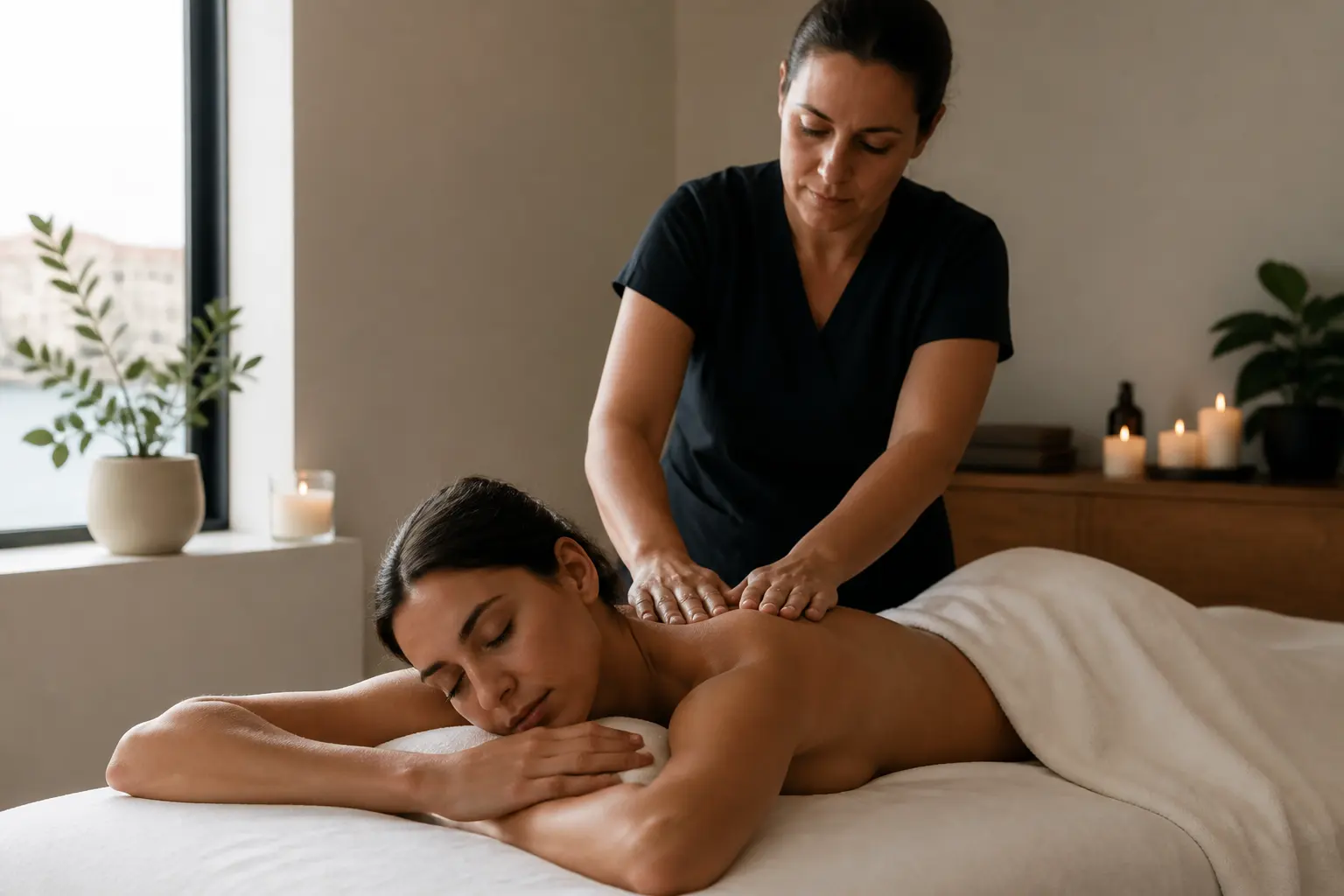
Booking your first professional massage can feel exciting, calming and slightly unfamiliar all at once. You may be wondering what to wear, whether you need to talk throughout the session, how much of your body will be covered, or what happens if a pressure level does not feel right.
Those are sensible questions. A professional appointment should feel clear, respectful and centred on your comfort from the moment you book. While massage styles and studio routines vary, a good experience usually follows a simple structure: you share relevant information, agree on your preferences, receive the service with appropriate privacy, and leave with clear guidance on what to do next.
Becammo does not offer massage services, so this is not a guide to a Becammo massage appointment. It is a practical introduction for anyone in Malta who is new to professional self-care appointments. The same principles of clear consultation, personal boundaries and thoughtful aftercare are also useful when you are considering a professional facial or brow service.
What a professional massage appointment usually involves
A massage is a hands-on service in which a trained practitioner works with the body using techniques that can differ widely by the type of massage selected. Some appointments are designed around a slower, relaxing pace, while others may focus more closely on particular areas you have discussed in advance.
The most important point for a first-time client is that a professional session should not be a mystery. Before it begins, you should understand the basic format, the expected length, the area or areas being worked on, and what you can request during the appointment.
In Malta, massage therapists and spa therapists are included among professions subject to health-screening requirements in certain work-permit contexts. This does not replace your own judgement when choosing a provider, but it is a useful reminder to look for a business that takes hygiene, professionalism and client communication seriously. You can read more through the Government of Malta health screening guidance.
Before you book: choose clarity over guesswork
For a first professional massage, booking the most clearly explained option is often more helpful than trying to choose the most specialised-sounding treatment. Read the service description and look for practical information rather than vague promises. A professional provider should make it easy to understand what the appointment includes and how to prepare.
Questions worth asking before your first visit
- What type of massage is this, and what is the general purpose of the session?
- How long is the appointment, including consultation and changing time?
- Which areas are normally included?
- What should I wear when I arrive?
- How is privacy handled while changing and during the session?
- Can I request lighter pressure or ask for an area to be avoided?
- Are there circumstances in which I should postpone and seek individual advice first?
You do not need to know every massage term before making an enquiry. Simply saying, “This is my first massage and I would like to know what to expect”, gives the practitioner useful context. A professional should respond without making you feel awkward or uninformed.
Share relevant information honestly
Many studios use a consultation form or ask a few questions before beginning. Answer as accurately as you can. Tell the practitioner about recent injuries, surgery, skin irritation, allergies, pregnancy, ongoing health concerns, medication that may affect your comfort, or any area you do not want touched. If you are unsure whether massage is appropriate for your circumstances, ask a qualified healthcare professional before booking.
This is not about making the appointment difficult. It is about helping the practitioner adapt the session, recommend postponing it where appropriate, or suggest that you obtain further advice first.
What happens when you arrive
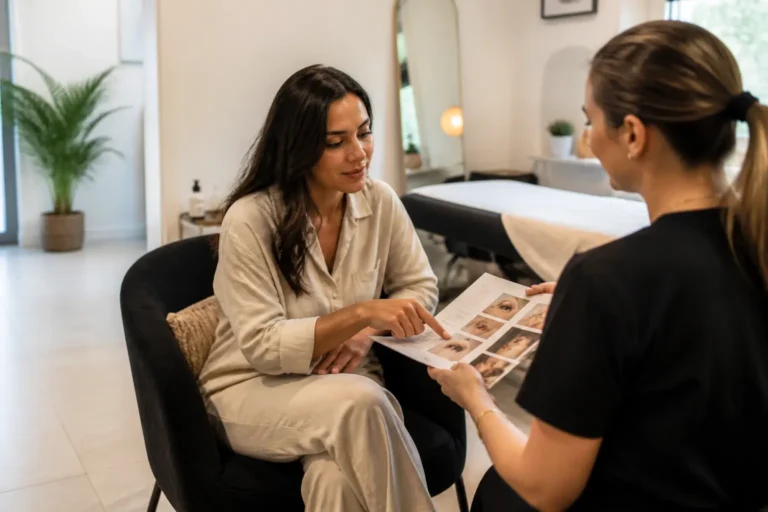
A calm first appointment normally begins with a welcome and a short conversation. The practitioner may confirm your booking, explain the treatment room set-up and ask what you would like from the session. This is your opportunity to mention practical preferences such as room temperature, music volume, pressure, communication and comfort.
Do not feel pressure to give the “right” answer. You may prefer quiet, or you may find a little conversation reassuring. You may know that you dislike strong pressure, or you may not know yet. Both are completely fine. First appointments are partly about discovering what feels comfortable for you.
What to wear
Arrive in clothing that is easy to change out of and back into. The exact approach to clothing during a massage varies according to the service and the areas being worked on. A reputable provider should explain this in advance and give you time to change privately.
You should never feel rushed, exposed or uncertain about what is expected. If an instruction is unclear, ask. Clear consent and comfort are not extras, they are part of a professional service.
Privacy, draping and personal boundaries
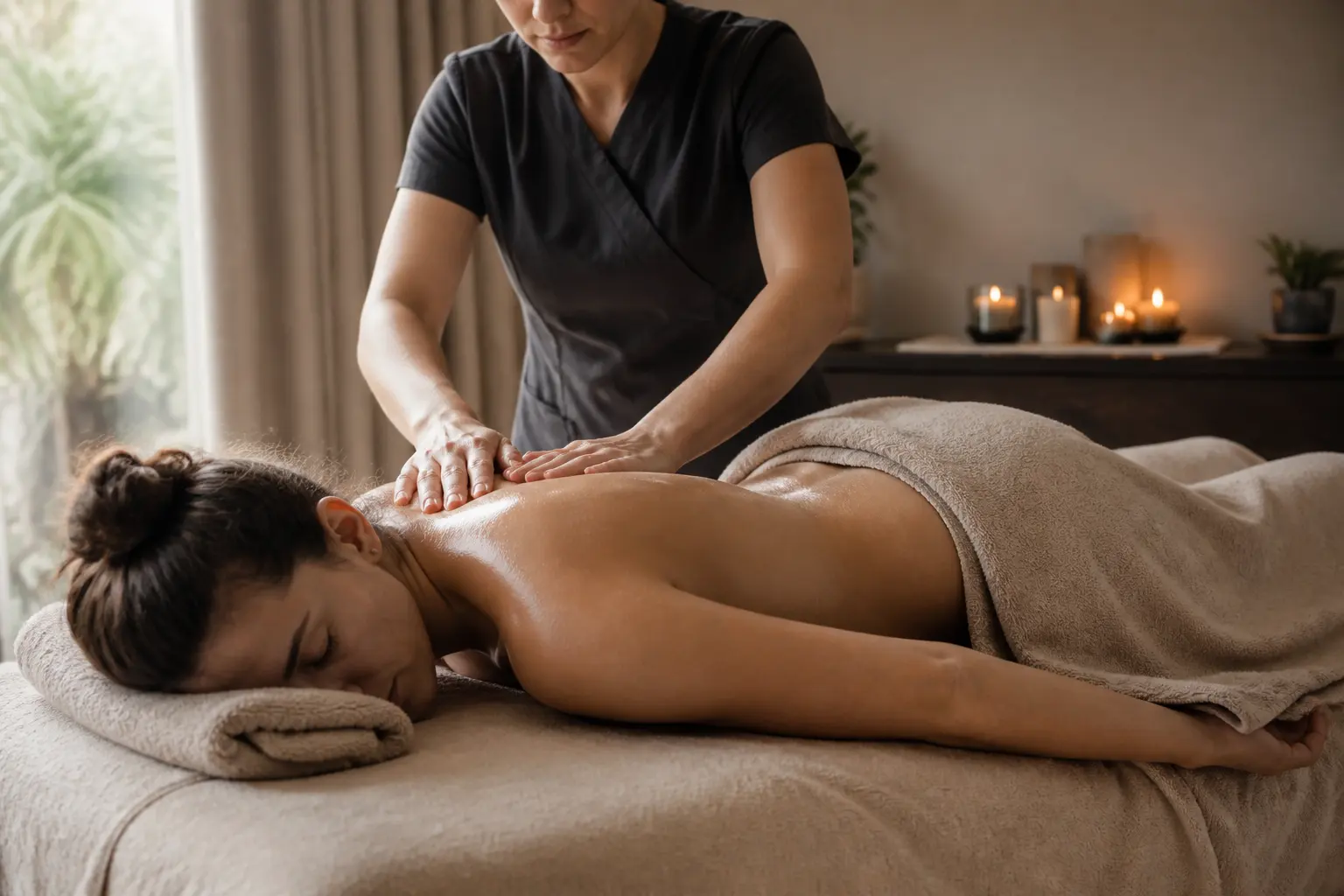
For many first-time clients, privacy is the biggest unknown. In a professional setting, the practitioner should tell you how they manage changing, covering and access to the room. During bodywork, clients are commonly covered with a towel or sheet, with only the area currently being worked on uncovered as needed. The exact practice can vary, so ask the studio how it handles draping before you arrive if this would help you feel prepared.
You remain in control of your boundaries throughout the appointment. You can ask to keep particular areas covered, decline work on a certain area, request a pause or stop the session. You do not need to explain beyond saying that you are uncomfortable.
A professional appointment should make it easy to speak up. Comfort, consent and clear communication are part of the service, not an interruption to it.
During the massage: what should it feel like?
People experience touch, pressure and relaxation differently. Some clients become very quiet or even sleepy. Others notice that their mind stays active, particularly during a first appointment. Neither reaction means you are doing anything wrong.
What matters is whether the experience stays within the comfort level you agreed. Massage may involve pressure, stretching or movement depending on the service, but you should not simply tolerate a sensation that feels too intense, sharp, alarming or wrong for you. Tell the practitioner promptly.
Useful phrases to keep in mind
- “Could you use a lighter pressure, please?”
- “That area feels a little sensitive today.”
- “Could we avoid my shoulders?”
- “I am getting cold. Could I have another towel?”
- “Can you explain what you are doing next?”
- “I would like to stop the session now.”
These requests are normal. Good practitioners expect feedback and adjust where they reasonably can. Speaking up early is usually easier than trying to relax while hoping discomfort will pass.
Should you talk during your appointment?
There is no etiquette rule that says you must chat or remain silent. At the start, conversation is useful for agreeing preferences and checking comfort. After that, you can respond naturally.
If you would like a quiet experience, you can say so. If silence makes you feel uneasy during your first massage, it is also fine to ask occasional questions. The practitioner may check in from time to time, especially around pressure and temperature. You can answer briefly, then return to quiet if that feels best.
The most helpful approach is simple: communicate when something affects your comfort, and do not worry about performing relaxation in a particular way.
How to prepare on the day
There is no need for an elaborate routine before your first professional massage. A few practical choices can make the visit smoother:
- Arrive a little early so you are not rushing into the consultation.
- Wear comfortable clothes and avoid planning a demanding activity immediately afterwards if you can.
- Have a normal meal earlier in the day rather than arriving extremely hungry or uncomfortably full.
- Drink water as you normally would.
- Turn your phone to silent before entering the treatment room.
- Tell the practitioner if anything has changed since you booked, including a new sensitivity, illness or injury.
Avoid arriving with the expectation that you have to endure an intense experience to make the appointment worthwhile. Your first session is an opportunity to understand your preferences and build confidence in communicating them.
After the session: give yourself a gentle transition
At the end of the appointment, take your time getting up and dressed. If you feel relaxed or slightly dreamy, that is a good reason not to rush straight into a busy errand. Your practitioner may offer service-specific aftercare guidance. Follow it and ask any questions before you leave.
If you have feedback, share it. Mention what you enjoyed, what you would change next time and whether the pressure felt right. This helps you make more informed choices if you book again, whether with the same practitioner or another professional.
If you experience anything that concerns you after an appointment, contact the provider for appropriate guidance and seek healthcare advice where needed. Do not rely on general online information to assess a personal health concern.
How to recognise a professional, client-centred setting
Choosing a provider is not only about décor or a long treatment menu. Look for evidence that the business respects the client experience.
- Service descriptions are understandable and do not rely on exaggerated claims.
- Booking information is transparent.
- There is an opportunity to share relevant information before the service starts.
- The practitioner explains what will happen and invites questions.
- Privacy and consent are treated seriously.
- You can give feedback during the session without embarrassment.
- Aftercare guidance is practical and proportionate.
These standards matter across personal-care appointments, not only massage. Whether you are booking a facial, brow shaping, lash service or another beauty treatment, you deserve to know what will happen, what you can ask for and how the professional will tailor the experience to you.
From a first massage to your first professional facial
If what appeals to you is the feeling of taking time for professional self-care, a facial may be a more relevant next step at Becammo. Becammo offers facial services, while massage is not part of the studio’s service menu. The connection is not the treatment itself, but the appointment experience: clear discussion, hygienic preparation, personal comfort and realistic expectations.
For a first facial, you can bring the same confident approach. Ask what the session involves, mention your skin sensitivities and current routine, and be open about the result you hope to achieve. A professional assessment helps determine whether a particular service is suitable for your skin and your plans, especially if you have an event, recent irritation or active products in your routine.
At Becammo’s Sliema and Swieqi locations, the team can answer practical questions before you choose a facial service. Booking with clarity means you can arrive knowing what to expect and focus on enjoying the time you have set aside for yourself.
Conclusion
Your first professional massage does not require expert knowledge. It requires a provider who communicates clearly and a willingness to express what you need. Ask questions, be honest in your consultation, protect your personal boundaries and give feedback as the session unfolds.
Those habits make any professional beauty appointment feel more comfortable. If you are exploring a first facial in Malta instead, choose the Becammo location that suits you in Sliema or Swieqi, review the available services and ask the team which appointment best matches your preferences.
Frequently asked questions
Do I need to know which type of massage I want before booking?
No. It is helpful to read the service descriptions, but you can also tell the provider that it is your first professional massage and ask which option is designed for beginners. Clear explanations should come before booking pressure.
Can I ask a massage therapist to use less pressure?
Yes. Pressure is a personal preference and can be adjusted during the session. Say something as soon as it feels too strong or uncomfortable.
What if I feel nervous about privacy during my first massage?
Ask in advance how changing and covering are handled. A professional provider should explain its privacy process clearly and give you time to get comfortable. You can also state your boundaries before the session begins.
Should I talk throughout a professional massage?
No. You can talk, be quiet or simply communicate when you need an adjustment. The important thing is to speak up about pressure, temperature, discomfort or boundaries.
Can I book a massage at Becammo?
No. Becammo does not offer massage services. The studio does offer beauty appointments including brow services and facials at its Sliema and Swieqi locations.
What should I ask before my first professional facial?
Ask what the appointment includes, what preparation is helpful, whether you should pause particular skincare products, and what aftercare is recommended. Share any sensitivities, active skincare use or upcoming events so the team can guide you appropriately.