Brow Lamination for Straight, Downward or Unruly Hairs: What to Discuss Before Booking
Brenda Cammo Team
If your brow hairs grow straight out, point downwards or seem to move in several directions at once, shaping them each morning can feel like a small but persistent challenge. Brow lamination may be worth discussing when your main goal is a more lifted, brushed-up and organised appearance without changing your natural brow colour or creating a permanent make-up effect.
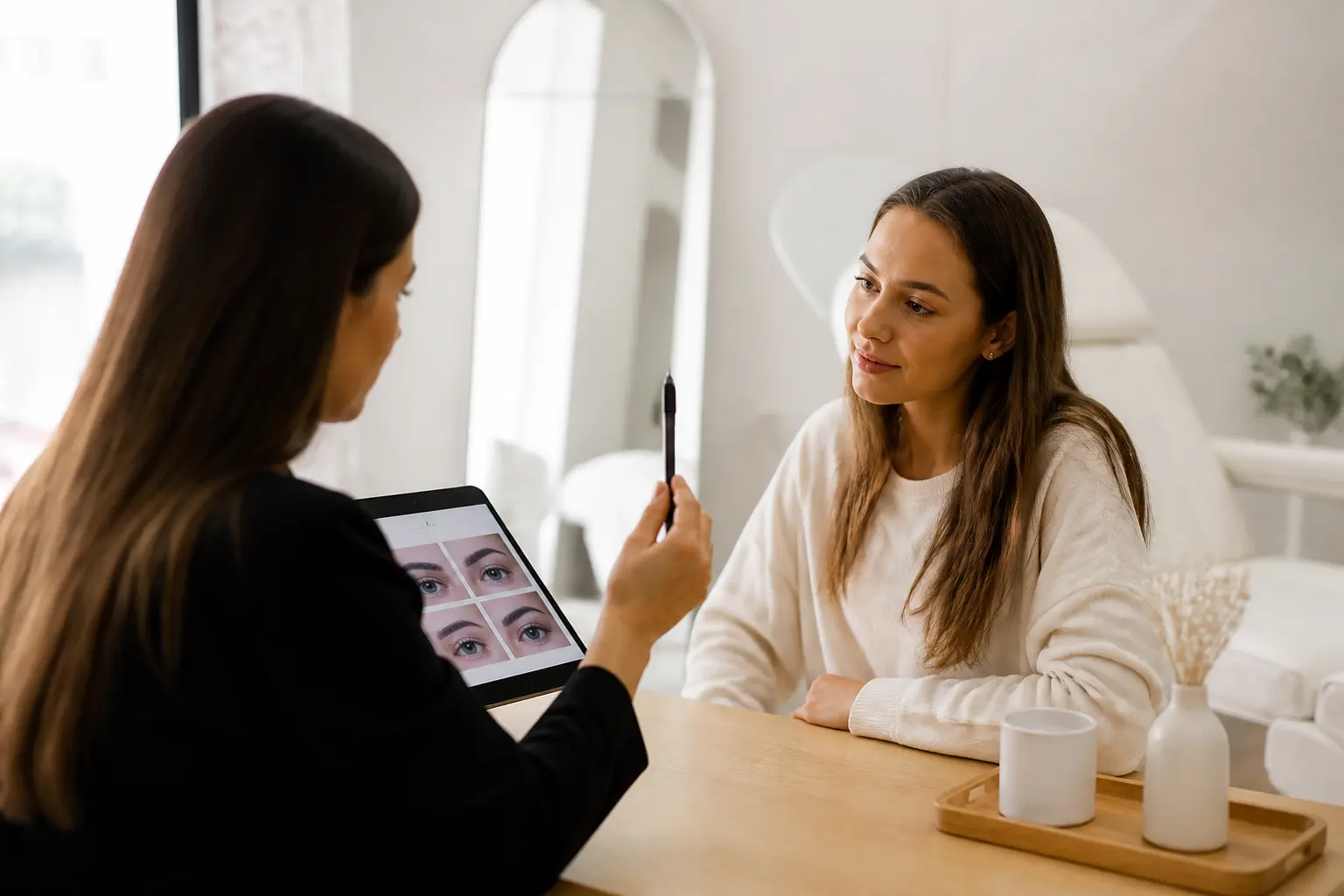
However, the most useful first step is not choosing a reference image. It is explaining how your own brows behave: where the hairs sit flat, which areas turn down, whether there are gaps, how you normally style them and what you would like to make easier in your routine. A thoughtful consultation helps turn a broad request for “fluffy brows” into a result that suits your natural density, facial features and everyday style.
What brow lamination is designed to do
Brow lamination is a brow styling service that works with the direction of your existing hairs. The aim is to make the hairs easier to place into a more uniform position, often creating a lifted or fuller-looking finish. It can be especially appealing when brow hairs are long, resistant to brow gel, downward-growing or inconsistent in direction.
It is important to separate this from brow shaping and semi-permanent brow services. Lamination does not add new hairs where none exist, and it does not create pigment strokes in the skin. It also does not automatically mean every hair will be brushed vertically upwards. For many people, the most balanced finish is softly lifted at the front, then guided at a gentler angle through the arch and tail.
That is why the starting point matters. Straight, downward and unruly brows can all benefit from a design conversation, but they do not need the same direction or the same level of lift.
Why straight, downward and unruly brows need different conversations
Straight brow hairs
Straight hairs may naturally sit forwards, sideways or close to the skin rather than rising into a visible arch. If you have straight brows, discuss whether your goal is added openness around the eye area, a more defined outline or simply brows that stay neater with less daily styling.

A very upright finish can look striking in photographs, but it may not feel like you on an ordinary workday. Ask your brow specialist to explain where a subtle lift could work best and whether the front of the brow, the middle section or the tail needs the most attention. The goal is not to force a trend onto your face; it is to make your natural brow pattern look intentional.
Downward-growing brow hairs
Downward-growing hairs can make the brow area appear heavier or less defined, particularly at the tail. During your consultation, point out the hairs that drop down again soon after you brush them. This gives the specialist a clearer picture of your day-to-day concern.
Ask what direction is realistic for your tail hairs and how the new placement might work with your usual brow pencil, tint or clear gel. In some cases, a softer diagonal direction may look more natural than trying to lift every hair to the same height. A tailored approach helps avoid a result that feels too stiff or disconnected from the rest of your brow shape.
Unruly or multi-directional hairs
“Unruly” can mean several things: hairs that curl, cross over one another, grow in different directions or refuse to stay in place after grooming. Rather than describing your brows as difficult, bring specific examples. Do the inner hairs stick up? Does one arch look fuller than the other? Do the tails twist or separate by lunchtime?
These details help guide the design. The appointment can then focus on organising the areas that bother you most while preserving enough softness for the brow to look natural. If one brow grows differently from the other, that is normal too. Symmetry is usually about balance, not making both sides identical hair by hair.
What to discuss before you book brow lamination
A good booking decision starts with clear information. Use the following points as a practical checklist when choosing a brow lamination appointment.
1. Your actual styling goal
Tell the specialist what you want to spend less time doing. Perhaps you repeatedly brush the hairs upwards, fill the same sparse-looking area with make-up or struggle to keep the tails in place. Your goal may be a polished brow for work, a more open-looking eye area, a low-maintenance holiday routine or simply a tidier version of your natural brows.
Be equally clear about what you do not want. If you dislike an exaggerated brushed-up look, say so. If you still want the brow tail to look slim and refined, mention it. A useful consultation makes room for preferences as well as possibilities.
2. Your natural density and any visibly sparse areas
Lamination rearranges the hairs you already have. It may help existing hairs cover an area differently, but it cannot replace hairs that are not there. If you have over-plucked brows, visible gaps or a particularly fine tail, ask what lamination can realistically contribute to the overall appearance.
You may decide that brow shaping, tint or henna is part of a separate conversation, depending on the finish you enjoy. The important point is to understand the role of each service rather than expecting one appointment to solve every brow concern.
3. Your usual brow make-up and skincare routine
Bring up anything you regularly apply around the brow area, including brow gels, pencils, tinting products, exfoliating skincare and active ingredients. You do not need to arrive with a perfect product list, but it helps to mention what you use often and whether your skin has felt reactive to cosmetics before.
If you regularly wear full brow make-up, explain the look you normally create. This can help you decide whether you want a defined, make-up-ready structure or a softer finish that needs little product afterwards. It is also sensible to ask when you can return to your normal routine following the service and which products should be avoided for the period advised by your specialist.
4. Previous reactions or skin sensitivity
Let the studio know about previous reactions to cosmetic products, brow tint, hair colour, adhesives or similar services, as well as any current irritation, broken skin or active sensitivity around the brows. This is not about diagnosing a condition; it is about making sure the appointment is discussed responsibly and that the studio can advise on suitability and its consultation process.
Patch testing and professional medical patch testing are not the same thing. A salon’s pre-service test should always follow the product and studio protocol, while a clinical patch test is a diagnostic process arranged through a healthcare professional. The NHS guidance on reactions to hair dye explains that cosmetic reactions can include irritation, itching and swelling, and that severe symptoms need urgent medical attention. If you have had a significant reaction before, raise it before booking rather than hoping it will not matter.
5. Recent brow services and your timing
Explain whether you have recently had threading, tint, henna, microblading, micropigmentation or another brow service. Timing can influence how an appointment should be planned, particularly when the skin is still settling or when you are trying to maintain a particular colour or shape.
You should also mention important events, travel, swimming plans or a photoshoot. The question is not whether lamination is “good” before an occasion, but whether you have enough flexibility to follow the aftercare guidance provided and see how the result fits into your normal routine before the day itself.
6. The level of maintenance you are comfortable with
Ask how you will be expected to style your brows at home. Some people enjoy brushing their brows into place each morning; others want the most minimal routine possible. Knowing this helps you choose a finish that is practical rather than merely attractive in the salon mirror.
Also ask how the appearance is likely to change as your hairs return to their usual growth pattern. Individual results and timing vary, so a responsible conversation should focus on your own hair texture, habits and desired look rather than promising an identical duration for everyone.
Questions worth asking at the appointment
You do not need specialist vocabulary to have a useful consultation. These questions can make the discussion more specific:
- Which parts of my brows are most suitable for a lifted direction?
- Would a soft lift suit my natural brow line better than a strongly upright finish?
- How can we keep the tail looking neat if my hairs grow downwards?
- Can lamination help my existing hairs sit across this sparse-looking area, and what can it not change?
- Should I combine this with shaping, tint or another brow service, or keep the appointment focused on lamination?
- What should I avoid before and after the appointment according to your product protocol?
- What signs of irritation mean I should contact the studio or seek medical advice?
These questions move the conversation away from a generic “before and after” image and towards a plan based on your brow pattern. They also make it easier for the specialist to set honest expectations.
How to prepare without overcomplicating it
Preparation is usually less about doing more and more about arriving with useful information. Avoid experimenting with unfamiliar brow products immediately before your appointment. If you have a favourite brow look, save one or two images that show the level of softness, definition or lift you like, but treat them as a visual reference rather than a template to copy.
Come ready to describe what happens at home. Do your brows fall flat after a shower? Does one side need more pencil? Do you brush them up but dislike how the tails look? This practical information is often more helpful than saying you want “laminated brows”.
If you are unsure whether your skin or recent beauty routine may affect suitability, contact the studio before the appointment. It is better to ask early than to arrive expecting a service that may need to be postponed or adapted.
Choosing a result that still feels like you
Brow trends can make a dramatic lift look like the only option, but a successful brow lamination result should work with your features and personal style. Some clients want a noticeable editorial brow; others want a quietly polished shape that makes their brows easier to manage. Both are valid goals.
At Becammo, the brow design conversation can take account of your natural hair direction, brow density, facial balance and preferred level of definition. This is particularly valuable for an international clientele, because brow hairs vary widely in texture, density and growth pattern. There is no single “ideal” brow direction for every person.
If straight, downward or unruly hairs are making your brows feel harder to style than they need to be, brow lamination can be a practical service to explore. The best place to start is a clear conversation about your own hairs, your routine and the finish you would genuinely enjoy seeing every day.
Frequently asked questions
Can brow lamination make straight brows look fuller?
It can change how your existing hairs sit, which may create a fuller-looking effect in some areas. It does not add hairs or create new density, so the outcome depends on your natural brow growth and the direction that suits it.
Is brow lamination suitable for downward-growing brow tails?
It may be suitable, but the desired direction should be discussed carefully. A softer, balanced placement can be more natural than trying to lift every tail hair sharply upwards.
Will brow lamination make my brows look identical on both sides?
No two brows grow in exactly the same way. The aim is usually a balanced overall shape and direction, not perfectly matching individual hairs.
Should I book threading or brow lamination first?
It depends on your main goal. Threading focuses on removing unwanted hair and refining the outline, while lamination focuses on directing the brow hairs you have. Explain your priorities when booking so the right service plan can be discussed.
What if I have reacted to brow or hair products before?
Tell the studio before booking and share what happened, even if the reaction was some time ago. Follow the studio’s consultation and testing guidance, and seek medical advice promptly if you experience severe or worrying symptoms.