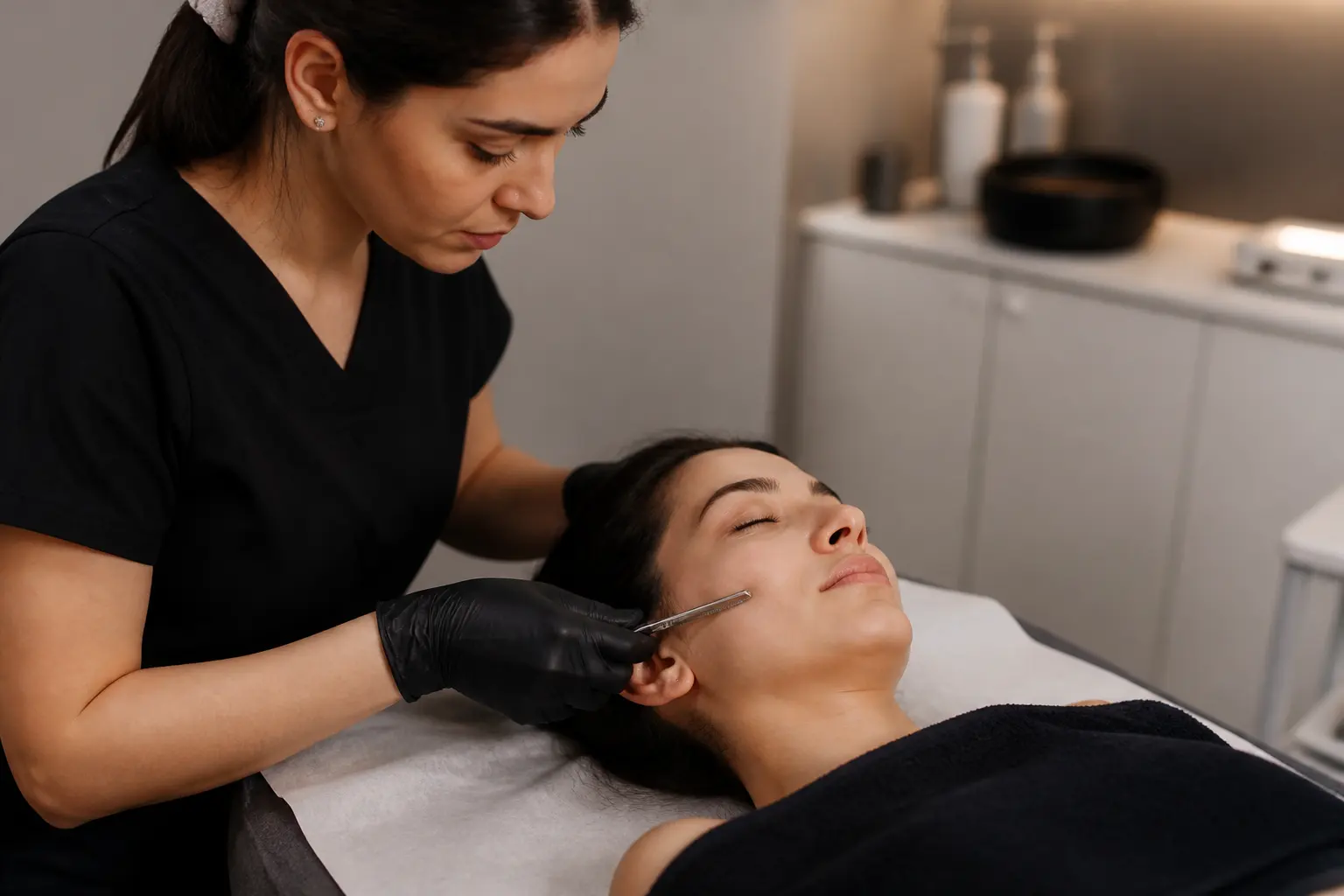
Dermaplaning is a physical exfoliation that removes fine facial hair, so complexion products may feel smoother and easier to blend afterwards. It does not replace skincare or careful application, and it should sit around your existing products rather than add steps. Before booking, share your goal, your active products and any recent irritation, and leave breathing room in your diary instead of booking on the day of an event.
If you wear make-up most days, the appeal of dermaplaning is easy to understand. A professional session can leave the face feeling smoother and can remove the fine facial hair often called peach fuzz, which may make foundation, skin tint or concealer feel easier to apply evenly.
However, dermaplaning is not a shortcut that replaces skincare, a well-chosen base product or careful make-up application. It is a form of physical exfoliation, so it needs to fit sensibly around the products and habits already in your routine. The best booking plan starts with a clear goal: perhaps you want a more polished finish for everyday make-up, a simpler base for an occasion, or a fresh start when your complexion feels dull.
This guide explains where dermaplaning may sit in a make-up routine, what it can and cannot change, and the details worth raising before you book.
What does dermaplaning change in a make-up routine?
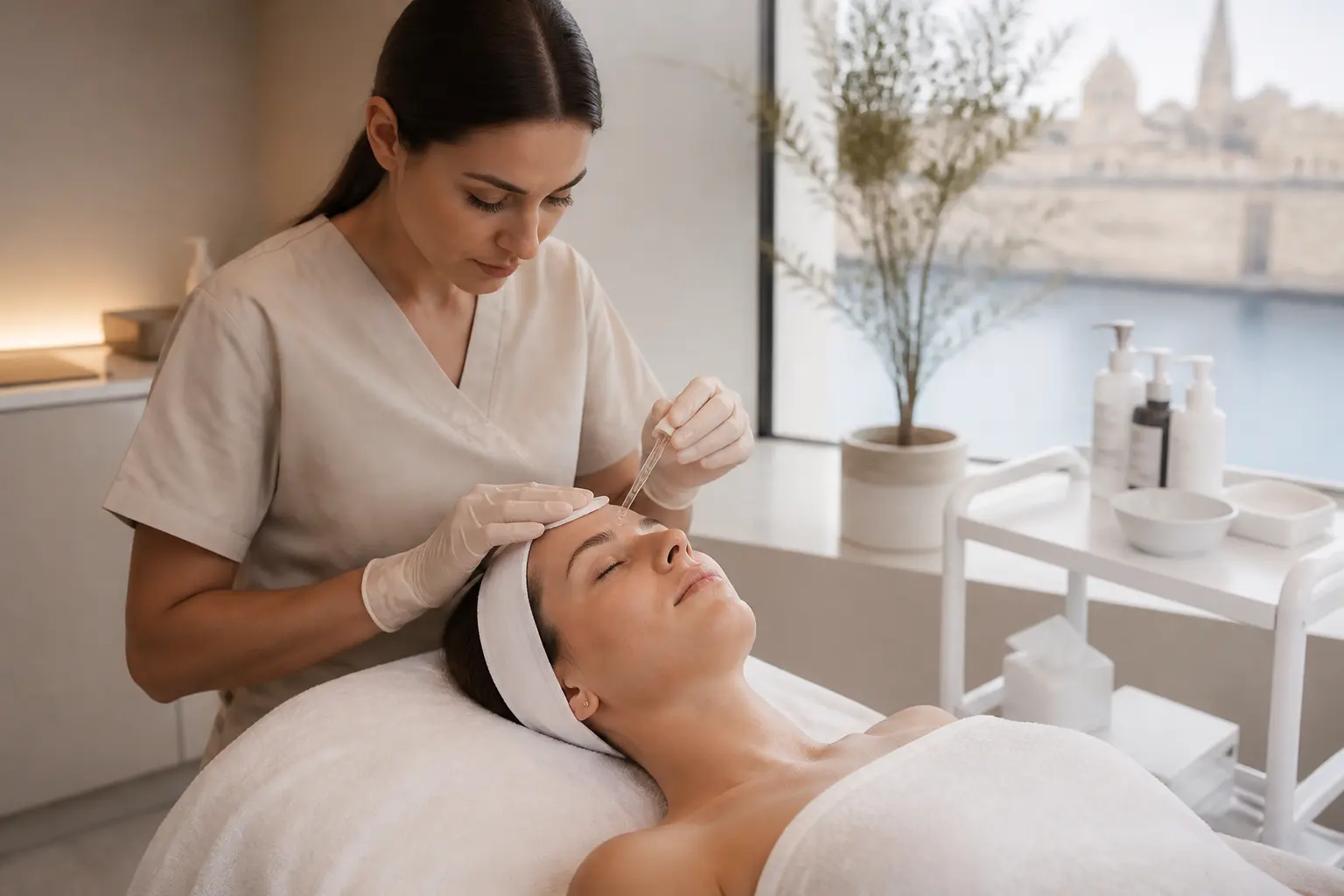
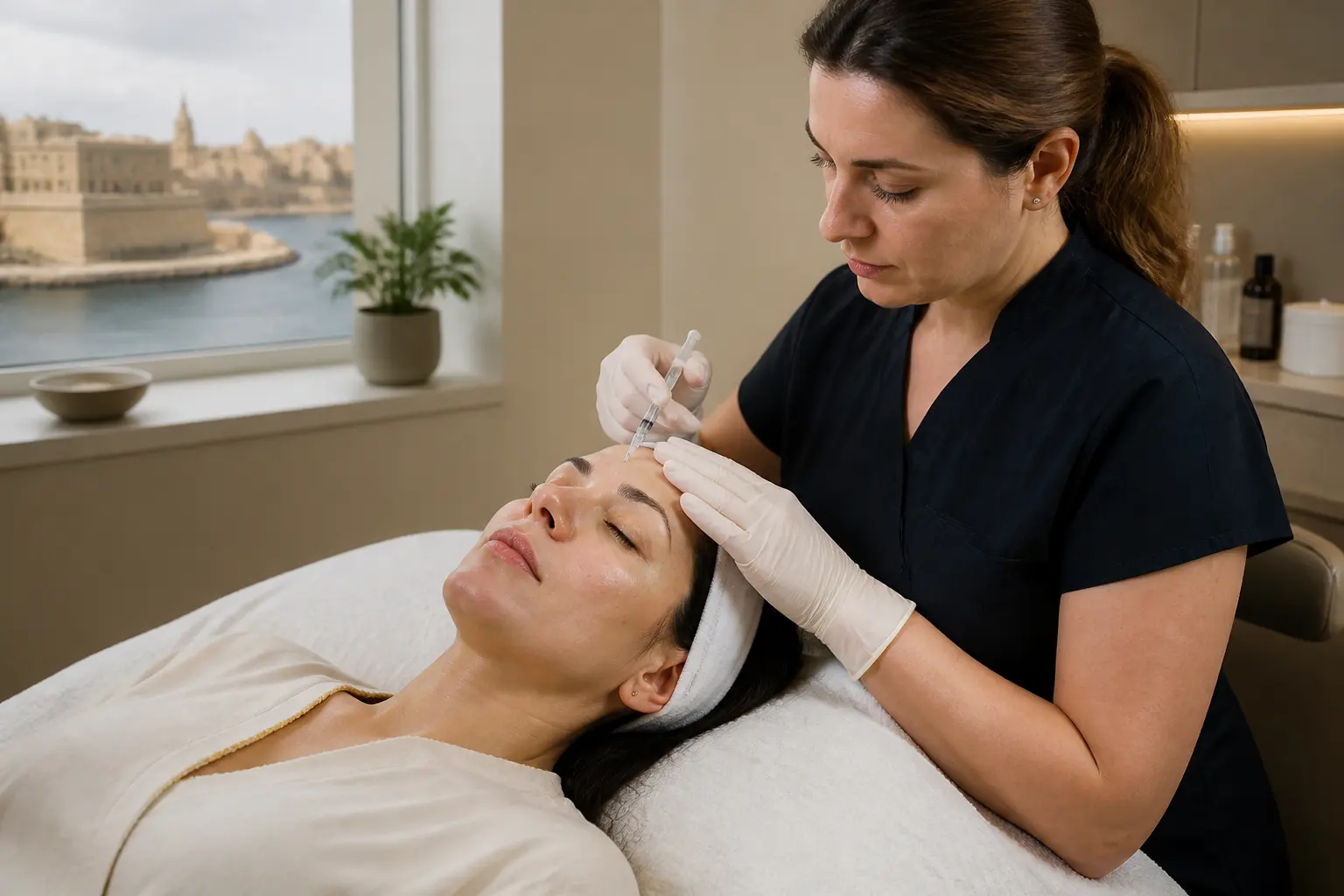
Dermaplaning is a facial treatment that uses a specialised blade to exfoliate the surface of the skin while removing fine vellus hair. These soft, light hairs are normal and differ from the coarser hairs that may grow in areas such as the upper lip or chin.
For make-up wearers, the most noticeable change is often tactile: the skin can feel smoother when applying complexion products. If fine hair catches powder, makes foundation look less even in certain lighting, or simply affects how your base feels to blend, removing it may make application feel more straightforward.
That does not mean dermaplaning creates a flawless finish on its own. Make-up can still settle into dry patches, cling to areas of dehydration, move throughout the day or look uneven if the shade, formula or application method is not right for your skin. Texture, pores and natural facial movement are also part of real skin. A useful aim is a comfortable, fresh-looking base rather than an unrealistic filtered effect.
Professional exfoliation should also be treated as one part of a wider routine. The American Academy of Dermatology notes that exfoliation is not suitable in the same way for every skin type and that overdoing it may lead to redness or irritation. Keeping the rest of your routine gentle is particularly important around an exfoliating facial appointment. American Academy of Dermatology guidance on safe exfoliation
How can dermaplaning support your everyday base?
It may make liquid and cream products easier to blend
Skin tints, tinted moisturisers, foundation and cream concealer are often applied with fingers, a sponge or a brush. After dermaplaning, some people find that these products glide across the face with less resistance from fine facial hair. This can be especially useful if your preferred look is light, sheer or skin-focused rather than full coverage.
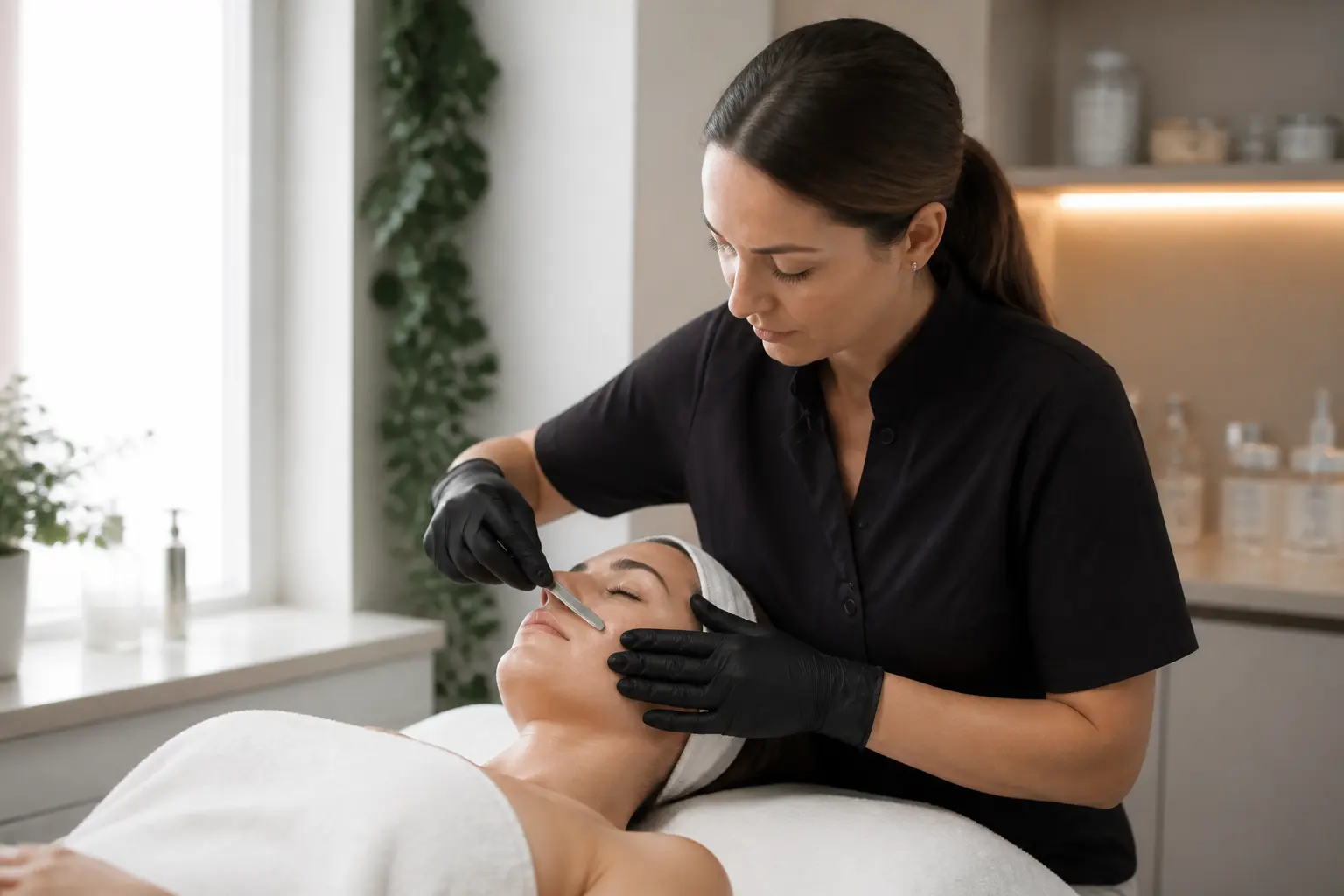
Use this as an opportunity to reassess application rather than automatically using more product. Start with a small amount, blend in thin layers and build only where you want additional coverage. A lighter hand can help keep the result close to your usual skin rather than masking it.
It may help powder look more considered
Powder is often used to reduce shine, set concealer or increase wear time. When facial hair is present, a generous amount of loose powder can sometimes sit visibly on the surface. A smoother canvas may make it easier to use a small amount precisely where you need it, such as the T-zone.
This is not a rule that everyone needs powder after dermaplaning. If your skin feels dry or tight, piling on mattifying products may make the finish less comfortable. Choose the finish that suits your skin and your typical day, whether that is natural, softly radiant or more matte.
It can simplify the look, not necessarily add more steps
It is tempting to treat a smoother-looking base as a reason to try every new primer, glow product and complexion technique at once. In practice, the most helpful approach is often simpler: gentle cleansing, moisturiser suited to your skin, daytime sun protection and make-up that you already know works well.
Sun protection belongs beneath make-up in a daytime routine. The American Academy of Dermatology advises applying sunscreen after other skincare products and before make-up. American Academy of Dermatology advice on everyday skincare and sunscreen
At BeCammo · Sliema · Swieqi
Facials in Malta
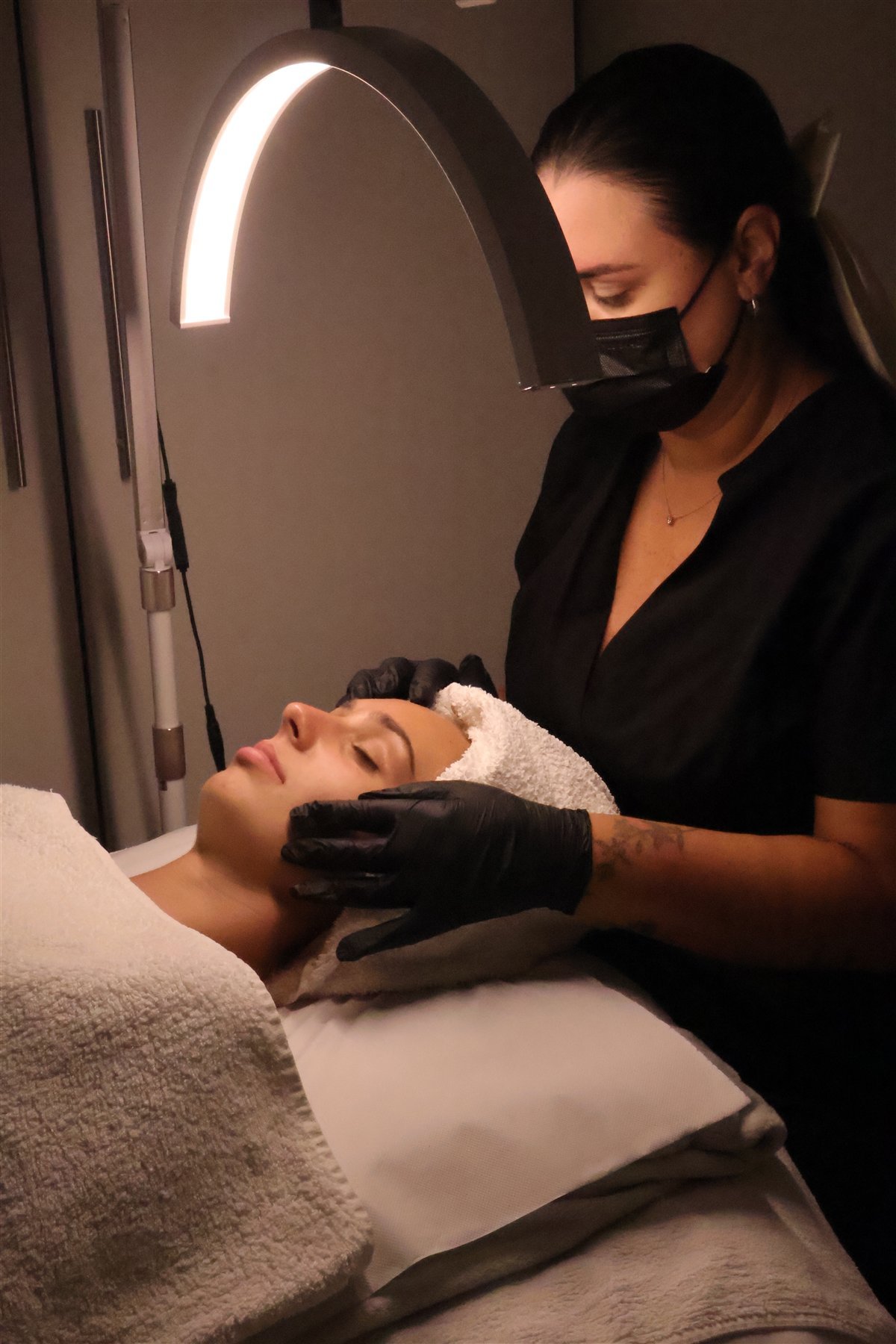
Deep cleansing, PDRN and dermaplaning facials for clear, glowing skin.
- from €50price
- Sliema · Swieqiwhere
- ★ 5.0460+ Google reviews
Where does dermaplaning fit in a practical routine?
There is no single routine that suits every skin type, work schedule or make-up preference. Instead of copying someone else’s post-facial routine, think about the role each product plays and keep the days around your appointment uncomplicated.
| Routine moment | Useful focus | What to avoid assuming |
|---|---|---|
| Before booking | Share your usual skincare, exfoliants and make-up concerns during the consultation. | That every active product can stay in your routine unchanged. |
| Appointment day | Arrive ready to discuss sensitivity, recent irritation and your plans after the session. | That a full make-up look immediately afterwards is always the best plan. |
| First days afterwards | Prioritise gentle cleansing, moisturising and daytime sun protection. | That extra scrubs, peels or strong products will improve the result. |
| Everyday make-up | Use clean tools and build complexion products gradually. | That smoother skin means you need heavier coverage or more powder. |
How should you plan the appointment around your diary?
Dermaplaning can be a thoughtful addition before an event, professional photographs or a holiday, but avoid treating it as a last-minute task that must be squeezed in immediately before you need to leave the house. Skin responses vary. Your therapist’s aftercare guidance should shape your timing, particularly if your skin is sensitive or you have a fuller make-up plan in mind.
If you are booking for the first time, give yourself breathing room in your diary. That lets you observe how your skin feels, reintroduce your usual make-up gradually according to the advice you receive, and avoid testing unfamiliar skincare or foundation at the same time.
For an everyday routine, the goal is not to make every morning dependent on a facial appointment. It is to use dermaplaning occasionally and deliberately, alongside habits that are sustainable between sessions: removing make-up at the end of the day, cleansing without scrubbing, moisturising as needed and protecting the skin from daytime sun exposure.
What should you consider before booking dermaplaning?
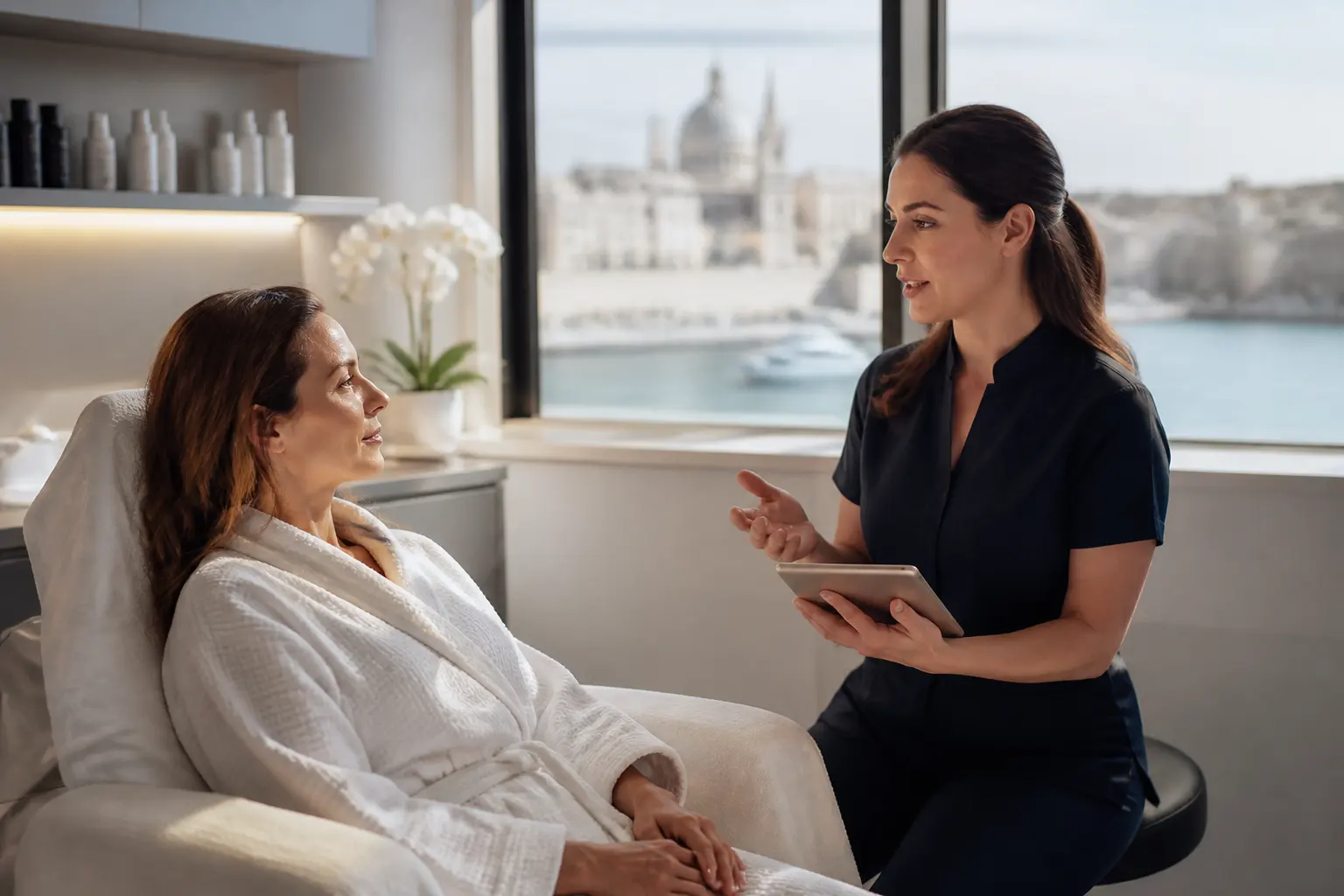
A good appointment begins with an honest conversation. Bring up details that may seem small, because they can affect whether the treatment timing and home routine need adjusting.
- What is my main goal? Explain whether you are focused on make-up application, fine facial hair, a dull-looking complexion, or a combination of these concerns.
- Which products do I use regularly? Mention exfoliating acids, retinoid products, scrubs, acne products and any new products that have caused sensitivity. Avoid guessing which ingredients matter; show photos of labels if that is easier.
- Has my skin been irritated recently? Sunburn, open areas, active irritation and a compromised-feeling skin barrier should be part of the discussion. Dermatology guidance advises against exfoliating sunburnt skin or skin with open cuts or wounds. Read the American Academy of Dermatology’s precautions for exfoliation
- Do I have an occasion or travel planned? Your therapist can help you think through timing instead of assuming that the appointment should happen on the day itself.
- What make-up do I normally wear? Tell them whether you use a light skin tint, long-wear foundation, mineral powder or a more elaborate base. This helps make the conversation practical rather than generic.
- Do I have a history of skin reactions? If you have a diagnosed skin condition, recurring reactions, allergies or an unresolved concern, seek appropriate medical advice before introducing a new exfoliating treatment.
Dermaplaning Pro or Dermaplaning SPA: which should you choose?
At BeCammo, dermaplaning is available in Dermaplaning Pro and Dermaplaning SPA options. Both are relevant if your goal includes fine facial hair removal and a smoother surface for make-up, but the most suitable choice should be based on the type of facial experience you want and the guidance given during your appointment.
Rather than booking purely by price or assuming the longer option is automatically necessary, use your consultation to describe your skin, routine and expectations. This keeps the decision centred on your needs rather than a trend or a one-size-fits-all beauty standard.
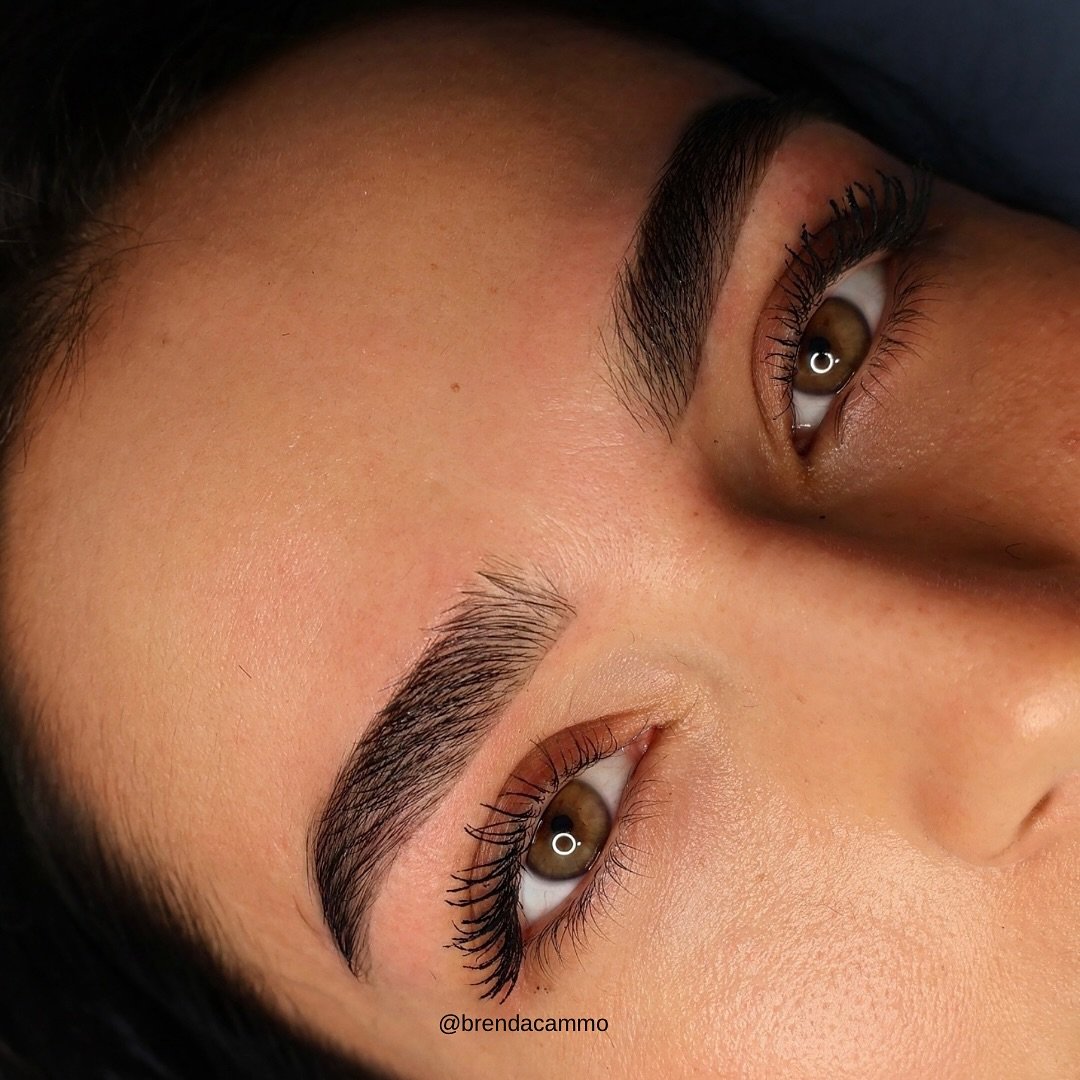
It is also worth separating dermaplaning from full-face threading. Both can be part of a grooming routine, but they have different hair-removal focuses and techniques. If your main concern is brow shaping or defined areas of facial hair, say so when booking. If your priority is the smooth feel associated with exfoliation and peach fuzz removal, dermaplaning may be the more relevant conversation.
Which make-up habits matter after an exfoliating facial?
Keep brushes, sponges and hands clean
Freshly cleaned tools are a sensible baseline for any make-up routine, particularly after a facial. Wash brushes regularly, allow them to dry properly and avoid sharing products or applicators. The American Academy of Dermatology also recommends cleaning make-up brushes weekly and applying make-up gently. American Academy of Dermatology advice on make-up and breakouts
Choose familiar formulas first
The days around a facial are not the ideal time to trial an unfamiliar full-coverage foundation, strongly fragranced primer or new exfoliating skincare product. If you need make-up, choose products you already tolerate and apply them with a light touch. For people prone to congestion or breakouts, non-comedogenic and oil-free labelling can be useful considerations, although no label removes the need to pay attention to how your own skin responds.
Do not chase smoothness with more exfoliation
One common mistake is following professional exfoliation with scrubs, strong acids or multiple exfoliating masks because the skin initially feels smooth. More is not necessarily better. The American Academy of Dermatology cautions that layering exfoliating ingredients can contribute to dryness and irritation, especially for sensitive skin. American Academy of Dermatology advice on avoiding redundant exfoliating ingredients
When should you pause and ask for guidance?
Stop treating your routine as a cosmetic experiment if your skin becomes persistently uncomfortable, very red, itchy, swollen or develops an unexpected reaction. Do not try to cover significant irritation with heavier make-up. Speak with the professional who treated you for aftercare guidance, and seek medical advice for symptoms that are severe, worsening or do not settle.
It is also sensible to postpone a dermaplaning appointment if you arrive with sunburn, open skin or active irritation. Rescheduling is often a more considered choice than pushing through a facial when the skin is not in a good place for exfoliation.
A realistic way to use dermaplaning for make-up
Dermaplaning can work well for someone who enjoys a smooth-feeling complexion and wants their everyday base to feel easier to apply. Its value is often subtle: your preferred skin tint may blend more comfortably, a small amount of concealer may be enough, or you may simply enjoy the feel of your skincare and make-up on freshly exfoliated skin.
The most successful approach is personalised. Discuss your usual routine, be open about sensitivities and active products, and allow time around your appointment instead of making it an emergency pre-event step. When you are ready, choose a Dermaplaning Pro or Dermaplaning SPA appointment and use the final booking conversation to match the service to your skin and make-up goals.
Frequently asked questions
Will dermaplaning make my facial hair grow back thicker?
Dermaplaning removes fine hair at the surface of the skin. It does not change the hair follicle, so it does not turn fine facial hair into thicker or darker hair. If you have concerns about new or changing hair growth, discuss them with an appropriate healthcare professional.
Can dermaplaning replace my exfoliating skincare products?
Not automatically. Dermaplaning is already an exfoliating treatment, so your existing exfoliating products may need to be paused or adjusted around the appointment according to the advice you receive. Share your complete routine before treatment rather than making changes based on guesswork.
Is dermaplaning only useful for full-coverage foundation?
No. It may suit people who wear anything from minimal skin tint to a fuller base. The main question is whether fine facial hair and surface texture affect how your chosen products feel or apply.
Should I book dermaplaning on the day of an important event?
It is generally wiser to plan ahead, especially for a first appointment. Your skin and make-up routine are individual, and you should follow the aftercare advice provided at the session.
Can I combine dermaplaning with brow grooming?
It may be possible to plan facial services together, but the right combination depends on your goals, skin condition and diary. Explain whether brow shape, upper-lip hair, fine facial hair or make-up preparation is your priority when you book.