What Is Peach Fuzz, and How Does Dermaplaning Relate?
Brenda Cammo Team
Peach fuzz is the soft, fine hair that naturally grows across much of the face. It is usually light in colour, short and less noticeable than the thicker hair that may grow on areas such as the upper lip, chin or jawline. Everyone has some degree of peach fuzz, although its visibility can vary with hair colour, skin tone, lighting and personal preference.
People often first notice it when applying foundation, taking close-up photographs or looking at their skin in bright daylight. That does not mean it needs to be removed. Peach fuzz is a normal feature of skin. However, if your goal is a smoother-looking surface for make-up or a more polished facial finish, it may be useful to understand how it relates to a dermaplaning appointment.
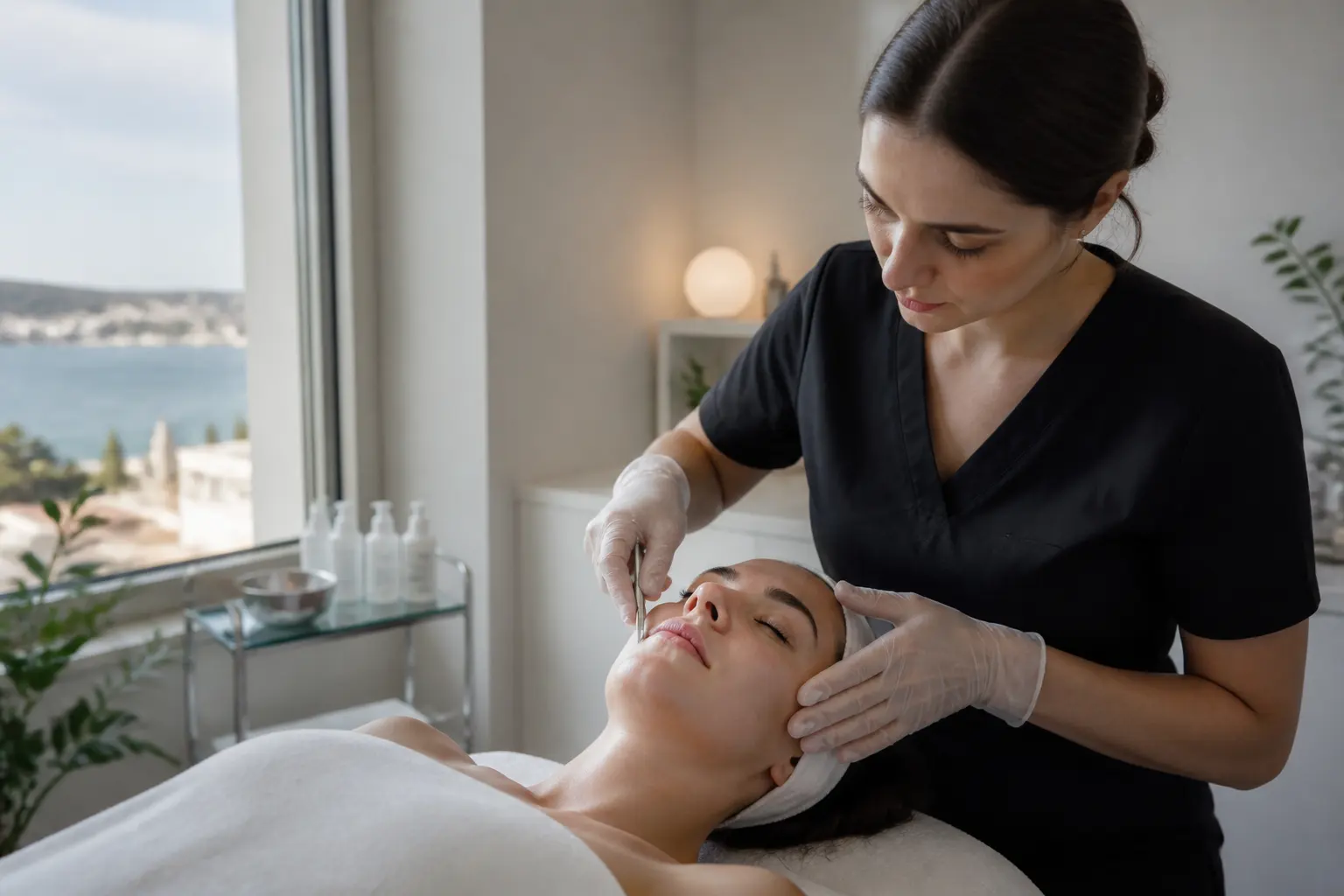
Dermaplaning is a facial exfoliation service that uses a professional blade to lift away surface debris and fine facial hair. The hair-removal element is why peach fuzz is frequently discussed, but it is not the only part of the conversation. Skin condition, recent products and your expectations all matter when deciding whether the appointment suits your routine.
What exactly is peach fuzz?
Peach fuzz is commonly used to describe vellus hair. This is the fine, soft hair that grows over many parts of the body, including the cheeks, forehead and sides of the face. It is different from terminal hair, which is generally coarser, darker and more noticeable.
On the face, peach fuzz can be almost invisible or more apparent depending on the individual. It may catch light, sit beneath liquid or powder make-up, or become more visible when viewed close up. None of these experiences means there is anything wrong with your skin or hair growth. The decision to remove it is personal and cosmetic.
Peach fuzz versus thicker facial hair
The distinction is useful because different hair-removal methods may suit different goals. Dermaplaning is generally associated with the fine hair on broad facial areas. A person whose main concern is more defined, coarser hair around the brows, upper lip or other specific areas may need a different discussion about the most suitable service.
| Feature | Peach fuzz | More noticeable facial hair |
|---|---|---|
| Hair type | Fine, soft vellus hair | Often thicker and more defined |
| Where it may appear | Cheeks, forehead, temples and much of the face | Upper lip, chin, jawline or individual areas |
| Why someone may remove it | A smoother-looking skin surface or make-up finish | Targeted grooming or hair removal |
| Appointment conversation | Usually considered within dermaplaning and facial care | May involve a targeted approach depending on the area and hair type |
A trained professional can discuss the area you would like to address and help keep expectations realistic. The aim is not to create one standard of facial hair or skin, but to choose an approach that makes sense for you.
How does dermaplaning relate to peach fuzz?
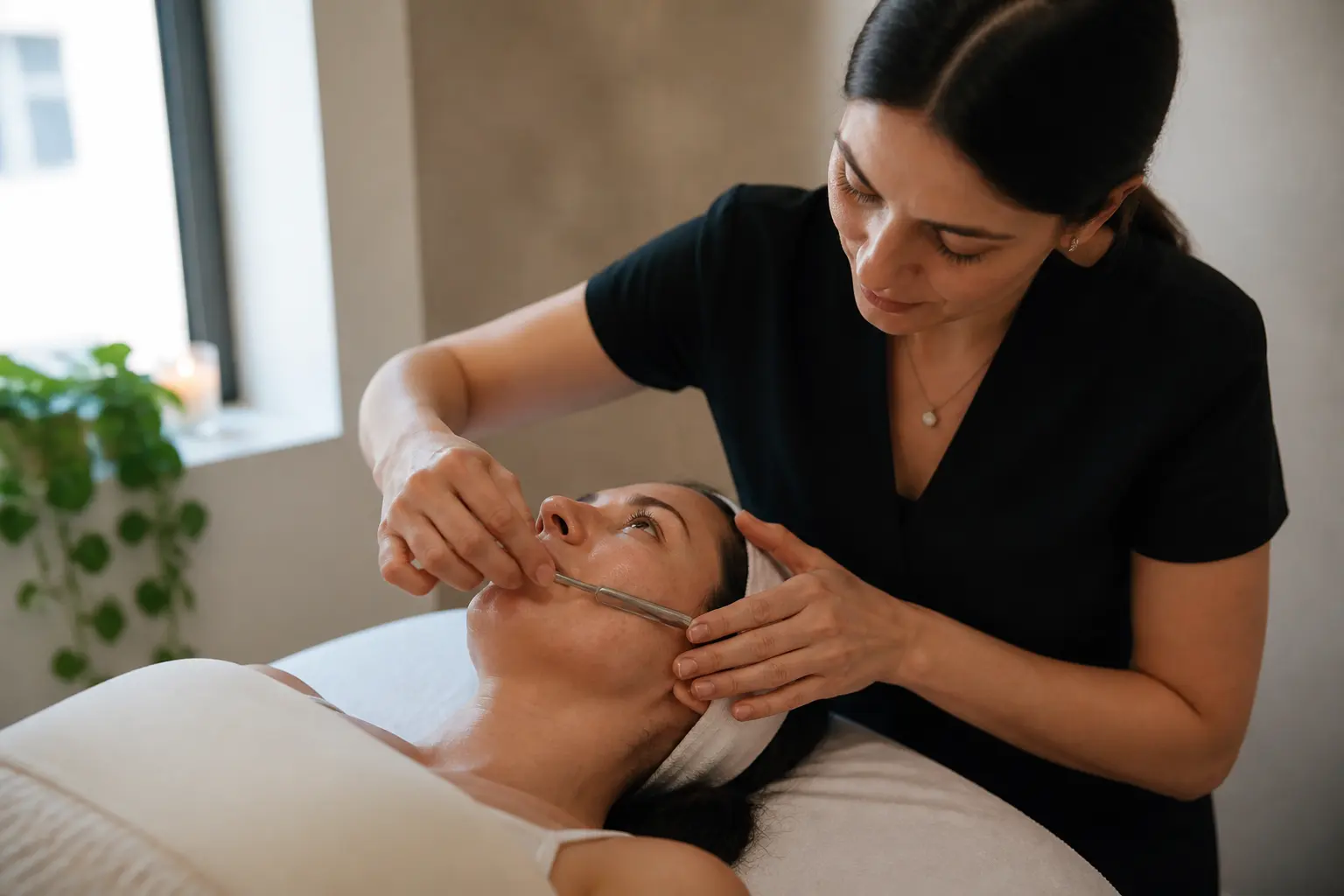
Dermaplaning is often chosen partly because it removes the fine hair sitting on the skin’s surface. During the service, a professional uses a sterile single-use blade at a controlled angle to work across appropriate areas of the face. At the same time, the procedure provides physical exfoliation by lifting away surface build-up.
That combination explains why many people describe their skin as feeling smoother afterwards. Fine hair can affect how certain make-up products sit, while surface texture can influence the appearance of a base product. Removing peach fuzz and completing careful surface exfoliation may therefore support a smoother make-up application for some people.
It is important not to reduce dermaplaning to facial shaving alone. The service should begin with an assessment of the skin and a discussion of your current routine. A professional appointment is about controlled technique, hygiene and selecting an appropriate approach, rather than simply removing hair as quickly as possible.
Does dermaplaning make peach fuzz grow back thicker?
No. Removing fine facial hair does not change the hair follicle or turn vellus hair into thicker terminal hair. When the hair grows back, the blunt tip created by removal can sometimes make it feel different as it first emerges, but this does not mean its texture, colour or rate of growth has changed.
Hair growth is influenced by individual factors, so the time at which you notice fine hair again will differ from person to person. If you have concerns about a sudden or significant change in facial hair growth, it is sensible to seek advice from an appropriately qualified healthcare professional rather than assuming dermaplaning is the cause.
What happens at a dermaplaning appointment?
The exact flow can vary according to the version of dermaplaning booked and the needs identified during the appointment. At Becammo, Dermaplaning Pro and Dermaplaning SPA are facial services, so the focus goes beyond removing peach fuzz alone.
Before beginning, the skin should be considered in context. Mention any sensitivity, recent sun exposure, active irritation, changes to your skincare routine, or products that may affect how your skin responds. This helps the professional decide whether to proceed, adapt the appointment or recommend delaying it.
During the dermaplaning element, the professional works with careful, controlled strokes over suitable facial areas. You may feel gentle contact on the skin, but a properly performed appointment should not be rushed. The facial is then completed according to the service selected and the professional approach used in the studio.
Afterwards, your skin may look clearer and feel especially smooth. That does not mean every concern, mark or texture variation has disappeared. Dermaplaning is a cosmetic facial service, not a medical treatment, and it cannot promise a particular result for every skin type.
Who may consider dermaplaning for peach fuzz?
Dermaplaning can be worth exploring if fine facial hair is one part of your cosmetic goal and you also want a fresh, smooth-looking facial finish. It can be especially relevant for someone who:
- Notices peach fuzz when applying foundation or complexion products;
- Would like a more even-looking make-up base for an occasion;
- Feels that their skin appears dull and wants to discuss professional exfoliation;
- Prefers a facial appointment that includes the removal of fine surface hair;
- Wants professional guidance rather than trying a blade-based method at home.
Suitability is individual. A person may have visible peach fuzz but still need to postpone dermaplaning because their skin is irritated, sun-sensitive or reacting to a product. Likewise, someone with very little visible hair may still be interested in dermaplaning for the exfoliation aspect. The best choice depends on your skin on the day, your routine and what you hope to achieve.
When should you raise concerns before booking?
Be open about anything that could affect comfort or skin response. This includes active breakouts, cuts, a rash, sensitivity, recent peeling or any skincare product that has made your skin feel reactive. It is also helpful to say if you are planning a holiday, a major event or a new make-up look soon afterwards.
A clear conversation protects your experience. Rather than trying to self-diagnose whether dermaplaning is right, describe what you are seeing and feeling: for example, “My cheeks feel dry and look textured”, or “I want foundation to sit more smoothly but my skin has felt sensitive this week.” That gives the professional useful context.
Dermaplaning, at-home facial shaving and threading are not the same
These approaches may all involve facial hair, but they have different purposes. At-home facial shaving is a personal grooming choice. Its tools, technique and level of skin preparation are not the same as a professional dermaplaning appointment.
Threading uses twisted thread to remove hairs from the root and is commonly selected for precise shaping, particularly around the eyebrows. Full-face threading can address facial hair across more areas, but its hair-removal focus differs from dermaplaning’s combination of fine-hair removal and surface exfoliation.
Choosing between them starts with your main aim. If you want detailed brow shaping, threading is likely to be central to the conversation. If you want to address fine peach fuzz alongside a smoother-looking facial surface, dermaplaning may be the more relevant service. If you are unsure, explain your priorities before booking instead of choosing only by the word “hair removal”.
How to prepare for a dermaplaning appointment
Preparation does not need to be complicated, but it should be thoughtful. Arrive with clean skin where possible and avoid testing unfamiliar products immediately beforehand. If you have used an active product, had a reaction or spent significant time in the sun, mention it when you attend.
It is also useful to avoid attempting to remove the peach fuzz yourself shortly before the appointment. Let the professional see the hair growth and skin condition as they are. This supports a more informed discussion about whether dermaplaning is appropriate and what result is realistic.
If an important date is coming up, do not leave your first dermaplaning experience until the last possible moment. Skin can behave differently from one person to another, and giving yourself time allows you to learn how your complexion looks and feels after the appointment.
Aftercare: keeping the focus on skin comfort
After dermaplaning, keep your routine gentle and pay attention to how your skin feels. A simple approach is usually more helpful than adding several new products at once. Use appropriate sun protection and follow the tailored aftercare guidance given at your appointment.
Try not to judge the service only by whether every fine hair has vanished from every angle. Natural facial hair and skin texture are normal. A realistic goal is a smoother-looking, well-cared-for surface that fits your personal routine, not an artificial or identical finish for everyone.
If you wear make-up regularly, you may notice that complexion products apply differently after dermaplaning. Test your usual products with a light hand first, particularly if you are preparing for an event. Your preferred finish, product formula and skin condition will all influence the result.
Choosing between Dermaplaning Pro and Dermaplaning SPA
Both options begin with the same essential question: are you looking to address peach fuzz and surface texture through a professional facial appointment? The right choice may depend on the experience you would like, the time you have available and the condition of your skin.
Rather than assuming one version is universally better, consider what you need from the visit. Explain whether your focus is make-up preparation, a moment of self-care, a smoother-looking facial surface, or simply learning whether dermaplaning is a suitable step for your routine. The studio can then guide you towards the most appropriate booking.
Conclusion
Peach fuzz is normal, fine facial hair, and it does not need to be removed. For those who would like a smoother-looking facial surface or a different make-up finish, dermaplaning offers a professional way to address fine hair while including surface exfoliation as part of a facial service.
The most useful next step is an honest discussion about your skin, your current routine and your goal. When you book, choose the dermaplaning option that suits your plans and mention any sensitivity or recent changes to your skin so your appointment can begin with the right information.
Frequently asked questions
Is peach fuzz normal on the face?
Yes. Peach fuzz is common, fine facial hair. How visible it appears varies naturally between individuals, depending on factors such as hair colour, lighting and skin tone.
Will dermaplaning make my facial hair grow back darker?
No. Dermaplaning does not change the colour, thickness or growth rate of hair. Fine hair can feel different as it grows back because of the blunt tip left after removal, but the follicle itself has not been altered.
Is dermaplaning only for removing peach fuzz?
No. Fine-hair removal is one part of dermaplaning. The appointment also involves professional surface exfoliation, which may be relevant if you want a smoother-looking skin surface.
Can I dermaplane at home instead?
At-home facial shaving is different from professional dermaplaning. A professional appointment involves an assessment of your skin, controlled technique and hygiene practices. If you are unsure what suits your skin, discuss it before trying a blade-based method yourself.
How soon will I notice peach fuzz again after dermaplaning?
This varies by person because hair growth differs naturally. Dermaplaning does not make hair return thicker, but you may begin to notice fine regrowth at a time that is individual to you.
Should I book dermaplaning if my skin is sensitive?
Do not assume it is suitable or unsuitable based on sensitivity alone. Tell the professional about irritation, reactions, sun exposure and the products you use so your skin can be considered before the service begins.