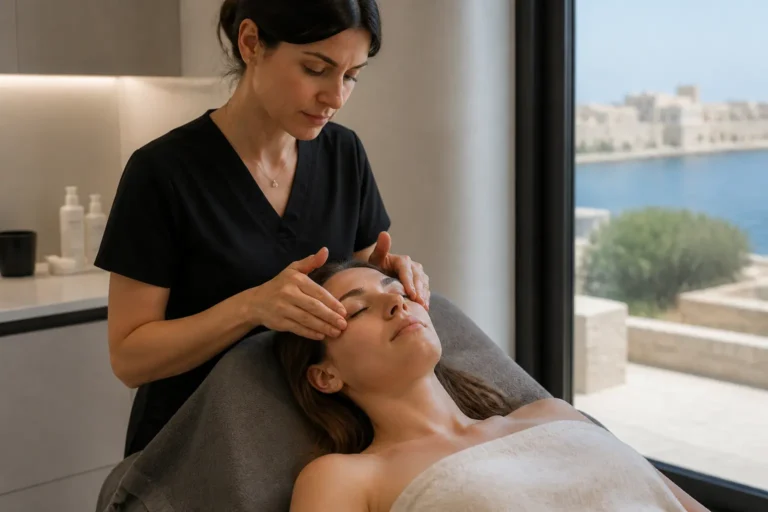
How to Prepare for a Deep Cleansing Facial and Plan Your Skincare Afterwards
Brenda Cammo Team

A deep cleansing facial can be a useful reset when your skin feels congested, dull or difficult to manage with your usual home routine. Preparation matters, though. Arriving with a clear picture of your skin, your current products and your plans for the following days helps make the appointment more considered and makes it easier to keep your skincare calm afterwards.
This guide explains how to prepare for a deep cleansing facial, what to mention during your consultation and how to build a simple aftercare routine without overloading your skin. The goal is not to create a long list of rules. It is to make practical choices that respect how your individual skin feels before and after the appointment.
What a deep cleansing facial is designed to support
A deep cleansing facial is a professional facial-care appointment focused on cleansing the skin and addressing visible congestion, such as blackheads, whiteheads and blocked-looking pores. The exact steps should be tailored after a consultation, because skin can be oily in some areas, dry in others, reactive, dehydrated or prone to breakouts.
It is helpful to think of the appointment as part of a wider routine rather than a replacement for every product you use at home. A facial professional needs to understand what your skin is used to, while you need a realistic plan for the days afterwards. That combination can help you avoid the common mistake of following a facial with several new actives, a scrub and strong cleansing simply because your skin feels freshly smooth.
At Becammo, the Brazilian Deep Cleansing facial is a one-hour service. Your appointment conversation is the right place to explain your current concerns, whether that is oiliness around the T-zone, recurring congestion, dry-feeling cheeks, uneven texture or a skin routine that has started to feel too complicated.
How to prepare for a deep cleansing facial
Keep your routine consistent in the days before
The most useful preparation is often the least dramatic. Avoid turning the days before your appointment into a skincare experiment. If you introduce a new serum, mask, scrub or spot product immediately before a facial, it can be difficult to tell whether a change in your skin is a temporary reaction to the product or part of your usual condition.
Use the products that normally suit you, and make a note of anything that has recently caused stinging, flaking, tightness or unexpected spots. This gives the facial professional better context than simply describing your skin as “sensitive” or “oily”.
Pause additional exfoliation if your skin feels stressed
Do not try to “deep clean” your face at home immediately before a deep cleansing facial. Strong scrubs, cleansing brushes and acid exfoliants can leave the skin feeling irritated or overly dry, particularly when used too often. The American Academy of Dermatology’s guidance on exfoliation notes that over-exfoliating can lead to redness and irritation, and recommends moisturising afterwards.
If exfoliation is already part of your routine, ask at booking or during your consultation whether it makes sense to pause it beforehand. The appropriate timing depends on the product, how often you use it and how your skin is behaving. A gentle, individual approach is more useful than applying the same timetable to everyone.
Tell the practitioner about active skincare and prescribed medication
Bring a short list of what you use on your face. It does not need to be complicated: product names, a photo of the labels or a note on your phone is enough. Include retinoids or retinol, exfoliating acids, benzoyl peroxide, acne products, strong brightening products and any prescribed topical medication.
This is especially important if you use a retinoid or have recently changed how often you apply one. Retinoids can cause irritation in some people and can increase sun sensitivity, so routine changes should be discussed carefully with the clinician who prescribed them where relevant. The American Academy of Dermatology’s retinoid guidance also advises avoiding retinoids during pregnancy and seeking professional advice when they are not suitable for your skin.
If you are taking oral acne medication, experiencing significant peeling, have active irritation, a sunburn or broken skin, mention this before the appointment rather than waiting until you arrive. It may affect whether a facial is appropriate that day or how it should be adapted. A beauty appointment is not a substitute for medical advice; persistent, painful or worsening skin concerns should be assessed by an appropriate healthcare professional.
Plan around sun, swimming and major events
In Malta, sun exposure can be part of everyday life, not only a holiday activity. If you have been in strong sun and your face feels hot, red, tender or sunburnt, let the studio know. Likewise, if you have a beach day, outdoor event, pool session or important occasion planned immediately afterwards, mention it while arranging your appointment.
Skin can look a little flushed after a facial, and everyone’s response differs. Leaving room in your diary gives you the flexibility to keep your routine gentle rather than feeling pressured to apply full-coverage makeup or spend extended time outdoors straight away.
Arrive with clean information, not necessarily a bare face
You do not need to worry about creating the “perfect” starting point for your appointment. If you wear makeup, sunscreen or have followed your usual morning routine, simply say so. The key is honesty about what is on your skin and how it has felt recently.
If possible, avoid picking at blemishes or attempting extractions yourself. Picking can leave skin sore and makes it harder to judge what is active congestion and what is irritation. Let the consultation guide the approach instead.
Questions worth asking at your appointment
A personalised facial is a conversation. Asking a few focused questions can help you leave with advice you can actually follow.
- What should I keep simple for the next 24 to 48 hours?
- Should I pause any exfoliating product, retinol or acne active, and when can I reintroduce it?
- Which moisturiser texture is likely to feel comfortable for my skin at the moment?
- Is there anything about my current routine that may be contributing to dryness or congestion?
- How should I plan sun protection after the facial?
- When should I book again if I want ongoing facial care?
You do not need to buy a completely new skincare collection to have a sensible aftercare plan. Often, understanding which products to pause temporarily is just as valuable as adding something new.
Your skincare routine immediately after a deep cleansing facial
After a deep cleansing facial, aim for a routine that is calm, familiar and easy to repeat. The skin does not need to be challenged simply because it has been professionally cleansed.
That evening: cleanse gently, then moisturise
If you need to cleanse later in the day, choose a gentle cleanser and use lukewarm water rather than hot water. Pat the skin dry instead of rubbing with a towel. The American Academy of Dermatology’s skincare-order advice recommends starting with gentle cleansing, then applying prescribed treatment where appropriate, followed by moisturiser and sunscreen during the day.
For the first evening, keep the focus on comfort. A straightforward moisturiser can help support the skin’s moisture balance without adding another potentially irritating step. If you have been given personalised instructions at your appointment, follow those first.
The following morning: prioritise sun protection
Sun protection should remain part of everyday facial care, especially after an appointment when you are trying to avoid unnecessary irritation. Choose a broad-spectrum, water-resistant SPF 30 or higher that suits your skin and apply it before heading outdoors. The American Academy of Dermatology advises applying sunscreen before going outside and reapplying every two hours when outdoors, as well as after swimming or sweating.
For daily life, this can be a simple routine: gentle cleanse if needed, moisturiser if your skin feels it needs one, then sunscreen. Sunglasses, shade and a hat can also be practical additions on bright days.
Do not stack strong products too quickly
It can be tempting to use an exfoliating toner, a retinol serum, a clay mask and a spot treatment because your pores feel clean. This can be too much at once. The safest approach is to return to active products gradually and only according to advice that takes account of your usual routine.
If you are using prescribed acne medication or a retinoid, do not stop, restart or alter the treatment plan without guidance from the professional who manages it. People taking isotretinoin, for example, may experience increased sensitivity and dryness; the American Academy of Dermatology advises avoiding several potentially irritating ingredients, including exfoliants and retinol, while taking it.
A simple three-day skincare plan
| Timing | Keep the routine focused on | Consider pausing or discussing first |
|---|---|---|
| Appointment day | Gentle cleansing if needed, moisturiser and avoiding unnecessary touching | Scrubs, strong acids, at-home peels and new products |
| Next morning | Gentle cleanse, moisturiser as needed and broad-spectrum SPF | Long unprotected time in the sun, tanning and product layering |
| Following days | Returning gradually to the routine that normally suits your skin | Restarting several active products at once |
This is a planning framework, not a universal prescription. A person with a simple hydrating routine may be able to continue it with minimal adjustment. Someone using prescription skincare, managing breakouts or dealing with sensitivity may need more individual guidance.
How to make your longer-term routine more manageable
A facial can be a useful moment to simplify your shelf. Instead of trying to solve every concern with a different product, start with the foundations:
- a cleanser that does not leave your skin feeling stripped or uncomfortable;
- a moisturiser chosen for how your skin behaves, rather than a trend;
- daily sun protection; and
- any targeted product used consistently and as directed.
The American Academy of Dermatology highlights moisturiser and sunscreen as core skincare steps and cautions that using multiple products over a short period can irritate the skin. That is a useful principle whether your concern is dryness, shine, uneven texture or occasional congestion.
Try to observe patterns rather than reacting to every small change. Does your face feel tight after a particular cleanser? Do breakouts appear after you add several products at once? Does your sunscreen feel too heavy for your daytime routine? These observations can make your next facial consultation more useful and help shape a routine that is realistic for work, travel and Malta’s sunny climate.
When to seek medical advice instead of relying on a facial
Deep cleansing facial care can support a considered beauty routine, but it is not designed to diagnose or manage skin disease. Speak with a qualified healthcare professional or dermatologist if you have severe or persistent acne, painful spots, a spreading rash, signs of infection, sudden swelling, bleeding or a reaction that does not settle. The same applies if a product repeatedly burns, stings or causes marked irritation.
Clear communication protects your skin and helps the appointment stay within its proper purpose: professional facial care tailored to your current comfort and visible concerns.
Conclusion
The best way to prepare for a deep cleansing facial is to keep your routine stable, avoid last-minute exfoliation, be open about products and medication, and plan for gentle skincare afterwards. A simple routine of careful cleansing, moisturising when needed and daily sun protection is often more useful than adding several new steps.
If your skin feels congested or you would like help reviewing what a professional facial appointment could include, book a Brazilian Deep Cleansing facial and use the consultation to discuss your skin, your routine and your plans for the days ahead.
Frequently asked questions
Should I exfoliate before a deep cleansing facial?
It is usually better not to add extra exfoliation immediately before your appointment, especially if your skin is already dry, irritated or sensitive. Tell the facial professional what exfoliants you use so they can advise you in the context of your routine.
Can I wear makeup to my facial appointment?
Yes. Simply let the practitioner know what you are wearing and what skincare you applied underneath. Honest information about makeup, sunscreen and products is more important than arriving with a bare face.
Can I use retinol after a deep cleansing facial?
Timing depends on your skin, the retinol product and the facial approach used. Ask for personalised guidance before restarting it. If you use a prescription retinoid, follow the advice of the clinician who prescribed it.
What should I use on my skin after a deep cleansing facial?
Keep it simple: a gentle cleanser when needed, a moisturiser that feels comfortable and daily broad-spectrum sunscreen. Avoid introducing several new products at once.
Can I go into the sun after a facial?
Plan carefully around sun exposure. Wear suitable sunscreen, seek shade where possible and avoid trying to tan. If your skin feels hot, red or tender after sun exposure before the appointment, tell the studio in advance.
How often should I book a deep cleansing facial?
There is no single schedule that suits everyone. Your skin type, congestion, home routine, sensitivity and personal goals all matter. Discuss a suitable approach during your appointment rather than following a fixed timetable.