Why Professional Facials Give Different Results to At-Home Masks and Gadgets
Brenda Cammo Team
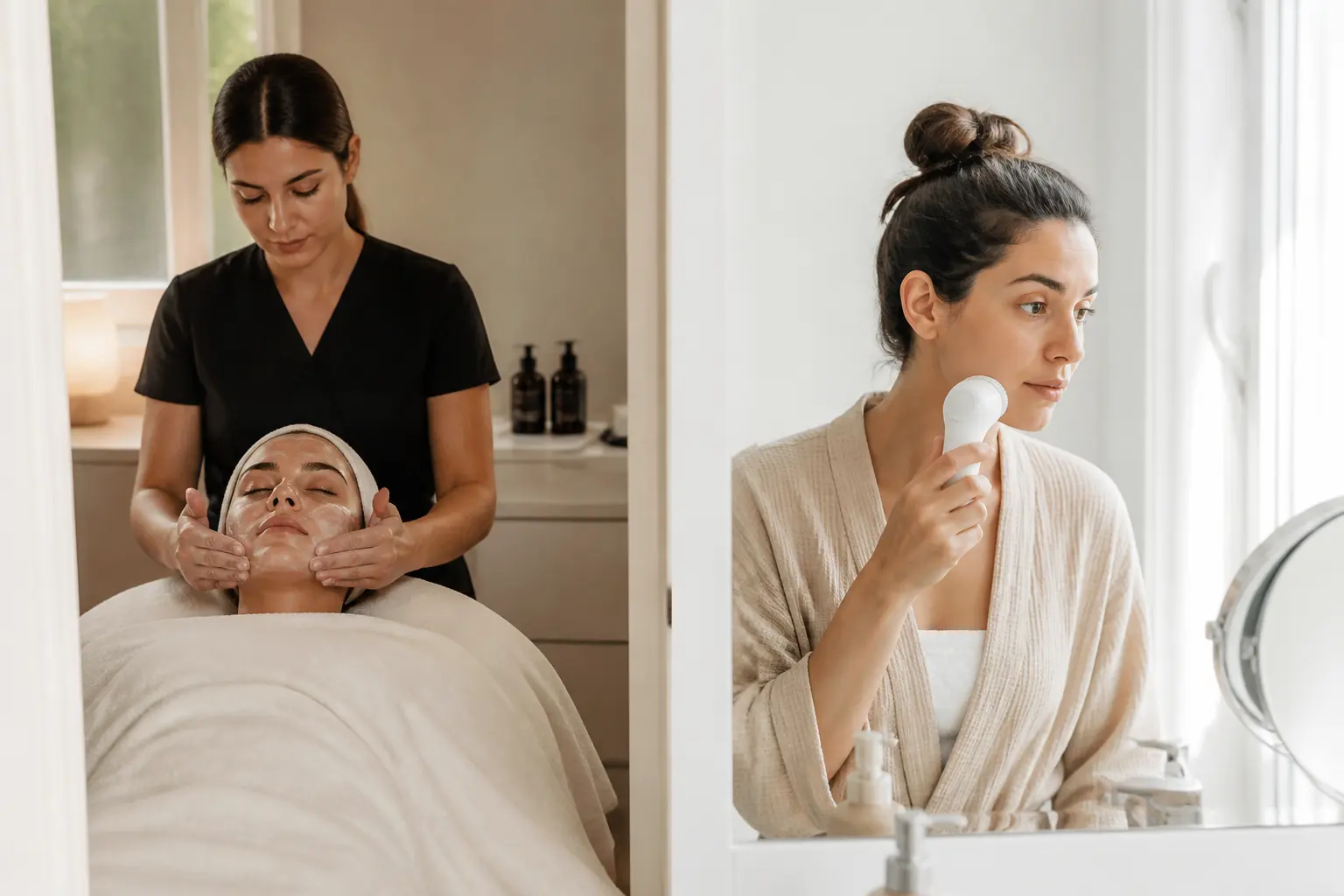
At-home face masks, LED masks, cleansing tools and massage gadgets can make skincare feel more enjoyable. Used thoughtfully, they may support hydration, comfort and a regular self-care routine. So why can your skin still look and feel noticeably different after a professional facial?
The short answer is that a facial appointment is not simply a more intense version of an at-home routine. A professional service brings together skin observation, a tailored sequence of steps, controlled application and practical aftercare guidance. Home products and devices have a different role: they are designed for convenience and regular use, rather than for a fully personalised session.
Understanding that difference can help you spend your time and money more wisely. It also removes the pressure to choose one over the other. For many people, the most sensible approach is a consistent, gentle home routine supported by professional facial appointments when they want more focused care.
At-home masks and gadgets have a useful, but limited, role
A well-chosen at-home mask can be a lovely addition to a skincare routine. Depending on its ingredients, it may provide temporary hydration, help the skin feel softer or offer a comforting reset after a long week. The American Academy of Dermatology notes that masks can support concerns such as hydration and skin-barrier comfort, but they do not replace a complete routine or care for skin conditions.
The same principle applies to home gadgets. LED masks, cleansing brushes and facial massage tools are popular because they are accessible and easy to fit around a busy schedule. However, the result you get depends on the device itself, how consistently you use it, whether it suits your skin and whether you follow the instructions correctly.
That does not make home care unimportant. In fact, everyday habits often shape how comfortable and balanced skin looks between appointments. Gentle cleansing, moisturising when needed and daily sun protection are usually more valuable than regularly changing products or chasing a dramatic overnight effect.
Convenience changes how home products are designed
Home-use products need to be simple enough for many different people to use without direct supervision. That means their instructions tend to be broad. A sheet mask cannot assess whether your skin feels dry because you have over-exfoliated, whether congestion is concentrated around the chin, or whether a new product has left you sensitised.
A gadget cannot adjust itself to the way your skin is behaving that day unless it has very limited, built-in settings. Nor can it ask what else you have used recently, such as acids, retinoids, scrubs or strong active products. This matters because layering too many exfoliating or stimulating steps can leave skin feeling tight, reactive or uncomfortable.
A professional facial begins with personalisation
One of the biggest differences is what happens before the main treatment steps begin. At a professional studio, facial care should start with a conversation about your current routine, immediate concerns and the result you are hoping for. Skin does not behave exactly the same way every week. Travel, weather, stress, sleep, make-up habits and product changes can all influence what it needs.
At Becammo, care is approached with hygiene, documented protocols and a personalised experience in mind. That creates space to adapt the appointment rather than applying the same sequence to every face. A client whose skin feels dehydrated may need a different focus from someone who is concerned about surface texture or visible congestion.
Personalisation is also about knowing when to keep things simple. A good facial is not defined by the greatest possible number of steps. It is defined by choosing steps that make sense together and avoiding unnecessary intensity.
Professional observation is more than looking closely in a mirror
It is easy to notice a dry patch or a breakout at home. It is harder to step back and recognise patterns. For example, skin may feel oily on the surface but also uncomfortable after cleansing. In that situation, adding more stripping masks might not be the answer. Equally, a person using several active products may not benefit from another exfoliating step during every self-care evening.
A professional can use what they observe, along with the information you share, to guide the service. The goal is not to diagnose a medical condition. If you have persistent irritation, a changing mole, painful acne or a skin concern that needs medical assessment, speak with an appropriately qualified healthcare professional or dermatologist. It is to make a beauty appointment more considered, comfortable and relevant to your current skin.
The sequence of a facial changes the overall experience
At home, skincare is often applied in the order that feels quickest: cleanse, use a product, perhaps apply a mask, then moisturise. That can be perfectly appropriate for day-to-day care. A professional facial is planned as a sequence, where one step prepares the skin for the next.
For instance, a service may begin with cleansing and a closer look at the skin before moving into the most suitable stages for that appointment. The preparation, application time, removal method and finishing products all affect how the session feels. That structure can be difficult to recreate in a bathroom between emails, laundry and dinner plans.
There is also value in having nothing else to manage for an hour. When you are not checking a timer, reading tiny instructions or wondering whether a tingling sensation is normal, you can relax. That does not mean a facial should be uncomfortable or overly aggressive. It means the process is supervised and paced with care.
Technique matters, especially with cleansing and exfoliation
Many at-home products are easy to buy, but easy access does not automatically make a technique easy to perform. This is particularly true of manual extraction tools, facial scrubs and devices that combine heat, vibration, suction or electrical current.
Trying to force out congestion, repeatedly scrubbing an area or pressing a device too firmly can irritate the skin. The most common problem is not that someone has done one thing “wrong”. It is that several small things build up: a strong cleanser, an exfoliating mask, a tool used for too long and then a new serum added on top.
The American Academy of Dermatology advises following a mask’s label directions, avoiding overuse and being careful not to duplicate active ingredients already used elsewhere in your routine. It also recommends washing a product off if it causes itching, burning or stinging. Their facial-mask guidance is a helpful reminder that more product time does not necessarily mean a better outcome.
In a studio setting, technique includes pressure, timing, product choice and the decision not to perform a step when it is not appropriate that day. These details can influence whether skin leaves looking fresh and comfortable rather than stressed.
Gadgets can support routine, but they are not all interchangeable
“Facial gadget” covers a very wide range of products. A cooling roller, a cleansing brush, an LED mask and a microcurrent device do not work in the same way, so they should not be compared as though they do.
Before purchasing or using a device, read the manufacturer’s instructions, check whether it is suitable for your skin and use only the recommended settings and frequency. Be especially cautious with devices that use light, heat, electrical current or needles. The US Food and Drug Administration explains that microneedling devices can involve risks when they penetrate the skin and recommends seeking a specially trained provider for this type of procedure. Read the FDA guidance on microneedling devices.
For LED products, expectations should remain realistic. The American Academy of Dermatology says some red-light devices may produce subtle to noticeable results for particular cosmetic concerns, while also advising people, especially those with darker skin tones, to discuss home red-light use with a dermatologist where appropriate. Its guide to red-light therapy is useful if an LED mask is on your shopping list.
A professional facial does not need to compete with your favourite home device. Instead, it can help you identify whether that device belongs in your routine at all, how often you can sensibly use it and which other products you may need to simplify around it.
Professional results are often about consistency, not one dramatic change
Photos and social media can make facial results look instant and uniform. Real skin is more individual. You may leave a professional appointment feeling cleaner, smoother, more hydrated or more relaxed, but the visible result can vary according to your skin, the service selected, your current routine and what your skin was like before the appointment.
For this reason, it helps to think in terms of skin habits rather than a single “fix”. A facial can be a focused reset and an opportunity to review what is working. At-home care then supports that feeling between visits. If your products constantly leave your skin uncomfortable, changing everything at once is rarely helpful. Introduce one change at a time and give your skin an opportunity to respond.
A simple way to combine home care and facial appointments
- Keep your home routine steady. Use products you know your skin tolerates, rather than switching routines every few days.
- Use masks as a targeted extra. Choose them for a specific reason, such as hydration or a moment of calm, not because you feel you must use one daily.
- Avoid stacking intense steps. If you use exfoliating products or a device, consider whether an additional scrub or strong mask is necessary that same day.
- Tell your facial professional what you use. Mention new products, active ingredients and gadgets so your appointment can be considered in context.
- Follow aftercare advice. The way you treat your skin after a facial can be just as important as the appointment itself.
When is it worth booking a professional facial?
You do not need to wait for a major skin concern to book. A professional facial can make sense when your skin routine feels confusing, when your complexion has been affected by travel or seasonal changes, or when you simply want dedicated time for well-planned care.
It can also be useful if you are tempted to buy several new gadgets or products at once. A consultation-style conversation may help you focus on what your skin is actually asking for, rather than what is trending online.
At Becammo in Sliema and Swieqi, the right facial choice should begin with your priorities, your comfort and a realistic conversation about what a session can offer. If you are interested in a more targeted facial experience, you can use the final booking prompt to explore the available option and ask any questions before your visit.
Conclusion
At-home masks and gadgets can be enjoyable, practical additions to skincare, but they are not designed to replace the observation, tailored technique and structured care of a professional facial. The difference is not always about using more powerful products. Often, it comes down to using the right approach for your skin on that particular day.
Keep your home routine gentle and consistent, choose gadgets with care and treat professional appointments as a chance to reset, learn and receive personalised support. When you are ready to explore a facial at Becammo, the booking option below is a straightforward place to start.
Frequently asked questions
Can an at-home mask replace a professional facial?
No. A mask may support hydration or comfort, but it cannot provide the personal observation, tailored treatment sequence and in-person guidance available during a professional appointment. Both can have a place in a considered routine.
How often should I use an at-home facial mask?
Follow the product instructions and pay attention to how your skin feels. Frequency depends on the formula and your existing routine. Exfoliating masks usually need more caution than simple hydrating options.
Why does my skin look brighter after a facial?
Skin may look fresher after thorough cleansing, hydration and a carefully selected treatment sequence. The exact appearance and how long it lasts will vary between individuals and according to their skin, routine and the facial chosen.
Should I bring my skincare products to a facial appointment?
You do not usually need to bring them, but it is helpful to know the names of the products and devices you use. Mention active ingredients, recent product changes and any sensitivity so the session can be planned more thoughtfully.
Are at-home LED masks safe for everyone?
Not necessarily. Devices vary, and suitability can depend on the product, your skin and your personal circumstances. Read the manufacturer’s directions carefully and seek professional advice if you are uncertain, particularly if you have an ongoing skin concern or are using medications that affect light sensitivity.