Threading for Mature Brows: Soft, Natural Definition
Brenda Cammo Team
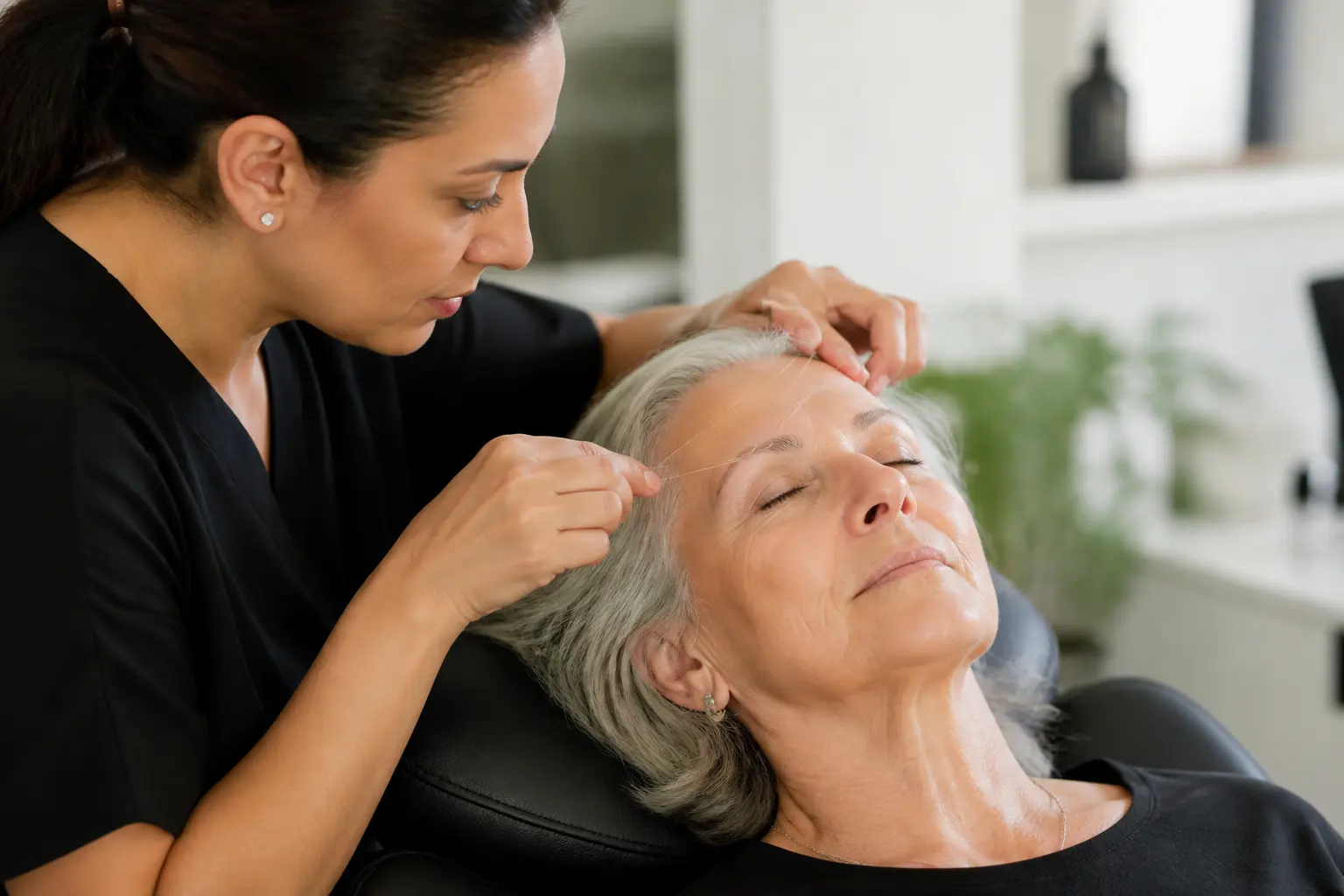
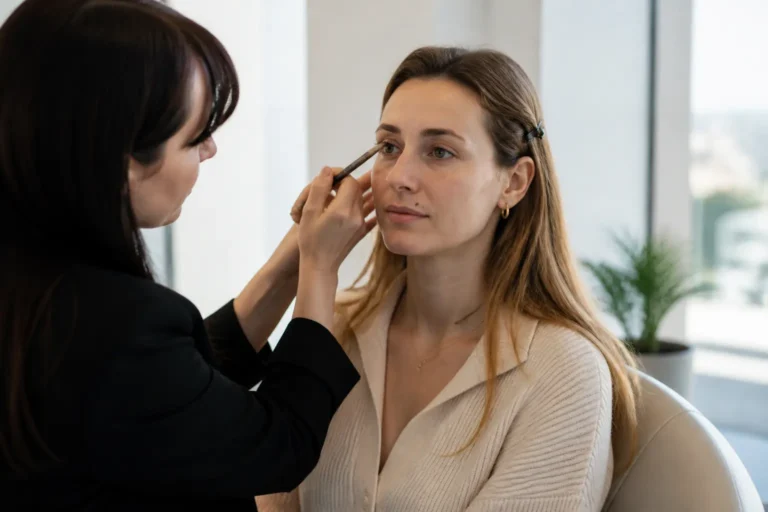
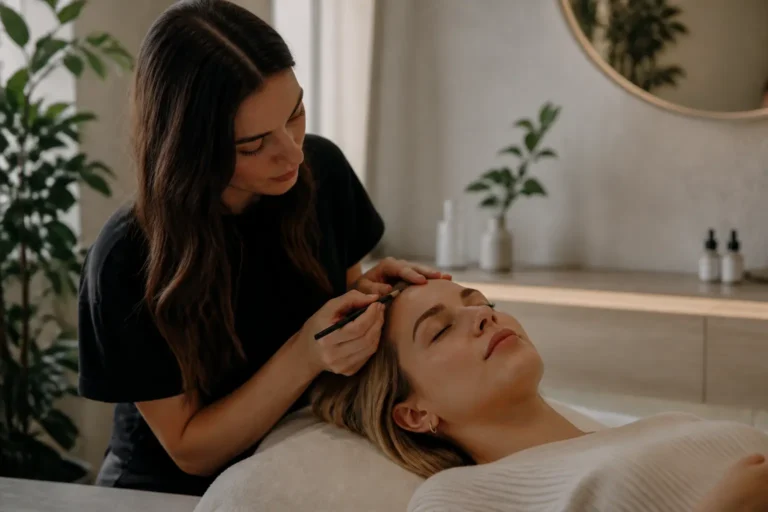
Mature brows do not need to follow a trend, become darker or be reshaped into a high, dramatic arch to look considered. Often, the most flattering approach is quieter: remove only the hairs that distract from the natural line, preserve useful density and create definition that still feels like you.
Threading for mature brows can support that approach because it allows a brow artist to work with precision around the existing shape. The aim is not to make both brows identical or to recreate a brow from an earlier stage of life. It is to make the brow area look clean, balanced and in harmony with your facial features today.
This guide explains what a soft threading design can involve, how to prepare for the conversation, and how to maintain the result without over-tidying at home.
What does a soft, natural brow design mean?
A soft brow design is defined enough to give the eye area structure, but not so heavily sculpted that the brow becomes the first thing people notice. Rather than chasing a fixed template, the artist considers the natural direction of the hairs, the existing fullness, the position of the brow and the proportions of the face.
For mature brows, this often means protecting the hairs that contribute to fullness while tidying selectively around them. A little clean-up beneath the brow, between the brows or above the natural outline may make a meaningful difference. It does not automatically mean narrowing the brow, deepening the arch or removing every fine hair.
A thoughtful design also accepts that brows are sisters, not twins. One side may sit slightly higher, grow more densely or have a different natural curve. Trying to force exact symmetry can lead to unnecessary hair removal. A balanced result is usually more realistic and more flattering than a perfectly matched outline.
Why threading can suit a lighter-touch brow routine
Threading uses a twisted thread to remove hairs from targeted areas. At Becammo, disposable single-use thread is used for each client: cotton is the usual material, while polyester is available for clients with relevant allergies. This method can be especially useful when the goal is precise tidying rather than a broad change to the brow shape.
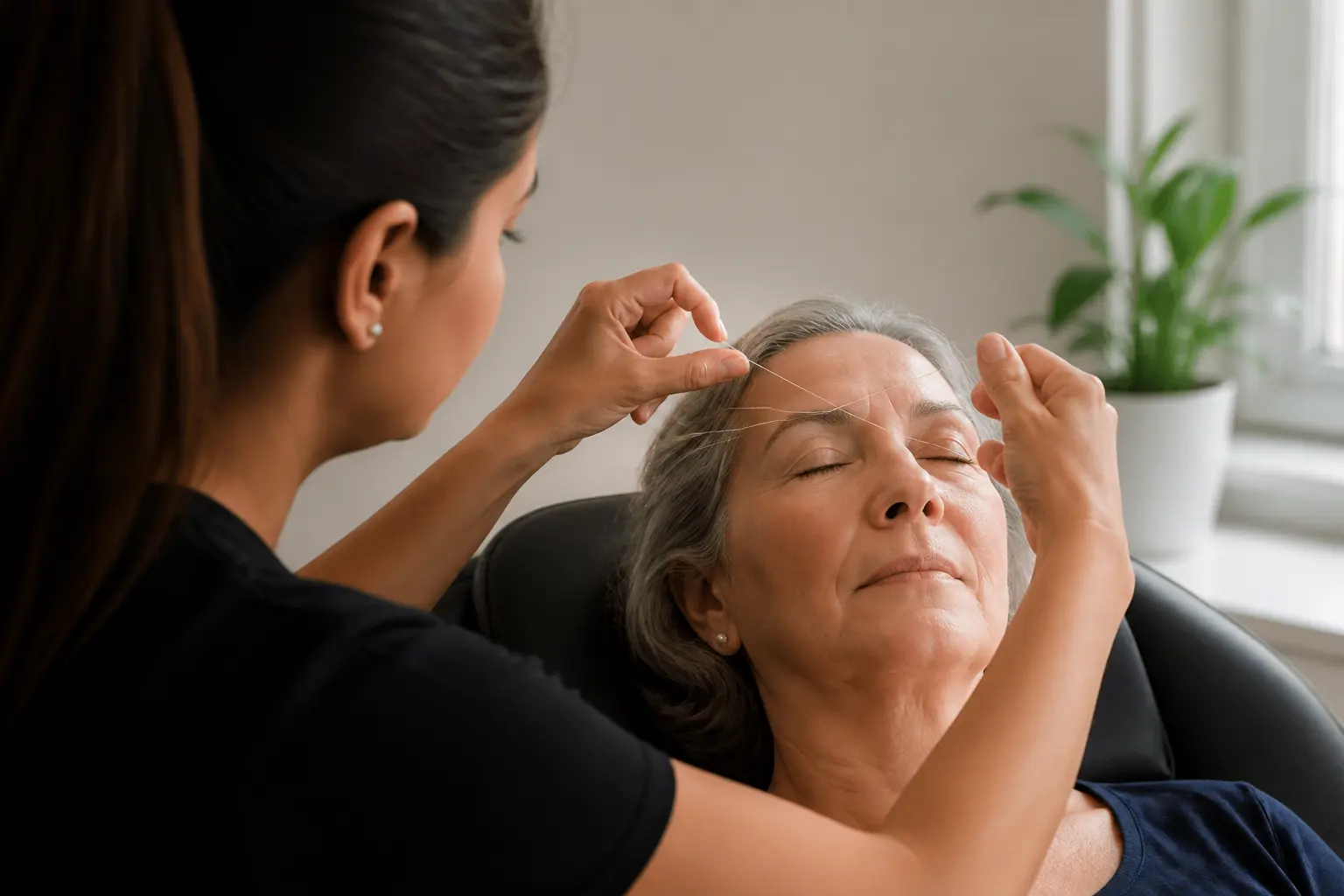
During a personalised appointment, threading can be adapted to the amount of hair present and the areas that need attention. The artist can leave hairs that support the line of the brow and concentrate on the few that interrupt its clarity. That measured approach matters when you prefer an understated finish.
Threading is not necessarily free from sensation. Some people experience mild, brief discomfort while hairs are removed, and sensitivity differs from person to person. If you are concerned about comfort, have easily irritated skin or are returning to brow grooming after a long time, say so when you book and again at the appointment.
What changes can mature brows have?
There is no single “mature brow” type. Some people retain dense brow hair and only want a neater shape. Others notice lighter, finer, wirier or more uneven growth. Brows can also appear less defined if individual hairs grow in several directions or if the original outline is no longer obvious.
These changes do not create a requirement to alter your brows. They simply make a design consultation more valuable. The goal is to identify what is already working and decide where a small amount of grooming can improve the overall impression.
Common priorities to mention to your brow artist
- You want to retain as much natural fullness as possible.
- You prefer a gentle arch, or want to avoid making the arch higher.
- You have a sparse area that you do not want threaded around too closely.
- One brow grows differently from the other.
- You wear glasses daily and want the shape to work with your frames.
- You use brow pencil, powder or gel and want a shape that is easy to maintain.
- You would like a clean result without a sharp, heavily outlined look.
These details are more useful than asking for a particular celebrity brow or a universal “anti-ageing” shape. Your features, preferences and existing hair pattern should guide the design.
How a threading consultation can keep the shape true to you
A good brow appointment starts before the thread is used. Explain what you like about your brows as well as what you would like to change. If you have spent years avoiding a certain shape, or if a previous over-tidy left you feeling unlike yourself, that is useful information.
You can ask for a conservative first appointment. This gives you the opportunity to see how a small refinement feels before considering any further adjustment at another visit. With brows, it is usually easier to remove less and reassess than to take away fullness that you later miss.
Discuss the overall brow line
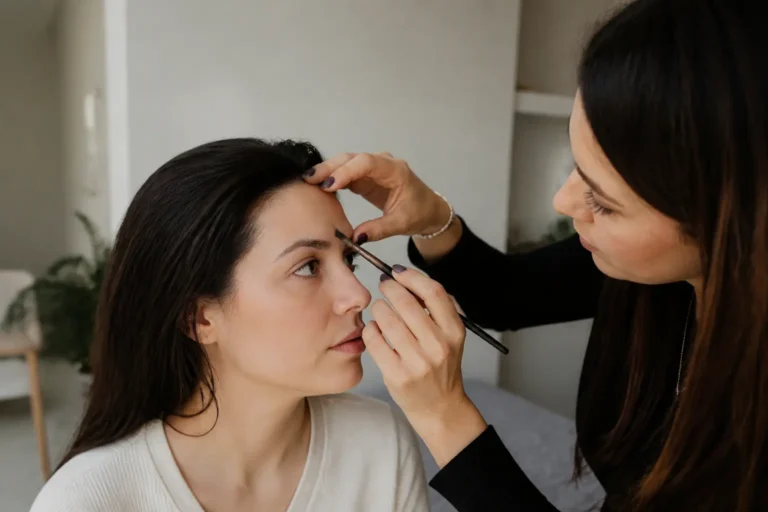
Your artist can look at where each brow begins, its natural high point and where it tapers, while taking account of the face as a whole. Mapping and design are not about imposing identical measurements on everyone. They provide a framework for discussing proportion and placement, then adapting it to your own growth pattern.
For a softer finish, you might ask to keep the top edge relatively natural and focus on removing only obvious stray hairs. Depending on your brows, a gentle tidy underneath may bring more clarity without creating a thin or overly angular appearance.
Protect areas that create density
When hairs are fine or sparse, every removal decision matters. Point out any patches you are trying to grow out, and ask the artist to leave the surrounding hairs where possible. The appointment can then focus on grooming elsewhere so the brow still looks intentional during the growing-out period.
This is also why frequent, unsupervised tweezing can make your routine harder. Removing a few hairs at home may seem minor, but repeated adjustments can gradually blur the shape or reduce density in areas you would rather preserve.
Choose definition, not severity
Definition can come from a cleaner line, better balance between the brows and hairs sitting in a more orderly direction. It does not always require colour services or a visibly drawn outline. If you do use make-up, a softly threaded brow often gives you a clearer guide for applying a light pencil or powder only where you want it.
If you are considering tint or henna as well, make that a separate conversation. The right choice depends on the result you want, your existing brow hair and how much colour definition feels comfortable for you. Threading alone may be the right starting point when your priority is shape.
Before your threading appointment: practical preparation
A little preparation helps the appointment stay focused on your brow goals and your comfort. There is no need to arrive with perfectly groomed brows; in fact, allowing the natural growth to show gives the artist more to assess.
- Avoid tweezing, trimming or trying to redraw the shape immediately before your visit.
- Come with a clear idea of whether you want a tidy-up, a subtle shape refresh or help growing out previously over-plucked areas.
- Tell the artist about skincare products you use around the brow area, particularly active products, and mention any recent sensitivity or irritation.
- Share relevant allergies, including any concern about materials used during the service.
- If you normally wear brow make-up, describe the finish you usually create or bring a photo of your own usual look as a reference.
Do not feel pressure to arrive with a dramatic before-and-after expectation. A successful natural design can look like a more polished version of your own brows rather than an obvious transformation.
After threading: keeping the result soft
After a brow threading appointment, avoid rushing into extra hair removal at home. Give yourself time to see the shape in normal daylight and as part of your everyday routine. A brow that looks different immediately after grooming may settle into a very natural appearance once any short-lived redness has passed.
Follow the aftercare guidance given at your appointment, especially if your skin feels sensitive. Keep the brow area clean, avoid rubbing it unnecessarily and be mindful of introducing new products directly on freshly threaded skin. If you have a question about your individual reaction or routine, contact the studio rather than guessing.
Use make-up sparingly, if you use it at all
A soft brow can be enhanced without covering the work of the threading. Brush hairs into place first. Then, if needed, use light, hair-like strokes in any visibly sparse sections rather than colouring in the entire brow. Choosing a gentle application can keep the result dimensional and personal.
If you prefer no make-up, that is equally valid. A well-considered threading design should make sense with a bare face as well as alongside your usual make-up.
How often should mature brows be threaded?
The right timing depends on how quickly your hair grows, how defined you like the brow area to appear and how much hair you want to retain. Many people find that a maintenance rhythm of roughly every 15 to 20 days suits the natural cycle of visible regrowth, while others prefer to wait longer for a more relaxed routine.
There is no benefit in booking simply because a calendar says you should. Look at your brows in everyday light. When stray hairs begin to interrupt the shape or you feel you are relying on too much home tweezing, it may be time for a tidy-up. If you are deliberately growing out an area, your artist may suggest a different approach based on what they can see.
A simple decision guide for your next brow appointment
| Your priority | A useful request to make |
|---|---|
| Keep my brows full | “Please tidy the obvious stray hairs but preserve the density I have.” |
| Make the brow area look neater | “I want a clean shape with a soft, natural edge.” |
| Reduce a strong arch | “I prefer a gentler line and do not want extra height through the arch.” |
| Manage uneven growth | “One brow behaves differently; can we balance them without making them identical?” |
| Grow out a sparse patch | “Please leave this area to grow and tidy around it where appropriate.” |
When a personalised appointment is particularly helpful
It is worth booking a professional design conversation if you are unsure where to remove hair, have had uneven results from at-home grooming or feel your brows no longer reflect your preferred style. This is also useful if you have different growth patterns on each side, wear glasses that affect how the brow area reads, or want to simplify your daily make-up routine.
Becammo’s brow service is built around threading and personalised design for a wide range of brow types and backgrounds. At either the Sliema or Swieqi studio, you can choose the location that fits your day and discuss a conservative, feature-led approach before the service begins.
Conclusion
Soft definition is not about doing less carelessly; it is about making careful choices. For mature brows, threading can create a polished, balanced result while respecting the density, direction and character that make your brows your own.
If you would like a shape that feels tidy but not overdone, book a brow threading appointment and make your preference for a gentle, natural finish part of the consultation from the start.
Frequently asked questions
Can threading make mature brows look too thin?
It does not have to. Tell your artist that preserving fullness is your priority. A personalised threading appointment can focus on stray hairs and leave the brow hairs that support density and shape.
Should mature brows have a high arch?
Not necessarily. The most suitable arch is the one that works with your natural brow line and features. A gentle arch or a straighter shape may feel more authentic and easier to maintain for some people.
Is threading suitable if my brow hairs are sparse?
It can be, provided the design is conservative. Show the artist any sparse areas you are growing out, so the threading can be planned around them rather than removing hairs you wish to keep.
How do I ask for natural-looking brows?
Use clear language such as, “I want soft definition,” “please keep the fullness,” or “I do not want a sharp outline.” Bringing a photo of your own brows on a day you liked them can also help communicate your preference.
Can I use brow make-up after threading?
Follow the individual aftercare advice given by your artist. Once the area is comfortable and you are ready to apply make-up, a light hand can maintain the soft finish: brush the hairs first and add only small strokes where you want extra definition.