What Single-Use Thread Means in a Brow Threading Appointment
Brenda Cammo Team
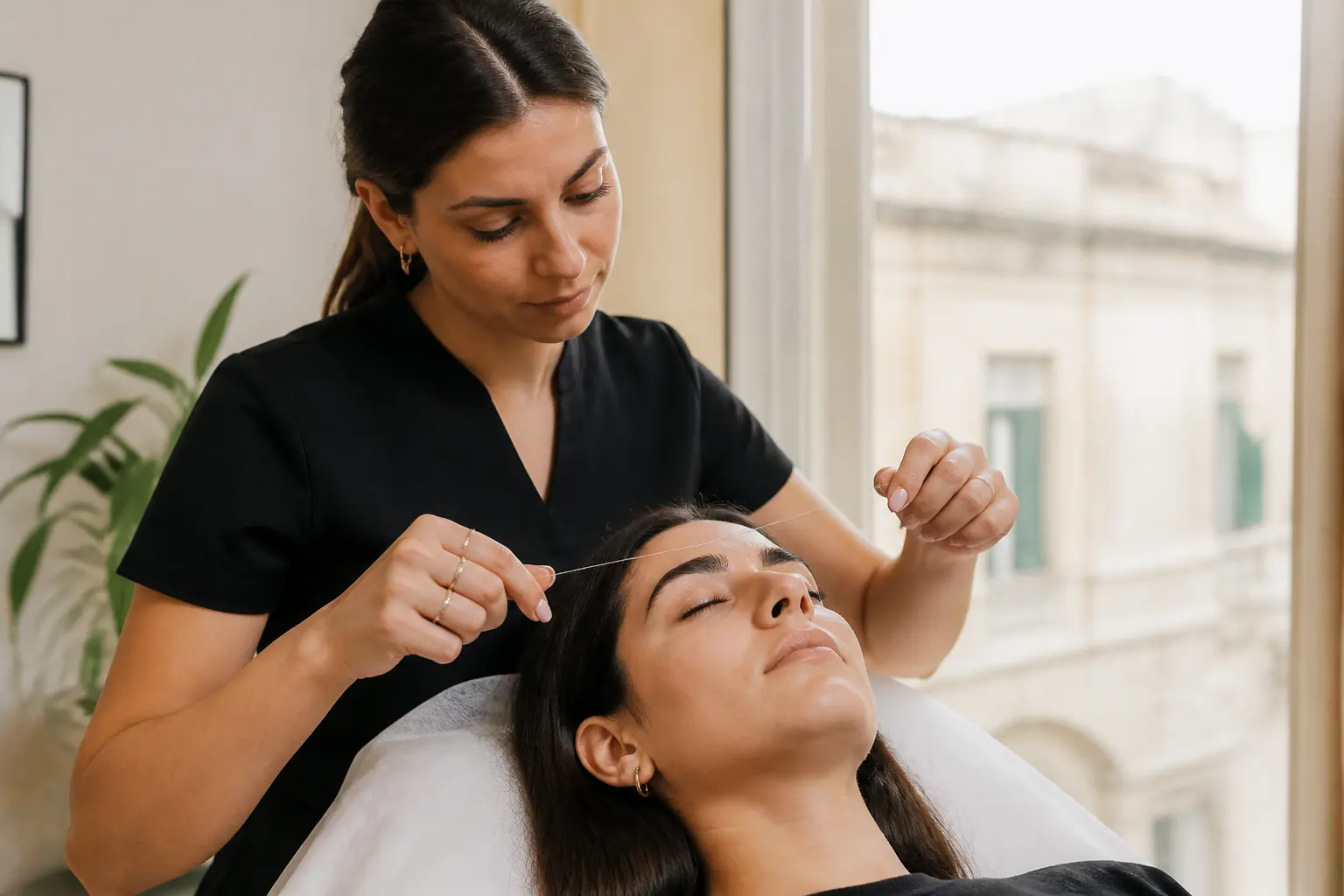
When you book eyebrow threading, the thread itself may seem like a small detail. In fact, it is an important part of the appointment. Single-use thread means that a fresh piece of thread is used for your service and discarded afterwards, rather than being kept for another client.
For a professional brow appointment, this simple practice supports a clean, organised service and gives you clarity about the materials being used close to your skin. It is also a useful point to understand if you are trying threading for the first time, returning after a long break, or comparing different beauty appointments in Malta.
At Becammo, eyebrow threading is carried out with disposable thread for one client only. Cotton thread is the standard option, while polyester thread can be used for clients with an allergy to cotton. The choice of thread is only one part of a considered appointment: your brow shape, natural hair growth, skin condition on the day and desired level of definition all deserve attention too.
What does single-use thread mean?
Single-use thread is thread prepared for one person’s appointment and not reused afterwards. During threading, the artist twists and moves the thread across the skin to catch and remove unwanted hairs with precision. Because the thread comes into close contact with the brow area, using a fresh section for each client is a straightforward hygiene measure.
It does not mean that threading is identical at every studio, or that one material alone determines the quality of the result. A professional appointment also depends on good preparation, clean working practices, clear communication and a design approach that respects your natural brows rather than forcing them into a fixed template.
Still, the thread is not an afterthought. Asking whether it is single-use is a sensible question, just as you might ask what will happen during the appointment or how to care for the brow area afterwards.
Why the thread matters during eyebrow threading
Threading is a hair-removal and shaping technique with a long history in India and the Middle East. The thread is looped and twisted in a controlled movement, allowing the artist to remove hairs from selected areas around the brow. This can make it useful for refining the outline while preserving the hairs that support the shape you are growing or maintaining.
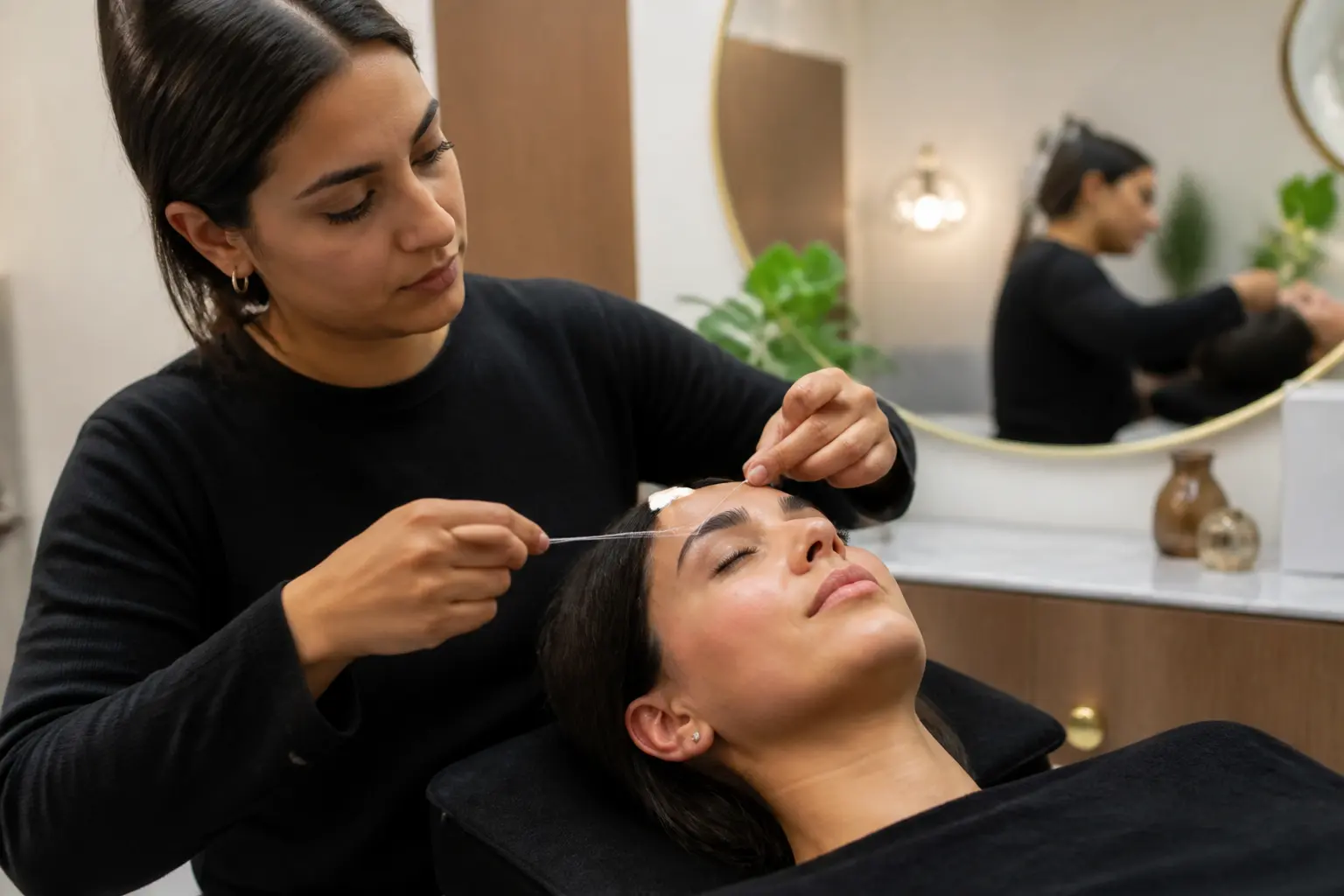
Since the technique works directly on the skin and hair, the condition and handling of the thread matter. A fresh, disposable piece helps keep the appointment process clear: it is allocated to you, used during your service and then thrown away.
For clients, this can feel reassuring because there is no ambiguity about whether the same piece has been used previously. For the studio, it supports a repeatable way of working across appointments. It is a practical detail, but practical details often contribute to a more comfortable and confident beauty experience.
What you may notice during a professional appointment
You do not need to know the threading technique before you arrive. However, understanding the basic flow can help you feel more prepared.
- A short design conversation. Your artist should establish what you would like to keep, soften, grow out or define. This is particularly important if you have uneven growth, sparse areas, a previous shape you no longer like, or an occasion coming up.
- Preparation of the working area. The brow area is assessed before threading begins. If you have sensitivity, irritation, active skincare use or any concern that could affect comfort on the day, mention it before the service starts.
- Fresh thread for the service. A new piece of thread is used for your appointment. At Becammo, disposable cotton thread is normally used, with a polyester option for clients who are allergic to cotton.
- Controlled hair removal and shaping. The artist works around the brows in small sections, continually checking balance and avoiding unnecessary removal. Brows are naturally sisters rather than exact twins, so the aim is harmony, not artificial duplication.
- A final check and aftercare guidance. At the end, you can look at the result, ask about the shape and discuss when to return based on your own hair growth and brow goals.
The sensation of threading varies. Some people describe brief pulling or mild discomfort, especially in more sensitive areas. It is better to expect that you may feel the hair-removal process rather than assume it will feel the same for everyone. Let your artist know if you need a pause.
Single-use does not mean one-size-fits-all
Although every client should receive a fresh piece of thread, the rest of the appointment should remain personalised. Your brows may be fine, dense, coarse, curly, patchy, light in colour or growing in more than one direction. Your preferred result may be a tidy natural outline, a softly lifted arch or a more defined shape to complement your make-up routine.
A professional threading service should take these differences into account. For example, someone growing out over-plucked brows may benefit from a conservative tidy-up that protects the hairs needed for future shape. Someone with naturally full brows may want more work through the centre and lower outline while keeping the upper line soft. Neither approach is automatically better; they answer different goals.
The same is true of facial features and personal style. Brow design is not about copying a trend or applying the same arch to every face. A thoughtful conversation helps the artist understand what you want while working with the brow hair you have today.
Cotton and polyester thread: what is the difference for clients?
At Becammo, cotton is the usual threading material. It is used as a disposable, single-use thread for each client. Where a client has a cotton allergy, polyester thread can be used instead.
You do not need to choose a material without guidance. If you know you react to cotton, have experienced sensitivity during a previous threading service, or are unsure whether something in your routine could affect the brow area, raise it when booking or before the appointment begins. Clear information gives the artist a better starting point.
It is also helpful to distinguish an allergy concern from the ordinary temporary redness that some people notice after hair removal. Skin can react differently depending on individual sensitivity, recent skincare use, climate, friction and the amount of hair removed. If you have a known concern, it is always worth discussing it directly rather than guessing.
Questions you can ask before your brow threading appointment
Good appointments make room for questions. You do not have to treat beauty services as something you should silently endure. If hygiene, comfort or your brow plan matters to you, it is reasonable to ask for clarification.
- Is a fresh, single-use thread used for every client?
- What type of thread do you use, and is there an alternative if I have a cotton allergy?
- Can we keep this appointment conservative while I grow out certain areas?
- I use active skincare products. Is there anything I should mention before threading?
- Can you show me what you plan to remove before we begin?
- What should I avoid immediately after the appointment if my skin feels sensitive?
These questions are not difficult or inconvenient. They help create a shared understanding of the service, especially when you are new to threading or want to make a change to your usual brow shape.
How to prepare without overcomplicating it
Preparation for eyebrow threading does not need to become a long checklist. The most useful step is to arrive ready to communicate clearly. Think about whether you want a tidy-up, a noticeable shape update, help growing out thin sections, or a brow design that works with your usual make-up.
Before the appointment, make a note of anything relevant to your skin or routine. This may include recent sensitivity, products you use around the brow area, a known cotton allergy, or a previous threading experience that was uncomfortable. Do not assume the artist can see every detail from your brows alone.
It can also help to avoid making several major changes at once. If you are trying to grow fuller brows, a measured approach over several appointments may be more useful than removing a large amount of hair and then regretting the result. Bring reference images only if they help explain the level of definition you like; your own brow structure should remain the starting point.
What to expect after threading
After eyebrow threading, the skin can look temporarily pink or feel a little sensitive. This is one reason it is helpful to plan your appointment with enough breathing room before an important event, photographs or travel. Your response can vary from one visit to another, so leave time rather than relying on a last-minute booking.
Follow the aftercare advice given by your artist, particularly if your skin feels reactive. Avoid unnecessary touching of the freshly threaded area and be mindful of products or activities that could make the skin feel more irritated. If something does not feel right or you have questions about your individual response, contact the studio for guidance.
The brow result will also depend on your natural hair cycle and growth pattern. Some clients return for regular tidying, while others prefer to leave more time between appointments to build fullness in selected areas. There is no universal timetable that suits every brow.
Choosing a studio with confidence
Single-use thread is one clear sign of an organised approach, but it should sit alongside other considerations. Look for a studio that explains the service plainly, listens to your preferences, uses an appointment process that feels professional and gives you the chance to discuss relevant skin or allergy concerns.
In Malta, Becammo offers eyebrow threading and design in Sliema and Swieqi, with experience working across a wide range of brow types and ethnic backgrounds. The focus is not on making every client’s brows look the same. It is on creating a considered shape that fits the individual while following documented hygiene and aftercare practices.
If you are booking your first threading appointment, keep the goal simple: choose an artist you feel comfortable speaking to, explain what you want to preserve as well as what you want removed, and ask about the materials used. A calm, informed conversation can make the appointment feel far more straightforward.
Frequently asked questions
Is the thread reused during eyebrow threading?
In a professional single-use process, the thread used for your appointment is not kept for another client. At Becammo, the thread is disposable and used for one client only.
What kind of thread is used for eyebrow threading?
Cotton thread is commonly used. At Becammo, cotton is the standard material, while polyester thread is available for clients who are allergic to cotton.
Does single-use thread change the brow result?
Fresh thread supports a clean appointment process, while the result also depends on the artist’s technique, your natural brow growth, the agreed shape and how much hair is appropriate to remove.
Can I ask for a conservative brow tidy-up?
Yes. Tell your artist which areas you are trying to grow and whether you prefer a natural, soft outline. A conservative design conversation is especially helpful if you have previously over-plucked your brows.
What should I mention before a threading appointment?
Mention known allergies, current skin sensitivity, relevant skincare products and any concern from a previous appointment. Also explain your brow goal, such as maintaining fullness, changing the arch or simply tidying the shape.
Single-use thread may be a small part of eyebrow threading, but it represents an important principle: the details of your appointment should be handled with care. When you understand the material, feel able to ask questions and have a clear conversation about your brow goals, you can book with greater confidence. If you are ready for a personalised brow tidy-up or design, choose the Becammo eyebrow service that suits your preferred Malta location and appointment needs.