How to Tell Your Brow Artist You Want Balanced Colour
Brenda Cammo Team
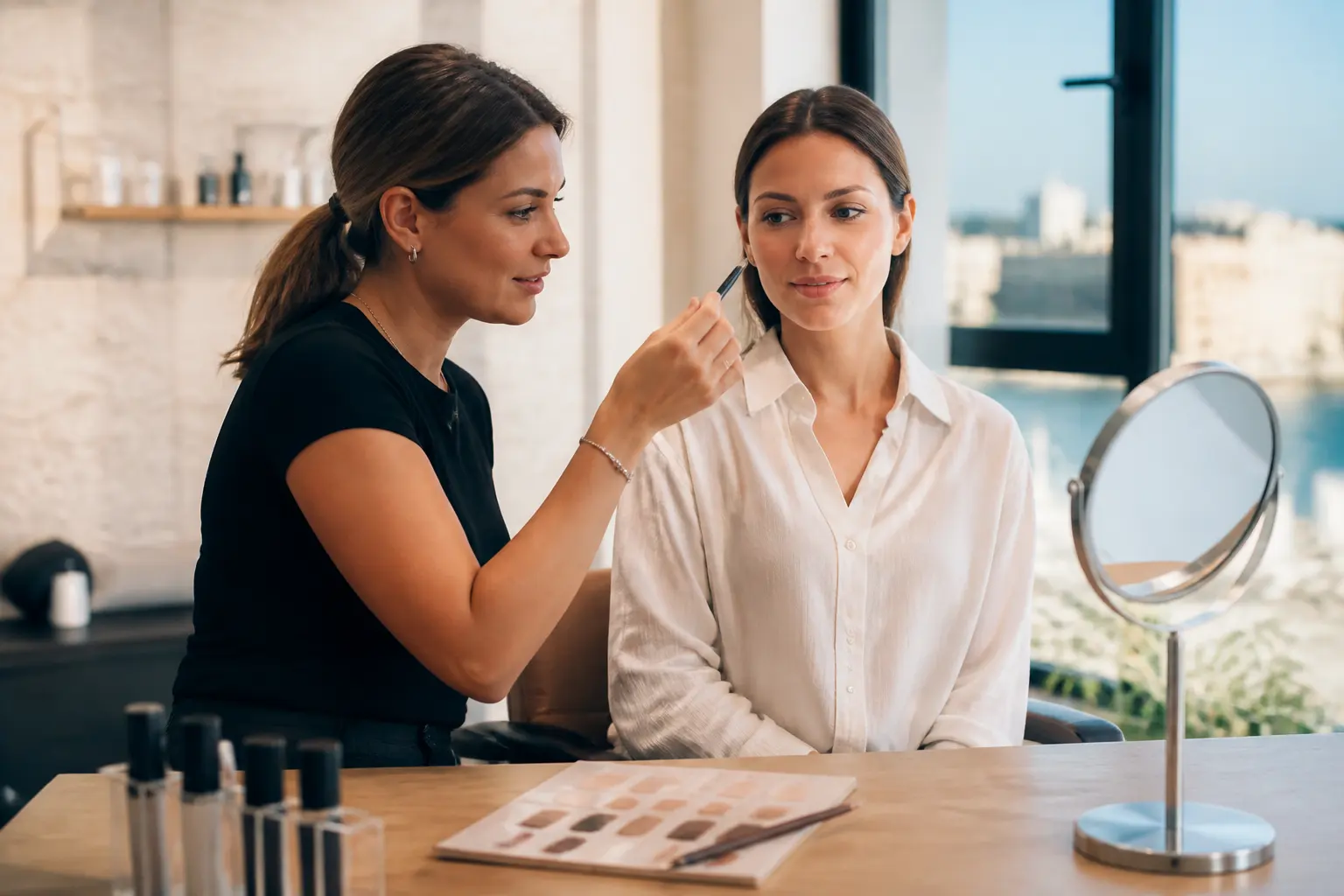
Eyebrow colour can look subtly different from one setting to another. A shade that feels soft and balanced in a studio mirror may appear deeper in direct daylight, warmer beside certain make-up, or more defined in a photograph. That does not automatically mean the colour is wrong. It means lighting, camera processing, skin tone, hair colour and the amount of product applied all influence what you see.
If you are booking brow threading with tint or henna, the most useful starting point is not simply asking for “natural brows”. Tell your brow artist where and how you most want to see the result: in everyday daylight, at work, on holiday, in flash photography, or with your usual make-up. A clear conversation gives your artist better context for creating definition that still feels like you.
Start with your real goal, not a colour name
Words such as light brown, dark brown and natural can mean different things to different people. Instead, describe the outcome you want from your brow colour.
You might say:
- “I want my brows to look fuller, but not obviously coloured in daylight.”
- “I wear little make-up, so I would like gentle definition rather than a strong outline.”
- “I wear a full base and eye make-up for events, and I want my brows to hold their presence in photos.”
- “My brow hairs are naturally dark, but there are sparse areas I would like to look less noticeable.”
- “My hair colour has changed and I want my brows to look harmonious with it, without matching it exactly.”
These descriptions help separate your preferred level of definition from the label of a particular shade. Colour selection is part of the wider brow design conversation, alongside hair density, natural brow depth, facial features and the shape created through threading.
Explain where you will see your brows most often
Daylight is usually the most revealing setting for brow colour because it can show warmth, depth and contrast more clearly than a warm indoor mirror. If a soft everyday finish matters most, say so before the service begins.
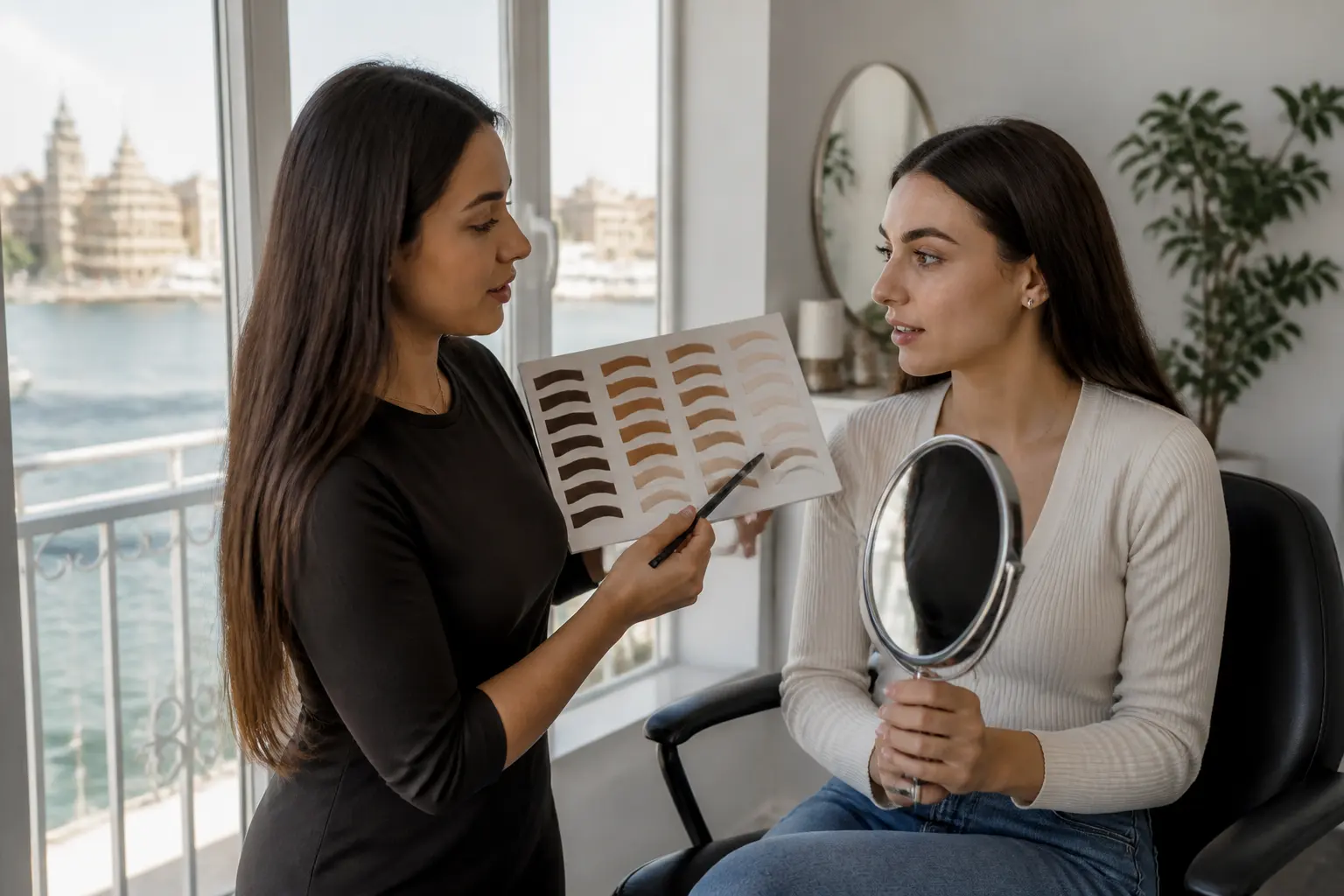
For an everyday daylight look
Tell your artist that your priority is a result that looks balanced outdoors and in natural light. This generally means avoiding a result that feels too heavy against your complexion or overwhelms fine, light or sparse brow hairs. It does not mean your brows need to disappear. The aim can still be a more polished frame for the face, with a level of colour that suits your own features.
It is helpful to mention whether you usually spend time outdoors, commute in daylight or live in a bright environment. In Malta, strong sunshine can make contrast and warmth more noticeable, so your usual environment is relevant to the consultation.
For indoor work, evenings or social occasions
Indoor lighting can be warmer, softer or more directional than daylight. You may prefer slightly more visible definition if your day often involves office lighting, dinners, events or evenings out. Explain that you would like a polished result that still works in daylight, rather than requesting a darker colour without context.
A useful phrase is: “I want definition that reads well indoors, but I do not want it to look too intense when I step outside.” This tells your artist that balance across settings matters to you.
For photos and video
Cameras do not see brows in exactly the same way as the mirror. Exposure, shadows, editing, flash, distance and the colour balance of a room can all affect how brow colour appears. A phone camera may soften some details, while a close portrait or flash can make contrast more noticeable.
If you have an upcoming professional shoot, wedding, celebration or content session, share this during the consultation. Mention the timing, whether you expect daylight or flash photography, and how you normally wear your make-up. Your artist can then discuss a colour approach that supports the look you want without assuming that a stronger result is always the answer.
Bring useful visual references
A few well-chosen images can be far more helpful than a long search for the perfect shade name. Bring photographs of yourself, ideally showing your brows in different circumstances. Your own images reveal more about the contrast you are comfortable with than a heavily edited inspiration photograph of someone else.
Useful references include:
- a daylight selfie with little or no brow make-up;
- a photo where you liked your brow colour and overall make-up;
- a photo where your brows looked stronger or warmer than you expected;
- a current image showing your hair colour and natural brow hair;
- an inspiration image that communicates the level of softness or definition you prefer.
When sharing an inspiration image, focus on what you like about it. Is it the fuller appearance, the soft front of the brow, the evenness through the tail, or the fact that the brows are visible without looking blocky? This is more useful than asking to copy another person’s exact colour. Every person has a different combination of skin tone, brow hair, hair colour and natural contrast.
Try saying: “I like that these brows are defined but still look soft in daylight. I do not necessarily want the same shape or shade; I want that level of balance on me.”
Tell your artist about your natural contrast
Natural contrast is the relationship between your skin, hair and brow hairs. It is one reason the same tint or henna shade can appear different from person to person. A deeper brow can look harmonious on someone with naturally dark hair and brows, while the same depth may look more dramatic on someone with fair brow hairs or lower overall contrast.
There is no universal rule that brows must be a particular number of shades lighter or darker than hair. Hair colour can be dyed, highlighted, sun-lightened or naturally mixed with different tones. Brow hair has its own texture and depth, too. A personalised consultation is more useful than a rigid formula.
Let your artist know if any of the following applies:
- your hair has recently been coloured, lightened or darkened;
- your brow hairs contain lighter, grey or uneven areas;
- your brows look much darker when you fill them in at home;
- you prefer your brows to contrast with your hair colour rather than blend closely with it;
- you are growing out previously over-plucked areas and want colour to be used with restraint.
These details help your artist understand whether you want to emphasise your existing brow hairs, add visual depth to lighter areas, or keep the overall result deliberately subtle.
Be specific about warmth, depth and softness
You do not need technical colour vocabulary to have a good consultation, but you can describe what has and has not suited you in the past.
If previous colour looked too dark
Say whether it looked too dark immediately, too dark outdoors, too solid on the skin, or too strong at the front of the brow. These are different concerns. You may like definition through the arch and tail while wanting a lighter, softer beginning to the brow.
If previous colour looked too warm
Some people describe unwanted warmth as orange, red, coppery or brassy. Others may find a very cool result too ashy or flat. Explain what you noticed rather than trying to identify the technical undertone. Your artist can use that information alongside an in-person assessment.
If you want colour to look less obvious
Ask for a softer finish and explain whether you mean less skin staining, less depth on the hairs, or a more diffused overall appearance. Tint and henna are not identical services, so it is worth asking which option is more aligned with the effect you want. The right choice depends on your brow hair, skin, desired definition and the service discussion.
Discuss your usual brow make-up honestly
Your daily routine matters because the colour service should work with the way you actually get ready. If you normally use a tinted brow gel, pencil, powder or concealer around the brow, tell your artist. Bring your usual products if you are unsure how much definition you already create at home.
For example, someone who fills sparse areas with a pencil each day may want colour that provides a more even starting point but still leaves room for their preferred make-up. Someone who rarely wears make-up may prioritise a result that looks complete without additional steps.
It also helps to explain if you change your routine for photographs. A brow that feels perfect with a full make-up look may feel more pronounced on no-make-up days. There is no incorrect preference; the important part is choosing a finish that fits the majority of your life.
Do not rely on a screen alone
Online photos can be useful references, but they are not reliable colour charts. Screens vary, editing can change tones, and filters may alter skin and hair colour significantly. Even an unedited image can change according to the time of day and the camera used.
For this reason, an in-person look at your brow hairs and complexion remains important. The artist can consider your natural brow pattern after mapping and threading, then discuss whether tint or henna suits your goal. This is especially valuable if you have had a colour result elsewhere that you found unexpectedly strong, warm or short-lived.
Know that fresh colour may not look identical every day
Immediately after a brow appointment, colour can appear more noticeable than it will once you have returned to your normal routine. Lighting, freshly groomed skin around the brows and the contrast created by tidied hairs can all make the result feel more defined at first.
Ask your artist what to expect from the specific service selected and what aftercare they recommend. Follow the advice given for your appointment rather than testing the result with lots of products or repeated washing straight away. If you have a significant event, booking with enough time to become familiar with the finished look can reduce last-minute pressure.
Colour longevity and visibility can vary. Skin type, skincare, cleansing habits, sun exposure, hair texture and the chosen service can all play a role. A consultation should set realistic expectations rather than promise that a particular shade will look identical in every light or last the same amount of time for everyone.
A simple consultation checklist
Before your appointment, take a minute to prepare the information that matters most. You do not need a complicated brief.
- State your priority: soft everyday definition, stronger photographic presence, fuller-looking brows, or a blend of these goals.
- Describe your main lighting: daylight, office lighting, evenings, outdoor events or camera flash.
- Share your routine: whether you wear brow make-up daily, occasionally or not at all.
- Mention past experiences: especially if previous colour looked too dark, too warm, too cool or too visible on the skin.
- Show personal references: bring a photo of yourself that represents a result you liked or did not like.
- Ask questions: ask how tint and henna may differ for your desired finish and what aftercare is appropriate.
Choose a brow appointment that leaves room for conversation
Balanced brow colour is not only about choosing a product. It starts with looking at the whole brow: natural hair direction, density, existing shape, facial balance and your personal style. Threading can tidy and define the brow line, while tint or henna can be discussed as an option for added visual depth.
At Becammo, brow services are approached with attention to individual brow types and personal preferences. Whether you prefer barely-there definition or a more polished finish for photographs, being clear about your everyday lighting and make-up routine helps make the conversation more precise.
When you are ready, choose the Sliema or Swieqi location that suits you and book a brow appointment online. Bring your questions and a couple of honest photo references; they are often the easiest way to communicate the colour balance you want.
Frequently asked questions
Should eyebrow tint match my hair colour exactly?
Not necessarily. Your natural brow hair, skin tone and preferred level of definition all matter. A close overall harmony is often more useful than an exact match to coloured or highlighted head hair.
Why do my brows look darker in photos than in the mirror?
Camera exposure, flash, shadows, editing and the contrast created by make-up can all affect the appearance of brow colour. Tell your artist if photographs are a key priority, and share examples of the type of images you expect.
Can I ask for a very natural brow tint or henna result?
Yes. Explain that you want soft, everyday definition and describe what “natural” means to you. A photo of your preferred level of colour can make the consultation clearer.
What should I tell my brow artist if I disliked a previous tint?
Describe exactly what felt wrong: too dark, too warm, too cool, too strong at the front, too visible on the skin, or not defined enough. The detail is more useful than simply saying you did not like the shade.
Is henna or tint better for brows that need more definition?
The most suitable option depends on your natural hairs, skin, desired finish and the consultation. Ask your artist to explain how each option may relate to the level of definition you want.