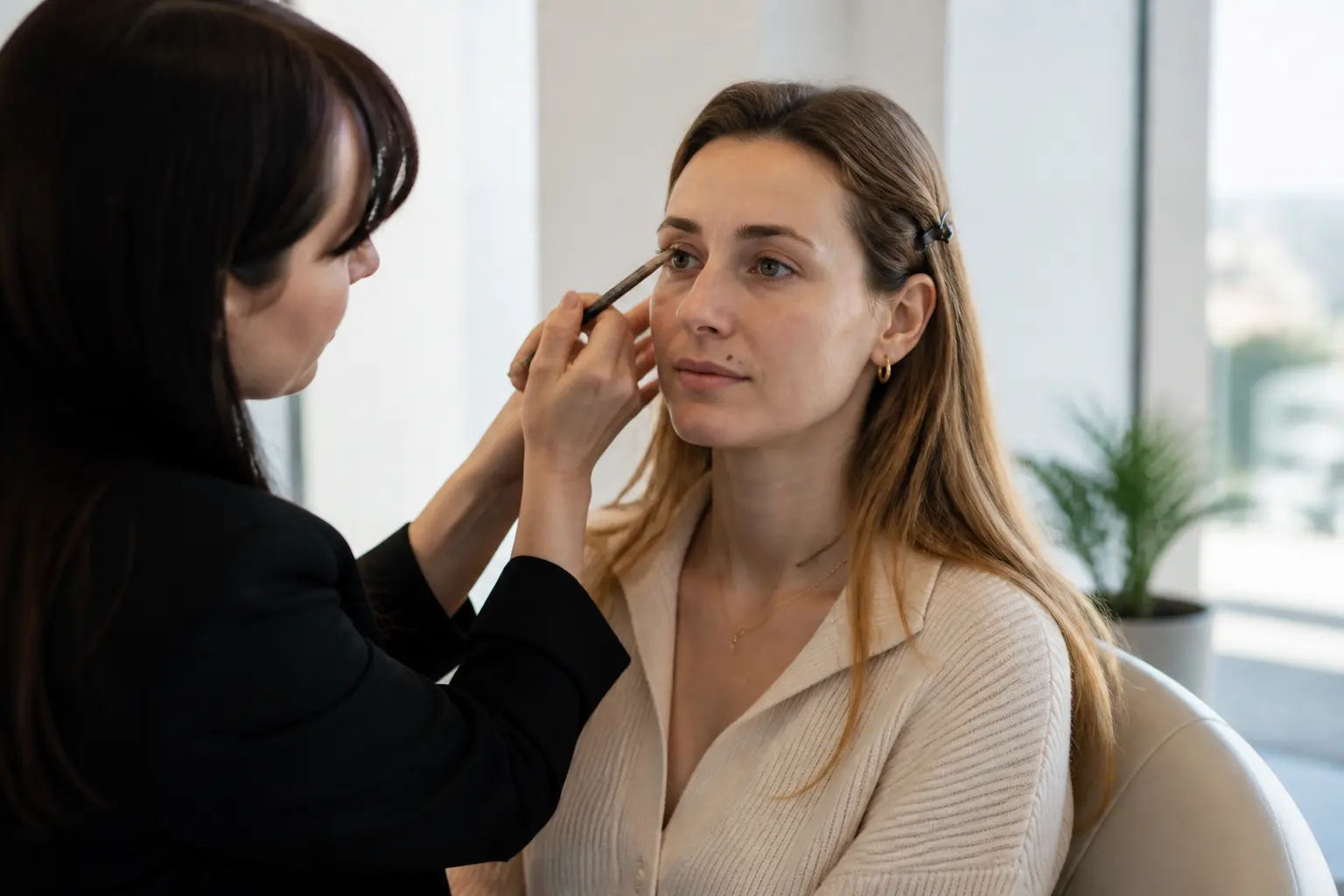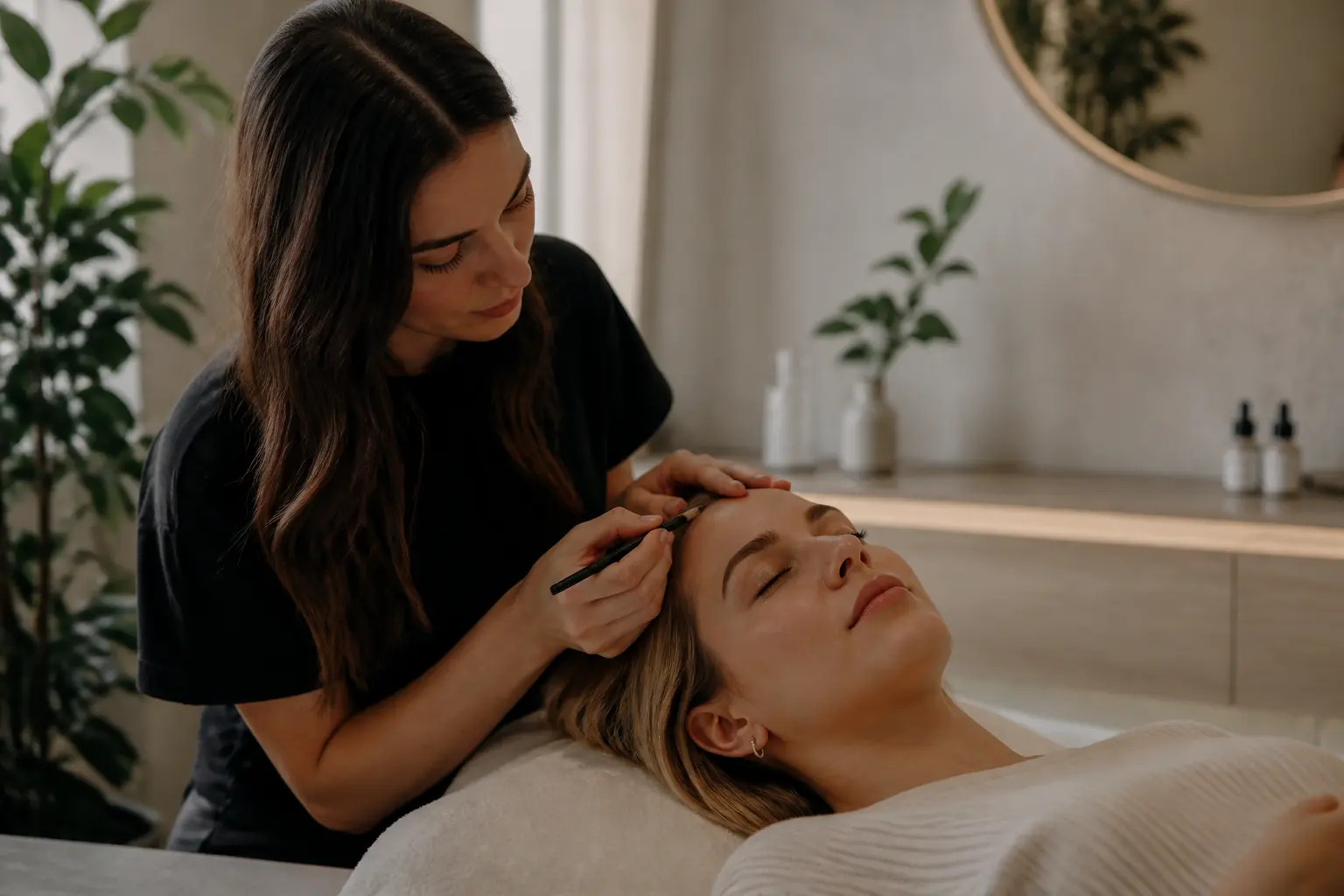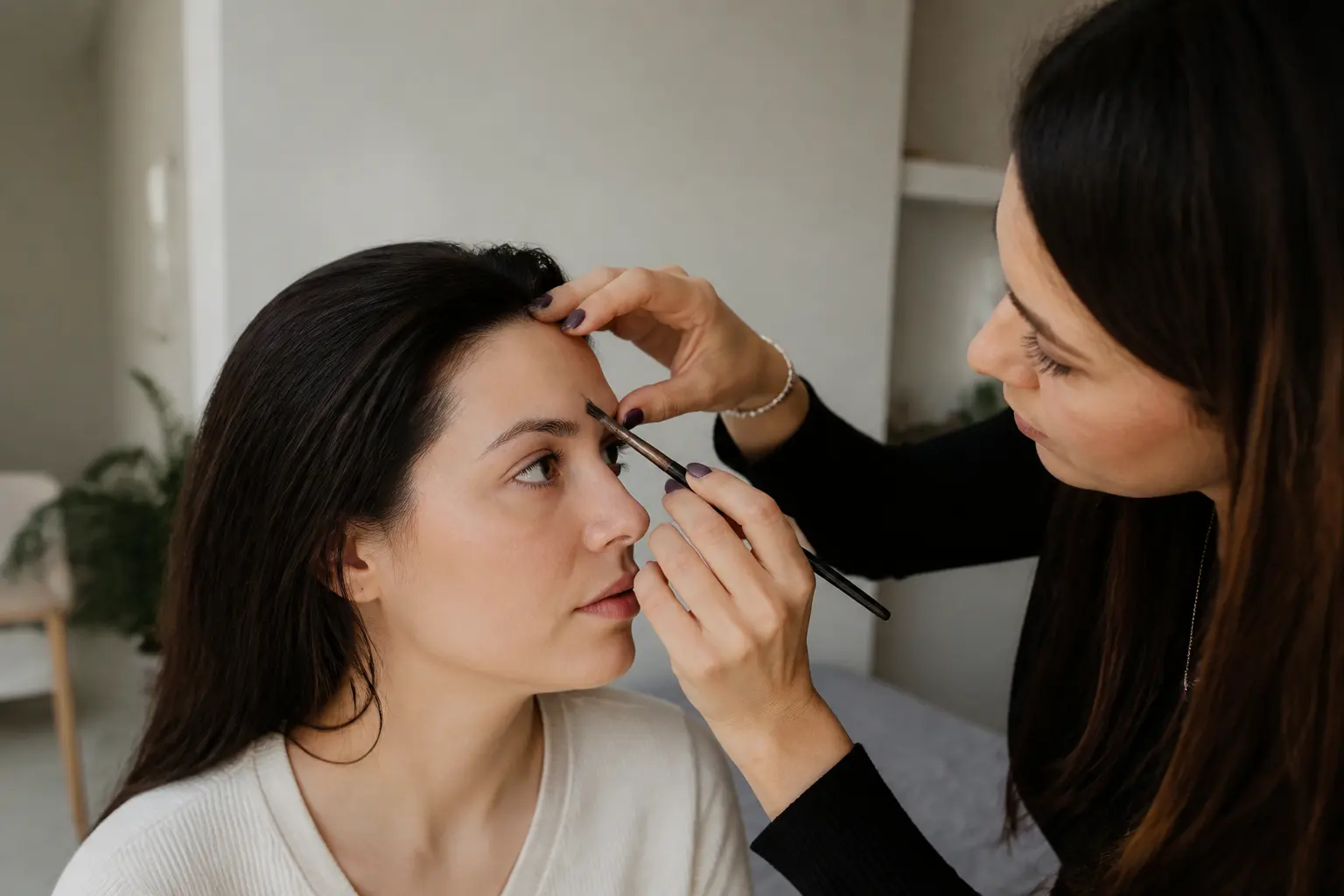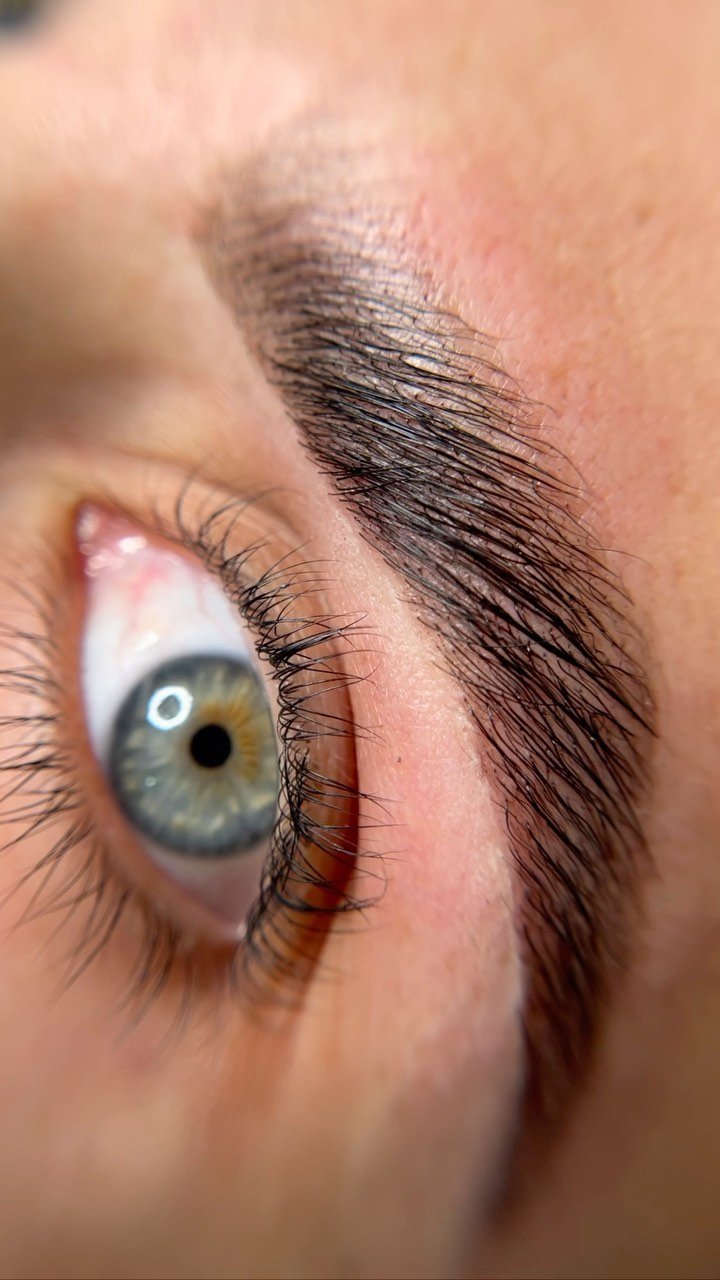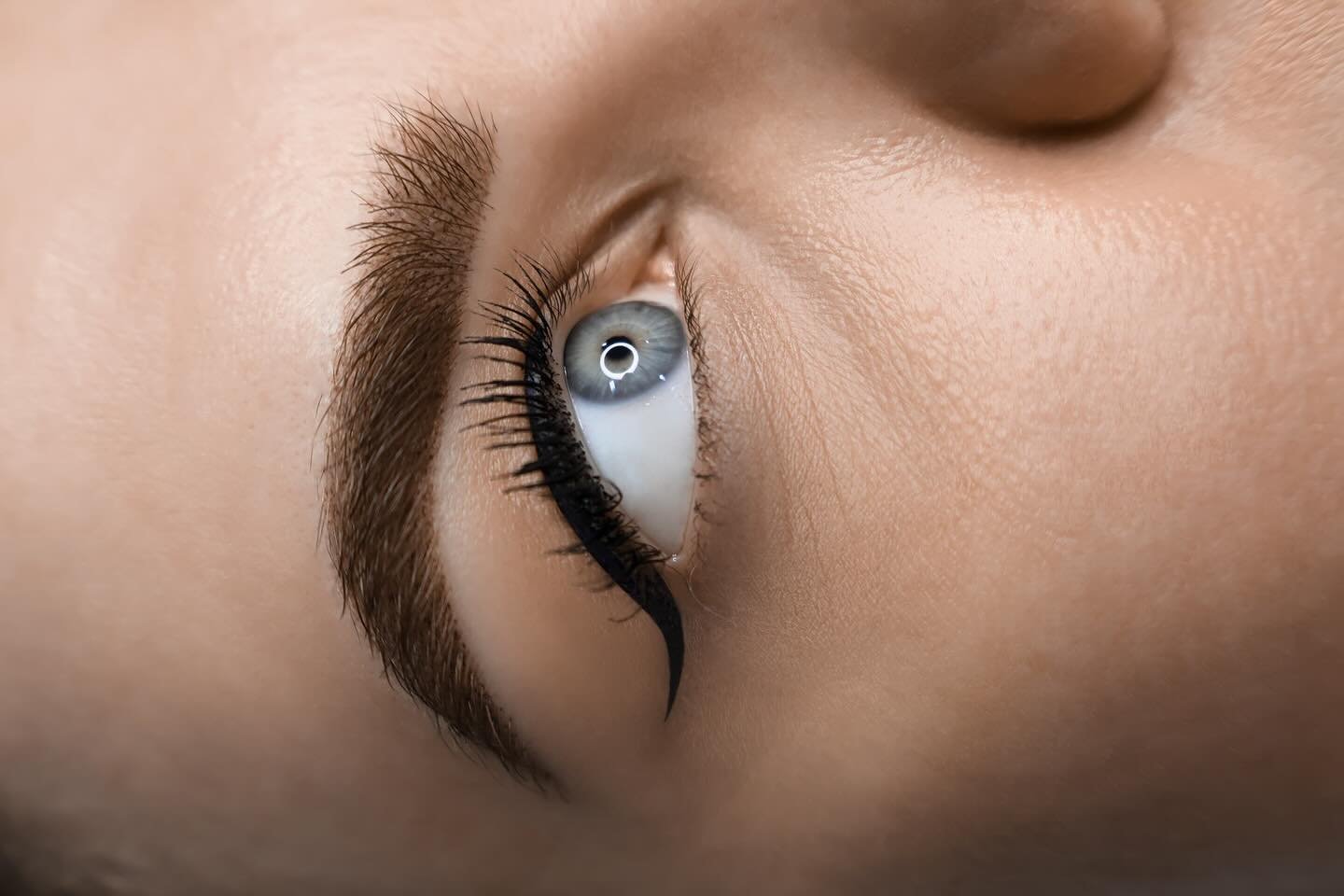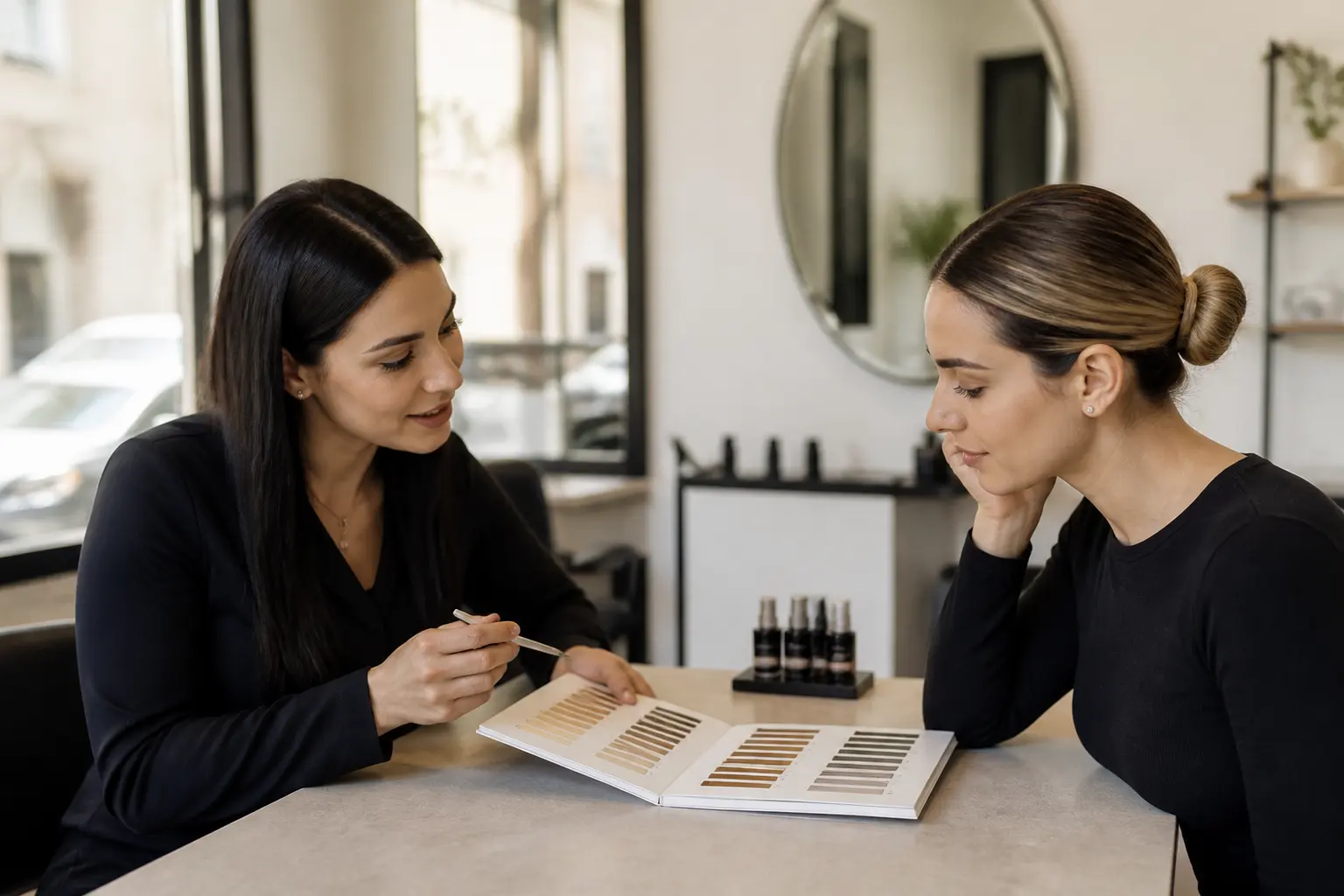
Choose an eyebrow tint shade by starting with your existing brow hairs, not your head hair: their depth, warmth, coolness, density and texture. Then weigh your skin tone and undertone, your usual make-up routine and the level of definition you want day to day. Going darker is not automatically better; tint colours the hairs you have and cannot add new ones.
Choosing an eyebrow tint shade is not simply about going darker. The most natural-looking result usually comes from a considered balance between your existing brow hairs, skin tone, hair colour, make-up habits and the amount of definition you genuinely want day to day.
If your goal is brows that look more noticeable without looking drawn on, the best starting point is often a shade that supports the hairs already there rather than trying to create an entirely different brow. A professional brow consultation can help translate a vague request such as “a little fuller” or “more polished” into a tint choice that still feels like you.
What does eyebrow tint actually change?
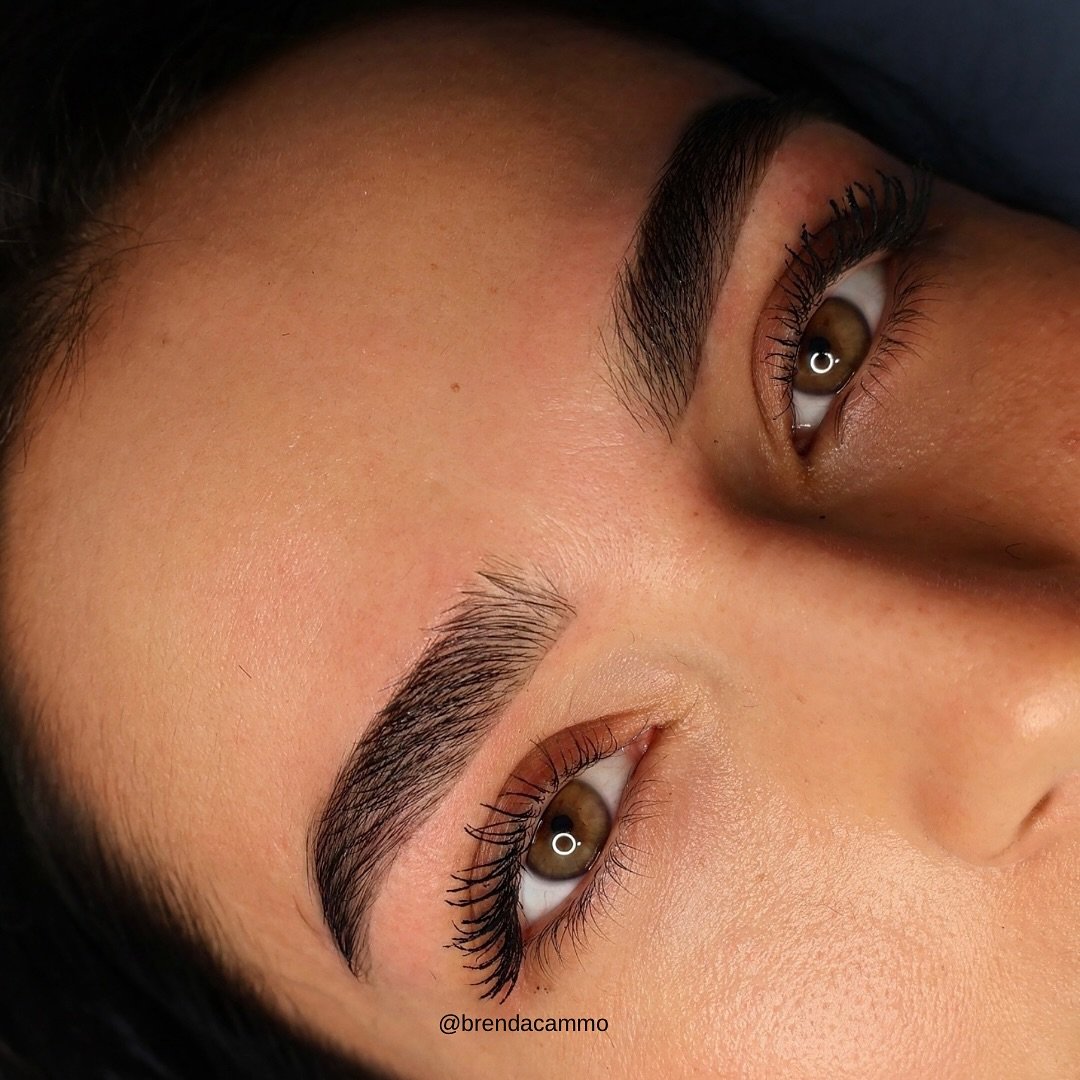
Eyebrow tint colours the brow hairs, which can make lighter, finer or less visible hairs stand out more clearly. This may make the brow line appear more complete and can add definition around the shape created through threading or brow design.
Tint does not add new hairs or permanently alter the structure of the brow. It is therefore useful to think of it as a finishing element: it can make the existing brow easier to see, but it works best when the chosen colour respects the density, direction and natural pattern of your hair growth.
A natural result does not necessarily mean an invisible result. It means the colour looks believable in everyday lighting, suits your features and does not overpower the rest of your face when you are not wearing full make-up.
What does natural definition mean to you?
Shade names such as light brown, medium brown and dark brown are useful references, but they are not a complete consultation. One person’s ideal medium brown may look warm and soft, while on another person it may look too cool, too deep or too obvious.
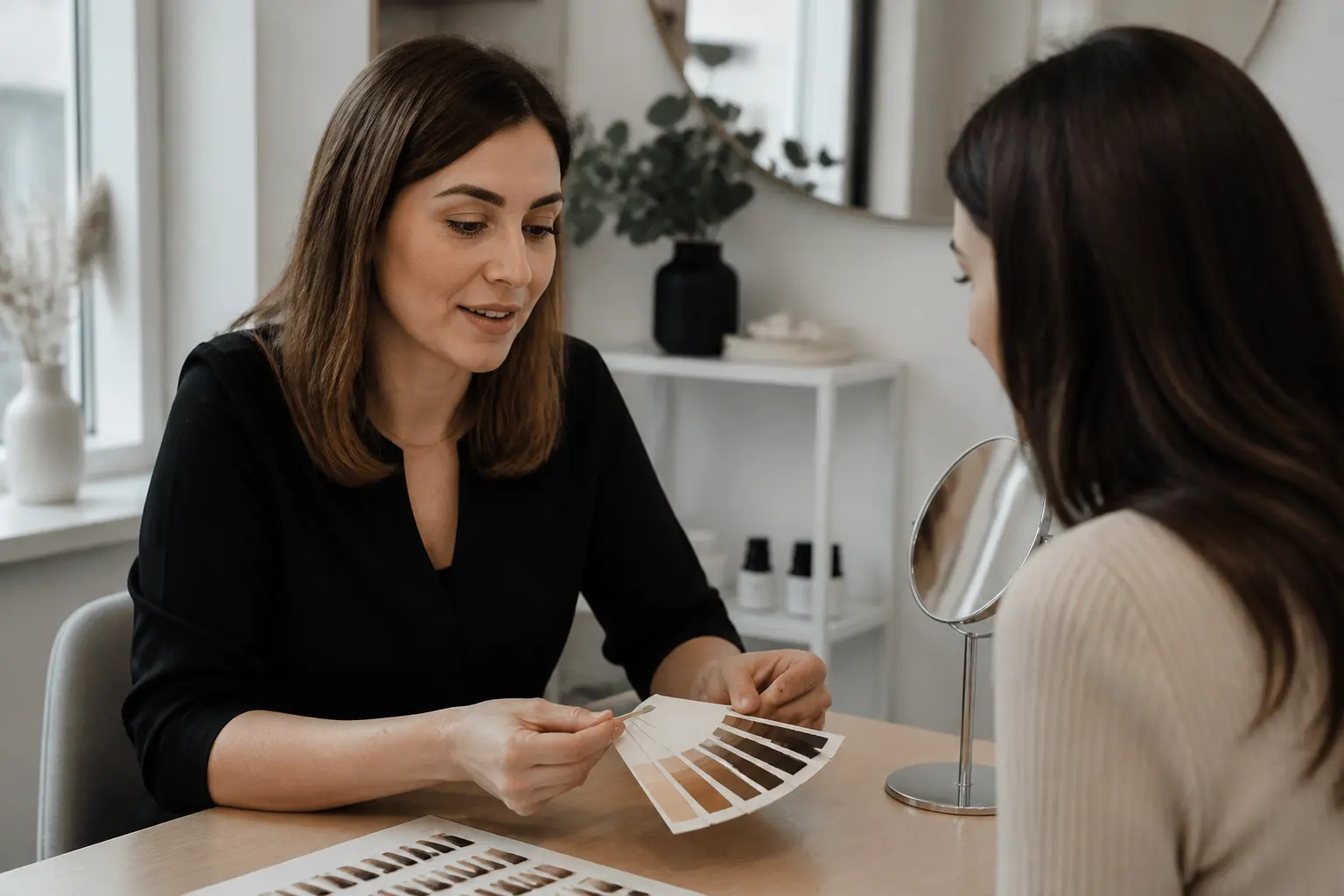
Before choosing a shade, decide what “natural definition” means to you. It may mean:
- making pale brow hairs more visible without changing the overall impression of your brows;
- creating a clearer outline that still looks suitable for work, university or everyday errands;
- balancing brows that look lighter than your current hair colour;
- reducing the need to fill sparse-looking areas with pencil or powder each morning;
- giving a more polished look for an occasion while avoiding a strong, block-like finish.
These are different goals, and they can lead to different shade choices. Someone who wants a subtle lift in visibility may prefer a softer result than someone who already wears defined brow make-up and wants their bare brows to hold more presence between appointments.
At BeCammo · Sliema · Swieqi
Eyebrow threading in Malta
Same client, before and after threading.
Clean, natural brows shaped to your face, at our salons in Sliema and Swieqi. Threading is what BeCammo was built on.
- from €16price
- Sliema · Swieqiwhere
- ★ 5.0460+ Google reviews
Why look at your brow hair before your head hair?
It is tempting to choose a tint solely by matching the colour of the hair on your head. In reality, brow hair often has its own mix of tones. It can be naturally ashier, warmer, darker, lighter or more translucent than scalp hair, particularly after sun exposure, colouring appointments or changes in hair colour.
The brow hairs themselves are the most useful starting point. During a consultation, consider:
- Natural depth: Are your hairs pale blonde, light brown, medium brown, deep brown or close to black?
- Visible warmth: Do they show golden, copper, reddish or warm brown notes in daylight?
- Coolness: Do they appear taupe, grey-brown or ash brown rather than warm?
- Density: Are there plenty of hairs that are simply light, or are there genuinely open areas where fewer hairs grow?
- Texture: Fine hairs can take on a more noticeable appearance with colour, while coarse or wiry hairs may already create strong visual definition.
This is why a personalised tint conversation is more useful than choosing the deepest shade in the belief that it will automatically make brows look fuller. On very light or fine hairs, too much depth can make the change feel sudden. On naturally deep hairs, a shade that is too light may make little visible difference.
How do skin tone and undertone affect a tint shade?
Your skin is the backdrop for your brows, so it affects how a tint shade reads. A colour that looks balanced against one complexion can seem too warm, too cool or too intense against another.
Rather than treating skin tone as a rigid category, think about the overall contrast between your brow hairs and skin. If your brow hairs are naturally very light against fair skin, even a gentle tint can create a noticeable improvement in definition. If your brows are already dark against lighter skin, adding depth may require a lighter touch to keep the result soft.
Undertones matter too. Some people feel most comfortable with a warmer brown that echoes golden or warm elements in their colouring. Others prefer a neutral or cooler brown because overly warm tones can look out of place on their brows. The aim is not to force every client into a cool or warm family; it is to choose a colour direction that looks harmonious on that individual face.
A natural brow tint should support your features, not become the first thing people notice about them.
How does your make-up style affect the tint shade?
Your everyday routine is one of the clearest indicators of how much definition will feel right. If you rarely wear make-up and want to wake up looking a little more put together, a softer tint can provide enough presence without making you feel unlike yourself.
If you often use brow pencil, tinted gel or powder, you may be comfortable with a slightly more defined starting point. Even then, the most suitable tint may not be the darkest option. You may prefer a flexible base that gives your brows structure on no-make-up days but still leaves room for you to add make-up when you want a more finished evening look.
Bring this information into the appointment. Saying “I wear a full brow most days” is different from saying “I only want my brows to show up in photos”. Both are valid preferences, but they help guide the tone and intensity of the tint.
How should you use reference photos for a tint shade?
Reference photos can be helpful, especially when it is hard to describe the level of definition you like. Choose images taken in natural-looking light where the person is not using a heavy filter. It is also useful to show a photo of yourself on a day when you liked your brows, whether that was after doing your own make-up or after a previous appointment.
However, a photo cannot be copied exactly. Camera processing, lighting, foundation, brow make-up and the model’s natural hair density can all change the way colour appears. Use images to communicate the mood of the result—soft, polished, balanced, defined—not as a fixed formula.
Why is going darker not always the answer?
A deeper tint can sound appealing when brows feel sparse or light, but darkness alone does not solve every concern. If the shape is not tailored to the natural growth pattern, or if there are areas with fewer hairs, a darker colour may draw attention to the issue rather than create the gentle fullness you wanted.
For a natural outcome, brow definition often comes from combining several thoughtful choices:
- tidying the outline without over-removing hairs;
- respecting the natural placement and height of each brow;
- choosing a tint depth that complements the existing hairs;
- allowing for the way the colour will look once you return to your normal routine and lighting.
This is one reason threading and tinting can work well together. Threading can refine the surrounding area and clarify the shape, while tint can help the brow hairs within that shape show up more clearly. The focus should remain on a balanced design rather than on creating identical, overly dramatic brows.
What should you tell your brow artist before tinting?
Clear communication can make a major difference, particularly if this is your first tint or you have had a shade before that felt too dark, too warm or too obvious. Consider sharing the following:
- whether you want a barely-there enhancement or visible definition;
- how you normally fill or style your brows at home;
- whether your head hair has been coloured recently or changes frequently;
- if you are trying to grow out over-plucked areas and want to keep the overall look soft;
- if a previous tint faded in a way you did not like;
- any known sensitivities, past reactions to colour products or relevant skin concerns around the brow area.
Do not assume a tint is a one-size-fits-all beauty step. Discussing your preferences and relevant history allows the artist to assess whether the service is appropriate and to follow the product guidance and salon protocol. Cosmetic products should include instructions, precautions and ingredient information; it is sensible to read and follow relevant advice, particularly if you have known allergies or sensitivities. GOV.UK consumer guidance on cosmetics also highlights the importance of product information, precautions and ingredient lists.
What should you expect in the first days after tinting?
A tint can look more defined immediately after the service than it will once you have settled back into your usual routine. This is useful to remember if you are nervous about the result: judge it over time rather than making a decision based only on the first glance in the mirror.
To help the shade work naturally in your life, book with your calendar in mind. If you are preparing for professional photographs, a holiday or an important event, allow enough time to see how the colour feels alongside your usual make-up and skincare. If you are trying tint for the first time, a regular week can be a more relaxed opportunity to discover your preferred level of definition.
Aftercare should always follow the guidance given for the specific product and service. Avoid treating general advice online as a substitute for the recommendations provided at your appointment.
How can your next tint choice be more personalised?
Your first tint does not need to be your forever formula. A useful brow routine develops through observation. Notice how the shade looks in daylight, in your workplace or university setting, with and without make-up, and as it gradually fades. Think about whether you would like the next appointment to be softer, more neutral, warmer, cooler or slightly more defined.
Keeping the same brow professional when possible can make these refinements easier. They can build on the previous design conversation, your hair growth pattern and the feedback you give about the finished colour. This is especially valuable when you want a consistent, natural appearance rather than a dramatic change at every visit.
Choosing a natural tint shade: a simple checklist
- Choose the level of definition you want before choosing a shade name.
- Start with your existing brow hairs, not only your head hair colour.
- Consider skin tone, undertone and the contrast you naturally have.
- Be honest about your daily make-up routine.
- Use unfiltered reference photos to show the style of result you like.
- Tell your artist about previous colour reactions or sensitivities.
- Assess the result over the following days, not only immediately after the appointment.
- Use your experience to fine-tune future tint appointments.
Conclusion
The right eyebrow tint shade is the one that gives you the definition you were missing while still fitting your natural colouring, routine and personal style. For some people, that means a subtle lift in visibility; for others, it means a clearer brow line that reduces the need for daily make-up.
If you would like a more considered result, book a brow appointment and explain how you want your brows to look in real life—not only in a close-up mirror or filtered photo. A tailored threading and tint conversation can help you choose a finish that feels polished, balanced and comfortably yours.
Frequently asked questions
Should eyebrow tint match my hair colour exactly?
Not necessarily. Your brow hairs may naturally sit in a different colour family from the hair on your head. A suitable tint usually considers both, while giving priority to the way the shade works with your existing brow hair, complexion and desired level of definition.
Is a darker eyebrow tint always better for sparse brows?
No. A darker shade can make existing hairs more visible, but it cannot create new hairs. If you want a soft, natural result, the shade should be chosen alongside the shape, density and pattern of your brows rather than simply being as dark as possible.
Can I choose a warm or cool eyebrow tint?
Yes, colour direction is part of the consultation. A warm, neutral or cooler-looking brown may suit different people differently. Explain if previous brow colour looked too reddish, too ashy or too intense so your preference can be considered.
What should I do if I have reacted to a hair-colour product before?
Tell the brow artist before booking or before the appointment. Do not proceed on the assumption that a brow tint will be suitable for you. Follow the salon’s protocol and the specific product guidance, and seek appropriate medical advice if you have concerns about a past reaction.
Can threading and eyebrow tint be booked together?
They can be combined when appropriate for your needs. Threading can refine the brow shape, while tint can add visibility to the hairs within it. Discuss the level of definition you want so the overall finish remains natural to you.