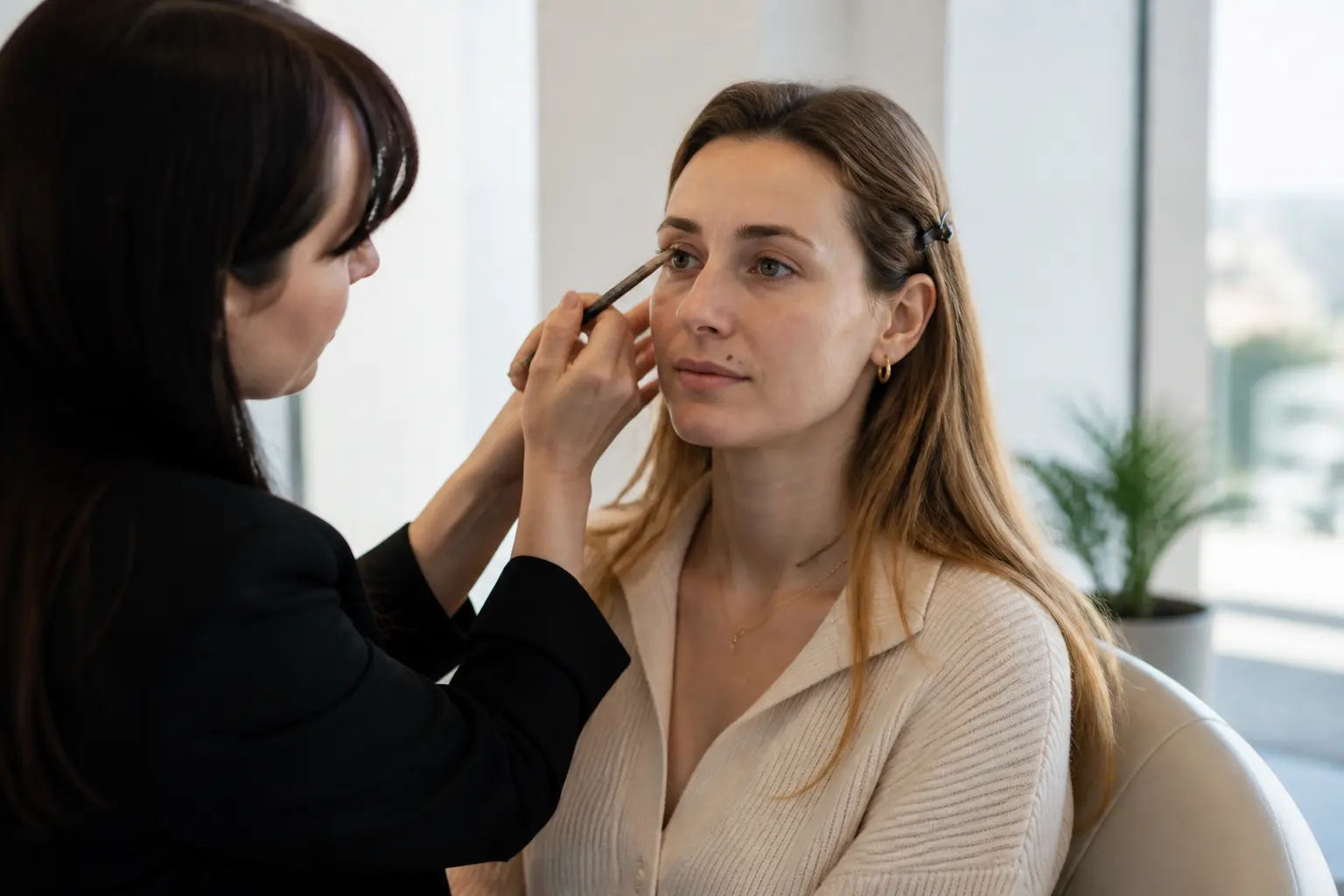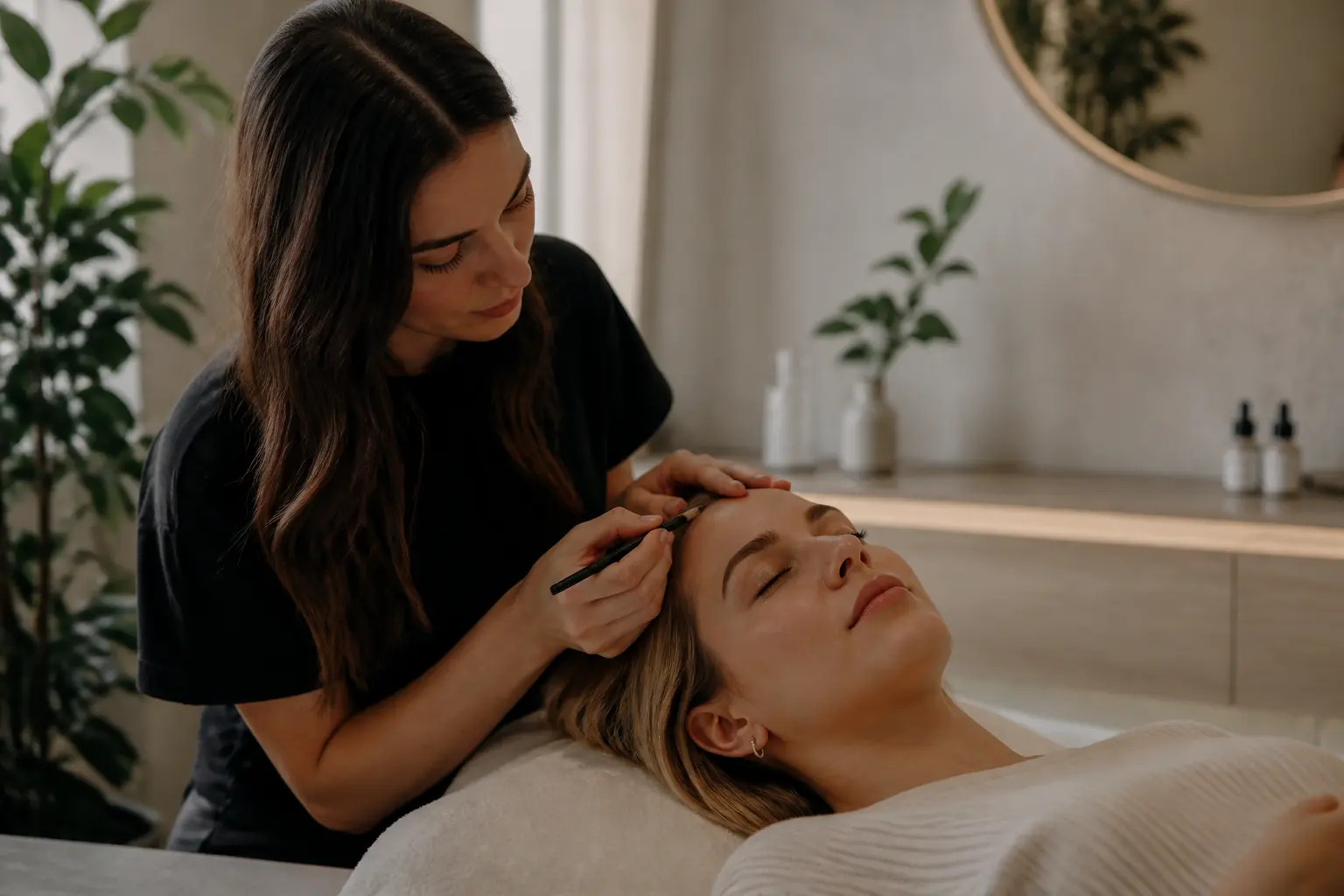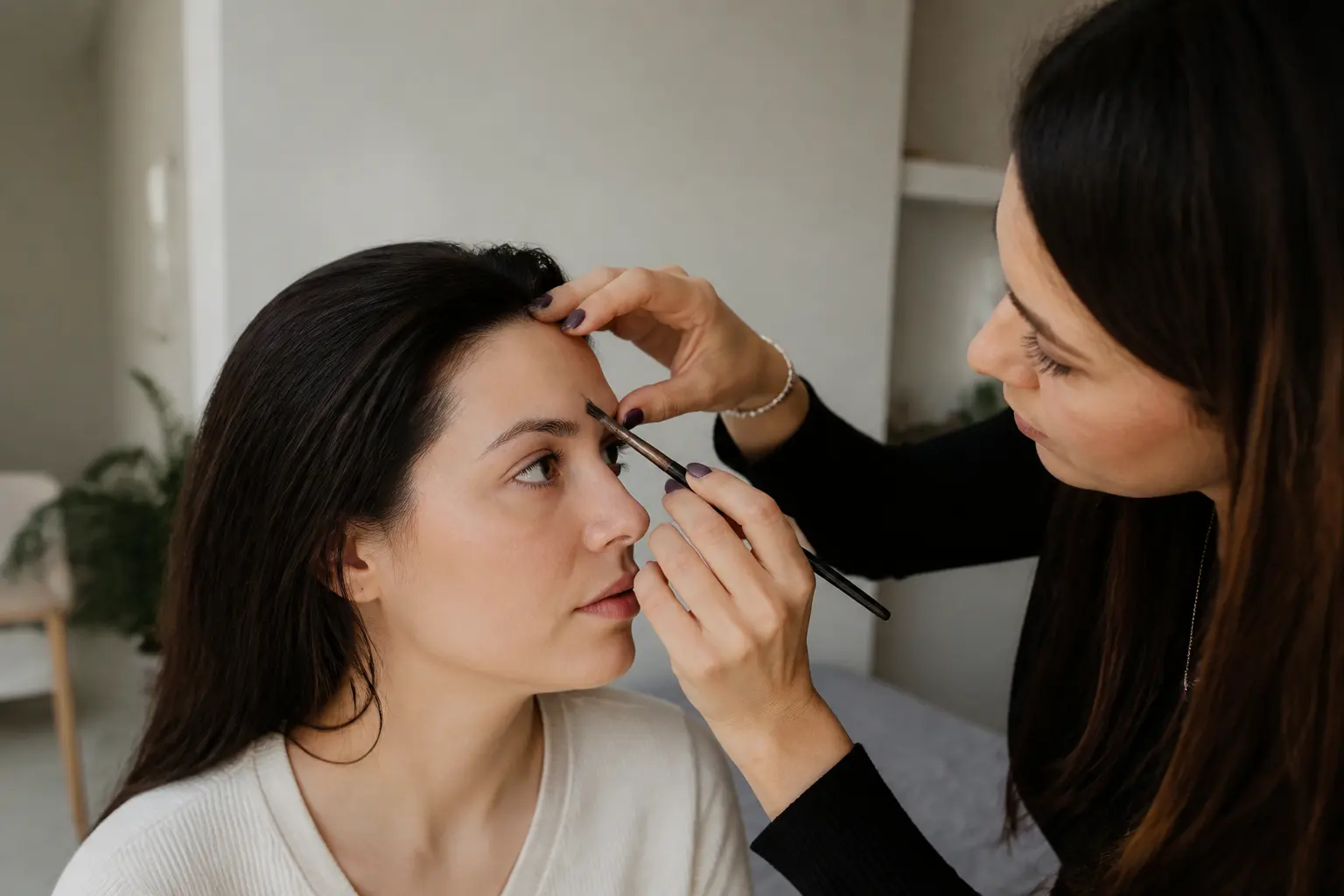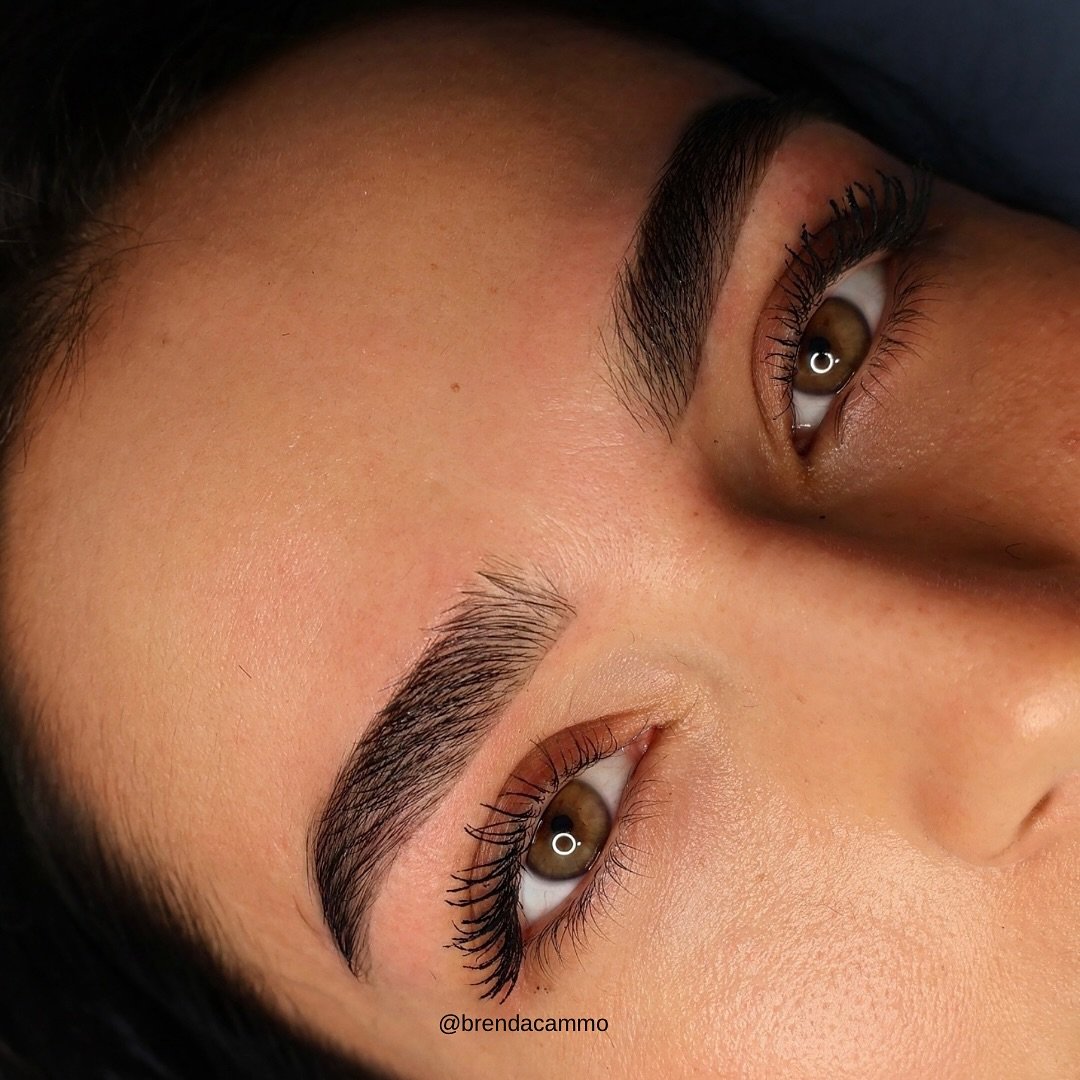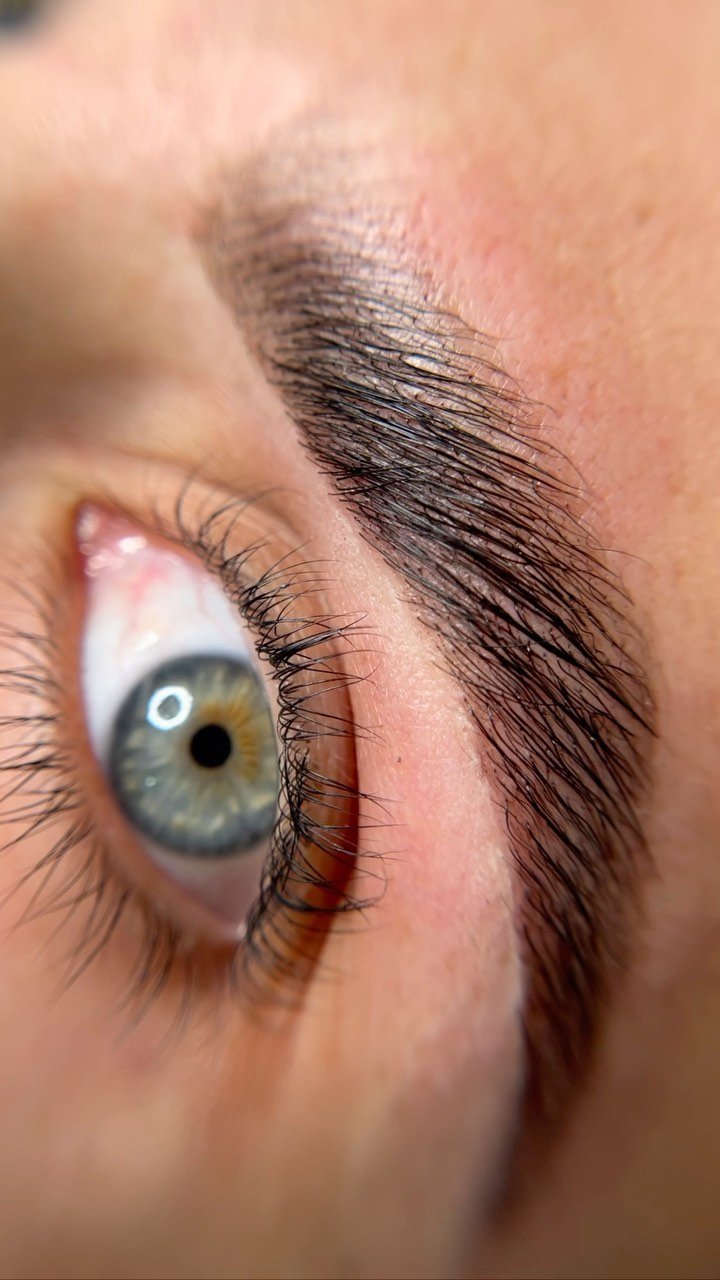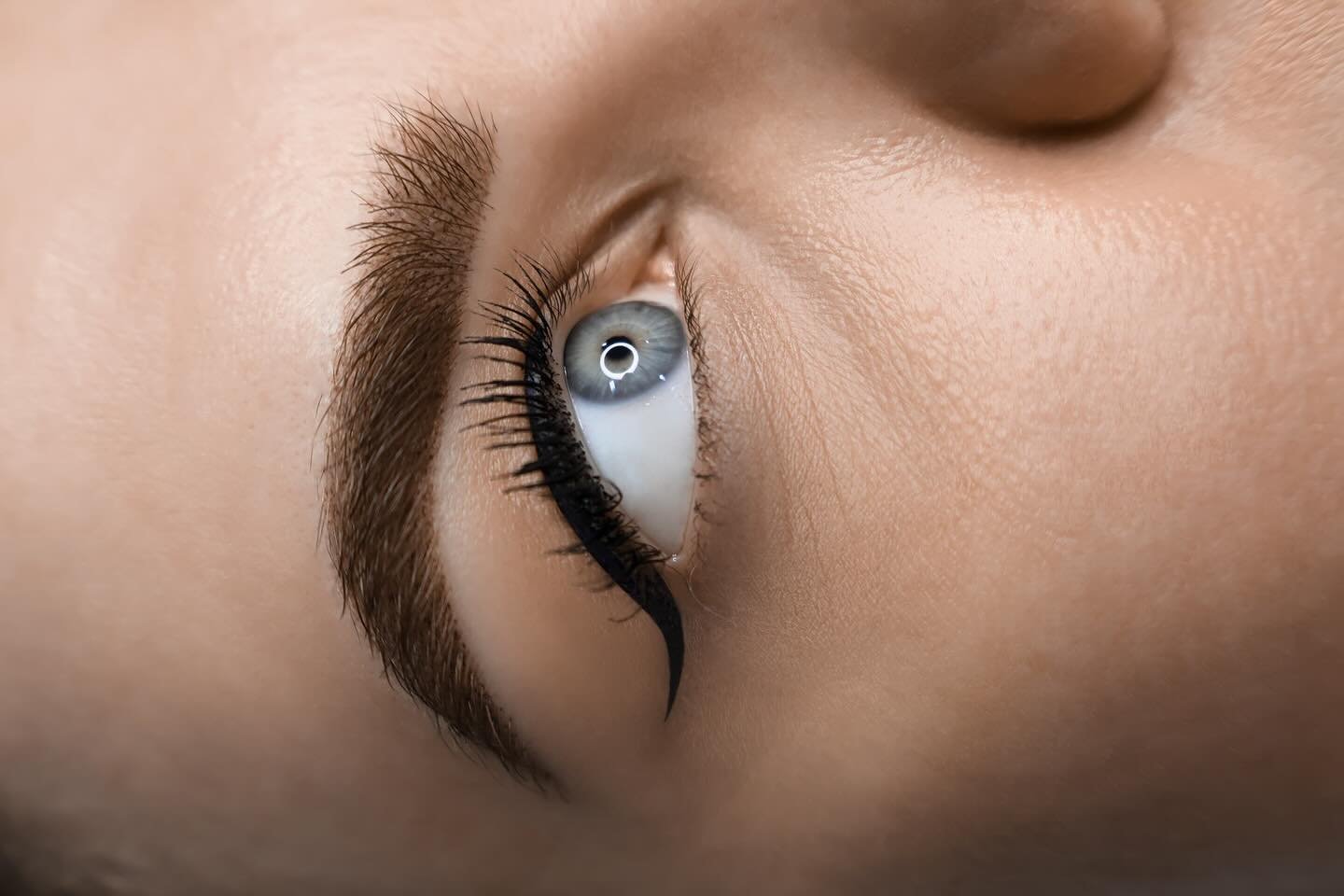
Henna brows can give fair hair a more visible, polished shape without a dark or harsh finish, as long as you discuss the level of definition before colour is applied. Tell your artist about your hair colour, make-up habits, comfort with contrast and visible skin staining, and any previous reactions. Threading first tidies the outline so the colour supports a shape that is already yours.
Henna brows can be an appealing option when your natural brow hairs are fair, soft in colour or less visible from a distance. A little more depth can make the overall brow shape easier to see, particularly if you prefer a more polished make-up look or feel that your brows disappear in photographs.
But a defined finish does not have to mean a dark, harsh or identical-looking pair of brows. With fair hair, the most important part of the appointment is the conversation before colour is applied. Your brow artist needs to understand how much definition you want, how your hair colour and skin tone read in everyday light, and whether you would like the result to look subtle without make-up or more noticeable as part of your routine.
This guide explains what to discuss before choosing henna brows for fair hair, how threading and design can support the result, and how to make an informed decision about the level of definition that feels right for you.
Why do fair brows benefit from a colour conversation?
Fair brow hair comes in many forms. Some people have naturally blonde or light brown hairs; others have brows that have become less visible after repeated sun exposure, colour changes or years of over-tidying. You may also have a mix of pale, medium and darker hairs within the same brow.
That variety matters because colour is not simply about making every hair darker. A thoughtful henna brow appointment considers the brows as part of the whole face: their density, natural direction of growth, existing outline, spaces between hairs and how clearly the shape is already visible.
For some clients, the goal is to make a well-established brow shape easier to see. For others, it is to add visual depth to sparse-looking areas while maintaining a soft outline. Someone who wears fuller make-up most days may want a more present result than someone who usually wears little or no make-up.
There is no single ‘correct’ brow shade for fair hair. A personalised approach is usually more useful than choosing the darkest possible colour in the hope of achieving stronger definition.
What finish do you want: soft, polished or occasion-led?
Before discussing henna shades, explain what you want your brows to look like in real life. Words such as ‘natural’, ‘defined’ and ‘soft’ can mean different things to different people, so it helps to be specific about the effect rather than relying only on a colour label.
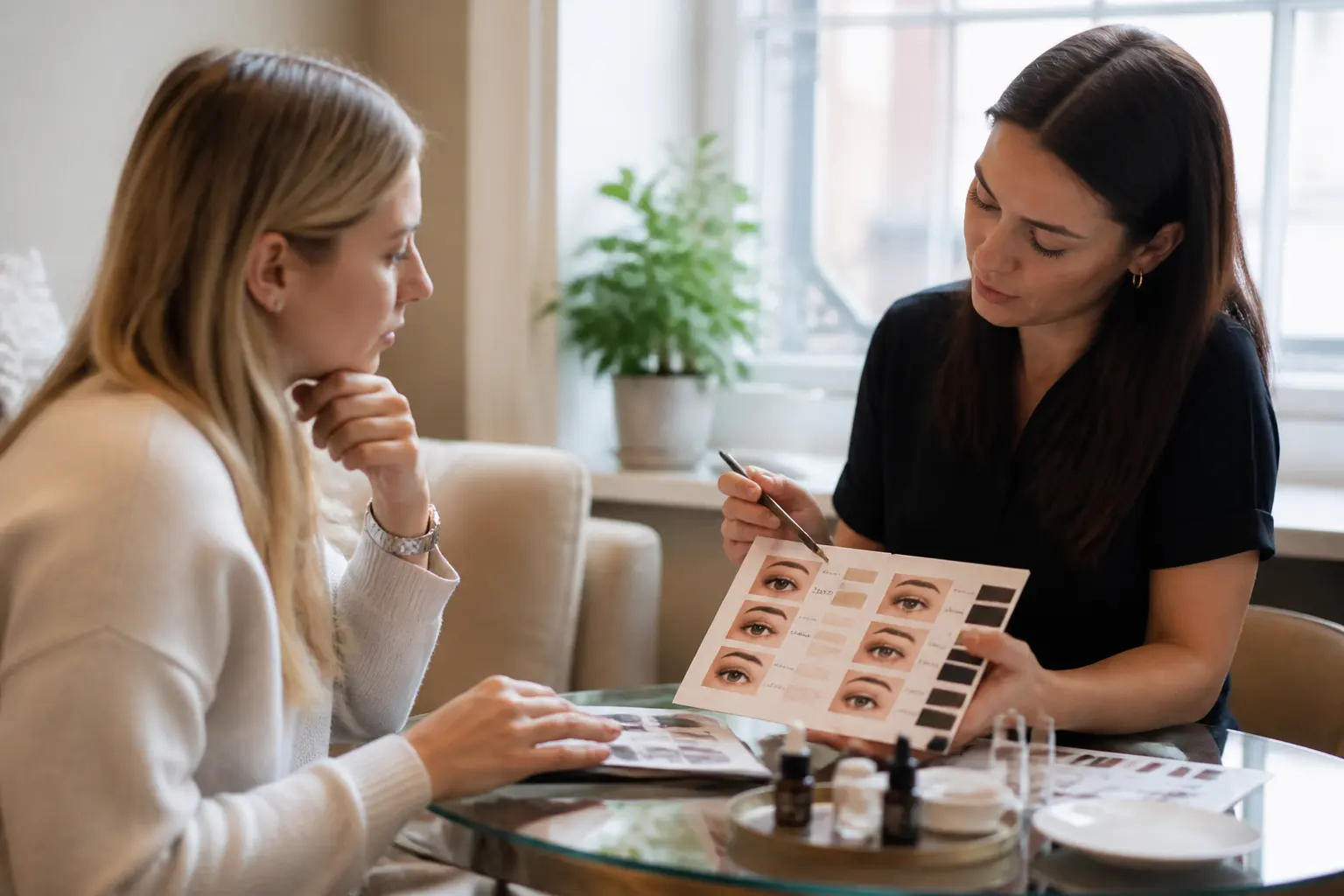
Soft everyday definition
This approach is often suited to someone who wants their brows to remain recognisable as their own, just more visible. The emphasis may be on gently enhancing the existing brow shape, giving fair hairs more presence and keeping the front of the brow lighter in appearance than the body or tail.
If your usual routine is minimal, tell your artist that you want to feel comfortable leaving the appointment without needing brow pencil, powder or a strong base of make-up. This can guide the discussion towards a more restrained finish.
Polished definition for make-up wearers
If brow products are already part of your daily make-up routine, you may prefer a result with more visible structure. In this case, share how you normally fill your brows: whether you create an arch, extend the tail, sharpen the lower edge or simply add colour through the hair.
Your artist can then assess whether the desired look can be supported by your natural brow pattern and a carefully chosen henna finish. The aim is not to reproduce a drawn-on brow exactly, but to create a result that works well with the way you usually present yourself.
A more defined occasion-led look
You may be booking before a holiday, celebration, professional photographs or a period when you want to spend less time doing your brows. Be open about the timing and the level of definition you have in mind. A noticeable result can still be balanced, but it should be planned rather than decided in the final minutes of the appointment.
If you are trying henna for the first time, it may be sensible to choose a finish that feels adaptable rather than making a dramatic change immediately before an important event.
At BeCammo · Sliema · Swieqi
Eyebrow threading in Malta
Same client, before and after threading.
Clean, natural brows shaped to your face, at our salons in Sliema and Swieqi. Threading is what BeCammo was built on.
- from €16price
- Sliema · Swieqiwhere
- ★ 5.0460+ Google reviews
What should you tell your artist before henna is applied?
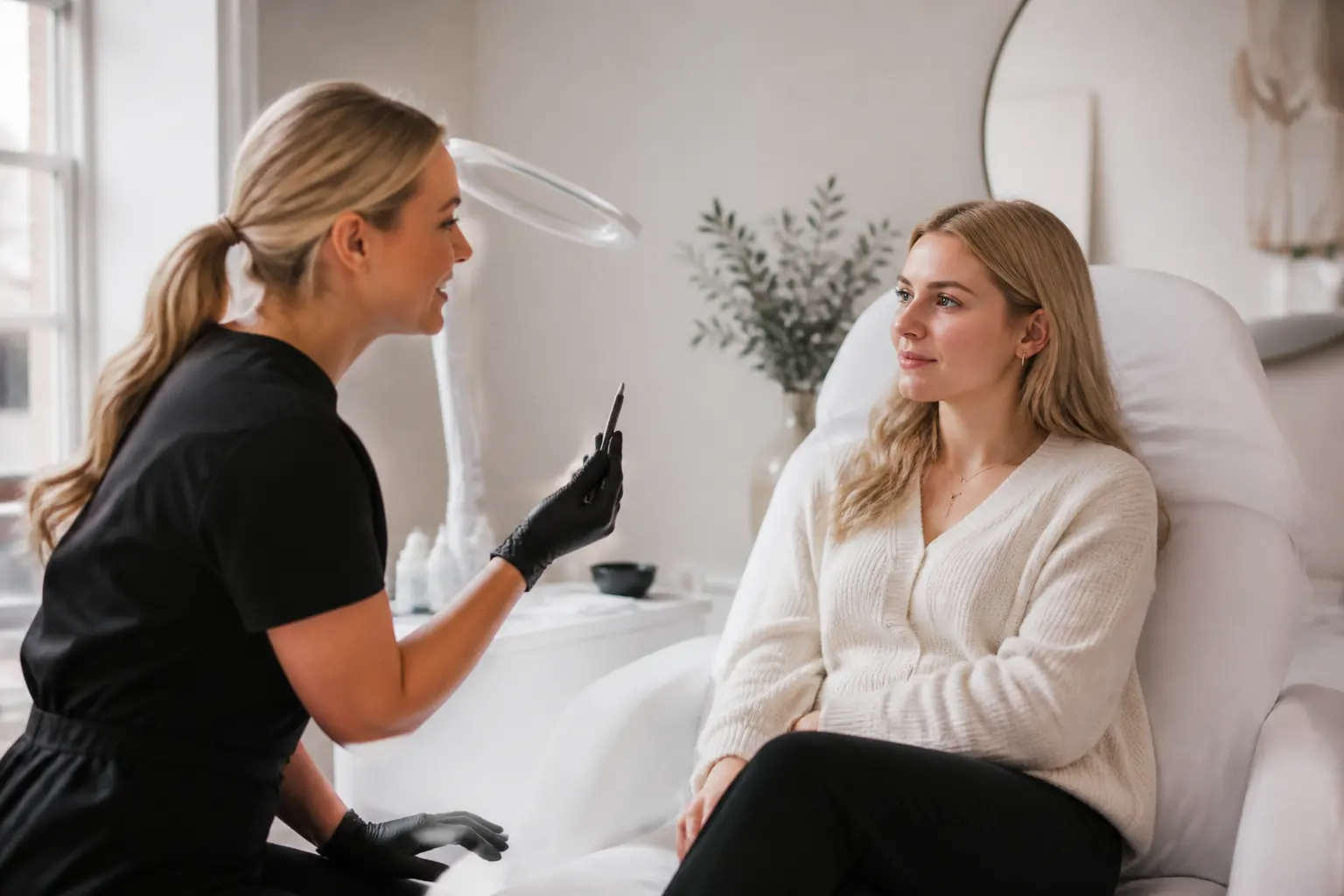
A good consultation is not an obstacle to a quick appointment; it is what helps align the final result with your preferences. When you have fair hair, the following details are especially useful.
Your natural hair colour and any colour changes
Let your artist know whether your current hair colour is natural, highlighted, toned, dyed or recently changed. Fair hair can look warmer, cooler or more neutral depending on the colour around the face, and your brow preference may change when your hair changes too.
Bring the conversation back to what you will be wearing most days. A shade that appears suitable beside freshly coloured hair may feel different when the colour grows out or changes tone.
Your make-up habits
Do you usually wear brow gel, pencil, powder or pomade? Do you prefer a brushed-up brow, a softly shaded brow or a clean, groomed outline? These habits help your artist understand whether henna should replace part of your daily routine or simply complement it.
If you often use a brow pencil to create a stronger tail or fill a particular gap, point this out. It gives useful context about where you feel more definition is needed and where you may prefer to keep the result lighter.
How you feel about visible skin staining
Henna brows involve colouring brow hairs and can also leave temporary colour on the skin. The way this reads can vary according to skin type, skin preparation, aftercare and individual factors. Tell your artist whether you enjoy a make-up-like effect on the skin or would rather focus on enhancing the hairs with a less pronounced outline.
It is also important to be realistic about variation. A skin stain is not identical for every person, and it should not be treated as a fixed promise. Discuss what is achievable for your own brow area rather than expecting the exact result seen on another person.
Your comfort with contrast
Fair-haired clients sometimes ask for a very dark colour because they want to see an immediate difference. That request is understandable, but contrast is worth discussing carefully. A result can look more defined without creating a stark contrast against pale hair or a light complexion.
Ask your artist to explain the difference between making the brow more visible and making it significantly darker. Those are not always the same thing. The most flattering option is often the one that gives enough definition for your preferences while still fitting naturally with your features.
Previous brow colour services or sensitivities
Share any previous experience with henna, brow tinting, brow lamination, microblading or other semi-permanent brow work. Mention any sensitivity, irritation or reaction you have experienced with brow or hair-colouring products, as well as any current skincare products that may affect the brow area.
Your artist can then advise whether a patch test, a different appointment plan or another approach should be considered. Never minimise a previous reaction simply because it happened some time ago; it is relevant information for a safe, well-prepared consultation.
How do threading and brow design support henna brows?
Henna is not only about colour. The effect is usually clearer when the brow area has been shaped with attention to your natural growth, facial balance and preferred level of tidiness.
Threading can remove unwanted hairs around the brow using a fine thread, helping reveal the outline that is already present. For clients with fair hairs, this can be particularly helpful because soft, fine hairs may blur the edges of the brow shape. Tidying the surrounding area can make the brows appear more intentional even before colour is added.
At BeCammo, brow services are built around threading and personalised design rather than a one-size-fits-all template. The conversation can include the natural height and direction of each brow, areas that grow more densely or sparsely, and how much tidying you are comfortable with. Brows are naturally sisters rather than identical copies, so the objective is balance, not forced symmetry.
When henna follows threading, the brow artist can consider where colour will support the shape and where a softer finish may be more appropriate. This is especially relevant for fair brows, where an overly solid front can look more obvious than intended.
Henna or tint: which suits fair brow hair?
Henna and tint are often discussed together because both can add colour to the brow area. However, they are not interchangeable, and the right option depends on the result you want, your brow hair and your consultation.
In broad terms, someone with fair hair may consider henna when they would like added depth and a more defined brow appearance. A tint may appeal to someone whose main goal is colouring the existing hairs while keeping the overall effect understated. The best choice is not determined by hair colour alone.
Ask practical questions during your appointment:
- Would henna or tint better suit the level of definition I want?
- How visible are my natural brow hairs at the moment?
- Would a softer colour application better match my complexion and make-up routine?
- How should I plan maintenance around my usual brow grooming?
- Are there any reasons to postpone colour on the day of my appointment?
These questions make the discussion more useful than simply asking which option lasts longer. Wear can vary, so the better choice is the one that fits your desired appearance, routine and individual assessment.
Should you bring reference photos to a henna appointment?
Reference images can be helpful, particularly when you find it difficult to describe what ‘defined but natural’ means to you. Try to bring a small selection rather than many unrelated examples. Include images that show both what you like and what feels too strong.
When looking at photos, remember that lighting, filters, editing, make-up and the model’s own hair colour can all influence the appearance of the brows. A look that suits one person may not translate directly to another face or brow pattern.
The most useful reference is often a photo of yourself wearing make-up that you genuinely enjoy. It shows your artist how you like to frame your eyes and how much contrast feels familiar to you.
How should you prepare for a henna brow appointment?
A more defined brow finish is a collaboration. You bring your preferences, routine and relevant history; your artist brings technical judgement about shape, colour placement and how your existing brows can support the result.
Before your visit, avoid treating the appointment as a decision that needs to be made in advance without discussion. You can arrive with an idea, but allow room for the consultation to refine it. If you have fair hair and are unsure between a subtle result and a bolder look, say so openly. It is better to discuss your uncertainty than to assume the artist can read it from a reference image alone.
Also consider your diary. If you are booking around a major occasion, give yourself enough time to become familiar with the finish and to ask any follow-up questions about upkeep. Brow colour and skin appearance can settle differently from person to person, and a little planning creates a calmer experience.
How should you approach aftercare and maintenance?
Your brow artist should explain aftercare based on the products used and your appointment. Follow those instructions rather than relying on general advice from social media or a friend’s experience. The way colour wears can vary with skin type, skincare, cleansing habits, sun exposure and how often you use make-up or brow products.
If you have fair brows, maintenance is also a chance to reassess the finish. You may discover that you would like slightly less contrast next time, a more visible tail, a softer front or a different balance between threading and colour. These adjustments are normal and are part of building a brow routine that feels like yours.
A regular brow appointment does not need to lock you into one look. It can be an opportunity to keep the shape tidy while adapting colour and definition to changing hair colour, seasons, make-up preferences and personal style.
Conclusion
Henna brows for fair hair can create a more visible, polished brow shape without requiring a single standard of beauty or an overly dramatic finish. The key is to discuss your preferred level of definition, your daily make-up habits, your comfort with contrast and any relevant history before colour is applied.
Pairing a thoughtful colour consultation with personalised threading and brow design gives you a clearer way to choose between soft enhancement and a more defined finish. When you are ready to explore the option, book a brow appointment at the BeCammo location in Sliema or Swieqi that best suits your routine, and use the consultation to make the result feel considered from the start.
Frequently asked questions
Will henna brows look too dark if I have fair hair?
Not necessarily. The final appearance depends on the colour choice, application approach, your natural brow pattern, skin tone and the level of definition you request. Discuss how much contrast feels comfortable for you before the service begins.
Can I ask for henna brows that still look natural without make-up?
Yes. Tell your artist that you want soft everyday definition and explain that you usually wear little or no make-up. This helps guide the conversation about colour intensity, shape and how pronounced you want the brow outline to appear.
Is henna better than brow tint for blonde or light brown brows?
Neither is automatically better. Henna and tint can create different effects, and suitability depends on your brow hairs, desired definition, skin considerations and routine. A consultation is the best place to compare the options for you.
Should I have threading before henna brows?
Threading and brow design can help clarify the brow outline by tidying hairs around the shape. Whether it is included in your appointment plan should be discussed with your artist according to your current brow growth and the finish you want.
What should I mention if I have used brow products or had a reaction before?
Tell your artist about previous henna, tinting, lamination, microblading or other brow services, along with any past sensitivity or reaction to colouring products. Also mention relevant skincare products used near the brow area.
How often will I need to maintain henna brows?
Maintenance timing varies with individual wear, brow growth, skincare habits and the look you want to maintain. Your artist can suggest a suitable plan after seeing how your brows respond and how much definition you prefer.