How Laser Tattoo Removal Breaks Ink Into Tiny Fragments
Brenda Cammo Team
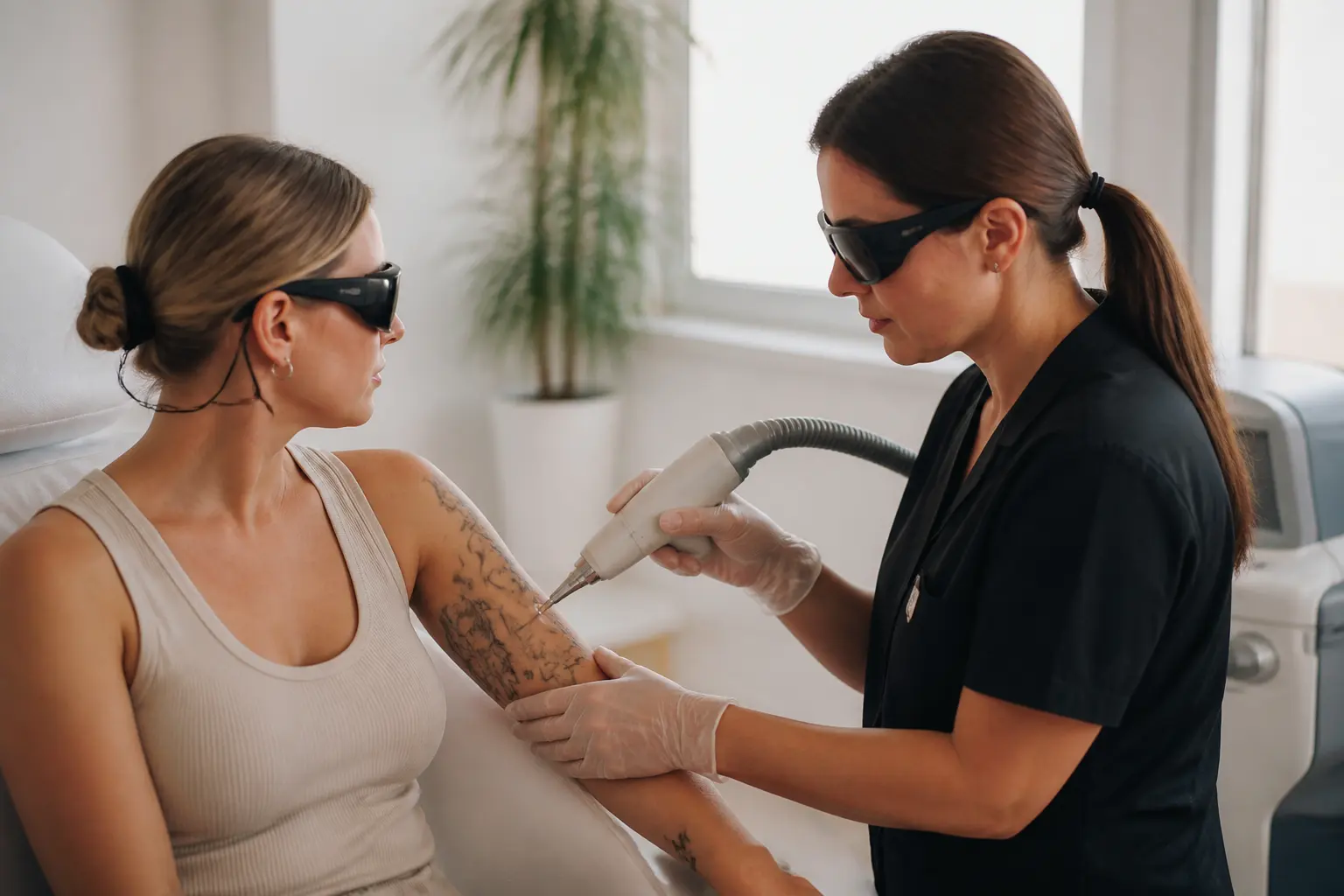
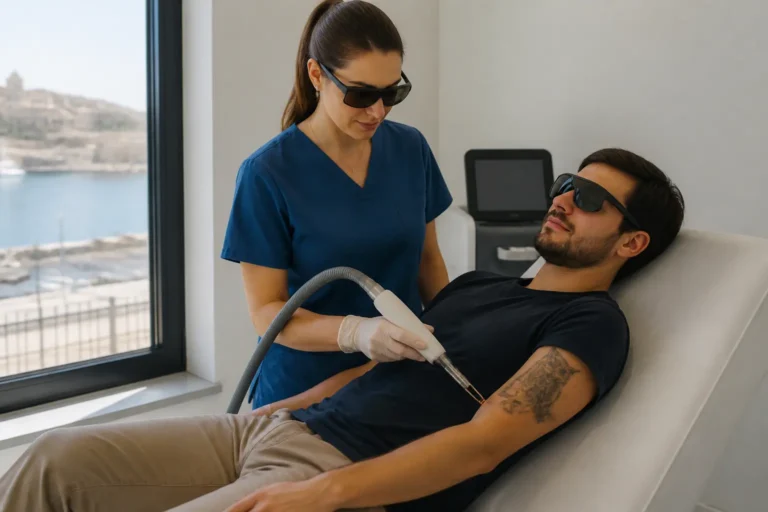
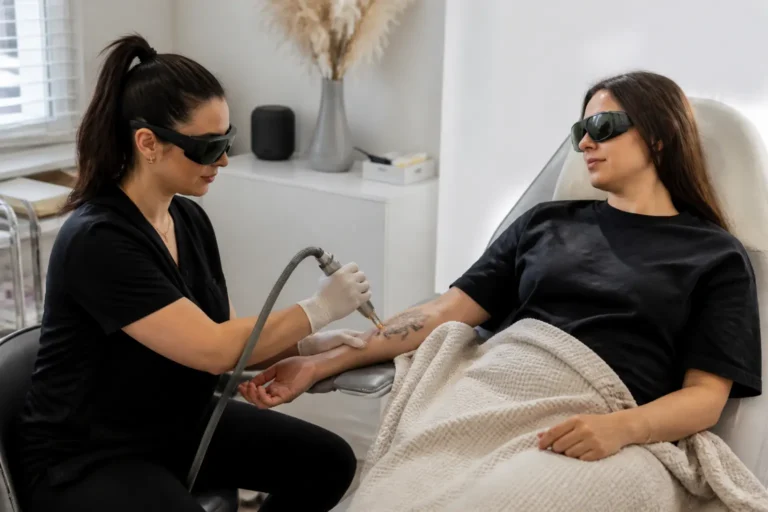
A tattoo may feel permanent when it is first applied, but laser tattoo removal works by addressing the reason the ink stays visible in the first place. Tattoo pigment sits below the skin’s surface in particles that are too large for the body to clear easily. During a professional laser session, precisely directed light energy targets those pigment particles and breaks them into much smaller fragments.
From there, the fading process is gradual. Your body needs time between appointments to process the fragmented ink, while the skin also needs time to settle. That is why laser tattoo removal is a course of sessions rather than a one-visit procedure, and why an individual consultation matters before any realistic plan can be discussed.
At Becammo, laser tattoo removal is available exclusively at the Sliema studio. Whether you are considering full removal, fading a design before a cover-up, or asking about old eyebrow micropigmentation, understanding how the process works can help you approach your consultation with clearer expectations.
Why tattoo ink stays in the skin
A tattoo is created when pigment is placed beneath the outermost layer of skin, in a deeper and more stable layer. This placement is what gives a tattoo its longevity. The body recognises the pigment as foreign material, but the original particles are generally too large to be carried away efficiently.
Over time, some tattoos soften or fade naturally, particularly with sun exposure and normal skin changes. However, the design remains visible because much of the ink continues to sit within the skin. Laser tattoo removal does not simply scrub away the surface. Its purpose is to target pigment beneath the surface without relying on abrasive methods.
The US Food and Drug Administration explains that laser light energy shatters tattoo ink into small particles, which the body’s immune system then clears over time. This is the central principle behind professional laser tattoo removal.
How laser tattoo removal works, step by step
1. A consultation looks at the tattoo as it is now
Before treatment, a professional needs to assess more than the design itself. Size, location, age, colour, density of pigment and whether the tattoo was professionally applied can all influence how it may respond. Your skin tone and skin history are also relevant to a safe, considered approach.
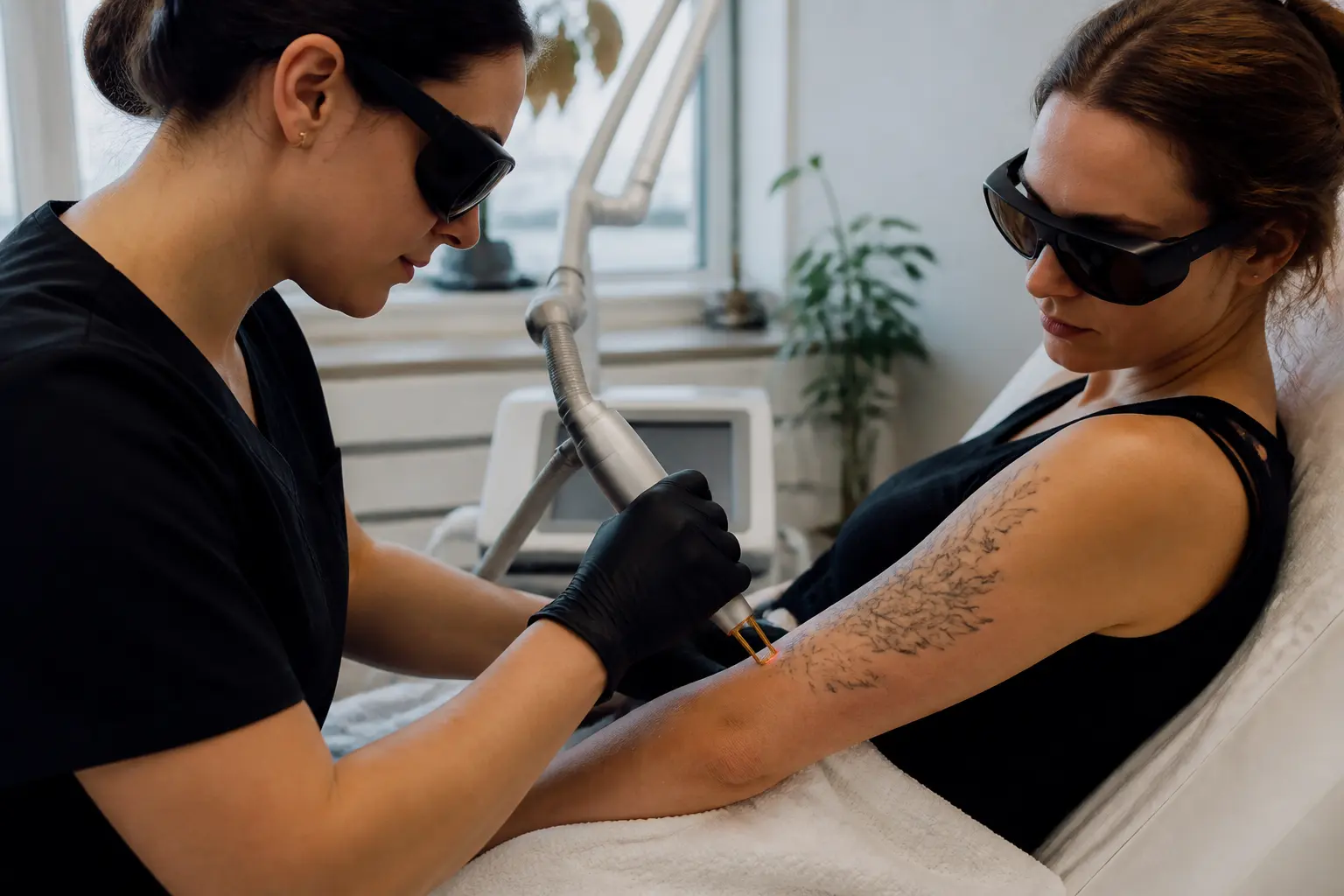
This is also the time to explain your goal. Some people want to lighten a tattoo enough to make room for a cover-up. Others hope to reduce the visibility of an old design as much as possible. These are different goals, so they should not automatically be approached in the same way.
For old microblading or permanent make-up, consultation is especially important. The FDA notes that some flesh-toned, white and permanent make-up pigments can darken through oxidation after laser exposure. This means no responsible provider should assume that every pigment will behave in the same way.
2. The laser is matched to the pigment being treated
Laser devices use specific wavelengths of light. Different ink colours absorb light differently, so the settings and laser approach need to suit the pigment being treated. Dark blue and black ink often absorb laser energy more readily than lighter shades. Colours such as green, red and yellow can be more challenging, while mixed-colour tattoos may require a more varied approach.
This is one reason online estimates can be misleading. Two tattoos of the same size may need very different plans if their pigment colours, layering and application depth are different. The visible appearance tells only part of the story.
3. Short pulses of energy target the ink
During the session, the laser delivers very short bursts of focused energy into the tattooed area. The aim is not to remove a layer of skin. Instead, the ink absorbs the energy and the larger pigment particles break apart into smaller fragments.
You can think of it as turning larger pieces of coloured material into much finer particles. The tattoo does not disappear instantly because those fragments still need to be gradually processed by the body after the session. What happens in the appointment starts the fading process, but the change continues between visits.
Professional laser work requires care because skin also contains natural pigment. The practitioner’s role is to work with an approach that considers the tattoo, its colours and the individual client, rather than treating every design with one fixed setting or schedule.
4. The body clears fragmented pigment gradually
Once the ink has been broken into smaller pieces, the body’s natural clearance processes can begin to deal with them over time. This is why spacing matters. Booking sessions too close together does not give the skin or the body adequate time to respond to the previous appointment.
The fade can be uneven at first. Some sections of a tattoo may appear to soften before others, particularly where the original pigment was applied more heavily. That does not necessarily mean the process is failing. It is one of the reasons progress should be reviewed over a series of appointments rather than judged only in the first few days.
Why more than one session is usually needed
Each laser appointment can only affect a proportion of the pigment available to be targeted at that time. The remaining ink, plus the time needed for visible fading, is why removal plans involve multiple sessions with intervals between them.
There is no universal number of sessions. A small black tattoo that has already faded may follow a different path from a newer, densely applied design with several colours. It is also not possible to promise complete removal. Even where substantial fading occurs, the final result can vary according to the ink, the skin and the tattoo’s history.
Factors that can influence the treatment journey include:
- The tattoo’s size and the amount of pigment present.
- Its colour palette, including whether it contains light, bright or mixed colours.
- How densely and deeply the ink was applied.
- Whether the tattoo has been covered, reworked or layered over time.
- The area of the body and its individual healing response.
- Your own skin characteristics and overall aftercare habits.
For this reason, a consultation should give you a personalised discussion rather than a fixed promise. It is more useful to understand the variables than to be given an overly precise answer before the tattoo has been properly assessed.
What does laser tattoo removal feel like?
Sensation is personal, and it can vary by tattoo location, size and individual sensitivity. Many people describe each laser pulse as a quick snap against the skin. It is more accurate to prepare for a degree of discomfort than to expect a completely sensation-free appointment.
A professional setting should make room for questions before treatment begins. If you are anxious about sensation, say so during your consultation. Clear communication helps you understand the process, plan appropriately and know what to expect on the day.
Immediately after a session, the area may look or feel different while it settles. The FDA lists temporary redness, soreness, pinpoint bleeding, infection, scarring and changes in skin colour among possible risks of laser tattoo removal. A suitable professional will discuss relevant considerations and aftercare guidance before treatment, not only after it has started.
Aftercare matters as much as the appointment
The laser session is only one part of the process. Thoughtful aftercare supports the skin while it recovers between appointments. Your practitioner should provide instructions specific to the area treated and your individual situation. Follow those instructions rather than copying a generic routine from social media.
In general, clients should avoid picking, rubbing or trying to speed up the visible healing process. Keep the area protected as directed, and contact the studio if you are unsure about what you are seeing. If you have a medical condition, a history of skin reactions, are pregnant, are taking medication, or have any concern that may affect your suitability, raise it before booking so you can be guided appropriately. For medical advice, speak with a qualified healthcare professional.
Sun exposure is another point to discuss. Tanned or irritated skin can affect the way a laser appointment is planned, so be open about recent sun exposure, travel and your skincare routine. In Malta, where bright conditions are part of everyday life for much of the year, this conversation is particularly useful.
Removal, fading for a cover-up and pigment correction are different goals
Laser tattoo removal does not always mean pursuing a fully clear area of skin. For some clients, the purpose is to fade existing ink enough to give a tattoo artist more creative flexibility for a new design. This is often called cover-up preparation.
The desired level of fading should be discussed from the beginning. A cover-up artist may have a different target from someone seeking to reduce the visibility of an unwanted tattoo as far as possible. Being specific about your plan can help shape a more relevant consultation.
Old eyebrow micropigmentation is a separate consideration. Although it is also pigment in the skin, cosmetic tattoo pigments can behave differently from conventional body tattoo ink. Never assume that a removal approach suitable for black body ink is automatically suitable for old brow work. A proper assessment is essential, particularly because some cosmetic pigments may change colour when exposed to laser light.
Questions worth asking at your consultation
A consultation is not simply a step before booking. It is your opportunity to make an informed decision. Consider asking:
- Is my goal better described as removal, significant fading or cover-up preparation?
- Which features of my tattoo are likely to affect the number of sessions?
- Are any colours or pigment types more unpredictable?
- How long should I leave between appointments?
- What should I do before the session and how should I care for the area afterwards?
- What changes should prompt me to contact the studio or seek medical advice?
Good answers should be clear without being absolute. Laser tattoo removal can be an effective way to fade unwanted pigment, but it remains a process with variables. A responsible provider will explain both the possibilities and the limits.
Choosing a professional setting in Malta
It can be tempting to focus only on speed or a headline price, especially when a tattoo feels urgent to remove. However, the quality of the initial discussion matters. The tattoo’s colours, depth, placement and your own skin all deserve consideration before a plan is proposed.
At Becammo Sliema, laser tattoo removal consultations can help you understand whether you are exploring tattoo fading, cover-up preparation or the removal of old micropigmentation. Bring your questions, be open about the history of the tattoo and explain the outcome you are hoping for. That creates a better starting point than making assumptions based on another person’s result.
Laser tattoo removal works by breaking ink into smaller fragments, then allowing time for gradual fading between sessions. If you are ready to discuss an unwanted tattoo or old pigment with a professional, use the booking option below to arrange your consultation at the Sliema studio.
Frequently asked questions
Does laser tattoo removal remove ink in one appointment?
No. Laser energy breaks tattoo ink into smaller fragments, but visible fading develops gradually after the session. Most removal plans need multiple appointments, with time between them for the skin to settle and for the body to process the fragmented pigment.
Which tattoo colours are easiest to fade?
Dark blue and black inks often respond more readily because they absorb laser energy effectively. Lighter and brighter colours, including green, red and yellow, can be more difficult. Mixed-colour tattoos may need a more individual approach.
Can I remove a tattoo to prepare for a cover-up?
Yes, fading can be a goal in its own right when you want to create more options for a future cover-up. Tell the practitioner that this is your aim during consultation, as the target level of fading may differ from a full removal plan.
Can laser be used on old microblading?
Old microblading and other permanent make-up pigments need individual assessment. Some cosmetic pigments can darken after laser exposure, so it is important not to treat them as identical to body tattoo ink. Book a consultation before making a decision.
Does laser tattoo removal hurt?
It can involve discomfort, and sensation differs from person to person. Many clients describe quick snapping sensations during the laser pulses. Discuss any concerns at consultation so you know what to expect.
Where is Becammo’s laser tattoo removal service available?
Laser tattoo removal is available exclusively at Becammo’s Sliema location, at 6 Triq Manwel Dimech, Sliema, MT, SLM 1059.