How Many Laser Tattoo Removal Sessions Might You Need?
Brenda Cammo Team

It is natural to want a clear answer before starting laser tattoo removal: how many sessions will it take? The honest answer is that no two tattoos, and no two removal plans, are exactly alike. A small black tattoo may respond very differently from a large, layered design with several colours, even when both are treated with the same care.
Laser tattoo removal works by breaking tattoo pigment into smaller particles. The body then gradually clears those particles over time, which is one reason appointments need to be spaced out. The United States Food and Drug Administration explains that the size and colours of a tattoo affect the length and number of treatments, and that complete removal is not always possible. Read the FDA overview of tattoo removal options and results.
Rather than treating a session estimate as a promise, it is more useful to understand the factors that shape it. A proper consultation gives the practitioner a chance to look at the tattoo, discuss your goal and build a realistic plan.
Why laser tattoo removal takes more than one session
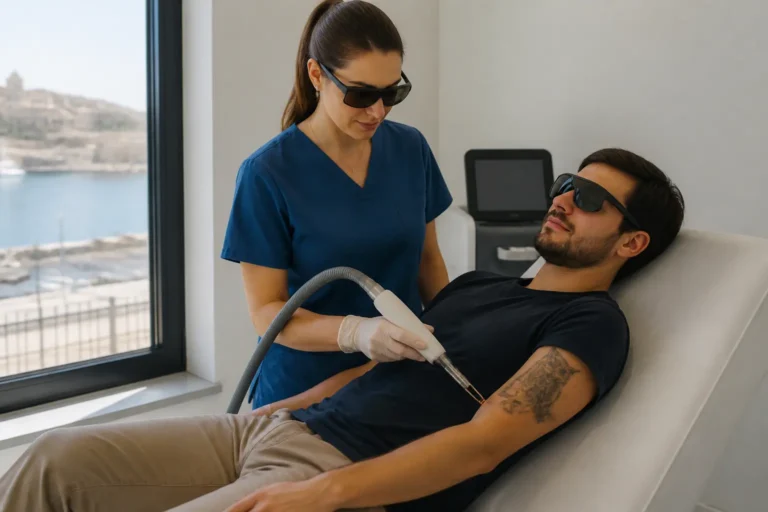
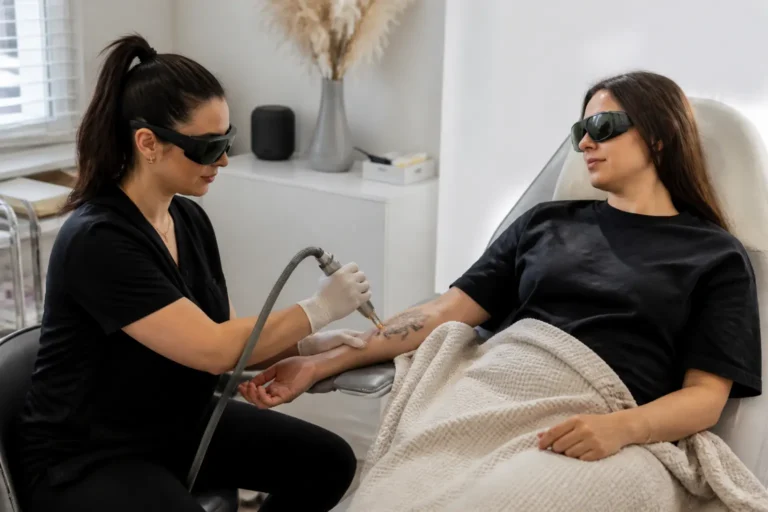
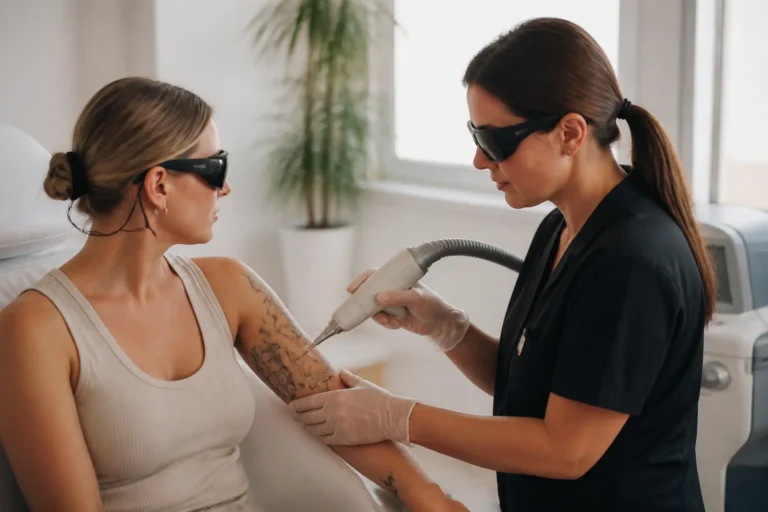
Tattoo ink is placed in the dermis, a deeper layer of skin. During a laser session, the light energy targets the pigment and breaks it into smaller fragments. The laser does not simply lift all ink out of the skin in one appointment.
Your skin needs time to settle between sessions, and your body needs time to process the fragmented pigment. Trying to rush this process is not a shortcut to a better outcome. It can make it harder to assess how the tattoo is responding and may not give the skin the recovery time it needs.
The American Academy of Dermatology also notes that tattoo artists build ink in layers, so a laser cannot safely break down every layer in one treatment. The organisation highlights that the body, rather than the laser alone, clears the tiny ink particles after treatment. See the American Academy of Dermatology’s guidance on laser tattoo removal.
What can influence how many tattoo laser removal sessions you may need?
1. The colours in the tattoo
Colour is one of the most important variables. Different pigments absorb light differently, so a multi-coloured tattoo may need different laser settings or wavelengths across the removal plan.

Dark blue and black inks are often described as more responsive than colours such as green, red and yellow. This does not mean that every black tattoo will disappear quickly, nor that coloured ink cannot lighten. It means colour is part of the assessment from the beginning.
White, flesh-toned and some permanent make-up pigments require particular caution. According to the FDA, these pigments can oxidise and turn darker when exposed to laser treatment. That possibility is especially relevant if you are considering removal of old microblading or other cosmetic tattooing, so it should be discussed clearly before proceeding.
2. How much ink is present and how deeply it was placed
A tattoo is not only a picture on the skin; it is a collection of pigment placed at varying density and depth. Dense, saturated areas may need a longer plan than lighter shading. A design that has been reworked, heavily outlined or built up over multiple sittings can contain more layers of ink than it appears to at first glance.
Professional tattoos are often more consistent in pigment placement, but they may also contain a substantial amount of ink. Amateur tattoos may be lighter or more uneven, yet this does not automatically make them simple to remove. The individual tattoo matters more than the label attached to it.
3. Tattoo size and the amount of skin being treated
Size does not determine everything, but it affects planning. A small symbol and a large sleeve are not treated in the same way. Larger tattoos may involve longer appointments, staged work across different areas, or a more gradual approach to keep the treatment practical and considerate of the skin.
For this reason, “number of sessions” should be separated from “how long will the whole process take?”. A tattoo may need a certain number of treatments, but the calendar length of the plan will also depend on intervals between appointments and how the area looks as it heals.
4. The tattoo’s age and any previous fading
An older tattoo may already look softer because some pigment has faded naturally over time. In some cases, that can affect how much visible ink remains to be addressed. However, age is not a reliable guarantee of fewer sessions. Some older tattoos still hold strong pigment, while newer tattoos can vary widely according to the ink, application and aftercare history.
If a tattoo has already had laser work elsewhere, that history is also useful to share. Previous treatment may have lightened parts of the design, changed the way colours appear or created an uneven pattern of remaining pigment. Bringing any information you have about earlier sessions can help make the consultation more informed.
5. The placement of the tattoo
The body area can influence how a removal plan is approached. Skin thickness, day-to-day friction, sun exposure and how easy the area is to protect while healing are all practical considerations. A tattoo on a frequently exposed area, for example, may require more attention to sun avoidance and clothing choices between appointments.
Placement also matters when the design sits close to a sensitive area, a scar, a mole or an area that is regularly shaved, rubbed or exposed to water. These details do not necessarily rule out treatment, but they are worth raising before booking.
6. Your skin and healing response
Laser tattoo removal should always be individualised. Skin tone, recent tanning, sensitivity, a history of raised scarring and the way your skin recovers can all influence the settings and timing considered appropriate for you.
This is why an assessment is more valuable than an online calculator. A cautious plan is not a sign that the treatment is ineffective; it is part of working responsibly with the skin in front of you. If you have a history of unusual scarring, pigment changes or a skin condition affecting the area, mention it during your consultation.
7. Your general health, medicines and current skin condition
Share relevant health information honestly before starting. Your practitioner needs to know about medicines, allergies, pregnancy or breastfeeding, active irritation, infection, recent procedures and anything else that could affect whether it is sensible to proceed or whether an appointment should be delayed.
The American Academy of Dermatology advises that health, medicines and any history of raised scars are among the topics that should be considered before laser tattoo removal. If there is any uncertainty about a skin concern, seeking advice from an appropriate healthcare professional before treatment is the sensible next step.
8. Your end goal: full removal, significant fading or cover-up preparation
“Removal” can mean different things. Some people want the tattoo to become as faint as possible. Others want enough fading to make room for a new design or cover-up. These goals can lead to different plans.
Preparing a tattoo for a cover-up may not require the same degree of fading as pursuing maximum clearance. Explaining your goal at the consultation helps avoid assumptions. It also allows you to revisit the plan after each session as the tattoo changes.
Why an exact session number at the first appointment can be misleading
You may see broad estimates online, including figures such as six to ten treatments. The FDA notes that tattoo removal may take six to ten treatments, but this is a general reference point rather than a personal prediction. Ink colour, tattoo size and the other factors above can shift the estimate in either direction.
A responsible practitioner should explain uncertainty rather than offer a fixed outcome before seeing how your tattoo responds. The first few stages of a plan often provide useful information: whether darker areas are fading first, whether a colour is behaving differently than expected, and whether the skin needs more recovery time.
It is also important to avoid promises of complete removal. Some pigment may remain, and there can be changes in skin colour or texture. The FDA lists potential effects including temporary redness, soreness, pinpoint bleeding, infection and scarring. Understanding these limits before you begin is part of making an informed choice.
How to prepare for a useful laser tattoo removal consultation
A consultation is your opportunity to turn a general question into a personal plan. At Becammo, laser tattoo removal is available exclusively at the Sliema studio, so an assessment can focus on your tattoo, your skin and what you hope to achieve.
- Take clear photos of the tattoo in natural light, particularly if you are enquiring before visiting Sliema.
- Be ready to describe when the tattoo was done and whether it has been retouched, covered up or treated with laser before.
- Tell the practitioner about all colours used where known, but do not worry if you do not have that information.
- Explain whether you want full fading, partial fading or preparation for a new tattoo.
- Share relevant health information, medicines, allergies and any previous skin reactions.
- Ask how the area should be protected between appointments, especially if it is exposed to Malta’s strong sunshine.
A consultation is also the right time to ask what changes should prompt you to contact the studio, how to care for the area after a session and when it may be appropriate to schedule the next appointment.
Keeping expectations realistic throughout the plan
Laser tattoo removal is a process, not a one-day change. Progress is commonly assessed over a series of appointments, not immediately after each one. Some areas of pigment may fade sooner than others, and multi-coloured designs can change unevenly as different inks respond.
The most helpful approach is to keep appointments only when the skin is ready, follow the personalised aftercare guidance you receive and protect the treated area from unnecessary sun exposure. Avoid trying DIY removal products or harsh home methods. The FDA states that it has not approved tattoo removal creams, ointments or do-it-yourself kits, and warns that they may cause burns, rashes or scars without reaching the deeper tattoo pigment.
If your tattoo includes old eyebrow microblading or permanent make-up, bring that up specifically. Cosmetic pigments can behave differently from body tattoo ink, and the plan should reflect that rather than relying on assumptions based on a standard black tattoo.
Conclusion
The number of laser tattoo removal sessions you may need is influenced by a combination of ink colour, density, tattoo size, placement, skin response, previous treatment and your desired result. None of these factors works in isolation, which is why a personalised consultation matters more than a universal session count.
If you are considering tattoo fading or removal in Malta, book a consultation at Becammo’s Sliema studio. It is the practical first step towards understanding what your individual tattoo may require and planning appointments at a pace that respects your skin.
Frequently asked questions
Can a small tattoo be removed in one laser session?
Usually, no. Even a small tattoo generally needs more than one session because pigment is treated gradually and the skin needs time between appointments. Its size may make treatment more straightforward, but it does not remove the need for an individual assessment.
Does black tattoo ink always need fewer sessions?
Black and dark blue inks are often more responsive to laser treatment than some lighter colours. However, ink density, layering, tattoo age, placement and your skin response still affect the overall plan.
How long should I wait between laser tattoo removal sessions?
The interval should be set after considering how the treated skin has recovered and how the tattoo is responding. Your practitioner will advise on appropriate timing for your situation rather than using a rushed, one-size-fits-all schedule.
Can laser tattoo removal prepare a tattoo for a cover-up?
Yes, fading a tattoo may help create more options for a cover-up design. The amount of fading needed depends on the existing tattoo and the design planned by your tattoo artist, so make that goal clear during your consultation.
Can old microblading be treated like a regular tattoo?
Not necessarily. Permanent make-up pigments can react differently under laser treatment, including the possibility of darkening with certain pigments. A consultation is essential before treating old microblading or other cosmetic tattooing.
Where can I book laser tattoo removal with Becammo?
Laser tattoo removal is offered exclusively at Becammo’s Sliema location. Choose the laser tattoo removal consultation through the online booking system to discuss the tattoo, your goals and the most appropriate next steps.