Why Tattoo Removal Takes Months: Spacing Sessions Properly
Brenda Cammo Team
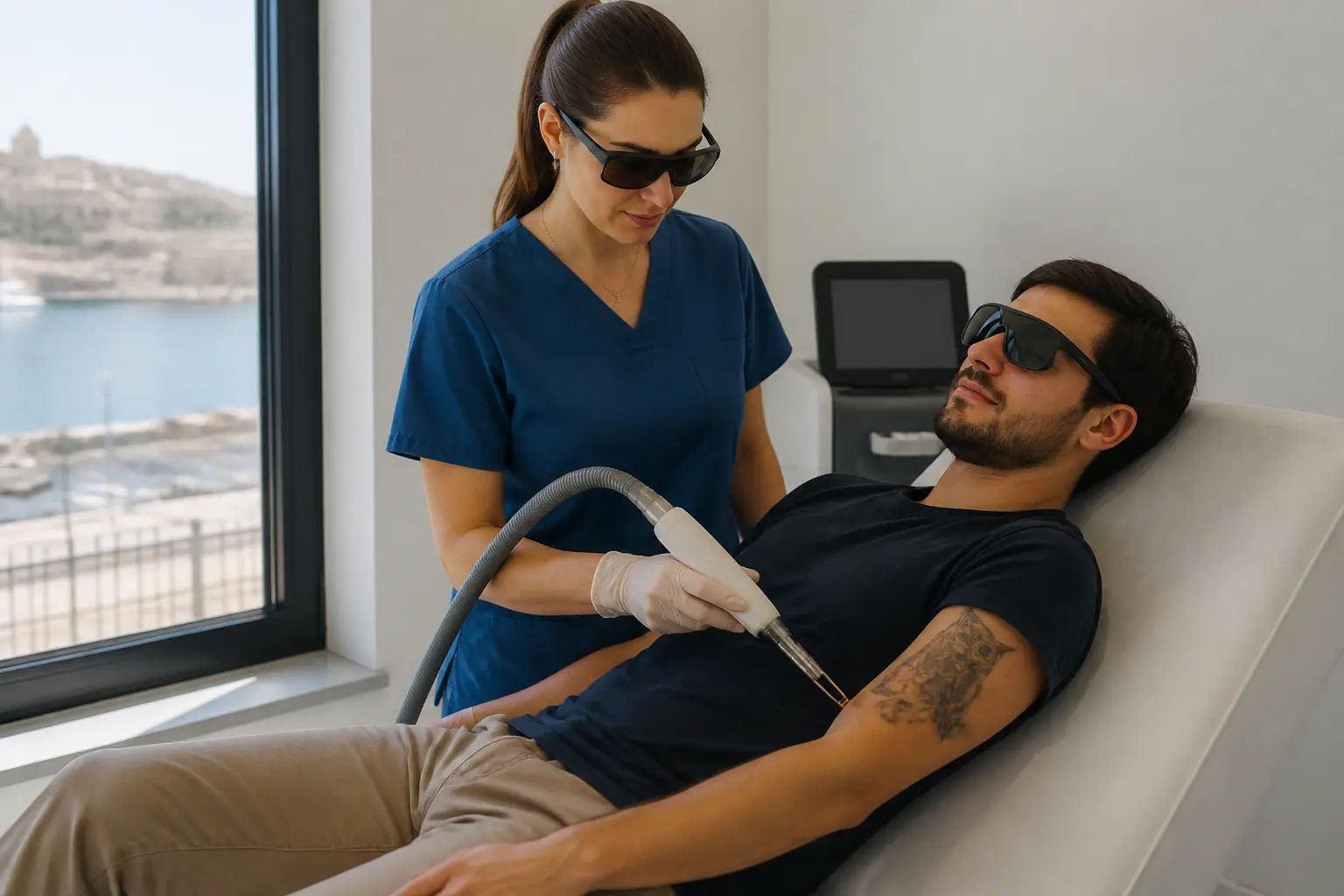
Laser tattoo removal is often described as a process, and that is exactly what it is. While the appointment itself may be relatively short, the fading happens gradually between sessions. For anyone hoping to remove or lighten a tattoo in Malta, understanding why appointments are spaced apart can make the whole journey feel more predictable.
The wait is not simply an administrative gap in a diary. Laser energy breaks tattoo pigment into smaller particles, but your body needs time to respond, recover and gradually clear those particles. Booking sessions too close together does not automatically make the tattoo fade faster. It can mean treating skin that has not fully settled and missing the benefit of the clearing that continues after your visit.
At a professional studio, tattoo removal should therefore be planned as a course, with each appointment considered in relation to the tattoo, its colours, its location and how your skin responded last time. Becammo provides laser tattoo removal consultations and sessions exclusively at its Sliema studio, where the right plan begins with an individual assessment.
Why laser tattoo removal cannot be rushed
A tattoo is designed to stay in the skin. Ink sits below the surface, which is why washing, exfoliating or applying a topical product cannot simply lift it away. Laser removal works differently. The laser targets pigment and breaks it into much smaller fragments.
That is only the first part of the process. After the pigment is fragmented, the body gradually deals with those smaller particles over time. The US Food and Drug Administration explains that several treatments are normally needed, with weeks between procedures so the skin has time to heal. The American Academy of Dermatology also notes that the body, rather than the laser alone, clears the tiny ink particles after treatment.
This is why an apparently slow schedule has a purpose. Your appointment starts the pigment-breaking process. The weeks afterwards are when recovery and gradual clearance continue. A course of removal is not a series of identical appointments squeezed together. It is a sequence of treatments, observation and sensible adjustments where needed.
What happens between tattoo removal sessions?
It is helpful to think of the time between sessions as active recovery time. Even when the treated area looks calmer after the first few days, changes may still be taking place beneath the surface.
Your skin has time to settle
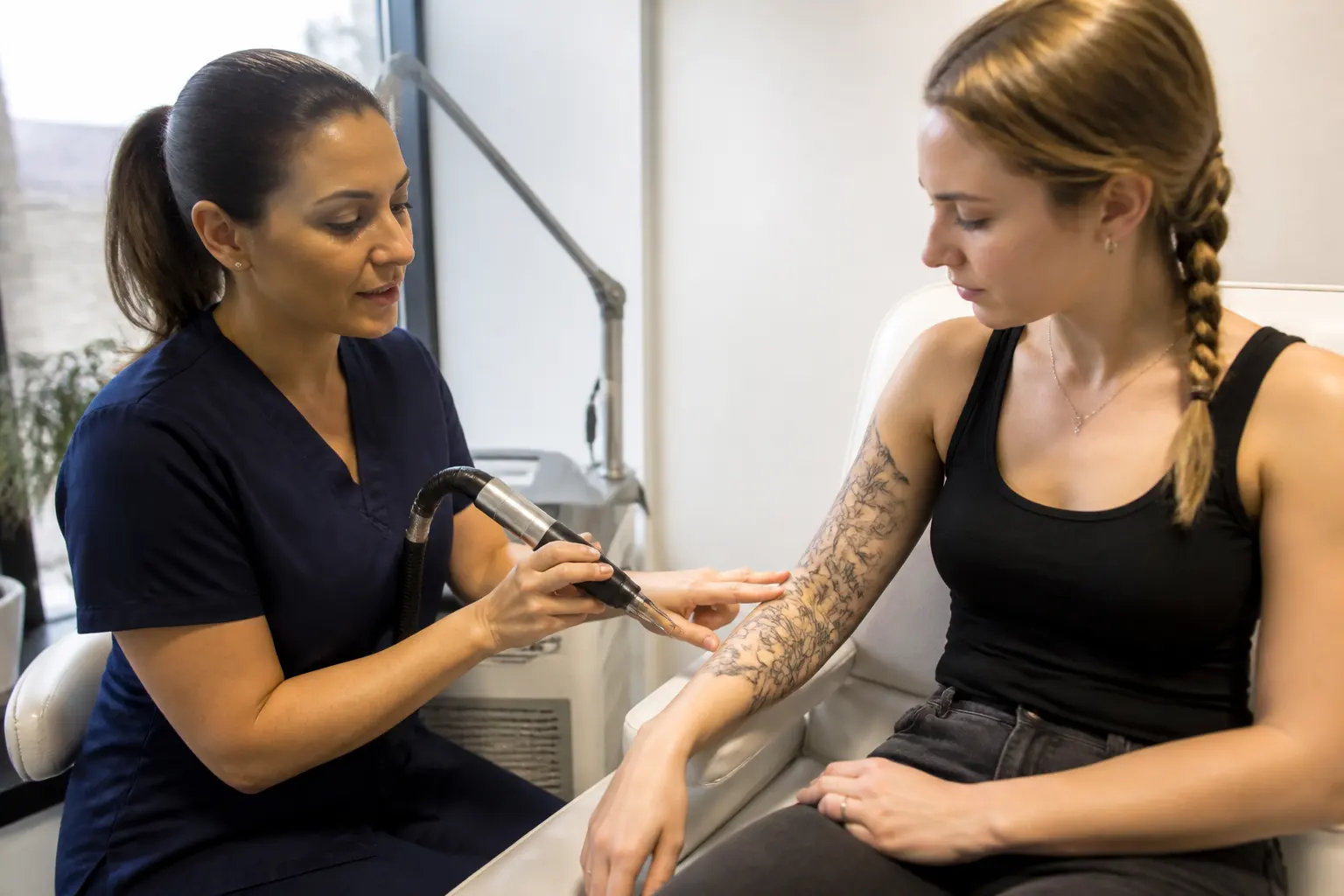
Following laser tattoo removal, the area can look red, feel tender or become temporarily swollen. Some people may also experience blistering or crusting. These reactions need appropriate aftercare and time to resolve before another session is considered.
Skin that is still irritated, damaged or healing should not be treated as though it has returned to its usual baseline. A responsible plan takes the visible condition of the skin seriously. If the area needs longer to recover, the next appointment may need to move. This is not a setback. It is part of working carefully with your skin.
Your body has time to clear disrupted pigment
Fading is not always immediate or even. A tattoo may appear noticeably lighter soon after a session, then continue changing more gradually over the following weeks. This is one reason it is unhelpful to judge the final effect too early.
Spacing allows enough time to see how the tattoo has actually responded. That gives a clearer basis for deciding whether further work is appropriate and how the next session should be approached.
The practitioner can assess the real response
Two tattoos that look similar at the start can behave very differently after treatment. One may lighten consistently. Another may need a more cautious plan because of the ink, placement, skin response or colour mix.
Leaving a suitable interval gives the practitioner a better opportunity to review the area rather than making decisions while the skin is still in its immediate recovery stage. It also gives you time to raise any concerns and follow aftercare properly.
How far apart should laser tattoo removal sessions be?
There is no one interval that is right for every tattoo or every person. Professional guidance commonly describes tattoo removal sessions as being separated by several weeks, often around six to eight weeks or longer depending on the treatment plan and the individual response. For example, Salisbury NHS Foundation Trust states that tattoo removal treatments are usually at least six weeks to two months apart, while North Bristol NHS Trust spaces treatments at least eight weeks apart to allow pigment absorption.
These examples are useful for setting expectations, not for replacing an individual consultation. Your recommended spacing should be based on the tattoo being treated and the condition of your skin at each stage. It may also change during the course if your response indicates that more recovery time would be sensible.
Rather than asking, “What is the fastest possible schedule?”, a more useful question is, “What spacing gives my skin and this particular tattoo the right conditions for the next session?” That shift in mindset can prevent unnecessary disappointment and help you plan around travel, holidays and work commitments.
The factors that influence a removal timeline
No honest tattoo removal plan can promise an exact number of sessions or a fixed finish date from a photograph alone. A consultation is valuable because several details affect how a tattoo may respond.
Ink colours
Different pigments interact differently with laser light. Darker inks, particularly black and dark blue, can often be more straightforward to target than colours such as green, red and yellow. The FDA notes that colours absorb different wavelengths differently, which is why multi-coloured tattoos can be more complex to treat.
Colour is not a guarantee of outcome. It is one practical factor that helps shape expectations and the likely pace of fading.
Professional, amateur and cosmetic tattoos
Ink depth, density and how the tattoo was applied can influence the plan. A densely packed professional tattoo may require a different course from a small, lightly applied amateur tattoo. Cosmetic tattooing and old permanent make-up also need careful assessment because pigment composition can vary.
This matters particularly for old eyebrow pigment. Permanent make-up removal is not simply a smaller version of body tattoo removal. A professional consultation is important before deciding whether laser removal is suitable for the existing pigment and the intended result.
Size, placement and layering
A small tattoo does not always mean a short course, and a larger tattoo does not automatically mean poor progress. Size is only one element. Placement, the amount of ink, the number of layers and whether the tattoo has been retouched can all affect the journey.
For cover-up preparation, the aim may be controlled fading rather than complete removal. In that situation, the timetable should reflect the point at which a tattoo artist can work comfortably with the remaining design, not an arbitrary number of laser sessions.
Your skin’s response and lifestyle
How your skin heals after each session matters. Sun exposure is particularly relevant in Malta, where strong sunshine can complicate the timing of aesthetic laser appointments. Avoiding unnecessary sun exposure around the treated area and following the aftercare given at your appointment can help you protect the skin while it recovers.
If you are planning beach days, a holiday or a major event, mention it during your consultation. It may be wiser to schedule around those plans than to begin a course that you cannot comfortably maintain.
Why booking sooner does not necessarily mean finishing sooner
It is understandable to want visible change quickly, especially if the tattoo has personal meaning or you are preparing for a cover-up. But frequent treatment does not remove the biological steps that happen between visits.
Booking another session before the skin is ready can make the overall experience more difficult, rather than more efficient. The aim is not to fill every available appointment. The aim is to give each session the best possible role within a carefully managed course.
Patience also helps you make better decisions. As the tattoo fades, you may decide that partial fading is enough, that a cover-up is now possible, or that you would like to continue towards further lightening. A spaced plan leaves room for those decisions to be based on what you can actually see.
How to plan tattoo removal around life in Malta
Because removal takes months, a little forward planning can make a meaningful difference. Start by considering your calendar for the next several months, rather than only the first appointment.
- Book a consultation before committing to a personal deadline, cover-up or special event.
- Tell the studio if you have travel, beach holidays or outdoor activities planned.
- Keep the treated area protected as advised, especially during sunny periods.
- Leave room in your diary for aftercare and for the possibility that a session may need to be moved.
- Take consistent photographs only if advised, as they can help you notice gradual changes that are easy to overlook day to day.
- Ask what signs mean you should contact the studio before your next appointment.
It is also sensible to avoid comparing your progress too closely with somebody else’s. Their tattoo may have different pigment, depth, age, placement and treatment history. The most useful comparison is your own tattoo from one properly spaced stage to the next.
What to ask at a tattoo removal consultation
A consultation is your opportunity to replace assumptions with a realistic plan. Bring clear information about when the tattoo was done, whether it has been retouched, whether you know the colours used and whether you are seeking complete removal or fading for a cover-up.
You may want to ask:
- What features of my tattoo are likely to affect its response?
- What interval is recommended between my sessions, and why?
- How will my skin be assessed before the next appointment?
- What aftercare should I follow after each session?
- What changes should I expect in the days and weeks after treatment?
- When should I contact the studio with a concern?
- Could sun exposure or planned travel affect my schedule?
Clear answers will not turn removal into an instant process, but they can make it far easier to approach with confidence and realistic expectations.
Conclusion
Laser tattoo removal takes months because the appointment is only one stage in a longer process. The laser disrupts the pigment, then your skin needs to recover and your body needs time to clear the fragmented ink. Properly spaced sessions respect both parts of that process.
If you are considering tattoo removal or controlled fading for a future cover-up, begin with an individual consultation rather than trying to set a finish date first. At Becammo in Sliema, you can discuss your tattoo, your priorities and a sensible schedule before starting your course.
Frequently asked questions
Can I have laser tattoo removal every two weeks?
That is usually too soon for a standard removal plan. Tattoo removal appointments are commonly separated by several weeks so the skin can heal and the body can continue clearing disrupted pigment. Your individual interval should be confirmed during consultation.
Will a longer gap between sessions ruin my progress?
No. A longer gap does not erase the fading achieved in previous sessions. In some circumstances, allowing more recovery time may be the more appropriate choice for your skin and schedule.
Why does my tattoo still look different weeks after treatment?
Visible changes can continue after the initial redness or tenderness has settled. The gradual clearing of fragmented pigment takes time, so it is normal for fading not to be limited to the day of treatment.
Can every tattoo be completely removed?
Complete removal cannot be promised. The result can vary according to ink colours, density, tattoo type, skin response and other individual factors. Some clients may seek substantial fading rather than a guarantee of complete disappearance.
Does sun exposure affect tattoo removal scheduling?
It can. Strong sun exposure and tanning may affect when it is sensible to treat the area. Discuss holidays, outdoor work and sun exposure during your consultation, then follow the studio’s aftercare guidance.
Is laser removal available for old eyebrow tattoo pigment?
Old permanent make-up may be assessed for laser removal, but it requires particular care because cosmetic pigments can vary. Book a consultation to discuss the existing pigment and whether removal is an appropriate next step.