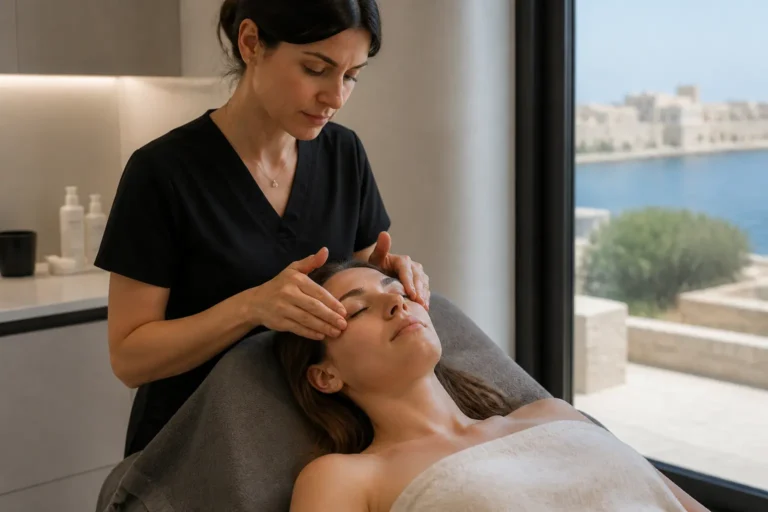
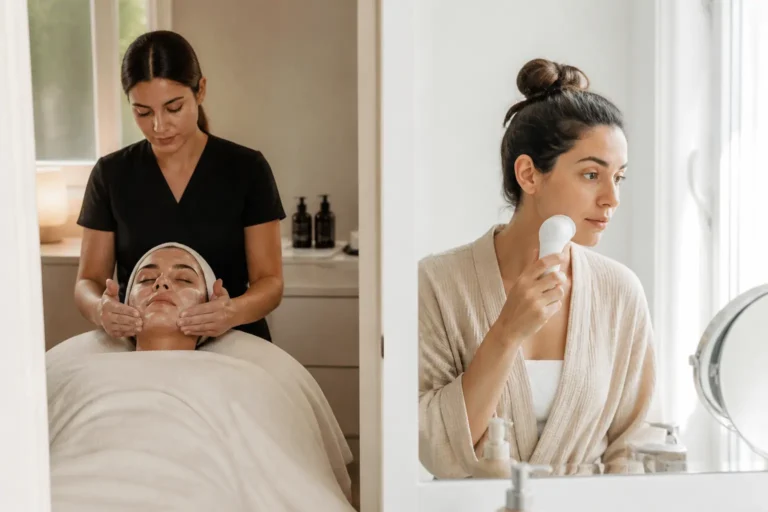
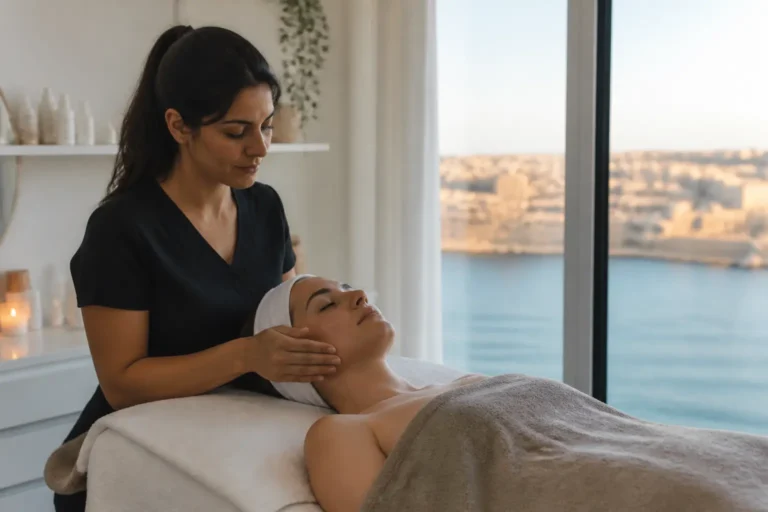
Your First Facial: Booking, Arrival and What Happens Next
Brenda Cammo Team
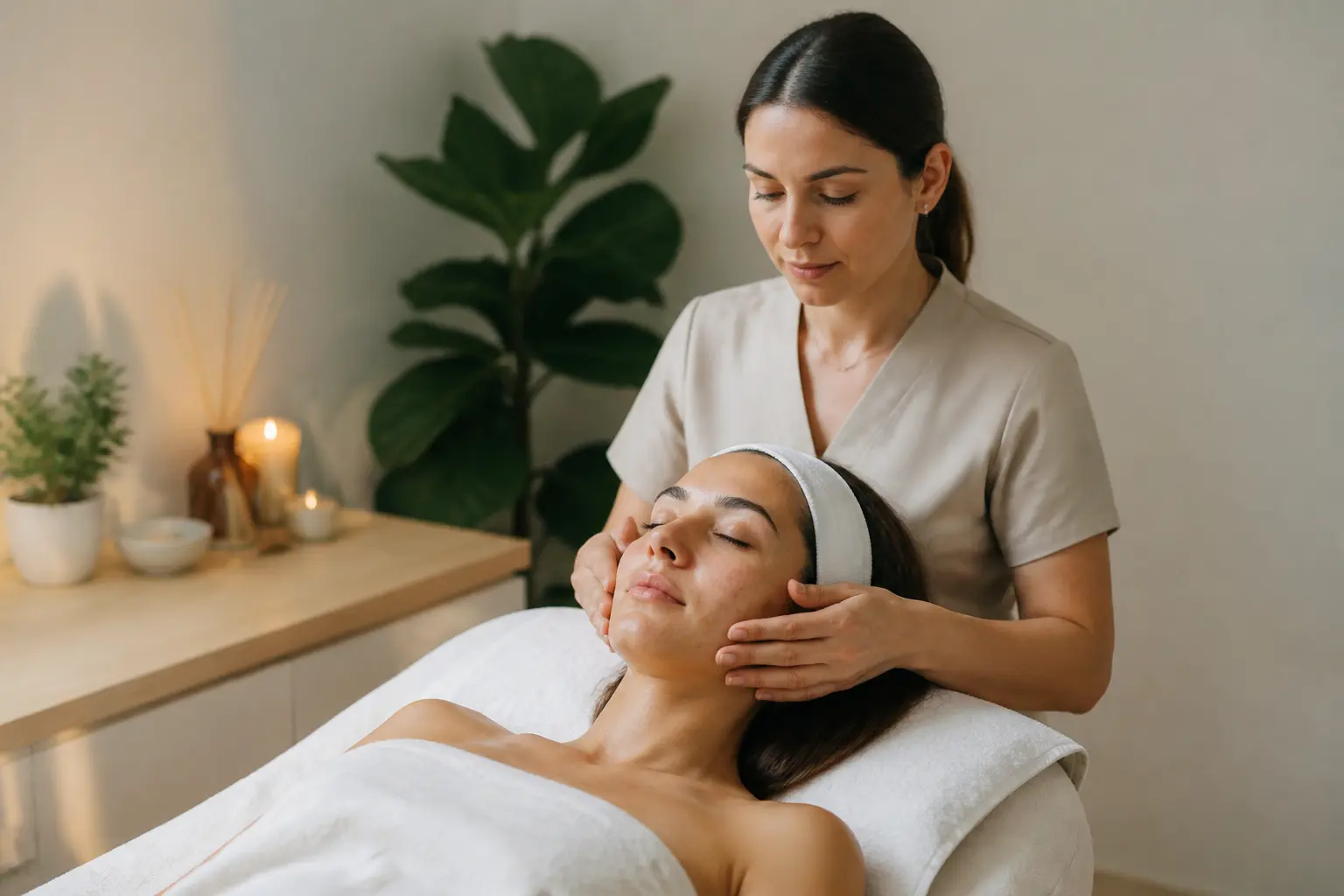
Booking your first facial can feel exciting, but it can also bring plenty of questions. Which facial should you choose? Should you arrive with bare skin? Will someone assess your skin first? And what should you plan for afterwards?
A professional facial is not about following one rigid routine for every face. Your skin, comfort level, current skincare habits and plans for the rest of the day all matter. At a beauty studio, the best first step is to arrive with a clear idea of what you would like help with, then stay open to guidance on the most suitable option for your skin on that day.
This guide walks through the usual first facial appointment journey, from making the booking to leaving the studio with a simple aftercare plan.
Before you book your first facial
Start by thinking about your reason for booking. You do not need to diagnose your own skin or know the name of every treatment. A simple goal is enough. Perhaps your skin feels dull after travel, you want a deep cleanse, you are curious about dermaplaning, or you would simply like to build a more consistent self-care routine.
When browsing facial options, read the service description rather than choosing only by the most dramatic-sounding name. A first appointment should feel understandable and manageable. Look for information about the focus of the facial, the approximate appointment length and any preparation guidance.
At Becammo, facials are available alongside other beauty services in Malta. This can make it convenient to book the treatment that fits your schedule, whether you visit the Sliema or Swieqi location. Choose your branch and service through the online booking system, then allow enough time to arrive calmly rather than rushing in from another commitment.
Choose a realistic time in your week
Your first facial is often more enjoyable when you have some breathing room afterwards. While many people continue with their day as normal, it is sensible not to book immediately before a high-pressure event, a long beach day or an evening when you need to apply full make-up straight away.
That does not mean you must reserve an entire day. It simply means giving yourself flexibility. Your skin may look freshly cleansed and feel different from usual after professional care, and some treatments can involve advice to be thoughtful with heat, friction, sun exposure or active skincare products for a period afterwards.
Share relevant information honestly
During the booking process or when you arrive, mention anything that could affect your comfort or the choice of facial. This may include skin sensitivity, recent irritation, allergies you know about, products you are currently using, or a recent beauty treatment that involved your face.
There is no need to feel embarrassed about a simple skincare routine, breakouts, dry patches or uneven texture. Professional appointments are designed around real skin, not filtered skin. Clear information helps the therapist decide whether the selected service is appropriate or whether a gentler approach would make more sense.
How to prepare on the day of your appointment
Preparation for a first facial is usually uncomplicated. Avoid trying several new products in the days immediately before your booking. If your skin reacts, it becomes difficult to know what caused the reaction and harder to judge how it is feeling when you arrive.
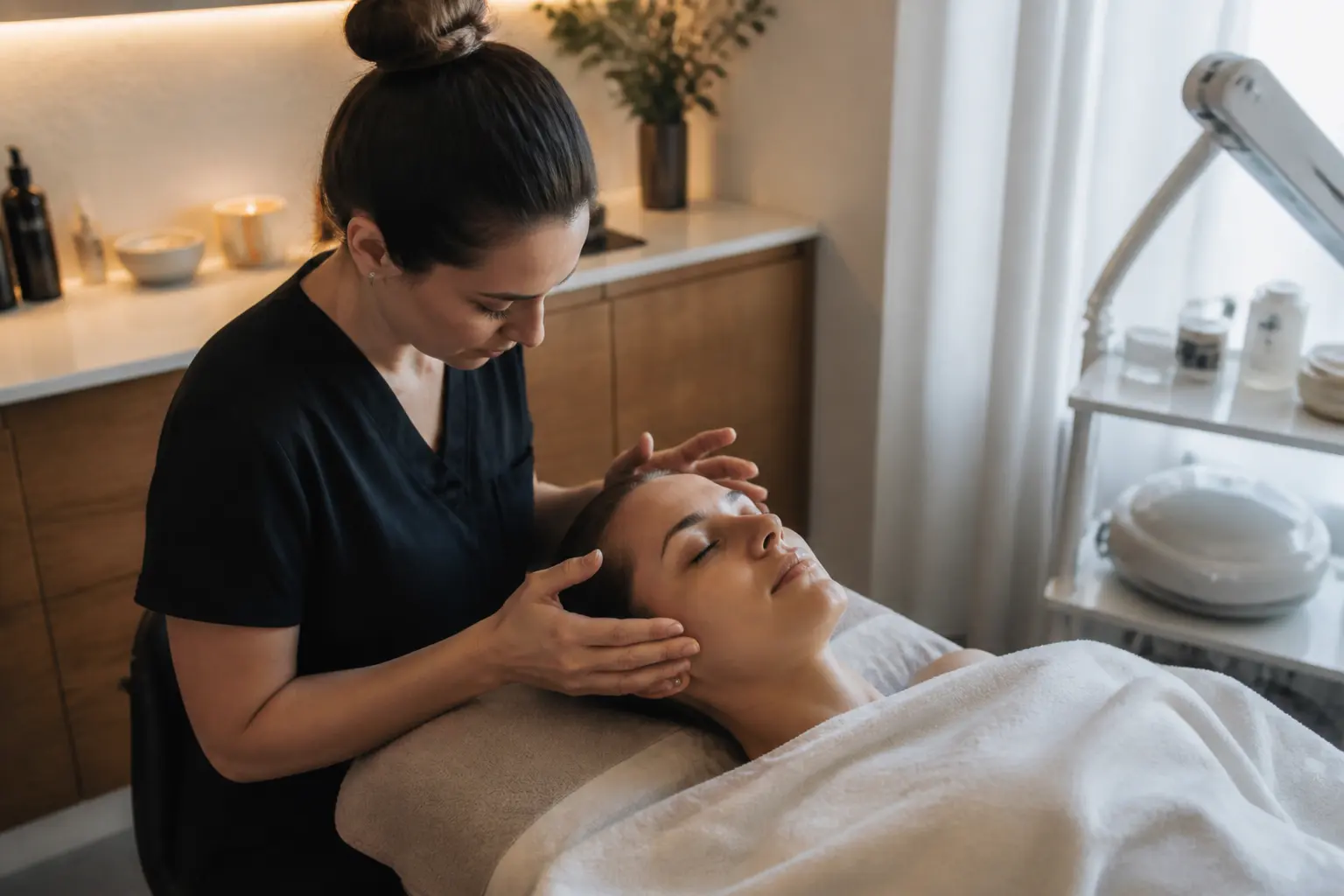
If possible, come without heavy make-up. A facial can still begin with cleansing when you have make-up on, but arriving with lighter skin can make the opening part of the appointment more straightforward. Most importantly, do not scrub, pick or aggressively exfoliate your face beforehand in an attempt to make it “ready”. Your skin does not need to be made perfect before professional care.
- Bring your usual skincare questions, especially if you are unsure about a product or routine.
- Tell the therapist about anything that has recently made your skin feel sore, tight or unusually reactive.
- Wear clothing that helps you feel comfortable while lying back.
- Plan for a little extra time if it is your first visit to the studio or a new location.
- Consider postponing if your facial skin is actively irritated, damaged or sunburnt, then contact the studio to discuss the best next step.
If you are uncertain before the appointment, asking a question is always preferable to guessing. A professional studio should be able to clarify practical booking points and help you understand what to expect from the service you have selected.
What happens when you arrive at the studio
Your arrival is the beginning of the service, not an awkward test you need to pass. You will usually be welcomed, checked in and given the chance to settle before the facial begins. For a first visit, this is also the moment to confirm what you booked and raise any last-minute questions.
A consultation is an important part of a professional facial experience. It does not need to be lengthy to be useful. The aim is to understand your main concern, your skin’s current condition and whether there are any factors that should influence the treatment. You may be asked about your skincare routine, sensitivity, allergies, recent treatments and the result you hope to achieve.
Be specific where you can. For example, instead of saying “my skin is bad”, you could say that it has felt dry around the cheeks, congested around the nose, rough under make-up or tired after travelling. This gives the therapist a more practical starting point.
Your first facial is also your chance to learn. Ask what each stage is for, what you may notice during the appointment and what would be sensible to do at home afterwards.
What happens during a professional facial
The exact sequence depends on the facial you book and the assessment at the start. A facial focused on deep cleansing will not feel identical to a dermaplaning service or a skin-focused rejuvenation facial. Still, many professional facials follow a broadly familiar structure.
1. Cleansing and an initial skin check
The appointment often begins by removing surface make-up, sunscreen and daily build-up. This is not just a practical step. It gives the therapist a clearer view of the skin before deciding how to proceed.
You may be asked whether any areas feel sensitive or whether there is anything you would prefer to avoid. Speak up if something feels uncomfortable. Mild sensations can be part of certain beauty treatments, but you should never feel that you have to stay silent to be polite.
2. Treatment steps chosen for the service
Depending on the facial, the middle of the appointment may include careful exfoliation, products selected for the service, hydration-focused steps, facial massage or techniques designed to improve the look and feel of the skin’s surface.
Some first-time clients expect every facial to involve the same tools, masks and massage. In reality, good professional care is more considered than that. The treatment should be guided by the service booked and by what is suitable for your skin at the time, rather than by a fixed menu of steps.
If you have booked dermaplaning, for example, the experience and aftercare considerations will differ from a Brazilian deep cleansing facial. If you are interested in a more specialised facial, ask what the appointment involves, who it may suit and what the studio recommends you do before and after.
3. A calm finish and practical guidance
Facials generally finish with products chosen to leave the skin feeling comfortable and protected. Before you leave, ask about the next few hours and days. The most useful advice is usually simple: how to cleanse, whether to pause strong products, when to return to your normal routine and what to do if your skin feels more sensitive than expected.
Professional guidance should be personalised. A person who uses strong exfoliating products at home may need different advice from someone whose routine is very minimal. Similarly, the right frequency for future facials depends on your goals, skin behaviour, budget and schedule. It is better to build a routine you can maintain than to chase an unrealistic timetable.
What your skin may look and feel like afterwards
Many people leave a facial feeling clean, refreshed and relaxed. However, avoid expecting one identical result for every person. Skin can respond differently according to its condition, the products used and the type of facial performed.
You may notice a fresher appearance, smoother-feeling skin or a temporary sense of hydration. You may also be advised to keep the rest of your routine gentle. This is why an evening appointment before a major event can be less convenient for a first visit. It is wiser to give yourself time to see how your skin responds before making facials part of event preparation.
Try not to inspect every pore under bright lighting as soon as you get home. Instead, follow the aftercare guidance you were given and pay attention to how your skin feels over the next day or two. If you have concerns, contact the studio rather than trying multiple new products at once.
Aftercare for your first facial
Your aftercare should reflect the facial you received, so the instructions from your appointment come first. In general, a low-key approach is often the most sensible one. Let your skin settle, avoid unnecessary friction and resist the urge to test a new scrub, acid or mask immediately afterwards.
- Use gentle cleansing as advised by your therapist.
- Apply sun protection as part of your daytime routine.
- Avoid picking or squeezing areas of concern.
- Keep make-up light if you have been advised to do so.
- Pause strong exfoliating products until you have been told it is appropriate to restart them.
- Contact the studio if you have a question about the advice you received.
It can also help to make a short note of what you liked about the appointment. Did your skin feel comfortable with the products? Was your main goal addressed? Did you prefer a treatment that felt more focused on cleansing, smoothing or relaxation? These observations make future bookings easier and more personalised.
How to make your second facial easier to book
Once you have had your first facial, you no longer need to start from zero. You will have a better sense of the studio environment, the appointment flow and the type of advice that feels useful to you.
At your next booking, you can refer back to what you had before and explain how your skin felt afterwards. You can also ask whether the same facial is suitable again or whether another service would better match your current needs. Skin changes with weather, travel, stress, lifestyle and product use, so repeating the exact same appointment is not always the only option.
The goal is not to create a complicated routine. It is to find professional care that fits naturally into your life in Malta and supports a more informed approach to your skin.
Frequently asked questions
Should I wear make-up to my first facial?
You can attend with make-up on, but lighter skin can make the start of the appointment simpler. Avoid applying heavy make-up immediately before your booking if you can. Your therapist can advise on make-up after the specific facial you receive.
What should I tell my therapist before a facial?
Share your main skin concern, any known allergies or sensitivity, your current skincare products and recent facial treatments. Mention anything that may affect your comfort, even if it seems minor.
Will my first facial hurt?
A facial should be a professional, comfortable experience, but sensations vary by service and skin sensitivity. If any step feels too intense or unpleasant, tell your therapist immediately so they can respond appropriately.
Can I book a facial before an important event?
It is usually best to avoid making your first-ever facial too close to an important event. Booking earlier gives you time to understand how your skin responds and to follow any aftercare advice without pressure.
How often should I have a facial?
There is no single schedule that suits everyone. The right timing depends on your skin, the facial selected, your goals and your routine. Ask for individual guidance after your first appointment.
Your first facial does not need to be intimidating. Book a time that gives you room to relax, arrive ready to share a little about your skin and let the appointment be a starting point for better-informed care. If you are considering a specialised facial at Becammo, choose your preferred Malta location and ask any practical questions before you book.