Brazilian Microblading Stroke Patterns That Mimic Real Brow Hair
Brenda Cammo Team
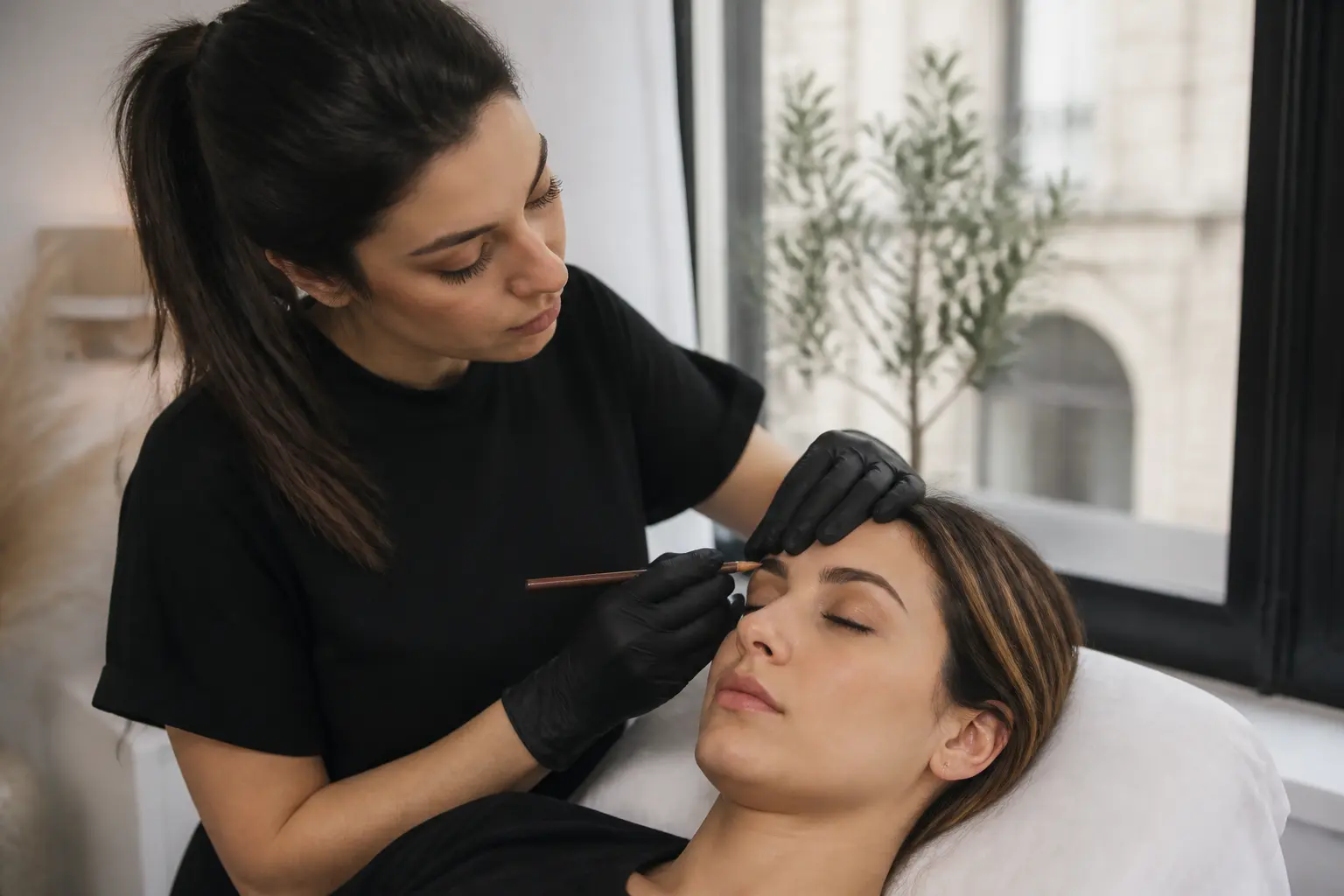
Brazilian microblading is often chosen by people who want brows that look softly defined rather than obviously drawn on. The detail that makes the biggest visual difference is not simply the number of strokes. It is the way each hair-stroke pattern is planned to reflect the natural direction, spacing and movement of real eyebrow hair.
Natural brows do not grow in one straight, uniform line. Hair at the front usually rises in a lighter pattern, the body of the brow gradually changes direction, and the tail tends to taper. A professional Brazilian microblading design takes these shifts into account. Instead of applying a standard template, the artist studies the existing brow, facial balance and the amount of natural hair available before creating a personalised stroke map.
For clients in Malta considering semi-permanent brows, understanding stroke patterns can make the consultation and booking decision much clearer. It helps you explain whether you are looking for subtle fullness, better symmetry, a more structured outline or a soft reconstruction of sparse areas.
What are Brazilian microblading stroke patterns?
Brazilian microblading uses fine, hair-like strokes to create the appearance of individual brow hairs. The intention is to blend those strokes with the client’s natural brow growth where possible, creating a result that looks balanced in everyday light and at a close distance.
A stroke pattern is the planned arrangement of those individual strokes. It guides where each line begins, its angle, its curve, its spacing and its relationship to surrounding natural hair. This is not a decorative detail added at the end. It is central to how believable the finished brow can look.
At a professional studio, the process starts with observation rather than copying a trend. Brows can vary significantly between people, including their growth direction, density, natural arch, hair thickness and degree of asymmetry. These differences are normal. A good design works with them thoughtfully instead of forcing both brows into an identical or overly rigid shape.
Why real brow hair does not follow one simple direction
Eyebrow hair has movement. Even within the same brow, it can change direction several times. This is why generic, parallel strokes can appear flat or disconnected from the natural brow.
The front of the brow
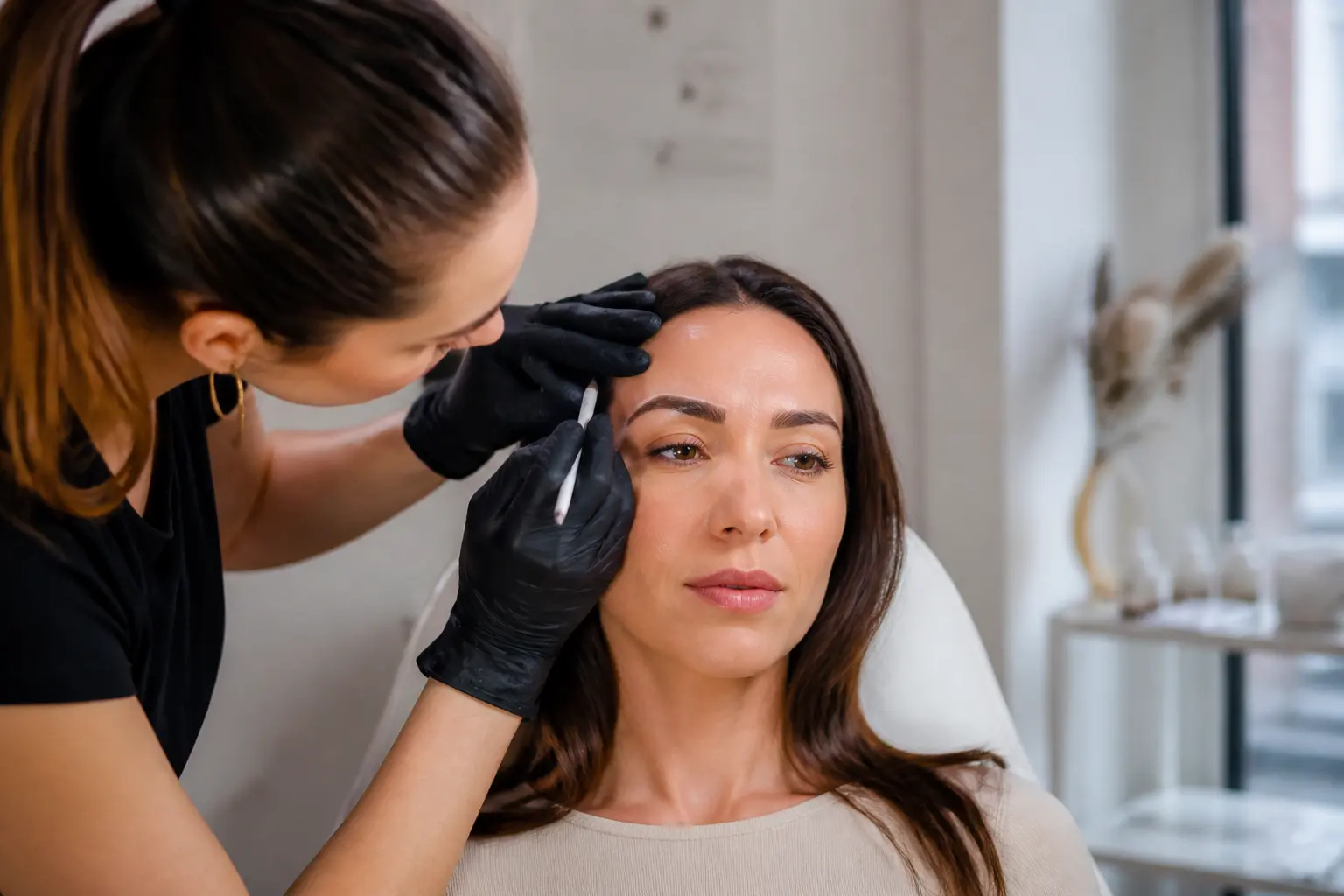
The front, sometimes called the brow head, often has hairs that point upwards or slightly outwards. These hairs are usually softer in appearance than the rest of the brow. A natural-looking microblading pattern typically respects that airy quality, leaving enough visual space so the front does not become a harsh block of pigment.
For someone with naturally upright front hairs, strokes may be designed to support that vertical movement. For another person, the hair may grow diagonally towards the arch. The appropriate pattern depends on what is already there and on the overall brow plan.
The body of the brow
As the brow moves away from the front, natural hairs commonly begin to angle towards the outer part of the face. This middle section carries much of the brow’s density and shape. Stroke placement here needs enough rhythm to look cohesive, while still avoiding a repetitive, stamped appearance.
The artist considers how the strokes will sit alongside existing hair. If strokes cross natural hairs at an unnatural angle, the result may look less integrated. When their flow is planned carefully, the added definition can appear more harmonious with the brow’s natural structure.
The arch and tail
Near the arch, growth direction often turns more noticeably. At the tail, hairs typically become finer and follow a narrower, tapered path. The tail is also one of the easiest areas to overextend or over-darken, especially when trying to correct unevenness.
A considered Brazilian microblading pattern keeps this area refined. The aim is not to create the longest or sharpest possible tail. It is to establish a shape that suits the face, supports the natural brow line and remains proportionate when viewed as part of the full face.
How a professional artist plans a realistic hair-stroke design
Microblading is a detailed semi-permanent procedure, so the planning stage matters as much as the application itself. Before the first stroke is created, a professional artist needs to understand what the client already has and what they would like to improve.
Assessing natural hair growth
Natural brow hair provides valuable information. Even sparse brows can show clues about the original growth direction, the intended arch and where volume is missing. The artist looks for changes in angle, small swirls, gaps and hairs that naturally sit flatter or more upright.
Not every gap should be filled in the same way. A sparse front section may need a lighter, more open pattern, while a missing section through the body may need strokes that continue the surrounding growth flow. This approach helps avoid the look of separate drawn-in sections.
Mapping the brow shape first
Hair strokes need a well-planned shape to sit inside. Brow mapping helps establish proportion and placement in relation to the face. It is a guide, not a rule that erases individuality.
During mapping, a professional artist considers the starting point, arch placement, tail length and overall thickness. The final shape should be discussed with the client before the procedure progresses. A natural result does not necessarily mean making brows thinner or thicker. It means creating a shape that feels coherent with the client’s features and preferences.
Choosing density with restraint
More strokes do not automatically mean a better result. If strokes are too crowded, too dark or too uniform, the brow can lose the lightness that makes hair-stroke work convincing. Space is part of the design.
Clients with fuller natural brows may need only carefully placed strokes in selected gaps. Clients with very sparse brows may require a more complete pattern, but the strokes still need separation and variation. The right level of density is individual and should be agreed during the assessment.
Creating variation in length and flow
Real brow hairs are not identical. They overlap, change length and shift subtly in direction. Microblading strokes are therefore planned with controlled variation, especially between the front, body and tail.
This does not mean random lines. The pattern should have an intentional flow. Each stroke needs to contribute to the overall movement of the brow, while allowing the result to retain a softer, less mechanical appearance.
Common Brazilian microblading stroke patterns
There is no single pattern that suits everyone. However, understanding a few common approaches can help you describe the look you are hoping for at a consultation.
Soft upright front strokes
This approach keeps the brow front light and feathered, with strokes that generally rise upwards before gradually blending into the rest of the brow. It can suit clients who want definition without a strong, square starting point.
The key is a gentle transition. A very dense or sharply outlined brow front can make the result look more made-up, even when the rest of the brow is subtle.
Flowing diagonal strokes through the body
In the central brow area, strokes may sweep gradually towards the arch. This can be useful when natural hair follows a diagonal direction or when the aim is to connect uneven areas with the client’s existing brow pattern.
The exact curve and angle should never be copied from someone else’s brows. It is the relationship between the stroke flow and your own growth pattern that matters.
Fine tapered tail strokes
A lighter, more tapered pattern towards the tail can create a polished finish without making the brow look heavy. This can be especially helpful where natural tail hair is thin or patchy.
Tail placement needs care because small changes can affect the apparent expression of the face. A professional design focuses on balance rather than chasing a dramatic lift or exaggerated extension.
Corrective patterns for uneven brows
Natural asymmetry is extremely common. One brow may sit slightly higher, grow more densely or have a different arch. Microblading can help create greater visual balance, but it should be approached realistically.
The goal is usually improved harmony, not perfectly mirrored brows. Facial movement, bone structure and natural hair distribution mean that brows are sisters, not exact copies. A personalised pattern can soften differences while preserving a believable result.
What affects whether hair strokes will look natural on you?
The final appearance of Brazilian microblading depends on more than the initial design. Skin characteristics, natural hair, lifestyle and aftercare all influence how the brows settle over time.
- Your existing brow hair: Natural hair can provide a useful guide for stroke direction and help the finished result blend more easily.
- Your skin: Skin condition and oiliness can affect how pigment appears and retains. An individual assessment is important before deciding on the most suitable semi-permanent brow option.
- Your desired finish: Someone wanting an almost undetectable enhancement may need a different density and shape from someone looking to rebuild more visibly sparse brows.
- Previous brow work: Existing semi-permanent pigment can affect the design options. Be open about previous procedures during your consultation.
- Healing and aftercare: Following the studio’s aftercare guidance supports the healing process and helps protect the work while it settles.
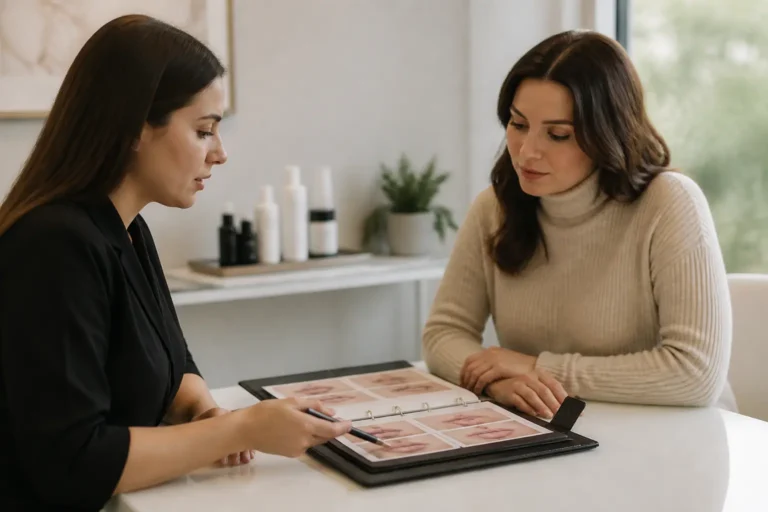
Because these factors vary, it is important to avoid choosing a pattern solely from a photograph. Reference images can be helpful for communicating a mood, such as soft, fluffy, structured or defined. They should not be treated as a guaranteed template for another person’s brow shape or skin.
Brazilian microblading versus a drawn-on brow effect
A hair-stroke result is designed to suggest natural texture. It is different from a solid brow make-up effect, where colour is applied more uniformly across the shape. Neither preference is inherently right or wrong, but they create different visual outcomes.
If you regularly fill your brows with a pencil using fine, short marks, Brazilian microblading may appeal because the hair-stroke technique aims for that kind of textured definition. If you prefer a more shaded, make-up-style brow, it is worth discussing this openly during a semi-permanent consultation so the most appropriate approach can be considered.
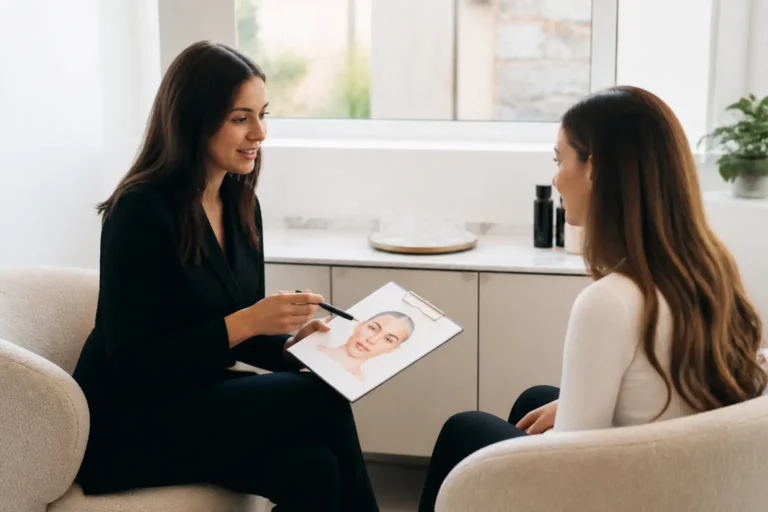
Clear communication is essential. Tell your artist how you normally wear your brows, whether you use make-up daily and which features bother you most. For example, you may want help with a tail that disappears, patchiness after over-plucking, or a front section that lacks definition. Specific goals give the design process a stronger starting point.
How to prepare for a microblading design consultation
You do not need to arrive knowing the technical name for every stroke pattern. The artist’s role is to translate your goals into a suitable design. Still, coming prepared can make the discussion more productive.
- Bring photos of how you like your brows when you feel most confident. These can show your preferred thickness, softness or level of definition.
- Point out areas you would like to address, such as gaps, uneven tails or a lack of visible arch.
- Be honest about previous brow procedures, sensitivity concerns and the products you use around the brow area.
- Ask how the proposed shape and stroke flow will work with your natural hair direction.
- Ask what aftercare will involve and when any planned touch-up should be discussed.
A professional consultation should leave you with a clearer understanding of the proposed plan, not pressure you into a brow style that does not feel like you. The best result is often one that makes mornings easier while still looking like your own brows.
Why personalised stroke patterns matter at Becammo
At Becammo, Brazilian microblading is approached as a personalised brow design service. The purpose of the hair-stroke pattern is to work with your facial features and existing brow growth, not to place the same brow shape on every client.
This matters in Malta’s international community, where clients bring a wide range of brow textures, densities, skin tones and beauty preferences. A thoughtful assessment allows the artist to consider your individual starting point and discuss whether Brazilian microblading is aligned with the look you want.
Whether your brows are naturally full with small gaps, sparse from years of over-plucking or simply uneven in shape, the conversation should focus on realistic enhancement. The aim is a design that feels personal, considered and easy to live with.
Conclusion
Brazilian microblading stroke patterns are what turn a general brow shape into a more natural-looking hair-stroke design. By following changes in real hair direction, keeping density appropriate and tapering the brow thoughtfully, a professional artist can create definition that complements rather than overwhelms your features.
If you are considering semi-permanent brows in Malta, book a Brazilian microblading appointment with Becammo and discuss your natural brow growth, preferred finish and any questions before the procedure. Choosing the right pattern begins with an individual conversation and a design that is made for you.
Frequently asked questions
Do Brazilian microblading strokes look like real eyebrow hairs?
They are designed to create the appearance of individual brow hairs. How natural they look depends on careful pattern planning, your existing brow hair, skin characteristics, healing and aftercare.
Can microblading follow my eyebrow cowlick?
A brow cowlick or change in hair direction should be considered during the design. It may influence the stroke flow and the way the artist plans a balanced result. Mention it during your consultation.
Will both brows have exactly the same stroke pattern?
Not necessarily. Natural brows and facial features are not perfectly symmetrical. The goal is visual balance and a harmonious overall result, rather than two identical copies.
Can Brazilian microblading fill sparse areas only?
In some cases, carefully placed strokes can focus on gaps or less defined sections. The suitable approach depends on your existing brow pattern, desired result and individual assessment.
Should I bring eyebrow inspiration photos to my appointment?
Yes. Inspiration photos can help communicate whether you prefer a soft, defined or fuller look. Your artist can then explain how that style may be adapted to your own brow growth and features.
How do I know whether Brazilian microblading is right for my brows?
An individual consultation is the best place to discuss your goals, natural brow hair, skin and previous semi-permanent work. It allows you to make an informed decision before committing to the procedure.