Hormonal Skin Changes and Facials: A Cycle-Aware Guide
Brenda Cammo Team
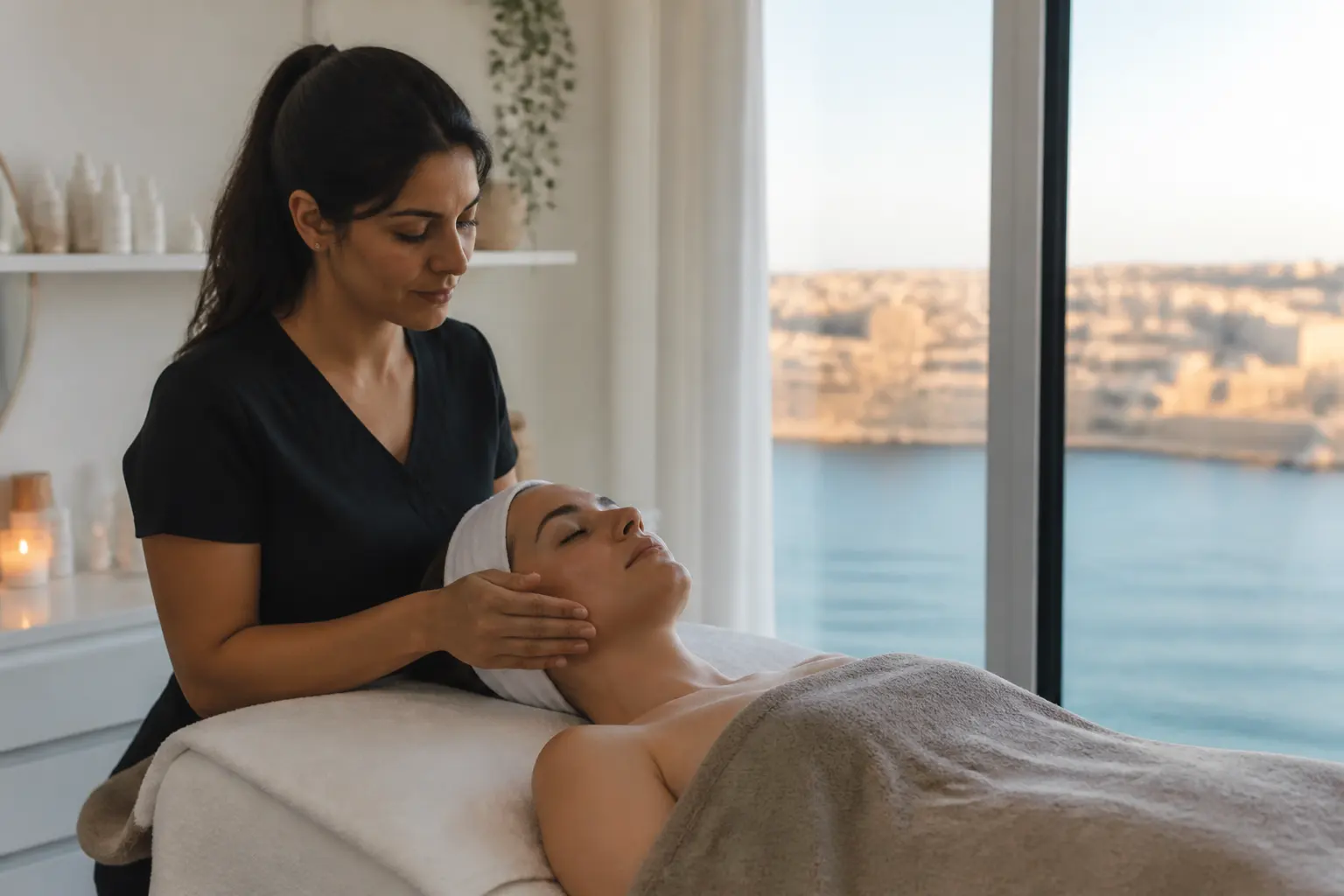
Your skin does not always behave the same way throughout the month. Some people notice extra shine, congestion or spots before their period, while others feel dryness, sensitivity or no meaningful change at all. If you have ever wondered whether you should book facials during your period, the most useful answer is this: you can, but your appointment should be guided by how your skin is presenting that day.
A professional facial is not about forcing your skin into a fixed routine. It is an opportunity to assess what is happening now, then choose a considered approach to cleansing, hydration and comfort. At Becammo, this starts with listening. Changes in your cycle, current skincare, recent breakouts, sensitivity and any active products you use all matter when planning the session.
Hormonal changes can contribute to acne flare-ups for some people, including around the time of a period. This is linked in part to the way hormones can influence oil production and pore blockage. However, not every spot is hormonal, and not every person has the same monthly pattern. The NHS explains that periods can be one time when some women experience acne flare-ups. That is why a personalised facial plan is more helpful than trying to follow a rigid cycle-based beauty rule.
How the menstrual cycle can show up on the skin
The menstrual cycle involves changing hormone levels, but the visible effects on skin vary widely. You may notice a familiar pattern for several months, then find that travel, stress, sleep, climate, contraception, pregnancy, peri-menopause or a new skincare product changes it.
Rather than expecting a specific skin concern on a specific day, look for your own repeat patterns. Keeping a simple note on your phone can help. Record when you notice congestion, increased oiliness, dry patches, redness, tenderness or breakouts, alongside where you are in your cycle. After a few months, you may have a clearer picture of whether there is a connection.
Increased oiliness and congestion
Some clients find that their T-zone looks shinier or that blocked pores seem more noticeable in the days before a period. Excess oil can mix with dead skin cells inside pores, contributing to blackheads, whiteheads and inflammatory spots. This is one reason a facial consultation should ask about current congestion rather than relying only on your usual skin type.
For skin that feels oily but not irritated, a professional may focus on thorough yet gentle cleansing and a treatment approach that respects the skin barrier. The goal is not to strip the skin or make it feel tight. Over-cleansing, harsh scrubs and repeatedly changing products can leave the complexion feeling uncomfortable and make it harder to understand what is actually helping.
Breakouts around the lower face
Breakouts that appear predictably around a period can be frustrating, especially around the chin, jawline and lower face. The American Academy of Dermatology notes that fluctuating hormone levels can trigger adult acne, including around periods. Its guidance on adult acne also highlights that skincare and haircare products should be chosen carefully to avoid clogging pores.
A facial can support a calm, consistent care routine, but it is not a substitute for medical assessment or prescribed acne care. A responsible studio will not promise to clear hormonal acne in one visit. Instead, the therapist can assess whether the skin is suitable for extractions, whether a more soothing appointment would be sensible, and what home care may be appropriate between visits.
Temporary sensitivity or tenderness
You may feel that your skin is more reactive at certain times, or you may simply be less comfortable with touch when you have period pain, fatigue or headaches. This is useful information to share before your appointment. It does not mean you must cancel automatically. It means your facial should be adapted with your comfort in mind.
Tell your therapist if your skin stings easily, feels unusually warm, is visibly irritated, or has been reacting to a new product. A gentler session may be more appropriate than intensive exfoliation or multiple stimulating steps. Your comfort matters just as much as the visible finish of the facial.
Should you book a facial during your period?
For most people, having a facial during a period is a personal comfort decision rather than a reason to avoid the appointment altogether. If you feel well and your skin is not unusually sensitive, you may be happy to keep your booking. A professional studio can adapt the service after checking how your skin feels on the day.
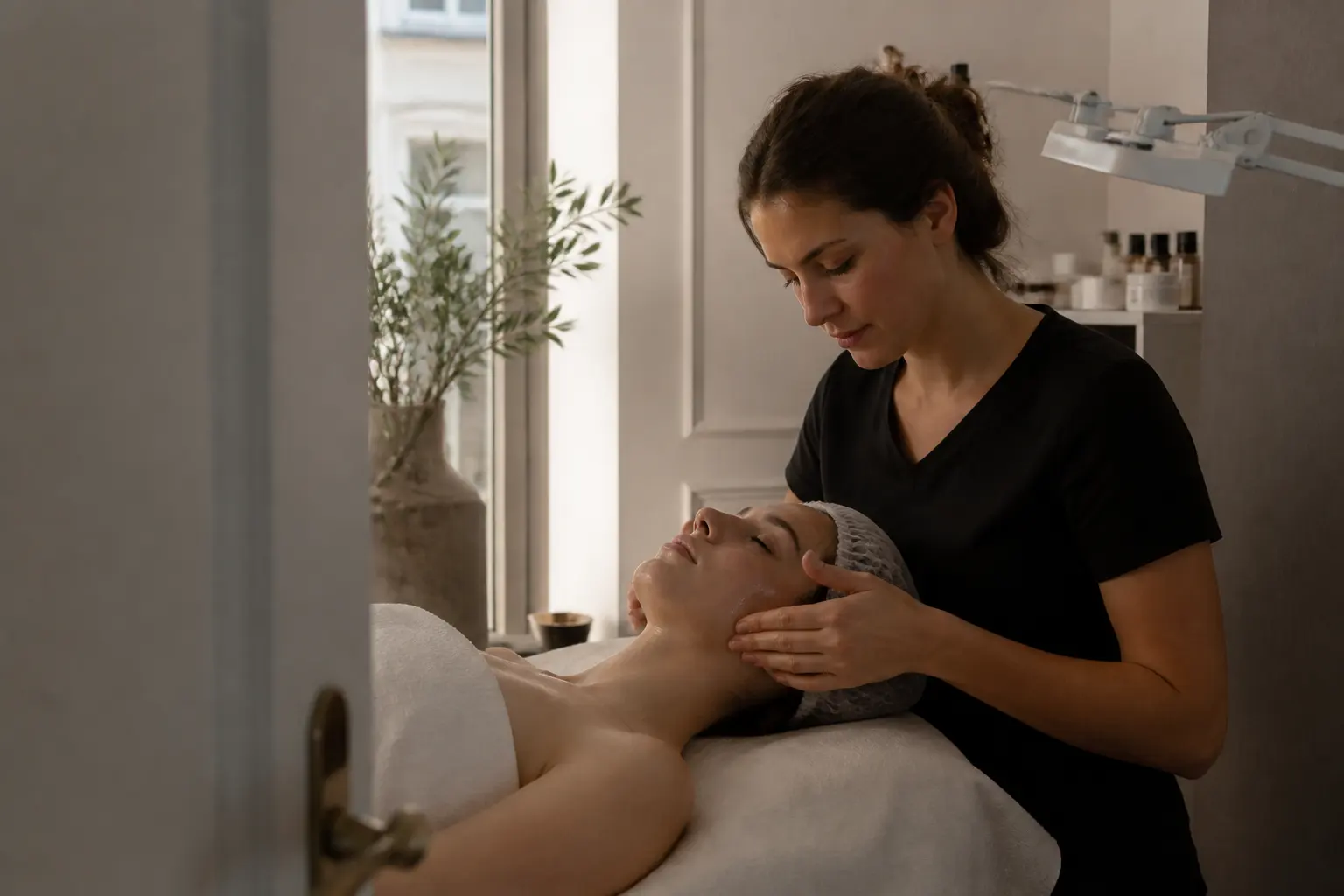
There are also practical reasons you might choose a different date. You may prefer to avoid an appointment if you are dealing with strong cramps, migraine, unusual fatigue, a painful breakout or heightened sensitivity. Equally, you may find that a quiet hour of professional care is exactly what you want. There is no prize for pushing through discomfort, and no need to postpone purely because you are menstruating.
When a facial may be particularly useful
- Your skin feels congested and you want a professional assessment rather than more aggressive home exfoliation.
- You have an event coming up and would like a calm, well-planned skin preparation appointment with enough time afterwards.
- You want help building a consistent facial schedule around your own skin patterns.
- You are unsure whether your current routine is too heavy, too drying or too complicated for your skin at that moment.
When to pause and ask for advice
- You have painful, deep or widespread breakouts.
- Your skin is sore, swollen, broken or actively irritated.
- You have started a strong active skincare product or a prescription medicine and are unsure how it affects facial treatments.
- You are pregnant, breastfeeding, trying to conceive, or have a medical skin condition and need clarity about which products or steps are suitable.
- You suddenly develop acne in adulthood alongside irregular periods or other changes that concern you.
Moderate or severe acne, nodules, cysts and acne that may scar deserve medical advice. The NHS recommends speaking to a GP about moderate or severe acne, and notes that sudden adult acne alongside symptoms such as irregular periods can warrant assessment. Read the NHS guidance on acne diagnosis. A beauty appointment should complement appropriate healthcare, not replace it.
How a professional facial can be adapted to the day
A good facial is responsive. The same person may need a different focus from one appointment to the next, even when they book the same facial category. At Becammo, a skin-focused appointment can begin with questions about your current concerns and a look at the skin before proceeding.
For congestion-prone skin
When blackheads, whiteheads or a heavier feeling through the T-zone are the main concerns, the focus may be on cleansing and considered pore care. If extractions are appropriate, they should be performed carefully and never treated as a race to remove every visible imperfection. Some congestion is best left alone if the area is inflamed or the skin looks stressed.
Afterwards, the skin benefits from simple, supportive home care. Avoid the temptation to follow a deep-cleansing facial with several new acids, scrubs or masks at home. Let the plan be clear and manageable.
For dry, dull or tight-feeling skin
Dryness can sometimes be mistaken for a need to scrub more. In reality, skin that feels tight may need a more comfort-led approach. Hydrating steps, a calm cleansing method and a simple post-facial routine may be more useful than trying to create an instant dramatic change.
If your skin is oily in some places and dry in others, mention that too. Combination skin does not need to be treated as one uniform surface. A personalised facial can take account of different needs across the face.
For sensitive or reactive-feeling skin
Sensitivity is a reason for better communication, not embarrassment. Let the therapist know if you have had recent redness, stinging, flaking, sun exposure, waxing, threading, cosmetic procedures or changes to your usual products. This allows the service to be adjusted before the skin is put under unnecessary pressure.
Be honest about what you have used at home, including exfoliating acids, retinoids, spot treatments and strong peels. Bring a photo of a product label if you are not sure of the name. Clear information helps a professional make safer, more appropriate choices for the appointment.
Planning facials around your own cycle
You do not need to organise your life around a perfect 28-day skincare calendar. Cycles vary, and many people use hormonal contraception, have irregular periods, are in peri-menopause, or do not menstruate. The better approach is to plan around how your skin and body usually feel.
- Notice your pattern. Track recurring changes for two or three cycles without judging every small blemish.
- Book with flexibility. If you know you are often sensitive before your period, avoid scheduling an intensive appointment immediately before an important event.
- Share changes at check-in. Mention new breakouts, tenderness, medication, travel, sun exposure and product changes, even if you have visited before.
- Keep home care steady. A straightforward routine is easier to evaluate than frequently switching between strong products.
- Review after each appointment. Consider how your skin felt in the following days and use that insight to guide the next booking.
For clients in Malta, seasonal factors can sit alongside hormonal changes. Heat, humidity, time in the sun, swimming and travelling can all affect how your skin feels. Your cycle may be part of the picture, but it is rarely the only factor.
What to tell your facial therapist
A few details can make your appointment more useful and more comfortable. Before the session, tell your therapist:
- where you are in your cycle if you think it is relevant to your skin or comfort;
- whether you usually get premenstrual breakouts, dryness or sensitivity;
- which products you currently use, particularly active ingredients;
- whether you have picked, squeezed or treated spots at home;
- if you are using prescription skincare or have recently changed medication;
- if you have an event, holiday or significant sun exposure planned soon after the appointment.
You do not need perfect skincare vocabulary. A simple description such as “my chin tends to break out before my period” or “my cheeks sting this week” gives useful context. The point is not to label yourself with a fixed skin type. It is to help the professional assess what your complexion needs today.
What a facial cannot do
Facials can be a valuable part of personal care, but they do not regulate hormones, diagnose conditions or provide a guaranteed answer to recurring acne. If you experience persistent, painful or scarring breakouts, a professional facial may still be enjoyable and supportive, but medical advice should be part of your plan.
It is also important to avoid chasing every flare-up with more treatments. Skin often responds well to consistency, thoughtful adjustments and realistic expectations. Your facial therapist can help you decide when a treatment fits your current skin condition and when a gentler approach, a later appointment or medical guidance makes more sense.
Conclusion
Hormonal skin changes can make your complexion feel less predictable, but they do not mean you have to stop booking facials. The key is a cycle-aware, skin-led approach: observe your own pattern, communicate openly, and allow the treatment to be adjusted to your comfort and current concerns.
If your skin tends to change around your period, book a facial consultation at Becammo in Sliema or Swieqi and let the team know what you have been noticing. A professional assessment can help you choose a calm, appropriate next step rather than guessing from a one-size-fits-all routine.
Frequently asked questions
Can I have a facial when I am on my period?
Yes, many people do. If you feel comfortable and your skin is not unusually reactive, your appointment can usually go ahead. Tell your therapist if you are experiencing tenderness, cramps, fatigue, sensitivity or a breakout so the session can be adjusted if needed.
Do hormones cause every breakout before a period?
No. Hormonal changes may contribute to breakouts for some people, but product choices, stress, sleep, climate, friction and other factors can also affect the skin. A recurring pattern can be useful to note, but it is not a diagnosis.
Should I book a deep-cleansing facial before my period?
It depends on your skin. If you often become congested before your period and your skin feels comfortable, a professional assessment may help guide the right facial approach. If you are prone to sensitivity or painful inflammation at that time, a gentler appointment may be more suitable.
Can a facial clear hormonal acne?
A facial cannot treat the underlying hormonal cause of acne. It may support your skincare routine and provide professional assessment, but persistent, painful, severe or scarring acne should be discussed with a GP or dermatologist.
What should I avoid before a facial if my skin feels sensitive?
Do not try to fix sensitivity with vigorous scrubbing, picking or several new active products. Tell your therapist about any exfoliants, retinoids, spot treatments, recent sun exposure or other beauty treatments so the facial can be planned responsibly.