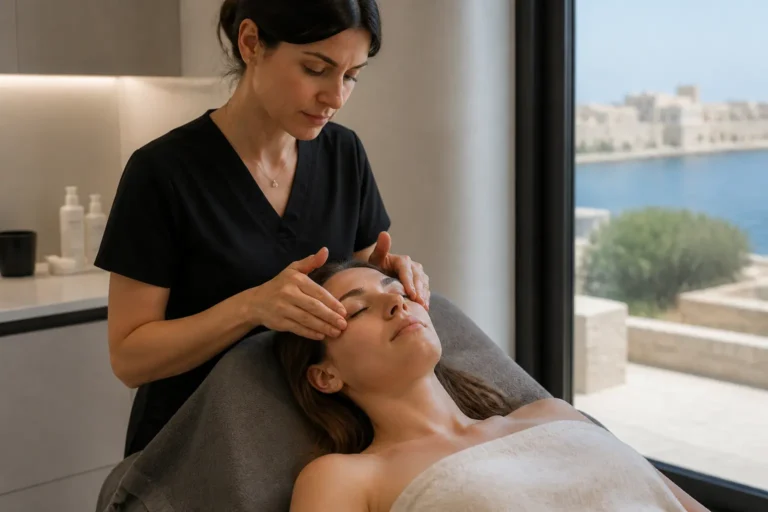
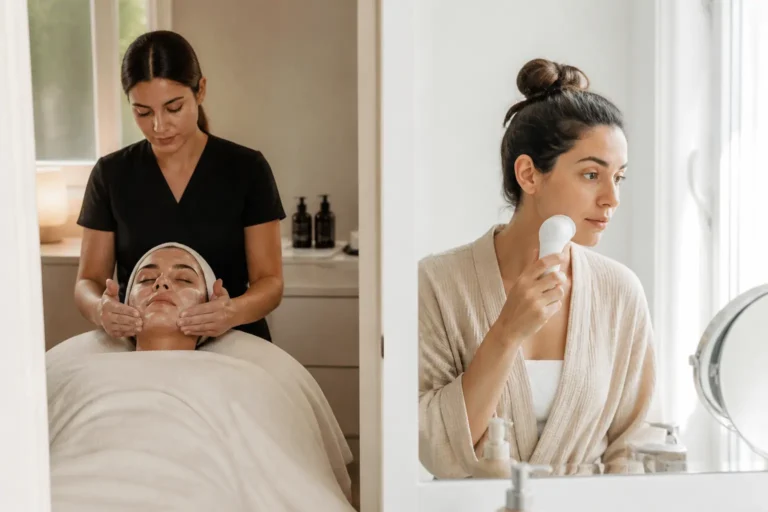
First Dermaplaning Session: What the Blade Actually Does
Brenda Cammo Team
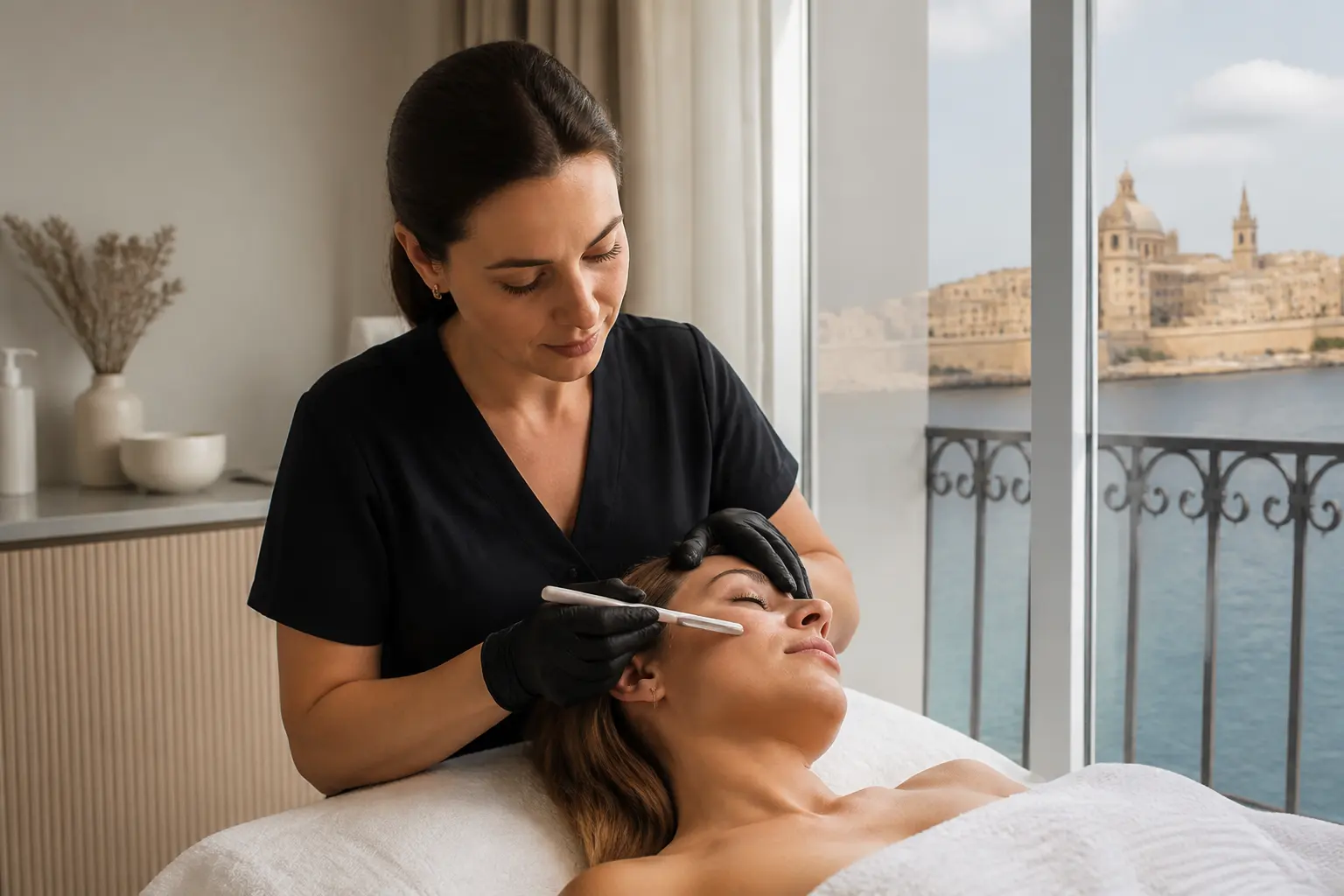
The thought of a blade moving across your face can make a first dermaplaning session feel more intimidating than it really is. It is completely reasonable to have questions before booking: Is it shaving? Does it remove more than peach fuzz? Can it cut the skin? And why does a professional technique matter?
Dermaplaning is a superficial exfoliation service. In a professional setting, the practitioner uses a purpose-designed blade at a controlled angle to gently lift away loose dead skin cells from the very surface of the skin, along with fine facial hair known as vellus hair or peach fuzz. It is not intended to cut deeply into the skin, reshape the face or remove hair from the root.
Knowing what the blade actually does can replace nerves with useful questions. Here is what to expect, what a careful appointment should feel like, and how to decide whether this facial service is right for your skin on the day.
The blade is for surface-level exfoliation
Your skin continually sheds cells. Some of those cells remain temporarily on the surface, where they can contribute to a rougher-looking texture or a less even makeup finish. Dermaplaning is designed to remove that superficial build-up through a light, controlled gliding motion.
At the same time, the blade trims the soft, fine hairs that sit on the surface of much of the face. These are not the same as coarse terminal hairs, such as a beard. The blade does not pull hair out from its follicle. It simply cuts the visible portion at skin level, much like shaving does.
A useful way to picture the technique is as precise skimming, not scraping. The practitioner works in small sections, keeps the skin appropriately supported, and uses deliberate strokes rather than pressure. The aim is to refine the skin’s surface, not to abrade it aggressively.
Dermaplaning is commonly described as a cosmetic procedure that removes the uppermost layer of skin cells and superficial facial hair. If you would like an independent overview of the process and its potential risks, the Cleveland Clinic guide to dermaplaning explains the procedure in accessible terms.
What the blade does not do
First-time nerves often come from imagining a far more intensive procedure than the one being booked. Setting clear limits helps.
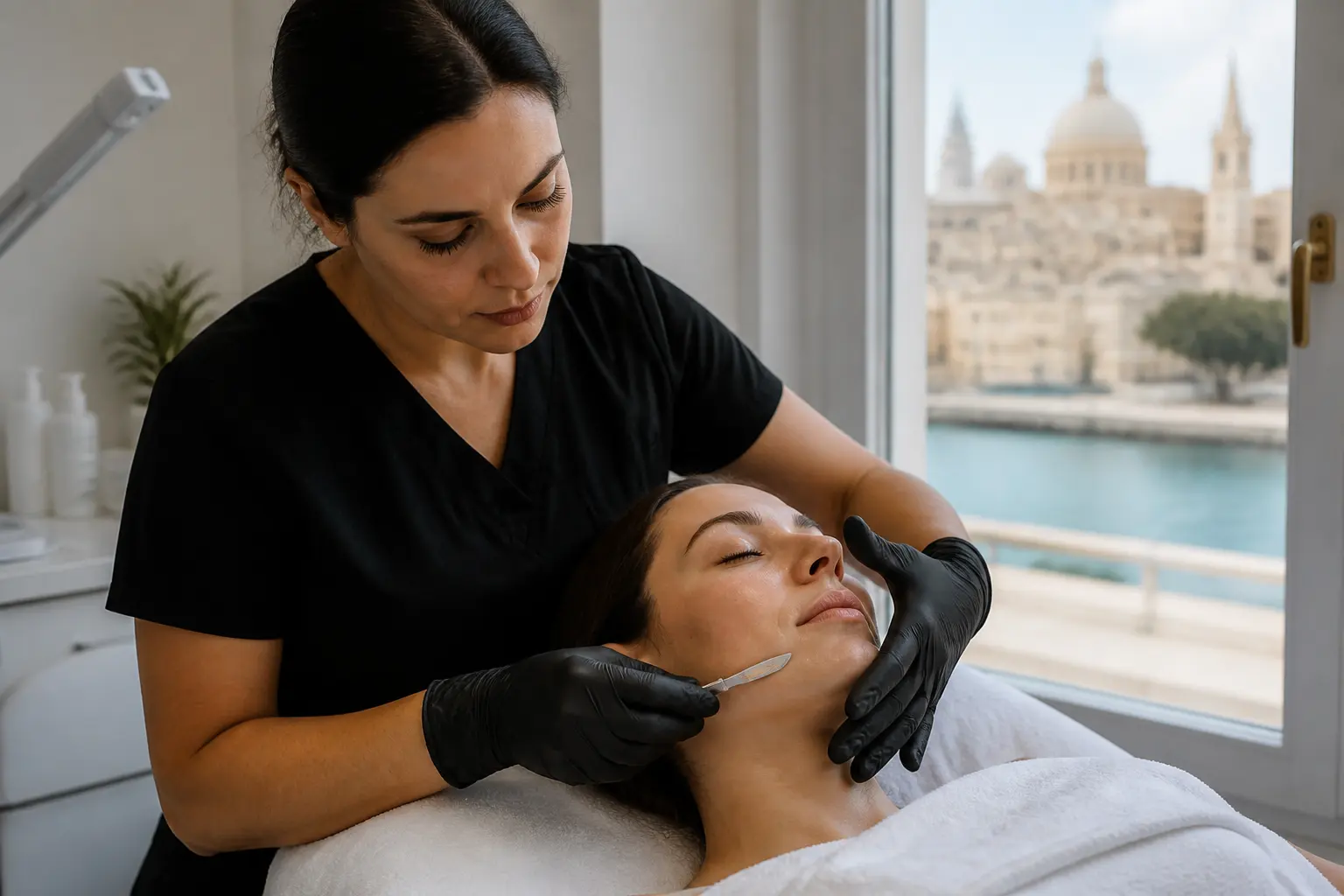
- It does not remove hair from the root. Dermaplaning cuts fine facial hair at the surface. It is not a form of waxing, threading or laser hair removal.
- It does not make facial hair grow back darker or thicker. Hair texture and colour are determined within the follicle. A blunt-feeling tip during regrowth can sometimes create that impression, but dermaplaning does not alter the follicle.
- It does not replace medical skin care. It is a cosmetic exfoliation service, not a solution for active skin conditions or a substitute for advice from a dermatologist.
- It does not need to involve force. A professional appointment should not feel like the skin is being harshly scraped.
- It does not create a permanently hair-free face. Fine facial hair grows as part of the normal hair cycle, so any smoothness from trimming it is temporary.
It is also important not to confuse dermaplaning with dermabrasion. Dermabrasion is a much more intensive resurfacing procedure. Dermaplaning focuses on the outermost surface and should be discussed in that context.
Why the professional angle matters
A blade is only one part of the service. The difference lies in how it is handled, how the skin is assessed, what is avoided, and what care follows the exfoliation.
During professional dermaplaning, the angle of the blade, the tension of the skin, the length of each pass and the areas selected all matter. A practitioner does not simply run a razor over the face. They work methodically, observing the skin as they go and avoiding areas that do not look suitable for exfoliation that day.
This is one reason an appointment should begin with a conversation. Let your therapist know about recent changes in your skin, sensitivity, active blemishes, irritation, products you use at home and anything that makes you unsure. A good consultation is not a formality. It is how the treatment is adapted, postponed or kept simple when needed.
At Becammo, dermaplaning is approached as a professional facial service rather than a rushed version of at-home face shaving. There are Dermaplaning Pro and Dermaplaning SPA options, so you can ask which format best suits your current routine and comfort level. The most suitable choice depends on what your skin is like on the day, not on a one-size-fits-all promise.
What your first dermaplaning appointment may feel like
Most first appointments begin with a skin check and a discussion of your goals. You may want a smoother makeup base, a more polished feel to the skin, or simply to understand whether dermaplaning fits into your facial routine. Share that openly, including if you are nervous about the blade.
Once the skin is cleansed and prepared, you will usually lie back while the practitioner works across suitable areas of the face. The sensation is often described as a light, dry brushing or soft scratching sound. You may notice the sound more than the feeling. Some areas can feel more ticklish or sensitive than others, particularly around facial contours.
It is fine to say something during the session. If you feel uncomfortable, unsure or overly sensitive in a particular area, speak up. A professional service should allow room for communication rather than expecting you to stay silent.
After the exfoliation step, the skin may look fresher and feel notably smooth. Mild temporary pinkness can happen, especially if your skin is naturally reactive. That does not mean every person will react in the same way. Skin tone, sensitivity, current routine and environmental exposure can all shape the immediate appearance.
What is actually removed from the face?
Loose dead skin cells
The main skincare element of dermaplaning is superficial exfoliation. It removes loose cells from the outer surface, which can leave the skin feeling softer to the touch. This is why some people choose it before an occasion where they want makeup to sit more evenly.
That smoother feel should not be confused with a guarantee of flawless skin. Texture, pores, blemishes, pigmentation and fine lines all have different causes. Dermaplaning may refine the surface temporarily, but it cannot promise to change every concern you see in the mirror.
Vellus hair, often called peach fuzz
Vellus hair is the fine, soft hair that can appear on the cheeks, jawline, forehead and upper lip area. It is normal and serves a biological purpose, even if you prefer the look or feel of having less of it on the surface.
When dermaplaning trims vellus hair, the result can make foundation, tinted moisturiser and powder products feel easier to apply. The effect is cosmetic and temporary. The hair will grow back according to its usual cycle, without becoming biologically thicker because it has been trimmed.
Surface debris
Daily life leaves residue on the skin, even when you cleanse carefully. Dermaplaning is performed on prepared skin, and the gentle exfoliation step can lift superficial debris alongside loose skin cells. It is not, however, a replacement for a consistent home cleansing routine.
Questions to ask before the blade touches your skin
The best first dermaplaning session is one where you feel informed, not persuaded. Bring questions, particularly if you are new to facials or have had sensitivity with exfoliating products before.
- Is my skin suitable for dermaplaning today?
- Which areas will be included, and which areas will be avoided?
- What should I pause in my usual skincare routine before and after the appointment?
- What level of redness or sensitivity would be normal for my skin?
- Should I choose Dermaplaning Pro or Dermaplaning SPA?
- When would it make sense to book another session, if at all?
These questions are particularly useful if you use active skincare products, have recently had another facial service, or are planning significant sun exposure. Your therapist can advise based on the service and your skin’s current condition. If you have an active or persistent skin concern, seek advice from an appropriately qualified healthcare professional before cosmetic exfoliation.
How to make a first session feel less daunting
Arrive with clean information, not perfect skin
You do not need to arrive with already-perfect skin. You do need to be honest about what has been happening with it. Mention irritation, breakouts, recent sun exposure and new products, even if they seem minor. This gives the practitioner the information needed to make a careful decision.
Do not try to exfoliate extra beforehand
It can be tempting to prepare by using a scrub, acids or a strong exfoliating mask. In practice, piling exfoliation on top of exfoliation can leave the skin less comfortable. Keep your preparation simple and follow the instructions given by your chosen studio.
Plan for gentle aftercare
After dermaplaning, keep the focus on comfort and protection. Use gentle, suitable products recommended for your skin, avoid unnecessary friction, and take sun protection seriously. Freshly exfoliated skin deserves a calmer approach, not an immediate experiment with several new products.
If you experience a reaction that concerns you, or symptoms that feel more than mild and temporary irritation, contact an appropriate healthcare professional. For a broader discussion of why active acne and inflamed skin deserve extra caution with shaving-style tools, see the Cleveland Clinic advice on dermaplaning at home.
Professional dermaplaning versus doing it yourself
At-home facial razors are widely available, which can make dermaplaning appear simple. Yet access to a tool is not the same as having an individual skin assessment, a controlled treatment environment and a practitioner who can recognise when to stop or postpone.
For some people, home facial shaving is part of their routine. For others, the uncertainty around technique, hygiene, active breakouts or product use makes a professional appointment the more reassuring starting point. A studio visit also gives you the chance to ask how facial exfoliation fits with your specific goals rather than copying a routine seen online.
If your biggest worry is the blade itself, do not feel embarrassed to say so when booking. First appointments are exactly where those questions belong. Understanding the process is part of feeling comfortable with it.
Conclusion
The dermaplaning blade is designed to work lightly at the skin’s surface, lifting away loose dead skin cells and trimming fine facial hair. It is not meant to dig into the skin or deliver dramatic medical-style resurfacing. The quality of the experience comes from assessment, controlled technique, clear communication and sensible aftercare.
If you are considering your first dermaplaning session in Malta, book a consultation through Becammo’s online booking system and choose the Sliema or Swieqi location that suits you. You can ask which dermaplaning option is most appropriate for your skin and arrive knowing exactly what to expect.
Frequently asked questions
Does dermaplaning hurt?
People experience the sensation differently. Many notice a light brushing or scratching feeling rather than pain, but sensitive areas can feel more noticeable. Tell your therapist if you are anxious or uncomfortable so they can guide you through the session.
Will my facial hair grow back thicker after dermaplaning?
No. Dermaplaning trims hair at the surface and does not change the follicle that determines its colour, thickness or growth pattern. Regrowth can sometimes feel different at the blunt tip, which is why the myth persists.
Can dermaplaning cut my skin?
A blade should always be treated with care. Professional technique uses a controlled angle and light, precise strokes to exfoliate the surface. Speak to your therapist about any concerns and disclose sensitivity or active skin issues before the appointment.
Can I wear makeup after dermaplaning?
Your therapist can advise you based on how your skin looks and feels after the session. Many clients enjoy the smoother makeup application that can follow dermaplaning, but it is sensible to keep products gentle and avoid irritating the freshly exfoliated surface.
How often should I have dermaplaning?
There is no single schedule for everyone. Your skin needs time between exfoliation sessions, and the right timing depends on your skin condition, home routine and goals. Ask for personalised guidance during your appointment.
Is dermaplaning suitable when I have active breakouts?
Active or inflamed breakouts may mean dermaplaning should be delayed or adapted. Let your therapist assess your skin before proceeding, and seek medical advice for persistent or significant skin concerns.