Lash Adhesive Sensitivities: Signs and Safer Options
Brenda Cammo Team
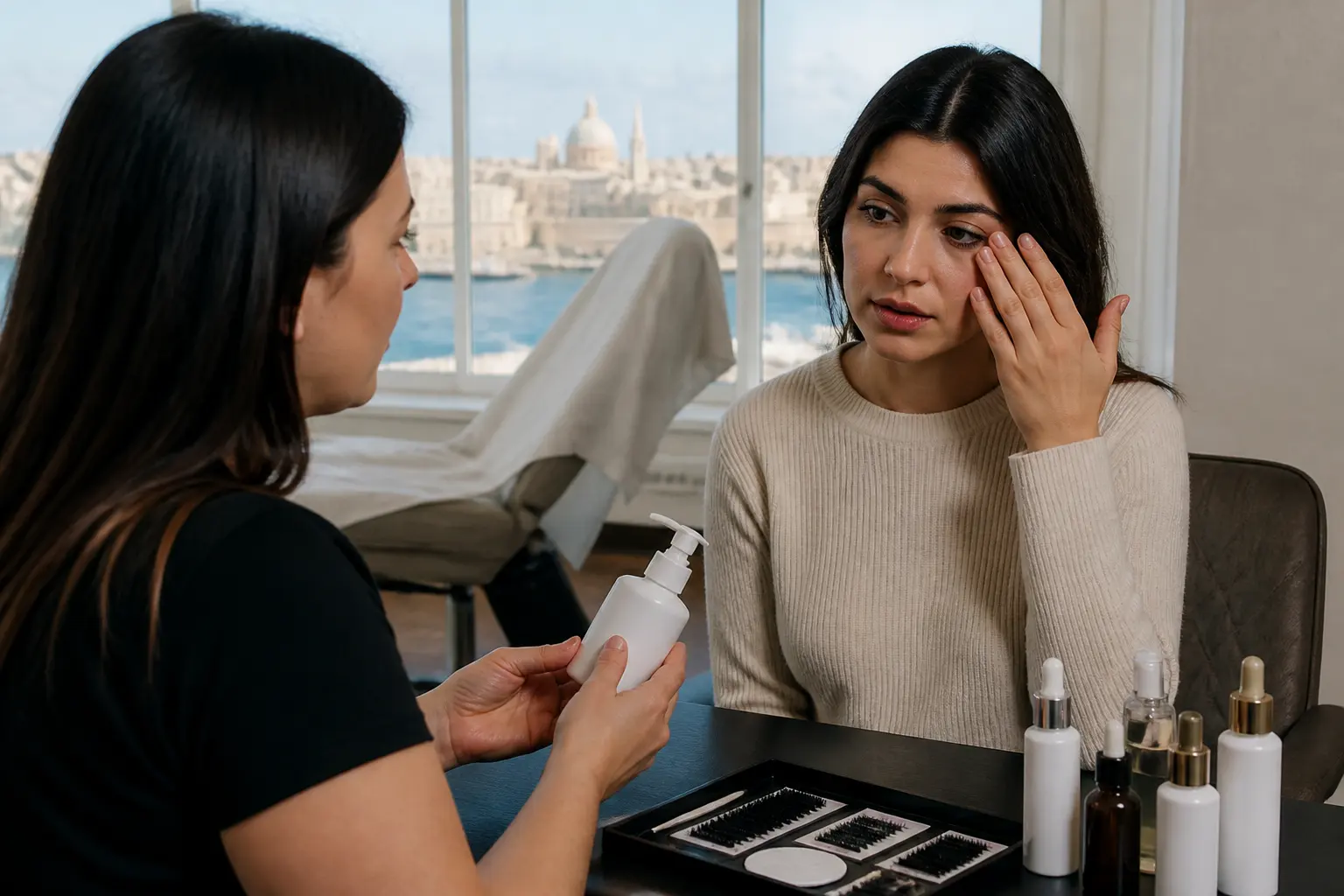
Itchy eyelids, puffiness or sore eyes after lash extensions can be worrying, especially when you are unsure whether it is a temporary irritation, an allergy or a separate eye problem. Because lash adhesive is used close to the eye area, it is important not to dismiss a reaction or try to cover it up with make-up.
This guide explains the signs that deserve attention, what to do if symptoms appear and how to approach future appointments more cautiously. It is general beauty guidance, not a diagnosis. If you have eye pain, a change in vision or significant swelling, seek advice from an appropriate healthcare professional promptly.
Why lash adhesive sensitivities can happen
Lash extensions are attached to the natural lashes with a professional adhesive. The product is designed to bond quickly, but individual responses to cosmetic ingredients can vary. A sensitivity may relate to the adhesive itself, its fumes during application, the under-eye pads or tape used during the service, remover products or another product used around the eyes.
It is also worth remembering that a reaction is not always an allergy. Cosmetic irritation and allergic contact dermatitis can look similar at first, but they are not the same thing. Irritation can occur when a product or its vapours bother delicate skin or the eye surface. An allergy involves the immune system and may occur after previous exposure, even if earlier appointments felt completely comfortable. The FDA’s guidance on cosmetic allergens notes that cosmetic allergies often present as itchy, red skin reactions and that sensitivities can develop over time.
This does not mean that every client will react, nor does it mean that extensions are automatically unsuitable after any mild discomfort. It does mean that new or unusual symptoms should be assessed thoughtfully before another full set or infill is booked.
Signs to watch after a lash appointment
Some temporary awareness around the eye area can have a simple cause, such as an under-eye pad sitting uncomfortably during the appointment. However, the following signs should not be ignored, particularly if they begin after the service, become more noticeable over the following hours or days, or return after repeat appointments.
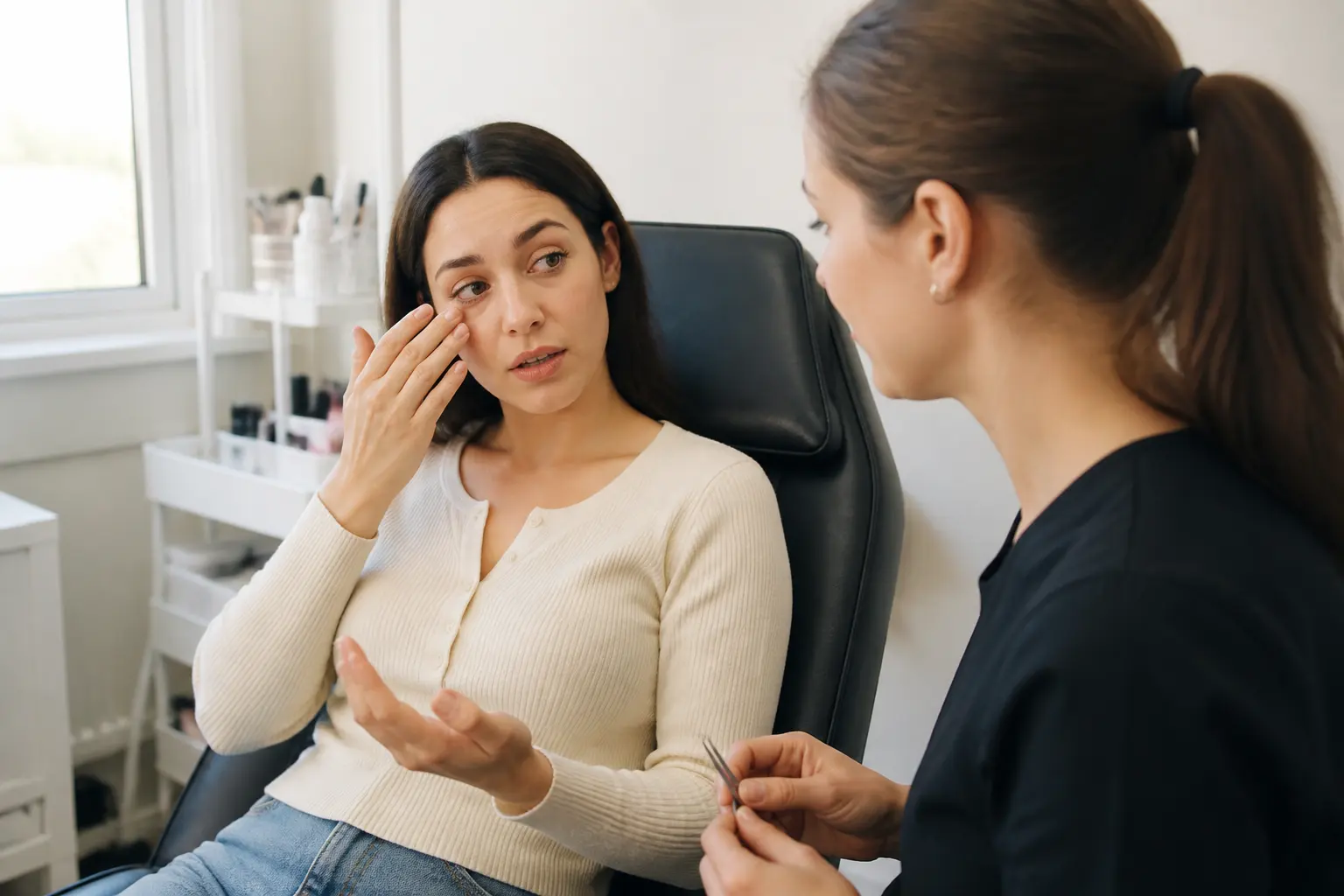
- Itching around the eyelids or lash line
- Red, irritated or flaky skin around the eyes
- Puffy, swollen upper or lower eyelids
- Watery eyes or persistent tearing
- Eye redness, stinging or a gritty feeling
- A rash, small bumps or tenderness on the skin close to the lash line
- Discomfort that worsens instead of settling
The American Academy of Ophthalmology’s EyeWiki overview of eyelash extensions lists redness, irritation, itchiness, tearing and swollen eyelids among symptoms associated with allergic eyelid reactions. It also notes that symptoms may emerge hours or days after application. This timing is one reason it helps to keep a note of when symptoms began, which products were used and whether you had recently changed skincare, eye make-up or contact lens products.
When it may be more than a mild sensitivity
Severe symptoms require urgent action. Do not wait for a salon appointment if you develop marked eye pain, a change in vision, a feeling that something is stuck in the eye, rapidly increasing swelling, or discharge. These symptoms can have causes that need medical assessment and should not be assumed to be a straightforward adhesive issue.
Breathing difficulty, throat or tongue swelling, wheezing, faintness or widespread hives are emergency warning signs. The NHS guidance on anaphylaxis describes these as signs of a potentially life-threatening allergic reaction. Contact emergency services immediately if they occur.
What to do if you suspect a reaction
Your next step should reflect the severity of your symptoms, but the general principle is simple: stop adding products to the area and get the right level of help.
- Do not apply more lash products. Avoid mascara, strip lashes, lash growth serums, eye make-up removers with strong fragrance and other new products until you know what is happening.
- Do not rub, pick or pull at the extensions. Rubbing can make the skin and eye area more irritated. Pulling extensions can also take natural lashes with them.
- Contact a healthcare professional when symptoms are persistent, significant or affecting the eye itself. The FDA advises stopping use of an eye cosmetic that causes irritation and seeking medical advice if irritation continues.
- Tell the lash professional what happened. Share the timing and symptoms clearly. A responsible studio needs this information before considering any future lash service.
- Arrange professional removal if advised or if the extensions need to come off. Removal should be handled carefully, with products and technique appropriate for the eye area.
At Becammo, it is always better to pause and ask questions than to push through discomfort for the sake of keeping a set. An appointment should feel considered, not rushed, particularly when the eye area has reacted before.
Why guessing the cause can be difficult
It is tempting to conclude that the adhesive alone caused every post-appointment reaction. In reality, several elements can be involved. Adhesive ingredients, fumes, cleansing products, tape, under-eye pads, environmental factors and pre-existing skin or eye irritation may all matter. A person may also have seasonal eye allergies or be using a new skincare active that has made the eyelid skin more reactive.
For this reason, phrases such as “hypoallergenic glue” should be approached with care. A product may be formulated without a particular ingredient, but that does not guarantee that it will suit every individual or prevent all reactions. The FDA explains that the best way to avoid a cosmetic allergen is to identify what you are sensitive to and avoid it, which may require discussion with a healthcare professional.
It is also important not to rely on a patch test as proof that a full lash appointment will be risk-free. A small test can sometimes be useful as part of a professional consultation, but it cannot diagnose an allergy or guarantee that the eye area will respond in the same way during a full application. If you have had a notable previous reaction, a clinician may be better placed to advise on formal allergy assessment.
Safer options to discuss before booking again
“Safer” does not mean risk-free. It means choosing a more cautious route based on your history, current symptoms and the information available about the products involved. If your previous reaction was mild and has fully settled, start with an honest conversation rather than automatically rebooking the same service.
Share your full history before the appointment
Let the studio know if you have experienced eyelid swelling, itching, watery eyes, skin rashes, asthma symptoms, known cosmetic allergies or reactions to adhesives, tapes or latex. Mention any current eye infection, inflamed eyelid skin or active irritation as well. The FDA advises avoiding eye cosmetics when you have an eye infection or inflamed skin around the eye.
This information helps the professional decide whether it is sensible to proceed, postpone or recommend that you seek medical advice first. It also gives you a clearer record should you need to discuss the reaction with a clinician later.
Ask what products are being used
You do not need to become an ingredient expert, but asking practical questions is reasonable. You might ask whether the professional can identify the adhesive, cleansing products, pads and tapes planned for the appointment, and whether ingredient information is available. If you know you have a particular allergy, bring that information with you.
People with a known latex allergy should be especially careful about checking labels and discussing products in advance. The FDA’s information on latex in cosmetics notes that eyelash adhesives can be among products of concern and recommends reviewing ingredient information or contacting the manufacturer where necessary.
Consider postponing while the area settles
If your eyelids are already dry, itchy, swollen or inflamed, adding adhesive, pads and cleansing steps may not be a sensible choice. Giving the area time to settle and seeking advice when needed can be the more careful option. This is particularly relevant after a recent reaction, an eye infection or an eczema flare around the eyes.
Choose an alternative beauty routine if extensions are not suitable
For some people, repeated lash extension adhesive exposure may not be the right choice. Depending on your individual circumstances, you may prefer to keep your natural lashes bare for a period, use mascara only after the eye area has settled and you have confirmed it is appropriate for you, or explore a lash lift once you have discussed your history with the studio.
A lash lift works with your natural lashes rather than attaching extensions with lash adhesive. It is still a professional beauty service involving products near the eye area, so it is not an automatic substitute for someone with a history of reactions. However, it can be a useful topic to discuss if your main goal is a more lifted, visible natural lash look without extensions.
How a professional lash appointment supports better decisions
A thoughtful lash service begins before the first extension is placed. Consultation is where expectations, eye comfort, lifestyle and relevant sensitivities should be discussed. It is also the time to be realistic about what can and cannot be safely promised.
At a professional studio, the lash artist should work carefully around the natural lashes, keep products away from the eye itself and check that pads and tape feel comfortable. You should also feel able to speak up during the appointment if you notice stinging, watering or discomfort. Staying silent because you do not want to interrupt the service is never the right approach.
Afterwards, follow the studio’s aftercare guidance and monitor how your eyes and eyelid skin feel. If you develop concerning symptoms, do not book an infill simply because there are gaps in the set. Resolve the reaction first, then make an informed decision about whether extensions remain suitable.
Questions to ask your lash artist
- I had swelling or itching after a previous set. Should I book, postpone or seek advice first?
- Can you note my previous reaction on my client record?
- Which products will be used close to my eyes, including tape and pads?
- What should I do if I feel stinging or excessive watering during the appointment?
- If I decide not to have extensions again, could a lash lift be worth discussing once my eyes are settled?
These questions do not make you a difficult client. They help create a clearer plan and support the careful, personalised service that the eye area deserves.
Conclusion
Lash adhesive sensitivities can range from mild irritation to symptoms that need prompt medical attention. The most important step is to take changes around your eyes seriously, avoid trying to fix a reaction at home and be transparent about your history before booking another lash appointment.
If you are considering eyelash extensions in Malta and have questions about comfort, previous reactions or whether a different lash option may suit you better, speak with the Becammo team before you book. A short conversation can help you choose the next step more confidently and responsibly.
Frequently asked questions
Can an eyelash extension adhesive allergy happen after years of wearing lashes?
Yes. A person can develop a cosmetic sensitivity after previous exposure, even if earlier appointments were uneventful. New symptoms should be discussed with a healthcare professional and the lash studio before another appointment.
How quickly do lash adhesive reactions appear?
Timing varies. Some irritation may be noticed during or soon after the appointment, while allergic eyelid symptoms can develop hours or days later. Note when the symptoms started and whether they change over time.
Should I remove lash extensions myself if my eyelids are swollen?
Do not pull or pick at them. Contact a healthcare professional if the swelling is significant or you have eye symptoms, and speak to a qualified lash professional about careful removal if appropriate.
Will a patch test prove that I will not react to lash extensions?
No. A patch test may be discussed as part of a cautious consultation, but it cannot guarantee that you will not react during a full service. It is not a replacement for medical allergy testing where that is needed.
Are sensitive or hypoallergenic lash adhesives completely safe?
No adhesive can be described as completely safe for every person. Product choices and techniques may be discussed, but known allergies, previous reactions and current eye or skin irritation should always guide the decision.
Can I have a lash lift instead if I reacted to lash extensions?
A lash lift does not use extension adhesive, but it still involves products around the eye area. Discuss your reaction history with the studio and seek medical advice first if symptoms were significant or have not fully settled.