Why One Eyebrow May Need More Tidying During Threading
Brenda Cammo Team
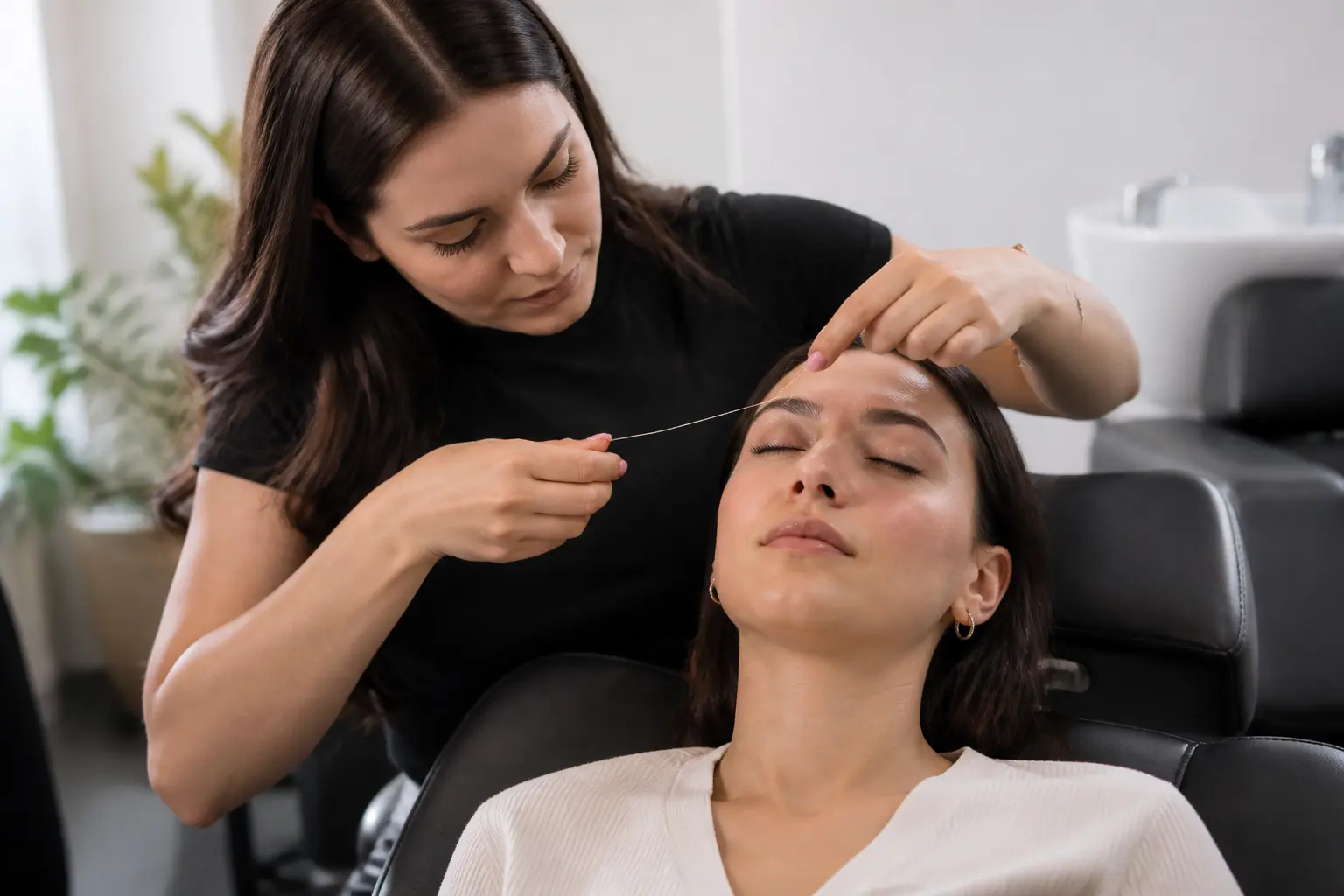
It can be surprising to hear that one eyebrow needs more tidying than the other during a threading appointment. You may arrive expecting the same amount of hair to be removed from both sides, then notice that your brow artist spends a little longer refining one arch, tail or lower line.
That does not automatically mean one eyebrow has been done incorrectly. In many cases, it reflects the way natural brows grow, move and sit on your face. Eyebrows are sisters, not identical twins: they can have different densities, directions, starting points and growth cycles. A thoughtful threading appointment works with those differences to create a shape that feels balanced for you, rather than forcing both brows into an unnaturally matching pattern.
At Becammo, the design conversation is personalised around your natural brow growth, facial features, preferences and everyday routine. Threading uses a fine disposable thread to remove selected hairs with precision, making it possible to tidy small areas without treating each brow as though it were exactly the same.
Why eyebrows naturally grow differently
Most people have some level of natural facial asymmetry. One eye may sit slightly higher, one brow bone may appear more prominent, or one side of the face may move more strongly when you smile, speak or raise your eyebrows. These are normal individual features, not faults that need to be erased.
Your brow hair can also behave differently from side to side. One eyebrow may:
- grow more densely through the front or arch;
- have a lower or less defined natural line underneath;
- grow hairs in a different direction;
- develop a fuller tail;
- have a small sparse area from past over-plucking, waxing or hair loss;
- produce new visible regrowth sooner than the other brow.
Because of this, equal numbers of hairs removed from each side would not necessarily create the most even-looking result. The aim is not to make both brows mechanically identical. It is to refine each brow in a way that brings the overall frame of the face into better visual balance.
What “more tidying” can mean in a threading appointment
More tidying does not always mean making one eyebrow thinner. It may simply mean spending extra attention on a particular area. For example, one brow may need a few extra hairs removed beneath the arch, while the other may need only a light clean-up at the tail.
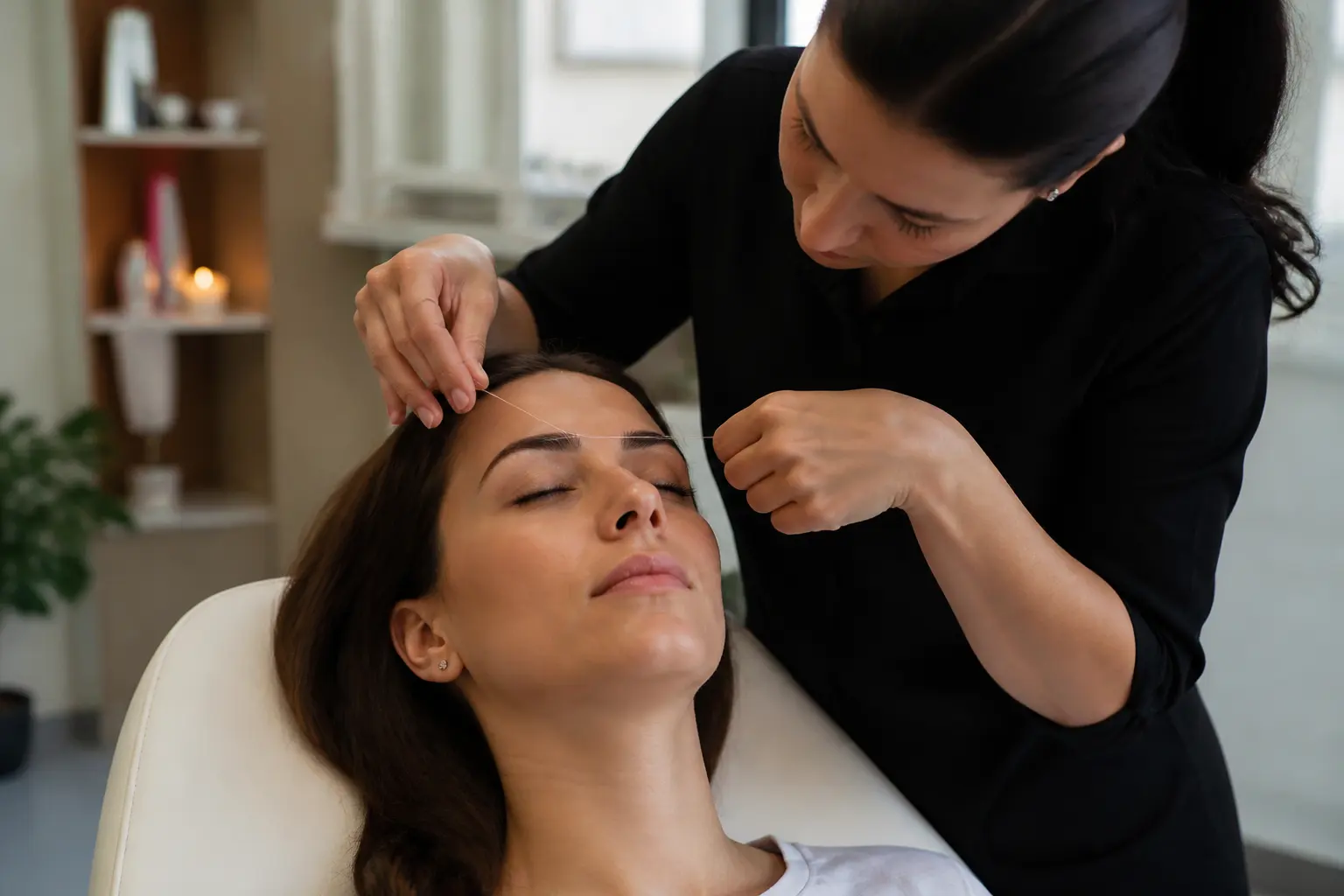
A brow artist may focus on different details on each side, including:
- cleaning stray hairs from the lower edge;
- softening a line that looks heavier on one brow;
- refining the arch so it sits in a similar visual position to the other side;
- removing longer hairs that disrupt the outline;
- preserving hairs in a sparse zone while tidying around them;
- balancing the beginning of each brow without over-defining it.
Threading is particularly useful for this kind of detailed work because the artist can target short rows of hair and make gradual adjustments. The appointment should not feel like a race to remove as much hair as possible. Careful brow design is often about knowing which hairs to leave in place.
Natural asymmetry versus an uneven brow shape
There is an important difference between accepting natural asymmetry and ignoring an eyebrow shape that does not suit your goals. A good consultation helps separate the two.
Natural asymmetry may be visible even when both brows are well maintained. Perhaps one arch lifts more when you talk, or one tail grows slightly higher. Trying to force perfect symmetry can sometimes lead to unnecessary removal and make the brows look too narrow, too angular or less like you.
An uneven shape, on the other hand, may be something you would like to adjust gradually. You might feel that one brow looks much heavier, that the fronts begin at noticeably different places, or that one side has lost its outline. In that case, your brow artist can explain what can be refined in the current session and what may need time to grow back.
This is why realistic expectations matter. A single threading appointment can improve definition, but it cannot instantly recreate hair where there is little growth. When one brow is sparse, preserving existing hairs and following a gradual plan is often more helpful than trying to make the fuller brow match it by removing too much.
Why the same brow can need different work from one visit to the next
You may also notice that the eyebrow needing more attention changes over time. This is normal. Brow hairs do not all grow at exactly the same speed or appear at the same time. One side may look tidy for longer while the other develops visible regrowth around the lower line, between the brows or at the tail.
Daily habits can influence what becomes noticeable too. Make-up removal, sleeping position, skincare application and the way you brush your brows may all make you more aware of hairs on one side. A brow can also appear different depending on lighting, your mirror angle and how expressive your face is on that day.
Rather than assuming that your previous appointment was uneven, it is useful to look at the new growth pattern. Your artist can assess what is actually ready to be removed and what should be left to support your preferred shape.
How a personalised threading design creates balance
Personalised brow design is not based on copying a single fashionable brow shape onto every face. It starts by observing your own brows as they are today.
During the appointment, the artist may consider the natural start, body, arch and tail of each eyebrow. They may also observe how the brows relate to your eyes, forehead, facial proportions and expressions. The result should complement your features while respecting the amount and pattern of hair you naturally have.
The front of the brow
The inner brow area can make a major difference to the overall expression. If one brow begins more densely or extends closer towards the centre, it may need a little more tidying. However, removing too much from the front can create an abrupt or disconnected look. A soft, considered approach usually keeps the result more natural.
The lower brow line
Many stray hairs appear below the brow, but their distribution is rarely identical on both sides. One brow may have a clearer lower line already, while the other needs more detail work to reveal its shape. This does not mean the artist is creating a higher brow; it may simply be a matter of making the outline easier to see.
The arch
Arches are one of the areas where people often seek symmetry. Yet the height and placement of a natural arch can differ from one side to the other. Removing too much in an attempt to force a sharp match can make a brow look overly thin. A balanced design may instead use small refinements to create harmony from a normal viewing distance.
The tail
One brow tail may grow longer, fuller or lower than the other. When this happens, a small amount of extra threading can make the two sides look more consistent. If the tail is sparse, though, the best decision may be to tidy around it and protect the hairs that remain.
What to tell your brow artist before threading
Clear communication helps you get a result that feels right for your style and routine. Before your appointment begins, mention anything that affects how you feel about your brows, especially if one side concerns you more than the other.
You could say:
- “I feel that my left brow looks fuller than my right.”
- “I am growing out a thin patch, so I do not want too much removed there.”
- “I like a soft, natural shape rather than a strong arch.”
- “I usually fill in this side with pencil because it is sparser.”
- “I want a tidy result, but I do not want the brows made thinner.”
- “One brow sits differently when I raise my eyebrows.”
It is also helpful to arrive with minimal brow make-up where possible, so the natural growth and current outline can be seen clearly. If you use active skincare products around the brow area or have experienced irritation after hair removal before, mention that before the service. Individual skin sensitivity and product use can affect the most appropriate timing for a threading appointment.
Why bringing reference photos needs care
Reference photos can be useful for showing whether you prefer a fuller, straighter, softer or more defined brow finish. They work best as a starting point for a conversation, not as a template that must be copied exactly.
A celebrity image, filtered photograph or close-up taken under studio lighting may not reflect your hair density, bone structure, natural brow placement or everyday make-up style. A good brow design should take inspiration from your preference while remaining achievable and appropriate for your own features.
If you have a photo of yourself after a previous brow appointment that you loved, that can be especially helpful. It gives the artist a clearer picture of what felt comfortable and familiar to you, including how much definition you prefer.
Can one brow be corrected in one appointment?
Sometimes a visible imbalance can be softened in one visit, especially when the difference comes from a few stray hairs or a fuller section of growth. Other changes take longer. If one eyebrow has been over-plucked, has a naturally sparse tail or grows in a markedly different direction, the most responsible approach may involve patience.
Your artist may suggest maintaining the fuller brow carefully while allowing selected areas of the sparser brow to grow. This avoids the common cycle of taking more hair from the fuller side simply to make both brows equally thin. The priority is to protect the shape you are building.
Progress can be subtle at first. Regular appointments, timed around your visible regrowth and personal preference, make it easier to review the direction of the design over time. Your ideal maintenance rhythm may not be identical to someone else’s because hair growth and desired finish vary from person to person.
What a balanced result should look and feel like
After threading, balanced brows should look tidy, considered and appropriate for your face. They do not need to match line-for-line when viewed extremely close-up. In fact, chasing that level of precision can make a natural brow shape look less relaxed.
Instead, look at your brows in normal daylight and from a comfortable distance. Consider whether they frame your eyes well, whether the overall density feels right, and whether you still recognise your own natural character in the shape. Your brows should support your features, not overwhelm them.
Mild temporary redness can occur after threading, particularly if your skin is sensitive. Avoid rubbing the area immediately afterwards, and follow the aftercare guidance given during your appointment. If you have an event, photo session or holiday plan, booking with enough time for your skin to settle can make the experience more comfortable.
Frequently asked questions
Is it normal for one eyebrow to grow faster than the other?
Yes. Hair growth can vary between the two brows, so one side may show stray hairs or lose definition sooner. This can change from appointment to appointment.
Does extra threading on one eyebrow mean it will become thinner?
Not necessarily. Extra tidying may involve only a few hairs in a specific area. A careful threading service aims to preserve the fullness needed for your chosen shape.
Can threading make my eyebrows perfectly identical?
No brow service can remove every natural difference between the two sides of the face. The aim is visual balance and a shape that works with your features, rather than artificial perfection.
Should I ask for both eyebrows to have exactly the same amount removed?
It is better to explain the finish you want, such as soft, tidy, fuller or more defined. Your artist can then decide how much work each brow needs to achieve a balanced overall result.
What if one eyebrow is much sparser than the other?
Tell your brow artist before threading. They can focus on preserving hairs in the sparse area and tidy the fuller side carefully, rather than over-removing hair to make both brows equally thin.
How often should I book eyebrow threading?
It depends on your hair growth, the level of definition you prefer and whether you are growing out part of the brow. Your artist can help you choose a maintenance rhythm based on how your brows look between visits.
When one eyebrow needs more tidying than the other, it is often a sign that your appointment is being adapted to your real brow growth rather than following a one-size-fits-all rule. If you would like a shape that feels polished while still looking like you, choose a threading appointment where your natural asymmetry, preferences and maintenance goals can all be discussed before the first hair is removed.