When Brow Hairs Grow in Different Directions: What a Threading Consultation Can Consider
Brenda Cammo Team
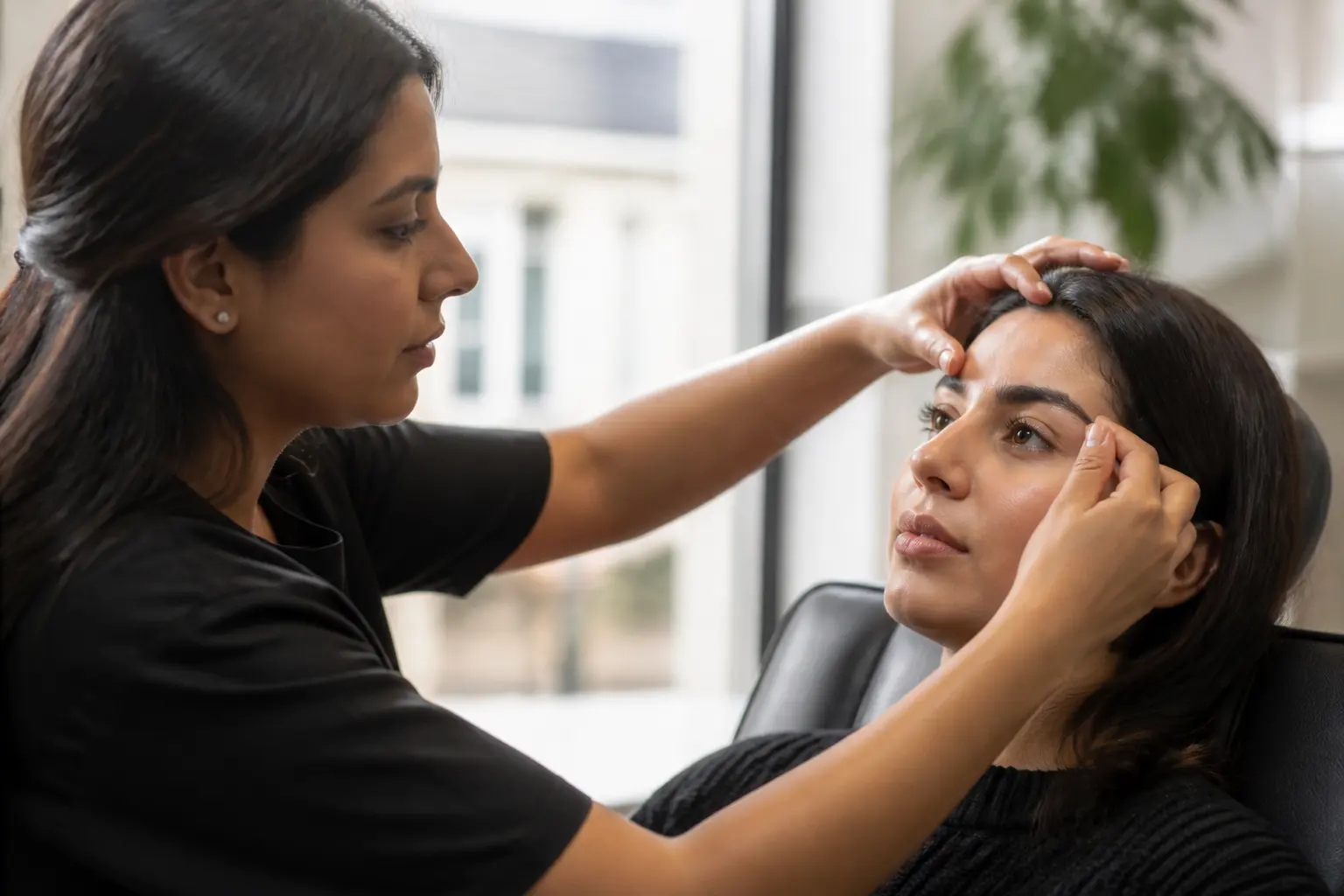
It is completely normal for eyebrow hairs not to sit in one neat direction. One brow may grow slightly upwards near the front, while the tail points downwards. A small section may curl, cross over another area or look fuller on one side than the other. These patterns can make daily brushing and brow make-up feel less predictable, but they are also useful information during a personalised threading consultation.
Rather than trying to make every brow follow the same template, a thoughtful design conversation looks at how your hairs naturally grow, where density changes and how much shape you want to retain. Threading can remove selected hairs with precision, but it does not change the direction in which the remaining hairs grow. That distinction matters when choosing a realistic brow plan.
Why eyebrow hairs can grow in different directions
Eyebrows are not made to grow in perfectly parallel lines. Their direction often changes across the brow: hairs at the inner corner may rise vertically, the central section may move diagonally, and the tail may sweep sideways or down. This natural variation contributes to the character of your face.
It is also common for the two brows to have different growth patterns. Facial features are naturally asymmetrical, and brow hair can be denser, finer, straighter or more flexible from one side to the other. Previous over-plucking, waxing, threading habits, make-up routines and periods of growing brows out can also affect how the overall shape appears.
When people say their brows are “unruly”, they may mean several different things:
- Some hairs point downwards while surrounding hairs sit flatter.
- A thicker patch grows in a different direction from the rest of the brow.
- The front of one brow looks more upright or textured than the other.
- The arch appears uneven because hair density changes before or after it.
- The tails look sparse, extended or less defined.
- Hairs cross over one another and look more noticeable when brushed or filled in.
None of these automatically means that your brows need a dramatic change. Often, the goal is simply to understand the pattern and decide how much definition, softness or maintenance suits you.
What threading can and cannot change
Threading uses a fine thread to remove unwanted hairs from the root. In a brow appointment, it can be used to refine the outline, clean up the area around the brow, soften an overgrown section and make the existing structure easier to see.
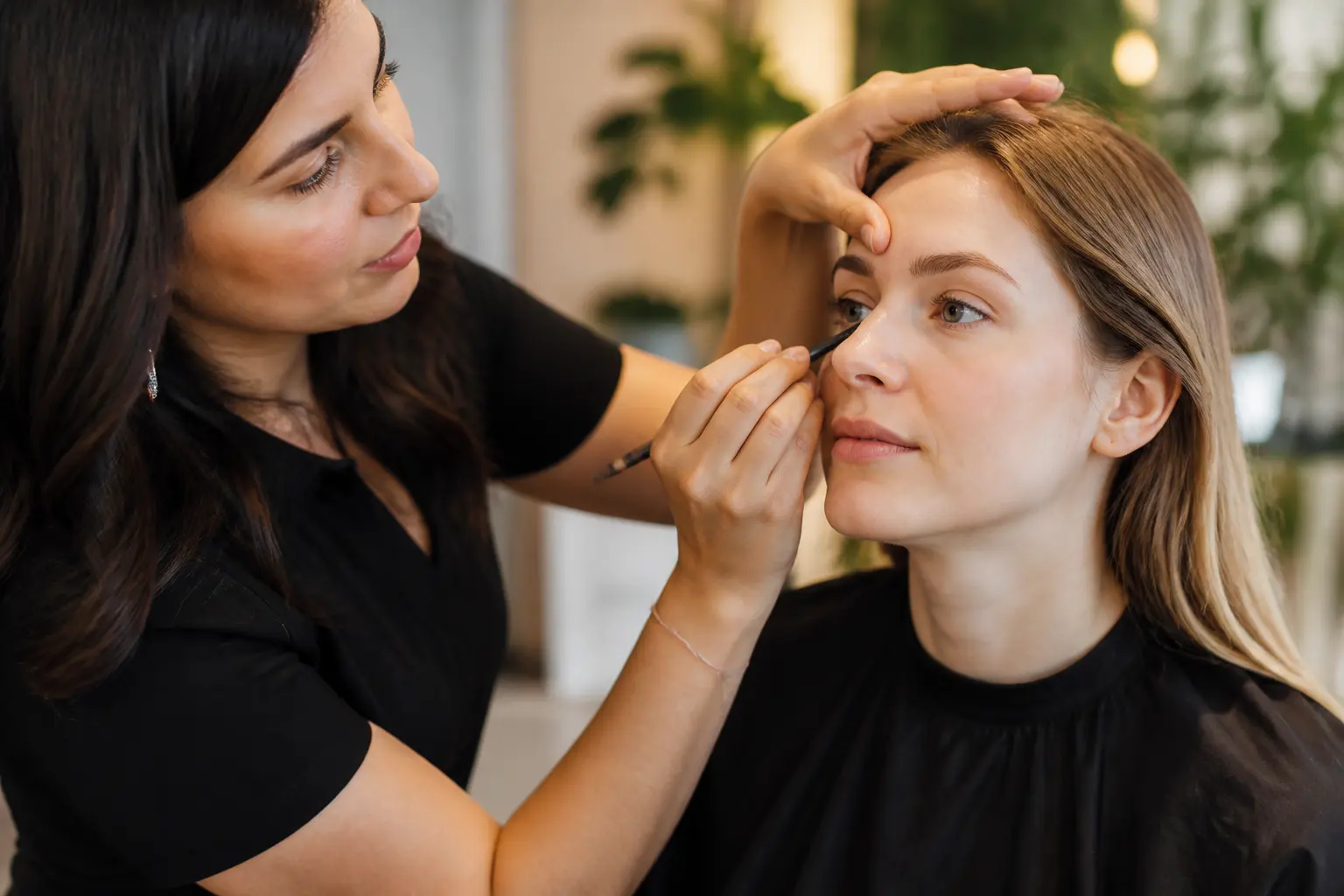
For brows with mixed growth directions, this precision can be particularly helpful. A threading professional can avoid taking too much from areas that already look lighter, while removing selected hairs that interrupt the shape. The aim is not necessarily to make every individual hair behave identically. It is to create a balanced overall result that respects your natural brow pattern.
However, threading does not permanently redirect hair growth. If some hairs naturally point down, curl or grow at an angle, they will still have their own direction after the appointment. Brushing, make-up and, where appropriate, a separate brow styling service may be part of the conversation if your main priority is changing how the hairs sit.
A good brow design does not need both brows to be identical. It should make each brow look intentional, balanced and suitable for the person wearing it.
What a threading consultation can consider
A consultation does not need to be long or overly complicated, but it should start before the first hairs are removed. When brow hairs grow in different directions, small details can have a large effect on the finished shape.
Your natural growth map
The first consideration is where each section grows and changes direction. The inner brow, body, arch and tail may all behave differently. Looking closely at this map helps avoid creating an outline that appears sharp immediately after threading but is difficult to maintain as hairs grow back.
For example, a downward-growing tail may need a softer approach than a full, upward-growing front. A professional may preserve certain hairs because they support visual fullness, even if they do not sit as neatly as the rest.
Density and sparse areas
Direction and density are closely connected. If a brow has a naturally sparse patch, removing too much around it can make the area look more obvious. Conversely, a dense section growing in several directions may need careful refinement rather than broad removal.
During the consultation, it helps to mention whether you are currently growing your brows out, whether you have previously over-plucked them, and whether there are areas you prefer not to touch. A gradual plan can be more useful than trying to achieve a major change in one session.
Natural asymmetry
One brow may have a higher arch, a stronger front or a tail that sits at a different angle. Trying to force both brows into identical shapes can sometimes mean removing healthy hairs that would be better kept. Instead, the design can focus on visual harmony: brows that relate well to each other and to your features without pretending they are mirror images.
This is especially relevant when the hairs themselves grow differently from side to side. The consultation can establish whether your priority is a softer natural finish, a more defined outline, a straighter appearance or simply tidier brows that still feel like you.
Your everyday brow routine
How you usually wear your brows affects the design conversation. If you use brow gel every morning, you may be comfortable with a little natural texture that can be brushed into place. If you rarely use make-up and prefer a low-maintenance look, you may want the shape to work well without daily styling.
Bring up the products you use, including pencils, pomades, powders and gels. They can reveal where you feel you need extra definition and which areas you normally try to disguise. This gives the threading professional a clearer picture of your practical goal, not just the shape you imagine in theory.
Your preferred level of definition
Not everyone wants the same finish. Some clients like a clean, polished outline, while others prefer a softer brow with more visible natural hairs. When different directions are part of your growth pattern, the level of definition you choose can influence how much is removed around the edges.
A more natural design may retain more texture. A more structured design may need more regular maintenance. Neither approach is automatically better; the right choice depends on your features, hair pattern and routine.
Skin and recent beauty treatments
Before threading, it is sensible to mention anything that may affect the skin around your brows, including active skincare, sensitivity, recent facial treatments or any recent semi-permanent brow work. This allows the appointment to be approached with appropriate care and helps avoid assumptions about what your skin is comfortable with on that day.
If you are unsure whether a recent product or treatment is relevant, mention it when booking or at the start of the appointment. Clear information supports a more considered service.
Questions worth asking at your brow appointment
You do not need specialist language to have a useful consultation. A few direct questions can make your expectations clearer and help you decide on a shape that is realistic for your brows.
- Which parts of my brows are naturally fuller or sparser?
- Are there hairs that should be kept to support the shape while I grow them out?
- How can we tidy the brow without making the different directions look more obvious?
- Would a softer or more defined outline suit my current growth pattern?
- How often might I need maintenance if I want to keep this shape?
- What can I use at home to brush and define the hairs between appointments?
These questions move the conversation away from chasing a copied brow shape and towards a design that works with your own features. Reference photographs can still be useful, but they are best used to explain the level of definition or overall mood you like, rather than as a strict template.
When a gradual brow plan may be the better choice
If your brows have been heavily shaped in the past, a single appointment may not be the moment for a complete redesign. In some cases, keeping selected hairs while cleaning up the surrounding area gives you a clearer foundation for future appointments.
A gradual plan can be especially useful when:
- You are growing out thin or over-plucked brows.
- One brow has noticeably less density than the other.
- You want to change the position of the arch slowly.
- You are uncertain about moving from a defined brow to a softer style, or the other way around.
- Your growth direction makes some areas look full one week and uneven the next.
With regular maintenance, the conversation can develop as your hairs grow through their natural cycle. The design can be adjusted over time instead of making an unnecessary dramatic change at the first visit.
How to prepare for a useful threading consultation
Preparation is simple. If possible, arrive with your brows in their usual state rather than heavily concealing them with product. This makes it easier to see the density, direction and outline that need to be assessed.
You can also make a quick mental note of what frustrates you most. Is it the downward tail? The uneven fronts? A patch that looks sparse when you wear make-up? Or the fact that one brow seems to need more brushing than the other? Specific observations are more helpful than simply saying that your brows look wrong.
If you have been trying to grow your brows, say so clearly before the shaping begins. The aim may then be to preserve new growth where possible while keeping the brows tidy enough for everyday life.
Threading and brow lamination: different goals
It can be useful to separate the goals of hair removal and hair styling. Threading focuses on shape by removing selected hairs. Brow lamination is a different service that is usually discussed when someone wants a more brushed-up, aligned or textured appearance from the hairs they already have.
If your main concern is that hairs point in several directions, a consultation can help identify whether you primarily need more precise shaping, a styling conversation, or a combination planned around your own brow condition and preferences. You do not need to decide alone before booking; explaining your goal is a sensible starting point.
Conclusion
Brow hairs that grow in different directions are a normal part of having natural brows. They do not rule out a polished result, but they do make a personalised design conversation more valuable. By considering growth direction, density, asymmetry, your make-up routine and the level of definition you enjoy, threading can be planned with more care and fewer assumptions.
If you would like your shape reviewed with your natural growth pattern in mind, choose a brow threading appointment and explain what you would like to improve. A considered consultation can help you keep the character of your brows while making their outline easier to maintain.
Frequently asked questions
Can threading make eyebrow hairs grow in a different direction?
No. Threading removes hairs but does not change the natural direction of the hairs that remain or grow back. It can, however, refine the outline so the overall brow looks more balanced.
Why does one eyebrow point downwards more than the other?
Brows often have different natural growth patterns and density from one side to the other. This is common and can be considered when choosing how much hair to remove and where to keep fullness.
Should I let my brows grow before a threading consultation?
If you are hoping to improve fullness or change your shape gradually, allowing some growth can give the professional more to assess. Tell them that you are growing your brows out so the appointment can be planned accordingly.
Can I bring a brow inspiration photo to my appointment?
Yes. A photo can help communicate whether you prefer a soft, defined, straight or lifted look. It is best used as inspiration, because your own hair direction, density and facial features will guide the final design.
Is brow lamination better for hairs that grow in different directions?
It depends on your main goal. Threading is for shaping through hair removal, while brow lamination is a separate styling option for the way existing hairs sit. A consultation can help clarify which conversation is most relevant to you.