Fine, Coarse or Wiry Brow Hair: A Personalised Threading Design Guide
Brenda Cammo Team
Brow hair is not one-size-fits-all. Some people have fine, soft hairs that can appear light from a distance; others have dense, coarse growth that makes a brow look naturally strong. Wiry hairs may grow in several directions or sit away from the skin, even when the overall shape is balanced. None of these textures is better or worse. They simply call for a different design conversation.
A personalised threading appointment should look at more than the outline of the brow. Your natural density, hair direction, growth pattern, skin comfort, daily make-up habits and preferred level of definition all matter. The aim is not to force every brow into the same arch or make every hair behave identically. It is to create a clean, considered shape that still feels like you.
For people booking brow threading in Malta, this is especially useful to understand before an appointment. A clear conversation about your brow hair type can help you decide whether you want a subtle tidy-up, more visible definition, a softer shape while growing hairs out, or a routine that is easy to maintain between visits.
Why brow hair texture matters in a threading design
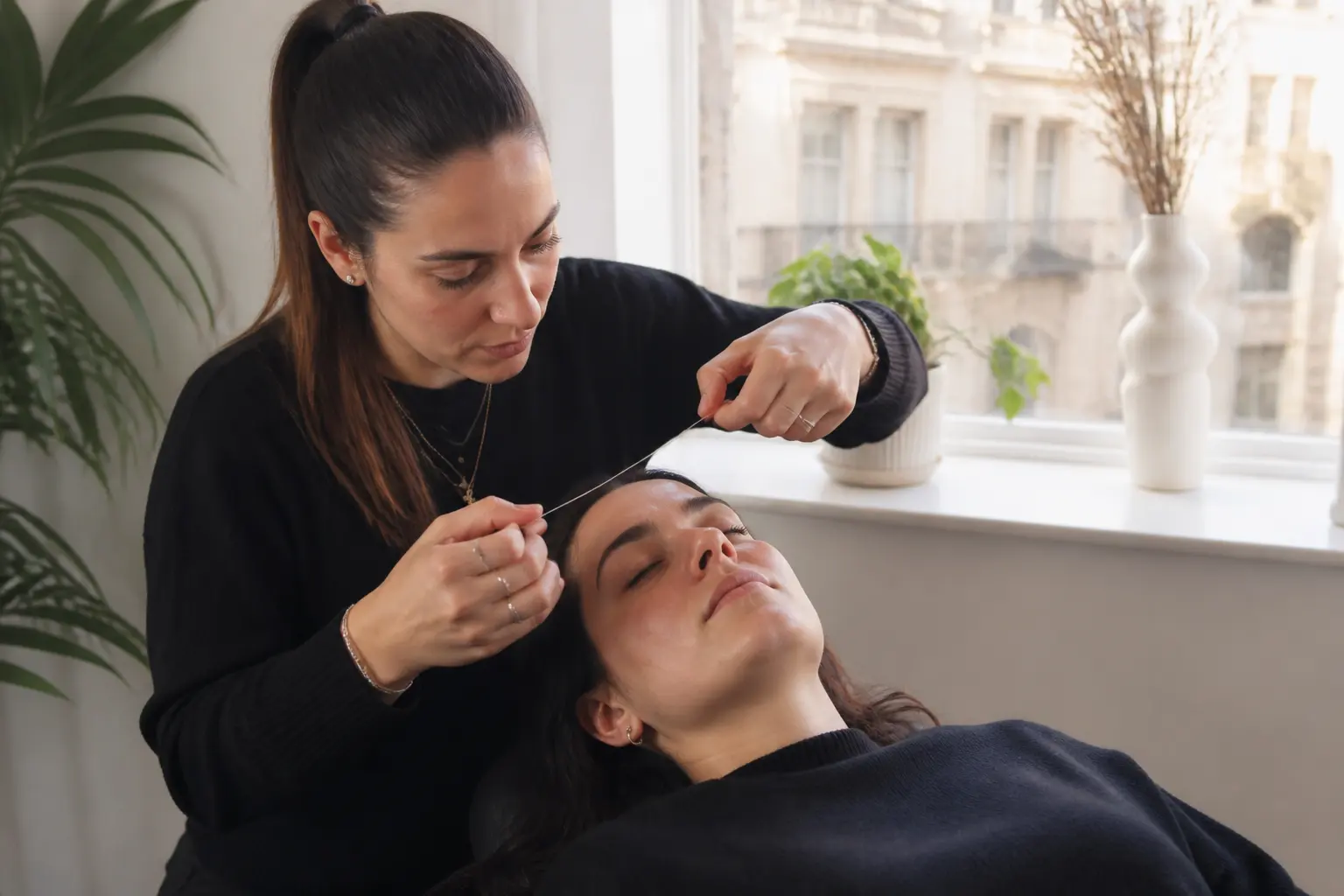
Threading removes selected hairs with a fine thread, allowing the brow artist to work around the natural outline with precision. Yet precision does not mean applying the exact same plan to every client. Hair texture affects how readily the brow shape shows, how quickly small regrowth becomes visible and how much definition is appropriate for a natural-looking result.
During a personalised design, the artist may consider:
- how fine, coarse or wiry the individual hairs are;
- where the brow is naturally fuller or more sparse;
- whether hairs lie flat, grow upward, point downward or change direction;
- the balance between the two brows, rather than expecting them to be identical;
- the amount of hair you are comfortable removing;
- how you usually fill, brush or set your brows at home; and
- whether you are maintaining your current shape or trying to grow out an older design.
Texture is one part of the picture, not a label that determines your brow shape. A fine-haired brow can still have strong density. A coarse brow can still contain areas that need a gentle approach. Wiry hairs may sit in a very flattering natural direction once the surrounding outline is cleaned. Personalisation means reading these details together.
Fine brow hair: creating definition without over-removing
Fine brow hair often looks soft and understated. Depending on its colour and density, it may appear lighter in photographs or look less defined when you are not wearing make-up. This does not automatically mean the brow needs to be made thinner, darker or dramatically reshaped. In many cases, the most useful design is one that protects the existing fullness while clearing only the hairs that blur the line.
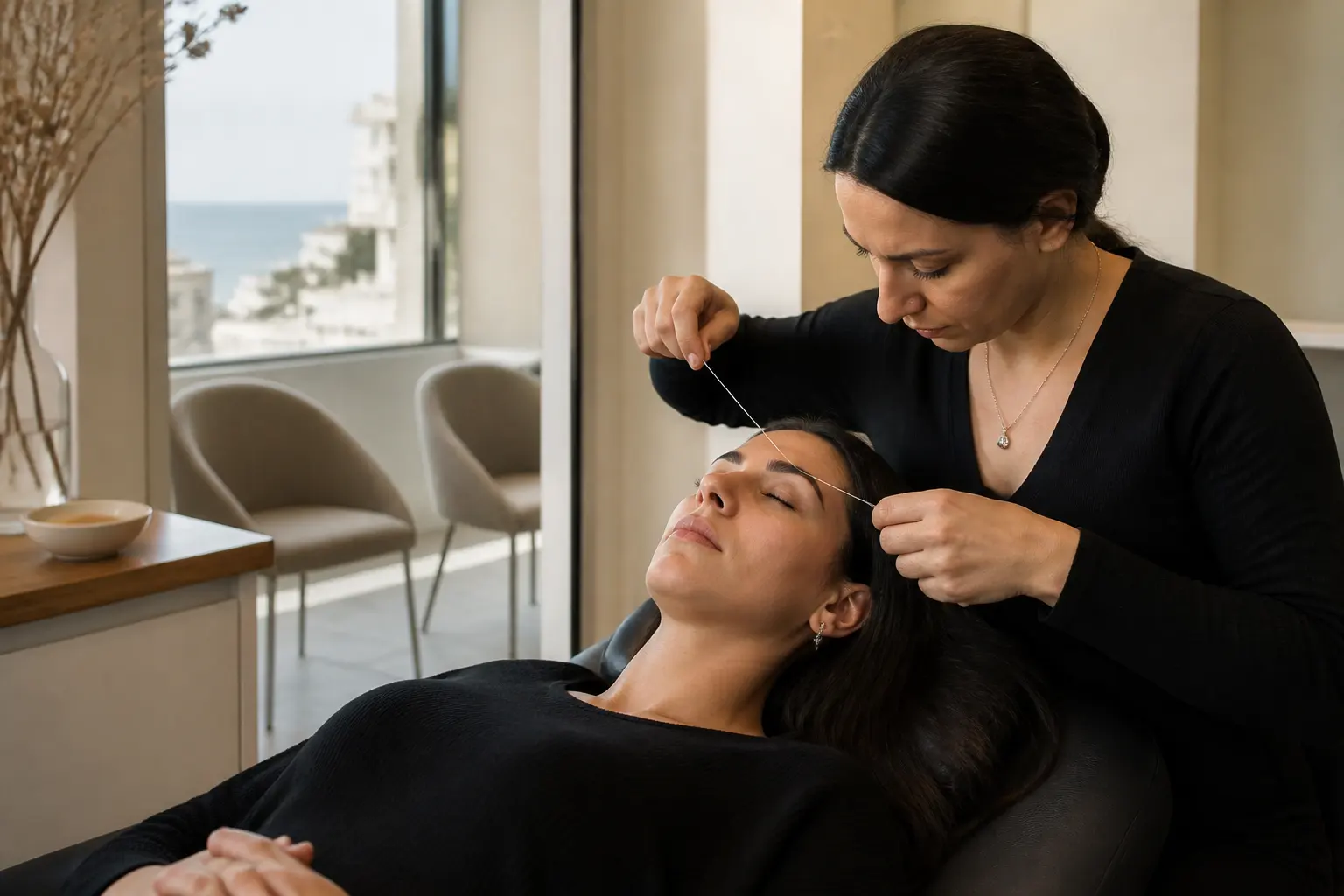
What a fine-hair design conversation may focus on
With fine brow hair, it can be helpful to discuss which areas you rely on for fullness. For example, you may prefer to keep the front of the brow soft and avoid removing too much from the upper line. You may also want to retain length through the tail if that is where your hairs naturally become lighter or less dense.
A threading design can then focus on making the outline easier to see rather than reducing the brow. Small adjustments below the arch, between the brows or around the tail may provide enough polish while leaving the core of the shape intact.
Useful questions to raise at your appointment
- “I like my brows full; can we keep the shape soft?”
- “This area looks sparse when I do not wear make-up. Can we avoid taking too much from it?”
- “I fill my tail most days. Would you keep the natural length there?”
- “I am growing my brows out. Which hairs should we leave alone for now?”
Fine hairs can also be easy to miss when you are shaping at home, particularly in bright bathroom lighting or when you are in a hurry. A professional threading appointment can offer a calmer way to review the overall balance before removing anything.
Coarse brow hair: refining a naturally bold brow
Coarse brow hair is often more visible, thicker in appearance or more resistant to lying in one direction. It may create a naturally expressive brow with very little product. At the same time, individual regrowth hairs can be noticeable sooner, particularly around the centre, under the arch or beneath the tail.
The purpose of threading is not to weaken a bold brow. It is to refine the edges and bring structure to the natural density. A clean outline can make a fuller brow feel intentional while preserving the character that makes it distinctive.
Where careful design makes a difference
Clients with coarse hair may be tempted to ask for heavy removal because their brows feel untidy between appointments. However, taking away too much at once can change the balance quickly. A more measured approach can define the underside, soften any obvious stray hairs and maintain enough density at the front and arch for the brows to remain proportional to the face.
Hair direction matters here too. A coarse hair growing slightly outside the outline may be worth removing, while a hair that supports the brow’s natural body may be better left in place. This is why brow design is more thoughtful than simply removing every visible hair outside a drawn line.
Everyday maintenance for coarse hairs
If your hairs are naturally strong, brushing them into place before applying make-up can help you see the real shape more clearly. Tell your artist if you use a brow gel, pencil or other styling product regularly. Your home routine can influence whether you prefer a crisp lower edge, a softer top line or a design that works well with minimal product.
A regular maintenance rhythm can also feel easier than waiting until the outline has completely disappeared. The timing is personal: growth rates, desired definition and comfort with regrowth vary from one person to another.
Wiry or unruly brow hair: working with direction, not against it
Wiry brow hair can feel unpredictable because some hairs may bend, curl, stand up or grow in directions that differ from their neighbours. This is common and does not mean your brows are impossible to shape. It means the design needs to account for how the hair sits naturally.
Threading can tidy the surrounding area and improve the clarity of the brow outline, but it does not permanently change the direction of each individual hair. A good design conversation should be honest about that distinction. If a hair naturally turns upward or outward, removing nearby hairs cannot necessarily make it lie flat. Instead, the artist can decide whether that hair contributes positively to the shape, whether it can be styled at home, or whether it sits far enough outside the preferred line to discuss removal.
What to tell your brow artist
Point out the hairs that regularly bother you. Perhaps one tail hair drops downward by midday, a few front hairs stand upright, or one brow looks more lifted after you brush it. These are useful observations. They help the artist understand how your brows behave in everyday life rather than only how they look in the chair.
It is also worth sharing how much styling you are happy to do. Some people enjoy brushing their brows each morning and using a clear gel. Others want a shape that looks neat with almost no routine. Neither preference is wrong, but the design should reflect it.
When another brow service may be part of the conversation
If your main goal is to make brow hairs look more brushed-up or easier to direct, brow lamination may be a separate service worth discussing. Threading and lamination address different goals: threading focuses on the removal of selected hairs and the outline, while lamination is about the appearance and direction of the brow hairs. The right choice depends on what you want to change in your routine.
For many people, though, a careful threading design is enough. Cleaning the outline can make wiry hairs look less distracting without trying to create an overly uniform brow.
How a personalised threading appointment can adapt
Personalisation starts before the thread is used. Rather than arriving with the expectation of a standard template, think about the result you want to see when you look in the mirror a few days later. Do you want your brows to look tidier without appearing obviously shaped? Are you hoping to preserve fullness? Do you need help adapting a previous shape that no longer suits your routine?
A tailored appointment may adapt in several ways:
- Amount removed: fine or sparse-looking areas may need a lighter touch, while dense sections may need selective refinement.
- Outline softness: some clients prefer a very clean lower line; others prefer a softer, less make-up-like finish.
- Arch placement: the natural brow structure, hair distribution and your preference guide the design rather than a fixed trend.
- Front-of-brow approach: this area can be kept feathery, gently refined or more defined depending on density and styling habits.
- Tail preservation: where hairs are fine, sparse or directional, keeping enough natural length may be more important than creating a sharper point.
- Maintenance plan: the best interval is individual and can be adjusted according to how quickly your outline grows back.
The process should respect natural asymmetry. Brows are sisters, not identical copies. One may have a higher arch, a denser front or a different growth direction. Trying to make them perfectly matched through excessive removal can leave both brows less balanced than before. The more useful goal is visual harmony.
Preparing for a better brow design conversation
You do not need to arrive with perfectly styled brows, but a little preparation can make it easier to explain your preferences. If possible, avoid aggressively tweezing or trimming just before the appointment. The more clearly your current growth pattern is visible, the easier it is to assess what is supporting the shape and what is simply outside it.
Before you book, consider these points:
- Look at your brows in natural light and notice where they seem fuller, lighter or more directional.
- Think about whether you prefer a low-maintenance result or are happy to style your hairs each day.
- Save a note about what you liked or disliked after past brow appointments, rather than relying only on a reference image.
- Tell the artist if you are growing out areas that were previously over-shaped.
- Mention any relevant skincare products or sensitivities as part of the appointment consultation.
Reference images can be useful for communicating a mood, such as “soft”, “structured” or “natural”. They should not be treated as a blueprint. Another person’s brow density, hair texture, bone structure and hair direction will not be the same as yours. Your strongest result is usually one that works with your own brows, not against them.
After threading: keeping the result easy to live with
Once your brows have been threaded, keep the aftercare guidance given at your appointment in mind. In practical terms, it also helps to resist the urge to remove every new hair as soon as it appears. If you are trying to build a fuller shape or improve balance between the brows, selective patience can be important.
Fine hairs may need time to become visible enough to assess. Coarse hairs may stand out earlier but still need to be judged in relation to the overall shape. Wiry hairs may require simple daily brushing to look their best between visits. A brow routine works best when it is realistic for your lifestyle, whether that means a quick brush in the morning or no make-up at all.
Conclusion
Fine, coarse and wiry brow hair each bring different considerations to a threading design, but none requires a generic solution. The most flattering plan begins with your natural growth, your preferred level of definition and the way you want your brows to work in daily life. A thoughtful threading appointment can preserve softness, refine fullness or manage directional hairs while keeping the result personal.
If you are ready to refresh your brow shape, choose the Becammo location that suits you in Sliema or Swieqi and book a threading service with enough time for a proper design conversation.
Frequently asked questions
Can threading work for very fine eyebrow hair?
Yes. With fine brow hair, the focus can be on selective removal and a clear but soft outline. The design should protect the areas that provide natural fullness rather than removing hair simply to create a sharper shape.
Will threading make coarse brow hair grow back thicker?
Threading removes hair from the root, but it does not change the natural thickness of the hair that grows back. Your regrowth will still reflect your own hair characteristics.
What can threading do for wiry eyebrow hairs?
Threading can remove selected hairs outside the desired outline and make the brow shape look tidier. It does not permanently alter the direction of hairs that naturally curl, stand up or grow at an angle.
Should I trim wiry brow hairs before a threading appointment?
It is usually helpful to leave your brows as natural as possible before the appointment, unless you have been given different advice. Seeing the full length and direction of the hairs helps with a more accurate design discussion.
How often should I book brow threading?
There is no single schedule for everyone. The right timing depends on how quickly your hair grows, how defined you like the outline to look and whether you are maintaining or growing out a particular shape.
Can I combine threading with brow lamination?
They can be discussed together when you want both a tidier outline and a more styled hair direction. Threading and brow lamination have different purposes, so the appropriate plan depends on your brow hair, preferences and appointment assessment.