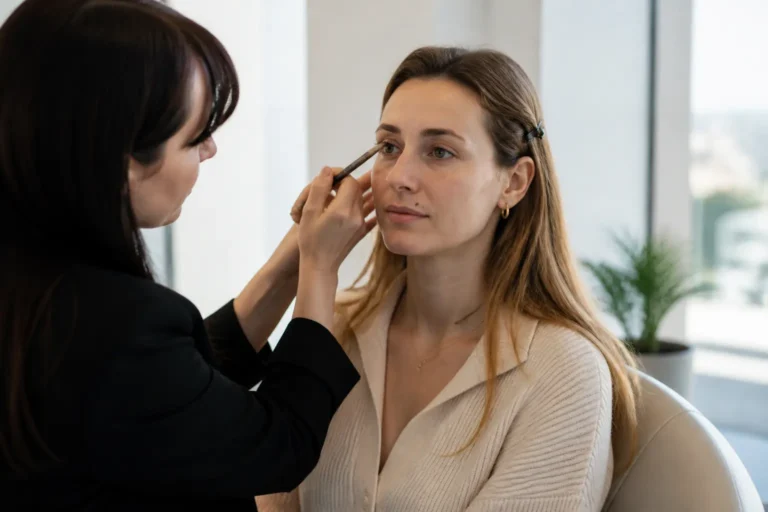
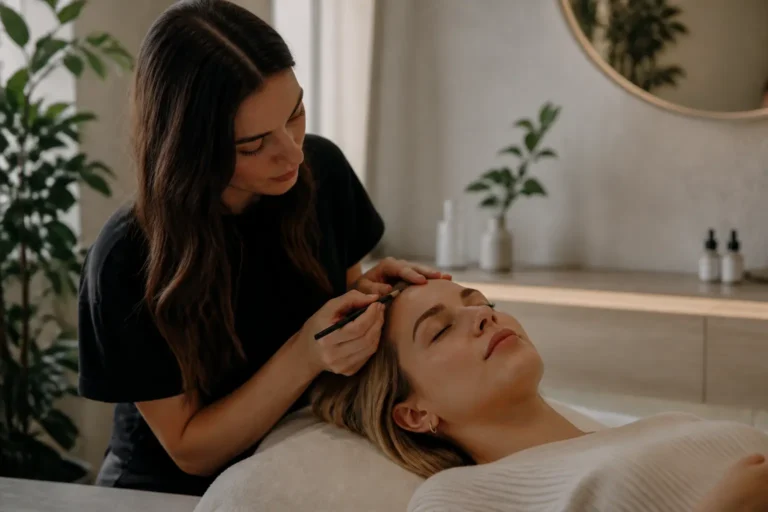
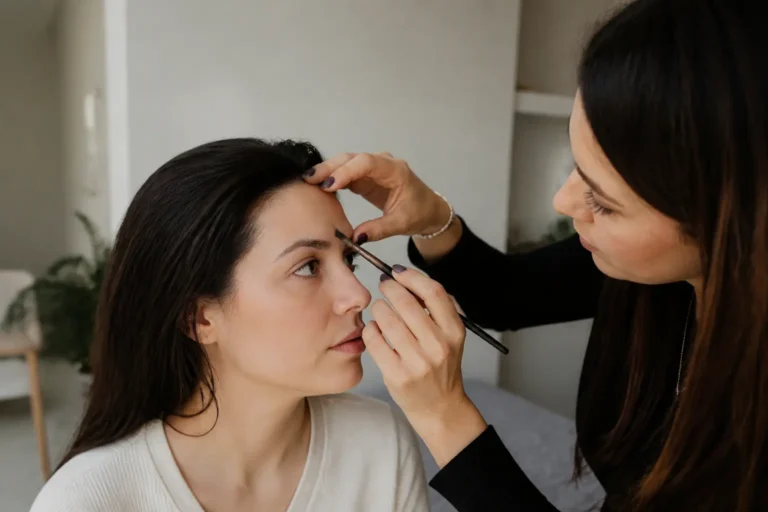
Threading Thick Brows: Keep Fullness While Refining Shape
Brenda Cammo Team
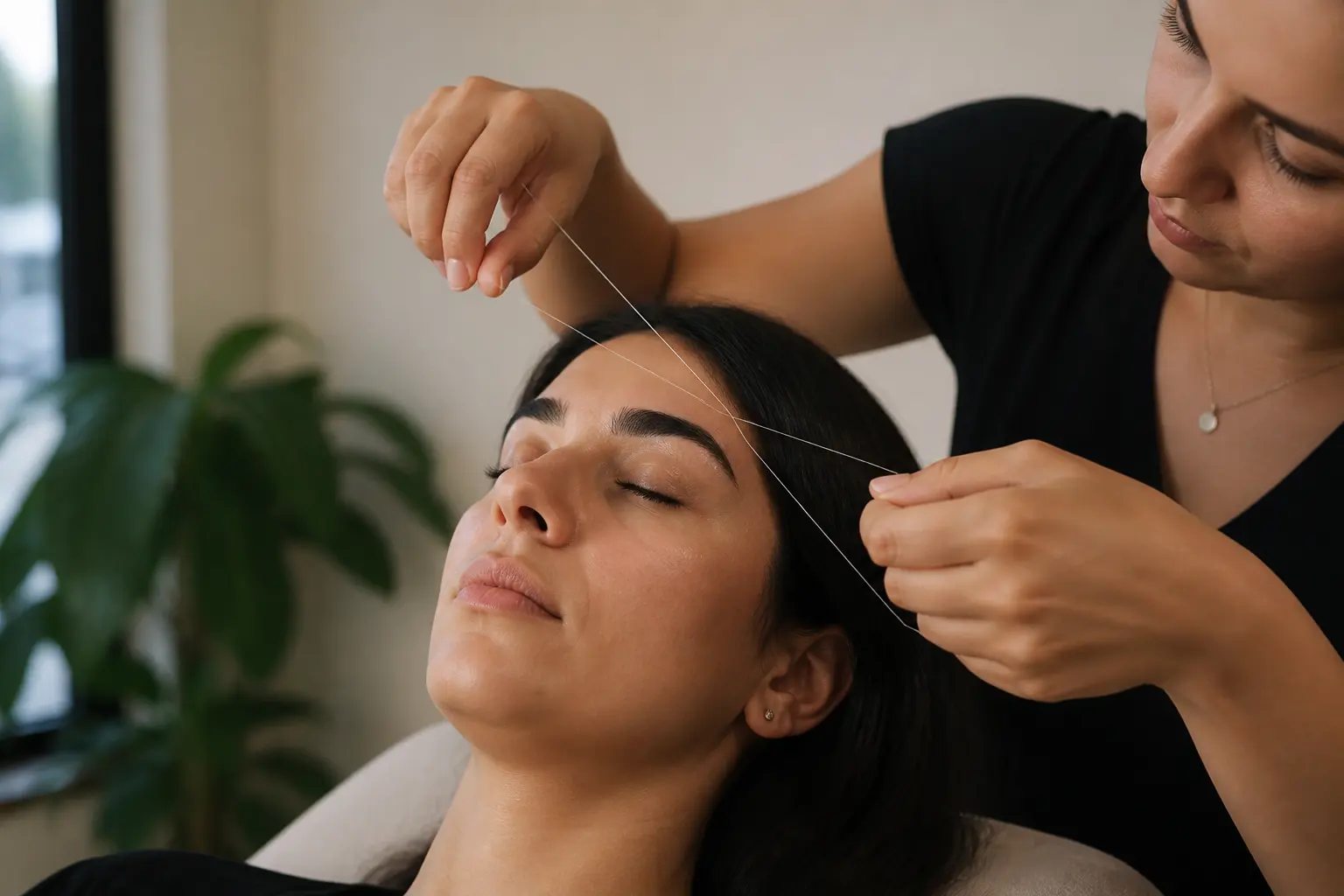
Thick brows can be one of your strongest natural features. They bring definition to the face, have visible texture and often need very little make-up to look expressive. Yet having full brows does not always mean they feel effortless: hairs can grow beyond the outline, the tail may look heavier than the front, or the two brows may appear less balanced as new growth comes through.
Threading thick brows is not about making them thin. A considered appointment can focus on refining the edges, clearing only the hairs that sit outside the intended shape and keeping the density that gives full brows their character. The aim is a brow that still looks like yours—just more intentional and easier to maintain.
What makes thick brows different?
Full brows usually have enough natural density to create a strong outline without relying heavily on pencil, powder or tint. That can be useful, but it also means small changes can be noticeable. Removing too much from the top, front or central body of the brow can quickly alter its proportion and make the result feel less natural than expected.
For this reason, shaping thick brows begins with restraint. Rather than treating every visible hair as unwanted, the practitioner needs to distinguish between:
- hairs that contribute to the natural density and direction of the brow;
- new growth that sits clearly outside the desired perimeter;
- areas where a small amount of refinement may make the brow look cleaner;
- differences between the two brows that are part of normal facial asymmetry.
A full brow does not need to be turned into a narrow brow to look polished. In many cases, keeping a softer, fuller body while tidying the surrounding area creates the most wearable result.
How threading can refine thick brows without over-thinning them
Threading uses a twisted thread to remove hairs with precision. This makes it well suited to brows that have plenty of density but need a clearer boundary. The technique can target individual areas around the brow rather than relying on broad removal across the whole shape.
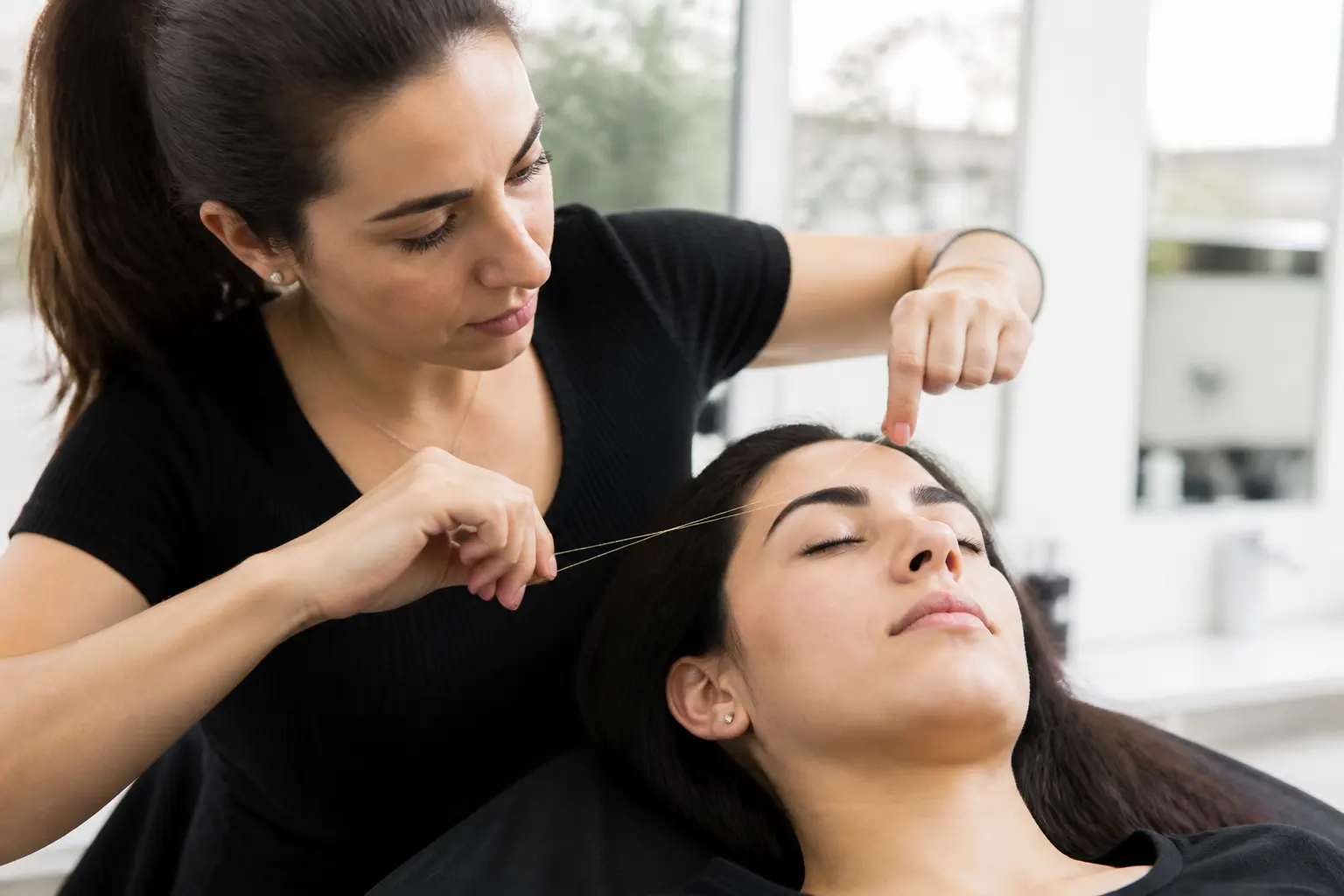
During a threading appointment, the focus may be on cleaning the centre, under-brow area, upper perimeter or tail according to your natural growth and the agreed design. There is no need for every full brow to follow the same pattern. A straighter brow, a gentle arch or a slightly softer tail can all work well when they follow the structure already present.
At Becammo, brow design is approached as a personalised service. Threading can help refine a full brow while respecting its natural direction, density and the way it sits on your face. This matters for clients from different ethnic backgrounds, as brow texture, thickness, growth patterns and preferred styling can vary considerably.
Start with a shape conversation, not a trend
When your brows are naturally thick, it helps to arrive with a clear sense of what you want to preserve. You may like their fullness but dislike the untidy regrowth around the edges. You may want the front to remain soft, while the tail looks a little more defined. Or you may be growing your brows out after previous over-plucking and want to avoid interrupting that process.
These are all useful details to share before threading begins. A good shape conversation can cover how you usually wear your brows, whether you fill them in, how much maintenance you are comfortable with and which parts you would prefer not to make slimmer.
Useful ways to describe the result you want
- “I want to keep them full, only tidy the outline.”
- “Please do not make the front boxy or too sharp.”
- “I like the thickness, but the tail feels untidy.”
- “I want a cleaner shape without taking much from underneath.”
- “I am growing out an area, so I only want surrounding hairs removed.”
- “I use brow gel, so I would like a shape that still looks good when brushed up.”
Bringing a photo can help communicate your preference, but it is best used as a reference for mood rather than a fixed template. Your natural brow growth, facial proportions and hair density should guide the final design.
Which areas are usually refined on full brows?
Every brow is individual, but thick brows often benefit from selective tidy-up rather than extensive reshaping. The exact areas depend on your growth pattern and the overall result you want.
The centre of the brows
Hairs between the brows can make a full shape look visually heavier when they grow in. Threading this area can create separation while keeping the fronts of the brows soft. The goal is not necessarily a harsh gap; it is simply enough space for each brow to read clearly on its own.
The lower edge
Removing a small number of hairs beneath the brow can make the baseline look more defined. On thick brows, this should be considered carefully. Taking too much from underneath may raise the brow visually or reduce the fullness that you enjoy. Often, a modest clean-up is enough.
The upper perimeter
The top line is frequently where caution matters most. Some hairs above a naturally thick brow contribute to its soft, full appearance. Others may sit distinctly outside the shape and create an uneven outline. A precise approach can remove only the hairs that disrupt the intended form, rather than carving a rigid top edge.
The tail
The tail can become fuzzy as it grows out, especially if the hairs point in different directions. Refining it may help the brow look more balanced from the front and side. However, a tail that is made too narrow can make a naturally dense brow appear disconnected, so it should still relate to the fullness of the body.
Why brow mapping can be helpful for thick brows
Brow mapping is a way of considering proportions before hair removal. It can be especially useful when you have strong natural brows because there is more hair to work with—and therefore more opportunity to preserve the right areas.
Mapping does not mean forcing both brows into identical shapes. Natural brows are sisters rather than duplicates, and faces themselves are not perfectly symmetrical. Instead, it can help identify a balanced starting point, a suitable arch area and a tail that complements your existing brow line.
For thick brows, mapping may be helpful when:
- one brow appears fuller or lower than the other;
- you are unsure how much thickness to retain;
- your brows have grown out after a long period without shaping;
- you want a more structured result but do not want an overdone look;
- you wear glasses and want to consider how the frames interact with the brow line.
The design should remain flexible. Mapping is a guide for a thoughtful conversation and measured refinement, not a reason to remove healthy, useful density simply to create perfect symmetry.
What to do before a threading appointment
A little preparation can make the appointment easier and help you communicate your preferences clearly.
- Let the brows grow enough to assess. If possible, avoid removing stray hairs yourself immediately before the appointment. Visible growth gives the practitioner a better view of the natural pattern and makes it easier to decide what should stay.
- Arrive without heavy brow make-up if you can. Brow pencil, pomade and tinted products can obscure the real density and direction of the hairs. If you do wear make-up, let the practitioner know how you normally style your brows.
- Pause active skin products around the area if they make you sensitive. If your skin feels irritated, dry or particularly reactive, mention it before the service. A brief consultation helps the team decide how to proceed appropriately.
- Say what you do not want. Preserving fullness is a specific request. Tell the practitioner if you do not want a high arch, slim tail, sharply squared front or a dramatic change.
How to care for thick brows after threading
After threading, the skin around the brow area may look temporarily pink or feel a little sensitive, particularly if it is your first appointment or you have not had hair removed recently. Keep your routine simple and avoid rubbing the area.
It can also help to avoid immediately applying heavy make-up or fragranced products directly over freshly threaded skin. If you have a particular skin concern, sensitivity or product routine, ask for personalised aftercare guidance before you leave.
Once the area feels settled, thick brows often need very little day-to-day styling. A clear or lightly tinted brow gel may be enough to guide hairs into place. Brush upwards at the front, then follow the natural direction through the body and tail. The intention is to enhance texture, not flatten it.
Maintaining fullness between appointments
The temptation with thick brows is often to remove one or two hairs at home whenever they appear. In practice, repeated tweezing can make it difficult to see the overall growth pattern and may lead to gradual over-thinning in the places where fullness matters most.
Instead, consider leaving the main shaping to regular threading appointments. Brow hairs grow at different speeds, so small amounts of regrowth between visits are normal. A professional can look at the whole brow each time and make small adjustments without losing the structure you have built.
Your ideal timing will depend on your hair growth, preferred level of neatness and how defined you like the outline to be. Some people prefer regular tidy-ups, while others wait until the shape feels noticeably less clear. There is no single schedule that suits every full brow.
Can thick brows be paired with tint, henna or brow lamination?
They can, but the best choice depends on the effect you want and the condition of your brows. Threading is primarily about shaping and removing unwanted hair around the brow. Tint or henna may be discussed when you want the existing hairs to appear more noticeable, while brow lamination is typically chosen by clients who want to guide the brow hairs into a more lifted, brushed-up direction.
For naturally thick brows, more is not always necessary. If your density already gives you strong definition, threading alone may be the simplest option. If you are considering an additional service, explain your usual brow routine and the finish you prefer so that the appointment can be planned around your real needs rather than a trend.
When a full brow needs a gentler approach
There are times when it is wise to pause and discuss rather than proceed with significant shaping. This includes brows with areas you are trying to grow out, visible scars, recent irritation, uneven patches or a history of over-plucking that has affected your confidence in the shape.
A personalised appointment can focus on tidying the surrounding growth while leaving selected areas untouched. That approach may feel slower than a dramatic reshape, but it protects the natural fullness you want to keep and gives you a clearer base for future appointments.
Conclusion
Threading thick brows works best when fullness is treated as an asset, not a problem to be removed. A precise, personalised shape can clear distracting regrowth, refine the outline and keep the natural density that makes your brows distinctive. Before booking, think about which elements you love most—the soft front, the textured body, the bold tail or the overall thickness—and make those priorities part of the conversation.
If you are ready for a tidier shape without losing the character of your full brows, choose the Becammo eyebrow service that suits your preferred location in Sliema or Swieqi and discuss the finish you would like at your appointment.
Frequently asked questions
Will threading make my thick brows thin?
Not when the service is planned around preserving fullness. Threading can focus on hairs outside the desired outline while keeping the central density and natural texture of the brow intact.
Should I ask for the top of my thick brows to be threaded?
It depends on your growth pattern. A small amount of refinement above the brow may help if hairs sit clearly outside the shape, but removing too much can make a naturally full brow look overly sharp or narrower than intended.
How do I explain that I want natural-looking thick brows?
Tell the practitioner that you want to retain thickness and only tidy the outline. Mention any areas you do not want made slimmer, such as the front, lower line or tail.
Can I use brow gel after threading thick brows?
Once the skin around the area feels settled, brow gel can be a simple way to guide full hairs into place. Choose a light touch so the brows retain their natural movement and texture.
How often should thick brows be threaded?
It varies according to your hair growth and the level of definition you prefer. Book when the outline begins to feel less tidy rather than following a rigid schedule that may not suit your brows.
Can thick brows still look soft after shaping?
Yes. Softness often comes from preserving the natural front, avoiding overly sharp lines and keeping enough density through the body of the brow. A personalised threading plan can balance neatness with a relaxed finish.