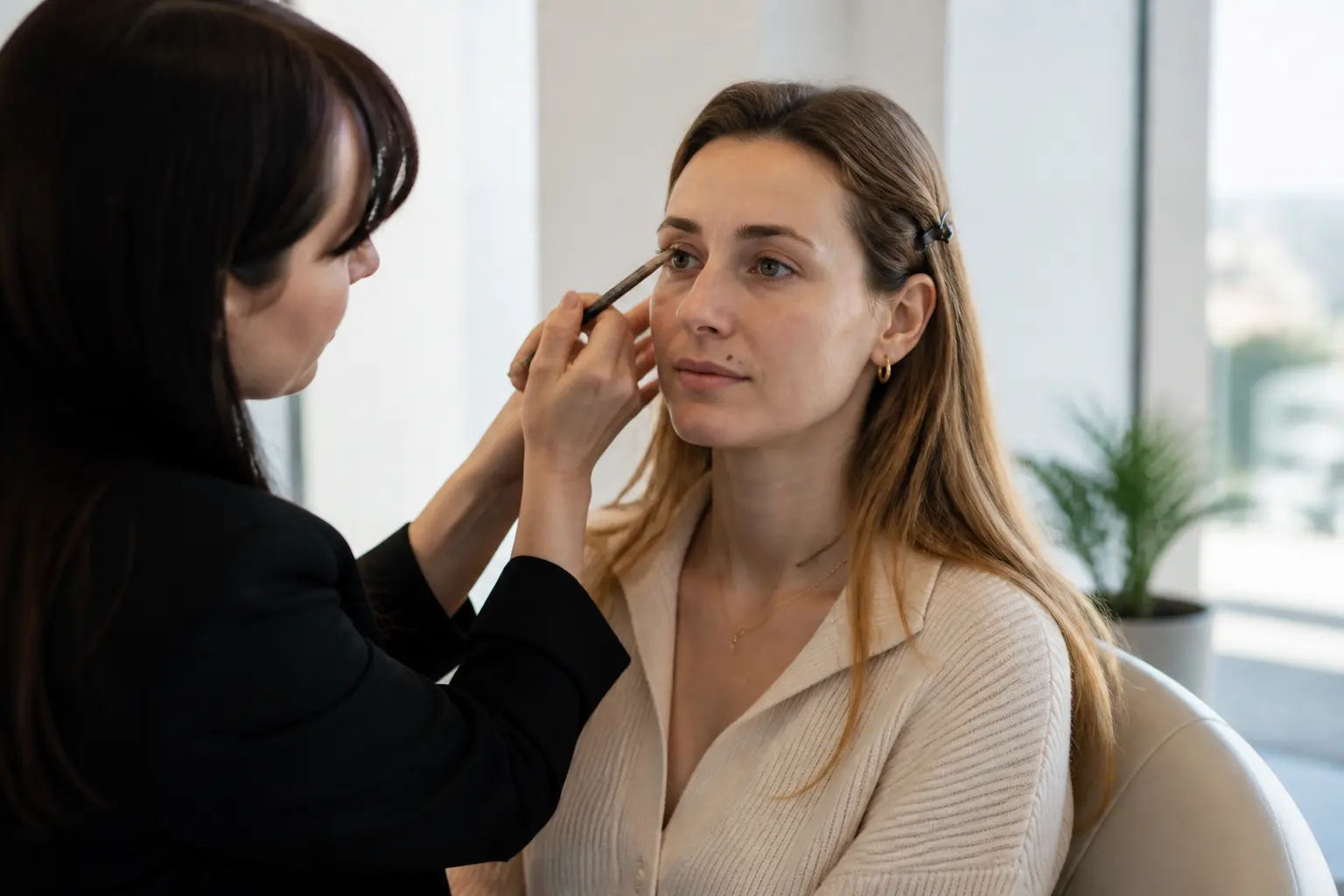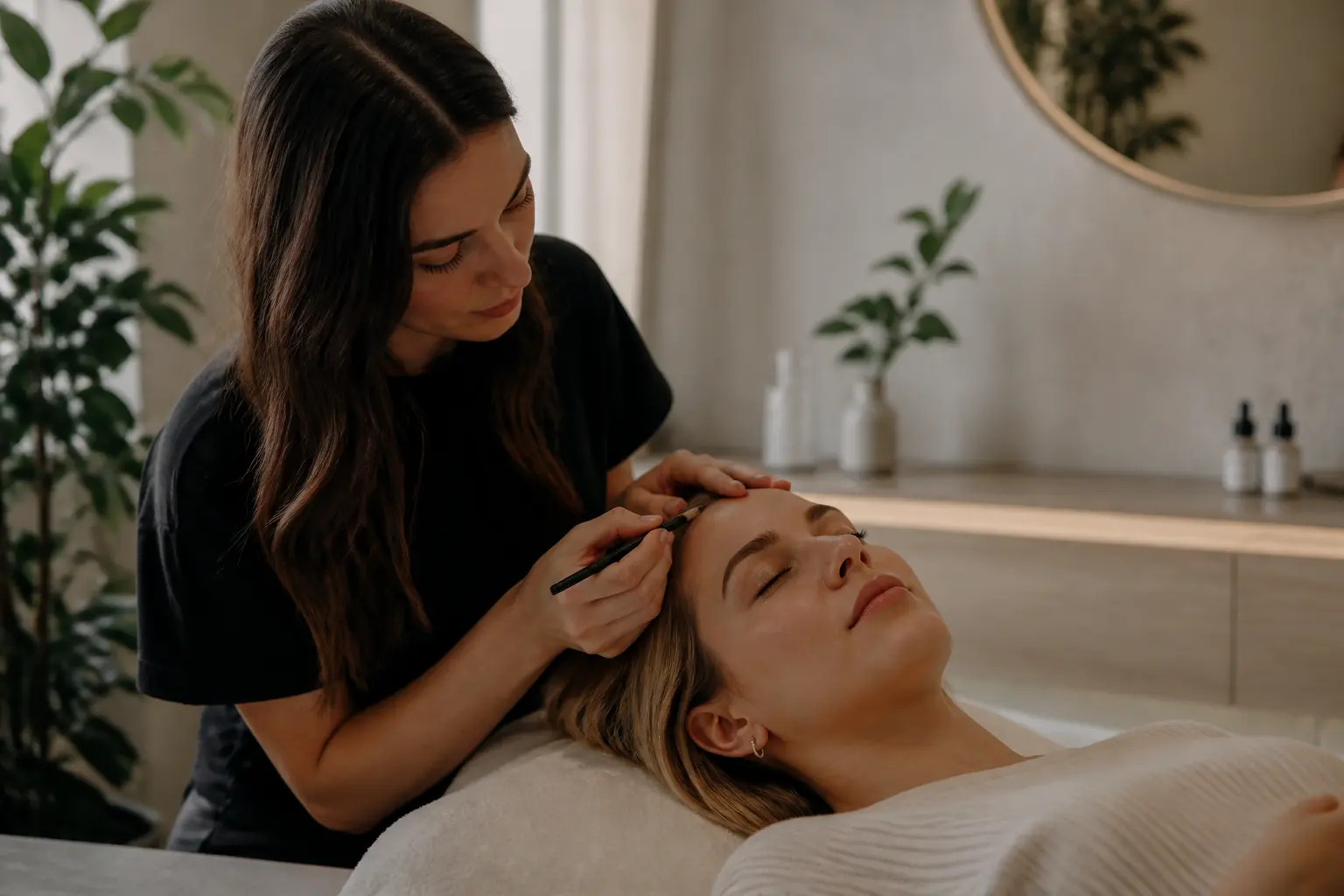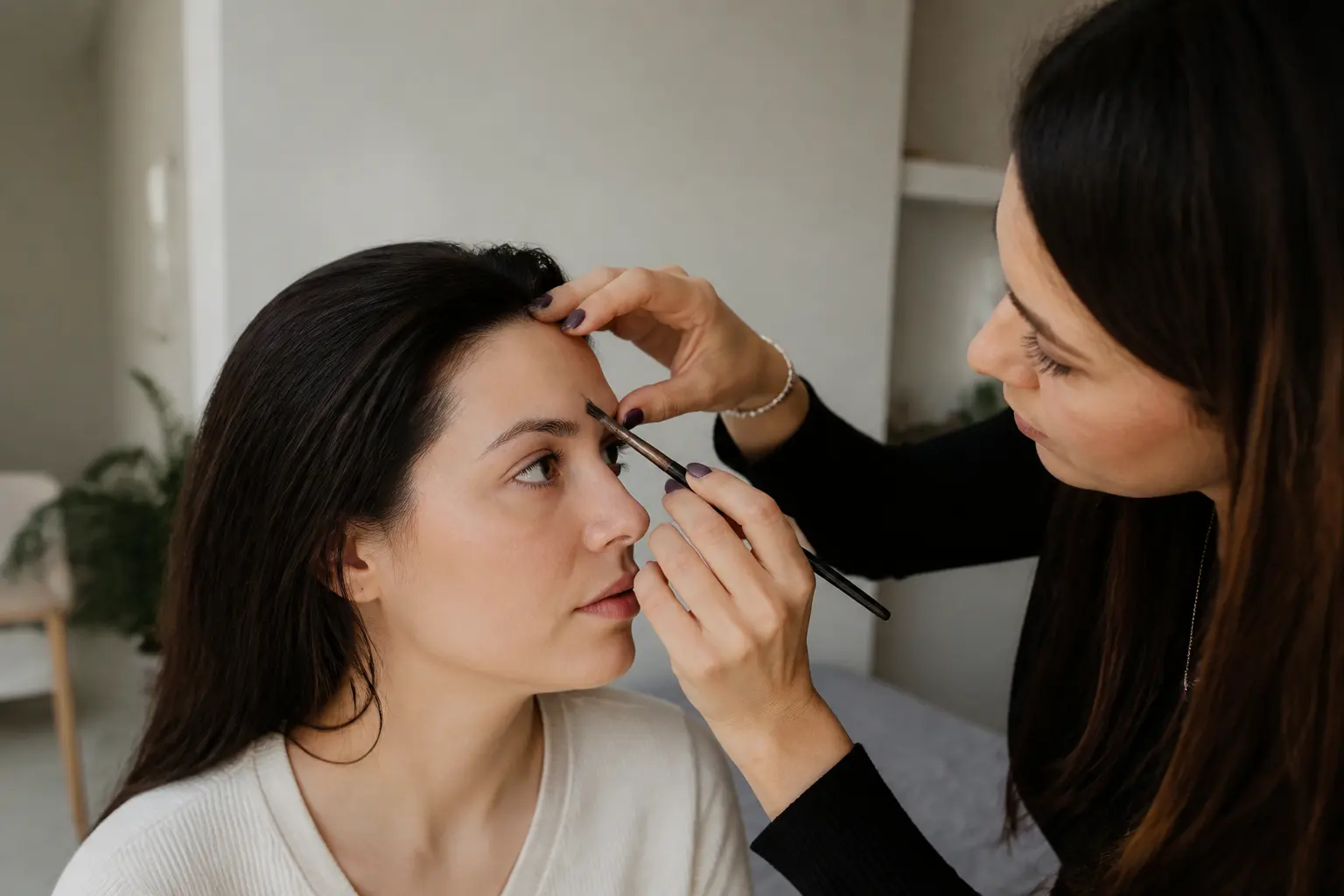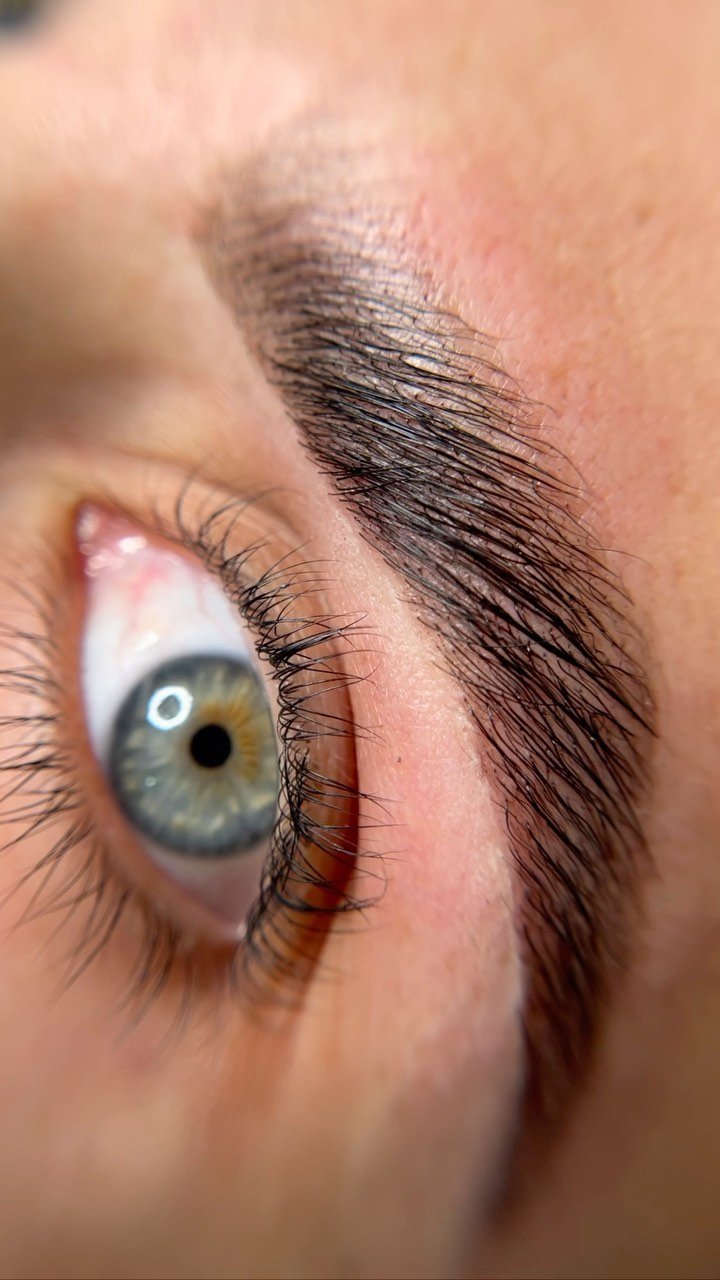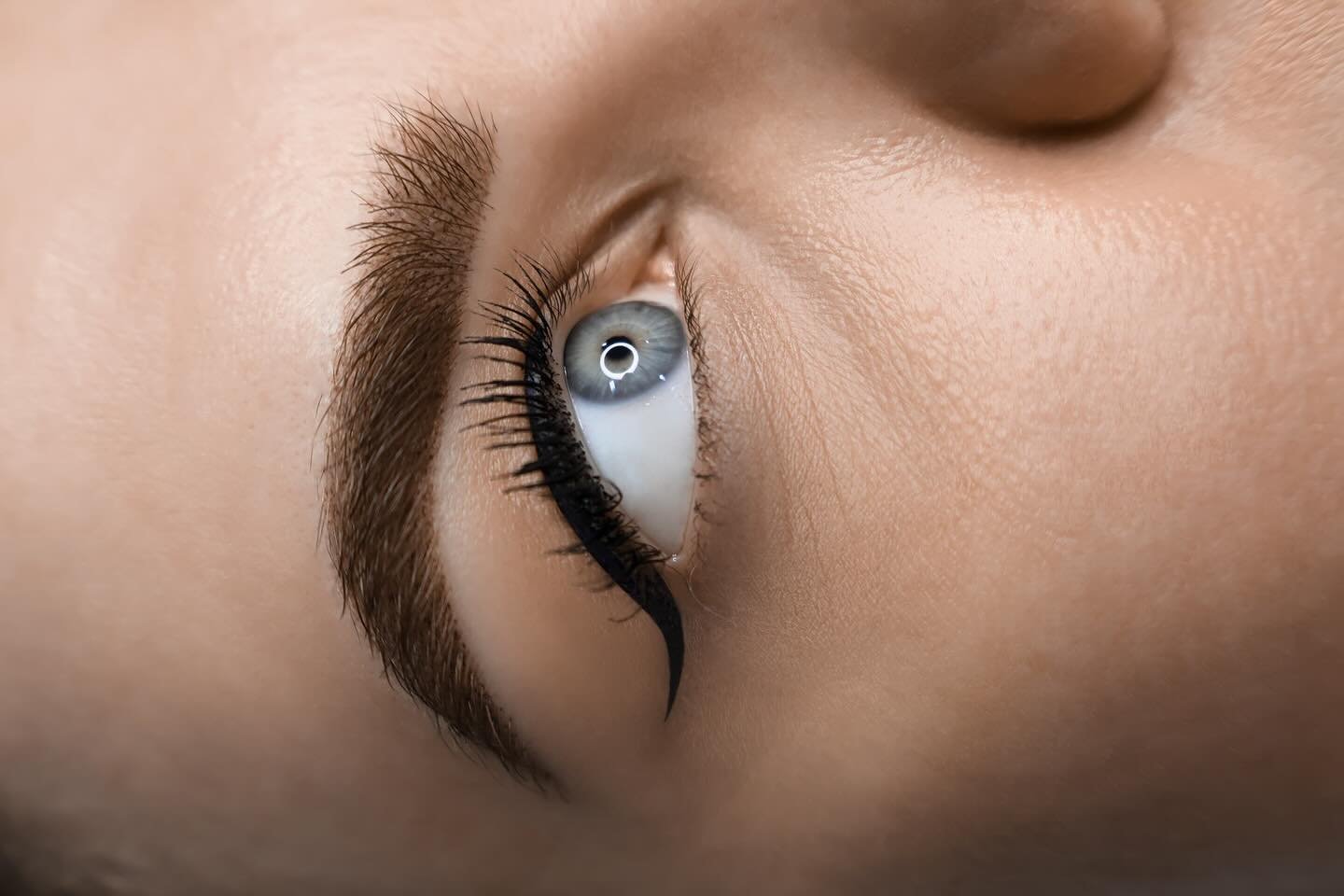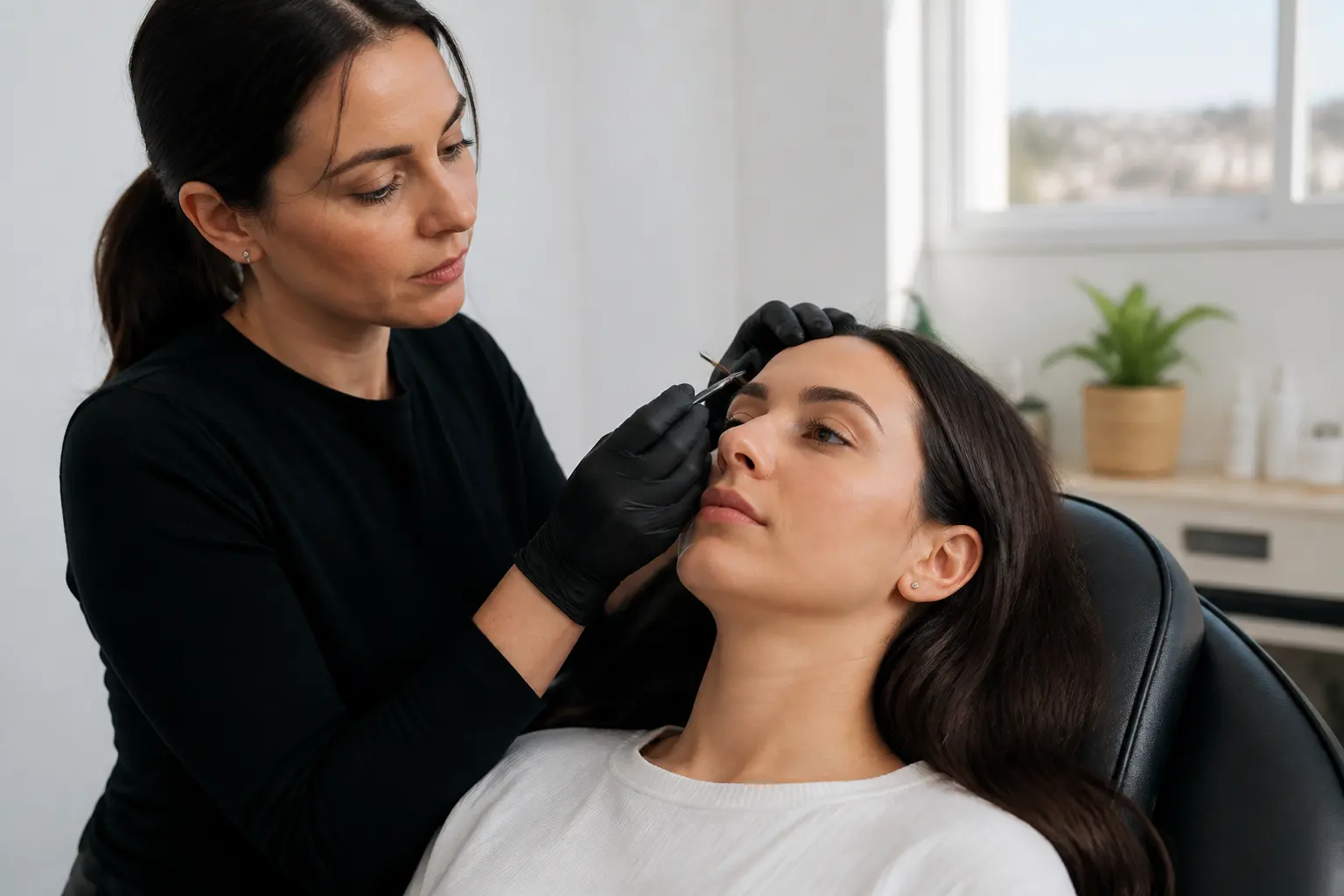
With oily skin, the choice between brow tint and henna comes down to what you want to see: tint mainly colours the brow hairs, while henna colours the hairs and leaves a temporary skin stain that oily skin may hold less predictably. Neither is automatically wrong. Discuss your skincare and sun products, makeup habits, sensitivities, brow density and preferred shade before booking.
If you have oily skin, choosing between brow tint and henna is not only about picking a shade. It is also about setting realistic expectations for how colour may show on the brow hairs, how much it may leave a visible mark on the skin beneath them, and how your everyday skincare routine could affect the finish.
Neither option is automatically right or wrong for oily skin. A thoughtful brow conversation should look at your natural hair colour, brow density, skin tone and undertone, makeup habits, skincare products and the kind of result you would genuinely enjoy seeing in the mirror. The aim is not to force a bold skin-stain effect that may not suit your skin or routine. It is to create brows that look considered, balanced and personal to you.
At BeCammo, a colour service can be combined with brow shaping through threading, so the brow outline and the chosen colour can be considered together. This is particularly useful when you want more definition but still want your brows to feel like your own.
Why does oily skin change the colour conversation?
Oil is a normal part of many people’s skin. Around the brows, it may be more noticeable if you also experience shine through the forehead and T-zone, use richer skincare, wear sunscreen daily or apply brow makeup most days.
For a colour service, the important point is that oil, skincare residue and makeup can affect how evenly a product takes to the brow area. They can also influence how long a visible skin stain appears to remain. Brow-henna manufacturers commonly note that oily skin can be more resistant to skin staining and that individual skin type affects longevity. Elleebana’s brow henna guidance similarly highlights that skin condition can affect both the stain and how long it is visible.
This does not mean colour will not work on oily skin. It means the appointment should be approached with a hair-first and expectation-led mindset. Your brow hairs can still gain depth and definition, while the appearance on the skin may be softer or shorter-lived than it would be for somebody with a different skin type.
What is the practical difference between brow tint and henna?
The terms are often used interchangeably in casual conversation, but they may create different visual effects depending on the formula, shade and application method. A professional should explain the specific product being used rather than relying on a one-size-fits-all promise.
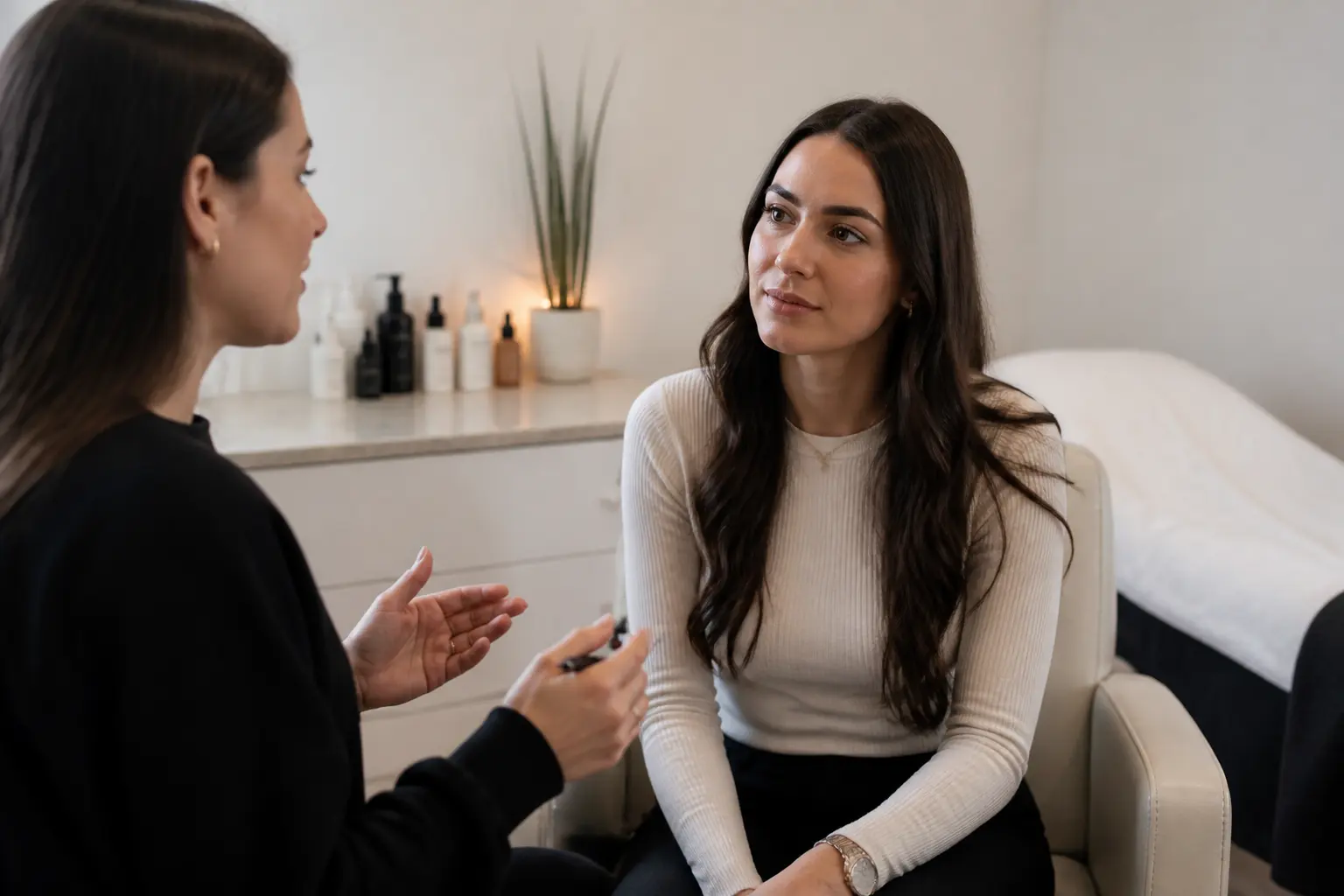
Brow tint
A brow tint is often chosen when the priority is making existing brow hairs look more noticeable. It can be especially helpful when brow hairs are fair, grey or uneven in colour, or when you want your natural shape to read more clearly without relying on pencil every morning.
The visible result may be centred more on the hairs than on the skin beneath them. Some tint formulas can leave a light temporary mark on the skin, but this should not be assumed. If your goal is a strong filled-in brow appearance without makeup, say so clearly before your appointment. That helps the professional explain whether the product, your skin and your natural brow density are likely to support that look.
Brow henna
Brow henna is commonly associated with colouring the hairs and creating a more noticeable temporary skin-stain effect. For people with sparse areas, that effect can make the brow shape look more defined at first. However, the result is variable. Oily skin may retain less of the stain, particularly on the skin itself, and the visible effect can fade differently from person to person.
That does not make henna a poor choice. It may still suit you if you enjoy a stronger initial outline, have a special occasion coming up or want to see more definition around the front, arch or tail of the brow. The key is to choose it because the likely result fits your preferences, not because you expect identical wear to somebody with dry or balanced skin.
At BeCammo · Sliema · Swieqi
Eyebrow threading in Malta
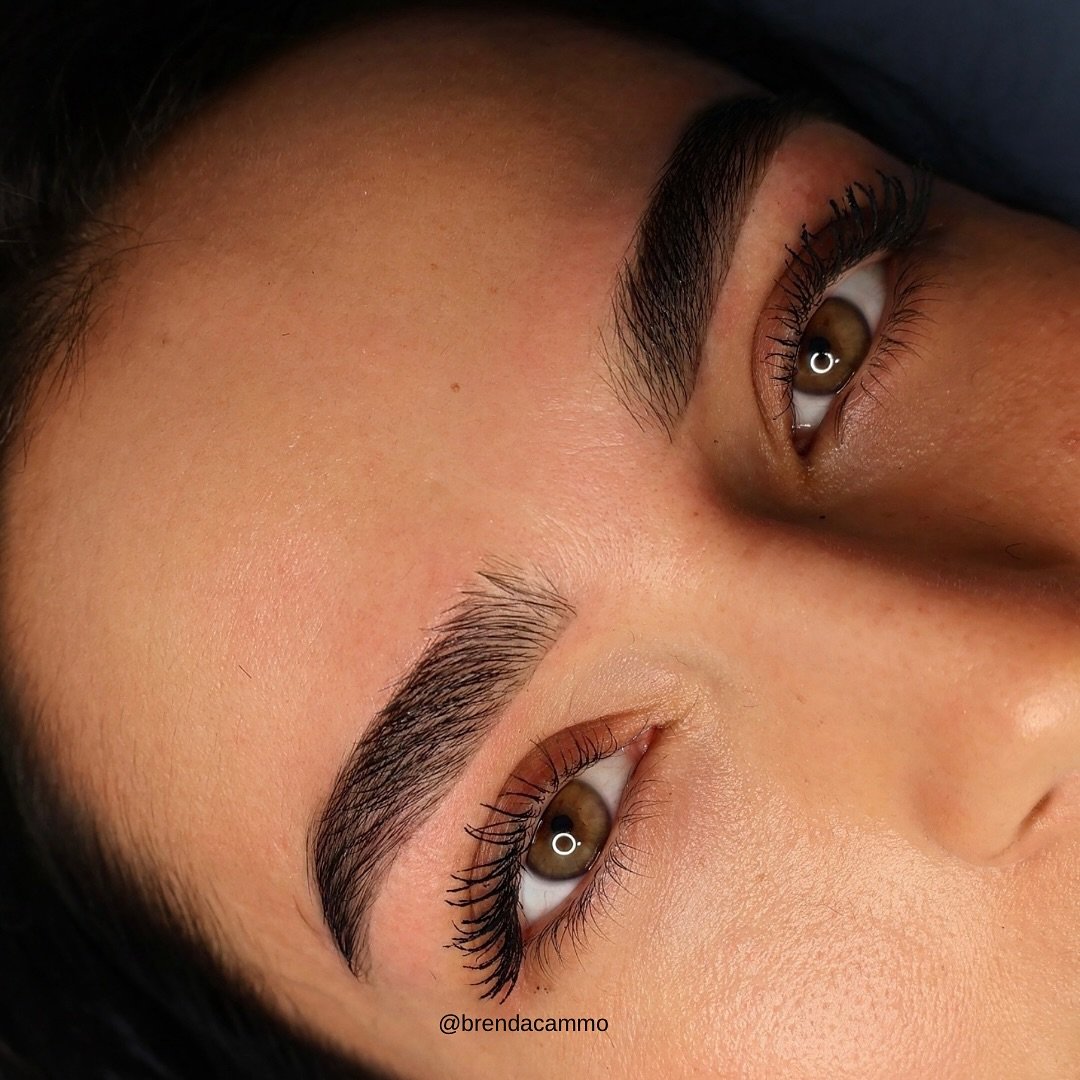
Same client, before and after threading.
Clean, natural brows shaped to your face, at our salons in Sliema and Swieqi. Threading is what BeCammo was built on.
- from €16price
- Sliema · Swieqiwhere
- ★ 5.0460+ Google reviews
What should you discuss before choosing tint or henna?
A good consultation does not need to be complicated. These are the details that can make the decision more informed and the outcome more comfortable to live with.
1. Whether you want colour on the hairs, the skin, or both
Start with the most useful question: what are you hoping to see once you leave the studio?
- Do you want fair hairs to look deeper and more visible?
- Do you want sparse areas to appear temporarily fuller?
- Would you prefer a soft, natural effect rather than a makeup-like outline?
- Are you comfortable with a bolder result immediately after the service while the colour settles?
If your main objective is hair definition, a tint may be enough. If you would like a more noticeable temporary outline as well, henna may be part of the discussion, with the understanding that oily skin can make skin-stain longevity less predictable.
2. Your usual brow makeup routine
Tell your brow professional if you use pencil, powder, pomade, brow pen, tinted gel or concealer around your brows every day. This helps clarify whether you want a colour service to replace some of those steps or simply make your no-makeup brows look more even.
It also gives useful context for the result you consider natural. Someone who usually creates a precise, structured brow with makeup may prefer more definition than someone who only brushes their brow hairs into place. Neither preference is better; they simply call for a different colour and intensity conversation.
3. The skincare and sun products used around your brows
Be open about the products you apply around your forehead and brow area. Daily moisturiser, facial oils, sunscreen, self-tan, exfoliating products and active skincare can all be relevant to preparation and aftercare. Product instructions for brow colour typically stress the importance of clean, dry, oil-free brow hairs and surrounding skin before application. For example, professional brow tint instructions from Eye Adore Cosmetics specify removing makeup and oils before tinting.
You do not need to stop your normal routine without guidance. Simply mention what you use so that the professional can advise on suitable timing and preparation for that appointment. If you have used a new product recently or your skin is feeling reactive, that is also worth raising before any colour is applied.
4. Any known sensitivities or previous colour reactions
A colour appointment should always include a conversation about sensitivities, allergies and previous reactions to cosmetic colour products. Mention if you have experienced itching, burning, swelling, unusual redness or a rash after hair dye, brow products, lash products or other cosmetic treatments in the past.
Do not treat a previous reaction as a minor detail. It is relevant information for deciding whether a patch test, a different plan or a postponed appointment is appropriate. If you are unsure what a past reaction was linked to, explain what you remember rather than guessing.
5. Your natural brow density and any gaps you want to soften
Colour can make existing hairs look more visible, but it does not create new brow hairs. If your brows have naturally fine areas, old over-plucking, uneven growth or a scar, colour may still improve the overall impression, but the result will depend on the hairs available and on how well the skin accepts a temporary stain.
This is where brow mapping and threading can be helpful companions to colour. A carefully considered shape can make the most of existing density, while colour can add depth to the hairs within that shape. It is a more balanced approach than trying to make one product solve every brow concern.
6. The shade direction you prefer
Bring your preference into the conversation using simple language. You might prefer a lighter, softer brown; a cooler-looking shade; a warmer effect; or a deeper result that still avoids looking harsh. Your hair colour matters, but it is not the only reference point. Skin tone, undertone, brow-hair colour and your usual makeup style can all influence what looks harmonious.
For oily skin, it can be sensible to focus on a shade you will still like once any skin effect softens. That may mean choosing colour that enhances the hairs rather than depending on a pronounced outline beneath them.
How should you prepare for the appointment?
Preparation helps create a clean canvas and gives the professional a clearer view of your natural brow hair and skin. On the day of your appointment, arrive with the brow area free from brow makeup where possible. Avoid applying heavy creams, oils or self-tanning products directly around the brows unless you have been given different pre-appointment guidance.
If you have an oily T-zone, there is no need to over-cleanse or scrub the area aggressively at home. Just share that your skin becomes oily through the day. The professional can prepare the brow area appropriately as part of the service and assess how the skin looks on the day.
It is also useful to book with enough time before an important occasion. Colour can look more defined immediately after application, and both the intensity and skin effect can change as you return to your usual cleansing and skincare routine.
What aftercare makes sense for oily skin?
Follow the aftercare given for the exact product used during your appointment. Different tint and henna systems can have different instructions, so generic advice from social media is not a substitute for the guidance you receive in the studio.
In practical terms, avoid trying to “lock in” colour by layering unfamiliar oils or strong products over the brow area. A simpler routine is usually easier to manage. Be mindful of friction from makeup removal, vigorous cleansing and frequent touching, as these habits can affect the appearance of colour on both hair and skin.
Most importantly, judge the service by the realistic result it gives you in daily life. If you like the hair colour but wish the skin effect lasted longer, explain that at your next appointment. If you prefer a softer result, that is equally useful feedback. Personalisation improves when your brow professional understands how the colour wears on your own skin over time.
When may a tint be the more comfortable choice?
A tint may be worth prioritising when you want your brow hairs to look richer but do not want to depend on a strong skin stain. It can suit people who prefer a softer finish, wear brow makeup selectively or have oily skin that tends to fade skin-based colour quickly.
It may also be a practical option if your goal is simply to make fair or lighter hairs show up better within a shape created through threading. In this case, the strength comes from combining tailored shaping with hair definition, rather than expecting the skin beneath the brows to carry the whole result.
When may henna still be worth discussing?
Henna can still be a useful option for oily skin when you would enjoy a more pronounced initial result and accept that the skin effect may vary. It can be especially relevant if you have particular sparse-looking areas, want extra definition for a short period or would like to see how a more structured brow appearance feels before committing to a longer-lasting brow procedure.
The right approach is honest expectation-setting: henna may colour the hairs and may leave a visible skin stain, but no professional can promise the exact intensity or wear time on every person. Your skin, preparation, daily routine and the product used all matter.
Conclusion
For oily skin, the most helpful choice is not necessarily “henna versus tint” in isolation. It is a colour plan built around your brow hairs, your preferred level of definition and the way your skin behaves in real life. Share your skincare routine, makeup habits, sensitivity history and desired finish before the appointment. Then allow the brow shape and colour to work together rather than expecting a temporary skin stain to do all the work.
If you would like personalised guidance, book a brow appointment at BeCammo in Sliema or Swieqi and discuss threading, tint or henna as part of a brow design that respects your natural features.
Frequently asked questions
Does oily skin mean brow henna will not work?
No. Oily skin does not automatically rule out brow henna. It may, however, make the skin-stain effect less predictable or shorter-lived. Henna can still add colour to the brow hairs, and a professional can help you decide whether the likely finish matches your preferences.
Is brow tint better than henna for oily skin?
Not in every case. Tint may be a more comfortable option when your priority is colouring the hairs and you prefer not to rely on a visible skin stain. Henna may still suit you if you want a stronger initial definition and understand that wear on the skin can vary.
Should I arrive without brow makeup for a tint or henna appointment?
Yes, arriving without brow makeup is helpful where possible. It allows the brow area to be properly prepared and gives the professional a clear view of your natural hair colour, density and shape.
Can I use my normal skincare after brow tint or henna?
Follow the specific aftercare advice given for your service. Mention your usual skincare products before the appointment, particularly if you use oils, exfoliating products, self-tan or rich creams around the brows.
Can threading and brow colour be done in the same appointment?
Often, brow shaping and colour are planned together so the finished shape and shade look balanced. The right order and approach should be confirmed during your appointment based on your brows, skin and chosen service.