What Is Eyebrow Threading? How the Technique Shapes and Refines Brows
Brenda Cammo Team
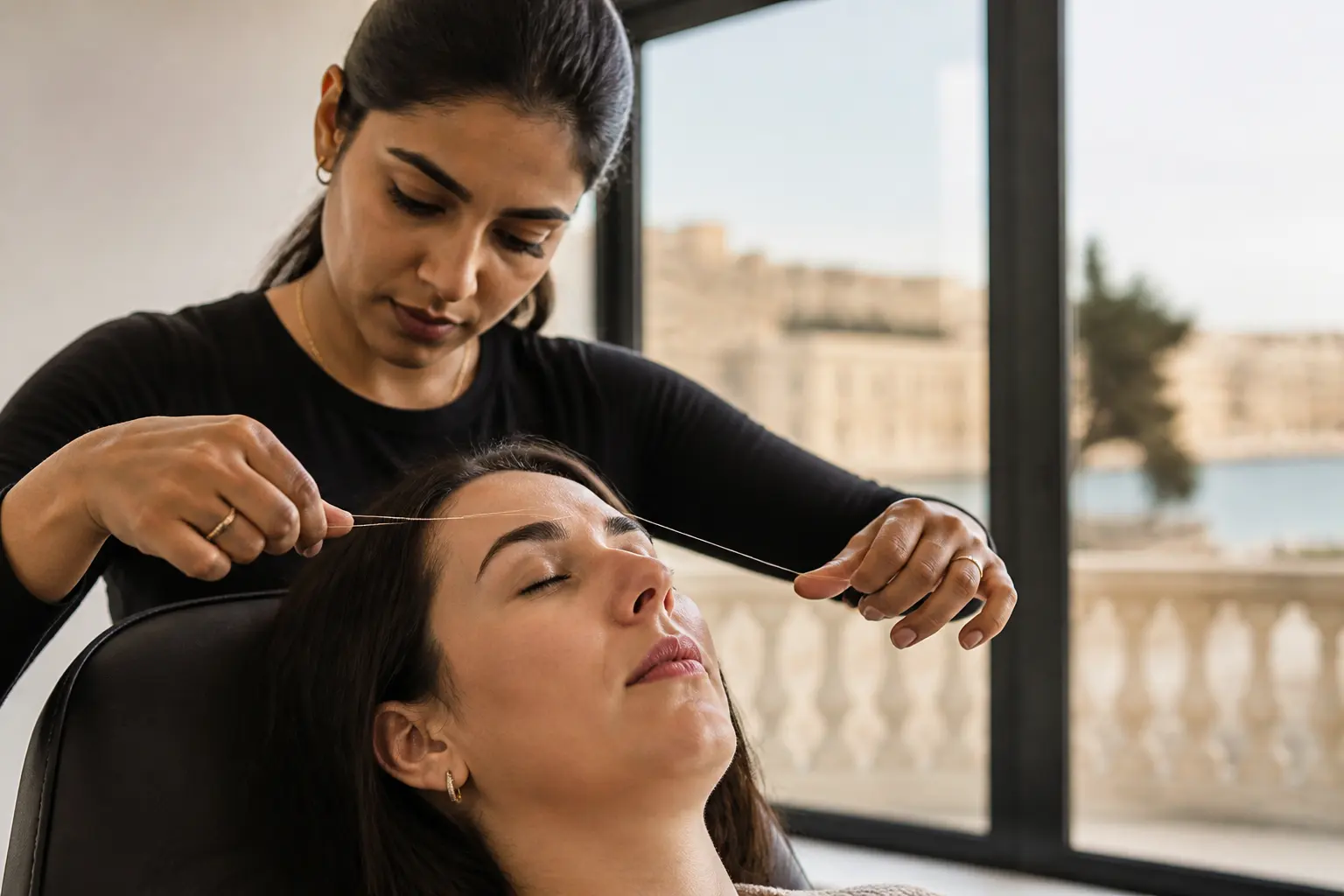
Eyebrow threading is a hair-removal and brow-shaping technique that uses a fine twisted thread to lift unwanted hairs from the root. It is often chosen by people who want a clean, considered brow shape without relying on wax or removing individual hairs one at a time with tweezers.
At its best, threading is not about making every pair of brows look identical or following one fixed trend. It is a personalised design process. Your natural hair pattern, density, facial features, everyday styling habits and preferred level of definition all matter. The aim is usually to refine what you already have, keeping your brows recognisably yours while making their outline look tidier and more balanced.
This guide explains how eyebrow threading works, what happens during an appointment, what the technique can and cannot do, and how to look after your brows afterwards.
What is eyebrow threading?
Eyebrow threading is a traditional technique with roots in India and the Middle East. A trained brow professional loops and twists a thread, moving it across the skin in a controlled way to catch and remove hairs along the brow line.
The thread acts with precision: rather than applying a product over a wider area, the professional can work gradually around the top, bottom and centre of the brows. This makes threading especially useful when the goal is to clean up fine regrowth, define an arch softly or preserve fullness while bringing the shape back into focus.
At Becammo, cotton thread is the standard choice. Polyester thread may be used for clients with a cotton allergy. The thread is single-use and discarded after each client as part of the hygiene protocol.
How does eyebrow threading work?
The technique may look simple from a distance, but good threading depends on hand control, visual judgement and a clear understanding of brow design. The thread is twisted into a small moving section. As the professional opens and closes the loop, hairs are caught in the twist and lifted out from the root.
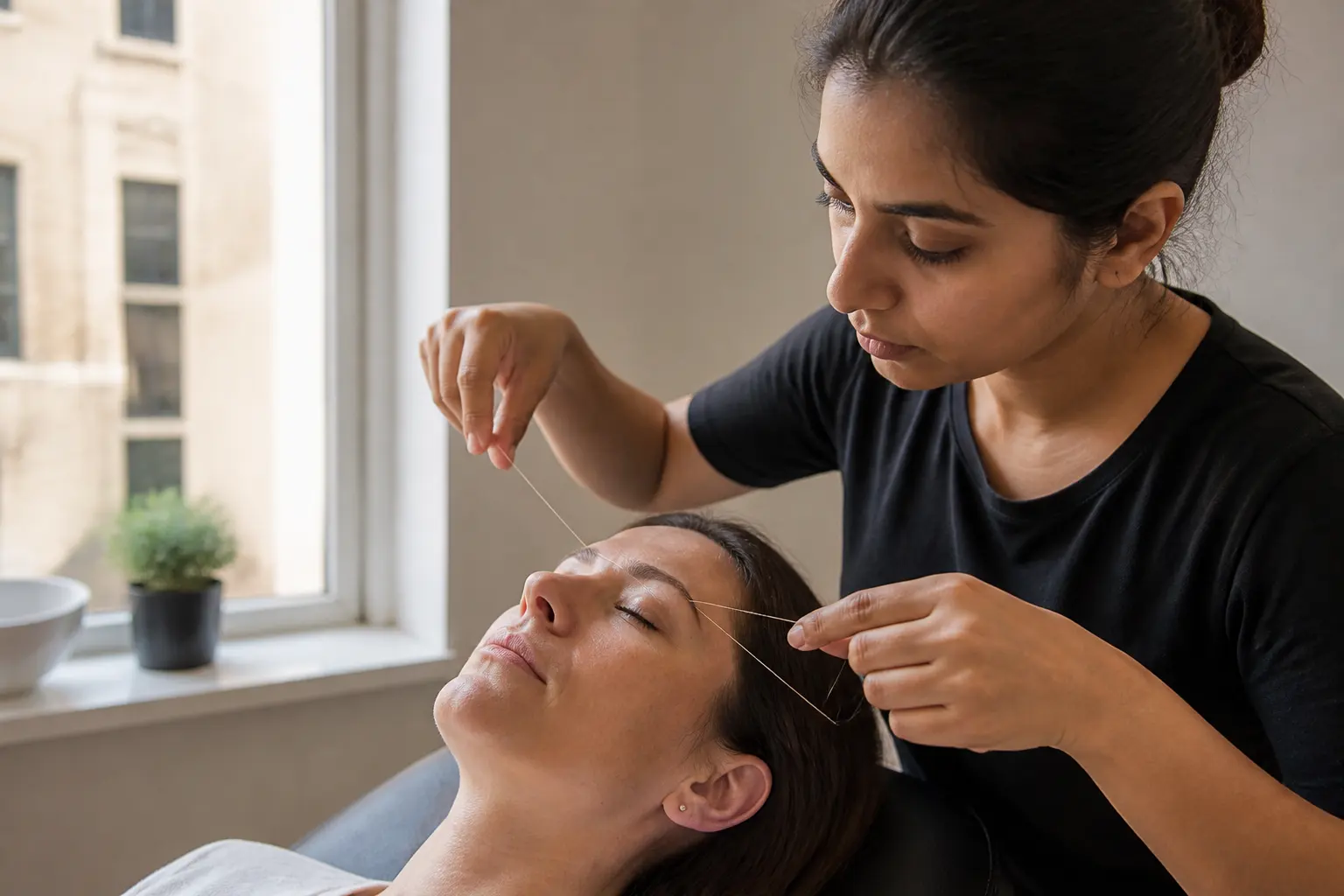
Because the thread can target a narrow line of hair, the appointment can be built around detail. A professional may work in small sections, checking the outline as they go rather than trying to remove everything at once.
Step 1: Looking at the natural brow pattern
Before shaping begins, it is useful to assess where the brow naturally starts, where it rises, how the tail sits and where hairs are sparse, dense, curly or growing in different directions. Brows are sisters rather than perfect twins: one may sit a little higher, grow more densely or have a different natural arch. A thoughtful threading service works with those realities instead of overcorrecting them.
Step 2: Agreeing on the desired finish
A useful appointment starts with a conversation. Do you want to retain thickness? Are you growing out over-plucked areas? Do you normally fill your brows with pencil or gel? Would you prefer a soft, natural edge or a more defined shape?
These details influence how much hair should be removed and where. For example, somebody with full brows may only need stray hairs tidied up, while somebody who likes a more structured makeup look may prefer a cleaner outline beneath the arch and along the tail.
Step 3: Removing unwanted hair with the thread
The professional threads the selected areas carefully, often moving between the top and bottom edges of each brow to maintain proportion. Fine hairs between the brows can also be removed where requested. The approach should remain measured: removing too much too quickly can make it harder to retain the fullness you may want for future appointments.
Step 4: Checking balance and finishing the shape
As the brows take shape, the professional checks their balance in relation to your face and to each other. This does not mean forcing symmetry that your natural features do not have. It means refining the brows so they look intentional from normal conversational distance, not merely perfect under close inspection.
What can eyebrow threading help with?
Threading can be a practical option for many brow-maintenance goals. It is particularly suited to people who value precision and want to make decisions based on their natural brow growth rather than a one-size-fits-all template.
- Cleaning up regrowth: Fine hairs around the brow can make the outline appear less clear between appointments. Threading can remove these selectively.
- Refining a natural shape: If you already like your brows but want them to look neater, a conservative threading approach can preserve their character.
- Maintaining fuller brows: Threading does not have to mean thin brows. The shape can be planned to retain density while improving definition around it.
- Creating a clearer framework for makeup: A tidier brow outline can make everyday pencil, powder or gel easier to place, especially if you prefer a polished finish.
- Supporting a grow-out period: When you are trying to regain fullness, strategic threading can remove hairs outside the intended shape while leaving the areas you are growing alone.
- Removing upper-lip or facial hair: Threading can also be used for areas such as the upper lip and full face, depending on the service selected.
Threading is about refinement, not a fixed brow trend
It is easy to see brow shaping as a search for one “ideal” arch. In reality, the most flattering approach is usually more individual. Brow design should take account of your existing hair distribution, skin, facial movement and the amount of time you want to spend styling your brows each morning.
A very sharp outline may suit someone who enjoys a defined makeup routine. Another person may prefer a softer border that still looks natural without brow products. Someone with sparse areas may want to protect every healthy hair available, while someone with strong, fast-growing brows may be comfortable with more regular maintenance.
This is also why ethnicity and natural hair texture deserve consideration. Brow hairs can differ in coarseness, curl pattern, density and direction of growth. An experienced design conversation makes room for those differences rather than expecting every brow to respond in the same way.
What does eyebrow threading feel like?
Threading involves removing hairs from the root, so it can feel uncomfortable for some people. The sensation is often brief and localised, especially when the service is performed in small, controlled sections. Your experience can vary according to your personal sensitivity, the area being threaded, your skin condition that day and the amount of hair being removed.
If you are concerned about sensitivity, mention it before the service begins. It is also sensible to tell the professional about any relevant skin irritation, recent exfoliation or products that may have made the brow area feel more reactive. A short conversation beforehand helps the appointment be approached with appropriate care.
What to expect at an eyebrow threading appointment
A threading appointment is usually straightforward, but it should not feel rushed. The process begins with your preferences and the condition of your brows, then moves into the practical shaping work.
- Consultation: You explain the finish you want, whether you are growing your brows out and any sensitivities or concerns.
- Assessment and design: The brow professional looks at natural growth, overall balance and the amount of hair that can be safely refined without compromising your goal.
- Threading: Hairs outside the agreed shape are removed with the thread in controlled sections.
- Review: The shape is checked, with attention to how both brows sit naturally on your face.
- Aftercare guidance: You receive simple advice on keeping the freshly threaded area comfortable and avoiding unnecessary irritation.
The service itself may be quick, but the quality lies in the assessment, control and restraint behind it. A brow shape that works for you should still feel like your own when you leave the studio.
How to prepare for eyebrow threading
You do not need a complicated routine before a threading appointment. A few practical steps can make it easier for the professional to see your natural brow pattern and for you to feel comfortable during the service.
- Arrive with the brow area as clean as possible, particularly if you usually wear heavy brow makeup.
- Try not to tweeze, trim or reshape your brows immediately before your visit. Letting the growth show gives the professional more information to work with.
- Tell the professional if you are intentionally growing out certain areas or recovering from previous over-plucking.
- Share any skin sensitivity, active irritation or recent use of products that may affect the brow area.
- Bring reference images only as a guide, not a strict template. Your natural brow pattern may not support an exact copy, but the images can help communicate the level of softness or definition you like.
Eyebrow threading aftercare: keep the area simple
Freshly threaded skin can look a little pink or feel temporarily sensitive. This is a normal reason to keep your immediate aftercare gentle. Avoid rubbing or touching the brow area unnecessarily, and follow any personalised guidance given during your appointment.
It can also help to keep makeup and strong skincare products away from the freshly threaded area for the rest of the day where possible. If you have plans that involve heat, friction or activities that may make the area feel uncomfortable, ask about timing before you book.
Everyone’s skin responds differently. If redness, sensitivity or another concern feels unusual for you, seek appropriate professional advice rather than trying to solve it with multiple new products at once.
How often should you book eyebrow threading?
The right maintenance schedule depends on how quickly your brow hairs grow, how precise you like the shape to look and whether you are trying to retain or regrow fullness. Many people notice regrowth within a few weeks, but there is no universal timetable.
Regular appointments can make it easier to maintain a familiar shape, while longer gaps may suit people who prefer a fuller, softer look. A brow professional can help you decide on a rhythm that fits your growth pattern and your routine, without removing more hair than your goals require.
Threading compared with waxing and tweezing
Threading, waxing and tweezing all remove hair, but they do so differently. The right choice is personal and may depend on your skin, preferences and the level of precision you want.
| Method | How it removes hair | What people often value |
|---|---|---|
| Threading | A twisted thread catches and lifts hairs from the root. | Detailed shaping and the ability to work through small sections. |
| Waxing | Wax adheres to hairs and is removed from the skin. | A quick approach for broader areas, depending on personal preference. |
| Tweezing | Hairs are removed individually with tweezers. | Targeted removal of selected hairs and at-home maintenance. |
Threading is often chosen for brows because the professional can make careful adjustments along the outline. However, no method is automatically right for every person. Your skin sensitivity, preferred finish and brow history should all be part of the decision.
When a brow consultation matters most
A brief design conversation is especially valuable if you have a scar through the brow, noticeable unevenness, very sparse areas, a history of over-plucking or a strong preference for a particular brow style. It is also helpful if you wear glasses every day, regularly use brow makeup or are deciding whether to combine shaping with a colour service such as tint or henna.
Threading can create a cleaner framework, but it cannot create hairs where there are none or make naturally different brows become identical. Being clear about those limits supports a more satisfying, realistic result.
Frequently asked questions
Is eyebrow threading suitable for thick brows?
Yes. Threading can be adapted for thick brows when the goal is to preserve fullness while tidying stray growth and refining the outline. Explain that you want to keep your density before the service begins.
Can threading make brows look too thin?
It can if too much hair is removed, which is why a clear consultation and careful technique matter. Tell your brow professional whether you prefer a fuller, softer or more defined result.
Should I thread my brows before tint or henna?
Threading is commonly used to create the shape first, giving a clearer framework for a subsequent brow colour service. The most suitable order can still depend on your chosen service and skin sensitivity, so ask when booking.
Can I wear brow makeup after threading?
It is usually best to keep the freshly threaded area simple for the immediate period after your appointment. Ask your professional for guidance based on how your skin looks and feels that day.
Does threading work for sparse brows?
It can help sparse brows look tidier by removing only hairs outside the intended shape and protecting the areas you are trying to grow. Threading cannot add density, but thoughtful shape-first design can make the most of the hair you have.
How do I choose the right threading appointment in Malta?
Choose a studio that takes time to understand your brow goals, maintains clear hygiene practices and can work with your natural hair pattern. At Becammo, you can select the most convenient location in Sliema or Swieqi and choose an eyebrow threading service through the online booking system.
Eyebrow threading is a precise way to bring order and definition to your brows while respecting their natural character. Whether you want a subtle clean-up, a more polished outline or support while growing your brows out, the most useful next step is a personalised shaping conversation. Book the eyebrow service that suits your routine and let your natural brow pattern guide the result.