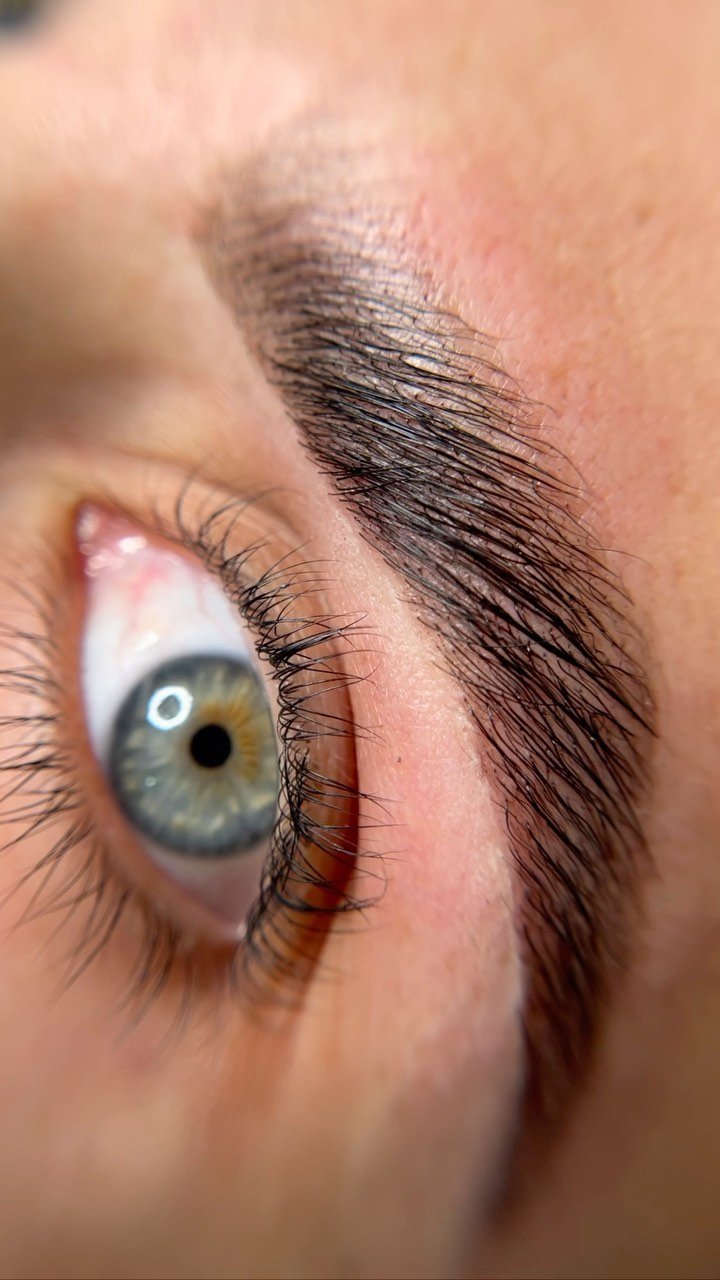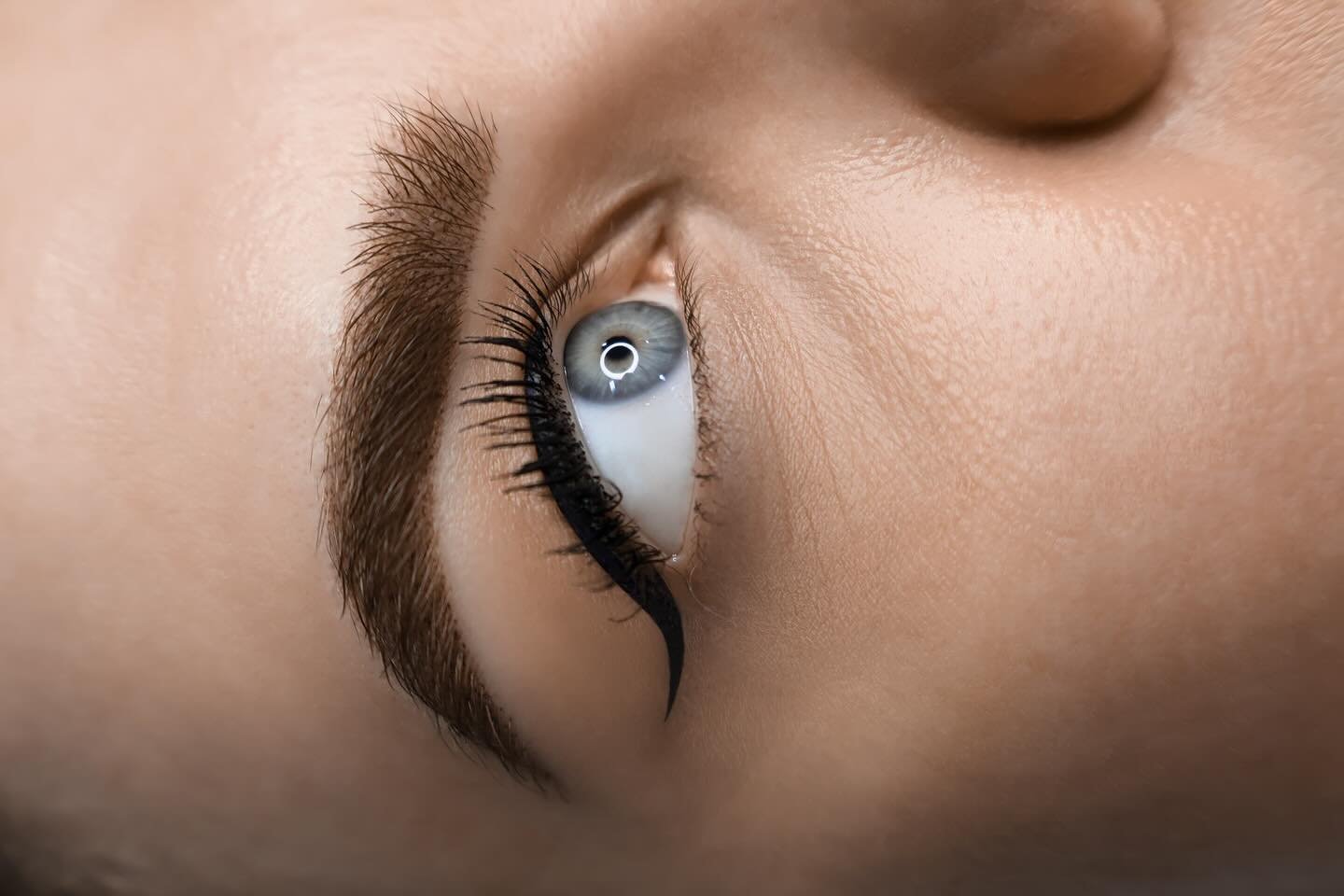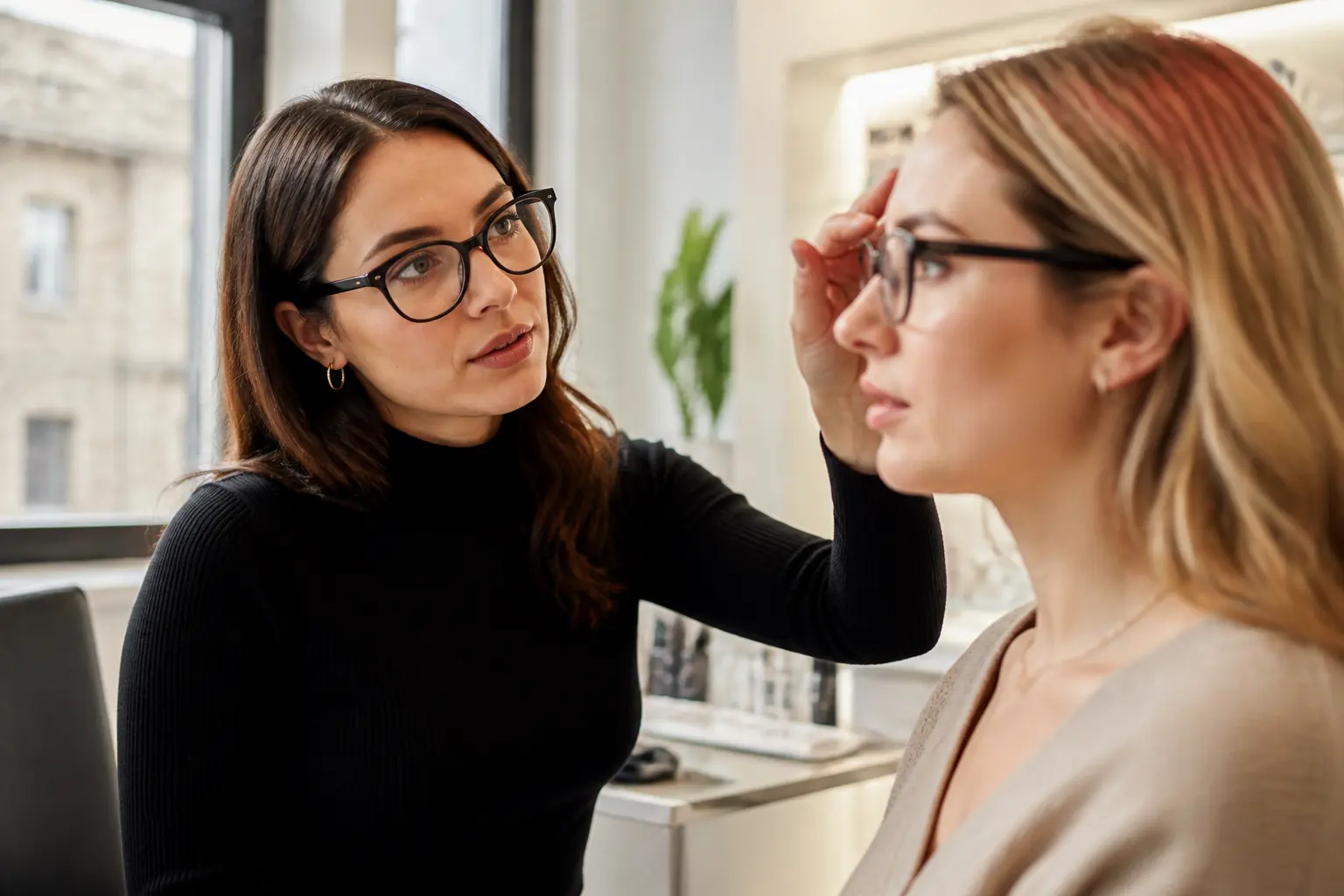
When glasses become part of your everyday look, a thoughtful update to the outline, arch placement or neatness is usually enough; a dramatic new brow is rarely needed. The best shape depends on where your frames sit, their visual weight and your natural growth, so wear your most-used pair to the appointment. Keep fullness, refine conservatively and check your glasses fit evenly before correcting asymmetry.
When glasses become part of your everyday look, they naturally change the way you see your brows. A shape that felt right before may now seem hidden behind the frame, overly close to it or less balanced in photos and video calls. That does not mean you need a dramatic new brow. Often, a thoughtful update to the outline, arch placement or overall neatness is enough to make your brows and glasses feel more harmonious.
The best brow shape for glasses is not a single template. It depends on the position of your frames, the strength of their lines, your natural brow growth and the features you want to keep visible. A personalised brow design can take all of these details into account, helping you keep your character rather than trying to create a brow that belongs to somebody else.
Why do glasses change how your brow shape looks?
Glasses sit directly beneath, across or close to the brow area, depending on their style and fit. Because frames create a strong visual line on the face, they can make the space between your brows and eyes look different from how it did without them.
This is especially noticeable if you have recently started wearing glasses more often for work, reading, driving or everyday comfort. Your frames may now be the feature people see first, so the brow shape that surrounds them deserves the same consideration as your haircut, make-up routine or favourite jewellery.
A brow update does not have to mean making the brows thinner, darker or more sharply arched. In many cases, the aim is simply to create a clean outline that works with the frame rather than competing with it. Threading can be useful for this because it allows the brow area to be refined hair by hair, while leaving the natural density where it supports your overall shape.
Should your frames dictate your brow shape?
Your glasses are an important reference point, but they should not completely determine your brow design. Frames can change over time, while your natural brow pattern and facial proportions remain the foundation of a shape that feels like you.
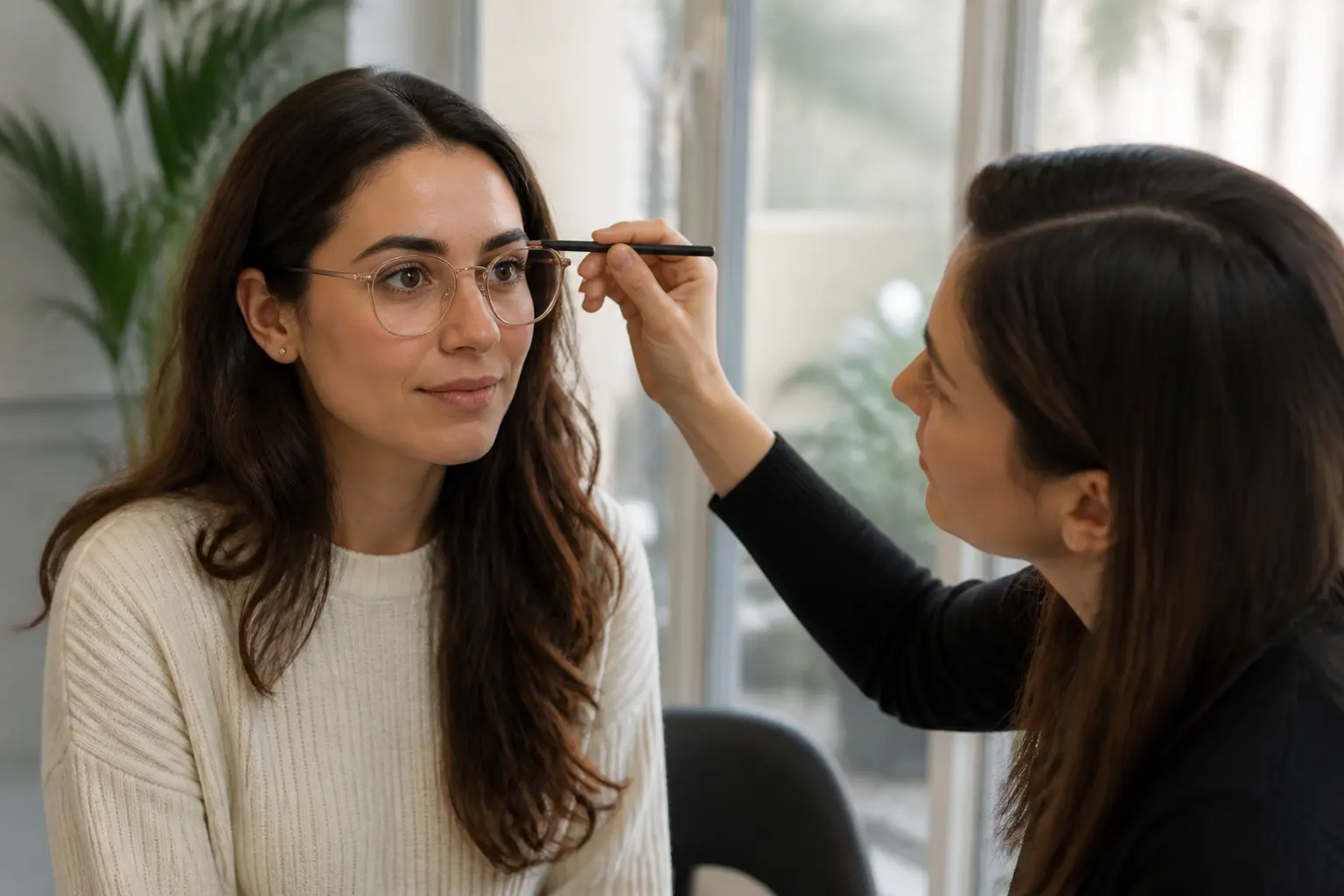
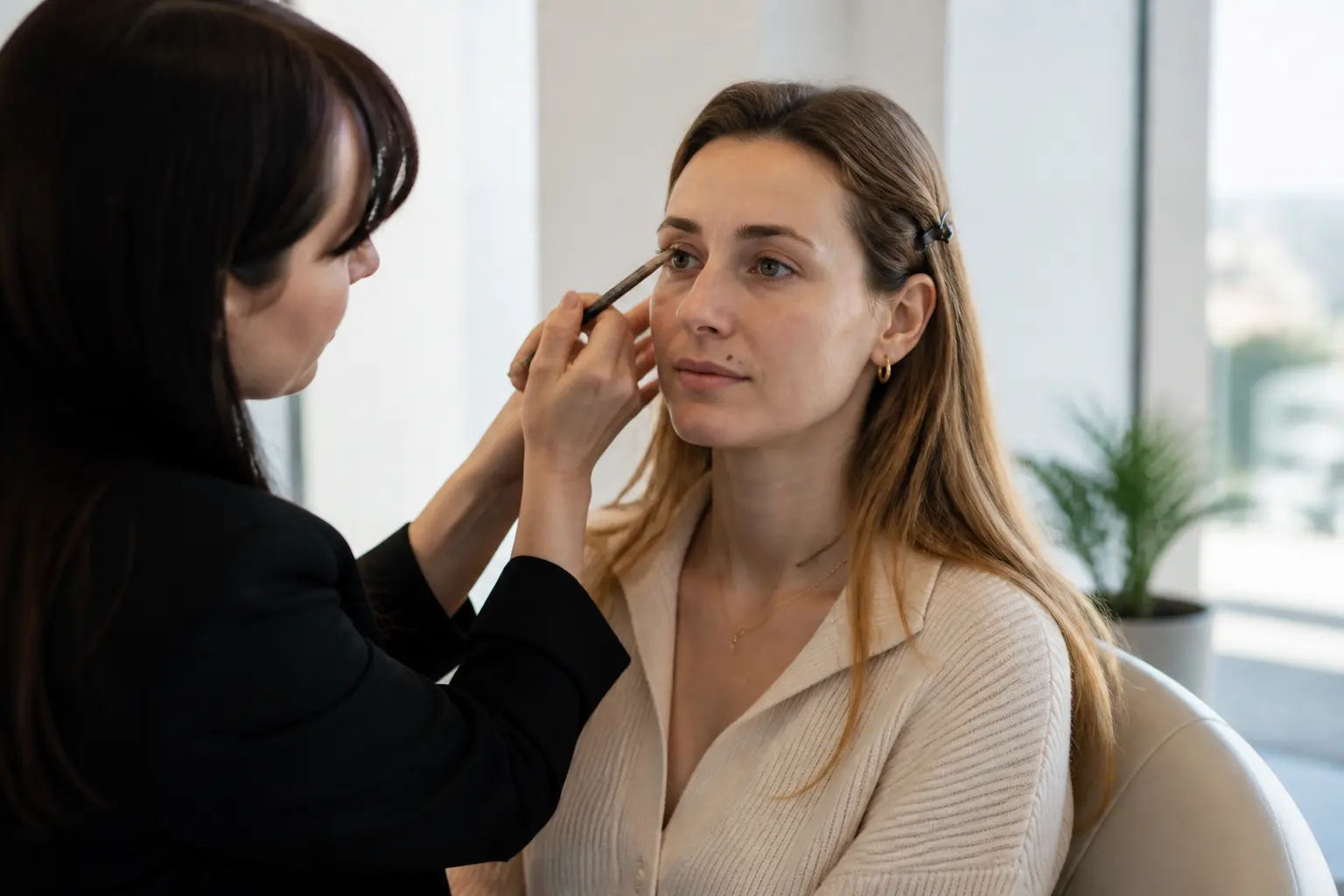
At a brow consultation, it can help to wear the glasses you use most often. This lets the professional see where the top edge of the frame sits, whether it follows or crosses the brow line, and how much of the brow remains visible when you are looking ahead naturally.
Instead of asking for a particular celebrity shape or trying to match the brow perfectly to the frame curve, focus on a few practical questions:
- Do my frames cover the lower edge of my brows?
- Does my current arch appear too high, too flat or disconnected when I wear my glasses?
- Do the brows look uneven because one side of the frame sits differently?
- Would a tidier outline make my eyes look more open behind the lenses?
- Which parts of my natural fullness should be preserved?
These questions turn the appointment into a conversation about balance, rather than a request for a completely different face.
At BeCammo · Sliema · Swieqi
Eyebrow threading in Malta
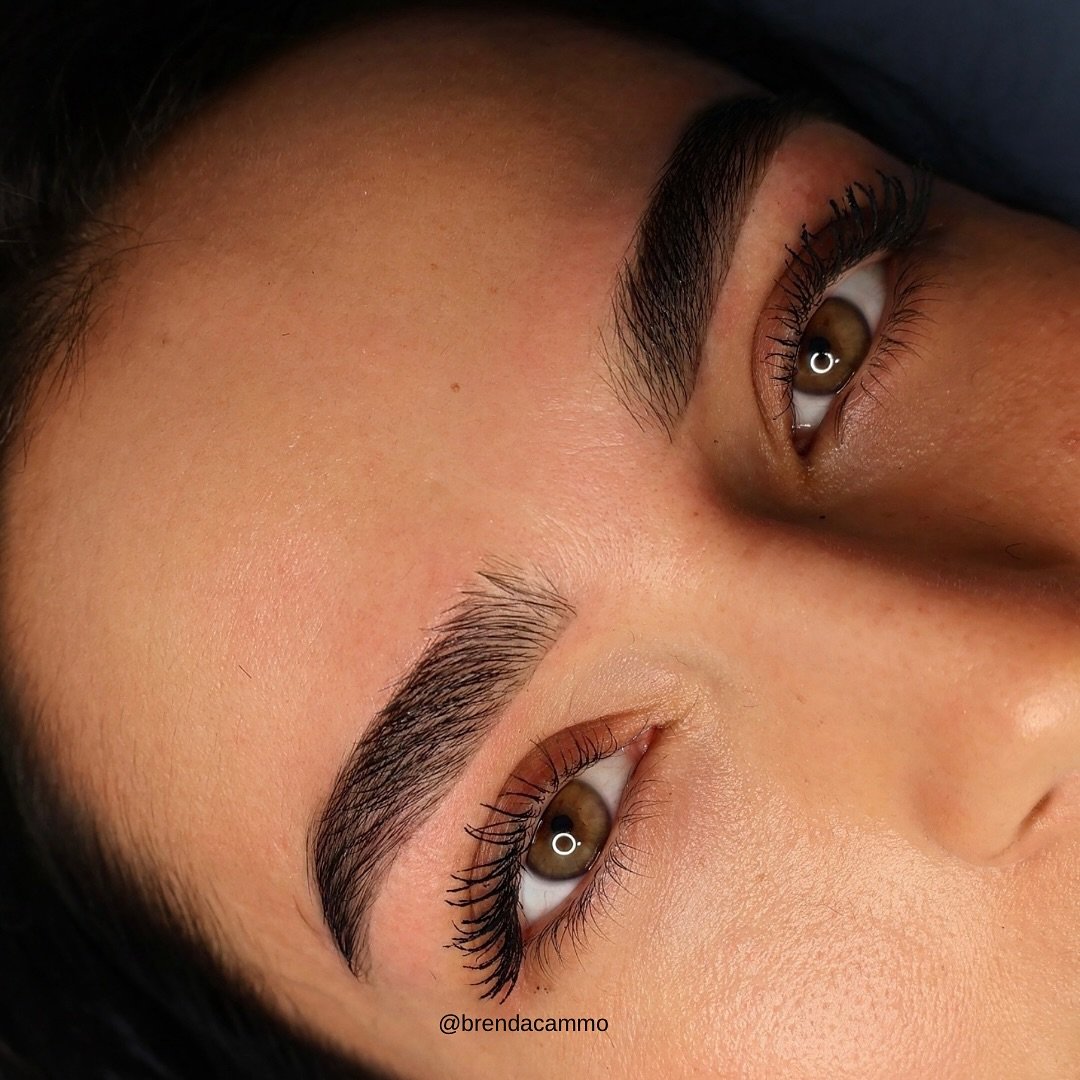
Same client, before and after threading.
Clean, natural brows shaped to your face, at our salons in Sliema and Swieqi. Threading is what BeCammo was built on.
- from €16price
- Sliema · Swieqiwhere
- ★ 5.0460+ Google reviews
How do different frame styles influence the conversation?
There is no rule that says a specific frame requires a specific brow. Still, the visual weight and position of a frame can guide the details worth considering during a brow design appointment.
Bold or thick frames
Thicker frames can create a strong outline around the eyes. If your brows are naturally full, preserving that fullness may help the face feel balanced. The focus may be on removing stray hairs and improving definition beneath and between the brows, rather than taking too much from the top line.
If brows are made extremely slim next to a bold frame, the contrast can sometimes make them feel less present. A natural, structured shape often gives the brow enough visibility without making the overall look feel heavy.
Fine metal or rimless glasses
Delicate frames leave more of the brow area visible. This can make small differences in symmetry, tail direction or stray growth more noticeable. A precise tidy-up may be all that is needed, especially for people who prefer a low-maintenance look.
With fine frames, it can be tempting to create a much stronger brow for contrast. That can work for some personal styles, but it is not essential. Your natural hair colour, density and daily make-up habits should remain part of the decision.
Rounded frames
Round or softly curved glasses can contrast with a brow that has a very sharp peak. That contrast is not automatically a problem; it may even suit your style. However, if the result feels overly angular, a consultation can explore whether a softer transition through the arch would look more cohesive.
This does not mean forcing a rounded brow. It means refining the existing line so it feels intentional and still follows your natural growth pattern.
Angular or rectangular frames
Frames with straighter lines can make the brow area look more structured. Some people enjoy pairing them with a softly defined arch, while others prefer a cleaner, straighter brow line to keep the look understated. The right choice depends on your face, the height of the frame and the amount of brow hair available to work with.
Oversized frames
Large frames can sit close to the brow or even overlap its lower edge. In this case, the space above the frame may become more important than the whole brow outline. Keeping the upper brow line neat, where appropriate for your natural growth, can help the shape remain visible without overworking it.
Which areas of your brow shape should you review?
When you wear glasses every day, a full redesign is rarely necessary. Instead, review the elements that have the greatest effect on the relationship between brows and frames.
The starting point
The inner brow area frames the bridge of the nose, which is also where glasses rest. Excess growth between the brows can sometimes draw attention to this central area, particularly with narrow or transparent frames. A careful tidy-up can create clearer separation while keeping the start of each brow soft rather than block-like.
The lower brow line
The lower edge is often the part closest to your frames. Refining it can help create a little more visual breathing room around the eyes, but it should be approached conservatively. Removing too much can make brows appear thinner than intended and may alter their natural structure.
Threading allows this area to be assessed closely, with attention to the frame placement and your comfort. It is particularly helpful when the goal is precision rather than a dramatic change.
The arch
An arch does not need to be high to be effective. For many people, a subtle lift or a cleaner transition through the highest point of the brow is enough to restore definition behind glasses. The best position is individual: it should work with your bone structure, hair pattern and the visual line created by your frames.
The tail
Brow tails can appear shorter or less visible when they sit behind the outer section of wider frames. Before removing hair in this area, it is worth considering whether the tail needs more definition, not less. A brow professional can help you avoid shortening the tail unnecessarily while still clearing stray growth around it.
Should you bring your glasses to the brow appointment?
If you switch between several pairs, bring the pair you wear most frequently. This might be your work glasses, prescription sunglasses or the frames you use for driving. The aim is not to design different brows for every pair, but to make sure the main pair is part of the visual assessment.
It can also be useful to explain how you usually wear your brows. For example, do you fill them in most mornings, brush them upwards with a gel, wear no brow make-up at all or occasionally book tint or henna? These habits affect how much structure you may want from the shape itself.
If you wear glasses mostly on screen-heavy days, you may prefer an easy, natural brow that still looks tidy without make-up. If glasses are a key part of a more polished personal style, you may wish to discuss a shape plus a colour service. The choice should be based on your routine and preferences, not on pressure to make the brows more dramatic.
What should you say during a personalised brow consultation?
Clear communication helps you get a result that feels right when your glasses are on and when they are off. You do not need technical language. A few simple comments can make your preferences much easier to understand.
- “I wear these glasses every day and want my brows to look balanced with them.”
- “I want to keep my brows full, but remove the hairs that make the shape look untidy.”
- “My frames sit quite high, so I do not want the brows to look too close to them.”
- “I prefer a soft, natural arch rather than a very defined shape.”
- “I usually do not wear brow make-up, so I need the shape to work on its own.”
- “I like my current brow direction but want more symmetry where possible.”
A professional brow design should take your request seriously while being honest about what your natural brow growth can support. Brows are sisters rather than identical twins: some variation in density, height and direction is normal. The goal is thoughtful balance, not an artificial match that requires removing too much hair.
Should you correct brow asymmetry caused by glasses?
Glasses can make natural asymmetry more obvious, particularly if the frames are slightly uneven on the nose or one lens sits closer to the brow than the other. It is easy to assume the brows are the only reason for the difference, but the fit of the glasses may also play a part.
Before making a major change to one brow, check whether the frames are sitting level and whether the nose pads, temples or bridge need an adjustment. If the glasses are balanced and you still notice a difference, a brow appointment can explore small refinements. Conservative shaping is usually wiser than trying to force both brows into exactly the same line.
Should you add tint, henna or brow lamination?
Shape is the starting point, but colour and styling can also influence how brows appear with glasses. Whether they are suitable depends on your natural brows, skin, maintenance preferences and the look you want.
Brow tint or henna
A tint or henna service may be worth discussing if your brow hairs are very light, sparse in appearance or less visible behind darker frames. These services can add definition, but they create different effects and their appearance can vary between brow hair and skin. A consultation is the right place to discuss the tone and the level of definition you are comfortable with.
Brow lamination
Brow lamination can change the direction and styling of the brow hairs, creating a brushed, more lifted effect. It may suit people whose brow hairs grow downward, sideways or in several directions. However, it is not necessary simply because you wear glasses. If your current concern is mainly stray hair or an outline that feels unclear, threading and design may be the more relevant place to begin.
For any colour or styling service, share details of recent skincare changes, sensitivity and your usual routine so the appointment can be planned responsibly.
How do you look after the shape between appointments?
Once your brows feel more balanced with your glasses, it is usually easier to maintain the result with small, consistent habits than by attempting major corrections at home.
- Use a clean spoolie to brush hairs into their natural direction before deciding whether anything looks out of place.
- Avoid repeatedly plucking hairs from the main body of the brow, especially when you are trying to grow out a previous shape.
- Keep your brow products light if your frames are already bold. A small amount of pencil, powder or gel may be enough.
- Check your brow look in natural daylight as well as indoor lighting, since frames, lenses and brow colour can appear different in each setting.
- Book maintenance according to your own hair growth and preferred level of definition, rather than following a rigid timetable.
If you are unsure whether a hair should be removed, leave it until your next appointment. Protecting the overall shape is usually more valuable than achieving a perfectly hair-free outline for a few days.
A brow shape that works with your real life
Glasses are not an obstacle to a good brow shape; they are simply part of the picture. The most flattering result is usually one that respects your natural brow density, sits comfortably alongside your everyday frames and feels manageable in your normal routine.
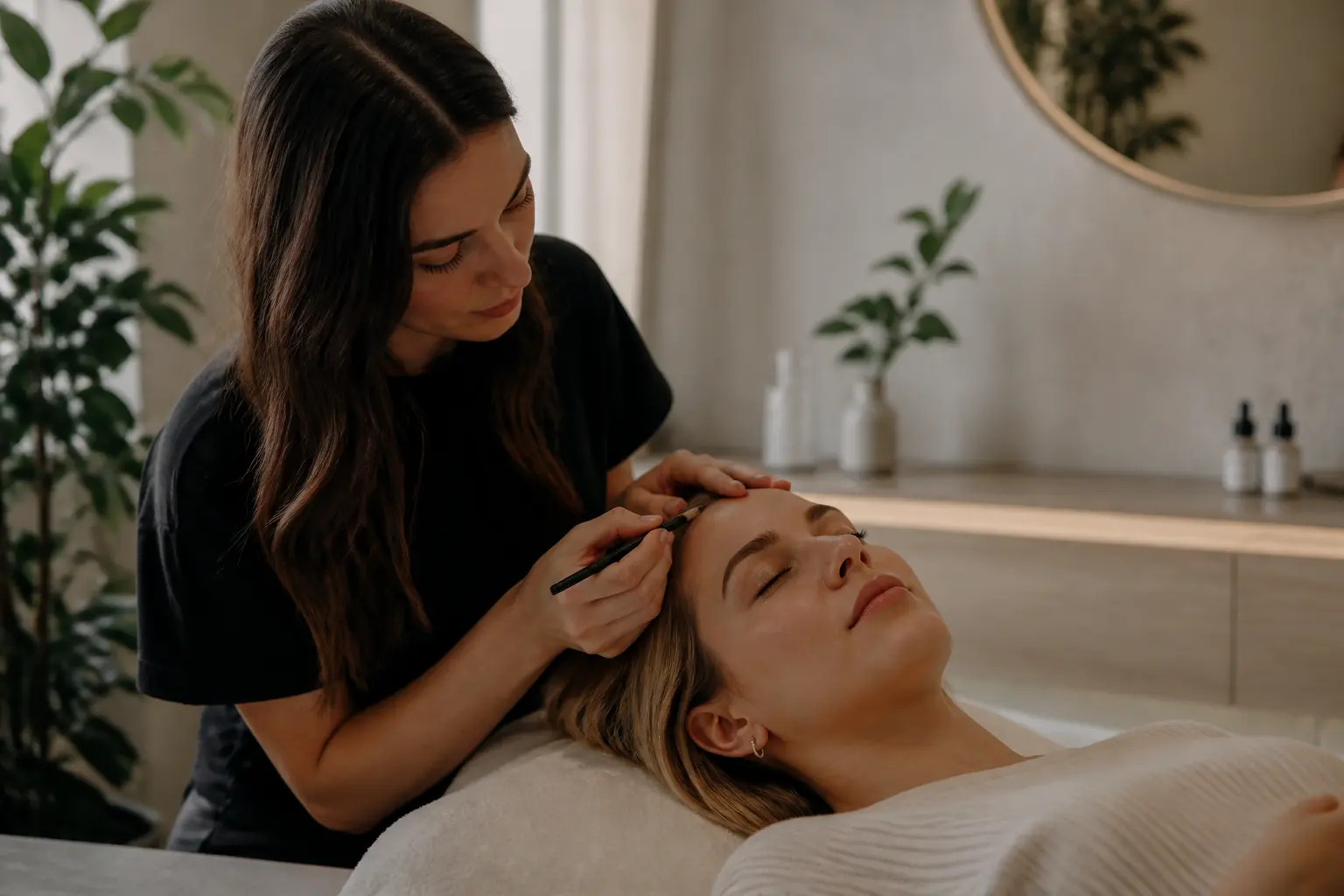
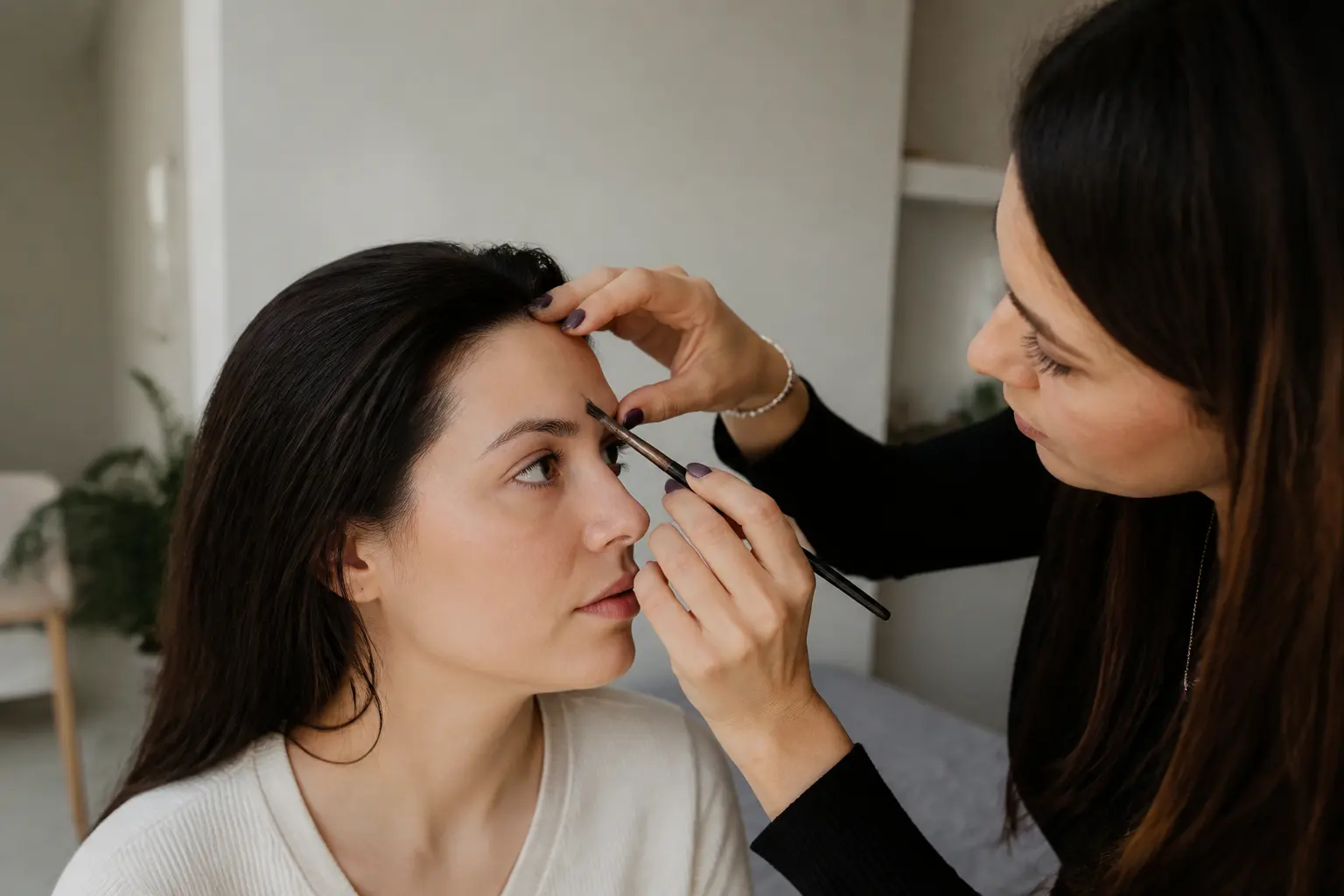
A personalised threading and brow design appointment can help you review the details without losing the fullness and expression that make your brows your own. Bring the glasses you rely on most, explain what feels different about your current shape, and allow the design to be guided by your features rather than a fixed trend.
When you are ready to refresh the shape, choose the BeCammo location that is most convenient for you in Sliema or Swieqi and book the eyebrow service that suits your routine.
Frequently asked questions
Should my eyebrows follow the curve of my glasses?
Not exactly. Your brows should follow your natural growth and facial structure first. The frame curve can be considered during the design, but trying to copy it precisely can create an unnatural result.
Can glasses make my brows look uneven?
They can make natural differences more noticeable, especially if one side of the frame sits higher. Check that your glasses fit evenly before assuming your brows need a major correction.
Should I make my brows thinner if my frames are thick?
Usually, no. Thick frames do not automatically require thinner brows. Keeping natural fullness while refining the outline often creates a more balanced result.
What should I bring to a brow threading appointment if I wear glasses?
Bring the pair you wear most often, particularly if you use them every day for work, reading or driving. This helps the brow professional assess the shape in the context of your usual look.
Can brow tint help my brows show up behind glasses?
It may add definition when brow hairs are light or less visible, but the best option depends on your natural colouring, skin and preferred finish. Discuss the tone and expected look before choosing a colour service.
How often should I update my brow shape when I wear glasses?
There is no single schedule. It depends on how quickly your hair grows, how defined you like the shape and whether your frames or personal style have changed. Regular maintenance can be planned around your individual routine.