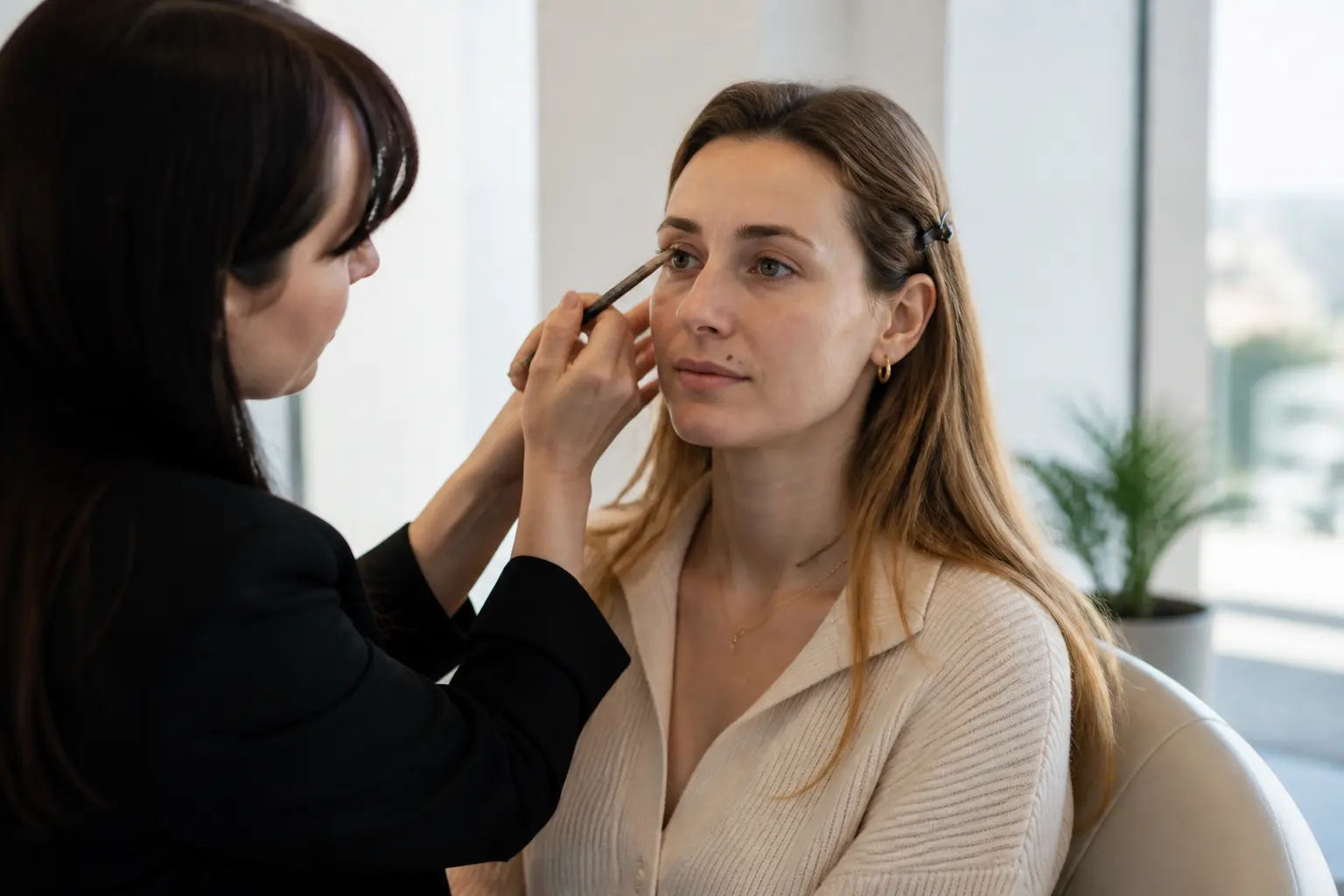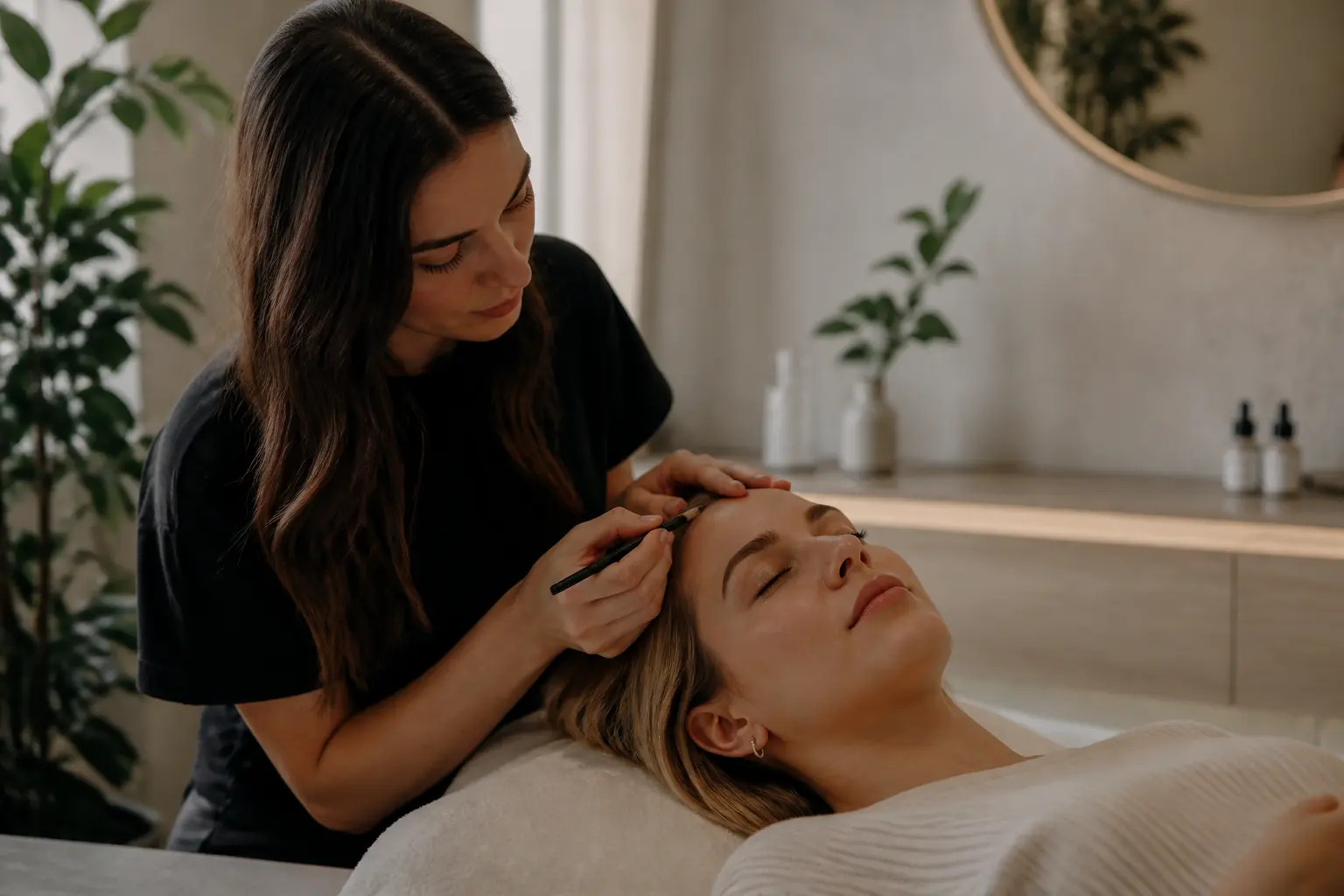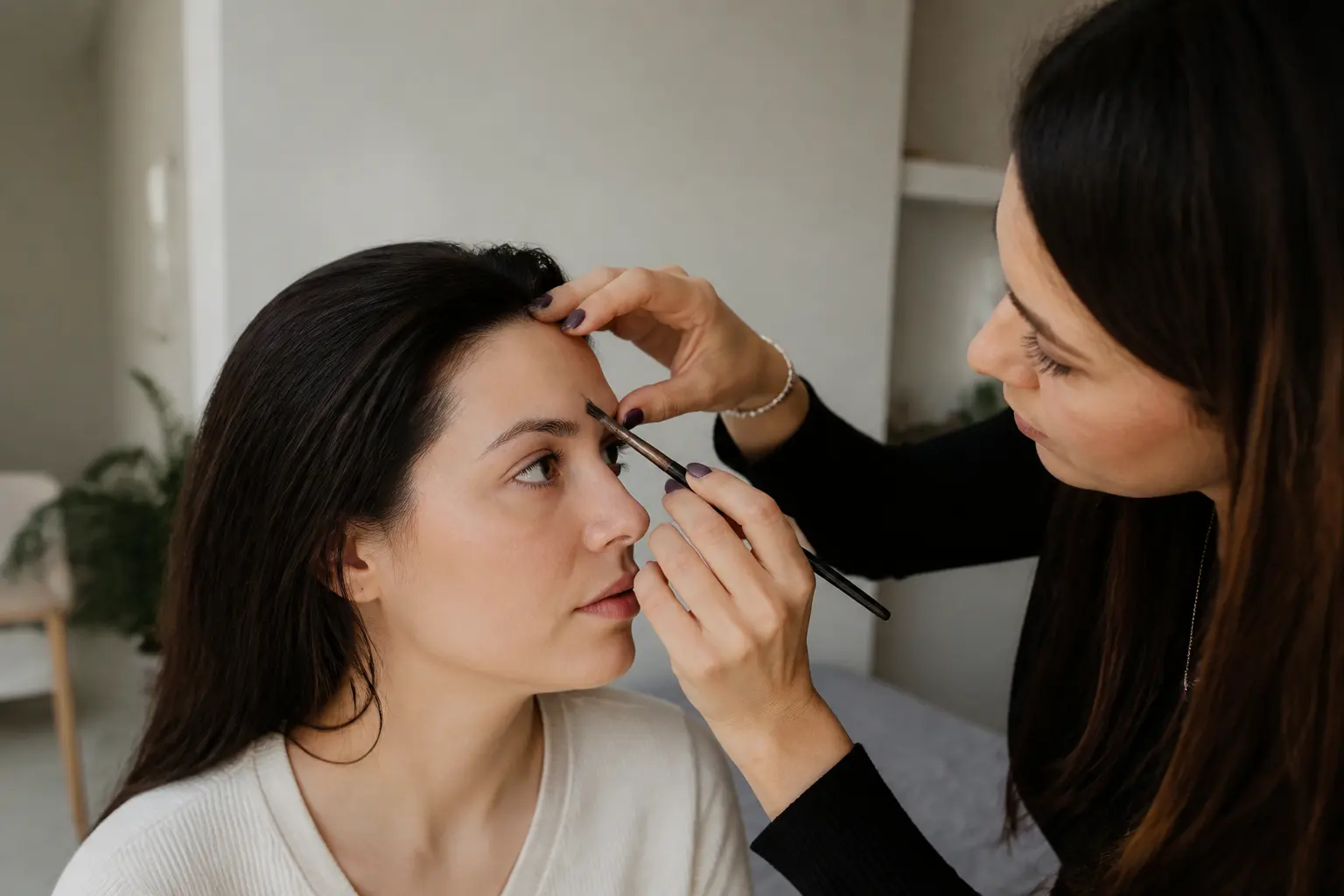
After a long break, treat the first threading appointment as a reset rather than an attempt to recreate an old shape: brows often grow back unevenly, and the extra hair shows where natural growth is happening. Stop emergency tweezing and trimming so there is enough growth to assess, explain your brow history and what you want to keep, and think in stages rather than one dramatic appointment.
Returning to brow threading after a long break can feel exciting, especially when your brows have grown in differently from how you remember them. Perhaps you stopped booking regular appointments, relied on occasional tweezing, changed your make-up routine, or simply decided to let your natural brow hair grow. Whatever the reason, the first appointment back is a useful moment to reassess your shape rather than trying to recreate an old result exactly.
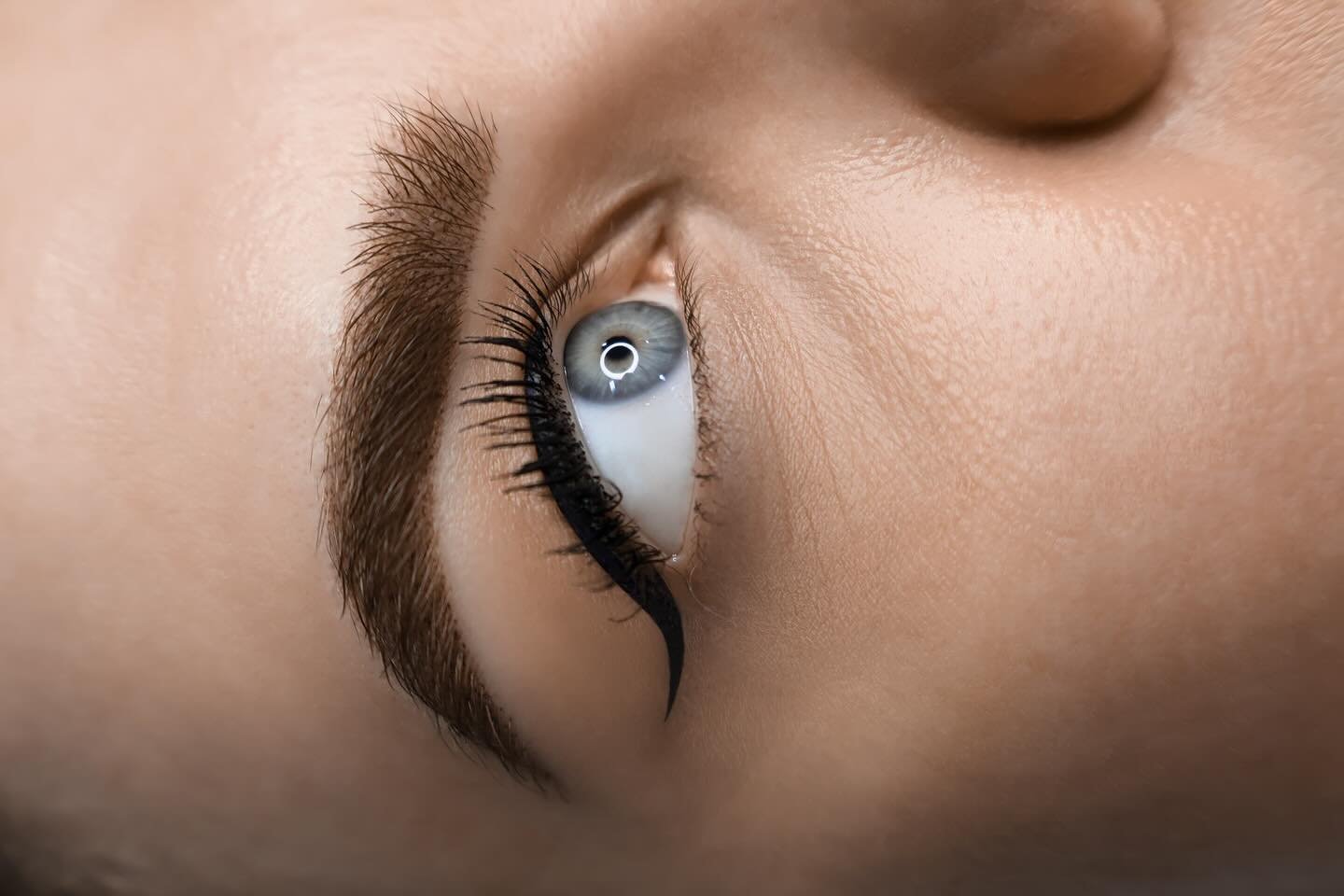
A thoughtful brow threading appointment can refine what is already there while respecting fullness, natural growth patterns and the features you want your brows to frame. The aim is not to force every hair into a uniform template. It is to create a shape that feels tidy, balanced and recognisably yours.
Why do brows look different after a long break?
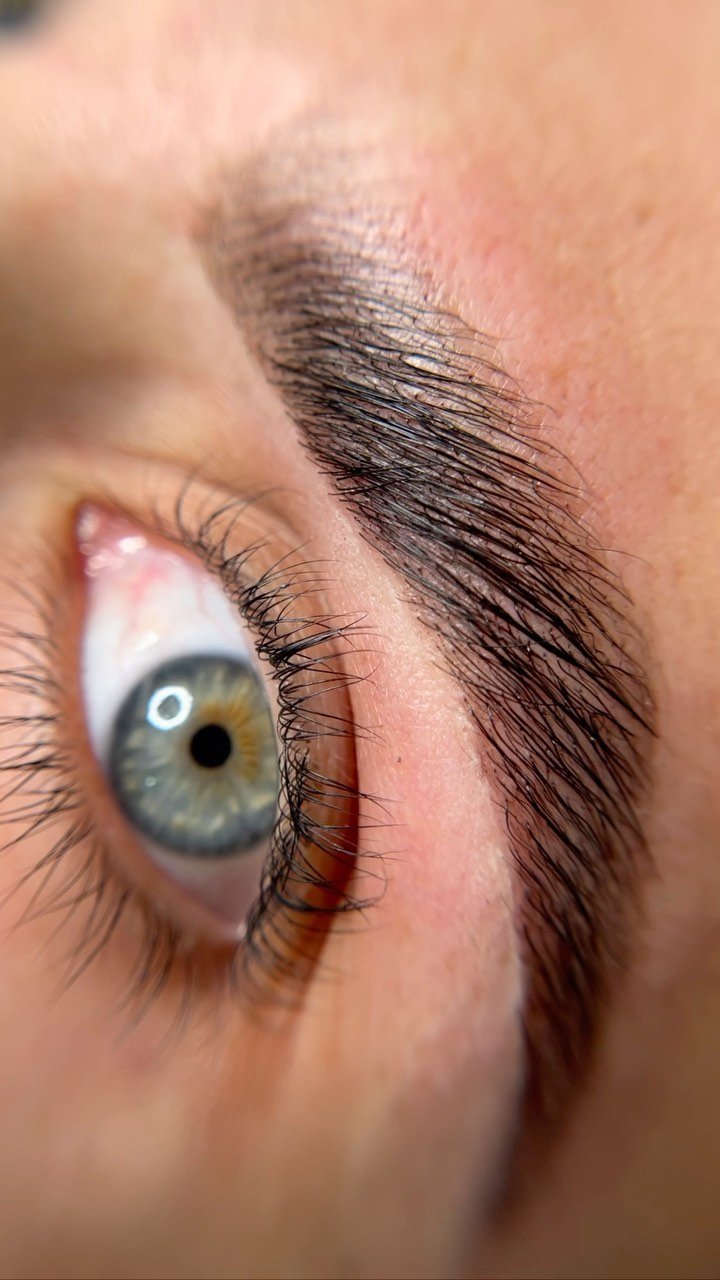
Brows do not always grow back in a perfectly even way. Some areas may look fuller, while other sections may appear lighter or more scattered. Hairs can also grow in different directions, particularly around the front of the brow, the arch and the tail. If you have tweezed certain areas repeatedly in the past, you may notice that those sections behave differently from the rest of the brow.
That does not mean your brows need an extreme correction. It simply means the appointment should begin with observation. A brow professional can look at the natural density, hair direction, skin condition and existing outline before deciding what to refine.
After a break, it is also common to see more hair outside the shape you prefer. This can make the brows feel untidy, but it can be valuable information. Those hairs show where your natural growth is currently happening. Removing too much too quickly can make it harder to keep useful fullness for future shaping.
How much growth do you need before booking?
If possible, avoid last-minute tweezing before your return appointment. Leaving the brow area alone for a short period gives the threading specialist a clearer view of your growth pattern and allows a more informed shape discussion.
You do not need to wait until every hair is fully grown or let your brows become uncomfortable. The practical goal is simply to arrive with enough visible growth to assess the outline. If you are unsure whether there is enough hair to thread, it is still worth booking a consultation-led appointment. The professional can advise whether a gentle tidy-up is appropriate or whether preserving certain areas would better support your shape goal.
Try not to trim brow hairs immediately before the appointment either. Trimming can alter how the brow sits and may make it harder to judge length, direction and natural texture. If a hair is especially long or unruly, point it out during your appointment rather than trying to fix it at home first.
At BeCammo · Sliema · Swieqi
Eyebrow threading in Malta
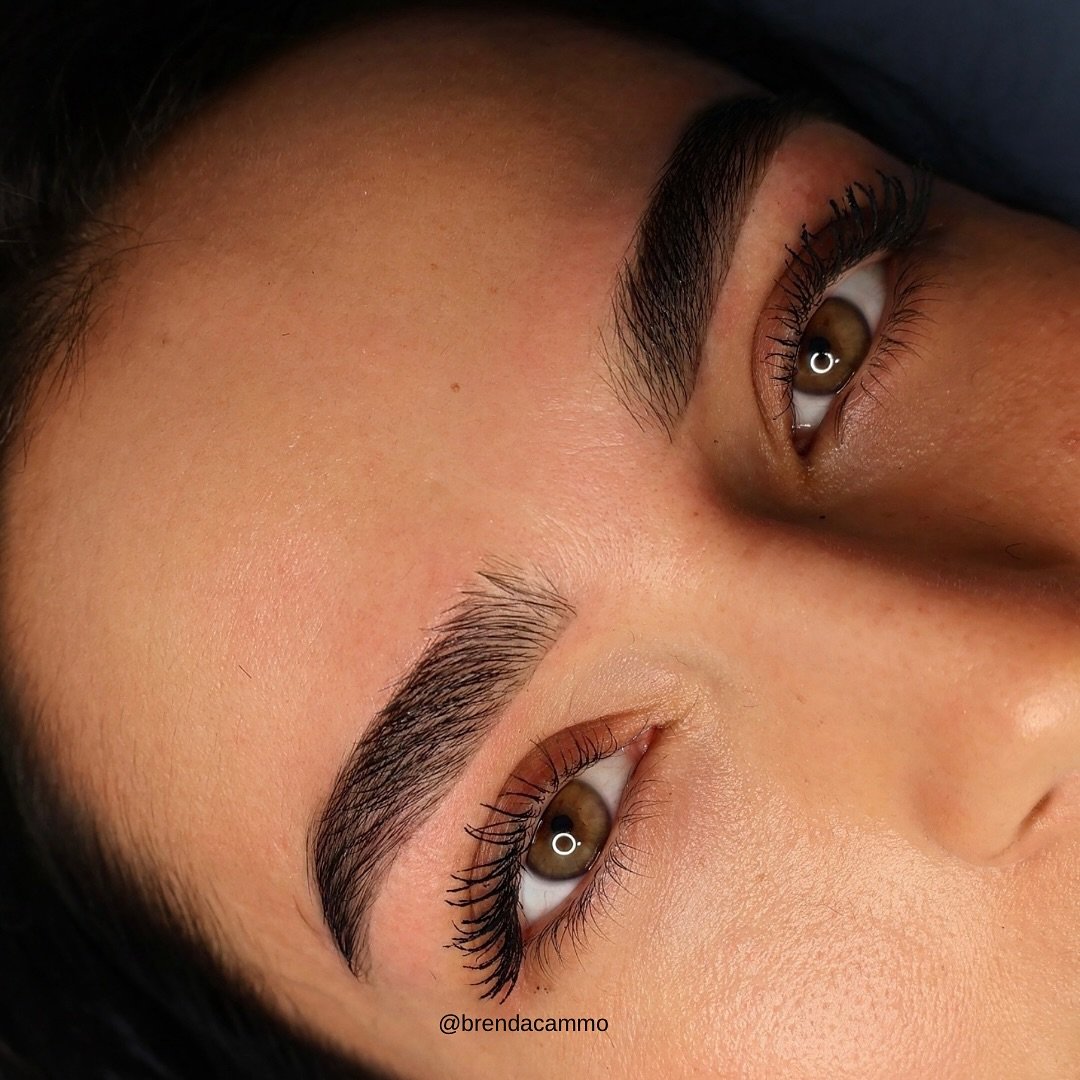
Same client, before and after threading.
Clean, natural brows shaped to your face, at our salons in Sliema and Swieqi. Threading is what BeCammo was built on.
- from €16price
- Sliema · Swieqiwhere
- ★ 5.0460+ Google reviews
What do you want from the first shape appointment?
Before you book, consider the difference between wanting your brows to look cleaner and wanting them to look completely different. A long break is often best approached as a reset: refine the obvious excess hair, identify the strongest natural shape and agree on what to preserve for the next few appointments.
Useful goals to share include:
- keeping the brows full while making the outline cleaner;
- softening an arch that feels too sharp;
- creating a little more definition without a heavily sculpted look;
- making the two brows appear more balanced while respecting natural asymmetry;
- tidying the front of the brow without creating harsh square edges;
- growing out an area that was previously over-tweezed.
It can help to bring a reference image, but use it as a conversation starter rather than a strict blueprint. Brow density, bone structure, hair texture and facial proportions vary from person to person. A shape that works beautifully on someone else may not suit your own natural starting point in the same way.
What should you tell your threading specialist?
The more clearly you explain your brow history and preferences, the easier it is to create a plan that feels right for you. You do not need technical vocabulary. Honest, simple details are more useful than trying to describe a particular brow trend.
Share your previous brow routine
Let the specialist know whether you used to have regular threading appointments, relied mainly on tweezers, had brow tint or henna, used a brow growth serum, or had a semi-permanent brow procedure in the past. These details can affect the visual starting point and the questions that should be discussed before shaping.
Explain where you feel unsure
You may like the fullness of your brows but dislike the uneven tail. You may be worried about losing too much from underneath the arch. Or you may not know whether your brows look naturally asymmetrical or simply overgrown. Naming the area you are most cautious about helps guide the appointment.
Say how polished you want the result to feel
Some people want a minimal tidy-up that still looks soft without make-up. Others prefer a more defined outline for a polished daily look. Neither preference is better. The important part is matching the level of refinement to your routine, comfort and natural brow pattern.
How can threading support a careful return to shaping?
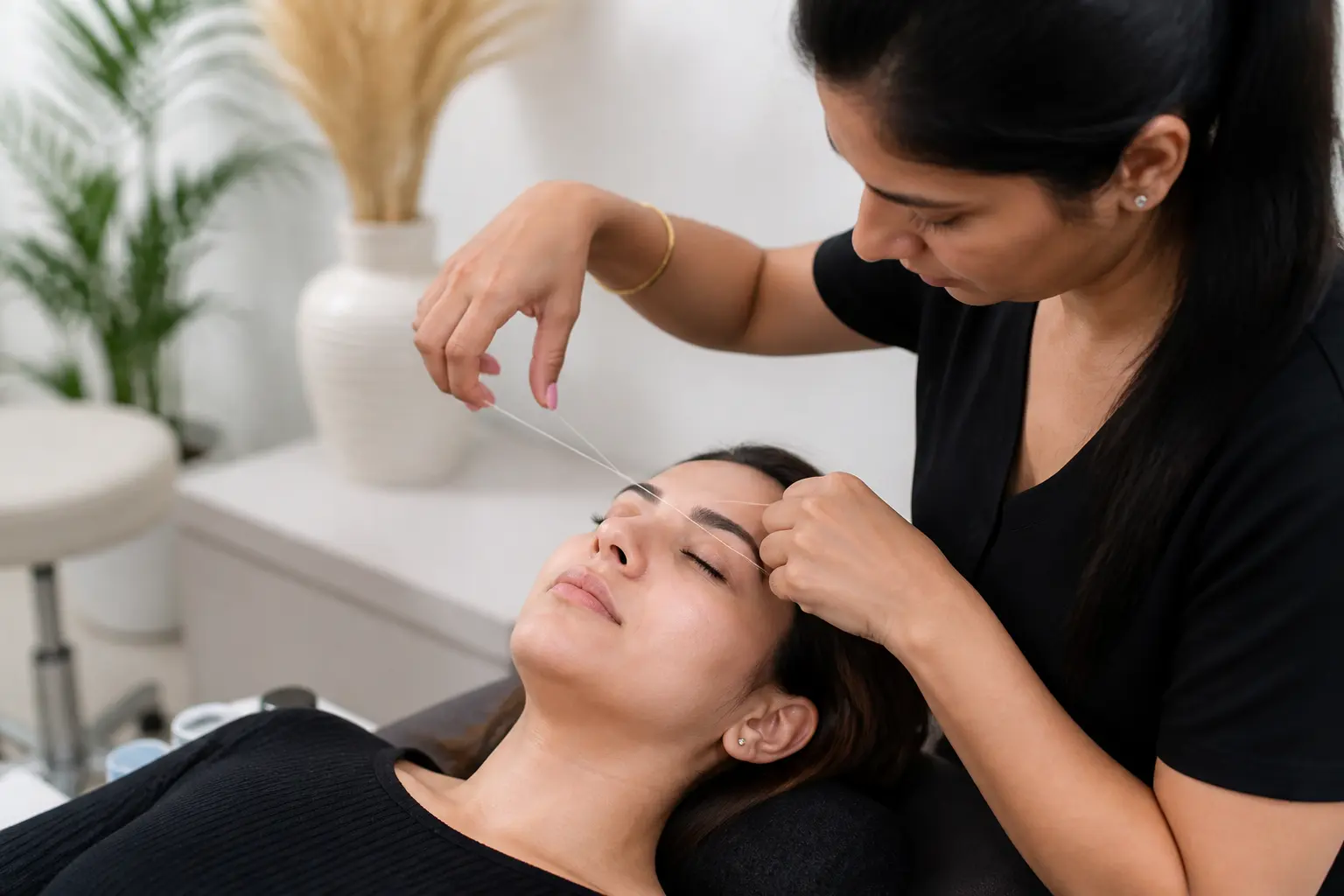
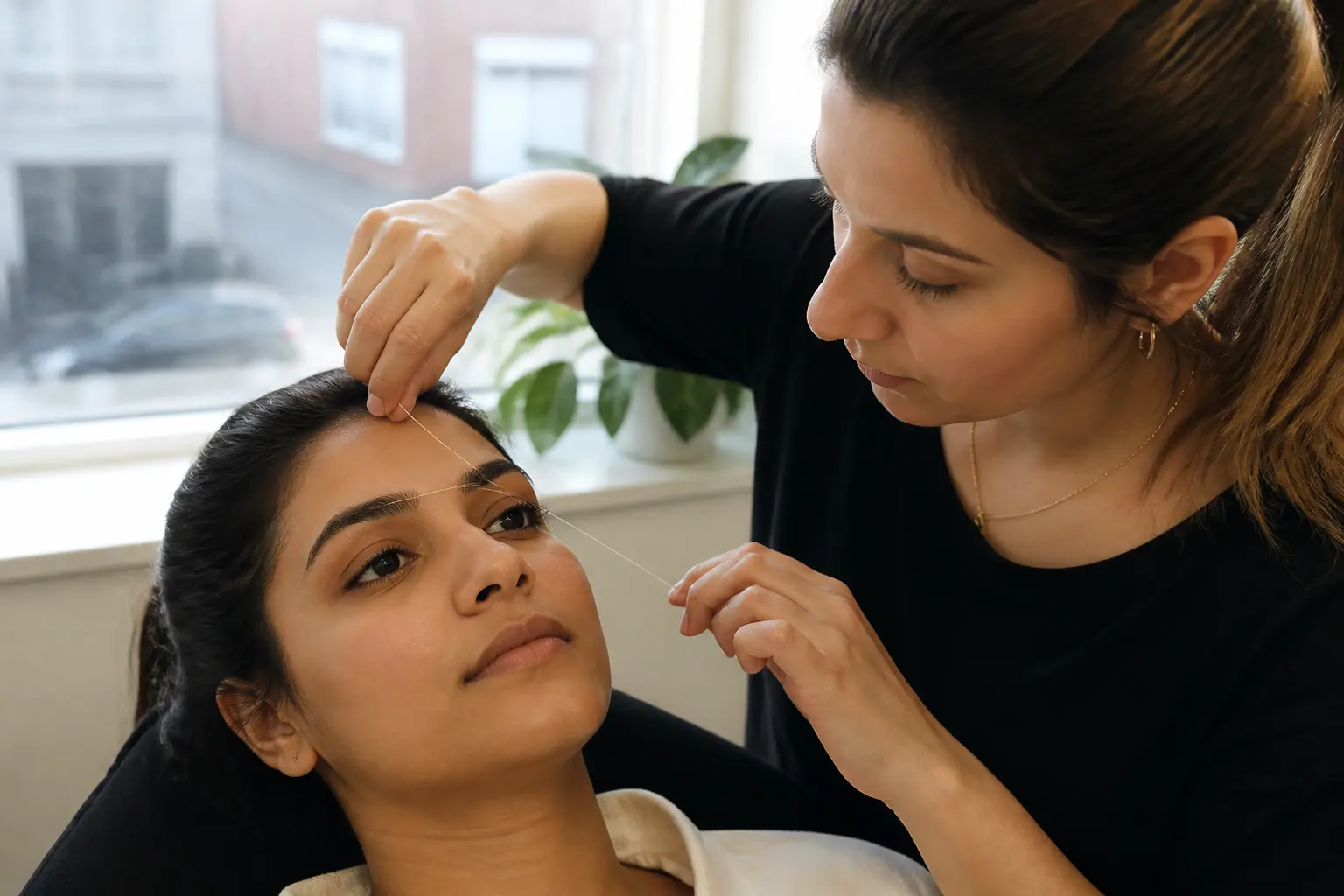
Threading uses a twisted thread to remove unwanted hair with precision. At BeCammo, single-use thread is selected according to the client’s needs: cotton is the usual option, while polyester may be discussed for clients with an allergy to cotton. The thread is discarded after each client.
For someone returning after a long break, the precision of threading can be particularly helpful around the outline. It allows the appointment to focus on selected hairs rather than treating the whole brow area as something that must be cleared away. This matters when you want to keep density, soften an old shape or gradually improve consistency over several visits.
You may experience mild, brief discomfort during threading, especially if you have not had hair removal in the area for some time. Sensitivity differs between people and can vary according to your skin and your usual routine. Mention any concerns when you arrive so they can be considered as part of a personalised appointment.
How should you prepare your skin for the appointment?
Simple preparation can make the appointment easier and help you have a clearer conversation about your brows. Arrive with the brow area as clean as possible, especially if you normally wear heavy brow pencil, pomade or concealer. This allows the natural hair pattern and skin to be assessed without product masking the outline.
It is also sensible to mention anything that may make the area more sensitive, such as recent sun exposure, irritation, active skin concerns around the brows, or products you are using near the area. If you are unsure whether a product or skin change matters, raise it before the service begins. A short conversation is preferable to making assumptions.
On the day, try to allow a little breathing room after the appointment rather than booking it immediately before a high-pressure commitment. Your brows may look freshly defined and the surrounding skin can appear temporarily pink. Planning ahead gives you time to settle into the result and follow any aftercare guidance provided during your visit.
Should you reshape everything in one appointment?
If your brows have been untouched for many months, your first appointment back does not need to solve every detail at once. In fact, a gradual approach is often more comfortable when you are rediscovering what shape suits you now.
The first visit can establish a clean baseline. A later appointment can then refine the shape once you have lived with it, seen how the hairs grow and decided whether you want more definition. This approach is especially useful if you are trying to regain fullness after over-plucking or if one brow grows more densely than the other.
Regular maintenance does not have to mean frequent, dramatic reshaping. Many clients find that returning around their own visible regrowth makes appointments easier to plan. Brow hair grows in cycles, so the ideal interval varies. Rather than following a rigid schedule, pay attention to when the outline begins to feel less clear and discuss a realistic rhythm with your threading specialist.
Should you add tint or henna to your first appointment back?
Threading on its own may be enough when your main aim is to tidy the outline and see your natural brow shape clearly. This can be a sensible choice if you are not yet sure how much definition you want after the break.
Tint or henna may be worth discussing if you want additional visual depth, particularly where brow hairs are light, fine or less noticeable. However, colour services and their visible effect can vary according to brow hair, skin, skincare habits and everyday exposure. Your first return appointment is a good time to explain whether you prefer a subtle result or a more defined make-up effect.
There is no need to choose everything at once. You can begin with threading, see how the new shape feels in your daily routine and decide later whether a colour service would complement it.
A practical checklist for your first appointment back
- Stop emergency tweezing. Leave enough visible growth for a meaningful shape assessment.
- Choose a realistic goal. Decide whether you want a tidy-up, a softer outline, more balance or a gradual return to fullness.
- Keep references flexible. Bring inspiration if helpful, but allow the final shape to reflect your own features and hair pattern.
- Arrive with clean brows. Minimise heavy brow make-up so the natural shape is easy to see.
- Discuss your history. Mention previous hair removal habits, colour services, growth products or semi-permanent brow work.
- Allow time afterwards. Avoid treating the appointment as a rushed stop immediately before an important event.
- Plan maintenance after you see the result. Your next appointment should be based on your actual regrowth and preferred level of definition.
Conclusion: let the first appointment set a new baseline
Returning to brow threading after a long break is less about chasing a perfect before-and-after moment and more about creating a shape that makes sense for your brows today. Arriving with a clear idea of what you want to preserve, what you would like refined and how natural you want the result to feel can make the conversation much easier.
A personalised threading appointment can help you reset your outline without losing sight of your natural brow character. When you are ready, choose the BeCammo location in Sliema or Swieqi that suits your routine and book enough time to make your first shape appointment back feel considered rather than rushed.
Frequently asked questions
How long should I grow my brows out before threading again?
There is no single timeframe that suits everyone. The aim is to leave enough visible growth for the brow shape and hair direction to be assessed. If you are uncertain, book an appointment and explain that you are returning after a break.
Will threading make my brows too thin after a long break?
It does not have to. Explain that you want to retain fullness and ask for a conservative first tidy-up. A careful plan can focus on defining the outline while preserving useful density.
Can uneven brows be made identical?
Natural brows are not perfectly identical, and their growth patterns can differ. Threading can improve balance and create a more harmonious overall appearance, while still respecting the features of each brow.
Should I tint my brows at the same appointment?
That depends on your goal. If you mainly want to understand your natural shape again, threading alone may be a good starting point. If you would like added visual definition, discuss tint or henna during the appointment.
Can I use brow make-up after threading?
Follow the aftercare guidance given during your appointment. If you have plans later in the day, tell the specialist beforehand so you can plan the timing and your routine appropriately.