Teen Facials: Starting Skincare Habits With Professional Help
Brenda Cammo Team
Teenage skin can feel unpredictable. One week it may seem oily and congested, the next it may feel dry, sensitive or covered in unexpected breakouts. Hormonal changes are often part of the picture, but the pressure to fix every blemish quickly can lead to an overloaded routine that makes skin feel even more unsettled.
A teen facial is not about chasing flawless skin or copying an adult anti-ageing routine. It is an opportunity to start with the basics: understanding your skin, using fewer products more thoughtfully, and learning habits that can be maintained at home. Professional guidance can be especially helpful when a teenager is unsure whether their skin is dehydrated, oily, congested, sensitive, or simply reacting to too many new products at once.
At a professional studio, the focus should be calm, personalised care. A facial appointment can help a teenager or parent ask practical questions, understand what a simple routine might look like, and decide whether facial care is appropriate at that moment. For persistent, painful or severe acne, however, a facial is not a substitute for medical support. The NHS guidance on acne advises speaking to a GP for moderate or severe acne, or when nodules and cysts are present, to help reduce the risk of scarring.
Why teenage skin needs a different approach
Puberty can change how the skin behaves. Increased oil production may contribute to clogged pores, blackheads, whiteheads and spots. That does not mean teenage skin is unclean, and it does not mean it needs harsh scrubs, strong acids or frequent washing.
In fact, over-cleansing and over-exfoliating can leave skin feeling tight, irritated and more difficult to manage. The NHS recommends washing acne-prone areas no more than twice daily with a mild cleanser and lukewarm water, as frequent washing can irritate the skin. It also advises against squeezing spots, which can make them worse and may contribute to scarring.
The goal is balance. A teenager may need help moving away from two common extremes:
- Doing very little because skincare feels confusing.
- Trying every trending product at once in the hope of fast changes.
Neither approach gives skin much chance to settle. A thoughtful routine is usually more useful than a crowded bathroom shelf.
What is a teen facial?
A teen facial is professional facial care adapted to a younger person’s current skin needs. The exact approach should always depend on an individual assessment, including visible congestion, sensitivity, dryness, active breakouts and the products already being used at home.
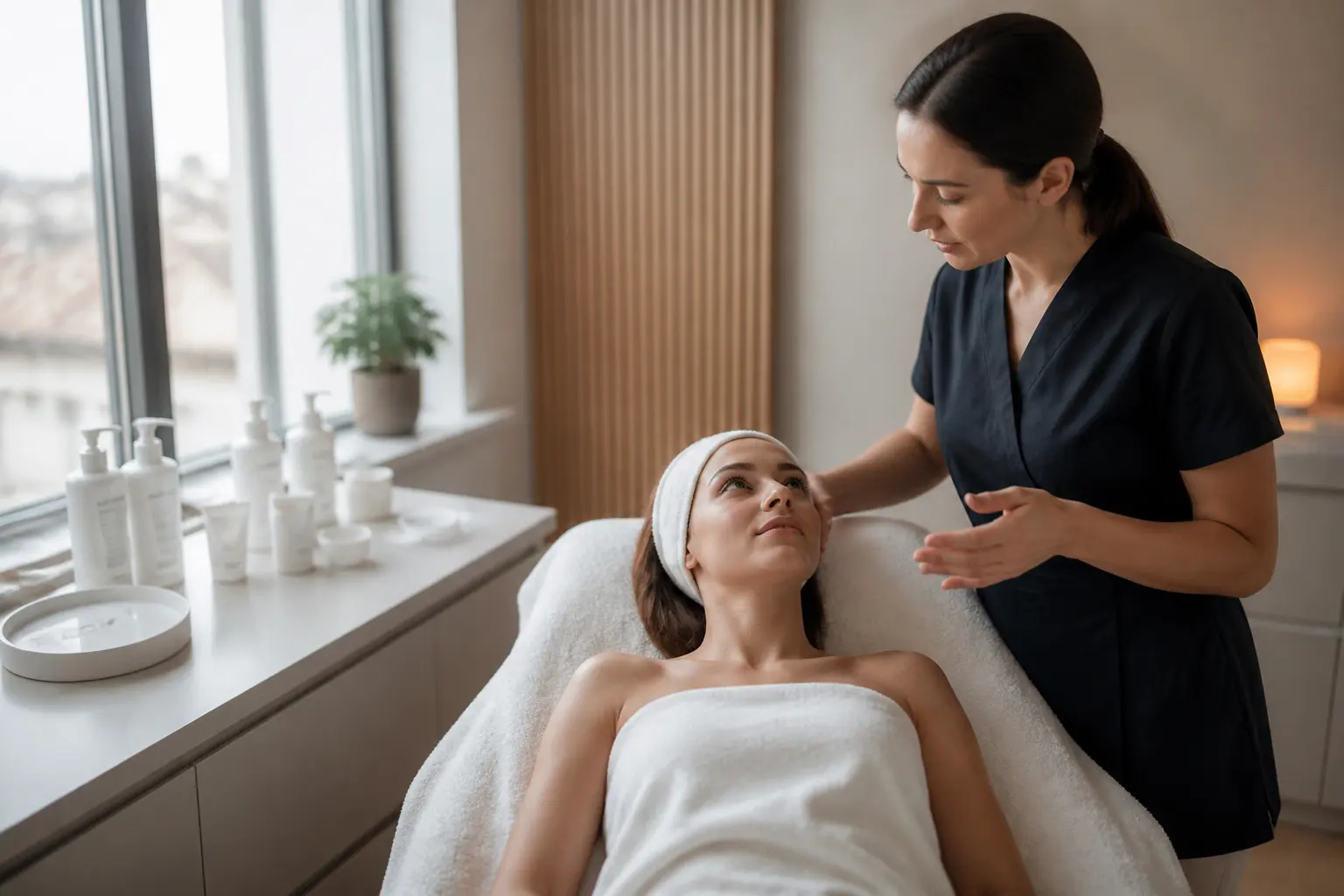
Rather than treating all teenage skin as oily or acne-prone, a good appointment begins by listening. Some teens have blackheads around the nose and chin but dry cheeks. Others have sensitive skin that becomes red easily. Some wear make-up regularly for school, events or sport, while others are dealing mainly with changes caused by puberty.
Professional facial guidance may include:
- Looking at the skin’s current condition and discussing priorities.
- Choosing a gentle cleansing approach appropriate for the skin type.
- Discussing whether congestion, dehydration or sensitivity is the main concern.
- Explaining why certain products may be too strong, too heavy or unnecessary.
- Providing clear, realistic home-care advice.
- Helping the client understand when a GP or dermatologist is the more appropriate next step.
Not every teen needs the same facial steps, and not every breakout should be approached in the same way. This is why a professional conversation before the service matters.
How professional help supports better skincare habits
The biggest value of a teen facial is often education. Teenagers are surrounded by skincare videos, product recommendations and dramatic before-and-after claims. It can be difficult to know which advice is relevant, especially when one person’s routine involves products that do not suit another person’s skin.
A simpler routine feels easier to maintain
Consistency matters more than complexity. A professional can help a teen build a routine around the essentials rather than encouraging a long list of steps. For many people, that starts with a gentle cleanser, suitable moisturiser and daily sun protection, with any additional products introduced carefully and only when they make sense for the skin.
Teenagers who use acne products may also need to understand that dryness and sensitivity can happen. Adding multiple exfoliating products on top of one another can be uncomfortable and may disrupt the skin barrier. A calm routine gives skin time to respond.
It creates space for honest questions
Questions that may feel small are often important. Should make-up be removed after school? Is it all right to use a face scrub every day? Why does skin feel oily and flaky at the same time? Can a moisturiser still be useful when someone has spots?
These are exactly the kinds of questions that can be discussed in a professional setting without judgement. The aim is not to make teenagers feel self-conscious about their skin. It is to help them feel more confident in caring for it.
It discourages picking and DIY extractions
Picking spots and attempting aggressive extractions at home can lead to more irritation. The NHS specifically advises against trying to squeeze spots or clean out blackheads. If extractions are considered during professional facial care, they should be approached carefully, with hygiene and the skin’s comfort in mind, rather than as something to force during every appointment.
What to expect at a professional facial appointment
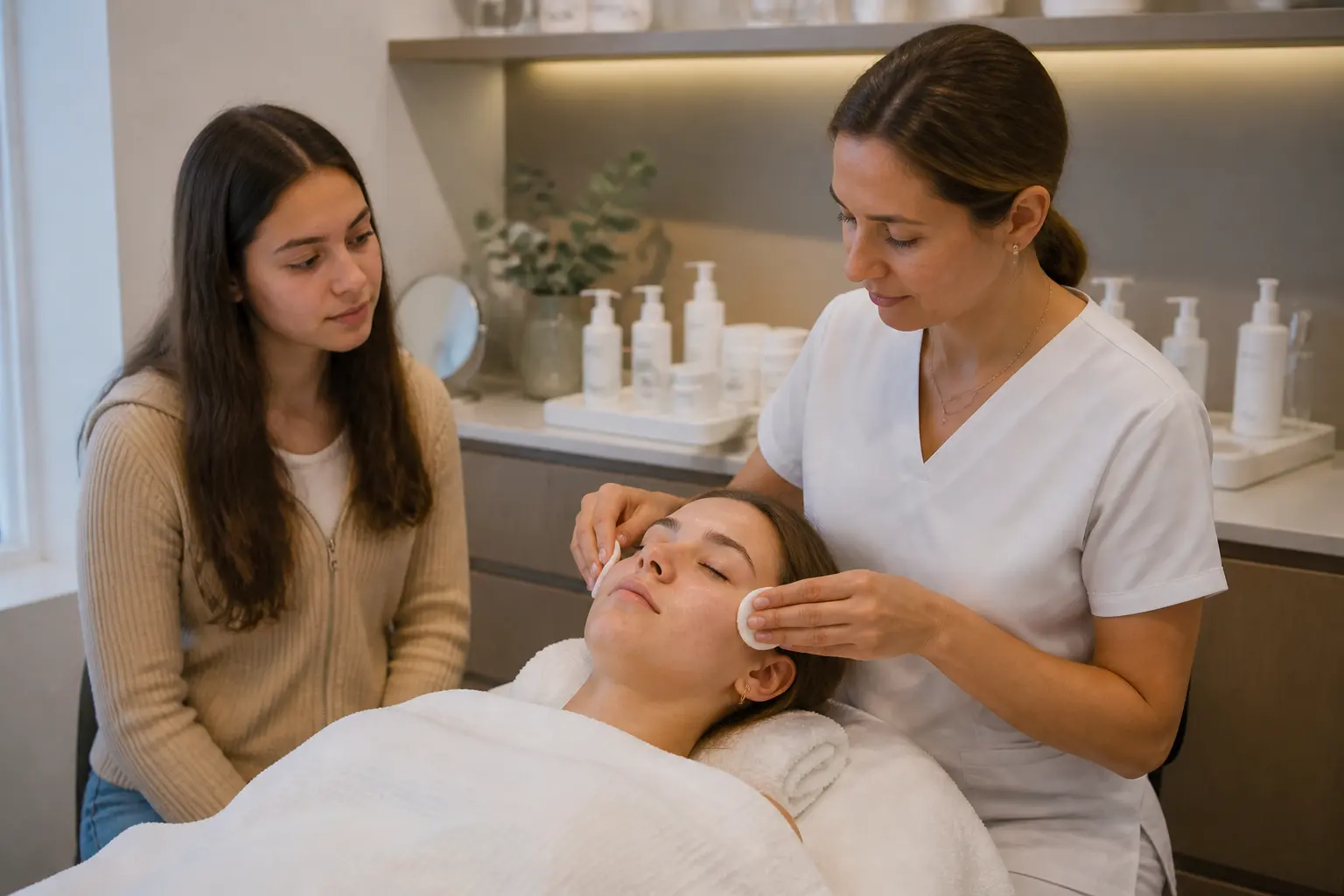
For a first facial, it helps to arrive with a clear idea of what has been happening with the skin. A parent or guardian may wish to be involved in the conversation, depending on the teenager’s age and preference. The most useful information is often simple:
- How long the skin concern has been present.
- Whether spots are sore, deep or leaving marks.
- Which skincare, make-up and sun products are currently used.
- Whether the skin stings, flakes or becomes red after products.
- Whether any prescribed or pharmacy acne products are being used.
- Whether there are allergies, sensitivities or other relevant skin concerns.
A professional should use this information to guide the appointment rather than relying on a standard routine. Teen skin does not need to be treated as a trend. It deserves a measured approach that respects comfort, skin condition and personal confidence.
At Becammo, facial services are approached as personalised beauty care. If you are booking for a teenager, it is sensible to share any concerns in advance and ask which service is most suitable. This makes it easier to set appropriate expectations before the appointment.
A practical starter routine for teenagers
A routine does not need to be expensive or complicated to be useful. The right products vary, but these habits provide a sensible foundation.
Morning
- Cleanse gently if needed. Use lukewarm water and a mild cleanser. Avoid scrubbing hard or using very hot water.
- Moisturise. Even oily skin may need moisture. Choose a product that feels comfortable and does not leave the skin heavy.
- Use sun protection. Daily sun protection is a valuable habit, particularly in Malta’s bright climate. For acne-prone skin, look for products labelled non-comedogenic or designed not to block pores where possible.
Evening
- Remove make-up fully. Sleeping in make-up can leave residue on the skin. Take time to remove it gently rather than rubbing.
- Cleanse. One careful cleanse is usually more useful than repeated washing.
- Moisturise. This supports comfort, especially if the skin feels dry or if an acne product has been recommended by a pharmacist or clinician.
When introducing a new product, add one change at a time. This makes it easier to notice what the skin likes and what may be causing irritation. If a product causes persistent burning, swelling, a rash or significant discomfort, stop using it and seek advice from a healthcare professional.
Common teen skincare mistakes to avoid
Using too many active products
Strong exfoliants, acids, retinoids and spot treatments may appear everywhere online, but combining products without understanding them can irritate the skin. A professional can help identify where a routine has become too intense, while a pharmacist, GP or dermatologist can advise on suitable acne treatment when needed.
Washing the face repeatedly
Oiliness can make someone want to cleanse again and again. However, frequent washing may irritate the skin. Keep cleansing gentle and avoid harsh soap, rough cloths and abrasive scrubs.
Assuming moisturiser causes breakouts
Skipping moisturiser is not always the answer to oily or spot-prone skin. The key is choosing a texture that feels comfortable and suits the individual. Skin that feels stripped can be harder to manage, especially when acne products are already drying.
Trying to fix acne overnight
Skin changes take time. The NHS notes that acne treatments can take several months to work, so realistic expectations and consistency are important. Quick fixes, squeezing and constant product swapping often create more frustration.
Ignoring emotional wellbeing
Skin concerns can affect confidence, social plans and self-image. A calm conversation with a trusted adult, a professional or a GP can make a real difference. Teenagers should not feel they have to manage distress about their skin alone.
When a facial is appropriate, and when medical advice comes first
Professional facial care can be a helpful part of a simple skincare plan for teens with mild congestion, uneven texture, occasional breakouts or uncertainty about their routine. It can also be a positive introduction to self-care when the focus remains realistic and gentle.
Medical advice should come first when acne is moderate or severe, when spots are painful, deep or cyst-like, when scarring is developing, or when a teenager feels significantly upset by their skin. A GP can assess the condition and discuss appropriate options. This distinction matters because beauty care and medical care have different roles.
It is also wise to mention any prescribed acne treatment before booking a facial. Some treatments can make skin more sensitive, and the professional needs that information to plan safely and appropriately.
How parents can make the first appointment feel positive
A first facial should not feel like a correction or a criticism. Framing it as a chance to learn about skin can help a teenager feel more comfortable. Let them explain what they want help with, whether that is blackheads, make-up removal, dry patches or a confusing routine.
Before booking, encourage questions such as:
- What should I bring or mention at my appointment?
- Which products should I pause before a facial?
- Can you help me simplify my current routine?
- What should I do at home afterwards?
- Should I speak to a GP about these breakouts instead?
This keeps the appointment practical and helps the teenager take ownership of healthy habits without pressure to look a certain way.
Starting with care, not perfection
Teen facials can be a useful introduction to thoughtful skincare, especially when they are centred on education, comfort and an individual assessment. The best outcome is not a complicated routine or an unrealistic promise. It is a teenager who understands how to cleanse gently, protect their skin, avoid unnecessary irritation and ask for the right kind of help when they need it.
If you are considering a facial for a teenager in Malta, book a facial appointment at Becammo in Sliema or Swieqi, or get in touch with the studio first to discuss current skin concerns and choose an appropriate service. A professional conversation can be a calm first step towards habits that feel manageable at home.
Frequently asked questions
What age can a teenager start having facials?
There is no single age that suits everyone. What matters is the teenager’s skin concern, comfort and the approach used. Before booking, ask the studio about suitability and share any active skin concerns or products being used.
Can a facial clear teenage acne?
A facial may support a gentle skincare routine and help with mild congestion, but it is not a medical solution for acne. Moderate or severe acne, painful spots, nodules, cysts or scarring should be assessed by a GP.
Should teenagers exfoliate every day?
Daily exfoliation can be too much for many people, especially if skin is sensitive or acne-prone. Over-exfoliating may cause irritation. It is better to seek personalised advice before adding exfoliating products to a teen routine.
Is moisturiser suitable for oily teenage skin?
Yes, oily skin can still need moisture. The important part is finding a comfortable product that suits the skin and does not feel overly heavy. A professional can help explain how to choose a simple routine.
What should a teenager avoid before a facial?
Tell the studio about any acne medication, prescription skincare, recent irritation or product reactions before the appointment. They can then advise what to pause or bring to their attention.
How often should a teenager have a facial?
This depends on the skin’s needs, the type of facial care chosen and the home routine. Rather than following a fixed schedule, start with an assessment and choose a plan that feels appropriate for the individual.