Sensitive Skin Facials: A Gentle, Personalised Approach
Brenda Cammo Team

When your skin is easily unsettled, a facial should not feel like a test of how much it can tolerate. A sensitive skin facial is about taking a measured approach: understanding what your skin is experiencing, choosing steps carefully and avoiding the idea that stronger always means better.
Skin sensitivity can show up as tightness, temporary redness, stinging, dryness or a feeling that familiar products suddenly do not suit you. These signs do not all have the same cause, and they do not automatically mean you should avoid every professional facial. They do mean that your appointment should start with a proper conversation, not a one-size-fits-all routine.
At a professional studio, the aim is to make choices around your skin on that day. The pace, products and level of exfoliation should be considered in relation to your current comfort, recent skincare use and the goal of your visit. For clients in Malta, this can be especially useful after periods of sun, heat, travel, air conditioning or a change in routine.
What does sensitive skin mean in a facial setting?
“Sensitive skin” is a useful everyday description, but it is broad. Some people have skin that is consistently dry or reactive. Others notice sensitivity after sun exposure, a new active product, shaving, wind, heat, over-cleansing or several treatments close together. Your skin may also be prone to a diagnosed condition that needs medical guidance alongside any cosmetic care.
A facial appointment is not a diagnosis. However, an experienced professional can ask the right practical questions before beginning. This helps distinguish between skin that needs a gentler session and skin that appears too irritated for a cosmetic treatment that day.
It is also worth remembering that irritation and allergy are not interchangeable. The NHS notes that contact dermatitis can be linked to irritants or allergens, including ingredients found in cosmetics and toiletries. If you think a product is causing repeated reactions, it is sensible to stop using it and seek advice from a pharmacist, GP or dermatologist rather than trying to cover the issue with more products. Read the NHS guide to causes of contact dermatitis.
The principle of a gentle facial protocol
A gentle protocol is not simply a shorter facial or a facial with fewer products. It is a personalised plan that puts skin comfort first. The focus is on choosing appropriate steps, observing how the skin responds and avoiding unnecessary intensity.
1. Start with a detailed consultation
The consultation is the most important part of a sensitive skin facial. Before the service begins, be ready to share:
- Whether your skin is currently itchy, sore, flaky, hot, very red or uncomfortable
- Any recent sun exposure, peeling, waxing, dermaplaning or other beauty appointments
- Products you use at home, especially retinoids, exfoliating acids, scrubs and strong acne-focused products
- Known allergies, previous reactions and any skin condition diagnosed by a healthcare professional
- Your main goal, such as comfort, hydration, a fresher look or help with a congested-feeling complexion
This information gives the therapist context. It can also prevent an appointment from being planned around an online trend rather than your actual skin condition.
2. Keep cleansing considerate
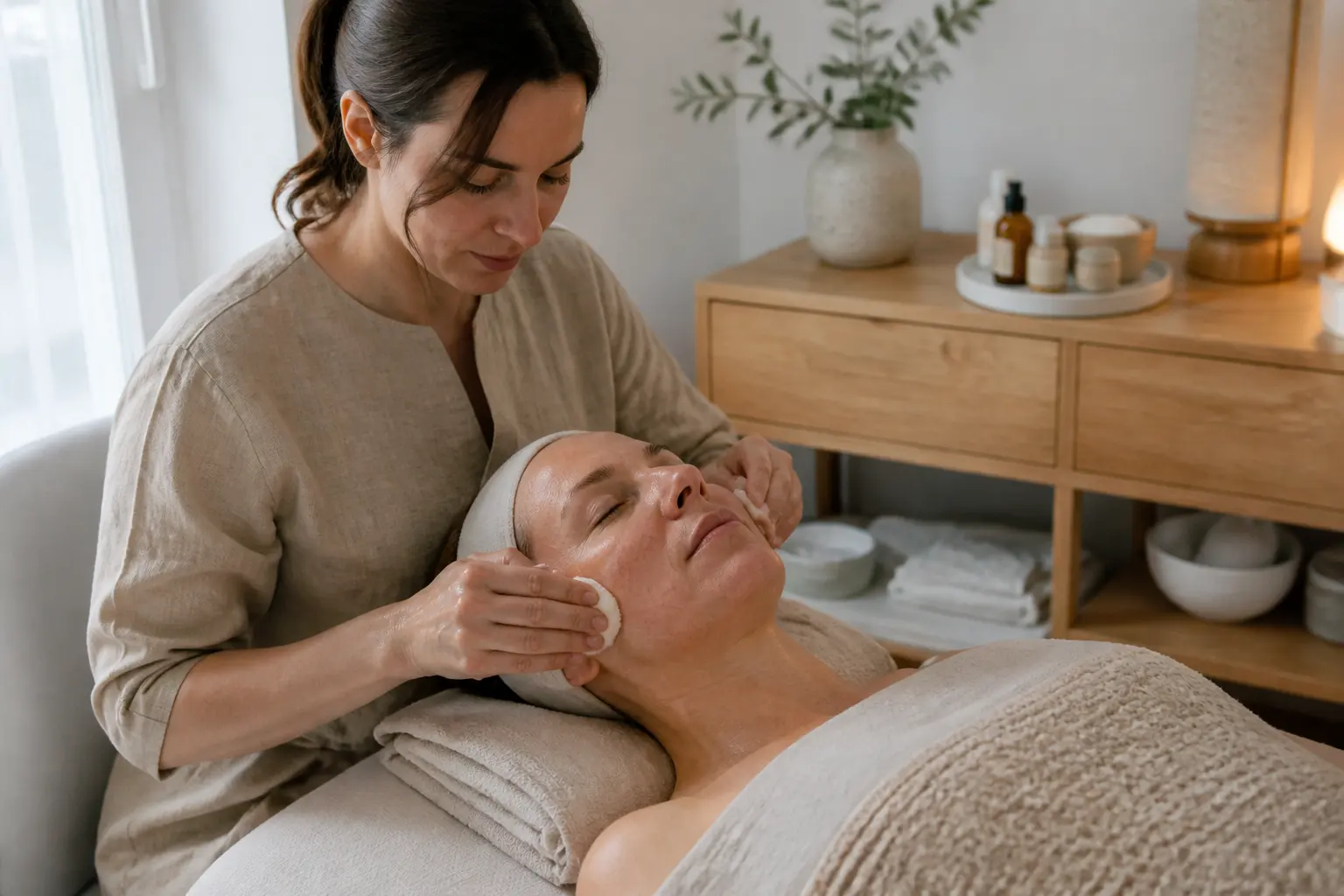
Cleansing is essential, but it does not need to feel harsh to be effective. For skin that feels reactive, the professional may choose a gentler cleanse and avoid excessive rubbing, repeated cleansing passes or very hot water. The intention is to prepare the skin without leaving it feeling stripped or tight.
At home, the same principle matters. The NHS advises people with itchy or irritated skin to avoid perfumed soaps and moisturisers and to favour unperfumed options where appropriate. See NHS self-care advice for itchy skin. This is general guidance, not a substitute for individual medical advice, but it reinforces why your daily routine should be part of the facial conversation.
3. Treat exfoliation as an option, not an obligation
Exfoliation can be useful in the right context, but it is not a compulsory part of every facial. If your skin barrier feels compromised, if you are peeling after sun exposure, or if you are already using active skincare at home, a professional may decide that an exfoliating step is not the priority.
Gentle care means choosing what to leave out as carefully as what to include. The skin does not need to be pushed through every possible stage simply because it is written on a standard treatment list. A considered facial can focus on comfort and a polished, cared-for appearance without chasing an immediate dramatic effect.
4. Use extraction only when it makes sense
For some clients, congestion is part of the picture. For others, the skin is too reactive for extra manual work to be a sensible choice on that day. Extractions should be assessed individually, with attention to skin comfort and visible irritation.
A careful therapist should not treat redness or sensitivity as something to work through. If a step is likely to make the skin feel more distressed, postponing it can be the more thoughtful decision. This is why a facial can look different from one visit to the next, even for the same client.
5. Prioritise hydration and comfort
When the skin feels dry, tight or unsettled, the session may place more emphasis on gentle hydration and a calm, comfortable finish. Rather than layering multiple new products, a personalised approach keeps the routine purposeful and easy to follow.
Comfort is not a lesser outcome. Skin that feels less tight and more supported can make everyday skincare, make-up application and simply getting through the day feel easier. The right facial goal is often a realistic one: helping your complexion feel cared for without creating extra stress for it.
When it may be better to postpone your facial
Booking a facial when your skin feels sensitive is possible in some situations, but not every flare-up is suitable for a cosmetic appointment. Be open with the studio before you arrive, especially if you have a sudden rash, broken skin, weeping areas, blisters, significant swelling or increasing pain.
The NHS advises prompt medical advice for severe reactions or possible infection, including symptoms that are rapidly worsening, discharge, increasing pain or feeling unwell. Review the NHS information on contact dermatitis symptoms. In these circumstances, a beauty facial should wait until you have appropriate medical guidance.
It is also sensible to rearrange or ask for advice first if you have recently had a strong professional peel, an intensive home exfoliation, a sunburn, or a reaction to a new product. Rescheduling is not a setback. It is a practical way to give your skin time and make a future appointment more comfortable.
How to prepare for a sensitive skin facial
Preparation does not need to be complicated. The goal is to arrive with a clear picture of your skin, rather than attempting to fix everything in the days beforehand.
- Keep your routine steady. Avoid introducing several new products shortly before the appointment.
- Do not over-exfoliate. Scrubs, acids and strong active products may make it harder to judge what your skin needs.
- Tell the studio about recent changes. Mention sun exposure, travel, new skincare, medication that affects your skin, or any recent procedure.
- Come without pressure for a particular step. A flexible plan allows the professional to adapt the service to your skin’s current state.
- Ask questions. If you are unsure about an ingredient, a treatment stage or your suitability for a service, asking before the appointment is always appropriate.
If you have a known contact allergy, medical patch testing is different from a casual product trial. The British Association of Dermatologists describes patch testing as a specialist dermatology procedure used to investigate whether contact allergies are contributing to a skin condition. Learn about patch testing from the British Association of Dermatologists. Let the studio know about any confirmed allergies and follow your clinician’s advice.
Aftercare that keeps the approach gentle
Your facial aftercare should reflect the same calm approach as the appointment itself. For the rest of the day, avoid experimenting with new products or adding strong exfoliants because your skin looks freshly treated. Let it settle into the routine agreed with your therapist.
In Malta’s bright climate, sun protection is an important part of maintaining everyday skin comfort. Choose a product that suits your own skin and use it as directed. If your skin has been particularly reactive, keep your routine simple and pay attention to anything that causes persistent discomfort.
It can also help to plan around your diary. If you have a major event, photoshoot or a long day outdoors, book with enough time to observe how your skin responds. Even a gentle facial can leave a temporary flush in some people, and no responsible studio should promise that every complexion will react in exactly the same way.
Choosing the right facial goal
When your skin is sensitive, the most useful question is not “What is the strongest facial available?” It is “What does my skin need right now?” Your answer may change across the year.
| What you notice | A helpful conversation to have before booking |
|---|---|
| Tightness and dullness | Ask about a comfort-focused facial and the products used during cleansing and hydration. |
| Congestion with occasional sensitivity | Discuss whether extractions or exfoliation are appropriate on the day, rather than assuming they are essential. |
| Redness after heat or sun | Explain when the exposure happened and ask whether it is better to wait before having a facial. |
| Repeated reactions to products | Share the products involved and consider medical advice if the reaction is ongoing or severe. |
| A special occasion coming up | Book with enough time and choose a balanced, familiar approach rather than an intensive experiment. |
This kind of conversation supports better decisions than a generic label. Sensitive skin is not one look, one cause or one fixed protocol. It deserves a plan that respects your history, your current comfort and the outcome you actually want.
Why professional personalisation matters
A professional facial should make space for observation and adjustment. At Becammo, hygiene, consultation and post-procedure guidance are part of the approach to beauty services. For facial care, that means you can explain your concerns, ask questions and decide on an appointment that feels appropriate for you.
There is no advantage in forcing your skin through an intensive routine when it is asking for a quieter approach. A good facial plan is not about doing the most. It is about doing what is suitable, then giving your skin the time and consistency it needs.
Frequently asked questions
Can I book a facial if my skin is sensitive?
Often, yes, provided your skin is not experiencing a severe or unexplained reaction. Share your concerns before booking so the studio can discuss whether a gentle, personalised appointment is appropriate. If you have broken skin, swelling, blisters, discharge or significant pain, seek medical advice first.
Should a sensitive skin facial include exfoliation?
Not necessarily. Exfoliation should be based on how your skin is feeling, your recent skincare use and your goals. A gentle facial may reduce, adapt or skip exfoliation when it does not suit the skin on that day.
What should I tell my facial therapist before my appointment?
Tell them about current sensitivity, known allergies, recently introduced products, active skincare, recent sun exposure and any diagnosed skin conditions. This gives them the information needed to personalise the session responsibly.
Can I use retinol before a facial?
It is important to mention retinol and other active products when you book. The best approach depends on the product, how often you use it and the type of facial being considered. Do not assume that your usual routine needs no adjustment.
How often should sensitive skin have a facial?
There is no universal schedule. The right frequency depends on your skin, the type of facial and how your complexion responds over time. Start with your current needs and review the plan with your therapist rather than booking to a rigid timetable.
If your skin needs a more considered approach, start with a conversation. Choose the Becammo location in Sliema or Swieqi that suits you, share what your skin has been feeling lately and book a facial appointment with room for personalisation.