Pre-Wedding Facial Timeline: Months, Weeks and Days Before
Brenda Cammo Team
A wedding countdown can fill up quickly with fittings, guest lists, beauty appointments and travel plans. Your skin deserves a place on that list too, but a pre-wedding facial timeline is not about chasing a dramatic last-minute change. It is about giving yourself enough time to understand what your skin needs, choose a suitable professional facial and arrive at the celebration feeling comfortable, fresh and confident.
Whether you are the bride, part of the wedding party or attending an important event in Malta, the most useful approach is to begin early and keep the plan simple. Skin can respond differently to professional exfoliation, extractions, new products and changes in routine. Booking ahead leaves room to observe that response, make sensible adjustments and avoid trying something unfamiliar immediately before photographs.
At a professional studio, the right facial plan should be personalised. It should take account of your skin concerns, current home routine, recent sun exposure, hair removal plans and the date of the event itself. Here is a practical guide to planning the months, weeks and final days before your wedding.
Why timing matters for pre-wedding facials
Facials are often chosen before weddings because people want skin that looks rested, smooth and well cared for under make-up and in photographs. However, the best timing is not the same for everyone. A person with reactive skin, active breakouts, dryness, congestion or a new skincare routine may need a different schedule from someone whose skin is already familiar with regular professional care.
The goal is not to overload the skin with appointments. It is to create a steady routine with enough breathing room between changes. This matters particularly if you are considering a facial with exfoliation, cleansing or manual extractions. Some people experience temporary redness or sensitivity afterwards, even when the treatment is appropriate for them.
A good pre-wedding plan also avoids making several major beauty changes at once. If you are arranging brow shaping, brow lamination, laser hair removal, lashes, nails and a facial, spread appointments thoughtfully. That makes the final week more relaxed and gives you time to focus on the celebration rather than recovery from a rushed beauty schedule.
Three to six months before the wedding: start with a skin assessment
If possible, begin planning three to six months ahead. This is the most comfortable window for anyone who has specific concerns they would like to discuss, such as uneven-looking texture, surface dryness, congestion or skin that does not sit as smoothly beneath make-up as they would like.
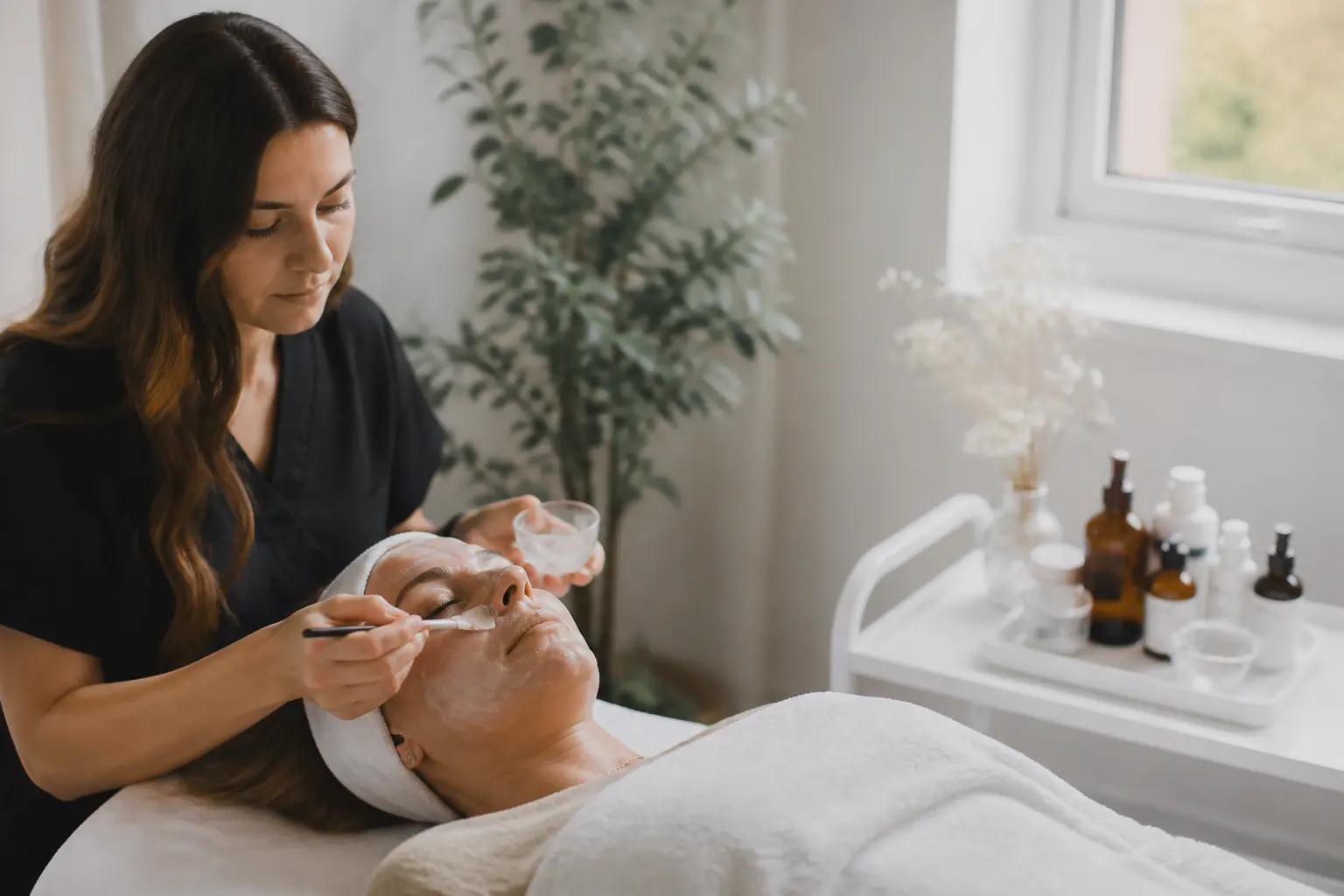
Your first professional appointment is an opportunity to talk through your current routine and event plans. Be open about the products you already use, including exfoliants, retinoid products or strong active ingredients. It is also useful to mention upcoming travel, time in the sun, laser appointments and any history of sensitivity. These details help the professional advise on a suitable pace rather than treating your wedding date as a reason to do too much too quickly.
Choose consistency over intensity
For many people, this stage is about building a regular rhythm rather than booking a single, intensive appointment. A professional facial can support a more consistent approach to cleansing, hydration and skin comfort, while your home routine remains gentle and manageable.
If your skin is prone to congestion, a Brazilian Deep Cleansing facial may be worth discussing as part of an earlier plan. Professional cleansing and extractions, where appropriate, should not be left to the final days before an event. Starting earlier gives the skin time to settle and lets you see how it responds to the appointment.
Do not test unfamiliar treatments close to the date
The months-ahead stage is also the right time to ask questions about treatments you have not tried before. For example, if you are curious about dermaplaning or a PDRN Facial, do not make your wedding week the first time you experience it. A professional can explain what the appointment involves and whether it is a sensible option for your individual plans.
Trying a new facial early means you can decide calmly whether it suits your preferences. If it does not feel right for your skin or schedule, you still have plenty of time to take a different route.
Six to eight weeks before: refine the routine
At around six to eight weeks before the wedding, the focus shifts from exploration to refinement. By now, you ideally know which professional facial approach feels comfortable for your skin. Rather than adding new variables, keep working with the routine that has been well tolerated.
This can be a helpful time for a follow-up appointment, especially if your earlier visit identified concerns that need a little ongoing attention. It is also a sensible point to assess whether your everyday skincare is practical. A complicated routine that you cannot maintain during a busy wedding period is rarely useful. Gentle consistency is often easier to follow than a shelf full of new products.
Think about make-up, photography and the rest of your beauty plan
If you are having a make-up trial, try to plan it after your skin has settled from any professional facial. This gives your make-up artist a more realistic sense of how products wear on your skin. It can also show you whether your current moisturiser, primer or foundation feels comfortable throughout the day.
Coordinate your facial schedule with other appointments too. If you are booking brow threading, brow lamination or facial hair removal, mention this when arranging your facial. The skin around the brows, upper lip and cheeks can be more sensitive after hair removal, so spacing services sensibly is part of responsible pre-event planning.
Keep sun exposure in mind in Malta
In Malta, sunny days are common for much of the year, and wedding preparations may include beach time, outdoor events or travel. Let your studio know if you have had significant sun exposure or expect it soon after your appointment. It is also wise to follow professional aftercare guidance and use daily sun protection that suits your skin.
A wedding tan may be part of your plans, but newly exfoliated or sensitised skin needs thoughtful care. Avoid treating facial appointments as separate from the rest of your schedule. Your time outdoors, product choices and beauty services all work together.
Three to four weeks before: schedule your final planned facial
For many people, three to four weeks before the wedding is a comfortable window for the final planned facial, particularly when it includes cleansing, exfoliation or extractions. This is not a universal rule, because skin type and the exact service matter, but it gives a useful buffer before the event.
At this point, tell the professional that your wedding is approaching. They can keep the appointment aligned with your established plan and avoid unnecessary experimentation. The aim is for skin to feel cared for, not challenged by a completely new technique or product.
Dermaplaning needs sensible scheduling
Dermaplaning is often considered before a special occasion because it can leave the skin feeling very smooth and can create a refined surface for make-up application. The Becammo Studio offers Dermaplaning Pro and Dermaplaning SPA options, but the best choice and timing should be decided after a professional conversation about your skin and diary.
If dermaplaning is new to you, book it well before the final weeks. If it is already part of your established routine, your professional can advise on a suitable interval before the wedding. Avoid combining it with multiple strong exfoliating products at home unless you have been specifically advised to do so.
Keep home care calm
As the date gets closer, resist the temptation to solve every small skin concern with a new product. Switching cleansers, introducing a strong acid or trying a trending mask can make it harder to understand why your skin is reacting differently.
- Use the simple routine that has been working for you.
- Cleanse without scrubbing aggressively.
- Apply moisturiser consistently.
- Use sun protection during the day.
- Avoid picking at blemishes or congested areas.
- Contact your studio if you are unsure whether an appointment should be moved.
One to two weeks before: protect what is already working
In the final fortnight, the priority is preservation. Your facial plan should now be familiar, and your focus can turn to keeping skin comfortable. If you have already arranged your final facial, this is the time to follow aftercare, stay consistent with your home routine and avoid unnecessary changes.
For some people, a gentle, familiar appointment may still fit within this period. For others, especially those who tend to develop redness or sensitivity, it may be better to leave more time. There is no advantage in following someone else’s countdown if it does not suit your own skin.
It is also worth considering the practical details of the wedding day. Are you travelling to the venue? Will you have an early make-up call? Are you getting married outdoors? These questions can help you decide whether your skin needs anything more than calm, reliable care.
The final three to five days: no experiments
The last few days before a wedding are not the time for a first facial, strong exfoliation, at-home extraction tools or unfamiliar skincare. Even a product recommended by a friend may not behave the same way on your skin. Keep the routine predictable and give yourself permission to do less.
If you need brow shaping or upper lip threading before the event, plan it with enough time for any temporary redness to settle. Threading uses a disposable thread to remove hair with precision, but the skin can still look a little pink immediately afterwards, particularly if you are sensitive. Booking earlier rather than on the morning of the wedding makes the process calmer.
A simple final-days checklist
- Use products you already know suit your skin.
- Do not pick, squeeze or over-exfoliate.
- Stay hydrated and prioritise rest where possible.
- Keep make-up brushes and pillowcases clean.
- Follow any personal guidance provided after your last facial.
- Leave enough time between hair removal, facial care and make-up application.
What to ask when booking a pre-wedding facial
Clear communication makes wedding beauty planning far easier. When you contact a professional studio, explain your event date and whether you have had facials, dermaplaning or targeted skincare appointments before. You can also ask practical questions that help shape an individual plan.
- Which facial option is most appropriate for my current skin concerns?
- When should I book my first appointment before the wedding?
- Should I arrange a trial appointment before choosing a final service?
- How should I space facial care around threading, brow lamination or laser appointments?
- Which home products should I pause or avoid before and after the facial?
- What should I do if my skin becomes irritated or I have unexpected sun exposure?
A professional should never make absolute promises about how skin will look on a particular day. Instead, they should help you make a realistic plan, explain the importance of timing and adapt recommendations to your skin, lifestyle and wedding schedule.
A pre-wedding facial timeline should feel supportive, not stressful
The most successful pre-wedding facial plan is rarely the most complicated one. Starting several months ahead, trying unfamiliar services early and allowing space before the final days can help you make thoughtful choices. From there, regular professional guidance and a simple home routine can keep the process manageable.
If you are planning a wedding in Malta, Becammo Studio can help you discuss facial options and organise an appointment around your date. Book with enough time to ask questions, choose a service that feels right for your skin and approach the celebration with a calm, well-planned routine.
Frequently asked questions
How far in advance should I book a facial before my wedding?
Ideally, begin planning three to six months before the wedding, especially if you have not had professional facials recently or want to try a service for the first time. Your final appointment may be scheduled earlier or later depending on your skin and the type of facial.
Can I have a facial the day before my wedding?
It is generally wiser not to try a facial the day before an important event. Skin can respond with temporary redness or sensitivity, and there is little time to adjust. Keep the final days calm and follow the routine that already works for you.
Is dermaplaning suitable before wedding make-up?
Dermaplaning may be considered as part of a pre-wedding plan because many people appreciate the smooth feel it can give the skin. It should be scheduled thoughtfully, especially if it is new to you, and discussed with a professional alongside your skincare routine and make-up plans.
Should I book extractions before my wedding?
If professional extractions are appropriate for your skin, it is usually better to book them well ahead of the final week. This provides time for the skin to settle and avoids a rushed, last-minute decision.
Can I combine facial treatments with brow threading before the wedding?
Yes, but timing matters. Tell your studio about every service you are planning so facial care and threading can be spaced sensibly. This is particularly important if your skin is sensitive or you expect to have make-up applied soon afterwards.
What should I do if I get a breakout shortly before the wedding?
Avoid picking or trying several new products at once. Keep your routine gentle and contact a qualified professional for advice based on your skin and timing. A calm approach is more useful than an aggressive last-minute attempt to change the skin.