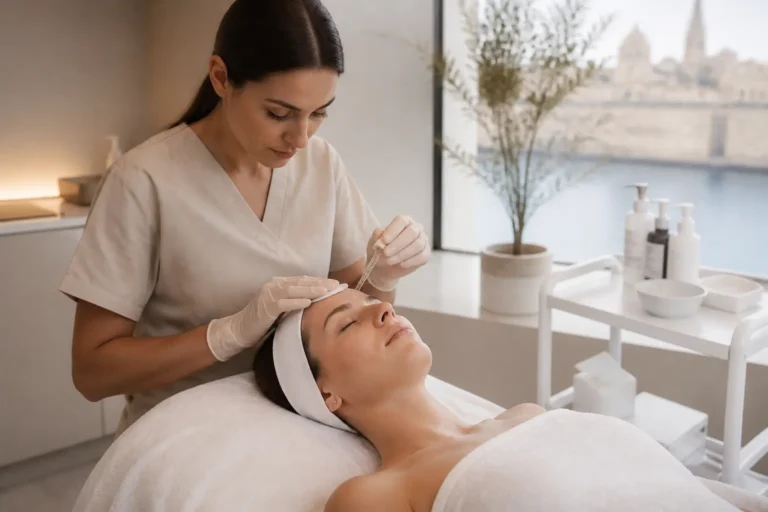
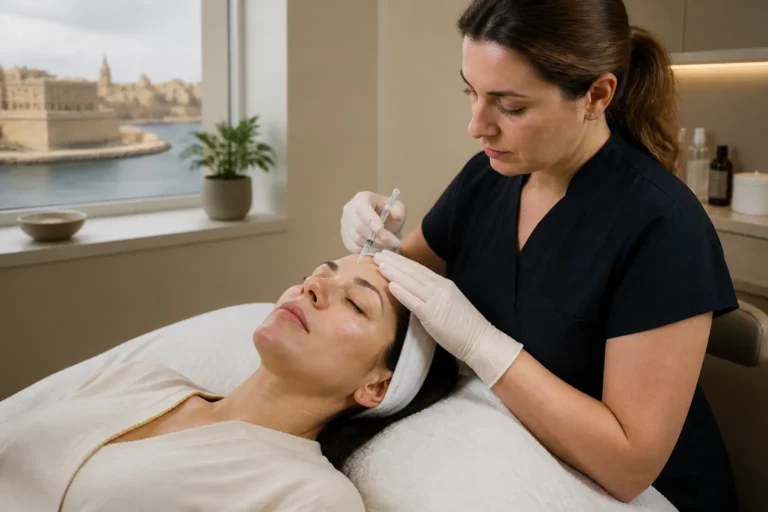
A PDRN Course of Sessions: Why Results Build Gradually
Brenda Cammo Team
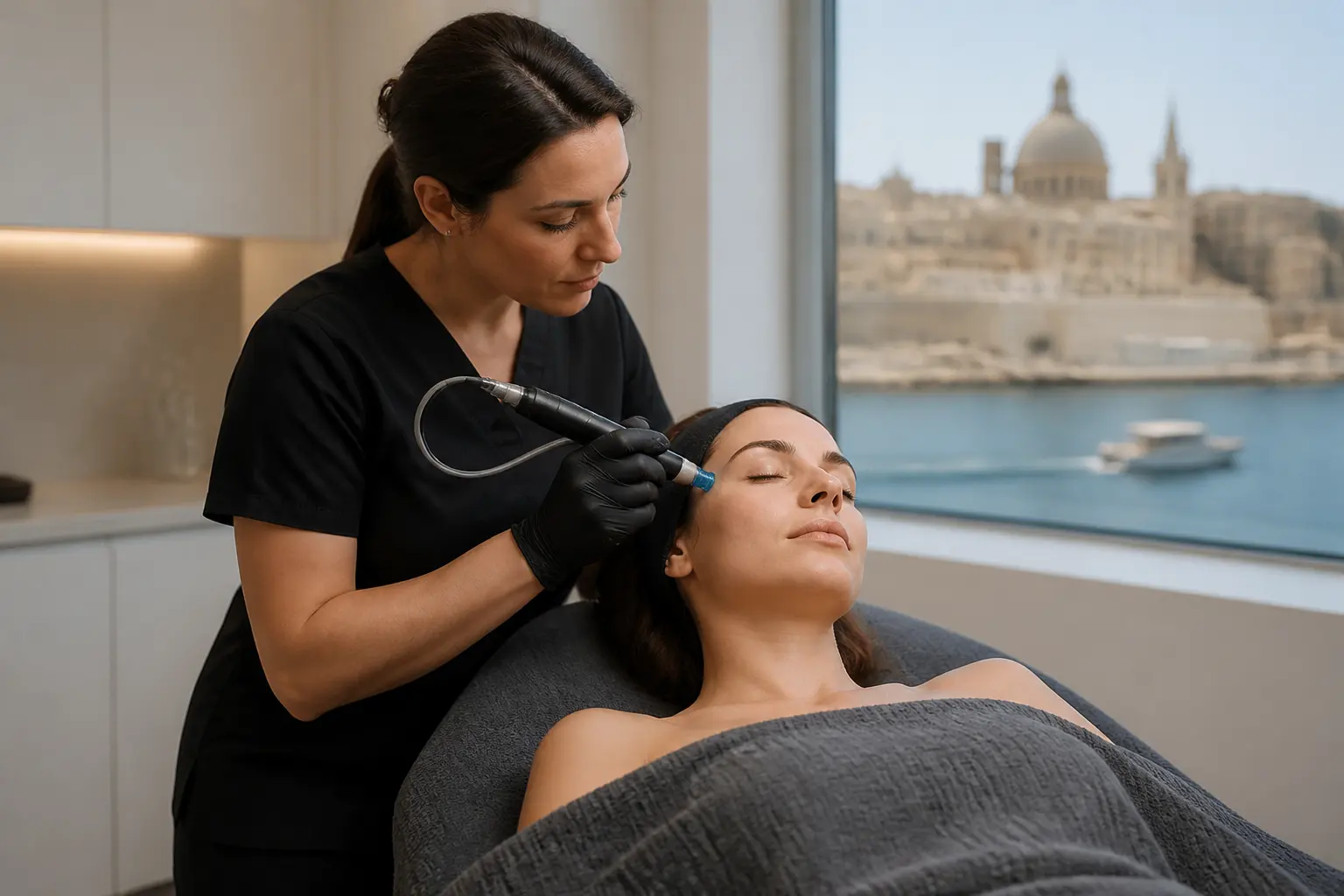
A PDRN facial is often chosen by people who want to support a fresher, more rested-looking complexion without expecting an overnight transformation. That expectation matters. While you may notice that your skin feels cared for after a professional facial, the changes people usually hope to see in skin texture, comfort and overall radiance are best assessed over a considered course of sessions.
In other words, a PDRN facial is not a one-day event with one fixed outcome. Your skin starts from its own baseline, responds in its own way and is affected by daily life in Malta, including sun exposure, air conditioning, sleep, skincare habits and seasonal changes. A good plan leaves room to observe those variables rather than making promises before your first appointment.
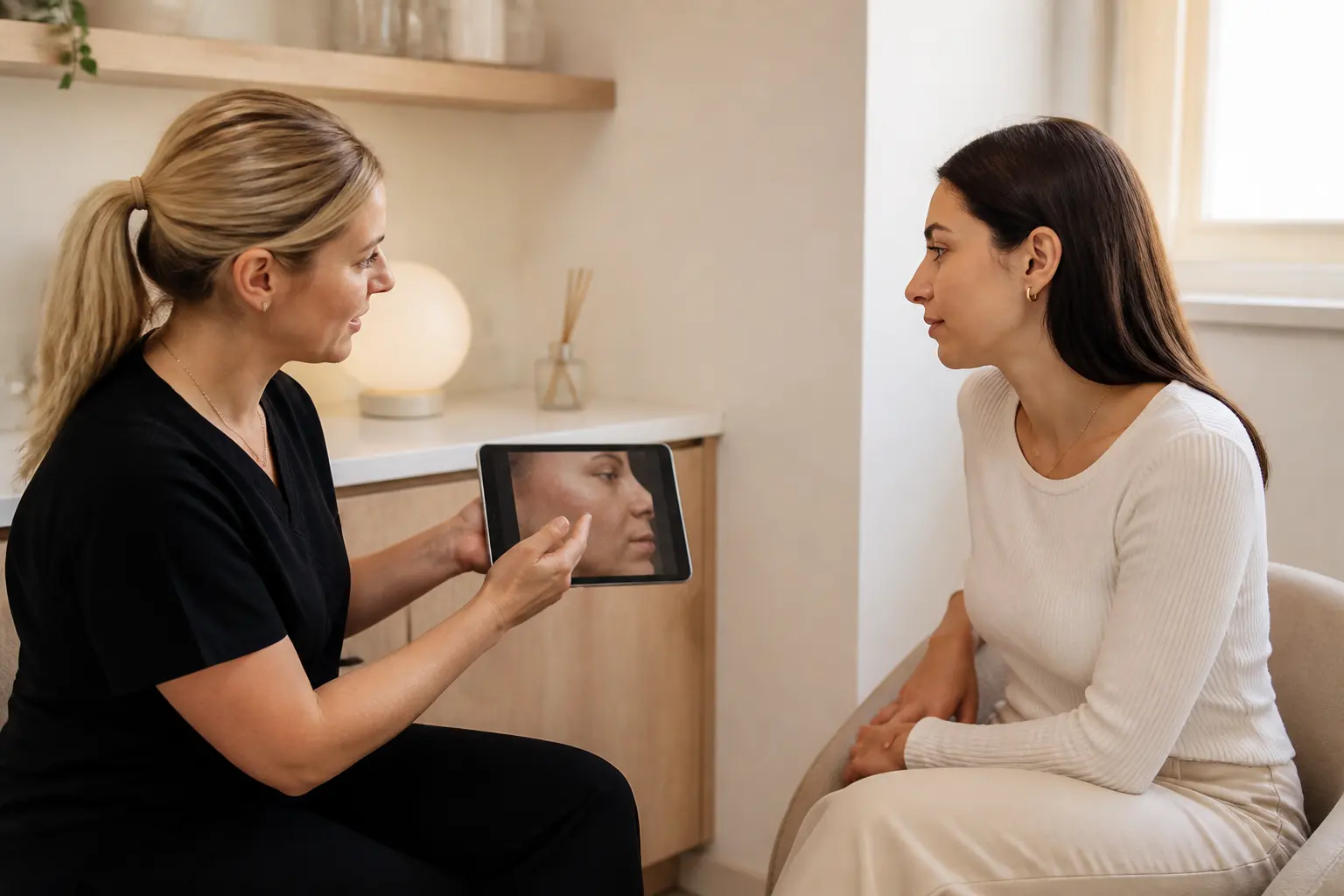
At Becammo, the purpose of a professional consultation is to understand what you would like to improve, look at your current routine and help you decide whether a PDRN Facial is an appropriate addition to your self-care plan. It is a beauty service, not medical treatment, and results can vary from person to person.
What does a PDRN facial course mean?
A course of sessions simply means planning more than one appointment, with time between visits to review how your skin is responding. It is different from booking repeated appointments automatically. The aim is to create a measured routine that is suitable for your skin, your diary and your goals.
PDRN stands for polydeoxyribonucleotide, a DNA-derived material that has been studied in the context of tissue repair and skin regeneration. Much of the published research examines medical or injectable contexts, which are not the same as a non-invasive studio facial. That distinction is important: findings from one format should not be treated as a promise about another. The wider evidence base is still developing, and published reviews describe the field as promising while calling for careful interpretation of outcomes. Read the systematic review on PDRN and tissue regeneration. (pubmed.ncbi.nlm.nih.gov)
For a professional facial setting, the practical question is not, “How many sessions will give me a guaranteed result?” It is, “What changes are realistic for my skin, and how should we review them?” That is why a course is personalised rather than copied from someone else’s plan.
Why visible changes can build gradually
Skin is living tissue that is constantly responding to internal and external conditions. A facial can be a valuable moment of focused care, but it does not remove the factors that influence how your complexion looks from one week to the next. Hydration, barrier comfort, surface smoothness and glow can all fluctuate.
A gradual approach gives you the chance to distinguish a short-term post-facial freshness from a change that feels more consistent in your usual routine. It also avoids putting pressure on your skin, or on your expectations, by treating one appointment as a final verdict.
Your starting point is individual
Two clients can book the same PDRN Facial and arrive with very different needs. One may feel their skin looks dull after travel and long days in air-conditioned spaces. Another may be focused on fine texture changes, while someone else may simply want a regular facial ritual that feels professional and restorative.
Skin type, sensitivity, current products, previous facial treatments and lifestyle all influence the conversation. This is why an experienced studio should not present a standard course as the answer for everybody. Your plan should begin with your priorities, not a trend or a before-and-after image from a different person.
Consistency helps you evaluate, not just repeat
Spacing appointments thoughtfully makes it easier to notice patterns. You can consider how your skin felt during the days after a session, whether your normal skincare was comfortable to use, and whether you saw the kind of improvement you hoped for in day-to-day light.
This process is useful even if you decide that a short series is enough. A course does not mean an endless commitment. It means giving yourself enough opportunity to assess whether the service fits your routine and whether continuing makes sense for you.
Daily habits still shape the picture
A facial appointment is only one part of skin care. A simple, suitable home routine, gentle cleansing, moisturising as needed and sensible sun protection can make it easier to maintain the feeling of care between visits. If you introduce several strong products at once, it becomes difficult to tell what is helping and what may be irritating your skin.
For Malta residents and visitors, sun exposure deserves particular attention. If you are spending more time outdoors, at the beach or around a pool, tell your beauty professional when you book. It helps the studio guide you on sensible timing and post-appointment care.
What to expect after the first appointment
After a first PDRN facial, it is reasonable to pay attention to how your skin feels rather than inspecting every detail in a magnifying mirror. Some people enjoy an immediate sense of hydration and a more polished surface appearance after professional facial care. Others may find that the most useful part of the first visit is understanding their skin better and establishing a calmer routine.
Neither experience automatically predicts the final value of a course. A single session can give useful information, but it is not enough to make a universal forecast. Your professional can use your feedback to decide whether to maintain the same approach, change the spacing, or suggest that another facial option may suit your priorities better.
It is also sensible to avoid arranging a new facial routine immediately before an important event if you have never had that type of service before. Leave time to see how your skin responds. This is especially helpful if your schedule includes flights, sun exposure, swimming or several beauty appointments close together.
How a professional studio plans a sensible course
Professional care should feel clear, not mysterious. Before booking a sequence of appointments, ask what will be reviewed and how your feedback will be used. A practical plan may include the following steps:
- Start with your goal. Explain what you notice about your skin and what you would like to see supported, such as a more refreshed look, smoother-looking texture or a regular moment of professional care.
- Share relevant context. Mention sensitivity, current active skincare, recent treatments, upcoming travel and any concerns you have had after facials in the past.
- Begin conservatively. Your first appointment is an opportunity to see how the service feels for you. There is no need to make assumptions about a long course before that conversation.
- Review between sessions. Notice comfort, routine changes and visible changes in ordinary lighting. Photos taken in the same place and light can be more useful than relying on memory alone.
- Adjust where needed. If your skin or timetable changes, your plan can change too. Personalised care should be responsive rather than rigid.
This approach reflects an important principle in aesthetics: the experience should be tailored to the person in front of you. At Becammo, facial care sits alongside a wider beauty menu, but each service should still be chosen for a clear reason rather than added simply because it is popular.
Questions to ask before committing to several sessions
If you are considering a PDRN facial course in Sliema or Swieqi, these questions can help you book with confidence:
- What is the main aim of this facial for my current skin priorities?
- What should I avoid before and after the appointment?
- How much time should I leave before an event, holiday or beach day?
- Which parts of my normal skincare routine should I mention?
- When should we review whether further sessions are useful?
- What signs would mean I should pause and seek appropriate professional advice?
A responsible beauty professional will welcome these questions. Clarity helps you make an informed decision and prevents the pressure to chase a result that may not be realistic for your skin.
How to track progress without becoming overly critical
It is easy to become more critical when you begin a facial course, especially if you check your skin very closely every day. Instead, choose a few calm markers that relate to your original goal. You might note whether your complexion looks more even in your usual morning light, whether your skin feels comfortable after cleansing, or whether makeup applies more smoothly.
Keep the conditions as similar as possible. Compare photos taken at the same time of day, without filters and from the same angle. This does not turn beauty care into a clinical assessment. It simply gives you a fairer way to judge small, gradual changes.
Also remember that your face is not meant to look identical every day. Hormonal changes, weather, stress and sleep can influence appearance. A professional course should support realistic self-care, not create a standard of permanent perfection.
When a course may need to be paused or reconsidered
It is always appropriate to speak up if something does not feel right for your skin. Let the studio know about unusual or persistent discomfort, a reaction, changes to medications, a new skin diagnosis or a planned procedure that could affect your facial schedule. The right next step may be to postpone, adapt the plan or seek advice from a suitably qualified healthcare professional.
This is not a setback. It is part of responsible beauty care. A quality studio puts hygiene, client information and thoughtful timing ahead of rushing through a pre-set sequence of appointments.
The science around PDRN and polynucleotides is an active area of research, but studies vary substantially in the products, delivery methods and outcomes examined. A recent review of randomised clinical trials highlights this variation, reinforcing why individual assessment and measured expectations matter. View the review of polynucleotides and PDRN in skin applications. (pubmed.ncbi.nlm.nih.gov)
Conclusion
A PDRN facial course is best understood as a gradual, personalised approach to professional skin care. Rather than promising a fixed result after a fixed number of appointments, it creates time to observe your skin, refine your routine and decide what is worthwhile for you.
If you are considering PDRN Facial care in Malta, book an appointment at Becammo in Sliema or Swieqi and discuss your priorities before planning your next sessions. A clear conversation is the best starting point for a facial plan that feels considered, comfortable and realistic.
Frequently asked questions
How many PDRN facial sessions will I need?
There is no single number that suits everyone. The right approach depends on your starting point, goals, skin response, lifestyle and the professional assessment. Your first appointment can help establish whether a course is appropriate and how it should be reviewed.
Will I see a result after one PDRN facial?
You may notice that your skin feels freshly cared for after a professional facial, but longer-term visible changes should be assessed gradually. One appointment is not a reliable basis for guaranteeing a particular outcome.
How far apart should PDRN facial appointments be?
Spacing should be agreed with the studio after discussing your skin, diary and response to the first appointment. Avoid copying someone else’s schedule, as their skin priorities and routine may be different from yours.
Can I book a PDRN facial before a holiday in Malta?
It is best to allow time before a beach holiday, major event or long-haul flight, particularly if it is your first appointment. Tell the studio about your plans so they can help you choose sensible timing and aftercare.
Can I combine a PDRN facial with other beauty appointments?
Potentially, but timing matters. Let the studio know about brow, lash, laser or semi-permanent appointments you have planned. The team can help you organise your beauty day in a way that respects your comfort and aftercare needs.