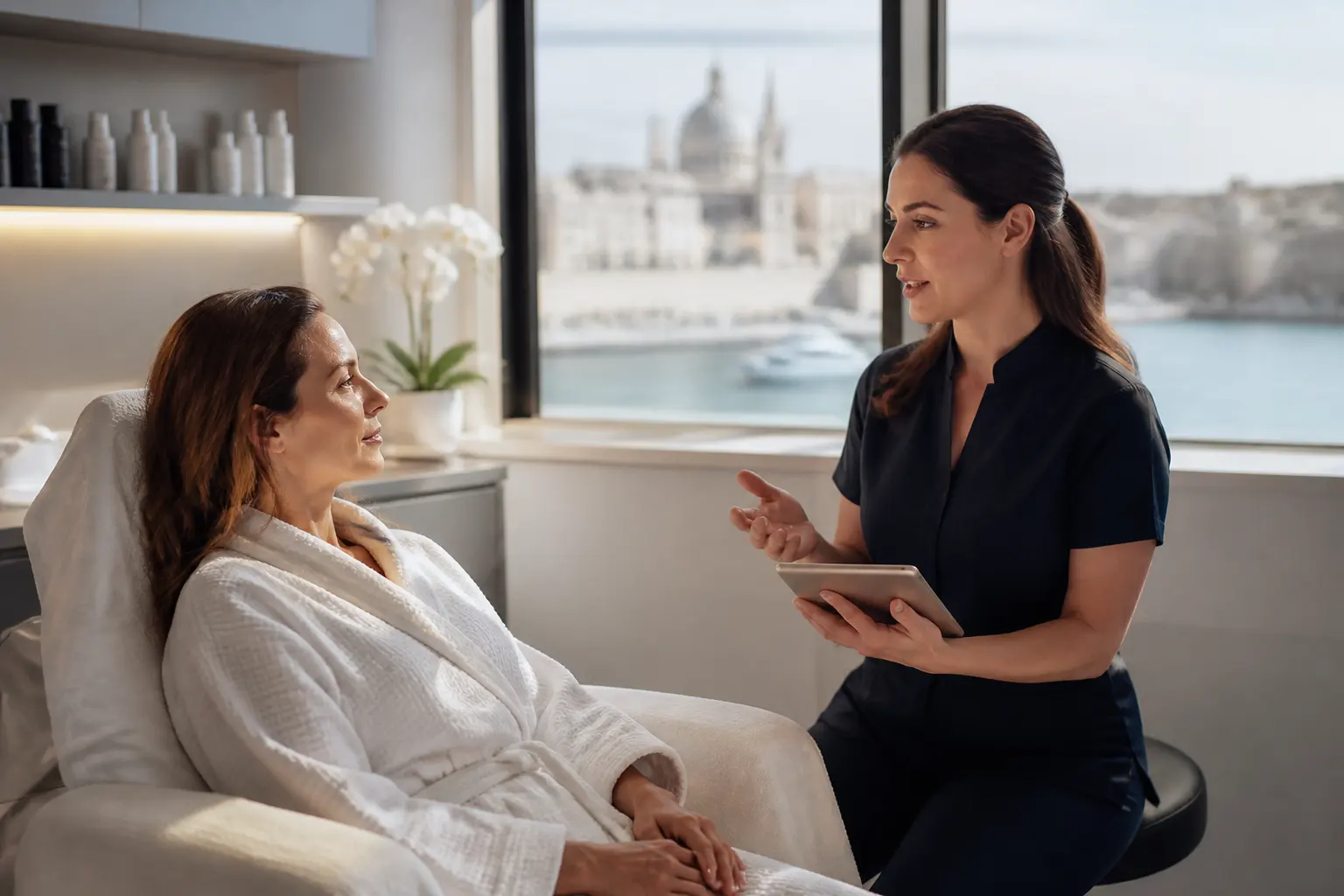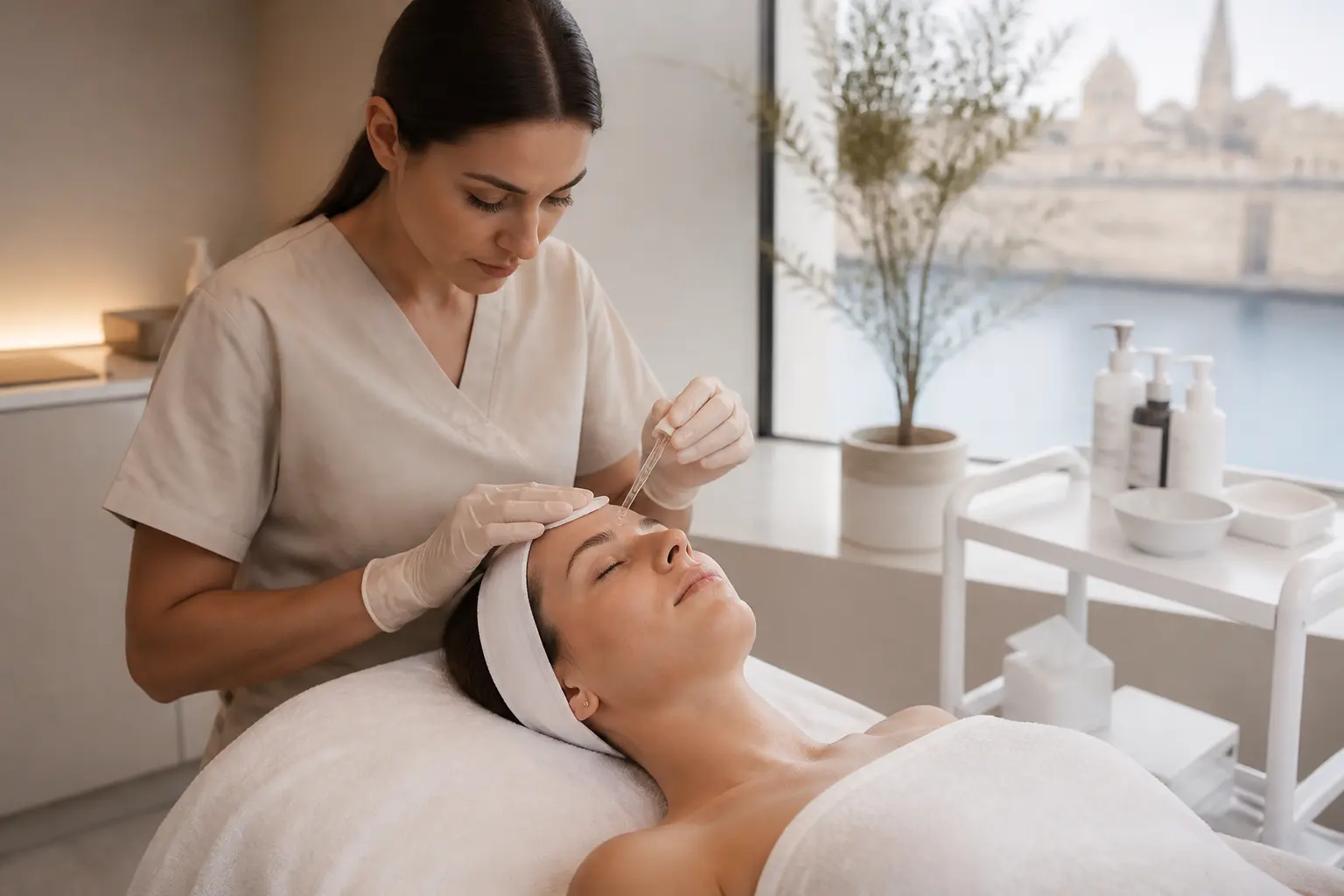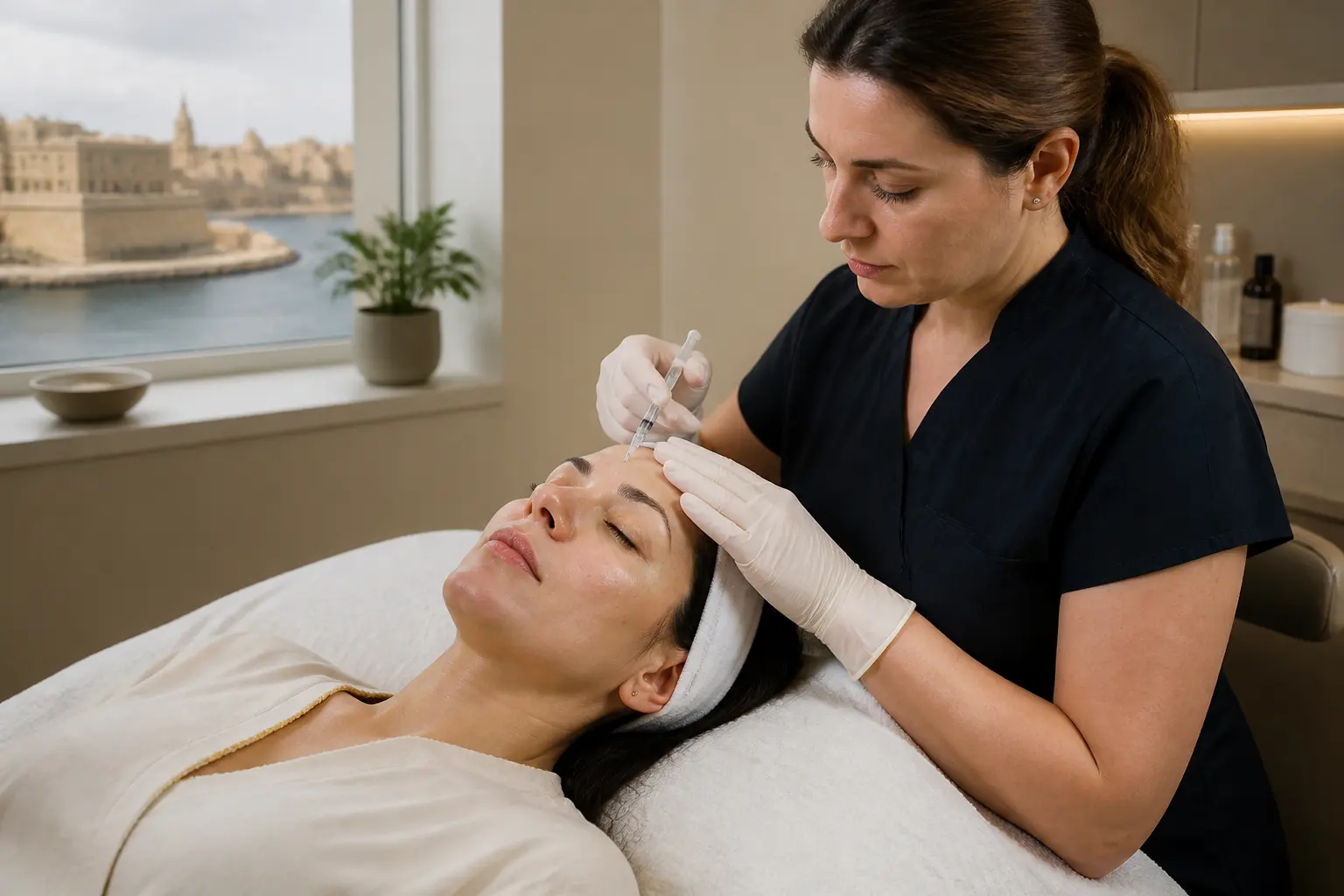
After a PDRN facial, simplify your routine: cleanse gently if needed, use a familiar moisturiser and wear broad-spectrum sunscreen with SPF 30 or higher every morning. Avoid deliberate tanning and direct midday sun in the first days, and pause retinoids, exfoliating acids, scrubs and strong spot treatments until the studio advises restarting. The personalised instructions given at your appointment always take priority.
After a PDRN facial, it can be tempting to add every glow-boosting serum in your bathroom cabinet. In reality, the most useful next step is often to simplify. A calm routine, careful sun protection and a short pause from potentially irritating actives give your skin the space to settle after its appointment.
This matters especially in Malta, where a quick walk to the office, the beach, the ferry or a coffee in the sun can mean more UV exposure than you expected. The goal is not to make aftercare complicated. It is to avoid creating unnecessary irritation while following the personalised guidance given at your appointment.
PDRN facial aftercare should always reflect the exact protocol used, your skin’s current condition and any products already prescribed or recommended by a healthcare professional. If the studio has given you specific instructions, they take priority over any general guide. Think of the advice below as a clear framework for the days after a professional facial, not as a replacement for individual assessment.
Why do the days after a PDRN facial need a simpler routine?
A professional facial is a focused moment of care for the skin. Afterwards, skin may feel comfortable and hydrated, or it may be temporarily more reactive than usual. That response can vary with your skin type, sensitivity, existing routine, recent sun exposure and the techniques included in the session.
This is why aftercare is less about chasing an instant change and more about protecting the conditions your skin needs to feel balanced. Over-cleansing, scrubbing, trying a new acid or applying multiple strong formulas can make it harder to tell what your skin actually needs.
A helpful principle is simple: use fewer products, apply them gently and reintroduce your usual actives one at a time. Dermatology guidance for treated or sensitive skin commonly stresses gentle care and sun protection, because UV exposure can aggravate visible discolouration in recently treated skin. The American Academy of Dermatology also recommends broad-spectrum, water-resistant sunscreen with SPF 30 or higher following skin treatments.
How should you handle sun after a PDRN facial?
Sun protection is not an optional extra after a facial. It is an everyday skin-care habit, and it becomes particularly important when you are trying to keep post-facial skin comfortable and even-looking.

In practical terms, avoid deliberately tanning, long unprotected outdoor periods and direct midday sun where possible in the first days after your appointment. This does not mean staying indoors. It means planning well. Seek shade when it is available, wear a hat that protects the face, and use sunscreen consistently.
Choose sunscreen you will genuinely wear
The best sunscreen is one you can apply generously and comfortably. Look for broad-spectrum coverage, SPF 30 or higher and water resistance when your day includes sweating, swimming or time by the sea. If you are sensitive to a particular formula, ask the studio which texture or type may feel most comfortable for your skin.
Apply it as the final step of your morning routine before make-up. If you are outside for an extended period, reapply according to the product instructions, especially after sweating or swimming. A hat and shade are useful additions, not replacements for sunscreen.
Do not be fooled by a cloudy morning or a short journey. UV exposure can still add up during errands, outdoor lunches and time near reflective water or pale stone. In Malta, keeping a small sunscreen in your bag can make aftercare much more realistic.
What if you have an outdoor event?
If you have a beach day, boat trip, wedding or long outdoor shift planned, mention it when booking. The studio can help you choose a suitable appointment time or advise whether it is better to schedule your facial after the event. Planning ahead is easier than trying to manage avoidable exposure afterwards.
At BeCammo · Sliema · Swieqi
Facials in Malta
Deep cleansing, PDRN and dermaplaning facials for clear, glowing skin.
- from €50price
- Sliema · Swieqiwhere
- ★ 5.0460+ Google reviews
Which skincare actives should you pause?
The word “actives” covers a wide range of ingredients, and not every active behaves in the same way. The shared issue is that some formulas can tingle, dry or irritate skin, particularly when it is already feeling sensitive.
For a short period after a PDRN facial, many people benefit from pausing products that exfoliate, strongly brighten or accelerate skin renewal. Your return date should be based on your practitioner’s instructions and how your skin feels, rather than a rigid internet timetable.
Retinoids and retinol
Retinol and prescription retinoids can be valuable parts of a long-term routine, but they are not always the best immediate follow-up to a facial. They can be irritating for some people and are associated with greater sun sensitivity. The American Academy of Dermatology’s guidance on retinoids advises using sun protection when using these products and notes that irritation can be a concern, particularly for dry or inflamed skin.
Pause retinoids until the studio says it is appropriate to restart. When you do return to them, use the frequency your skin already tolerates. There is no need to compensate for a brief break by applying more than usual.
Exfoliating acids and scrubs
AHAs, such as glycolic or lactic acid, and BHAs, such as salicylic acid, can be useful in the right routine. However, they are designed to exfoliate, so using them immediately after a facial may be more than your skin needs. The same applies to exfoliating pads, peeling solutions, grainy scrubs, cleansing brushes and rough towels.
Wait until your skin feels settled and you have been advised that it is suitable to resume them. Then bring back one product at a time. If stinging, persistent redness or tightness appears, pause and ask for advice rather than layering more products to counteract the reaction.
Vitamin C, benzoyl peroxide and strong spot treatments
Vitamin C formulas vary widely, from gentle derivatives to stronger acidic products. Benzoyl peroxide and targeted blemish treatments may also feel drying or uncomfortable on reactive skin. They are not automatically unsuitable in every routine, but the immediate post-facial period is usually not the moment to experiment.
Keep your routine quiet first. Once skin feels normal again, reintroduce products thoughtfully, preferably one at a time. That approach helps you identify what agrees with your skin and what does not.
Fragrance-heavy products and new launches
Aftercare is not the right time to test a new mask, scented oil or highly fragranced cream. Even a product that works well for a friend may not suit your skin on that day. Choose familiar, gentle products where possible, and avoid rubbing them in aggressively.
What routine should you use after a PDRN facial?
For many clients, a basic routine is enough after a PDRN facial. The exact products may differ, but the roles are straightforward: cleanse gently if needed, support comfort with a suitable moisturiser, and protect from the sun.
Morning
- Cleanse lightly if needed. If your skin does not feel oily or congested, a rinse or a mild cleanser may be sufficient. Avoid hot water and vigorous rubbing.
- Use a simple moisturiser. Select a familiar product that feels comfortable and does not sting.
- Apply sunscreen. Choose broad-spectrum SPF 30 or higher and allow it to form the final step before make-up.
Evening
- Remove sunscreen and make-up gently. Use a mild cleanser and lukewarm water.
- Moisturise. Keep the focus on comfort, not on multiple treatment steps.
- Leave strong actives aside. Wait for the point advised by your practitioner before restarting them.
If you were given a studio-specific product recommendation, follow that advice. A professional will take account of the service performed and the information you shared during consultation.
Letting the skin do its work does not mean ignoring it
“Letting the skin do its work” means resisting the urge to constantly check, touch and adjust. It does not mean overlooking a reaction that concerns you.
Avoid picking at dry areas, pressing on the face or repeatedly applying products because you want a faster-looking result. Give your skin a chance to settle between steps. If you use make-up, apply it with clean tools and a light hand once the studio confirms it is appropriate for you.
It is also sensible to avoid adding unnecessary heat or friction straight after a facial. Very hot showers, steam rooms, intense workouts and facial massage can be uncomfortable for some people while skin is feeling sensitive. If any of these activities are part of your normal week, ask about timing at your appointment.
When should you ask the studio or a healthcare professional?
Contact the studio if you are unsure whether to restart a product, if you have an important occasion coming up, or if your skin is responding differently from what was discussed during your appointment. Bringing a photo of the product label or your current routine can make that conversation much easier.
If you experience a significant or worsening reaction, seek advice from an appropriate healthcare professional. Do not try to manage a concerning response by using more exfoliants, strong spot treatments or several new soothing products at once.
Clients using prescription skin medicines, managing a diagnosed skin condition, or following advice from a dermatologist should mention this before booking. The safest aftercare plan is the one that fits your wider skin-care context.
A realistic PDRN aftercare checklist for Malta
- Follow the aftercare instructions given for your individual appointment.
- Keep the first part of your routine gentle and familiar.
- Wear broad-spectrum sunscreen with SPF 30 or higher every morning.
- Use shade, a hat and sensible timing for longer outdoor plans.
- Pause retinoids, exfoliating acids, scrubs and other potentially irritating actives until advised to restart.
- Avoid trying new, fragranced or intensive products while skin is settling.
- Reintroduce your normal products gradually, rather than all at once.
- Ask questions if you are unsure, especially before a holiday, event or high-sun day.
Conclusion
Thoughtful PDRN facial aftercare is not about building a complicated recovery routine. It is about protecting your skin from excess sun, giving stronger actives a short pause, and paying attention to how your own complexion feels. A gentle approach can make your routine easier to manage and helps you avoid unnecessary irritation.
If you are considering a PDRN facial in Malta, or you want help planning your existing skincare around an appointment, book with BeCammo and ask the team about aftercare for your skin and schedule. Choose the most convenient studio location in Sliema or Swieqi when you book online.
Frequently asked questions
Can I wear sunscreen after a PDRN facial?
Sun protection is an important part of post-facial care. Use the sunscreen and timing recommended by your practitioner. In general, a broad-spectrum, water-resistant SPF 30 or higher is a practical standard for daytime protection.
When can I use retinol after a PDRN facial?
There is no one return date that suits every client. Pause retinol or other retinoids until the studio advises it is appropriate, then restart gently at the frequency your skin normally tolerates.
Should I avoid vitamin C after a PDRN facial?
Some vitamin C products can feel too active when skin is sensitive, particularly stronger acidic formulas. Ask your practitioner when to bring your usual serum back, and avoid introducing a new vitamin C product immediately after your appointment.
Can I go to the beach after a PDRN facial?
It is best to avoid prolonged direct sun and tanning immediately after your facial. If beach plans cannot be moved, use shade, a protective hat and suitable sunscreen, and ask the studio for personalised advice before your appointment.
Can I exfoliate after a PDRN facial?
Do not rush back to exfoliating acids, scrubs, peeling pads or cleansing tools. Wait until your skin has settled and follow the practitioner’s timing advice, then reintroduce one exfoliating product at a time.
What is the simplest routine after a PDRN facial?
A gentle cleanser when needed, a comfortable moisturiser and consistent sunscreen are often enough in the immediate period after a facial. Keep strong actives on hold until you have been advised to resume them.