Facials for Men With Beards: Working Around Facial Hair
Brenda Cammo Team
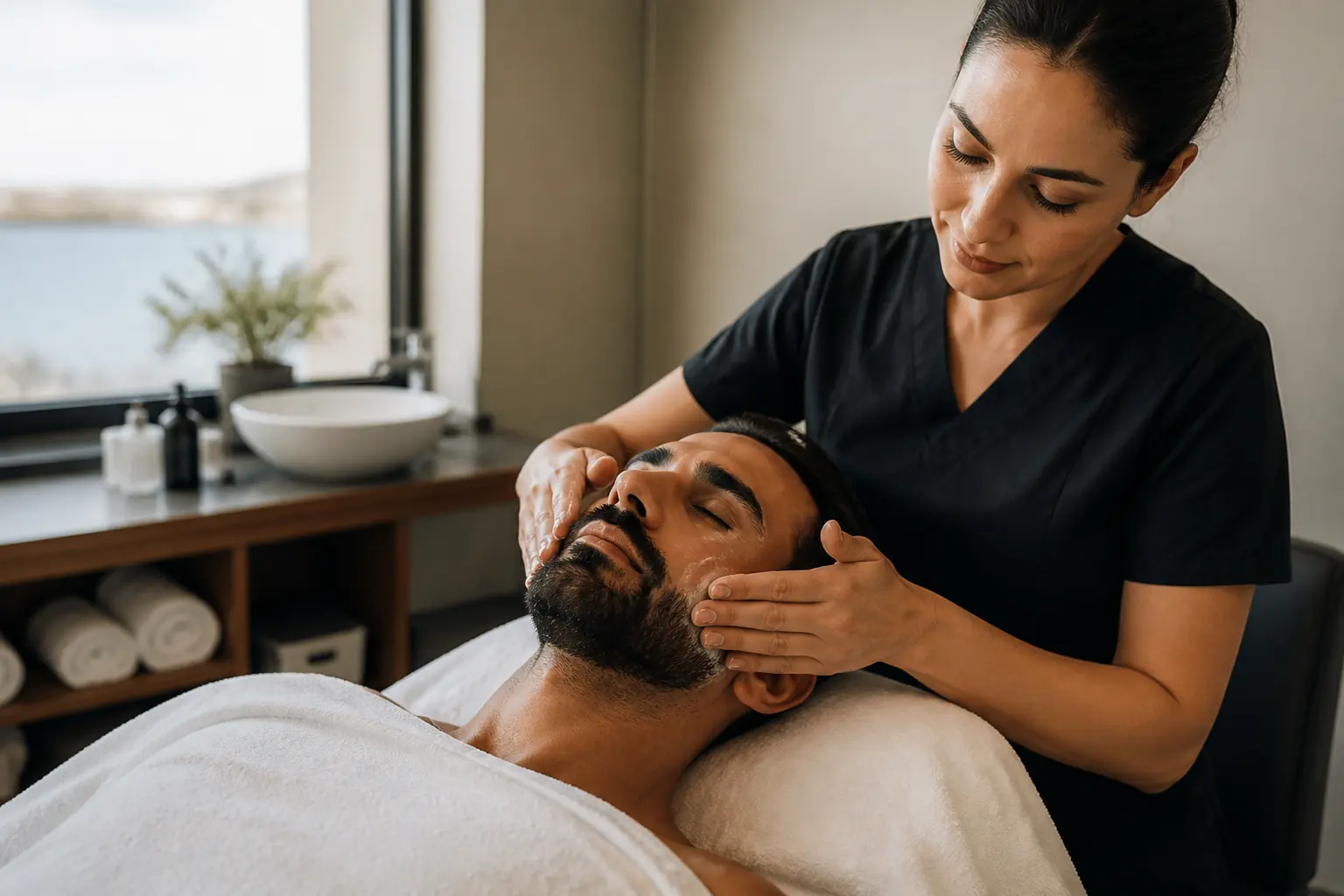
A beard should not stop you from booking a facial. It simply means your appointment needs to be planned around the areas that are easy to access, the condition of the skin beneath the hair and the grooming routine you already follow.
For many men, the skin under a beard can be the part that needs the most attention. Facial hair can hold onto sweat, excess oil, dead skin cells and product residue if cleansing is rushed or does not reach the skin properly. That does not mean a beard is unhygienic. It means your skin care needs to account for the fact that there is hair between your hands and your skin.
A professional facial for men with beards is not about asking you to change your look. It is about assessing your skin, working carefully around the beard and focusing on the areas where treatment is appropriate, including the forehead, nose, cheeks, eye contour, jawline edges and any accessible skin beneath the beard. At Becammo, a facial appointment starts with your individual skin needs rather than a one-size-fits-all approach.
Can you have a facial without shaving your beard?
Yes, in most cases. You do not normally need to shave off a beard before a facial. A trained professional can adapt the session to the length, density and shape of your facial hair, as well as your skin concerns.
The practical limit is access. Treatments that need direct contact with the skin, such as close exfoliation or extractions, cannot be performed through dense hair. Instead, the facial can focus on exposed areas and on the skin that can be reached safely by separating shorter or less dense sections of hair. The beard itself can also be taken into account when cleansing and discussing home care.
If your beard is very full, the clearest gains may be in the upper face, nose, temples, exposed cheeks and the outline of the beard. If you keep close stubble or a short beard, there may be greater access to the skin beneath it. The right plan depends on what your skin looks and feels like on the day, not on a fixed template.
Why the skin beneath a beard deserves attention
Beard hair can make it easier to miss the skin underneath during a quick morning cleanse. Heavy oils, balms, waxes and styling products can also leave residue where hair meets skin. The American Academy of Dermatology notes that oil, dead skin cells and bacteria can become trapped near the skin beneath a beard, which may contribute to clogged pores and breakouts in some people. It recommends gently washing both the beard and the skin under it rather than relying on soap or shampoo alone. American Academy of Dermatology guidance on common beard concerns.
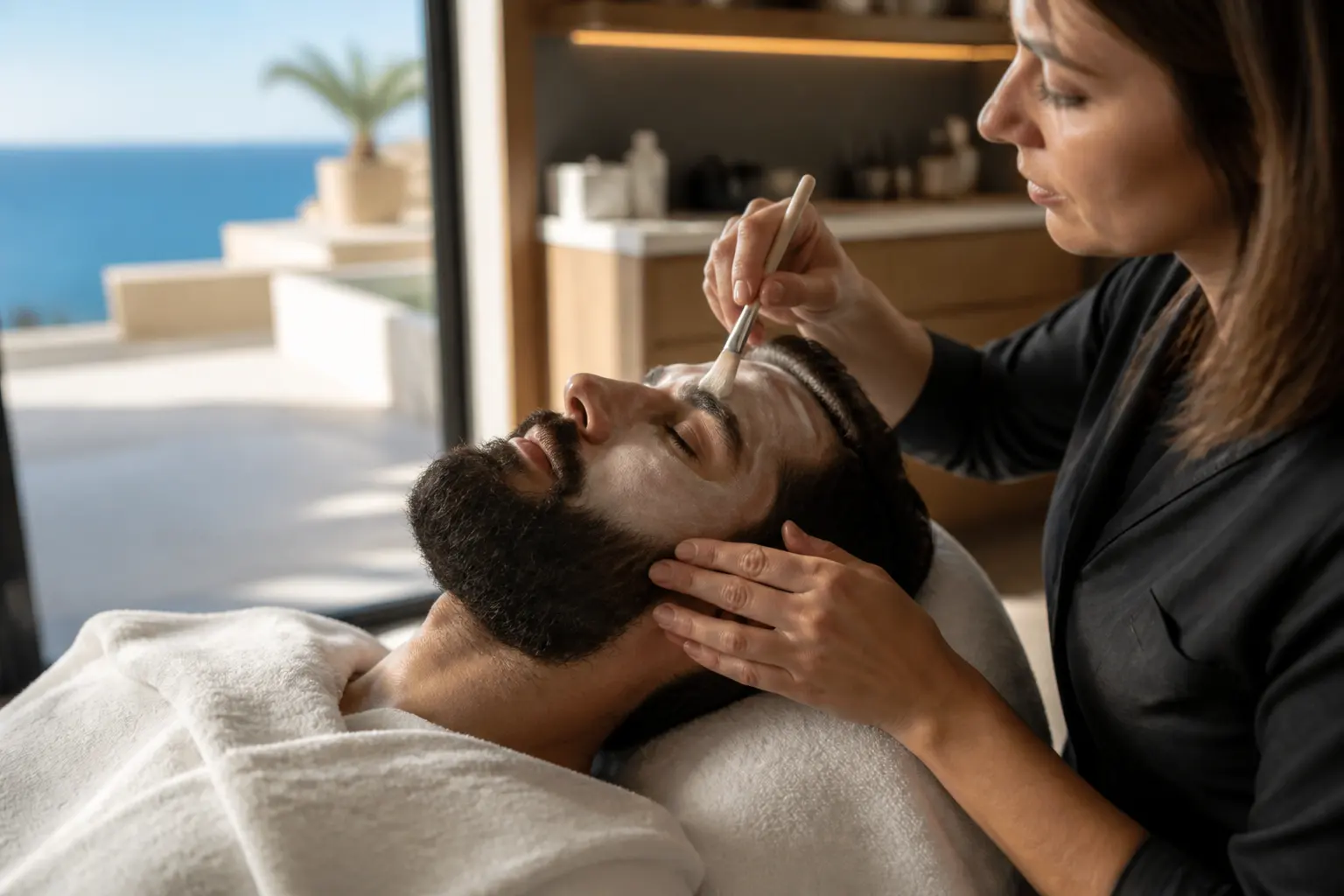
Common reasons men consider a facial while keeping their beard include:
- Congestion around the nose, forehead or beard line.
- A dull or uneven-looking complexion in exposed areas.
- Dryness or a tight feeling beneath the beard.
- Visible blackheads around the nose and chin edges.
- Skin that feels unsettled after frequent trimming or shaving the neckline.
- Uncertainty about which products suit both the beard and the skin underneath.
A facial is a professional skin-care service, not a substitute for medical diagnosis. If you have painful bumps, spreading redness, broken skin, a persistent rash or signs of infection, it is sensible to speak with a pharmacist, GP or dermatologist before booking an aesthetic treatment.
How a professional facial works around facial hair
The value of a professional appointment is not simply the products used. It is the assessment and the ability to adjust the session as your skin requires. Men’s skin is not automatically one category, and neither is beard care. Oily skin can still be dehydrated, sensitive skin can also become congested, and a thick beard may sit alongside a forehead that feels dry or reactive.
1. Skin assessment comes first
Before treatment begins, the professional should consider your skin type, current concerns, facial hair density, shaving or trimming habits and the products you use. Mention if you use beard oils, fragranced balms, retinoids, exfoliating acids, acne products or any prescribed topical product. This information helps avoid unnecessary irritation and supports a more appropriate choice of facial steps.
It is also helpful to explain whether you get razor bumps, ingrown hairs or frequent spots along the beard line. Shaving can irritate skin and may aggravate acne for some people, while follicle-related bumps can resemble acne. American Academy of Dermatology shaving advice and its overview of folliculitis both emphasise the relationship between shaving, irritation and hair follicles.
2. Cleansing is adapted, not rushed
A good facial cleanse should address exposed skin and, where possible, reach beneath the beard without aggressively scrubbing the hairs. The goal is to remove daily residue while respecting the skin barrier. Rough rubbing can leave the skin feeling more irritated, particularly if you have recently trimmed or shaved around the neckline and cheeks.
At home, use your fingertips to work a suitable cleanser through the beard to the skin, then rinse thoroughly with lukewarm water. This is particularly important if you use styling products. If you only wash the visible surface of the beard, residue can remain close to the skin.
3. The treatment concentrates on accessible areas
The forehead, nose, upper cheeks, temples and eye area are generally easy to treat. The beard perimeter can be approached carefully too, depending on sensitivity and hair density. If there is accessible congestion, a professional may decide whether it is suitable to address it during the session. Extractions are not about squeezing every visible pore. They should be selective, hygienic and based on a skin assessment.
For a fuller beard, some parts of the lower face may simply be left alone. That is not a lesser appointment. It is an appropriate adjustment that respects both your skin and the beard you want to keep.
4. Finishing products should suit both skin and beard
The final products matter because a heavy finish that sits uncomfortably beneath hair may not fit your routine. If your skin is prone to clogged pores, look for products described as non-comedogenic or oil-free where appropriate. The American Academy of Dermatology also advises choosing moisturising products based on your skin type and applying moisturiser to both skin and beard after washing. American Academy of Dermatology beard care advice.
What to do before a facial if you have a beard
A little preparation helps the appointment focus on your skin rather than removing unnecessary product build-up.
- Cleanse your beard and face as normal. Arrive with clean skin where possible, especially if you regularly use oil, balm, wax or styling cream.
- Do not try a new active product the night before. Introducing a strong exfoliant or unfamiliar product shortly before a facial can make it harder to judge how your skin is reacting.
- Tell the therapist about recent shaving or trimming. Freshly shaved areas can feel more sensitive. Mention any nicks, irritation or bumps so the session can be adjusted.
- Pause only as advised. If you use active skin-care products, ask what to do before your appointment rather than stopping prescribed products without professional medical advice.
- Bring your questions. A facial is a useful chance to ask whether your current beard products support your skin or feel too heavy for it.
You do not need to arrive with a perfectly styled beard. In fact, it is usually more useful for the therapist to see your ordinary grooming pattern and understand which areas are regularly covered, shaved or irritated.
Beard oils, balms and breakouts: finding the balance
Beard oil is not automatically a problem. For some people, it helps soften hair and makes the beard feel more comfortable. The issue is whether the amount, formula and cleansing routine suit your skin. If you notice bumps, congestion or shine developing around the beard line, it is worth reviewing how much product you use and whether it is being rinsed away fully.
Rather than applying a large amount directly to the skin, start with a modest quantity through the beard lengths and assess how your skin responds. If breakouts are a concern, a lighter beard conditioner or a non-comedogenic moisturiser may be more comfortable than a rich oil, but the right choice remains personal. The American Academy of Dermatology advises that products containing oil can contribute to clogged pores for some people, and recommends considering non-comedogenic options when breakouts are an issue. American Academy of Dermatology advice on product-related breakouts.
One practical habit makes a difference: clean your beard tools. Brushes, combs and trimmers can collect product residue and should not be ignored as part of your grooming routine.
Facials, beard dandruff and irritated skin
Flaking beneath a beard can have several causes, including dryness, product residue or a skin condition that needs medical assessment. It is tempting to scrub harder, but forceful exfoliation can worsen irritation. A facial professional can help identify whether your skin appears dry, congested or sensitive and can recommend a gentler cosmetic routine. They should not diagnose a skin condition during a beauty appointment.
Seek clinical advice if flaking is persistent, the area is sore, there is a rash, the skin cracks or you develop painful acne-like bumps. These symptoms may need assessment beyond a facial. For everyday grooming, gentle cleansing, thorough rinsing and avoiding over-scrubbing are sensible foundations.
How to care for your skin after the appointment
After a facial, keep the rest of the day uncomplicated. Your therapist may personalise aftercare according to the service performed and your skin’s response, but these principles are broadly useful:
- Use a gentle cleanser and lukewarm water.
- Avoid vigorous beard brushing over freshly treated skin.
- Keep beard balm, oil and wax light if the skin feels sensitive.
- Do not pick at blemishes or congestion.
- Use sun protection on exposed facial skin during the day.
- Follow any product-spacing advice given during your appointment.
If you are planning to shave the beard line after your facial, ask when it makes sense to do so. Leaving a little space between treatments and close shaving can be more comfortable for skin that is already prone to irritation.
Choosing the right facial in Malta
The best facial is not necessarily the most intensive one. Choose based on your current skin priorities. If your main concern is blocked pores and a rough texture, a professional deep-cleansing facial may be worth discussing. If your skin is easily reactive, a gentler, personalised approach may be more suitable. If you are unsure, start with a conversation and be clear that you are keeping your beard.
At Becammo’s Sliema and Swieqi studios, the facial consultation is the place to explain your grooming routine, beard length and skin goals. This allows the appointment to be shaped around your face as it is, rather than asking you to fit a standard idea of how a facial should look.
Conclusion
Facials for men with beards are entirely possible when the service is adapted to the skin that is accessible and the beard you want to maintain. The key is thoughtful assessment, gentle cleansing, realistic treatment choices and an aftercare routine that does not overload the skin beneath your facial hair.
If your beard is part of your everyday style but your skin needs more attention, book a facial consultation at Becammo and mention your beard, current products and any areas that concern you. A professional can help you choose a session that works with your grooming routine, not against it.
Frequently asked questions
Do I need to trim my beard before a facial?
No. You can usually attend with your normal beard length. If you are considering a major trim, it may be useful to do it a few days before rather than immediately before the appointment, especially if your skin is sensitive.
Can a facial clean the skin underneath a full beard?
It can support cleansing in accessible areas, but dense hair limits direct access to every part of the lower face. A professional can work carefully around the beard and advise you on maintaining the skin beneath it at home.
Are facials suitable if I get razor bumps?
Possibly, but it depends on whether the skin is calm and intact. Tell the therapist about razor bumps, ingrown hairs or irritation before treatment. Painful, inflamed or persistent bumps should be assessed by a medical professional.
Will a facial make my beard feel greasy?
It should not. Let the therapist know if you dislike heavy finishes or are prone to breakouts. Products can be selected with your skin type and beard routine in mind.
Can I use beard oil after my facial?
Ask for personalised aftercare at the end of the appointment. If your skin feels sensitive, it may be better to keep products light and avoid applying a rich oil directly onto freshly treated skin.
How often should men with beards have a facial?
There is no single schedule for everyone. Your ideal frequency depends on your skin, the facial selected, shaving habits and home routine. A professional assessment is the best way to decide what is realistic for you.