Facial Aftercare: Simple Home Care That Helps Results Last
Brenda Cammo Team

A professional facial can leave your skin feeling refreshed, smoother and more comfortable, but what you do afterwards matters too. Facial aftercare does not need to mean buying a completely new routine or using every active product in your bathroom. In many cases, the most helpful approach is to keep things simple, gentle and consistent.
After a facial, your skin may have received cleansing, exfoliation, hydration, massage or extractions, depending on the service and your individual needs. That is why the days immediately following your appointment are a good time to reduce unnecessary stress on the skin barrier. Think calm care rather than constant correction.
Whether you live in Malta year-round, have just arrived for a sunny break, or are fitting a facial into a busy week in Sliema or Swieqi, this guide explains how to look after your skin at home and when it is sensible to ask your facial professional for personalised advice.
Why facial aftercare matters
A facial is not separate from your home routine. Your appointment gives your skin focused professional attention, while your daily habits influence how comfortable and balanced it feels afterwards. Cleansing too aggressively, testing several new products at once or spending long periods in strong sun can make it harder to understand what your skin needs.
Good facial aftercare supports three simple goals:
- Keeping the skin clean without leaving it tight or stripped.
- Maintaining hydration and comfort with products your skin already tolerates well.
- Protecting the skin from environmental exposure, especially daytime sun.
This is particularly useful after a facial that includes exfoliation or extraction. Skin can look clearer and feel softer, yet it may also be temporarily more reactive to friction, heat or strong formulas. There is no need to panic if your skin looks a little pink after an appointment, but it is wise to give it a quieter routine while it settles.
Your simple facial aftercare routine
The best routine is usually the one you can follow comfortably. Rather than layering multiple serums and masks, return to reliable basics. If your facial professional has given you specific aftercare directions, those should always come first because they reflect the service you received and what they observed about your skin.
1. Cleanse gently
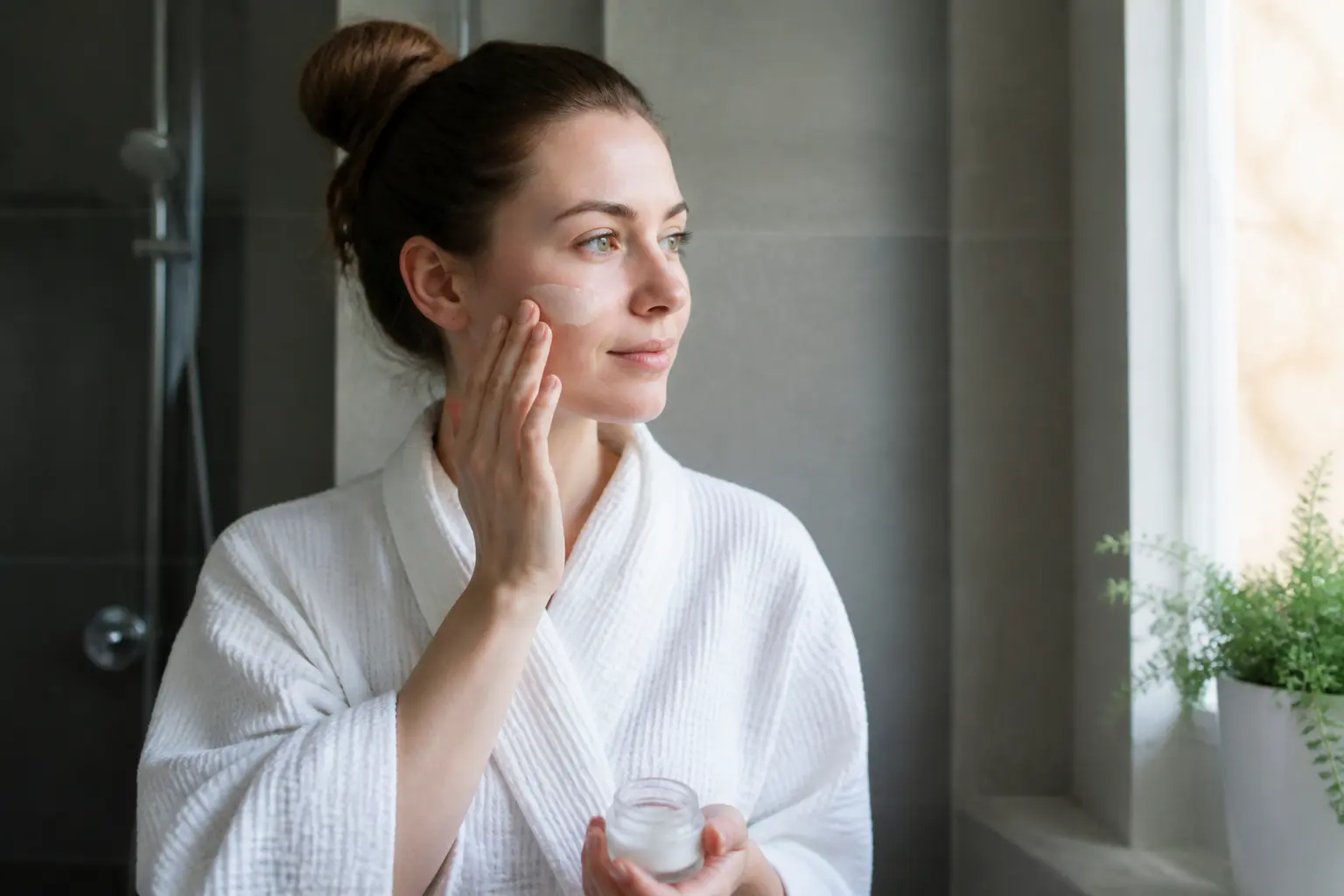
At home, use a mild cleanser that removes daily grime, sunscreen and make-up without making your face feel squeaky-clean. Very hot water, rough flannels and repeated cleansing can be unnecessarily harsh, especially if your skin has already been exfoliated during the facial.
Use lukewarm water, take your time around the hairline and sides of the nose, then pat your face dry with a clean towel. Rubbing can create extra friction when skin is feeling sensitive.
2. Keep hydration uncomplicated
After cleansing, apply a moisturiser that you know suits your skin. The aim is comfort, not a complicated experiment. A familiar hydrating serum may also be appropriate if it is part of your usual routine and has not caused irritation before.
If your skin tends to be oily, hydration still matters. Choose a texture that feels comfortable for you rather than skipping moisturiser entirely. If your skin is dry or dehydrated, applying moisturiser while the skin is still slightly damp can help make the routine feel more comfortable.
3. Wear sunscreen during the day
Daytime sun protection is an important part of facial aftercare, especially in Malta where bright weather can be part of everyday life for much of the year. Apply a broad-spectrum sunscreen that works for your skin and use it as directed on the product label. Reapply when appropriate for your day, particularly if you are outdoors, sweating or spending time near the sea.
A hat, sunglasses and shade are useful practical additions when the sun is strong. These habits are not only for the day after a facial. They are valuable parts of a steady skin-care routine throughout the year.
4. Leave active products out for a little while
Active ingredients can have a place in a well-planned routine, but immediately after a facial is not always the moment to push the skin further. Depending on your skin and the treatment received, it may be sensible to pause exfoliating acids, scrubs, retinoid products and other intensive formulas for a short period.
The right timing varies. It depends on your normal routine, the type of facial and how your skin is feeling. If you are unsure when to restart a product, ask the professional who treated you instead of guessing. A personalised answer is more useful than following a generic timetable online.
What to avoid after a facial
Facial aftercare is as much about what you leave out as what you put on. You do not need to cancel your life after an appointment, but a few small choices can help you avoid unnecessary irritation.
Avoid picking at the skin
If you have congestion, visible pores or a blemish that seems ready to disappear, it can be tempting to touch or squeeze. Try not to. Picking can irritate the area, leave marks and make a small concern feel more noticeable. If you are prone to congestion, regular professional advice and a consistent home routine are generally more useful than an occasional attempt to fix everything at once.
Skip harsh exfoliation
Abrasive scrubs, exfoliating brushes and strong at-home peels can be too much following a facial, particularly if exfoliation was already included in your service. More is not automatically better. Let your skin enjoy the work that has already been done before adding another intensive step.
Be mindful of heat and sweat
Very hot showers, steam rooms, saunas and high-intensity exercise may feel uncomfortable when skin is flushed or sensitive. If you have just had a facial and your face feels warm, choose a gentler plan for the rest of the day. Listen to your skin rather than forcing a routine.
Do not trial several new products
A facial often inspires people to overhaul their skin care straight away. It is understandable, but introducing several unfamiliar products at once makes it difficult to identify what is helping and what is not. If a reaction occurs, you will not know which formula caused it.
Keep your routine stable and make changes one at a time. This is especially important for anyone with sensitive skin or a history of reacting to fragrance, acids or stronger active ingredients.
How to make the refreshed feeling last
It is normal for the immediate glow after a facial to change as the days pass. Your skin is living tissue, affected by sleep, weather, stress, hormones, diet, make-up, shaving, travel and the products you use. The goal is not to recreate an appointment result perfectly every morning. It is to give your skin supportive conditions between professional visits.
Build consistency, not a ten-step routine
A straightforward routine can be enough for many people: cleanse, moisturise and use sunscreen in the daytime. Additional products should have a clear purpose, whether that is supporting dryness, uneven texture, breakouts or another concern discussed during your appointment.
Consistency helps you notice patterns. You may find that your skin feels more comfortable when you cleanse only once in the evening, or that a richer moisturiser works better during windy weather. Those observations are useful information to share at your next facial.
Keep make-up tools and pillowcases clean
Clean brushes, sponges and pillowcases are small details that can make a routine feel more considered. Make-up tools collect product, oil and residue over time, while pillowcases come into contact with skin night after night. Regular cleaning is a practical habit, particularly if you are managing congestion or frequent breakouts.
Choose make-up removal carefully
Never rely on a quick splash of water to remove a full day of sunscreen or make-up. At the same time, avoid scrubbing until the skin feels raw. Use a cleanser that suits you, take a little time to work it in gently and remove it thoroughly. If you wear long-wear or waterproof products, a suitable first cleanse can help dissolve them before your usual cleanser.
Pay attention to Malta’s environment
Salt air, sunshine, air conditioning and changing humidity can all influence how your skin feels. A routine that works perfectly in one season may need a small adjustment in another. For example, skin can feel drier after windy outdoor days, while heat and humidity may make heavier textures feel less appealing.
Instead of changing everything, adapt one step at a time. You might use a lighter moisturiser in the day and a more nourishing option at night, or become more disciplined about sunscreen and shade on days spent outdoors. The key is to respond thoughtfully rather than react with a collection of random products.
When should you contact your facial professional?
It is a good idea to get in touch if you are unsure about the advice given after your appointment, especially before restarting stronger products. Your facial professional can clarify how to care for your skin based on the service you had and the concerns discussed during your consultation.
Contact a qualified healthcare professional promptly if you experience a severe, persistent or worrying reaction. Beauty guidance is useful for routine aftercare, but it is not a substitute for medical assessment when a skin concern needs one.
Preparing for your next appointment
Your next facial can be more useful when you arrive with a clear picture of how your skin behaved after the previous one. Make a brief note of anything relevant: dryness around the cheeks, extra shine through the T-zone, new breakouts, a product that felt uncomfortable or a routine step that was easy to maintain.
Be open about what you are using at home. This includes exfoliants, retinoid products, acne products and any new formulas. Honest information helps the professional tailor the service more thoughtfully and give aftercare that makes sense for your routine.
At Becammo, facial appointments are an opportunity to slow down, assess what your skin is currently asking for and leave with practical guidance rather than a one-size-fits-all plan. If you are ready to refresh your routine with professional support, choose the facial service that suits your needs and ask any questions before your appointment.
Frequently asked questions
Can I wear make-up after a facial?
This depends on the facial you have received and how your skin feels afterwards. If possible, giving your skin a break from make-up can be a comfortable option. If you need to wear make-up, use clean tools, apply it lightly and remove it gently at the end of the day. Ask your facial professional for guidance specific to your appointment.
Should I exfoliate after a facial?
Usually, it is best not to rush into exfoliation, particularly if exfoliation was part of your service. The right time to return to acids, scrubs or exfoliating tools varies by skin type, product and facial. Follow the aftercare advice provided to you.
What is the most important part of facial aftercare?
Keeping the routine gentle and protecting your skin during the day are strong foundations. Use products that suit you, avoid overdoing active ingredients and wear sunscreen as part of your normal daytime routine.
Why does my skin feel different a few days after a facial?
Skin naturally changes from day to day due to your environment, routine and individual skin behaviour. The immediate post-facial feeling will not stay exactly the same, but a calm, consistent routine can help maintain comfort and support your overall skin-care goals.
Can I use my usual retinoid after a facial?
Do not assume the answer is the same for every facial or every person. Ask your facial professional when it is appropriate to restart it, particularly if your skin feels sensitive or the service included exfoliation.
How often should I book a facial?
The right frequency depends on your skin goals, lifestyle and the type of facial. A professional can help you decide on an approach that feels realistic and appropriate for your skin, rather than following a rigid schedule.
Simple, steady home care can help you get more from the time you set aside for your skin. When you would like tailored advice and a professional facial in Malta, book a facial appointment at the Becammo location that is most convenient for you.