Dermaplaning vs Facial Shaving: Professional or At Home?
Brenda Cammo Team
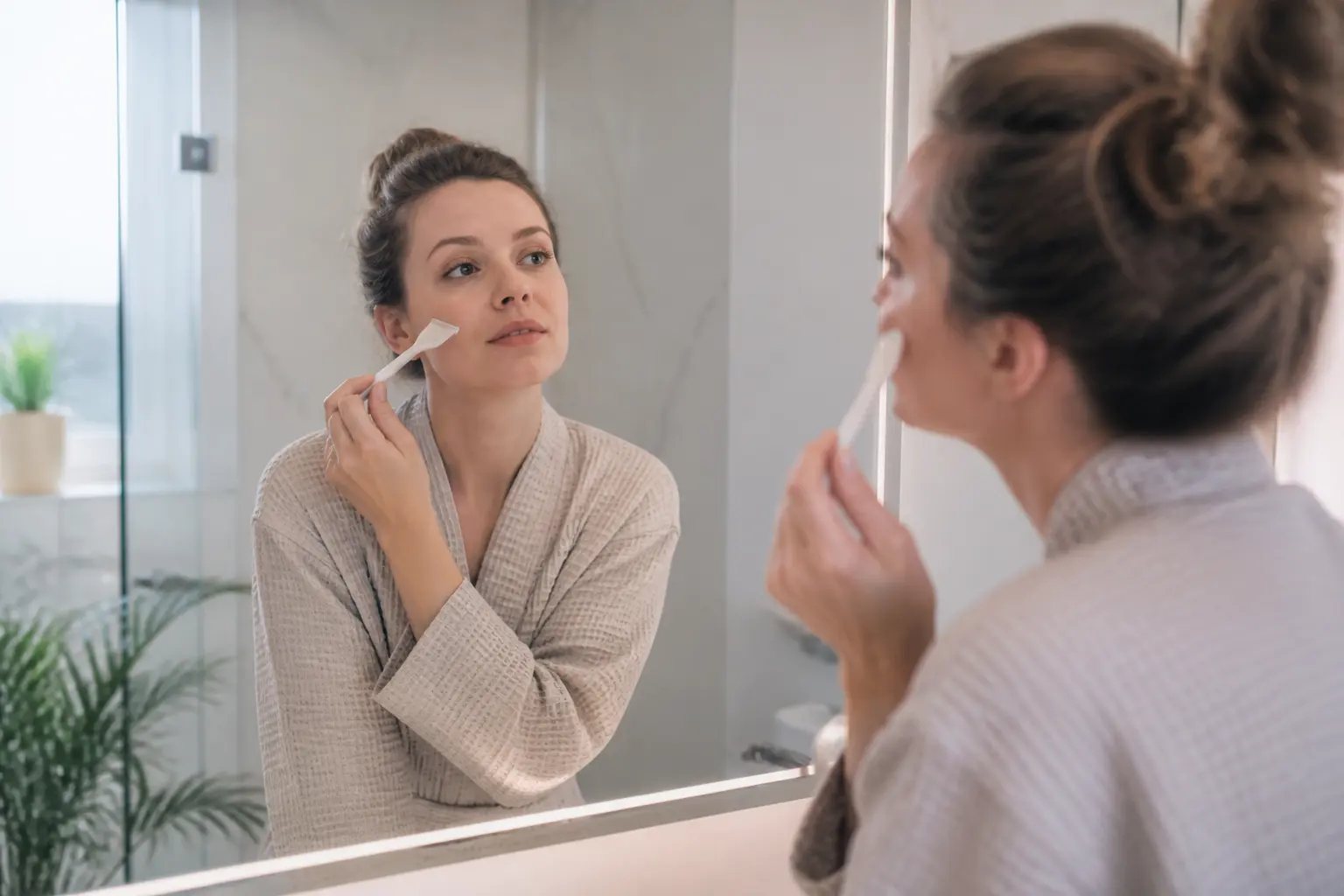
Dermaplaning and facial shaving can look very similar at first glance: both involve passing a blade across the face to remove fine vellus hair, often called peach fuzz. Both can leave the skin feeling smoother, and both are commonly discussed by people who want make-up to sit more evenly. But they are not automatically the same experience.
The most useful way to compare dermaplaning vs facial shaving is to look beyond the tool. A professional appointment is a planned facial service, with an assessment of your skin and a controlled exfoliation focus. An at-home routine is usually a personal grooming step that you manage yourself, with your own razor, products and judgement. Neither option needs to be treated as universally right or wrong; the better choice depends on your goal, your current skin condition and how comfortable you are with an exfoliating blade.
If you are considering a Dermaplaning Pro or Dermaplaning SPA appointment, this guide explains the practical differences to help you book with clearer expectations.
What dermaplaning and facial shaving have in common
Both methods cut hair at the surface of the skin. They do not pull hair out from the root, and shaving does not make facial hair grow back darker, thicker or faster. A blunt growing edge can sometimes feel different as hair returns, which is one reason the myth persists, but the act of cutting hair does not change its growth pattern.
Both approaches may also remove some surface build-up as the blade moves over the skin. This is why people often describe an immediately smoother feel and a more even make-up finish afterwards. The result is temporary: hair growth, skin texture and the visible effect will vary from person to person.
There is an important limit, though. Smoothness is not the same as a solution for every skin concern. A blade-based routine is not a substitute for personalised advice on ongoing acne, persistent sensitivity, eczema flares, pigmentation concerns or other active skin changes. If you are unsure whether your skin is appropriate for exfoliation, it is sensible to pause and seek advice from a qualified skin professional or dermatologist.
The central difference: a professional service versus a home routine
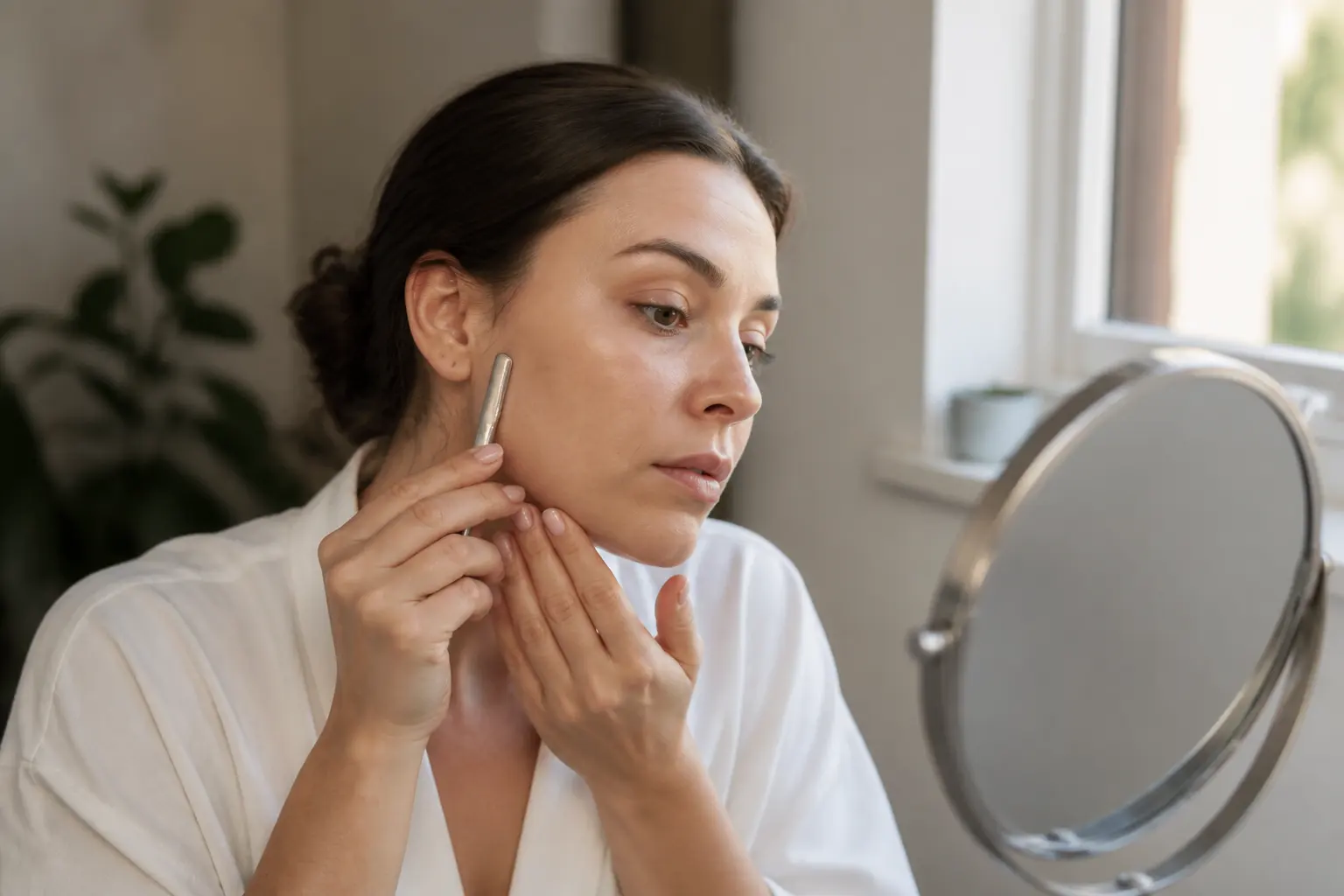
Facial shaving at home is generally a self-managed hair-removal routine. You choose when to do it, the tool you use and how much pressure or coverage feels right. It can be convenient for someone with straightforward goals who is confident maintaining a gentle, hygienic routine.
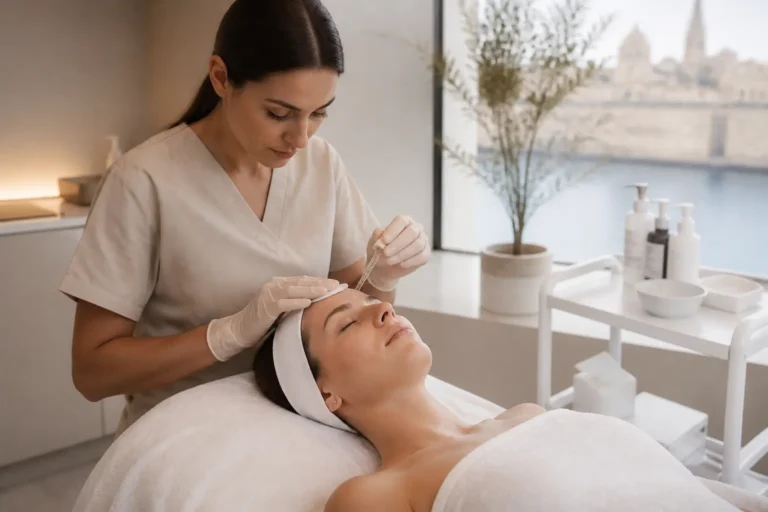
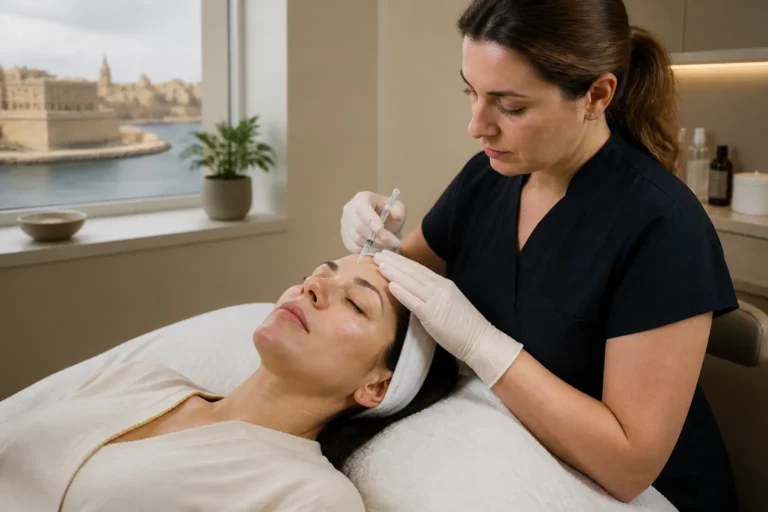
Professional dermaplaning is more structured. It is performed as an appointment, not simply as a quick pass with a razor before leaving the house. At Becammo, dermaplaning is offered within the facial menu as Dermaplaning Pro and Dermaplaning SPA. The service focus is the relationship between fine facial hair, surface exfoliation and the smoother skin finish many clients want before make-up or as part of their self-care routine.
A key advantage of an appointment is the conversation before the service. Your artist can ask about your current skincare, sensitivity, recent skin changes and the finish you hope to achieve. This does not turn a beauty appointment into medical care, but it does make the choice more considered than copying a social-media routine at home.
| Consideration | Professional dermaplaning appointment | At-home facial shaving routine |
|---|---|---|
| Main context | A planned facial service with a personalised consultation. | A personal grooming step managed independently. |
| Goal | Fine-hair removal and surface exfoliation within a facial-care experience. | Quick removal of visible peach fuzz or facial hair at the surface. |
| Technique | Carried out by a trained professional using a controlled approach. | Depends on your own tool, preparation, pressure and technique. |
| Skin review | Allows you to raise skincare use, sensitivity and preferences before starting. | Requires you to decide whether your skin is suitable that day. |
| Convenience | Requires booking and travel to the studio. | Can be done when convenient, if appropriate for your skin. |
| Aftercare | You can ask specific questions before leaving. | You need to plan gentle aftercare and recognise irritation yourself. |
How a professional dermaplaning appointment is different
It begins with your skin and your aim
A good appointment starts with context. Perhaps you wear foundation often and want a smoother-looking base. Perhaps peach fuzz catches the light in photographs. Or perhaps your face simply feels dull and you want a facial service that includes controlled exfoliation. These are different starting points, and it helps to say which one applies to you.
It is also important to mention products that can make your skin feel more reactive, particularly active skincare products. Do not assume that a product is irrelevant just because it is part of your normal evening routine. Bringing this up before your appointment gives the professional the information needed to decide whether to proceed, adapt the plan or suggest that another time may be more suitable.
The focus includes controlled exfoliation
At-home facial shaving is often mainly about hair removal. Professional dermaplaning is usually chosen for the combined effect of removing fine hair and lifting surface dead skin cells with an exfoliating blade. That distinction matters when setting expectations. The aim is a refined, smooth-looking surface, not a dramatic transformation or a promise that all texture will disappear.
Skin naturally has texture, pores and movement. A professional service can support a polished finish, but it should not be described as erasing normal skin features. A realistic expectation is that the face may feel smoother and that make-up may apply more evenly, while the result still depends on your skin, products and everyday routine.
Hygiene is part of the service, not an afterthought
When a blade comes into contact with facial skin, hygiene and careful handling matter. A professional environment offers a documented service routine and a clear place to ask questions about what is being used on your skin. This is especially reassuring if you have had irritation from home shaving, are unsure how to sanitise tools properly or simply prefer not to manage this part yourself.
At home, cleanliness is still essential. Dermatology guidance notes that cuts or nicks can increase the risk of infection, and that shaving tools should be kept clean. It also advises avoiding shaving over active breakouts, as shaving can aggravate acne and may irritate already vulnerable skin. Cleveland Clinic and the American Academy of Dermatology both emphasise gentle technique, clean tools and attention to irritation.
What at-home facial shaving can and cannot do
An at-home facial-shaving routine can be a practical choice for some people. It is accessible, flexible and may suit someone who wants to remove a small amount of fine hair without arranging an appointment. It can also help a person understand whether they enjoy the look and feel of a hair-free facial surface before committing to a professional service.
However, convenience should not encourage rushing. The face is not an area to treat casually with an old body razor, a dull blade or a tool stored damp in the shower. A dull or poorly maintained razor can contribute to nicks and irritation. The American Academy of Dermatology recommends shaving in the direction of hair growth, rinsing the blade regularly and storing it dry to reduce irritation and bacterial growth. Read its shaving guidance here.
Home shaving also has a narrower margin for error because you are making every decision yourself: whether your skin is calm enough, whether the blade is suitable, whether you are applying too much pressure and whether post-shave redness is ordinary temporary sensitivity or a sign to stop. It is not the ideal time to experiment if you have an active rash, open areas, inflamed acne or a skin reaction you do not understand.
When might an at-home routine be the better fit?
Facial shaving at home may suit you if your goal is simple maintenance, your skin is currently calm, and you are comfortable following a careful routine. It can also make sense if you prefer to keep hair removal separate from facials and do not need a consultation each time.
Keep the routine conservative. Do not treat every slight texture change as a reason to shave again. Overdoing any exfoliating step can leave skin feeling uncomfortable rather than polished. If you notice ongoing redness, stinging, bumps or breakouts after shaving, stop repeating the routine and consider professional or dermatological guidance instead of trying to correct the problem with more passes of the blade.
When is a professional appointment likely to be more useful?
A professional dermaplaning appointment may be the more comfortable choice if you want the service to be part of a considered facial routine, are preparing for a special occasion, or would value guidance around active skincare and your desired make-up finish. It is also a sensible option if you are new to facial hair removal and do not want to learn through trial and error on your own skin.
For example, someone planning professional photographs may want a smoother canvas but also want to avoid testing an unfamiliar razor the night before. A booked appointment gives them a clear time to discuss their diary, make-up plans and skin history. Likewise, a person who regularly uses retinoids, exfoliating acids or strong acne products should mention this before arranging dermaplaning rather than assuming every facial service fits every routine.
Professional does not mean that a result is identical for everyone. Fine hair density, skin sensitivity, make-up preference and aftercare all influence the experience. The value is the personalised conversation and controlled service, not an unrealistic promise of flawless skin.
How to prepare for either option
Before a professional booking
- Share your current skincare routine, especially products that make your skin more sensitive or exfoliated.
- Mention active breakouts, irritation, cuts, rashes or recent reactions.
- Explain whether your priority is peach-fuzz removal, a smoother make-up base or a broader facial-care appointment.
- Think about upcoming events, sun exposure and when you need your skin to look settled.
- Ask which dermaplaning option, Pro or SPA, best matches the experience you want.
Before at-home facial shaving
- Do not proceed over broken, inflamed or actively irritated skin.
- Use a clean, suitable tool and do not share it with anyone else.
- Work slowly with light pressure; repeated forceful passes are not a better technique.
- Keep the rest of your routine gentle afterwards, including moisturiser and daily sunscreen.
- Stop if you experience persistent discomfort or a reaction.
Dermaplaning vs facial shaving: the practical decision
Choose at-home facial shaving when you want a modest, self-managed grooming step and feel confident caring for your skin and tools. Choose professional dermaplaning when you want a more considered service, controlled exfoliation and the chance to discuss what suits your skin and routine before the blade touches your face.
There is no need to treat home shaving as inferior or professional dermaplaning as compulsory. They meet different needs. The most important thing is to be honest about your skin that day, avoid chasing perfectly poreless skin and choose a frequency that leaves your complexion comfortable rather than overworked.
If you would like dermaplaning to be part of your facial routine in Malta, choose the Dermaplaning Pro or Dermaplaning SPA service when booking and use the appointment conversation to share your make-up habits, skincare and expectations. That small preparation helps make the experience more personal, practical and appropriate for you.
Frequently asked questions
Will facial hair grow back thicker after dermaplaning or shaving?
No. Cutting hair at the skin’s surface does not change the number of follicles or the way hair grows. Regrowth can feel blunt at first because the tapered end has been cut, but this does not mean the hair has become thicker.
Is dermaplaning the same as shaving with a standard razor?
They share the basic action of cutting hair at the surface, but a professional dermaplaning appointment is a facial service with a controlled exfoliation focus and an opportunity for personalised discussion. A standard home shave is a self-managed grooming routine.
Can I dermaplane if I have acne?
It is best not to shave or dermaplane over active, inflamed breakouts. Shaving can irritate acne-prone skin further. If acne is persistent or you are uncertain, ask a dermatologist or qualified professional for advice before booking or trying it at home.
Should I stop using active skincare before dermaplaning?
Do not make assumptions about your routine. Tell your professional which products you use, including retinoids and exfoliating products, so they can advise on whether the appointment is suitable and how to plan it. For home shaving, avoid using it as an extra exfoliating step when your skin already feels sensitised.
Which is better for make-up: professional dermaplaning or at-home facial shaving?
Either may create a smoother feel, but professional dermaplaning may be preferable when you want a planned service before an occasion or would like the exfoliation element assessed in the context of your skin. At-home shaving may suit simple, regular maintenance when done carefully.