Delicate Zones in Dermaplaning: How Professionals Adapt Pressure
Brenda Cammo Team
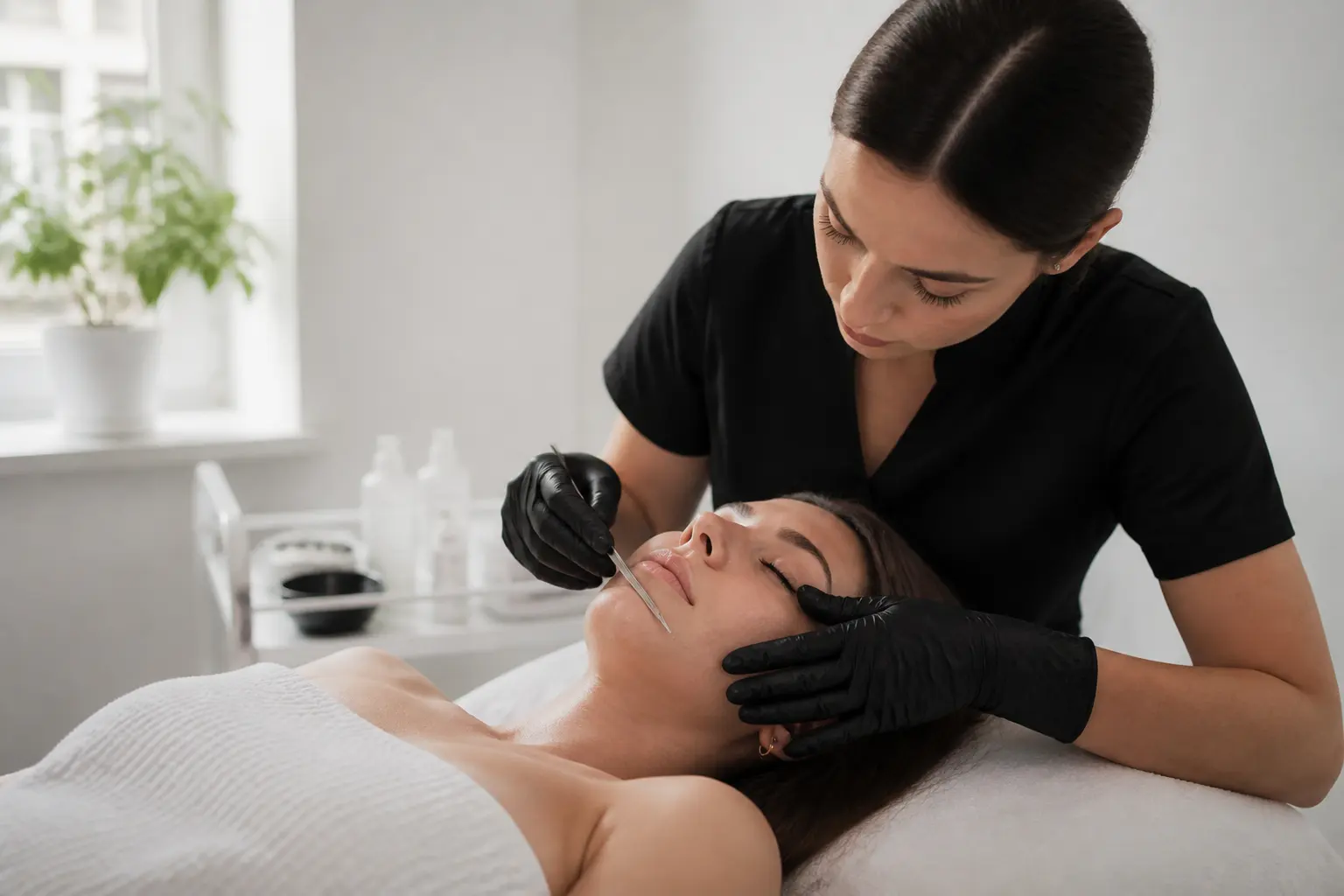
Dermaplaning is often described as a simple way to refine surface texture and remove fine facial hair, but a careful session is never about applying the same movement everywhere. The face has changing contours, skin thickness, sensitivity and hair patterns. That is why delicate zones in dermaplaning need a more considered approach.
In a professional setting, the aim is not to be forceful. It is to work with control, using an appropriate touch for the individual area and the client’s skin on the day. Around the nose, lips, eye area and jawline, a practitioner must respond to the skin’s natural structure rather than treating the face as one flat surface.
This is one reason a professional consultation matters. Dermaplaning is a form of physical exfoliation, so skin condition, current skincare products and active irritation all affect whether a session is suitable and how it should be approached. The American Academy of Dermatology notes that exfoliation can increase irritation when skin is already sensitive or when certain products are in use. At Becammo, this individual view is part of keeping the experience thoughtful, comfortable and appropriate for your skin.
Why pressure is not the same across the whole face
Facial skin is not uniform. Some areas have a broad, relatively even surface, while others are curved, mobile or close to naturally sensitive features. A professional adapts their handling to these differences rather than relying on one repeated level of pressure.
It can help to think of dermaplaning as a sequence of small, controlled decisions. The practitioner considers:
- the shape and firmness of the area;
- how easily the skin moves under light contact;
- the presence of fine hair, texture or visible dryness;
- any current sensitivity, blemishes or irritation;
- the client’s comfort throughout the appointment.
The professional’s focus is on controlled contact, not intensity. A heavier hand is not a sign of a more effective session. In fact, when an area is delicate, control and restraint are especially important.
Dermaplaning uses a specialised blade to remove superficial dead skin cells and fine facial hair. Because a blade is involved, professional assessment, hygiene and careful technique are central to a responsible appointment. The Cleveland Clinic’s overview of dermaplaning also highlights that the procedure has possible risks, including irritation, infection, scarring and changes in skin colour. These are important reasons to be open about your skin history and to avoid treating a session as a one-size-fits-all beauty step.
The facial zones that need extra care
Along the sides of the nose
The area beside the nostrils is small, curved and often prone to congestion or dryness. It is also a place where the skin can fold slightly as you talk, smile or breathe. A professional does not assume that this area can be approached like the centre of the cheek.
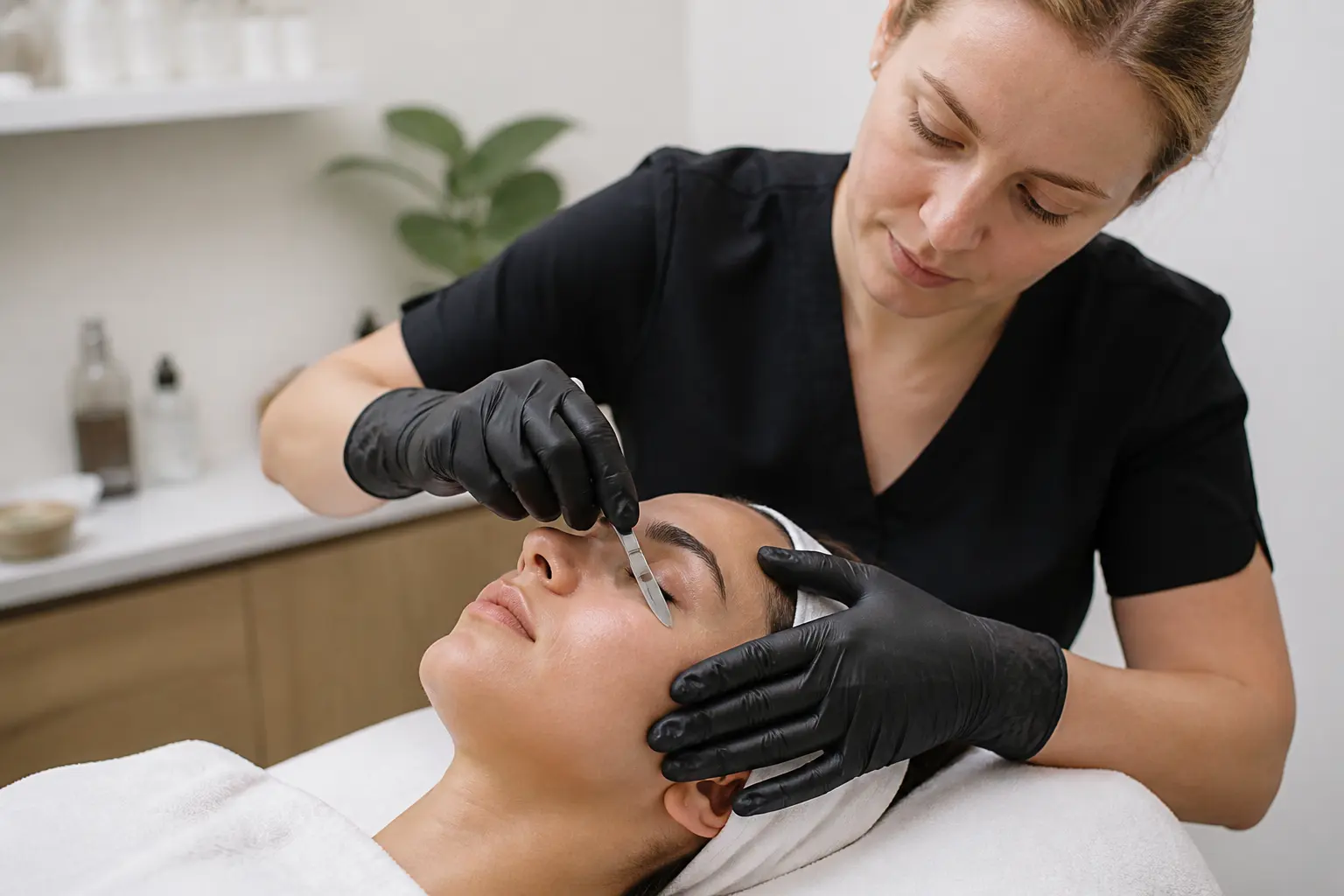
Instead, they work with the shape of the area, keeping the contact controlled and adjusting their pace. Supporting the skin appropriately helps create a steadier surface, while smaller, deliberate movements help the practitioner remain aware of exactly where the blade is travelling.
If there is an active spot, broken skin or obvious irritation near the nose, the right choice may be to work around it or postpone part of the service. Skipping one small area is far more sensible than trying to force a uniform result across compromised skin.
Above and around the upper lip
The upper-lip area is a common concern for people who want to remove peach fuzz and create a smoother base for make-up. It is also highly mobile. Smiling, speaking or tightening the mouth changes the surface immediately, so professional positioning and clear communication make a difference.
A therapist may ask you to hold a relaxed or specific expression briefly so the area can be supported safely. The approach should be measured, with attention to the natural curve of the lip line and the condition of the surrounding skin.
This area deserves additional caution if you are experiencing a breakout, a cold sore, recent irritation from hair removal or sensitivity from active skincare. Tell your therapist before the session begins, even if it feels minor. Information that seems small can influence whether the area should be included that day.
The lower eye and upper cheek area
The skin around the eyes is naturally more delicate than many other parts of the face. Dermaplaning is not a procedure for working close to the lash line or eyelid. A responsible professional respects clear boundaries and does not chase fine hair into areas where precision and safety would be compromised.
On the upper cheek, technique must still account for the proximity of the eye area, the cheekbone’s changing contour and any sensitivity. The treatment should remain focused on the appropriate facial surface, never on pushing too close to a delicate feature for the sake of completeness.
Clients should also mention any recent eye-area treatment, irritation or skin reaction. When in doubt, it is appropriate to ask for advice from a qualified medical professional before booking cosmetic exfoliation around a sensitive concern.
The jawline and chin
The jawline can look smooth from a distance but feel very different during a facial treatment. It curves towards the neck, and the skin can move as the head is turned. The chin is another area that is often more textured, affected by hormonal breakouts or irritated by shaving and hair removal.
Here, professionals adapt by working with the angle of the jaw and checking the skin rather than simply following a fixed pattern. If the chin is actively inflamed or tender, working around it may be the most appropriate option. Good treatment choices are not about doing every possible pass. They are about respecting what the skin is showing on the day.
The temples and hairline
Temples and hairlines can be overlooked, yet they bring their own considerations. Hair density may change abruptly, and hairline products, dry skin or styling residue can affect the surface. The skin may also be more reactive after sun exposure.
A professional checks where facial skin ends and the hairline begins, keeping the treatment purposeful. This matters especially for clients who use hair oils, leave-in products or SPF around the edge of the face. Clean, prepared skin gives the practitioner a clearer view of the area and helps avoid unnecessary friction.
How professionals adapt without overworking the skin
Pressure is only one part of a skilled dermaplaning service. Professionals also adapt the way they support the skin, the angle of contact, the size of the area they work on and the pace of the appointment. These elements work together.
Rather than viewing a face as a checklist of zones to clear, a trained practitioner observes and reassesses as they go. A calm, even cheek may tolerate a different approach from a dehydrated area around the mouth. Fine vellus hair may sit differently on the side of the face than it does on the chin. No two clients, or even two parts of one face, are exactly alike.
A good professional session is tailored to the skin in front of the therapist, not to an identical routine repeated without adjustment.
At Becammo, dermaplaning is approached as a facial service with room for individual judgement. The goal is a polished, cared-for finish, while staying attentive to skin comfort and suitability. This is particularly valuable if you have sensitive-feeling skin, use active skincare or are unsure how dermaplaning fits into your existing routine.
What skin preparation tells a professional
Preparation is not just about arriving with a clean face. It gives your therapist the best possible starting point to assess the skin properly. Avoid turning up with heavy make-up, fresh self-tanner or layers of products that can obscure dryness, irritation or active blemishes.
Before booking, be ready to mention:
- retinol, prescription retinoids, exfoliating acids or benzoyl peroxide in your routine;
- recent waxing, shaving, threading or other facial hair-removal methods;
- recent peels, facial treatments or periods of heightened sensitivity;
- active acne, cuts, rashes, cold sores or areas of broken skin;
- any history of a skin reaction that you think may be relevant.
This is not about making the appointment complicated. It is about helping the therapist make an informed decision. The American Academy of Dermatology advises considering existing products and medicines before exfoliating, because some can make skin more sensitive. If your skin is flaring or you are uncertain about an active skin condition, seek medical advice rather than trying to exfoliate through it.
Why this is different from using a blade at home
At-home facial shaving tools are widely available, but availability is not the same as professional judgement. The delicate areas of the face are exactly where limited visibility, awkward angles and inconsistent pressure can make a seemingly simple task less predictable.
A professional has the benefit of clear lighting, a stable treatment position, clean working practices and the ability to see the skin from a better angle. They can also decide when not to proceed. That final point matters. A session may be adapted, partially completed or rescheduled if the skin is not in the right condition.
DIY dermaplaning can also make it easier to overlook hygiene or use repeated passes in pursuit of smoothness. The Cleveland Clinic advises that cuts or nicks can raise the risk of infection, and it recommends avoiding dermaplaning over active acne or skin conditions. If your priority is a smooth make-up base or a refreshed facial finish, a studio appointment offers a more considered route than trying to manage every curve of your own face.
Questions worth asking before your appointment
You do not need to know every technical detail before booking, but it is reasonable to ask how the service will be personalised. Helpful questions include:
- Is my current skincare routine suitable for dermaplaning?
- Should I pause any exfoliating products before the appointment?
- Can areas with active blemishes be avoided?
- What should I use after the session to keep my skin feeling comfortable?
- When should I arrange my next facial or hair-removal appointment?
A professional should welcome sensible questions and set clear expectations. Cosmetic services should feel considered, never rushed or pressured. If you have a significant skin concern, recurring reactions or a condition that needs diagnosis, a dermatologist is the appropriate person to consult.
Aftercare matters most where skin is delicate
Once dermaplaning is complete, your skin may feel smoother and more exposed than usual because superficial dead skin cells and fine hair have been removed. Keep the rest of the day simple. Follow the aftercare guidance given at the studio, use gentle products as advised and protect your skin from sun exposure.
Do not assume that a newly smooth surface needs more exfoliation, stronger active products or extra scrubbing. A restrained routine gives your skin space to settle. If you notice persistent or worsening irritation, swelling, blistering, signs of infection or another unexpected reaction, seek advice from an appropriate healthcare professional.
Conclusion
The most delicate parts of the face are where the value of professional dermaplaning becomes clearest. Skilled care is not defined by covering every millimetre in exactly the same way. It is defined by adapting to contours, supporting the skin, recognising when an area needs a lighter approach and knowing when it should be left alone.
If you are considering dermaplaning in Malta, book a Dermaplaning Pro or Dermaplaning SPA appointment at Becammo in Sliema or Swieqi. You can discuss your skin goals, current routine and any areas you are unsure about before the service begins.
Frequently asked questions
Does dermaplaning use the same pressure on every part of the face?
No. A professional adapts their contact according to the contour, mobility and condition of each area. Curved or naturally sensitive zones need particularly careful handling.
Can dermaplaning be done around the eyes?
Dermaplaning should respect the eye area and should not be taken close to the eyelid or lash line. A professional works within appropriate facial boundaries and prioritises safety over treating every fine hair.
What happens if I have a spot on a delicate area?
Tell your therapist before the session. Depending on the spot and the surrounding skin, they may work around it, adapt the service or advise waiting until the area has settled.
Should I use retinol before dermaplaning?
Tell your therapist about retinol, prescription retinoids and exfoliating products before booking. These may affect skin sensitivity, so individual guidance is important.
Will my facial hair grow back thicker after dermaplaning?
Dermaplaning removes hair at the surface. It does not change the hair follicle, so it does not make vellus hair grow back thicker or darker.