Autumn Skin Reset in Malta: Repairing Summer Sun Effects
Brenda Cammo Team

After a Maltese summer of bright days, sea swims, warm evenings and more time outdoors, skin can start to feel different. You may notice tightness after cleansing, a duller-looking complexion, uneven tone, dry patches, congestion from heavier sunscreen, or makeup that no longer sits as smoothly as it did before.
An autumn skin reset is not about trying to undo a season overnight. It is a calmer, more useful way to assess what your skin needs now, simplify your routine, protect it from ongoing daylight exposure and choose professional support thoughtfully. At Becammo, a facial appointment begins with looking at your skin as it is today, rather than following a one-size-fits-all seasonal formula.
This matters in Malta, where sunny weather does not end simply because summer holidays do. Sun protection remains an everyday step, while a gentler, consistent routine can help your skin feel more comfortable as the season changes.
What summer can leave behind on the skin
Summer routines often ask more of the skin. Heat can make you sweat more, swimming can leave skin feeling dry, and frequent sunscreen reapplication can encourage some people to cleanse more aggressively than usual. Travelling, late nights, air conditioning and trying several new products can add to the picture.
Not everyone will experience the same changes. Skin type, tone, sensitivity, existing concerns, medicines and your usual routine all matter. Still, these are common reasons clients begin thinking about a post-summer facial:
- Skin feels dehydrated, tight or rough.
- The complexion looks less even or less luminous.
- Dark marks appear more noticeable after time outdoors.
- There is a build-up of sunscreen, makeup or excess oil.
- Breakouts or congestion have become more frequent.
- Your usual products suddenly sting, pill or feel too heavy.
It is important to separate cosmetic concerns from skin changes that need medical assessment. Sun exposure can cause lasting damage over time, and a facial is not a substitute for seeing a dermatologist or doctor about a new, changing, bleeding, painful or unusual mark. The American Academy of Dermatology explains that accumulated sun exposure can be linked with visible changes such as uneven pigmentation and wrinkles, as well as more serious skin-health risks.
Start by calming the routine, not adding everything at once
When skin looks tired after summer, it is tempting to buy several exfoliants, brightening serums and masks at once. That can make a stressed skin barrier feel even less comfortable. A better reset begins by reducing friction and giving your skin a predictable routine for a couple of weeks.
Keep the basics consistent
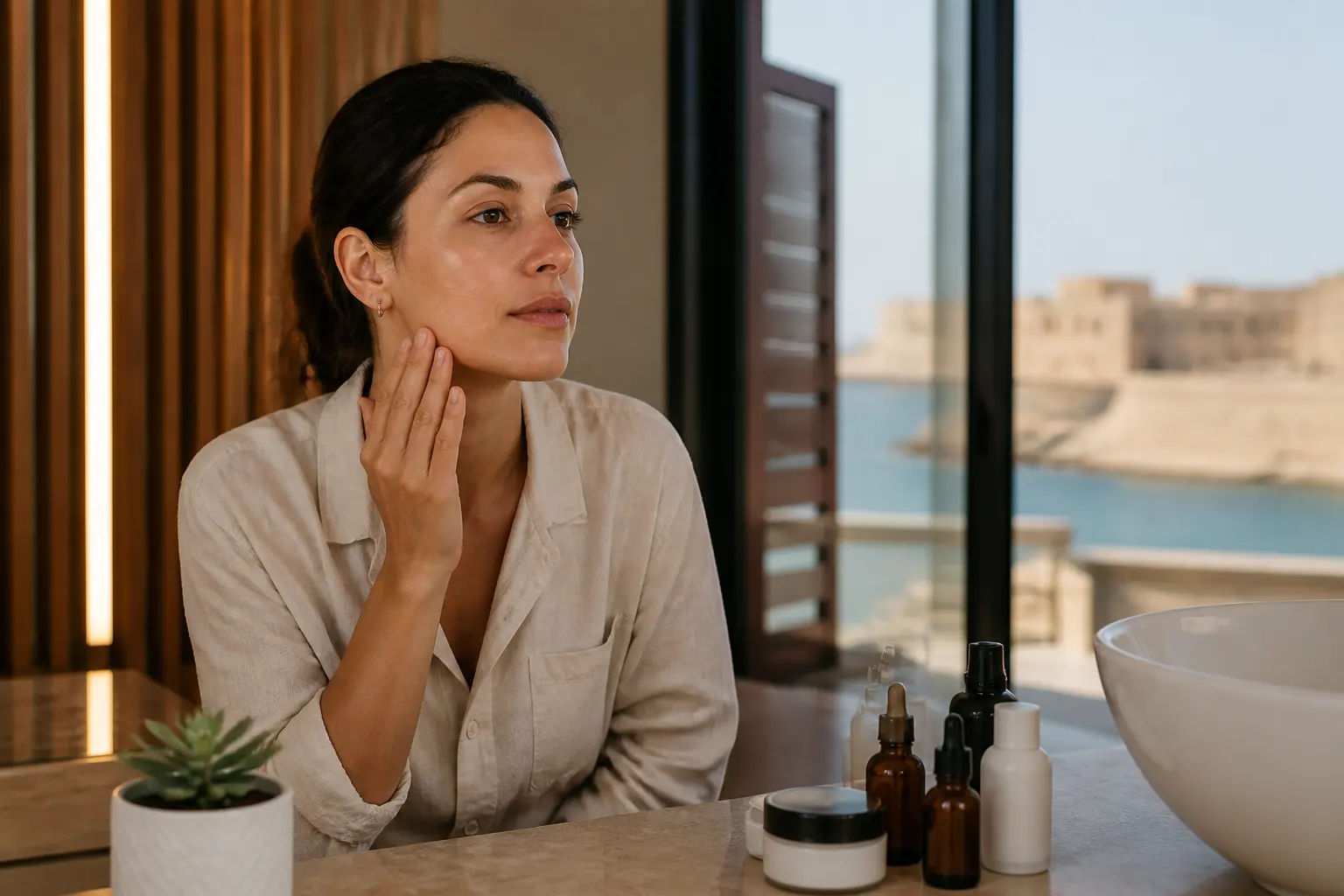
A simple autumn routine can include a gentle cleanser, a moisturiser that feels comfortable for your skin type, and broad-spectrum sunscreen during the day. If you already use active skincare ingredients, there is no need to assume you must stop them all. The key is to pay attention to irritation and avoid introducing multiple new actives at the same time.
If a product burns or stings, do not treat that sensation as proof that it is working. Irritation can make skin feel more unsettled and may make uneven tone look more noticeable. The American Academy of Dermatology guidance on melasma self-care also advises choosing gentle products when skin is prone to pigmentation concerns.
Be careful with over-exfoliation
Exfoliation has a place in some routines, but more is not automatically better. Scrubs, strong acids, retinoid products and professional exfoliation all need to be considered in context. If your skin is flaky, sore, sunburnt or reactive, adding another exfoliating step may not be the right next move.
At a professional studio, this is one reason a skin conversation comes before selecting the service. Tell your therapist about recent sunburn, peeling, breakouts, sensitivity, allergies and every active product you use at home. That information helps guide what is appropriate for the day, including whether it is wiser to choose a gentler facial or wait until your skin has settled.
Why sunscreen still belongs in an autumn reset
Autumn is not a break from sun protection. In Malta, outdoor lunches, walks, commuting and sitting near windows can still add up. Broad-spectrum sunscreen helps protect against UVA and UVB exposure, while a hat, shade and clothing add practical support when you are outside for longer.
For everyday use, the American Academy of Dermatology recommends choosing a broad-spectrum, water-resistant sunscreen with SPF 30 or higher. It also notes that tinted formulas containing iron oxides can be helpful for people concerned about dark spots, because visible light can contribute to pigmentation in some skin tones.
This is particularly relevant if you have noticed patches or marks becoming darker after summer. Do not expect a single facial or one new serum to change this immediately. Consistent sun protection is the foundation of any sensible plan for a more even-looking complexion.
If you have had sunburn, pause the reset
Sunburn is skin damage, not a normal stage of tanning. If your skin is hot, painful, blistered, swollen or peeling, prioritise recovery and avoid exfoliating appointments until it has healed. The NHS sunburn advice recommends getting out of the sun, cooling the skin, using an unperfumed moisturiser and protecting the area from further direct sunlight. Seek urgent medical advice if symptoms are severe or you feel unwell.
What a professional autumn facial can and cannot do
A professional facial can be a useful part of your reset when it is selected for your current skin condition. Depending on the service and your consultation, the focus may be on a thorough yet appropriate cleanse, comfort, hydration, surface smoothness or helping the skin look fresher before you return to a more structured home routine.
At Becammo, the purpose is not to promise a complete reversal of sun effects. It is to assess your present needs, work carefully and help you choose realistic next steps. Your therapist may ask about:
- Recent time in the sun, sunburn or peeling.
- Your current cleanser, sunscreen and moisturiser.
- Active ingredients, including acids, retinoids or acne products.
- Any sensitivity, allergies or history of irritation.
- Breakouts, congestion or dryness.
- Whether you have an important event coming up.
A professional treatment is also a useful opportunity to ask practical questions. For example, should you restart an active product straight away? Is your skin showing dehydration, congestion or both? Would a simpler home routine be more helpful than adding another product? Clear answers can prevent expensive trial and error.
Choosing the right reset for your skin today
There is no single autumn facial that suits everybody. The right approach depends on what you are seeing and feeling, rather than the calendar alone.
For skin that feels dry or tight
Focus first on comfort. Use lukewarm rather than very hot water, avoid rough towels and choose a moisturiser that leaves your skin feeling supported without heaviness. At your appointment, explain whether tightness happens all day or only after cleansing. That distinction can help your therapist understand whether your current routine may be too stripping.
For a dull-looking complexion
Dullness can come from dehydration, surface build-up, disrupted sleep, dryness or an uneven texture. A professional facial may help refresh the appearance of the skin, but a steady home routine matters afterwards. Avoid chasing instant brightness through repeated harsh exfoliation, especially if your skin is already sensitive.
For congestion after sunscreen and heat
Sunscreen is still essential, even if you are experiencing congestion. Instead of stopping it, review the rest of your routine. Make sure you remove sunscreen and makeup gently at the end of the day, avoid picking spots, and mention your breakouts during a professional consultation. For acne-prone skin, look for products labelled non-comedogenic where suitable, but remember that individual skin responses can vary.
For uneven-looking tone or darker marks
Gentle care and consistent protection are more helpful than aggressive experimentation. Uneven tone can have many causes, and deeper or persistent pigmentation may need dermatologist-led advice. A professional facial can support your overall routine, but it should not be presented as a medical solution for pigmentation conditions.
How to prepare for an autumn facial appointment
A little preparation helps your appointment be more comfortable and productive. You do not need to arrive with perfect skin. In fact, your therapist needs to see how your skin genuinely behaves.
- Share your current routine. Take a photo of your key products or make a short list, especially if you use acids, retinoids or prescription skincare.
- Tell the truth about recent sun exposure. Mention any redness, tenderness, peeling or sunburn, even if it seems minor.
- Do not scrub just before your appointment. There is no need to prepare by exfoliating at home.
- Leave time before a major event. If you are booking ahead of a wedding, party or photo shoot, allow room for your skin to settle and ask for personalised timing advice.
- Ask about aftercare before you leave. Find out when to return to your usual active products, makeup, gym sessions or other beauty appointments.
A realistic two-week autumn skin reset
If your skin has no signs of acute irritation or sunburn, this simple structure can help you move from summer habits into an easier autumn routine.
| Time | Focus |
|---|---|
| Days 1 to 3 | Simplify. Cleanse gently, moisturise, wear sunscreen and stop any product that is clearly irritating your skin. |
| Days 4 to 7 | Observe. Note whether tightness, roughness, breakouts or uneven tone are improving, unchanged or worsening. |
| Week 2 | Book a professional skin conversation or facial if you want tailored support. Discuss products, sensitivity and realistic goals. |
| After your appointment | Follow the aftercare you are given. Reintroduce products thoughtfully rather than changing your entire routine at once. |
The goal is not perfection in fourteen days. It is a clearer understanding of your skin, fewer unnecessary products and a routine you can continue through autumn.
When to seek medical advice instead of booking a facial
Beauty care and medical care have different roles. Please seek advice from a doctor or dermatologist if you notice a mole or mark that is new, changing, bleeding, crusting, painful or not healing. The same applies to severe sunburn, persistent rashes, significant swelling, painful acne or a skin reaction that does not settle after stopping a product.
A careful studio should welcome this distinction. Pausing a cosmetic service when skin needs medical attention is part of responsible care.
Conclusion
An autumn skin reset in Malta works best when it is gentle, consistent and personal. Start with cleansing that does not leave your skin stripped, moisturise for comfort, continue daily broad-spectrum sun protection and avoid turning your routine into a harsh recovery project.
If summer has left your skin feeling unlike itself, a professional facial can be a helpful place to begin. Book at the Becammo location that suits you in Sliema or Swieqi, share your recent sun exposure and home routine, and ask which approach makes sense for your skin today.
Frequently asked questions
Can a facial reverse summer sun damage?
No cosmetic facial can reverse all sun-related skin changes. A well-chosen facial may support comfort, cleansing and a fresher-looking complexion, while everyday sun protection remains essential. For concerning or persistent changes, seek advice from a dermatologist.
Should I have a facial if my skin is peeling after sun exposure?
Not until the skin has recovered and is no longer tender or actively peeling. Let the studio know what happened before booking, as your therapist may recommend waiting or choosing a gentler approach later.
Do I need sunscreen in Malta during autumn?
Yes. Daily broad-spectrum sunscreen remains a useful habit when you spend time outdoors. Reapply according to the product instructions, particularly after swimming or sweating and during extended outdoor time.
Can I use acids or retinoids after a facial?
It depends on the facial, your skin and the products you use. Ask your therapist for specific aftercare. In general, do not assume you should restart strong active products immediately if your skin feels sensitive.
What should I tell my therapist before a post-summer facial?
Mention recent sunburn, peeling, sensitivity, breakouts, allergies, active skincare, prescription products and any upcoming event. This helps your therapist make a safer, more personalised recommendation.