Dermaplaning Frequency for Oily vs Dry Skin Types
Brenda Cammo Team
Dermaplaning frequency is not the same for every complexion. If your skin becomes shiny quickly, you may assume that more frequent exfoliation is the answer. If it feels dry or looks flaky, you may be tempted to book as soon as texture appears. In both cases, the best approach is more considered: look at how your skin is behaving, what products you use at home and how it settles after a professional session.
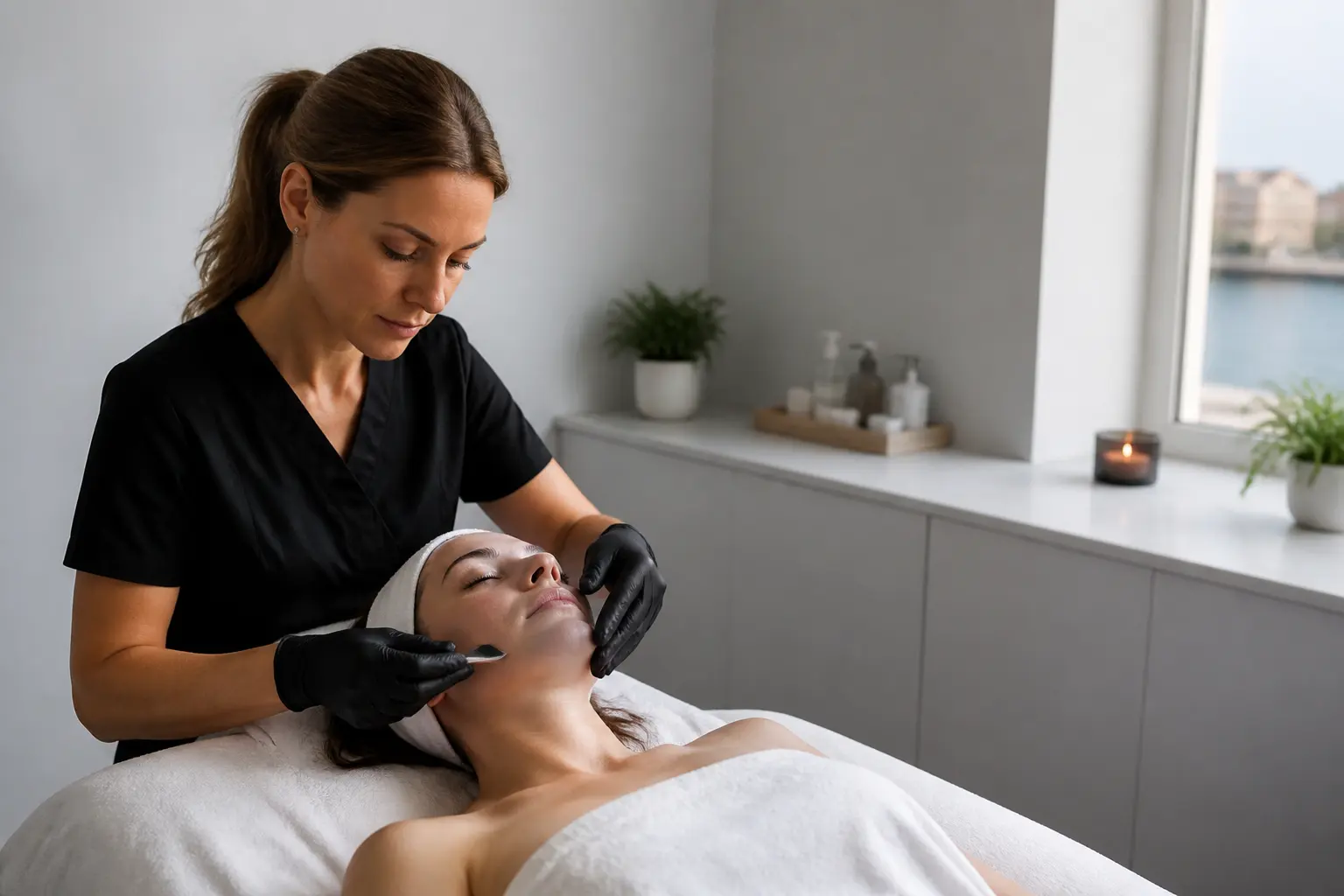
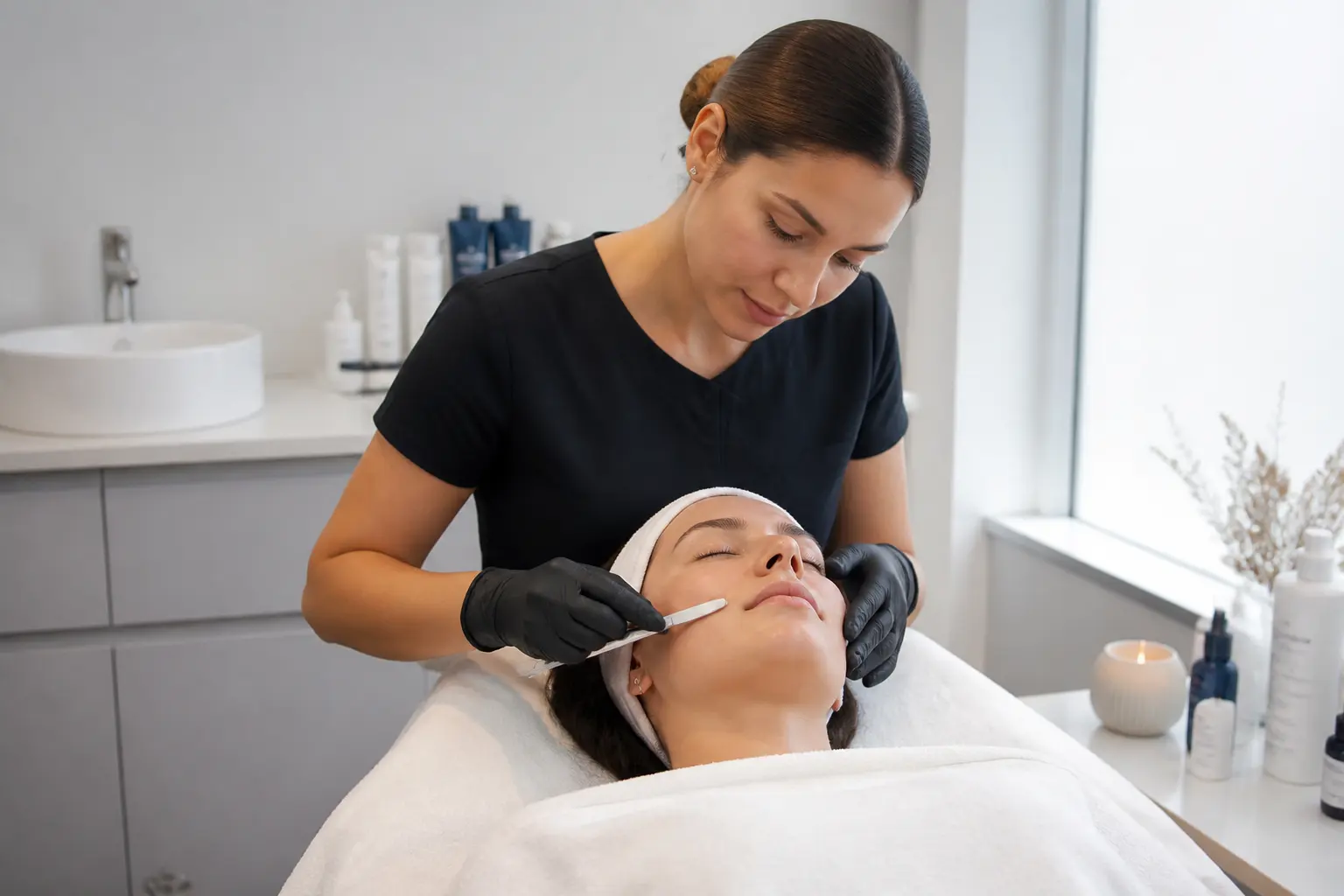
At Becammo, dermaplaning is approached as a facial service, not as a rushed habit to repeat whenever peach fuzz or dullness returns. A professional uses a sterile blade at a controlled angle to remove surface dead skin cells and fine vellus hair. The aim is a smoother-looking surface and a fresh base for make-up and skincare, while respecting the condition of your skin on the day.
For many clients, the practical question is simple: how often should I book if my skin is oily or dry? There is no single interval that suits everyone, but there are useful signs and planning principles that can help you choose an appropriate time.
Why skin type matters when planning dermaplaning
Dermaplaning is a form of physical exfoliation. That matters because both oily and dry skin can become irritated when exfoliation is too frequent, too intense or combined with an already demanding home routine. The American Academy of Dermatology explains that exfoliation needs to be matched to skin type and existing products, and that more aggressive exfoliation generally needs to happen less often.
American Academy of Dermatology guidance on exfoliation also highlights an important point for anyone booking facial services: retinoids, retinol and benzoyl peroxide can make skin more sensitive. Your therapist needs to know about these products before deciding whether dermaplaning is suitable that day.
Skin type is a helpful starting point, but it is not the whole picture. Weather in Malta, sun exposure, travel, air conditioning, stress, breakouts, medication and a change in skincare can all affect how skin responds. A person with naturally oily skin can still have a dehydrated or sensitised barrier. Equally, someone who describes their skin as dry may have oilier areas through the forehead, nose and chin.
Dermaplaning frequency for oily skin
Oily skin produces more sebum, which can make the face appear shiny and may leave the surface feeling less smooth between appointments. This does not mean that oily skin needs constant exfoliation. In fact, trying to strip away oil with harsh cleansing, scrubs or repeated exfoliation can leave skin feeling uncomfortable and unsettled.
A professional dermaplaning appointment may be worth considering when oily skin feels congested at the surface, make-up is no longer sitting evenly, or the complexion looks dull despite a consistent gentle routine. However, it is sensible to leave enough time to see how your skin settles after each session rather than immediately building a very frequent schedule.
A sensible starting point for oily skin
For stable oily skin with no active irritation, many clients begin by reviewing their skin around three to four weeks after a session. This is not a fixed rule or a promise that everyone should book on that timetable. It is simply a useful point to check whether the skin feels comfortable, whether texture has returned and whether your current products are keeping oil balanced without dryness.
If your skin is oily and also acne-prone, timing deserves extra care. Active inflamed spots, broken skin or a flare-up can change whether dermaplaning is appropriate. It is better to postpone and ask for personalised guidance than to try to force a session because it was already in the diary.
Signs oily skin may be ready for another session
- Your skin has remained calm since the previous appointment.
- You are not dealing with sore, inflamed or open blemishes in the area to be treated.
- Your usual cleanser and moisturiser feel comfortable rather than stinging or leaving skin tight.
- Fine facial hair and surface texture are affecting how make-up sits.
- You are not currently increasing exfoliating acids, retinoids or other strong active products.
When oily skin may need more time
- Your skin feels tight, sore or unusually reactive despite looking shiny.
- You have started a new acne-focused routine or have recently increased active ingredients.
- There are active breakouts, cuts, sunburn or irritated patches.
- You have been scrubbing, using peel pads or layering several exfoliating products at home.
Oily skin still needs hydration. The American Academy of Dermatology’s advice for oily skin recommends gentle cleansing and moisturising rather than trying to dry the complexion out completely. That principle is useful after dermaplaning too. The goal is comfortable, balanced skin, not a tight or squeaky-clean feeling.
Dermaplaning frequency for dry skin
Dry skin often makes people notice roughness, dullness and visible flaking more quickly. Dermaplaning can help create a smoother-looking surface, but dry skin usually calls for a more cautious rhythm. If the skin barrier is already struggling, adding another exfoliating step too soon can make it feel tighter or more reactive.
Instead of booking according to a strict timetable, dry-skin clients should prioritise recovery. Look at whether the skin remains supple after cleansing, whether moisturiser sinks in comfortably and whether there are any areas of peeling, itching or sensitivity. If those concerns are present, it is usually wiser to focus on gentle hydration and delay the next exfoliating service.
A sensible starting point for dry skin
For dry skin that is calm and well supported by a simple routine, it can be reasonable to reassess around four to six weeks after dermaplaning. Some clients will prefer a longer gap, particularly during windy, sunny or air-conditioned periods when their skin feels more vulnerable. The right interval is the one that allows the skin to look and feel settled between appointments.
Moisturising is especially important after any exfoliating service. The American Academy of Dermatology’s dry-skin guidance recommends gentle, fragrance-free care and regular moisturising to support dry skin. Your home routine should complement dermaplaning, not compete with it.
Signs dry skin may be ready for another session
- Your skin feels comfortable rather than tight or stingy.
- There is no persistent flaking, cracking or red irritation.
- You have kept the routine gentle and have not added several new active products.
- You want a smoother base before an occasion or make-up application.
- Your skin recovered well after the previous dermaplaning session.
When dry skin may need more time
- Moisturiser burns, stings or does not relieve tightness.
- You are experiencing a visibly flaky, irritated or compromised area.
- Your skin has been overexposed to sun, wind, heat or strong products.
- You have recently used a peel, scrub, retinoid or other exfoliating active without allowing time for your skin to settle.
What about combination skin?
Combination skin is common, particularly when the T-zone is shiny while the cheeks feel normal or dry. It can be misleading to set your dermaplaning frequency based only on the oilier areas. A professional assessment looks at the whole face, including areas that may be more delicate or dehydrated.
For this skin type, a moderate approach is often most helpful. Rather than increasing the frequency because the nose or forehead is oily, pay attention to how the cheeks, jawline and areas around the mouth are responding. Your at-home products can also be adjusted by zone, such as using a lighter non-comedogenic moisturiser where needed and a more comforting moisturiser on drier sections.
Frequency is only one part of safe planning
It is easy to focus on the calendar, but preparation and aftercare also influence how your skin feels. Before booking, tell your therapist about current skincare, especially exfoliating acids, retinoids, retinol, benzoyl peroxide or any product that has caused dryness. Mention recent sun exposure, sensitivity, breakouts and any skin concern you are managing with a clinician.
On the day, a professional should assess whether the session is suitable. Sometimes the best service is to wait. That is not a setback. It is a sensible decision that puts your skin condition before a timetable.
After dermaplaning, keep the routine calm. Use a gentle cleanser, moisturise according to your skin type and protect the skin from sun exposure with suitable broad-spectrum SPF. Avoid immediately piling on scrubs, peel pads or strong active products just because the skin feels smooth. The surface may look polished, but it still benefits from a simple routine.
How to build a dermaplaning schedule that suits you
A useful first step is to treat your first two appointments as a learning period. Notice how your skin looks and feels in the days afterwards, then again after several weeks. This gives you more useful information than copying someone else’s routine online.
- Start with an assessment. Share whether your skin is oily, dry, combination, sensitive or prone to breakouts.
- List your products honestly. Include serums, exfoliating toners, masks and prescription skincare, not only your cleanser and moisturiser.
- Choose a cautious initial interval. Oily skin may review sooner than dry skin, but neither needs automatic frequent exfoliation.
- Watch for comfort, not only smoothness. Tightness, burning, redness and persistent flaking are signs to pause and seek advice.
- Adjust seasonally. A schedule that feels fine during one part of the year may need changing when your skin is drier or more exposed to the elements.
Professional dermaplaning at Becammo
At a professional studio, dermaplaning is not simply about removing fine facial hair. It is about assessing whether your skin is ready, carrying out the service with care and helping you avoid an over-exfoliated routine afterwards. Becammo offers Dermaplaning Pro and Dermaplaning SPA options, so your appointment can be chosen in line with your skincare goals and the experience you are looking for.
If you are unsure whether your skin is oily, dry or dehydrated, or you are wondering how your active skincare fits around a dermaplaning appointment, ask before you book. A short conversation can help you choose a timing that feels more appropriate for your skin rather than following a one-size-fits-all schedule.
Frequently asked questions
Can oily skin have dermaplaning more often than dry skin?
It may be appropriate to review oily skin sooner than dry skin, but oiliness alone does not mean you should dermaplane frequently. Skin comfort, active breakouts, sensitivity and your home routine all matter.
How long should dry skin wait between dermaplaning appointments?
Dry skin often benefits from a longer recovery period. Reassessing around four to six weeks can be a practical starting point when the skin is calm, but your therapist may suggest waiting longer if there is flaking or sensitivity.
Does dermaplaning make oily skin produce more oil?
Dermaplaning does not need to be used to strip oil from the skin. Over-cleansing or over-exfoliating can leave skin uncomfortable, so a gentle routine and suitable moisturiser remain important for oily complexions.
Can I use retinol before dermaplaning?
Tell your therapist if you use retinol, retinoids, exfoliating acids or benzoyl peroxide. These products can increase sensitivity, so your appointment timing and product pause should be discussed individually.
Should I dermaplane if my skin is peeling?
Not automatically. Peeling can be a sign that your skin needs gentler care and more hydration. Contact the studio for guidance, and seek advice from a qualified healthcare professional if you have a persistent or severe skin concern.
Which Becammo dermaplaning option should I choose?
Dermaplaning Pro and Dermaplaning SPA are both professional facial options. If you are deciding between them, ask the Becammo team about your skin goals, current routine and preferred appointment experience before booking.
The most useful dermaplaning schedule is one that keeps your skin looking smooth while also feeling calm and comfortable. When you are ready, choose your preferred Becammo location in Sliema or Swieqi and book a dermaplaning appointment with your current skin condition in mind.