Microblading Colour Choices: Hair, Skin Tone and Pigment
Brenda Cammo Team
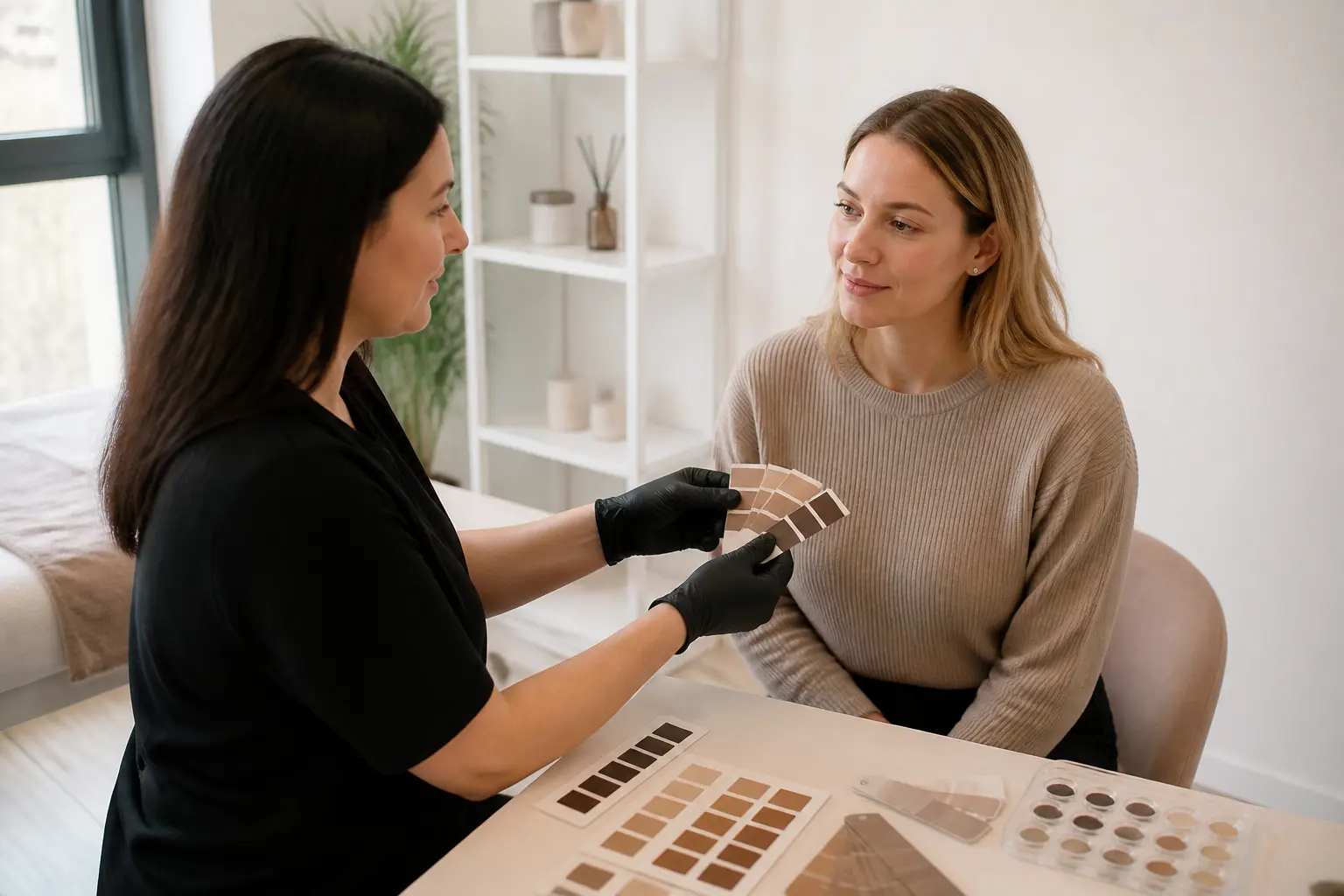
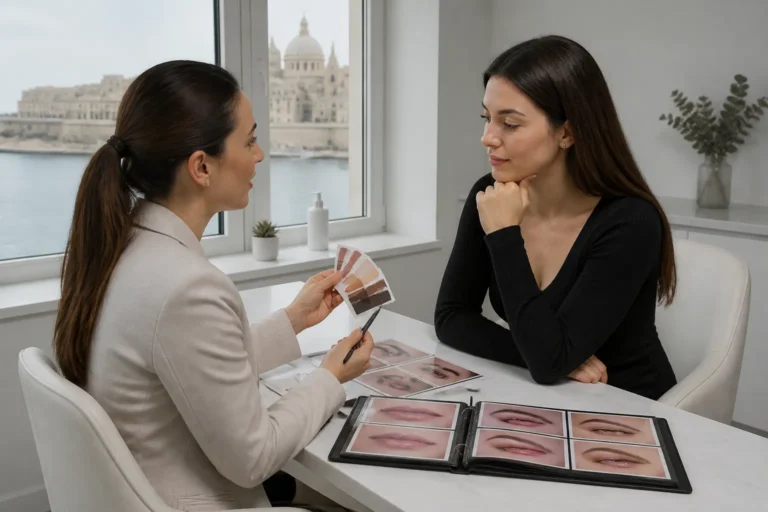
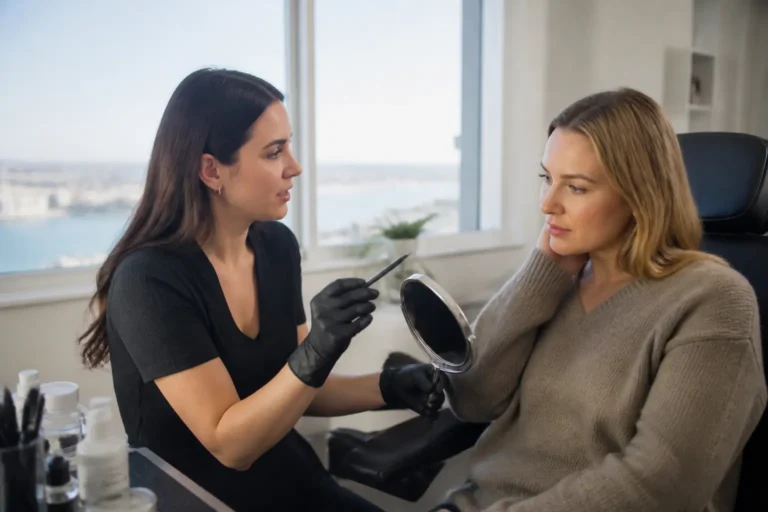
Choosing a microblading colour is about far more than picking a shade that looks similar to your hair on the day of your appointment. The most natural-looking result usually comes from careful colour matching, where the artist considers your existing brow hairs, skin tone, undertone, brow density and the way pigment is likely to settle as it heals.
At a professional studio, pigment selection is part of a personalised design process. A colour that looks right in the bottle, or even immediately after the procedure, may not be the best choice once it has healed into the skin. That is why microblading colour matching should never be approached as a quick choice between “light brown”, “medium brown” and “dark brown”.
For clients in Malta, this matters especially because the local community is wonderfully international. Brow hair and skin can vary widely in depth, warmth, texture and contrast. A good microblading plan respects those differences rather than trying to make every pair of brows look the same.
What does microblading colour matching involve?
Microblading colour matching is the process of selecting and, where appropriate, adapting a pigment so it harmonises with your natural features. The aim is usually to create brows that support your face and blend with the hairs you already have, rather than making them look stamped on or disconnected from your colouring.
A professional assessment commonly considers:
- the colour and depth of your natural brow hairs
- your hair colour at the roots, particularly if it is dyed
- your skin tone, from fair to deep
- your skin undertone, which may lean warmer, cooler or more neutral
- the amount and pattern of natural brow hair
- your preferred level of definition
- any previous semi-permanent brow pigment
- how your skin type may influence pigment retention and healing
These details help the artist choose a direction for the colour. The final recommendation is not only about whether a brown looks light or dark. It is also about whether it needs to appear softer, warmer, cooler or more balanced against your individual features.
Why matching only your head hair can be misleading
Many people arrive with a simple request: “Can you match my hair colour?” It is a useful starting point, but it is not the whole answer. Brows and scalp hair do not always have the same natural depth or tone. Someone with blonde hair may have medium brown brows, while a person with dark hair may naturally have softer, lighter brow hairs.
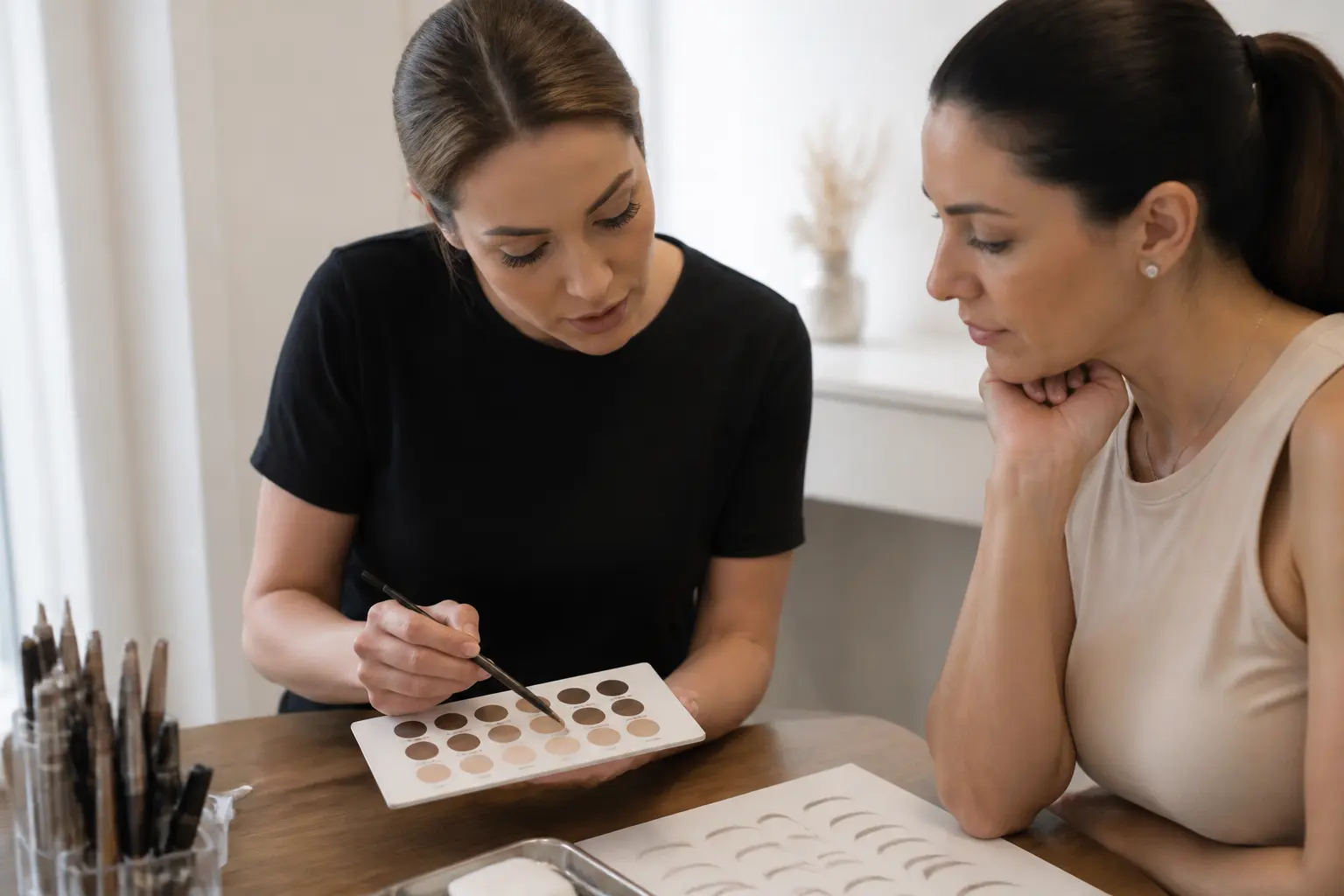
Hair colour can also change more often than brow colour. Highlights, bleaching, warm copper tones, ash colouring and grey blending may all affect the appearance of the hair around your face. If you frequently change your hair colour, it is often sensible to choose a brow pigment that works with your natural colouring and gives you flexibility, rather than matching a temporary salon colour too precisely.
For example, a client with cool-toned blonde highlights but naturally medium brown brow hairs may suit a soft, balanced brown better than an overly pale or grey-looking brow. Equally, a client with very dark hair does not automatically need the darkest available pigment. A brow that is too deep can feel harsh, particularly when the person has fair or low-contrast skin.
How skin tone and undertone shape the colour decision
Skin tone refers broadly to the depth of the skin, while undertone refers to the more subtle warmth, coolness or neutrality beneath the surface. Both matter in microblading because pigment is placed in the skin and changes in appearance as it heals.
Two clients may have brow hairs that look similarly dark, yet need different pigment approaches because their skin and underlying tones are different. A colour that appears balanced on one person may look too warm, too cool or too intense on another.
Warm undertones
Warm-toned skin may show golden, peachy or olive qualities. In these cases, the pigment plan may need to account for how warmth in the skin can influence the healed appearance. The purpose is not to make the brows look orange or red, but to choose a balanced shade that sits naturally alongside the client’s colouring.
Cool undertones
Cool-toned skin can have rosy, bluish or pink-leaning qualities. An artist will consider this when selecting the pigment direction, as an unsuitable shade can look disconnected from the face once it settles. The preferred result is still a believable brow colour, not an obviously grey or overly ashy effect.
Neutral and olive complexions
Neutral and olive skin tones can work beautifully with a range of brow colours, but they still benefit from individual assessment. Olive complexions in particular can carry both warmth and coolness, so copying a pigment choice from a friend or an online photo is rarely reliable.
Skin undertone is only one part of the picture. Lighting, skincare habits, sun exposure, natural brow hairs and the amount of pigment used all affect the overall impression. This is why a professional consultation is more useful than choosing a shade from a chart at home.
Natural brow hair is the most important visual reference
Your existing brow hairs offer valuable information about where the colour should sit. Even if your brows have sparse areas, the hairs that remain show their natural depth, direction and texture. Microblading strokes are designed to blend among those hairs, so the pigment should support them.
When brow hair is soft brown, a very dark pigment may overpower it. When brow hair is naturally deep and dense, a shade that is too light may disappear beside it. The goal is not always an exact one-to-one match. Sometimes a slightly softer pigment creates a more convincing result because it allows the real hairs to remain visually dominant.
Hair strokes are also part of colour perception. Fine, carefully placed strokes can make a shade appear lighter and softer than a solid block of the same pigment. This is one reason why choosing a technique, shape and colour should happen together.
Should brows be lighter or darker than your hair?
There is no universal rule. The best brow colour depends on your natural brow hair, facial contrast and the level of definition you enjoy wearing. A person with naturally pale hair and brows may want subtle definition without moving too far away from their features. A person with dark hair may prefer brows that have structure but are not so dark that they become the first thing others notice.
Instead of asking whether brows should always be lighter or darker, ask whether the proposed colour creates balance. Consider these practical examples:
- Light hair with light brows: a soft, natural-looking shade may add shape while keeping the overall appearance gentle.
- Blonde hair with darker natural brows: the brow hair itself may guide the choice more than the scalp hair.
- Dark brunette hair: a rich brown can offer definition without automatically choosing a very dark brow.
- Black hair: the most dramatic pigment is not necessarily the most natural option. A softened deep brown may sometimes blend more seamlessly.
- Grey hair: the artist can assess the remaining brow hairs and skin tone rather than assuming grey scalp hair requires grey-looking brows.
- Dyed red or copper hair: the pigment should complement the overall colouring while remaining believable alongside the natural brow hairs.
The right shade should make sense on your face when you are wearing minimal make-up as well as when you are dressed up for an evening out.
Why the fresh colour is not the healed colour
Immediately after microblading, brows can look stronger, sharper and deeper than the final healed result. This is a normal part of the visual journey, which is why the first-day appearance should not be judged as the finished colour.
During healing, the skin recovers and the pigment settles. The final appearance can be influenced by aftercare, skin characteristics, lifestyle and how well the pigment is retained. Results vary from person to person, and no responsible artist can promise that every skin will heal in exactly the same way.
This is also why your artist may be cautious about choosing a pigment that appears too light or too dark at the first appointment. The selection should account for the expected healed balance, not simply the colour you see immediately after the procedure.
A thoughtful microblading colour choice is designed for your healed brows, not just for the mirror straight after your appointment.
Existing pigment changes the conversation
If you have had microblading, microshading or another semi-permanent brow procedure before, colour matching becomes more complex. Even faded pigment can affect the way a new shade appears. The artist needs to assess the remaining colour, its depth and how much of the old work is still visible.
In some cases, a new microblading design may be possible over old faded pigment. In others, the previous colour or shape may mean that a different approach, further fading or a separate assessment is more appropriate. Trying to cover old pigment with a darker colour without proper evaluation can lead to a result that lacks clarity or looks heavier over time.
Bring clear information to your consultation if possible. Let the artist know when the earlier procedure was done, whether it was microblading or another technique, and whether you have had previous colour correction or removal. This helps create a realistic plan before any work begins.
Questions to ask at your microblading consultation
A consultation is your opportunity to discuss colour openly and make an informed decision. You do not need to know pigment terminology. Clear preferences and honest information about your brows are more useful than trying to arrive with a fixed shade in mind.
You may wish to ask:
- How will my natural brow hairs influence the chosen colour?
- How does my skin tone and undertone affect pigment selection?
- Will the proposed colour look softer after healing?
- How will my dyed or highlighted hair affect the overall balance?
- Do I have any old pigment that needs to be considered first?
- What result is realistic for the density and condition of my current brows?
- How does the touch-up appointment support the final colour and shape?
It can also help to mention your everyday make-up routine. If you rarely wear make-up, you may prefer a softer result. If defined brows are already part of your signature look, you may want more visible structure. Neither preference is wrong, as long as it is discussed honestly and designed around your features.
Preparing for a colour-focused appointment
Before your appointment, avoid making major last-minute changes to your brow appearance. Do not tint your brows immediately beforehand unless the studio has advised you to do so, as the natural hair colour is an important reference for the design. If you colour your hair regularly and have a salon appointment planned, consider arranging the timing so that your artist can see the look you expect to wear for the coming weeks.
Arrive ready to discuss any previous brow work and the skincare or active products you use around the brow area. Follow the studio’s pre-appointment guidance carefully. If you are unsure whether a product, skin concern or previous procedure is relevant, ask before booking rather than guessing.
Photos can be helpful for communicating a general style preference, but they should be used as inspiration, not as a promise that the same colour will suit every face. Your finished brows should be designed for you, not copied from somebody with different hair, skin and natural brow density.
Choosing confidence over a one-size-fits-all shade
The best microblading colour is usually the one that looks coherent with your own features, heals into a balanced result and continues to suit you beyond a single hair-colour trend. It should enhance the brows you have, not replace your identity with a generic template.
At Becammo, Brazilian Microblading appointments are approached with attention to brow mapping, natural hair pattern and individual colouring. Whether you visit the Sliema or Swieqi studio, ask your questions before committing to a final design. A personalised conversation about pigment, shape and realistic expectations is the most reliable starting point for brows that feel like yours.
Frequently asked questions
Can I choose my own microblading pigment colour?
You can absolutely share your preference, including whether you like a softer or more defined brow. The final pigment recommendation should be made with professional input, taking account of your natural brow hairs, skin tone, undertone and any existing pigment.
Will microblading match dyed hair?
It can be designed to complement dyed hair, but matching a temporary hair colour exactly is not always the most practical choice. Your natural brow hairs and long-term colouring should also guide the decision.
Why do my brows look darker just after microblading?
Freshly completed microblading often appears stronger and more defined than the healed result. Colour settles during healing, and the final appearance varies according to individual skin and aftercare.
Can microblading pigment be adjusted at the touch-up?
The touch-up appointment is an important stage for reviewing how the brows healed and refining details where appropriate. Your artist can assess colour, shape and pigment retention at that stage.
Is a cooler pigment always better for fair skin?
No. Fair skin can have warm, cool or neutral undertones, and brow hair colour also matters. A personalised assessment is more reliable than choosing pigment solely according to skin depth.
What if I have old microblading that has faded?
Old pigment should be assessed before booking new work. Depending on its remaining colour, depth and shape, new microblading may be possible, or another plan may be more suitable.
If you are considering microblading and want guidance on a colour that works with your hair, skin tone and existing brows, book a Brazilian Microblading appointment and discuss your preferences with the studio before your session.