Massage Before or After the Gym? Timing Your Recovery Session
Brenda Cammo Team
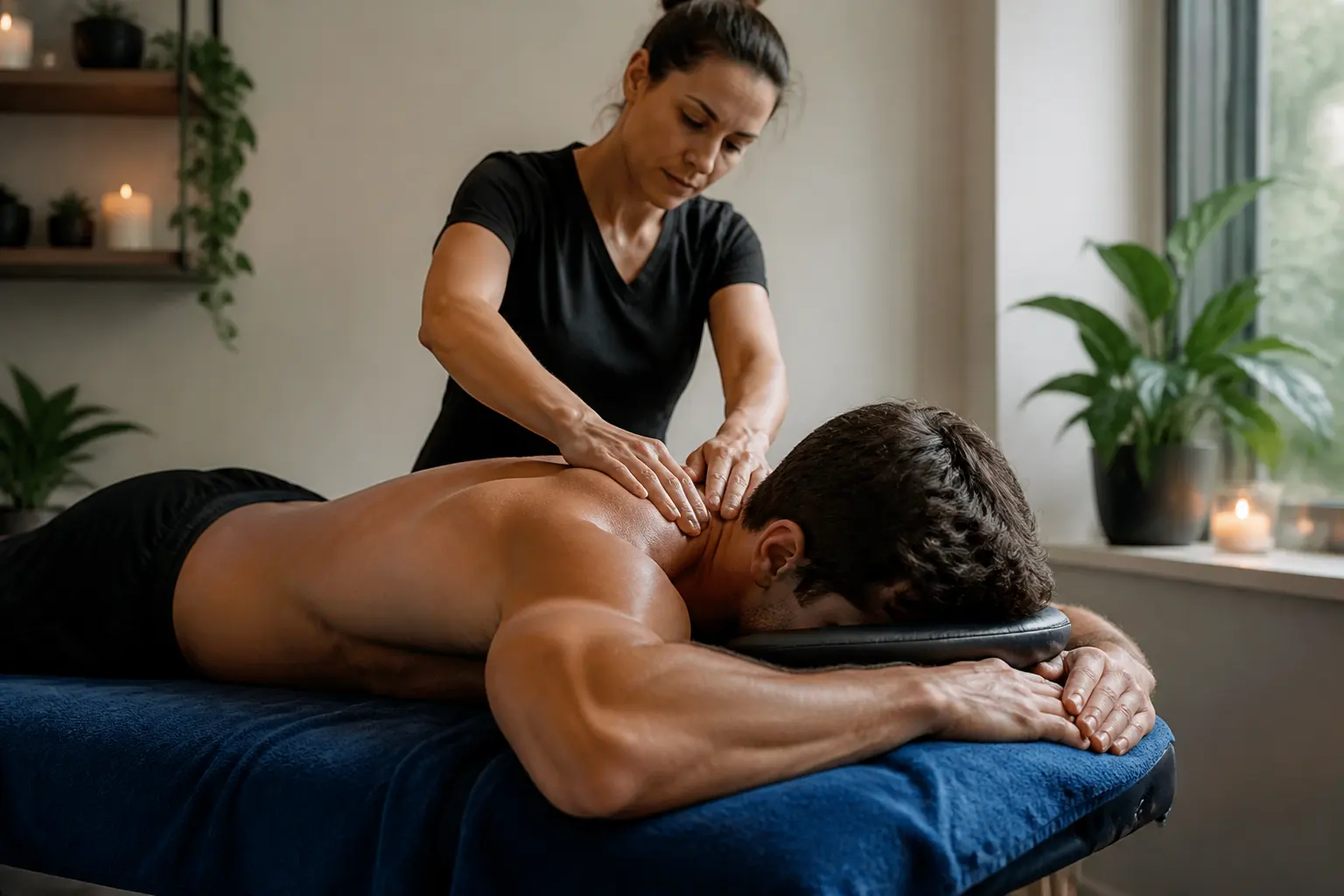
Massage can fit beautifully into an active routine, but timing matters. If you are deciding whether to book a massage before or after the gym, the most useful answer is usually based on what you need from that day’s session. Are you preparing to move, dealing with post-workout tightness, or trying to build a more consistent recovery routine?
For most people, a massage works best after training or on a separate recovery day, particularly when the aim is to relax, ease the feeling of muscle soreness and make time for recovery. Before the gym, a shorter and lighter session may be more suitable when you want to feel mobile and settled rather than deeply relaxed.
A professional massage is not a substitute for a proper warm-up, gradual training plan, sleep, food or hydration. It can, however, be a thoughtful part of the wider picture. At Becammo, the massage approach can be discussed around your activity level, the areas that feel tense and the type of pressure you find comfortable.
The short answer: when is massage best?
If your workout includes heavy lifting, intervals, a long run or demanding sport, book your massage after the gym or on the following day. This is often the more comfortable option when your priority is winding down and supporting your recovery routine.
If you are exercising later that day and feel generally stiff, a lighter pre-workout massage may help you feel more at ease through your range of movement. It should not leave you feeling sleepy, tender or less switched on before training.
The research does not support massage as a reliable way to boost strength, sprinting, jumping or endurance performance directly. It may offer modest benefits for flexibility and delayed-onset muscle soreness, often called DOMS. That distinction is important: massage can support how recovery feels, without being presented as a shortcut to better gym performance. A systematic review and meta-analysis published in BMJ Open Sport & Exercise Medicine reached this balanced conclusion.
Massage before the gym: what it can and cannot do
A massage before exercise is best thought of as preparation for movement, not as a replacement for preparation. Your body still needs a warm-up that matches the workout ahead, such as gentle cardio, gradual loading and movement patterns relevant to your session.
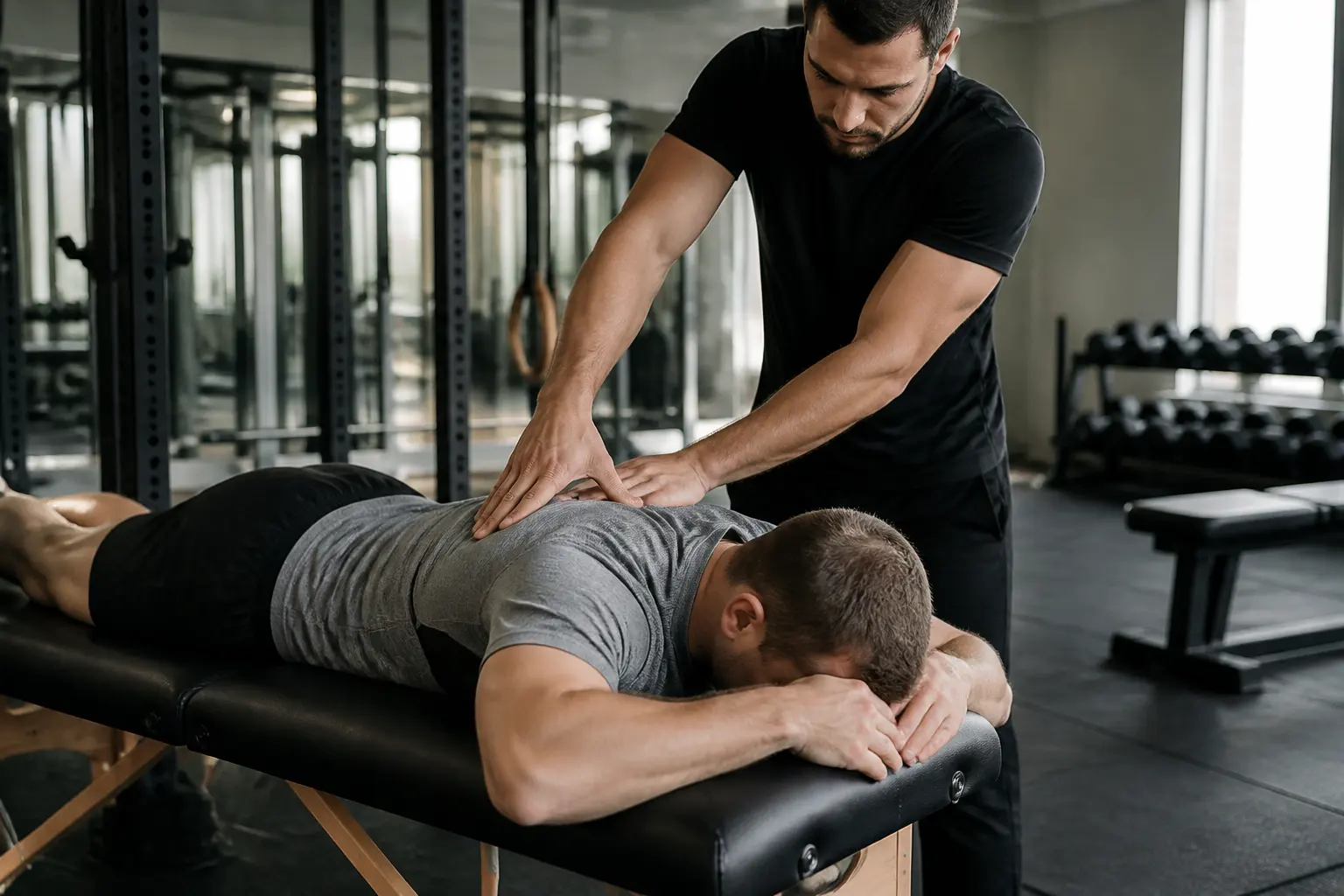
When a pre-gym massage may suit you
- You have had a long day at a desk and feel generally tight before an evening workout.
- You are returning to a familiar routine after a few quieter days and want a gentle reset.
- You have a mobility-focused gym session planned, rather than a maximum-effort performance day.
- You want to combine a light massage with a calm, unhurried approach to training.
For this timing, communicate clearly with your therapist. Tell them that you plan to train afterwards, what activity you are doing and whether there is a particular area you want to feel more comfortable moving. Light to moderate work is usually the sensible direction. The goal is to leave feeling ready to move, not heavily worked over.
When to avoid deep pressure before training
Very firm pressure immediately before a demanding session may not be the best match for everyone. Some people feel relaxed, sleepy or temporarily tender afterwards. That can be unhelpful before heavy compound lifts, fast running, competitive sport or any workout that requires sharp coordination.
There is also no need to chase discomfort in the belief that it proves the massage is effective. A good session should be tailored to your tolerance and purpose. If you are unsure, choose a lighter appointment before exercise, or move the massage to after training instead.
Massage after the gym: the practical recovery option
Post-workout massage is the more natural choice for many gym-goers because the demands of the session are over. You can slow down, focus on the areas that worked hardest and avoid wondering whether a deeply relaxing treatment will affect your training.
Massage after strenuous exercise may help reduce the perceived soreness that appears later, although individual responses differ. A systematic review of controlled studies found massage was associated with lower DOMS ratings after intense exercise. Read the systematic review on PubMed.
That does not mean you should book a very intense massage after every session. Recovery is personal. Someone who trains twice a week, walks daily and works on their feet will have different needs from someone preparing for an endurance event or strength competition.
Good times to book after training
- Later on the same day, once you have had time to cool down, eat and rehydrate.
- The next day, when stiffness is beginning to be noticeable.
- After a particularly demanding week, when your usual mobility routine is not quite enough.
- On a planned rest day, when you can make the appointment part of a broader recovery ritual.
A later appointment is often easier than rushing straight from the gym table to the massage bed. Give yourself a little space to shower, drink water, eat something appropriate for your routine and notice how your body actually feels.
What about a massage on the next day?
If you are prone to delayed soreness, the following day can be an excellent time to book. DOMS commonly feels different from the immediate tiredness at the end of a workout. You may wake up with legs that feel heavy after squats, a back that feels worked after pulling exercises, or shoulders that notice a new upper-body programme.
This is where a tailored massage can feel especially valuable. Rather than trying to force the body into a particular outcome, the therapist can adapt the session according to your comfort, your training load and the areas you want to prioritise.
It is still important to keep expectations realistic. A massage cannot undo an overly ambitious programme, compensate for poor rest, or make an injury disappear. A wider review of recovery methods found massage among the options associated with reduced soreness and perceived fatigue, but recovery results are influenced by many factors. See the systematic review and meta-analysis on recovery techniques.
Choose the timing by your training goal
| Your situation | Timing that often makes sense | Massage approach |
|---|---|---|
| You want to feel less stiff before a gentle gym session | Before the gym | Light, mobility-focused and not overly sedating |
| You have a hard strength, running or sport session planned | After the gym or another day | Save deeper relaxation for when training is finished |
| You are sore after a new or demanding workout | Later that day or the next day | Personalised pressure around comfort and tender areas |
| You are building a sustainable weekly routine | Rest day or lower-intensity day | A consistent session that complements sleep and mobility work |
| You are preparing for a competition or event | Depends on the event and your usual routine | Avoid experimenting with unfamiliar pressure or timing at the last minute |
How to plan massage around different gym styles
Strength training
After lower-body strength training, many people notice tightness through the glutes, thighs, calves and lower back. A recovery-focused massage after training or on the next day can be a comfortable way to slow down. If you are lifting heavy later that same day, avoid a session that leaves the relevant area feeling too sensitive.
Running and cardio
Runners may prefer a lighter appointment before an easy run, while reserving a more restorative session for after a longer distance or harder interval work. If your legs already feel unusually painful, swollen or unstable, do not assume that massage is the answer. Pause the training plan and seek suitable clinical advice where needed.
High-intensity sessions
HIIT, circuits and mixed conditioning can create whole-body fatigue. Here, after-gym massage is often the easier choice because it allows the focus to be recovery and relaxation. Keep your next workout in mind too. A demanding session may call for gentler work if you need to train again soon.
Mobility and low-impact training
If your gym session is yoga-inspired mobility, Pilates, gentle resistance or a lower-intensity class, a light pre-session massage may fit well. The key is not to confuse temporary ease of movement with permission to push beyond your usual capacity.
What to tell your massage therapist
The more useful information you share, the more personalised the session can be. You do not need technical fitness language. A simple, honest description is enough.
- What training you did recently, or what you plan to do afterwards.
- Whether you are experiencing ordinary muscle tightness or a new, sharp or worrying pain.
- Which areas feel most worked, stiff or uncomfortable.
- Your preferred pressure, including whether you dislike very firm techniques.
- How soon you expect to train again.
- Any relevant health information that could affect the session.
This conversation is part of professional care. It helps set a session that matches your goal instead of applying one generic approach to every active body.
When not to book a recovery massage
Ordinary post-gym stiffness is one thing. A possible injury is another. Do not use massage to push through severe pain, sudden swelling, bruising, numbness, marked weakness, dizziness or a loss of normal movement. If you suspect a sprain, strain or other acute soft-tissue injury, firm massage early on can be inappropriate because it may increase bleeding and swelling. University Hospitals Coventry and Warwickshire guidance advises avoiding massage in the first 72 hours following an ankle sprain.
Seek assessment from an appropriate healthcare professional if symptoms are severe, persistent, getting worse or clearly different from your usual training soreness. Massage can be part of wellbeing and recovery, but it is not a diagnostic service.
A simple recovery routine that makes sense
Rather than relying on one appointment to carry all of your recovery, build a routine you can genuinely maintain:
- Finish your training with a gradual cool-down that suits the activity.
- Eat and hydrate according to your needs and normal routine.
- Prioritise sleep, especially after hard training blocks.
- Use gentle movement on rest days if it feels good for you.
- Book massage when you want focused time for comfort, relaxation and recovery support.
- Adjust your gym plan if soreness is unusually intense or your form is changing.
This approach keeps massage in its most useful role. It is a considered form of self-care, not a test of toughness and not a replacement for listening to your body.
Conclusion
For most gym-goers, massage after exercise or on a rest day is the more practical option, especially when the aim is to relax and manage the feeling of post-training tightness. A lighter pre-gym session can also work when your goal is to feel more comfortable moving, provided it does not leave you overly relaxed or tender before your workout.
Your ideal timing depends on the session ahead, your recovery window and how your body responds. If you are in Malta and would like help choosing a massage that fits around your gym routine, book a session with Becammo or ask the team about the most suitable approach for your schedule.
Frequently asked questions
Is it better to have a massage before or after the gym?
After the gym is usually the simpler choice when you want to relax and support your recovery routine. Before the gym can suit a lighter, mobility-focused session, especially before lower-intensity exercise.
Can I exercise immediately after a massage?
You can, but it depends on the pressure used and the workout planned. After a deeply relaxing or firm session, many people prefer to train later or on another day. Tell your therapist beforehand if you plan to exercise immediately.
Will massage stop muscle soreness after a workout?
No method can promise that. Massage may help reduce the feeling of delayed soreness for some people, but response varies with the workout, your training background and your overall recovery habits.
How often should I book a massage if I go to the gym regularly?
There is no universal timetable. Some people book around demanding training periods, while others prefer a regular monthly or fortnightly wellbeing routine. Choose a frequency that feels useful and sustainable for you.
Should I get a deep tissue massage after leg day?
Not necessarily. If your legs are very tender, deep pressure may not feel appropriate. A professional therapist can adapt the pressure and focus based on your comfort, training and next workout.
Can massage help if I think I have injured myself at the gym?
Do not assume so. Sudden pain, swelling, bruising, numbness, weakness or reduced movement should be assessed by an appropriate healthcare professional rather than treated as ordinary gym soreness.