Eyelash Extensions for Hooded Eyes: Maps That Open the Gaze
Brenda Cammo Team
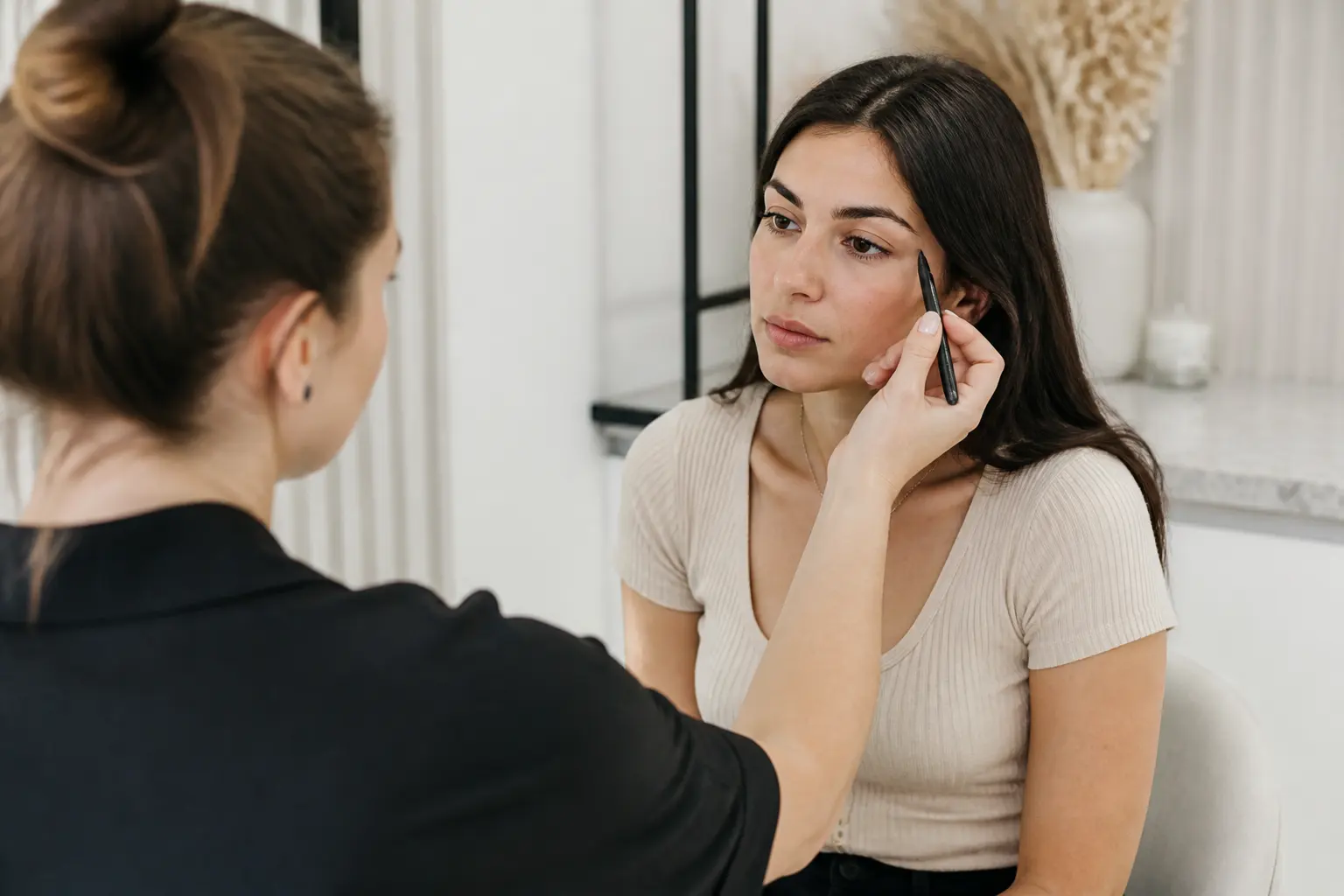
Hooded eyes can look beautifully soft, expressive and elegant, but they do call for thoughtful eyelash extension styling. When the upper lid naturally sits closer to the lash line, a lash map that is too heavy, too long in the wrong area or too dramatic at the outer corner can make the eye area feel visually crowded.
The aim of eyelash extensions for hooded eyes is not to change your natural eye shape. It is to create a balanced, comfortable set that gives the lashes visible definition when your eyes are open. A professional lash artist considers where your lid folds, how much of the mobile lid is visible, the direction and strength of your natural lashes, and the finish you would genuinely enjoy wearing day to day.
At a professional studio, this starts with observation and conversation, not a fixed template. The most flattering map is personal, because two people with hooded eyes can have very different lash lines, brows, lid space and style preferences.
What are hooded eyes?
Hooded eyes describe an eye shape in which skin from the upper lid folds over or sits close to the crease. For some people, the crease is less visible when the eye is open. This is a normal variation in facial structure and can occur alongside many other eye shapes.
From a lash styling perspective, the key detail is what can be seen when you look straight ahead. Extensions may look very different with the eyes closed than they do in everyday conversation, photographs or a mirror. That is why a lash artist should assess the eye while open as well as closed before deciding on the map.
A hooded eye does not require one particular lash set. Classic lashes, a soft volume finish or a mixed set may all work well, depending on your natural lashes and the overall result you want. The difference lies in the placement, curl, length transitions and density.
Why lash mapping matters for hooded eyes
Lash mapping is the plan for the extension set. It guides the artist on how lengths, curls and density are distributed across the lash line. Rather than placing the same extension style everywhere, the map creates a deliberate shape.
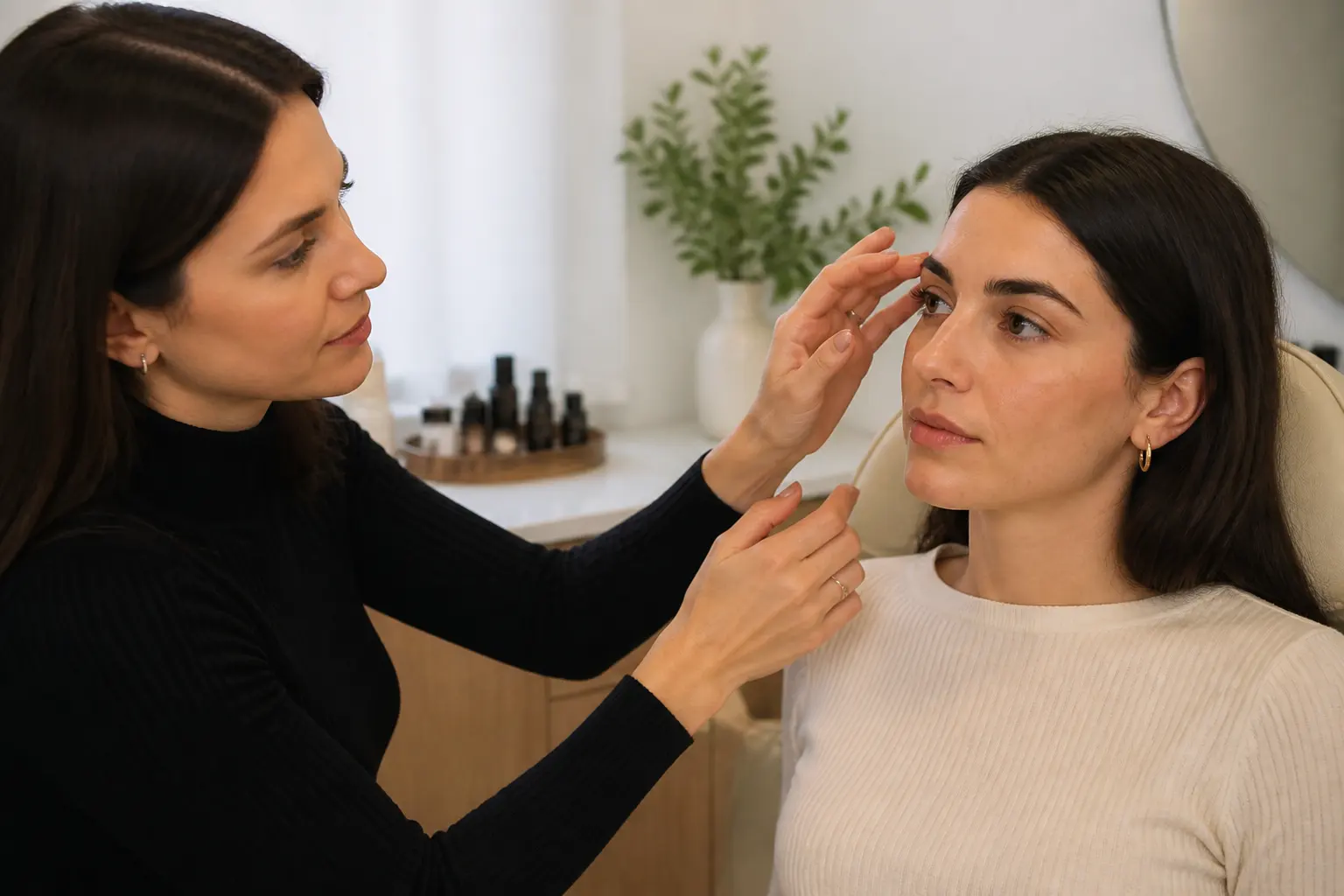
For hooded eyes, a well-considered map often focuses on making the lashes noticeable without adding unnecessary visual weight where the lid overlaps the most. The goal may be a brighter-looking, more open gaze, but the way to reach that goal varies.
- Length placement helps guide attention towards the most flattering point of the eye.
- Curl selection affects how visible the extensions are from the front.
- Density determines whether the finished set feels delicate, defined or more glamorous.
- Transitions prevent abrupt changes that can make a set appear unbalanced.
- Natural lash health sets the limits for what can be applied responsibly.
A good map should look intentional from several angles. It should also remain wearable between appointments, rather than relying on excessive length or density for impact.
Maps that can complement hooded eyes
There is no universal “best” map for every hooded eye. Still, certain approaches are often useful starting points during a consultation.
Open-eye mapping
An open-eye map usually places the visual peak around the centre of the lash line or slightly beyond it, rather than concentrating the longest lengths at the very outer corner. This can bring attention upwards and create a rounded, awake-looking finish.
For a client whose hood is more noticeable towards the outer eye, this approach may prevent the outer corner from appearing pulled down or hidden. The exact peak depends on the individual eye, so it should be adjusted rather than copied exactly from a chart.
Soft kitten mapping
A soft kitten map gradually builds from the inner corner, reaches its focal point around the outer-middle area and then tapers gently. It can offer an elongated effect without the strong outer-corner emphasis of a traditional cat-eye set.
This is often a useful option for someone who likes a little definition and length but wants to avoid a result that feels too horizontal. The soft taper is important. If the longest extensions are placed too far out, they may disappear into the lid fold when the eyes are open.
Custom squirrel-inspired mapping
A squirrel-inspired map creates its highest point before the outer edge, then reduces the length slightly towards the final lashes. When adapted thoughtfully, it can create lift and movement through the upper lash line.
It is not a formula to apply automatically. On some eye shapes, a pronounced peak may look too sharp. On others, a softer version can be a beautiful way to keep the outer corner light while still creating a refined, styled appearance.
Balanced natural mapping
For clients who want their lashes to look enhanced rather than obviously extended, a balanced natural map can be an excellent choice. The lengths change subtly, and the emphasis stays close to the natural lash line.
This approach can work especially well if you wear minimal make-up, have a full brow that already frames the eyes strongly, or prefer a low-maintenance look between infills. A natural map does not mean flat or plain. With the right curl and careful placement, it can still make the lashes far more visible.
Choosing curls and lengths with care
Curl and length are often more important than choosing a named style from a photograph. A set that looks open and lifted on one person may look completely different on another person with a different lid position or lash direction.
Why curl can make a difference
For hooded eyes, the artist may consider a curl that remains visible from the front without pressing towards the lid. The right option depends on your own natural lash curl and the space available around the eye.
A stronger curl is not automatically better. If it is selected without considering the natural lash direction, comfort and secure attachment can be affected. The most suitable curl is the one that creates a harmonious result while respecting the natural lashes.
Why longer is not always more open
Very long extensions can look impressive in a close-up photo, but they are not always the best choice for hooded eyes. When length is excessive, the lashes can touch the lid area, feel visually heavy or cast a shadow over the eye.
A professional set uses length strategically. Often, a modest increase at the right point in the map looks more polished than long extensions across the entire lash line. The finished result should suit your features, lifestyle and comfort, not simply follow a trend.
Classic, volume or mixed lashes for hooded eyes?
The set type influences the overall effect, but none of these options is exclusively for one eye shape. Your natural lash quantity and strength are just as important as the desired look.
| Set type | How it can look on hooded eyes | Who may prefer it |
|---|---|---|
| Classic lashes | Clean, defined and close to a mascara-like enhancement. | Clients who enjoy an understated, everyday finish. |
| Volume lashes | Can add softness and definition where natural lashes are sparse, when kept balanced. | Clients who prefer a fuller appearance without relying on excessive length. |
| Mixed lashes | Combines definition with texture for a flexible, personalised finish. | Clients seeking a noticeable but not overly dense set. |
The best option is not necessarily the fullest set. A well-made classic or mixed set can give hooded eyes a lovely frame when the mapping is precise. Equally, a light volume set may suit someone who wants more visible density while keeping the shape soft.
What happens during a professional lash consultation?
A consultation helps turn a general request, such as “I want my eyes to look more open”, into a realistic styling plan. You can bring inspiration images, but it is helpful to treat them as a starting point rather than an exact promise. The person in the image may have a different lid structure, lash density and natural eye shape.
Your lash artist should look at factors such as:
- the visible lid space when your eyes are open;
- the position of the crease and outer corner;
- the direction, thickness and condition of your natural lashes;
- any unevenness between the eyes, which is common and natural;
- your usual make-up style and how noticeable you want the extensions to be;
- your ability to return for regular infills and follow aftercare guidance.
It is also the right time to mention sensitivity concerns, previous experiences with lash extensions, contact lenses, upcoming travel or events, and any preference for a soft or more defined result. Clear communication helps the artist create a plan that feels like you.
How to make the most of your appointment
Come to your appointment with clean lashes and eye area, free from mascara and heavy eye make-up. This gives the lash artist a cleaner starting point and helps them assess your natural lashes properly.
Be open about the look you wear most often. If you usually like a bare face, a very dense, long set may feel unfamiliar even if it is technically possible. If you love eyeliner and polished evening make-up, you may prefer more definition through the lash line. There is no right answer, only a choice that fits your routine.
During the appointment, keep your eyes comfortably closed and allow enough time for detailed application. Good lash work depends on careful isolation and placement, not rushing.
Aftercare supports the shape of your set
Your lash map is only part of the result. Everyday care helps the extensions stay neat as your natural lashes move through their normal shedding cycle. Clean them as advised, brush gently with a clean lash brush, and avoid pulling or picking at the extensions.
It is also sensible to plan infills before the set becomes too sparse. The ideal timing varies because natural shedding, lifestyle and aftercare differ from person to person. Booking consistently gives your lash artist the best opportunity to maintain the original balance of the map.
If you notice discomfort, irritation or an unusual reaction after an appointment, contact the studio promptly for guidance rather than attempting to remove extensions yourself.
Common mistakes to avoid when choosing a hooded-eye lash style
- Requesting a cat-eye set without discussing your lid shape. It can be beautiful, but a strong outer-corner focus is not ideal for every hooded eye.
- Choosing length from a social media image alone. The same length can appear very different across eye shapes.
- Assuming more volume always creates more lift. Excess density can make the lash line appear heavier when it is not balanced carefully.
- Ignoring natural lash condition. A sustainable, comfortable set should be planned around the lashes you have.
- Waiting too long for an infill. Once shedding changes the distribution of the set, its original shape can be harder to maintain.
Final thoughts
Eyelash extensions for hooded eyes work best when the map is designed around your individual features, rather than around a single trend. A subtle open-eye map, soft kitten finish, carefully adapted squirrel-inspired shape or natural balanced set may all be appropriate depending on your lash line and the look you want.
If you are booking in Malta, choose a professional consultation where you can discuss your eye shape, preferred level of definition and natural lashes before the styling begins. A personalised map gives you the best starting point for lashes that feel comfortable, suit your face and look considered every day.
Frequently asked questions
Can hooded eyes have cat-eye eyelash extensions?
Yes, but the traditional cat-eye shape may need adapting. A softer outer transition or a peak placed before the outer corner can sometimes create a more balanced result. Your lash artist can assess this during your appointment.
What is the best curl for eyelash extensions on hooded eyes?
There is no single best curl. The right choice depends on your natural lash direction, the position of your lid and the amount of lift you want. A professional assessment is more reliable than selecting a curl from a photograph alone.
Do volume lashes make hooded eyes look smaller?
Not necessarily. A light, well-mapped volume set can add attractive definition. However, excessive density or length in the wrong areas may make the lash line feel heavier, which is why mapping matters.
Should the longest lashes go at the outer corner?
Not always. For some hooded eyes, placing the longest lengths slightly before the outer corner can create a more open-looking finish. The best placement depends on your individual eye shape.
How often should I book an eyelash extension infill?
Infill timing varies with your natural lash shedding, aftercare and how full you like your set to look. Your lash artist can recommend a suitable schedule after seeing how your lashes retain the extensions.