Does Eyebrow Threading Remove Hair From the Root?
Brenda Cammo Team
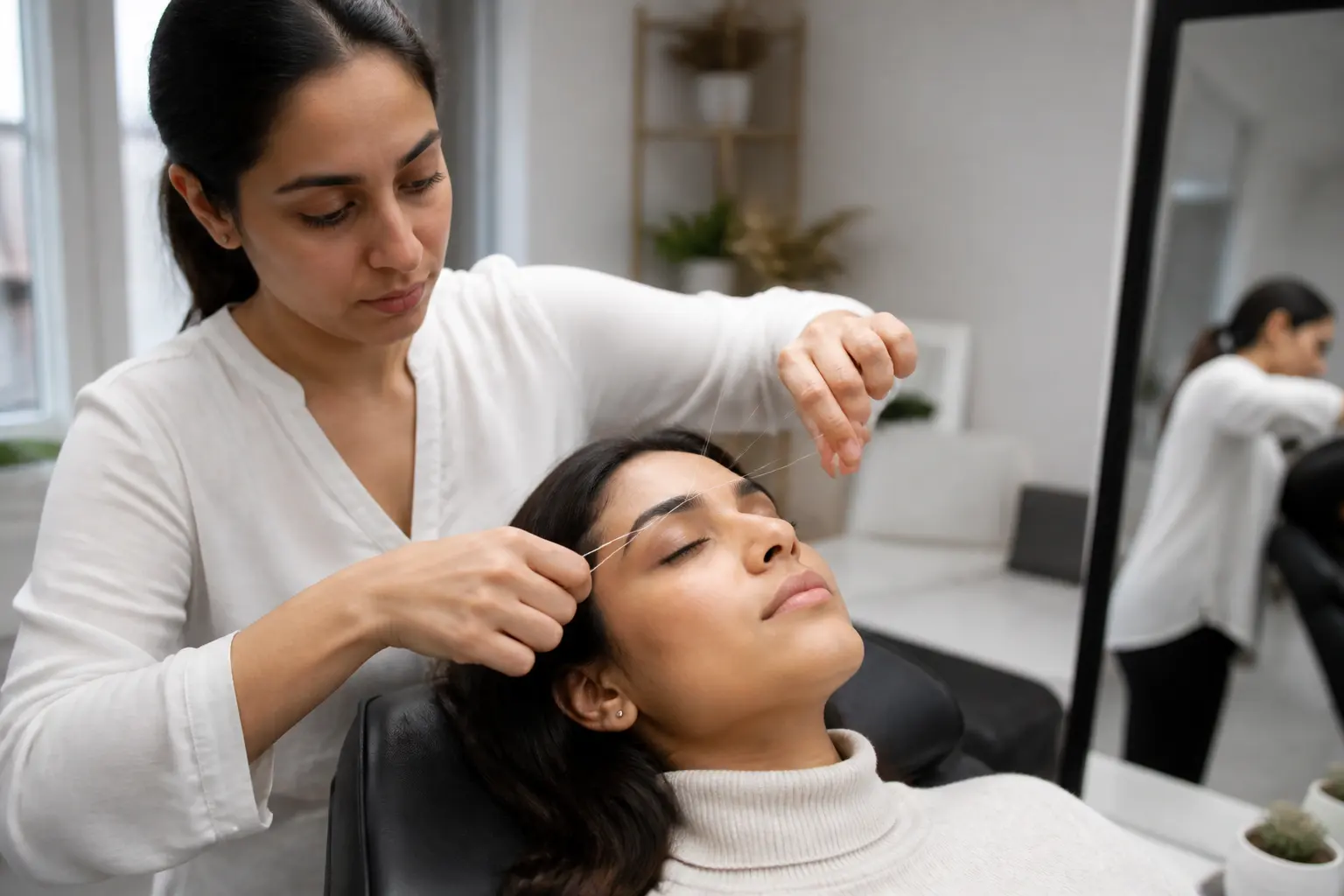
Yes, eyebrow threading is designed to remove hairs from the root rather than simply cutting them at skin level. A trained brow artist uses a twisted loop of thread to catch individual hairs or small rows of hairs and lift them out as the thread moves across the skin.
That detail helps explain why threading can leave the brow area looking clean and defined, while still allowing the appointment to focus on preserving the fullness you want. It also explains why regrowth does not usually look identical for every hair: brow hairs grow in cycles, and not every hair is at the same stage at the same time.
If you are deciding whether threading is right for your brow routine, it helps to understand what the thread is actually doing, what it is not doing, and why a personalised shape conversation matters before any hair is removed.
How eyebrow threading works
Threading is a hair-removal and brow-shaping technique with a long history in India and the Middle East. During a brow appointment, the artist works with a fine thread, usually cotton. The thread is twisted in the centre and controlled with the hands to create a moving loop.
As this twisted section travels over the skin, it catches hairs in its path and pulls them out from the follicle. The motion is precise: rather than spreading a product over a larger area, the artist can work gradually around the upper brow line, lower brow line, centre area and any hairs that sit outside the intended shape.
At Becammo, cotton thread is the usual standard, while polyester may be used for clients with an allergy concern. The thread is single-use and discarded after the appointment. Hygiene, a clear consultation and careful skin handling are all important parts of a professional threading service.
Does threading pull every hair out from the root?
Threading aims to remove the hair shaft and root together. In everyday language, people may say a hair has been “pulled from the root”. More precisely, the visible hair is lifted from the follicle where it grows.
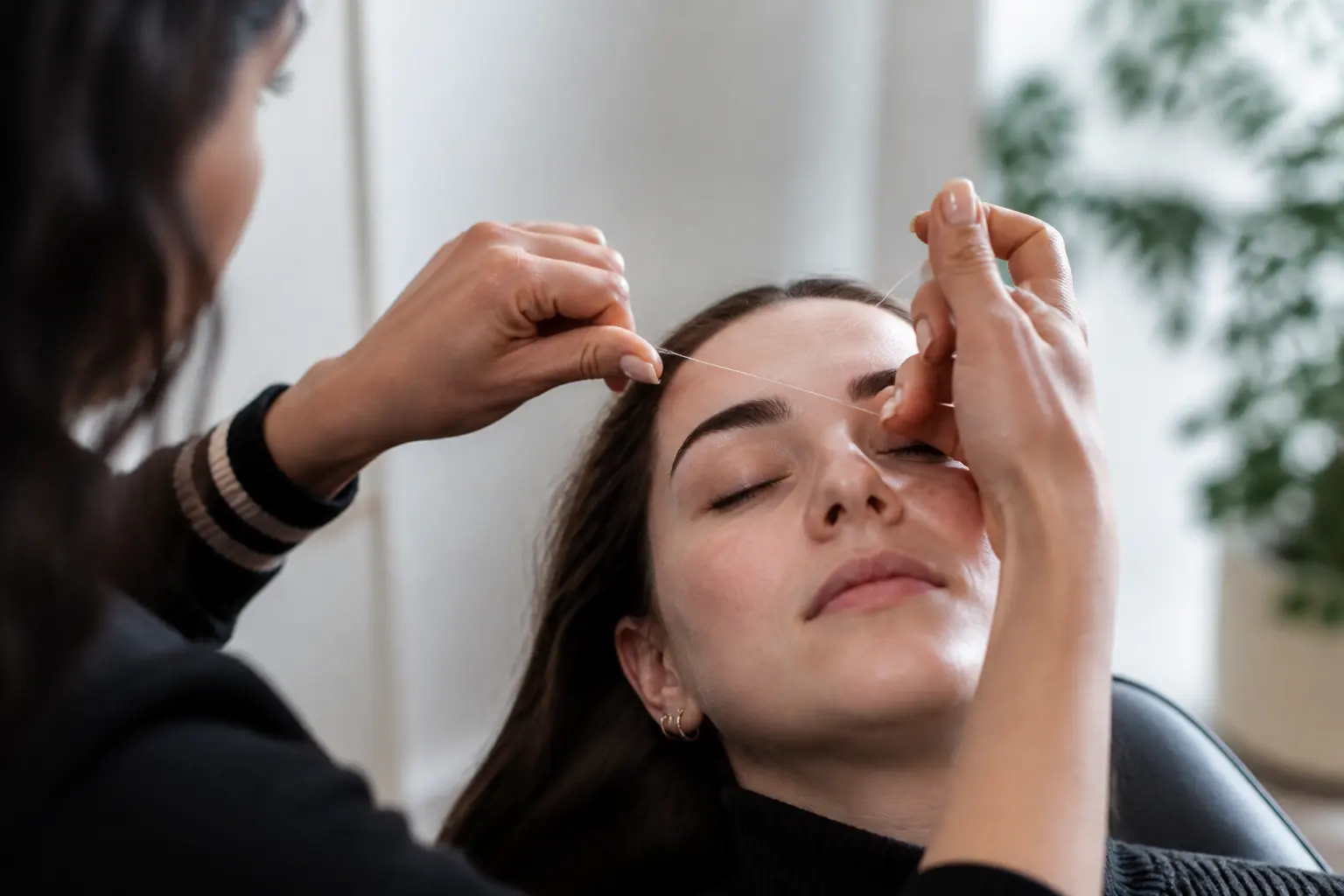
However, no method can make every single hair behave in exactly the same way. Hair direction, thickness, how closely a hair sits against the skin and the stage of its growth cycle can all affect how readily it is caught by the thread. A skilled artist adjusts the angle and tension of the thread, then checks the area carefully as the shape is refined.
Occasionally, a very short or fine hair may not be ready to be removed cleanly during that particular session. That does not mean the technique only cuts hair. It means brow work should be approached with patience rather than repeated passes simply for the sake of creating an overly sharp finish.
Threading versus shaving
Shaving cuts the hair above or very close to the skin surface. The hair remains in the follicle, so it can become visible again relatively quickly as it grows out.
Threading works differently because it lifts the hair from the follicle. Regrowth still happens, but the hair needs time to emerge again. The timing varies from person to person and even across different areas of the same brow.
Threading versus tweezing
Tweezing can also remove individual hairs from the root. The main difference is the method of control. Tweezers grip one hair at a time, while threading can remove a carefully selected line of hairs in a continuous movement.
Neither approach should be treated as automatically better for every person. The value of threading lies in its ability to create clean lines while the brow artist continuously considers the overall shape, density, natural growth pattern and the areas that should remain untouched.
Threading versus waxing
Waxing can also remove hair from the root, but it uses a wax product applied to the skin. Threading uses thread instead. Some people prefer threading because the artist can work in smaller, highly targeted sections around the brow shape.
Your choice should take account of your skin, current skincare routine, comfort level and desired brow finish. If you use strong exfoliating products or have an active skin concern around the brow area, mention this before your appointment so the service can be considered appropriately.
What happens after a hair is threaded?
Once a brow hair is removed, the follicle remains part of the skin and can produce another hair over time. Threading is a hair-removal method, not a way to permanently stop brow growth.
This is important if you are growing out sparse or over-shaped brows. A well-planned threading appointment can tidy the areas that sit outside your preferred shape without taking too much from the main brow body. But the appointment should begin with a shared understanding of your goal: a crisp defined brow, a soft natural outline, more room to grow hairs back, or a balance between these priorities.
Because brow hairs are not all synchronised, you may notice a few new hairs appearing between appointments even when the shape initially looked very clean. This is normal. It does not mean the earlier hairs were merely cut; it reflects the fact that other hairs may have been below the skin surface or at a different stage of growth.
How long does it take for threaded eyebrows to grow back?
There is no single timetable that suits everyone. Many people notice enough new growth to think about another brow appointment after roughly two to three weeks, but your ideal schedule can differ depending on your natural hair growth, brow density, preferred finish and how much hair you would like to retain.
Someone who likes a very polished outline may choose more regular maintenance. Someone growing out a previous shape may prefer longer gaps and a more conservative approach at each visit. Your brow artist can help you decide what makes sense for your current goal without assuming that every brow should follow the same routine.
It is also useful to remember that “regrowth” can look different from one person to another. Coarser or darker hairs may become noticeable sooner, while fine pale hairs can be less visible even when they are present. Lighting, brow makeup and your natural skin tone can also change how defined the new growth appears.
Will threading make eyebrow hair grow back thicker?
Threading does not intentionally make brow hair grow back thicker, darker or faster. Because the hair is removed from the follicle, the new hair begins to grow again through its usual cycle. It may feel different when it first emerges, but that does not necessarily mean the hair itself has changed.
It is easy to connect a visible regrowth phase with the idea that hair has become stronger. In reality, several factors can affect how noticeable it seems: the natural texture of the hair, the contrast between hair and skin, whether surrounding hairs were also removed, and how closely you are checking the brow area.
If your brows have become noticeably sparse, patchy or different from usual, a brow appointment is not the place to make assumptions about the cause. A cautious design can help you avoid further over-removal, while any broader concern about hair changes can be discussed with an appropriate healthcare professional.
Why precision matters when removing hair from the root
The fact that threading removes hair from the root is exactly why brow shaping needs restraint. Brows frame the face, but there is no universal “perfect” shape that should be applied to everyone.
A thoughtful appointment considers features such as the natural starting point of the brow, the existing arch, the direction of growth, density differences between the two sides and your styling preferences. It also recognises that brows are naturally sisters rather than identical twins. The aim is usually balance and a shape that feels like you, not forced symmetry.
This matters especially for clients with sparse brows, mature brows, scars, uneven density or a history of over-plucking. In these situations, removing every hair outside an imagined template can work against the longer-term goal. A shape-first approach identifies which hairs support the brow and which ones can be removed without losing the natural character of the brow.
What to do before an eyebrow threading appointment
A little preparation can make the consultation and service clearer.
- Arrive with a clean brow area where possible. Heavy brow pencil, pomade or powder can make it harder to assess natural density and hair direction.
- Explain your normal brow routine. Let the artist know whether you fill your brows daily, tint them, use brow gel or are trying to grow areas out.
- Share your shape goal. Say whether you want to keep fullness, create a cleaner arch, soften a previous shape or remove only obvious stray hairs.
- Mention skin sensitivity and products. Tell the artist about irritation, recent exfoliation or products that may affect the skin around the brow area.
- Bring up previous brow experiences. If a past appointment felt too thin, too angular or unlike you, that feedback is useful before the new shape begins.
A proper conversation is not an extra step. It helps ensure that root-level hair removal is used carefully and in line with your own preferences.
Simple aftercare for freshly threaded brows
It is common for the skin to look temporarily pink or feel a little sensitive after threading, particularly if your skin is reactive or if it has been some time since your last appointment. Avoid rubbing the area and keep your hands away from the brows as much as possible immediately afterwards.
For the rest of the day, keep your routine gentle around the brow area. If you are planning another brow service, such as colour or lamination, ask about the most suitable order and timing for your individual booking. The right plan can depend on your skin, your preferred result and the services involved.
If redness, irritation or discomfort feels unusual or persists, seek advice from an appropriate healthcare professional. Beauty services should always be approached with care, particularly when the skin is already compromised.
When eyebrow threading may be a good fit
Threading may suit you if you want a defined but personalised brow shape, prefer a service that works directly with your natural hair pattern, or want to maintain your brows without relying on a single fixed template.
It can work for a wide range of brow types, including fuller brows that need refining and sparser brows where every retained hair matters. The key is not the label of the technique alone. It is the consultation, hygiene standards and technical judgement used during the service.
At Becammo, threading and brow design are approached with attention to different ethnicities, natural brow textures and personal preferences. Whether your brows are naturally bold, fine, curved, straighter, uneven or in a growing-out phase, the starting point should be your own features and your own routine.
Conclusion
Eyebrow threading does remove hairs from the root, using a twisted thread to catch and lift hairs from the follicle. That is why it can create a clean, lasting-looking outline, while still requiring careful decisions about which hairs should stay.
Regrowth is normal, varies between individuals and does not follow one exact timetable. The most helpful way to approach threading is to focus less on removing every stray hair and more on building a shape that works with your natural brows. If you would like a personalised brow-shaping appointment in Malta, choose the Becammo location that is most convenient for you and book the threading service that suits your routine.
Frequently asked questions
Does eyebrow threading hurt?
Threading can involve brief discomfort because hairs are being removed from the root. Everyone experiences this differently, and sensitivity can vary from one appointment to another.
Can threading remove very short eyebrow hairs?
It can remove many short hairs, but very fine or newly emerging hairs may not always be ready to catch cleanly. A professional should avoid overworking the skin simply to remove every tiny hair.
How often should I get my eyebrows threaded?
Many people return when new growth starts to affect their preferred shape, often after around two to three weeks. Your natural growth pattern and brow goal may call for a different interval.
Is threading suitable for sparse eyebrows?
It can be, provided the appointment prioritises preserving the hairs that support your natural shape. Tell your brow artist if you are growing your brows out or want only minimal clean-up.
Can I wear brow makeup after threading?
It is usually best to keep the freshly threaded area simple immediately afterwards, especially if the skin looks pink or feels sensitive. Ask your brow artist for guidance based on your skin and the rest of your brow routine.