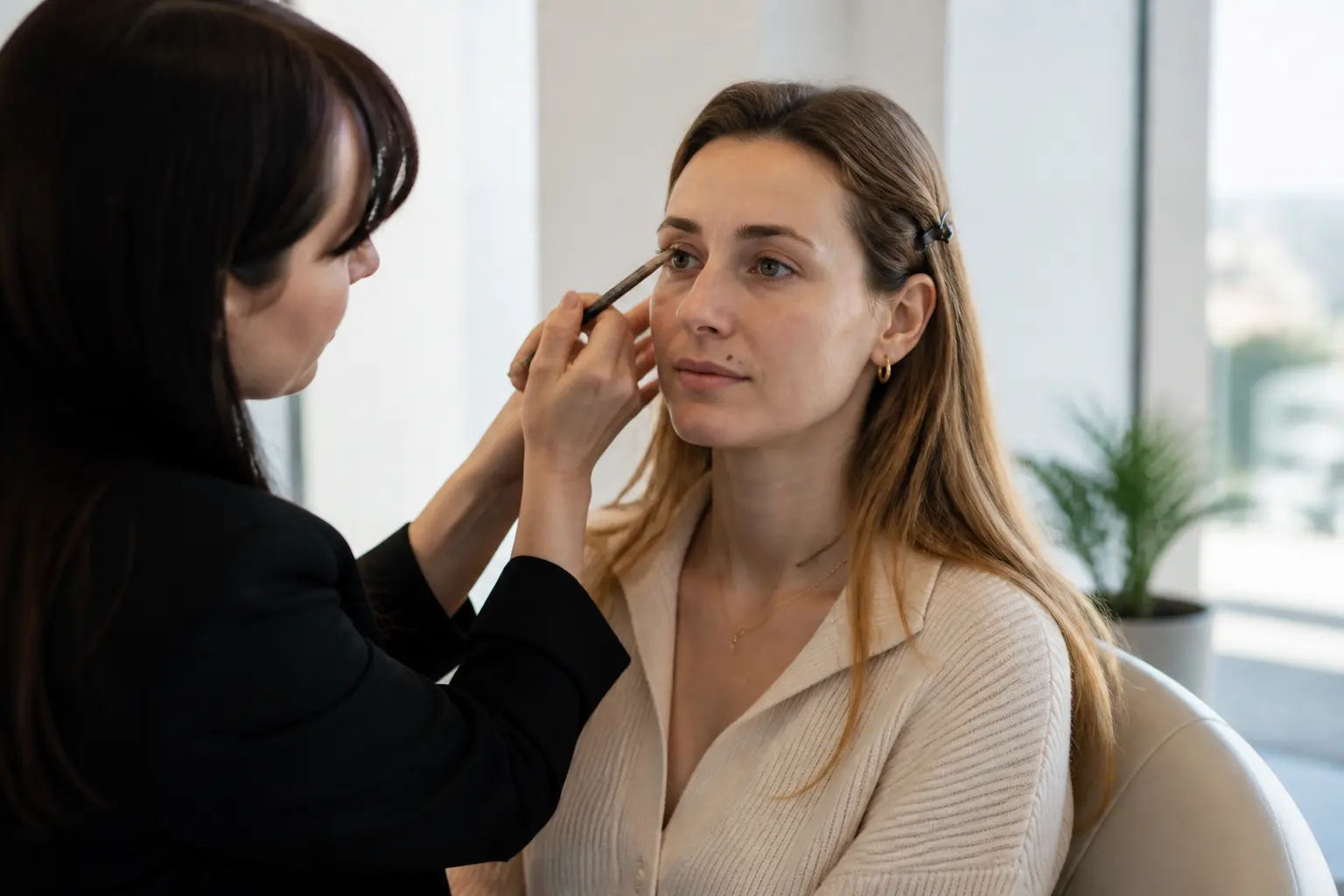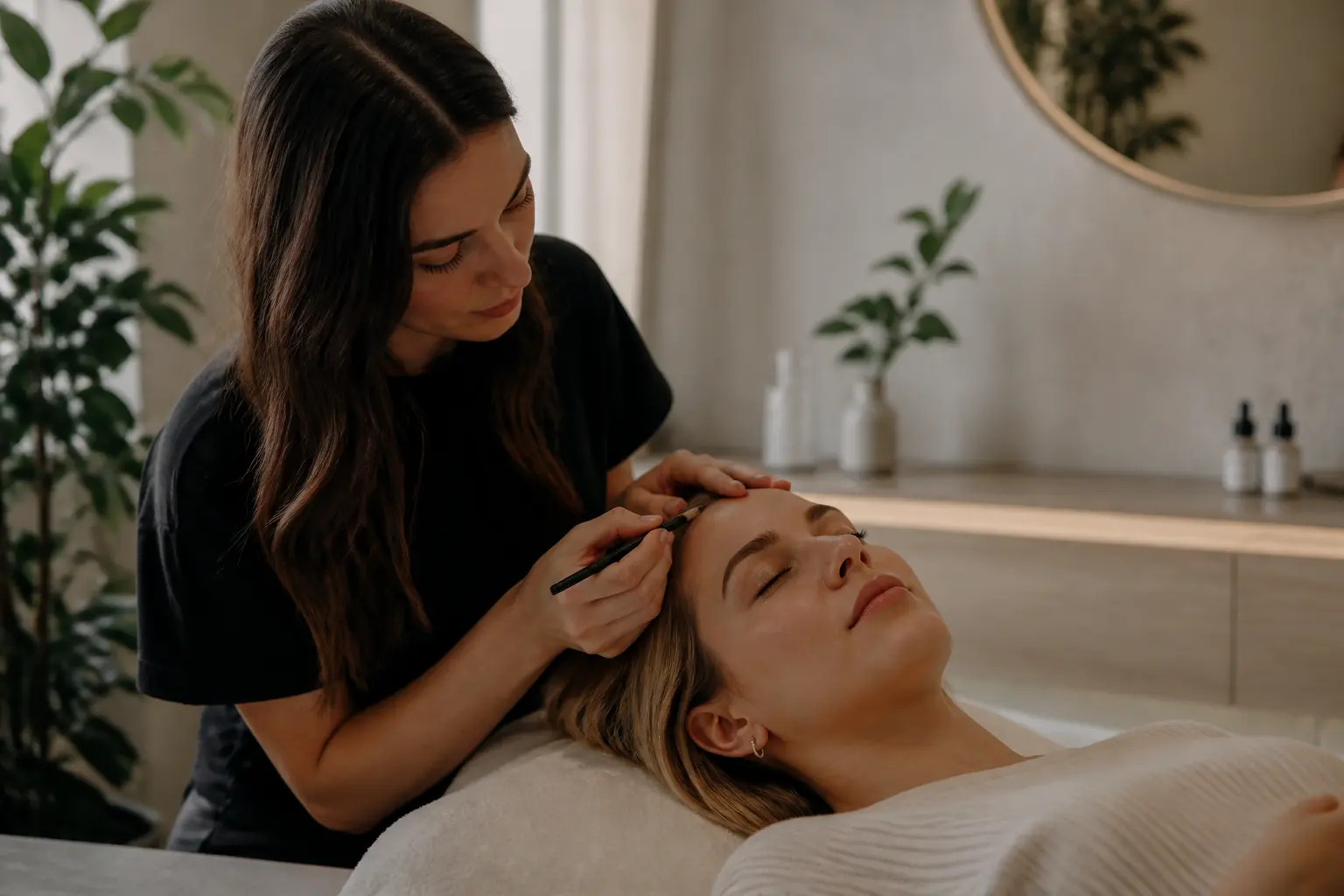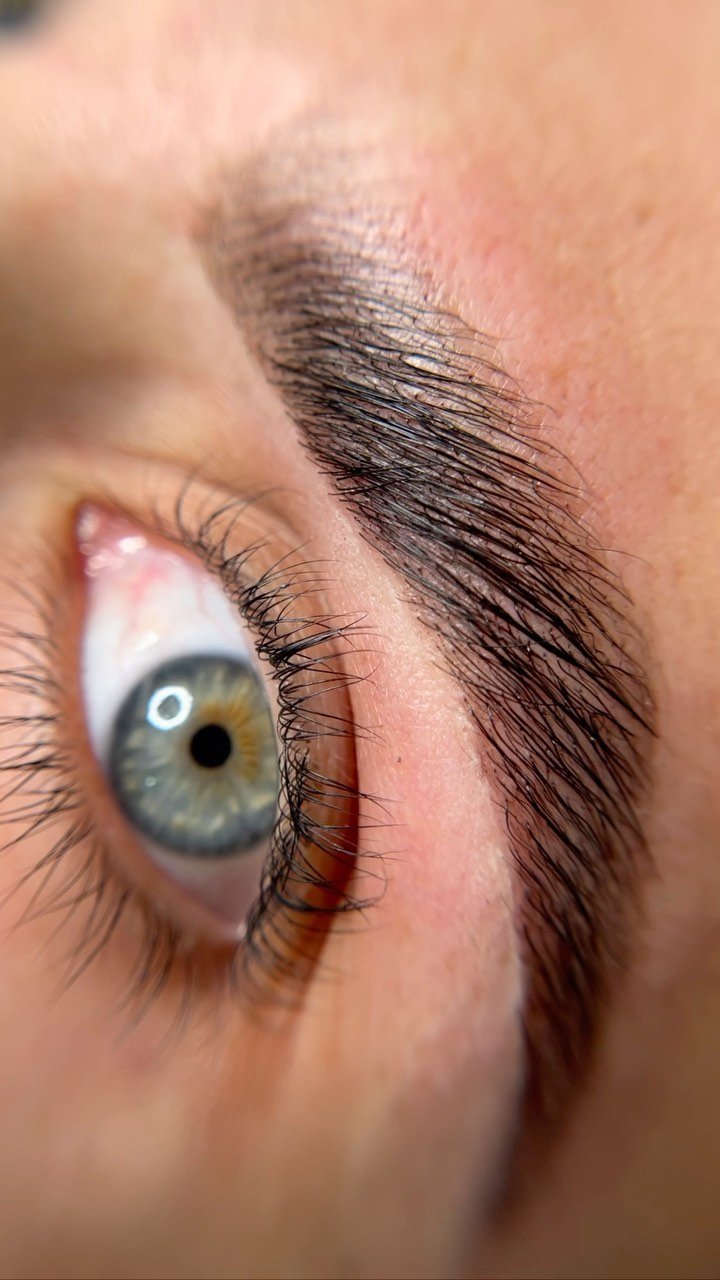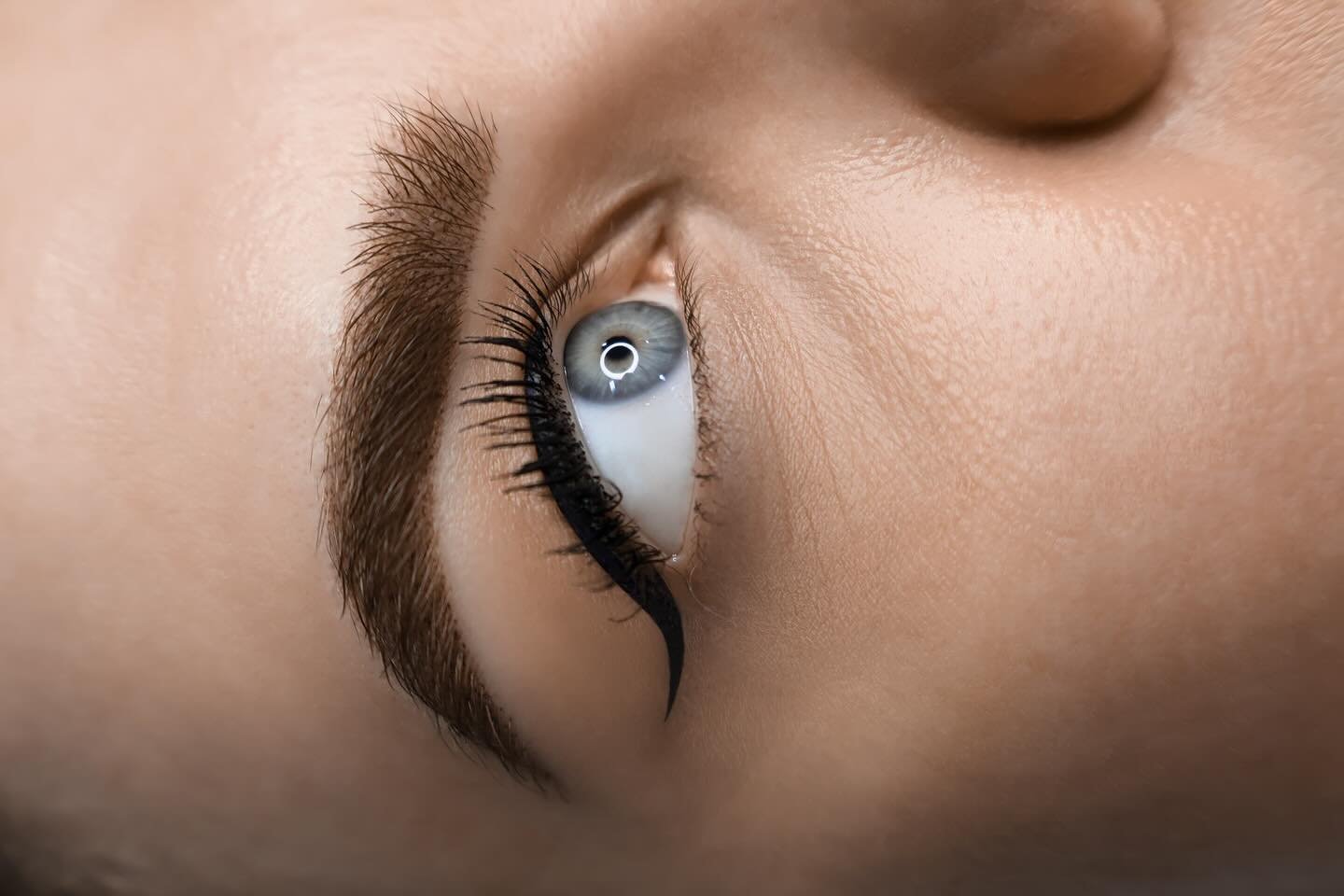
Threading can refine fine or light brows by removing only the hairs that blur the natural outline, giving a cleaner edge, a more balanced front and tail and better separation between the brows. It does not add hair, change hair colour or create density. The aim is a subtle, believable result that protects natural fullness rather than a heavy, highly defined brow.
Fine or light brow hair can make everyday brow grooming feel surprisingly complicated. You may have enough natural hair for a shape, but individual hairs can be delicate, pale, soft in texture or less visible against your skin. As a result, even a small amount of unwanted growth can blur the outline, while removing too much can make the brow seem lighter still.
This is where a personalised threading appointment can be useful. The aim is not to create a heavy, highly defined brow that does not suit you. It is to identify the hairs that interrupt your natural line, protect the hairs that contribute to fullness and refine the overall shape in a way that still looks believable from a normal speaking distance.
For fine or light brows, precision matters as much as hair removal. A thoughtful design conversation can help establish how much definition you want, where your natural density sits and whether your current routine includes brow pencil, tint, henna or simply a clear brow gel.
Why does fine or light brow hair need a different approach?
Not all brows need the same level of tidying. Thick brows may tolerate more visible clean-up around the edges, while fine or light brows can appear smaller when the surrounding area is over-threaded. The right approach is therefore often more selective.
Fine hair may grow in a soft, feathery direction that makes the brow look less structured, even when there is a reasonable amount of it. Light hair creates a different challenge: the brow may be present but visually subtle, especially in bright daylight, under indoor lighting or when paired with darker head hair.
Neither characteristic is a flaw to correct. They simply affect how a brow shape is seen. A personalised appointment can focus on preserving the natural brow while creating a clearer frame around it.
Fine hair is about texture as well as density
A brow can look fine because each hair has a delicate diameter, because the hairs lie flat, or because the density varies through the brow. In some cases, the front is naturally fuller while the tail looks more transparent. In others, the whole brow is soft and wispy.
Threading can help tidy hairs that sit outside the intended line, but it cannot and should not be treated as a way to create density where there is little natural hair. The most useful goal is often to make the existing hair easier to read visually by removing distractions around the shape.
Light hair changes visual contrast
Light brow hair may not show strong contrast against the skin. That can make a perfectly natural brow appear less defined in photographs, in certain lighting or without make-up. It can also mean that a sharp, dark-looking outline would feel out of proportion to the brow itself.
For this reason, shaping usually works best when it respects the softness of the hair colour. The result can still look neat and polished, but the lines should support your features rather than compete with them.
What can a personalised threading appointment refine?
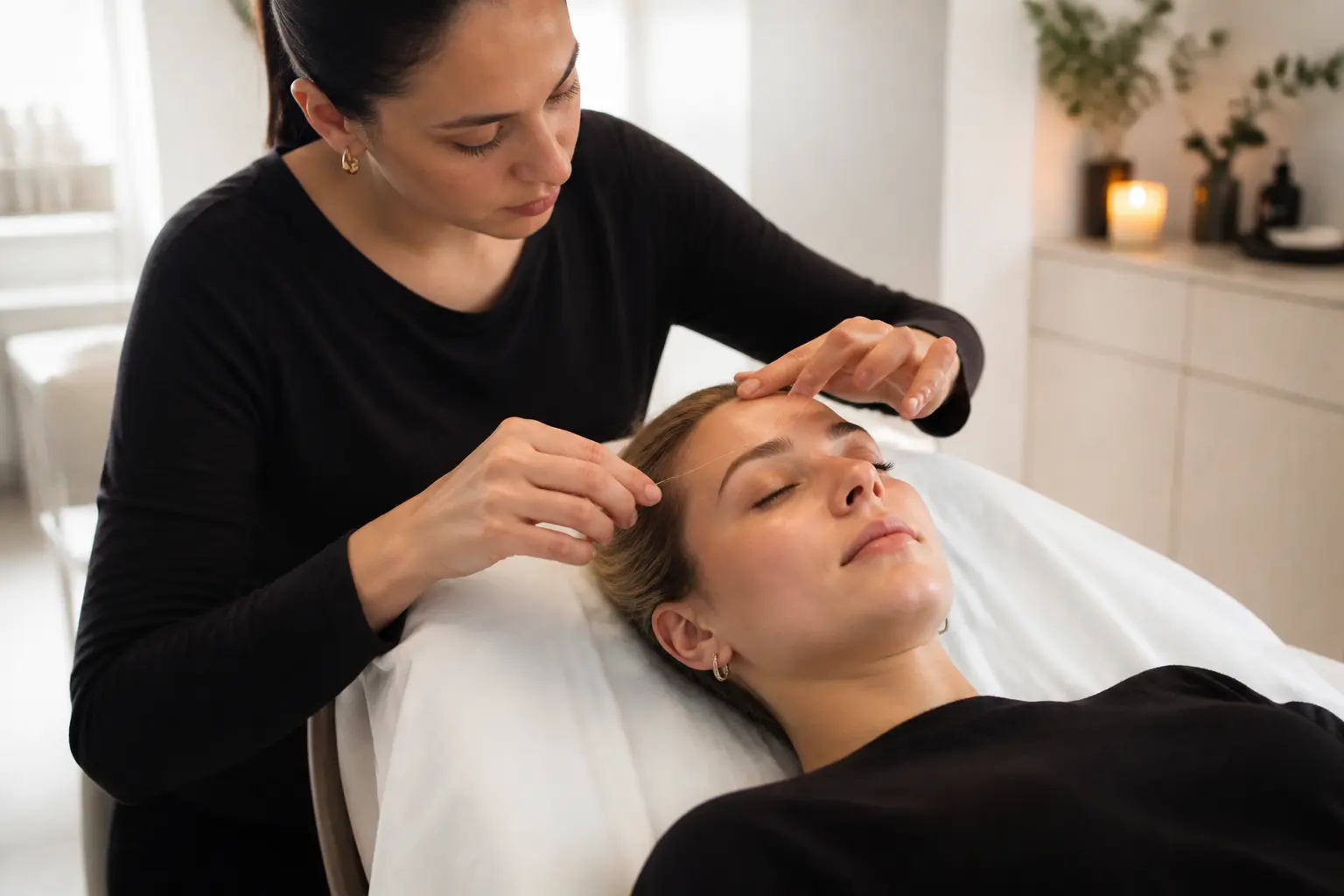
Threading uses a twisted thread to remove unwanted hair with control. In a brow appointment, the value of the technique lies in the ability to work carefully around the natural shape. For fine or light brows, this can mean making small, intentional adjustments instead of taking a broad approach to hair removal.
1. A cleaner outline around the brow
Hairs above, below or between the brows can soften the visible outline. Removing selected hairs from these areas may make the main brow shape appear clearer, even though the brow itself has not been made darker or artificially thicker.
The amount removed should depend on your natural growth pattern. A very clean lower edge may suit one person, while another may prefer a softer finish that keeps the brow from looking too narrow.
2. A more balanced starting point and tail
The front and tail are often the areas where fine or light hair needs the most careful judgement. Removing too much from the front can make the brow look abrupt or sparse. Over-refining the tail can make it disappear visually.
During a personalised design, the focus can be on keeping these areas proportional to the rest of your brow. Sometimes that means cleaning only the most obvious stray hairs rather than trying to force a dramatic arch or an ultra-slim tail.
3. Better separation between the brows
The space between the brows strongly affects how open and balanced the face appears. It is also an area where preferences differ. Some people prefer a very clean central space; others want to retain a softer, more natural transition.
Threading can refine this area with precision, but the ideal amount of hair to remove depends on your existing brow placement and facial proportions. A good result should make the brows feel more intentional, not as though they have been moved further apart than nature intended.
4. A shape that works with your usual styling
If you fill your brows with pencil, powder or pomade most mornings, your threading shape can be planned around that routine. You may want enough natural hair left in key areas to guide your make-up application, rather than a very stripped-back shape that requires more product each day.
If you do not usually wear brow make-up, the priority may be a soft outline that looks tidy on its own. Explaining this at the start of the appointment helps make the finished result more practical for your day-to-day life.
At BeCammo · Sliema · Swieqi
Eyebrow threading in Malta
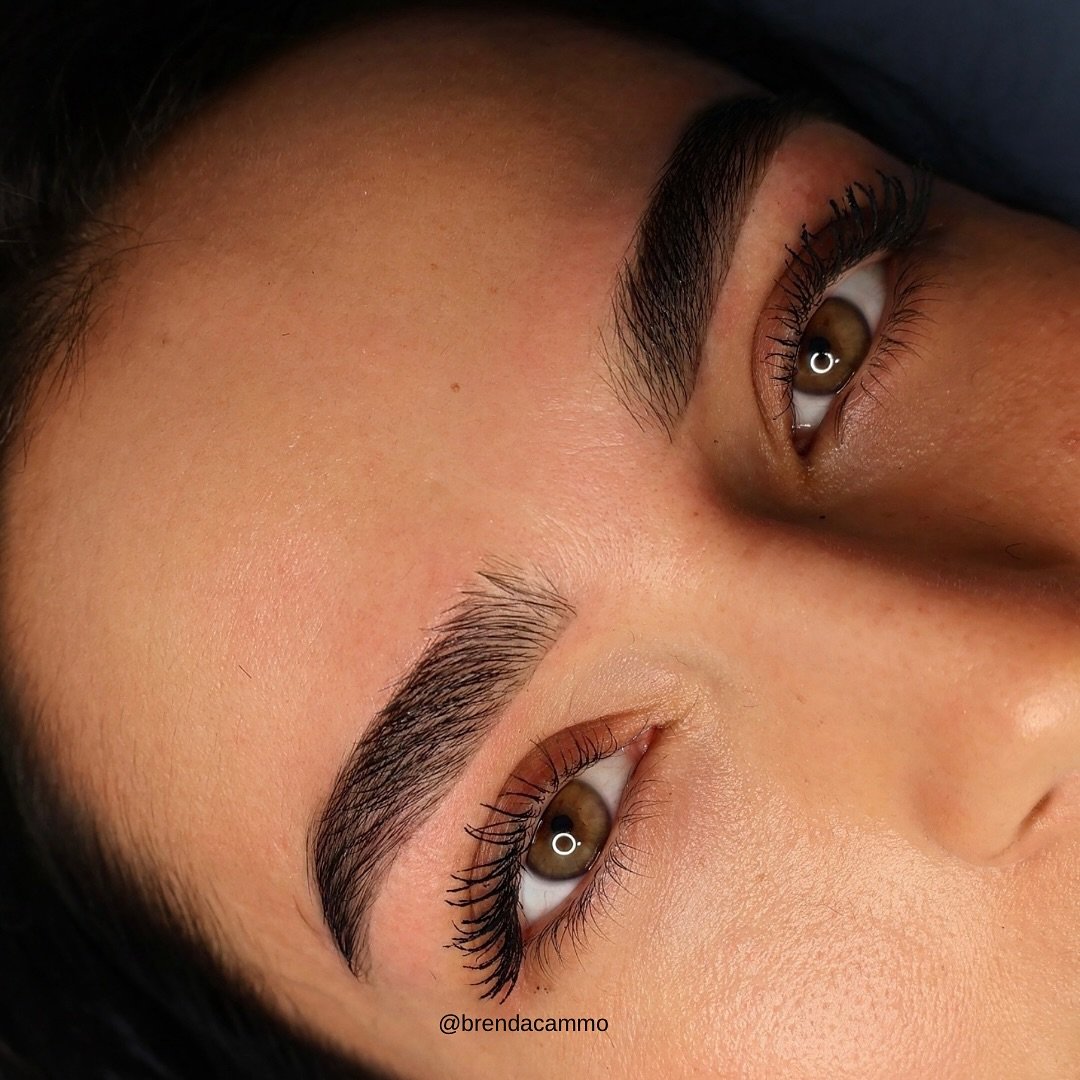
Same client, before and after threading.
Clean, natural brows shaped to your face, at our salons in Sliema and Swieqi. Threading is what BeCammo was built on.
- from €16price
- Sliema · Swieqiwhere
- ★ 5.0460+ Google reviews
What can threading not change on its own?
It is helpful to be clear about the role of threading. It refines shape by removing hair; it does not change the natural colour of brow hair or create extra hairs in areas with low density. It also cannot make every brow perfectly symmetrical, because natural brows are sisters rather than identical copies.
For fine or light brows, this distinction matters. A neat design may make the brow look more visible by improving its outline, but it will not necessarily create the stronger colour contrast some people want. If colour definition is part of your goal, it is worth discussing whether a brow tint or henna service is appropriate for your preferences and natural hair.
That conversation should remain personal. The right choice depends on your brow hair, skin, desired finish and how much maintenance you are comfortable with. Some clients prefer threading alone; others like to combine a tidy shape with subtle colour definition.
How can brow mapping support a softer, more visible shape?
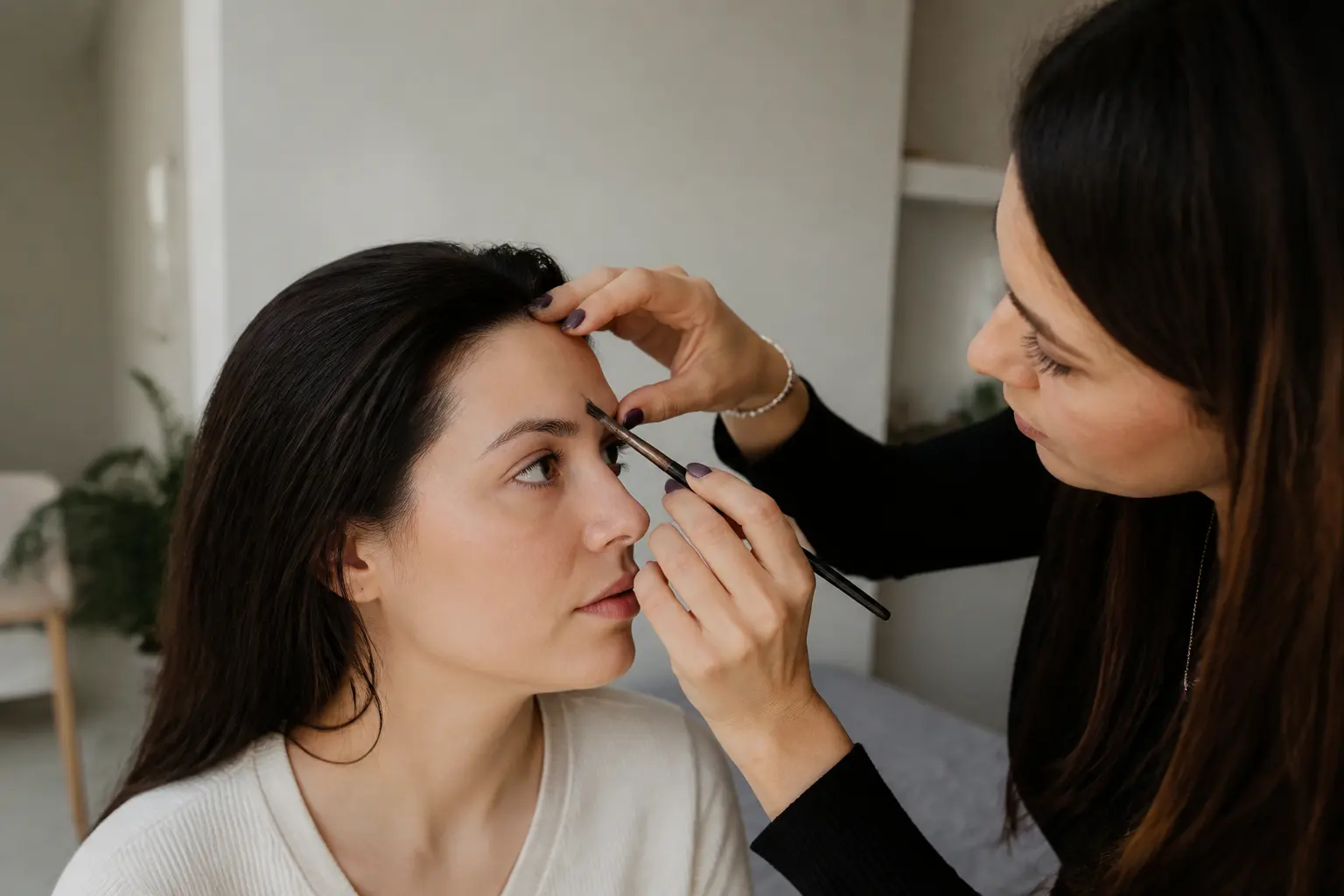
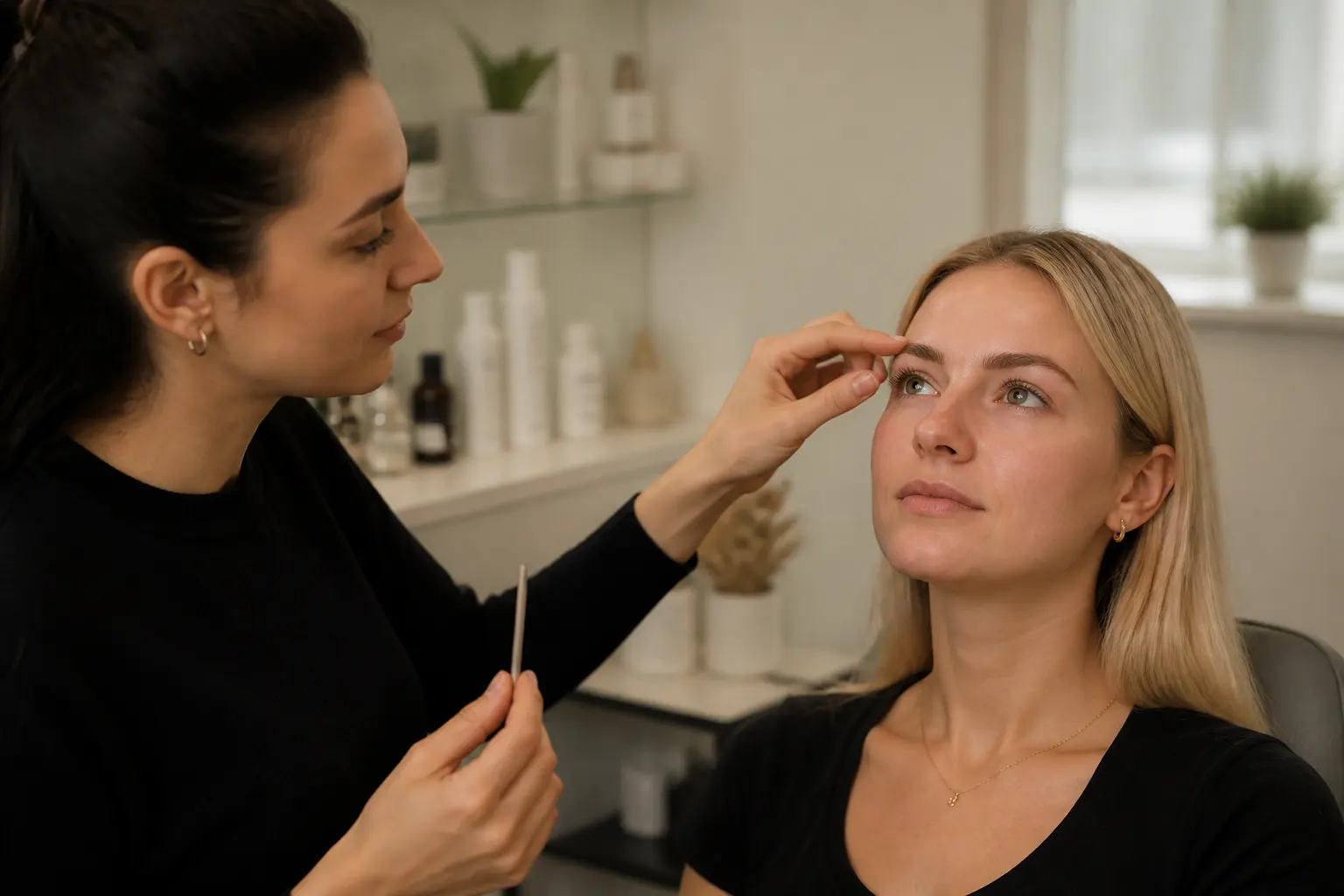
Brow mapping is a way of considering the main points of the brow, such as its starting position, highest point and tail. It is not about forcing every face into one standard brow template. Instead, it gives the design process a structure so that the shape can be adjusted with care.
For fine or light hair, mapping can be especially helpful because the visible brow line may be less obvious at first glance. Looking at the natural growth before threading helps avoid unnecessary removal from already delicate areas.
Mapping is a guide, not a rigid rule
Your bone structure, natural hair direction, existing density and preferred styling all matter. A mapped outline may show where a brow could sit visually, but the final design should still be realistic for the hair you have.
For example, if one tail is naturally lighter or shorter than the other, a personalised approach may prioritise balance without trying to remove healthy hair from the fuller side just to make both brows identical. This is often a more natural-looking choice.
What should you mention before your appointment?
Clear communication helps a brow specialist understand what “defined” means to you. Before threading begins, it can be useful to share a few details about your brows and routine.
- Tell your specialist if you feel your brows disappear in photos or certain lighting.
- Explain whether you normally wear brow pencil, powder, tinted gel or no product at all.
- Mention if you are growing out areas that were previously over-plucked.
- Say if you prefer a soft, natural outline or a more polished finish.
- Point out any areas you are especially keen to preserve, such as a fuller front or a longer tail.
- Let the team know about any skin sensitivity, recent irritation or products that may affect the appointment.
Bringing a reference photo can also help, provided it is used as a conversation starter rather than a promise of an identical result. Your own brow growth, colour and features should lead the final design.
How should you prepare for threading fine or light brows?
You do not need an elaborate routine before a brow appointment, but a few simple steps can make the consultation and shaping process clearer.
Arrive with your brows visible where possible
If practical, arrive without heavy brow make-up so the natural hair pattern is easy to assess. If you wear brow product every day and would like the shape to work with it, you can still explain how you usually fill your brows or bring a photo of your normal finished look.
Avoid last-minute self-tidying
It can be tempting to tweeze a few hairs before an appointment, particularly when your brows feel untidy. However, leaving the growth visible gives the specialist more information about the natural shape and areas that need protection. This is particularly valuable when hair is fine, pale or growing back unevenly.
Be honest about your maintenance preferences
A shape that looks ideal immediately after an appointment may not be the right shape if it requires frequent make-up or more upkeep than you enjoy. If you prefer a low-maintenance result, say so. A softer design that grows out gracefully may be more useful than a highly sculpted finish.
How should you care for your brows after threading?
After threading, the skin around the brows may feel temporarily sensitive or look slightly flushed. This can vary from person to person. Treating the area gently and following the aftercare guidance provided at your appointment is the best approach.
Try not to rub or repeatedly touch the freshly threaded area. If you plan to use brow make-up afterwards, ask when it is suitable to apply it based on how your skin is feeling. Keeping your routine simple can be especially helpful if the skin is prone to sensitivity.
As the hairs grow back, you may notice that some appear sooner than others. Brow hairs do not all grow at the same speed, so this is normal. Rather than removing individual hairs impulsively, consider waiting until there is enough growth for your preferred shape to be reassessed.
When is a subtle result the right result?
With fine or light brow hair, a successful threading appointment is not always the most dramatic before-and-after change. Often, the difference is that your brows look more organised, your natural arch is easier to see and your face feels more balanced without anyone being able to identify exactly what changed.
That subtlety is valuable. The goal is not to make your brows look like someone else’s. It is to work with their natural colour, texture and growth pattern so they feel polished while remaining recognisably yours.
Frequently asked questions
Can threading make fine eyebrows look thicker?
Threading does not add brow hair or change hair thickness. However, by removing stray hairs around the natural line, it can make the existing brow shape look clearer and more intentional.
Is threading suitable for very light blonde or grey brow hairs?
It can be suitable because the appointment focuses on the natural hair pattern rather than colour alone. If you would like more visible colour definition as well as shaping, ask whether tint or henna may be worth discussing.
Will threading make my fine brows too thin?
A personalised approach should aim to preserve the hairs that support your natural shape. Tell your specialist that you want to keep fullness and prefer a soft result, particularly if you have had over-plucked brows in the past.
Should I use brow pencil after threading?
You can ask for guidance based on your skin and the products you use. Once the area feels comfortable, light make-up can help add definition if that is part of your normal routine.
How often should fine or light brows be threaded?
Timing varies with your individual hair growth, preferred finish and how quickly visible stray hairs return. Booking when the shape begins to lose clarity is often more useful than following a rigid schedule.
Fine or light brow hair does not need a stronger or harsher design to look refined. A carefully planned threading appointment can bring out the shape that is already there, protect natural fullness and leave you with a result that fits your features and routine. When you are ready, choose the BeCammo location that is most convenient for you and book a brow appointment with your preferred level of definition in mind.