Eyebrow Threading vs Tweezing: How the Two Approaches Differ
Brenda Cammo Team
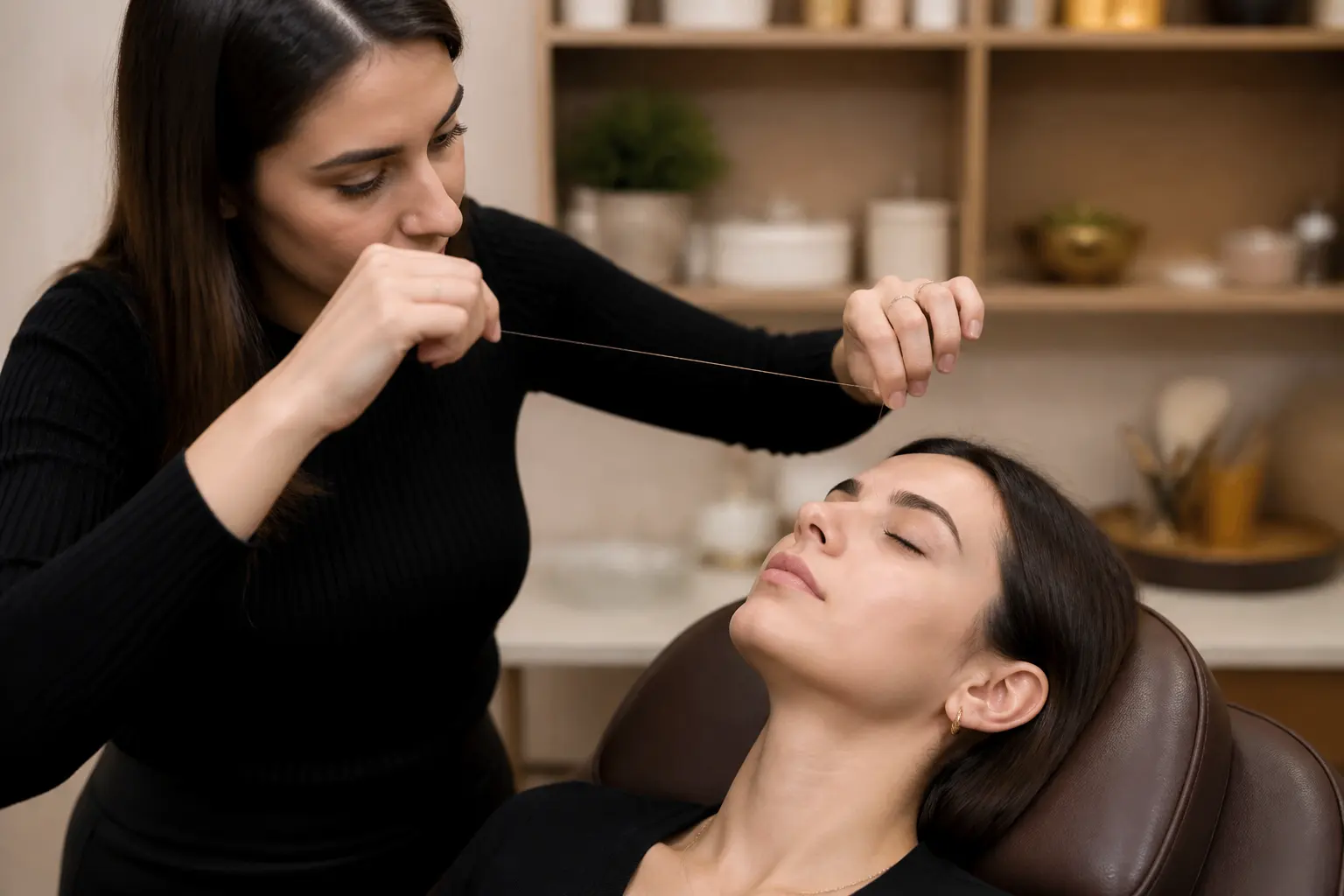
Eyebrow threading and tweezing both remove hair from the root, but they do not create the same experience or necessarily the same approach to brow shaping. Tweezers allow you to pick out individual hairs at home, while threading uses a twisted thread to lift several hairs in a controlled line. The best choice depends on how much shaping you want, how confident you feel maintaining your brows yourself and how your skin responds.
For many people, the most useful question is not simply “Which is better?” but “What do I need from this appointment or routine?” If you want to remove one or two obvious stray hairs between appointments, tweezing can be practical. If you want to reassess your outline, create cleaner definition or keep fullness while refining the shape, professional threading can offer a more structured starting point.
Eyebrow threading vs tweezing at a glance
| Point to compare | Threading | Tweezing |
|---|---|---|
| How hair is removed | A twisted thread catches and lifts hairs from the root. | One hair is gripped and pulled from the root with tweezers. |
| Best suited to | Refining an overall brow outline and clearing several hairs efficiently. | Removing a small number of individual stray hairs. |
| Precision | Precise in trained hands, especially for lines and detailed shape work. | Highly precise for one selected hair at a time. |
| Speed | Can remove multiple hairs in one pass. | Usually slower when many hairs need removing. |
| At-home use | Usually best performed by a trained practitioner. | Accessible for careful, occasional maintenance at home. |
| Planning the shape | Can be paired with a design and mapping conversation. | Relies on you already knowing which hairs should stay and which should go. |
The American Academy of Dermatology describes threading as a method that can remove many hairs at once while preserving the hairs you intend to keep. That distinction matters around the brows, where a small change in the outline can alter balance, softness and how easy your daily makeup routine feels.
How eyebrow threading works
Threading is a traditional facial hair-removal technique. A practitioner manipulates a loop of thread so that its twisted section catches unwanted hairs and lifts them away from the root. It can be used to work through a fine row of hairs above, below or between the brows, as well as around other facial areas.
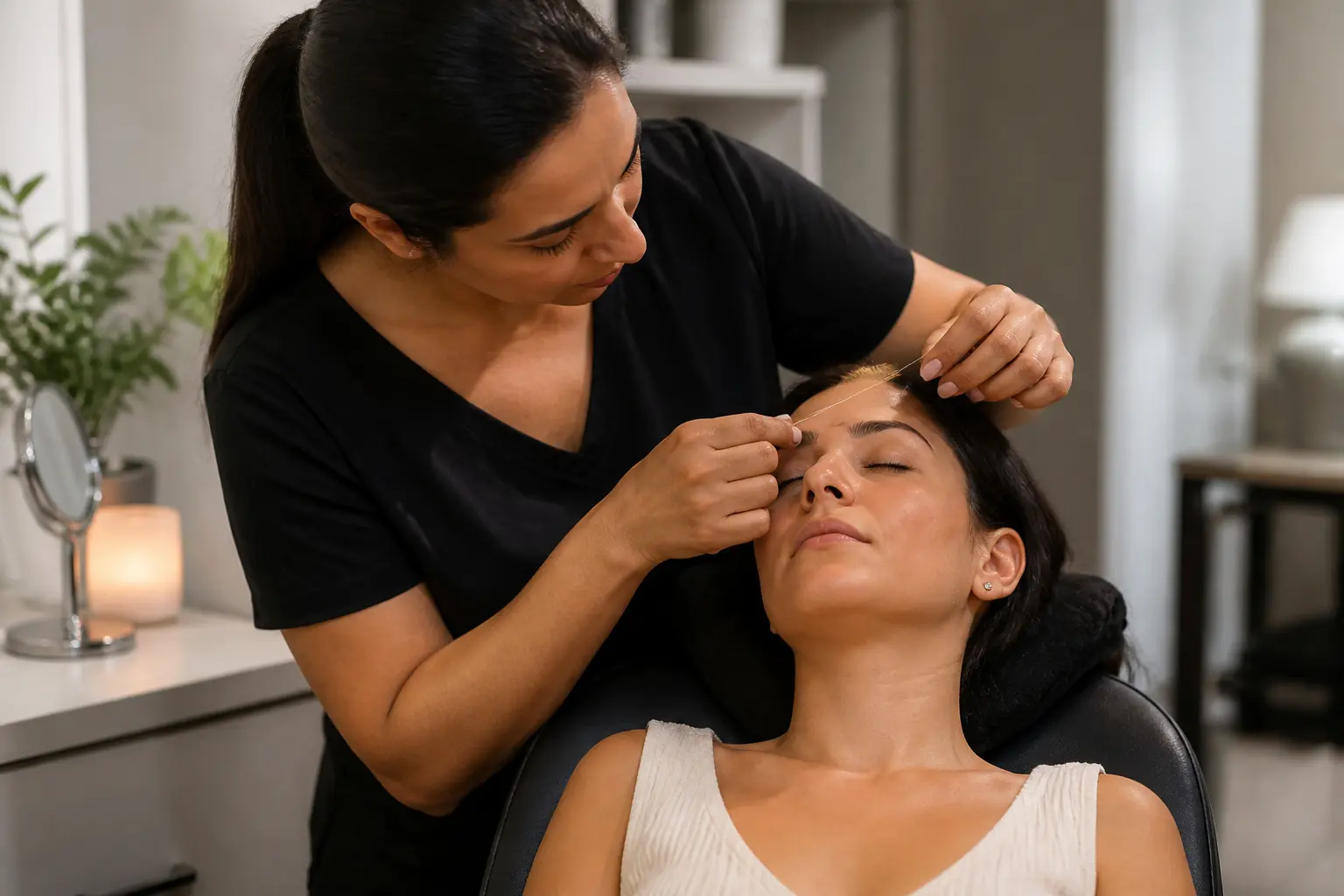
At Becammo, threading is approached as more than simply taking hair away. The aim is to look at the existing density, natural direction of growth and the brow’s relationship with your facial features before refining the outline. Brows do not need to be identical to look balanced, and a personalised design should not force every face into one trend-led shape.
A professional threading appointment can be particularly helpful when you are growing out brows that have been over-shaped in the past, when your brows grow differently from side to side or when you are unsure which hairs are part of your long-term shape. Rather than repeatedly removing hairs in response to what looks uneven on a particular day, you can establish a clearer plan for maintenance.
How tweezing works
Tweezing uses a small tool to grip and pull one hair at a time. Its main advantage is selectivity: if you can clearly identify a single stray hair that sits outside an established brow shape, you can remove only that hair without disturbing the rest of the area.
That makes tweezing useful as light maintenance. It can also be convenient when a full appointment is not yet due. However, it becomes more difficult when you are trying to redesign both brows from scratch. Looking very closely in a magnifying mirror, trying to make one side match the other and plucking repeatedly can make it easy to remove hairs that would have supported a fuller outline.
The concern is not that tweezers are inherently wrong. It is that an individual hair can look out of place when viewed in isolation, yet be important to the overall shape when viewed at normal distance. A cautious approach is usually more useful than trying to correct every tiny difference at home.
The biggest difference: shaping a brow versus maintaining it
Threading and tweezing often work best for different jobs.
- Threading is often chosen for shaping: clearing a soft line of regrowth, refining the arches and tails, and tidying the brow area while protecting intentional fullness.
- Tweezing is often chosen for maintenance: removing an occasional obvious hair after you already have a shape you like.
Think of threading as a way to review the full picture. A skilled practitioner can step back, assess both brows together and remove hair in a sequence that supports the intended design. Tweezing is closer to a spot-cleaning tool: useful when used sparingly, but less reliable as the only method for regular reshaping.
This does not mean every threading appointment needs a dramatic result. In fact, people who prefer natural-looking brows often benefit from a conservative threading approach. The appointment can focus on tidying the perimeter, softening rather than exaggerating the arch and leaving density where it contributes to the brow’s character.
Precision: is threading or tweezing more accurate?
Tweezers are exceptionally precise for one hair because you choose exactly what to grip. Threading is precise in a different way: a trained practitioner can work in fine, controlled rows and create a clean border efficiently. The Cleveland Clinic notes that threading can remove individual hairs or a line of hairs, while also emphasising that practitioner skill matters.
For a home routine, tweezing may feel more controllable because you are moving slowly. Yet slow does not automatically mean more accurate for brow design. When you are looking very close to the mirror, it is easy to lose sight of proportion. You may remove a little more from the higher brow, then compensate on the other side, and gradually make both brows narrower than intended.
For a professional appointment, threading can be especially useful when the goal is a clean but not severe line. The practitioner can remove diffuse regrowth around the outline without treating every brow hair as a problem to solve. This is valuable for naturally thick, textured, fine or uneven-density brows alike.
Comfort and skin considerations
Both methods involve pulling hair from the root, so neither should be described as completely comfortable for every person. Sensation varies according to your individual sensitivity, the area being worked on, hair density and your familiarity with the method. Some people find threading quick and manageable; others prefer the slower pace of tweezing.
Threading uses thread rather than wax, which is one reason it is commonly considered by people who prefer a brow method without wax on the surrounding skin. The American Academy of Dermatology notes that threading may cause little irritation for some people, including those with sensitive or acne-prone skin, while also warning that technique and experience matter.
Whatever method you choose, it is worth mentioning relevant skin sensitivity before a professional brow appointment. If the skin around your brows is irritated, peeling, sunburnt or reacting to a product, postponing may be the sensible option. If you use strong active skincare products near the brow area, ask your skincare professional or prescriber for individual guidance before hair removal rather than assuming every routine is suitable.
Hygiene is part of the decision
With tweezing at home, keep your tool clean and do not share it. With threading, choose a studio that can explain its hygiene approach. At Becammo, the thread is single-use and discarded after each client. Cotton thread is the usual material, with polyester available for clients who report an allergy to cotton.
A good appointment should also give you space to explain previous reactions, your preferred level of definition and whether you are trying to grow particular areas back. Clear communication helps make the service more personal and more conservative where needed.
Time, upkeep and regrowth
Because both threading and tweezing remove hair from the root, regrowth does not follow the same pattern as shaving. However, there is no single maintenance timetable that suits every person. Brow hairs grow at different speeds, and your preferred finish also affects when you feel ready for another appointment.
If your priority is a consistently polished outline, a regular threading routine can make maintenance easier because the main shape is reviewed professionally each time. If you prefer a softer, lower-maintenance look, you may allow more regrowth and book when the outline begins to feel less defined. Between visits, avoid turning a few new hairs into a full reshaping session at home.
Tweezing can be tempting as soon as you see regrowth, but frequent correction can make it harder to understand your natural brow pattern. If you are deliberately growing your brows out, consider leaving questionable hairs alone until your next shaping appointment. A trained professional can help distinguish temporary regrowth from hairs that are likely to contribute to a fuller result.
Which option may suit your routine?
Choose professional threading if you want to:
- Refresh the overall outline rather than remove only one or two hairs.
- Keep your brows full while making them look tidier.
- Discuss asymmetry, sparse areas, scars or different growth directions before shaping.
- Have a defined brow design without relying on a wax-based method.
- Build a consistent maintenance routine with a brow specialist.
Choose careful tweezing if you want to:
- Remove an isolated stray hair between appointments.
- Maintain a shape that has already been professionally established.
- Make a small adjustment without changing the brow’s structure.
- Keep your routine simple while you wait for enough regrowth to make a shaping appointment worthwhile.
It is also perfectly reasonable to combine the two: use threading for your main brow shape, then use clean tweezers very sparingly for the occasional unmistakable stray hair. The key is to avoid letting at-home maintenance become unplanned over-plucking.
What to ask before a threading appointment
If you are new to threading or returning after a long break, start with a simple conversation. You do not need technical beauty vocabulary to communicate what you want. Useful points to mention include:
- Whether you want to preserve fullness or prefer a more defined finish.
- Which areas you are currently trying to grow out.
- Whether you use brow pencil, tint, henna or brow gel regularly.
- Any skin sensitivity or recent irritation around the brow area.
- Whether you have a scar, noticeable asymmetry or a particular concern about one brow.
You can also bring reference images to show the level of definition you like, but treat them as a conversation starter rather than a template. Your natural hair density, growth pattern and facial proportions are individual. The most flattering brow result is often one that works with those features rather than copying someone else’s exact arch.
Conclusion
Eyebrow threading and tweezing are both useful hair-removal approaches, but they serve different purposes. Tweezing is practical for the occasional individual hair, while threading is designed to refine the bigger picture with speed, detail and a considered brow shape. If you are unsure which hairs to keep, want to maintain natural fullness or would like a more consistent outline, a professional threading appointment gives you the opportunity to make those choices with care.
For brows that feel tidy, balanced and still recognisably yours, book a threading service at the Becammo location that is most convenient for you in Sliema or Swieqi.
Frequently asked questions
Does threading remove more hair than tweezing?
Not necessarily. Threading can remove several hairs efficiently, but the amount removed should depend on the brow design and your preferences. A conservative threading appointment can focus on unwanted regrowth while keeping natural density.
Can I tweeze between threading appointments?
Yes, if you do it sparingly and only remove hairs that are clearly outside your established shape. If you are unsure about a hair, leaving it until your next appointment is often the safer choice for maintaining fullness.
Is threading suitable for naturally thick eyebrows?
Yes. Threading can be adapted for thick brows when the aim is to retain their natural character while refining the outline. Tell your brow specialist that you want to preserve fullness before the service begins.
Will eyebrow threading make my brows identical?
Natural brows are rarely identical. Threading can help create a more balanced appearance, but a good design respects differences in bone structure, growth direction and hair density rather than forcing perfect symmetry.
How should I prepare for eyebrow threading?
Arrive with the brow area clean where possible, explain any sensitivity or current irritation, and avoid experimenting with a major at-home reshaping immediately before your appointment. Let your specialist know about any skincare products that may be affecting the area.