Growing Out Your Eyebrows: How Threading Keeps Shape Tidy
Brenda Cammo Team
Growing out your eyebrows can feel like a test of patience. Perhaps you have over-plucked in the past, your arches no longer feel even, or you simply want more fullness before choosing a new shape. The difficult part is that leaving every hair untouched can make brows look untidy, while removing too much can set your progress back.
A carefully planned threading appointment offers a middle ground. Rather than treating the brow as something that must be made thinner or sharply reshaped at every visit, the appointment can focus on protecting the hairs you are growing while removing only the clearly unwanted ones around the area. The result is a tidier appearance during the growing-out phase, with a shape that remains personal to your natural brow pattern.
At Becammo, eyebrow design begins with observation and mapping rather than a one-shape-fits-all approach. This matters especially when you are rebuilding your brows: the aim is not to force a trend, but to make thoughtful choices around your current hair growth, facial proportions and daily routine.
Why growing out eyebrows can look untidy at first
Eyebrow hairs do not all grow at the same speed or in the same direction. Some may return quickly, while other areas remain sparse for longer. New growth can also appear finer, lighter or shorter than the rest of the brow, which makes the outline look less defined while you wait.
This uneven stage is normal. It can be tempting to correct every hair that sits outside your preferred line, especially near the arch, under the brow or at the front. However, those hairs may be useful to the final shape once they have had more time to grow. Repeatedly removing them can keep you in the same cycle: a brow that looks neat for a short time but never gains the fullness or balance you want.
The goal during this period is not necessarily to avoid all grooming. It is to distinguish between hairs that support your future brow shape and hairs that are unlikely to do so. That is where an experienced threading and design appointment can be helpful.
Can threading help when you are growing out your eyebrows?
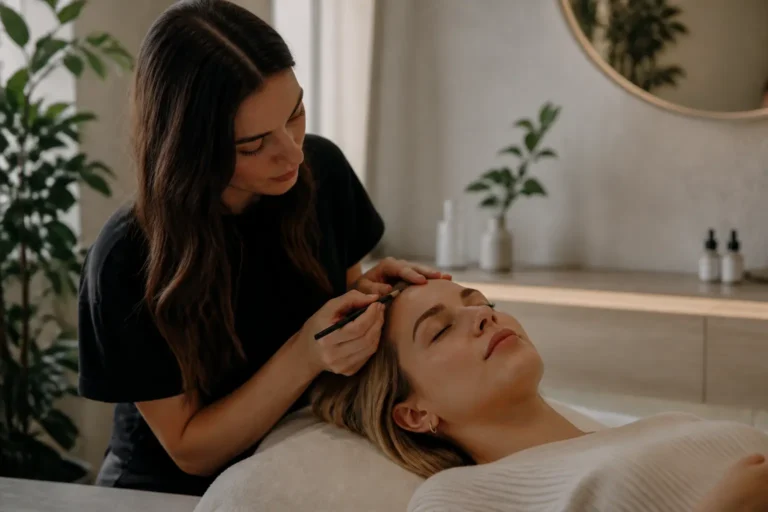
Yes, when it is approached conservatively. Threading can be used to tidy the surrounding area while leaving the growth zone intact. A professional can work around the brow rather than reducing the brow itself, helping it look more polished without unnecessarily disrupting the hairs you are trying to retain.
Threading uses a fine thread to remove hairs with precision. At Becammo, cotton thread is the standard option, while polyester thread may be used for clients with relevant allergies. The thread is disposable and used once per client as part of the studio’s hygiene protocol.
For growing-out brows, the most useful part of threading is precision. Instead of taking a broad strip of hair away, the service can concentrate on details such as:
- obvious stray hairs well beyond the intended brow area;
- hair between the brows, if you wish to keep that area clean;
- unwanted hairs above or below the brow that do not contribute to the planned outline;
- fine facial hair that may make the eyebrow area look less defined;
- small adjustments that help both brows look more balanced while they grow.
Threading does not make eyebrow hair grow faster, and it cannot promise that every sparse area will fill in. Hair growth varies from person to person. What it can do is help you manage the in-between stage with a more intentional, tidy look.
What happens at a growing-out eyebrow appointment?
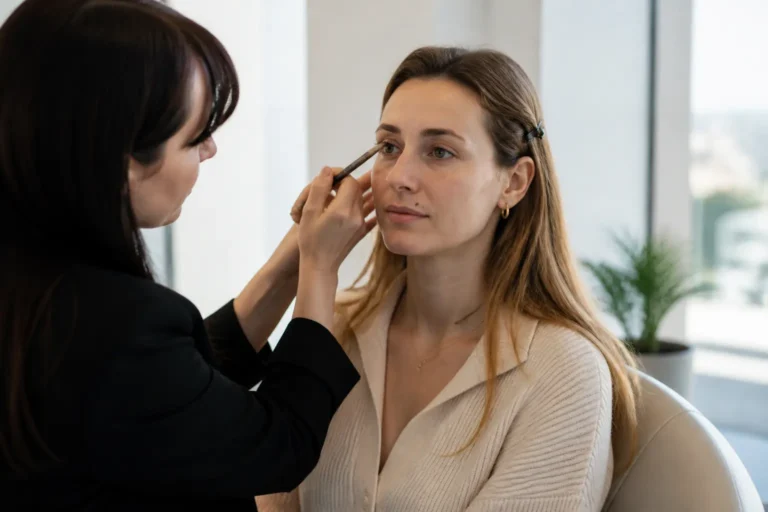
A good appointment should start with a conversation. Let your brow artist know that you are growing your eyebrows out and explain what you hope to achieve. You may be aiming for a fuller front, a softer arch, more length at the tail, or simply better symmetry. These details change what should be protected.
1. Looking at your natural brow pattern
Every brow has its own density, direction of growth and natural high points. Brows can also differ slightly from one side to the other. Rather than trying to make them identical, a personalised design looks for visual balance while respecting these natural differences.
This is particularly important for clients with different hair textures, skin tones and ethnic backgrounds. A flattering eyebrow shape is not a fixed template. It should be adapted to the individual face and the way their eyebrow hair naturally behaves.
2. Mapping the shape with your growth goal in mind
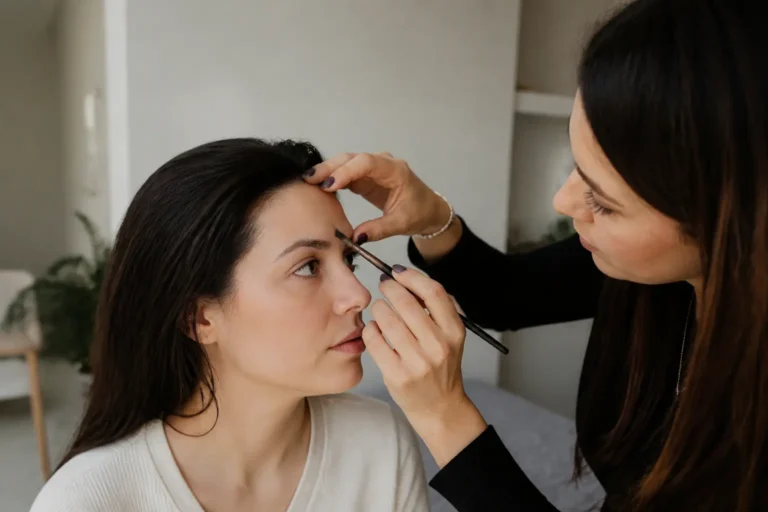
Eyebrow mapping helps identify the beginning, arch and tail in relation to your facial features. When you are growing out your brows, mapping can provide a helpful visual guide: it shows which areas may need time and which hairs are best left alone for now.
The mapped shape is not a reason to remove everything outside a line. During a growth phase, it is better viewed as a guide for measured decisions. A brow artist may leave hairs that look slightly out of place today if they could improve the fuller shape you are working towards.
3. Removing only what is necessary
This is the central principle. A maintenance appointment for growing brows should feel different from a full reshaping service. The focus is on keeping the perimeter clean and the brows readable, not on making them smaller or more dramatic.
If you are unsure about a particular area, ask before it is threaded. Clear communication is useful, especially around the underside of the arch and the tail, where a few hairs can make a visible difference over time.
What should you avoid removing while growing brows out?
There is no universal list, because brow growth and facial proportions vary. Still, people growing out their brows often benefit from being cautious with certain areas until a professional assessment has been made.
- The front of the brows: Removing hairs here can make brows appear further apart or less full. The front often needs a softer, more natural finish rather than a harsh edge.
- Hairs beneath a sparse arch: A hair that seems low today may be valuable once the surrounding area gains more density.
- The upper line: Over-cleaning above the brow can change the overall balance and create an overly narrow appearance.
- The tail: The tail is often one of the areas people want to rebuild. Avoid making it shorter simply to match the other side on a particular day.
Rather than attempting detailed corrections at home, take a photo of your brows in natural light and bring your questions to the appointment. This can make it easier to discuss your priorities and track how the shape is changing over time.
How often should you book threading while growing out your eyebrows?
The right interval depends on how quickly your hair grows, where you are trying to gain fullness and how tidy you want the surrounding area to look. Some clients prefer occasional light maintenance, while others wait longer between appointments to give more growth a chance to become visible.
As a general approach, book according to the condition of your brows rather than following a rigid timetable. If the area around the shape is beginning to distract from your brow line, a conservative tidy-up may be useful. If you are seeing new hairs in areas you had previously kept very clean, it may be better to assess them before removing anything.
During your appointment, ask for guidance based on your individual brow pattern. Your brow artist can help you decide whether the next visit should be a light clean-up, a more complete design session or simply a review of your progress.
Simple ways to keep growing-out brows polished between appointments
Growing your eyebrows out does not mean you have to feel unkempt every day. A few gentle styling habits can help you make the most of the hairs you already have without interfering with growth.
Brush the hairs into place
Use a clean spoolie brush to guide hairs upward and outward in the direction they naturally grow. This immediately makes the brow look more organised and can reveal where you have genuine fullness.
Use light, targeted makeup if you want it
A fine brow pencil, powder or tinted brow product can help soften small gaps while your natural hairs develop. Use short, hair-like strokes rather than drawing a heavy block of colour. The aim is to complement your own brow, not hide it beneath a new shape.
Do not chase perfect symmetry at home
Brows are sisters, not identical copies. Trying to make each side match by repeatedly plucking can lead to gradual over-removal. If one brow appears stronger or higher, mention it at your next threading appointment instead of making a quick correction yourself.
Keep your skincare routine in mind
If you use active skincare products around the brow area, tell your brow artist before threading. It is also sensible to arrive with the area clean and to follow any aftercare advice given after the service. Skin sensitivity and product use can differ from person to person, so an individual conversation is more useful than assuming one rule fits everyone.
Threading versus leaving brows completely untouched
Leaving your eyebrows entirely untouched may suit some people, particularly at the very beginning of a growth plan. However, it is not the only sensible option. For many clients, a carefully controlled threading appointment provides reassurance that their brows can still look intentional while they wait for more growth.
| Approach | Potential benefit | Point to consider |
|---|---|---|
| Leave all hairs untouched | Gives every hair time to show its potential | The brow area may feel harder to style or less defined |
| Threading maintenance | Keeps the outer area tidy while preserving selected growth | Requires clear communication about which hairs must be kept |
| Frequent home plucking | May offer a quick short-term tidy-up | Can make it difficult to build a fuller, more balanced shape |
The best choice is the one that suits your comfort level and brow goal. If you have been disappointed by uneven results in the past, a professional assessment can give you a clearer plan than reacting to individual hairs day by day.
When a fuller-looking result may need a different conversation
Threading is an excellent option for shaping and maintenance, but it is not designed to replace missing eyebrow hair. If you have significant gaps, old scarring, very sparse tails or simply want a longer-lasting makeup effect, you may wish to discuss semi-permanent eyebrow options separately.
Microblading and micropigmentation are different services with their own consultation process, suitability considerations and aftercare. They should not be treated as a shortcut or assumed to be right for everyone. A consultation is the right setting to ask questions about the look you want, your lifestyle and the maintenance involved.
For many people, though, the first step is simpler: allow the natural brow pattern to become visible, then use precise threading to create a shape that works with it.
Conclusion: tidy now, shape thoughtfully for later
Growing out your eyebrows is not about abandoning grooming altogether. It is about changing the purpose of grooming. Instead of removing every hair that seems inconvenient, choose a plan that protects useful growth and keeps the overall area neat.
A thoughtful threading appointment can help you navigate that stage with more confidence. By combining personalised mapping, precise hair removal and a conservative approach where needed, you can maintain a polished look while giving your brows room to develop. When you are ready, choose the Becammo location that suits you in Sliema or Swieqi and book an eyebrow appointment with your growth goal clearly in mind.
Frequently asked questions
Will threading make my eyebrows grow back thicker?
No. Threading is a hair-removal method and does not promise thicker or faster eyebrow growth. Its value during a grow-out phase is in keeping the surrounding area tidy while preserving hairs that may support your intended shape.
Can I still have my eyebrows threaded if I am growing them out?
Yes. Tell your brow artist that you are growing your brows out before the appointment. The service can then focus on light maintenance rather than a full reduction or major reshaping.
How long does it take to grow out over-plucked eyebrows?
There is no single timeline. Growth can vary by person and by area of the brow. A personalised approach is more useful than expecting every section to fill in at the same pace.
Should I stop plucking between threading appointments?
If your aim is fuller brows, avoiding impulse plucking is often helpful. If a hair concerns you, leave it until your next appointment or ask for guidance before removing it yourself.
Can threading make uneven eyebrows identical?
No eyebrow pair is perfectly identical. Threading and careful design can improve visual balance, but the aim should be harmony with your natural features rather than forcing exact symmetry.